
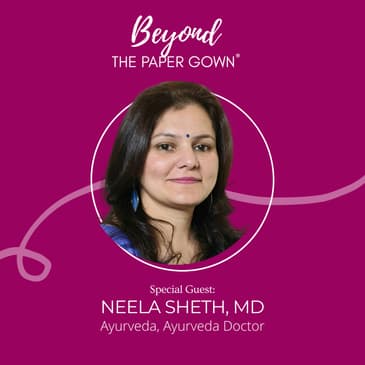

Join us as Dr. Neela Sheth, an Ayurvedic physician practicing in Switzerland, discusses traditional Indian medicine and women's health. With 20 years of experience, Dr. Sheth explores Ayurveda's approach to topics like hormonal health, menopause, and PCOS. She explains key Ayurvedic concepts such as doshas and personalized treatment approaches, while sharing patient experiences from her practice. This conversation examines how Ayurvedic practices can complement modern healthcare and covers wellness strategies drawn from this traditional system. Tune in to learn about perspectives on health from one of India's ancient medical traditions.
Please visit Beyond the Paper Gown to join our community and to learn more about achieving your optimal health.
SHOW NOTES:
Neela Sheth MD Ayurveda, Ayurveda Doctor
Mitzi Krockover, Founder and CEO, Woman Centered, LLC and Host of Beyond the Paper Gown
[00:00:14] Welcome to Beyond The Paper Gown. I'm your host, Dr. Mitzi Krockover. Today, we're exporting Ayurveda, one of the world's oldest holistic healing systems with Dr. Neela Shef, an Ayurvedic physician practicing in Switzerland. Dr. Shef specializes in women's health and brings over 20 years of experience treating patients across multiple continents. Before we get started, just a reminder that the information we present here is for education only and is not intended as many.
[00:00:46] Dr. Neela Shef provides a descriptive analogy.
[00:00:53] Ayurveda, in the name itself, is the meaning Ayurveda. Ayurveda is a Sanskrit word which is made from Ayur and Veda. Ayur means life.
[00:01:06] Ayurveda means knowledge.
[00:01:07] Ayurveda funk whippP sounds a 10475 Express.
[00:01:08] XA tradition as RFam級TA Veda means knowledge and learning about life.
[00:01:33] Ayurveda Complete
[00:01:34] machine we need to have a user manual how to use this machine what are the indicators that the
[00:01:41] machine is working well or not an introduction to what is the property of this machine so that is
[00:01:48] what ayurveda is to our body and that is why all the knowledge about how to live a life
[00:01:57] leading to a healthy and long life is the knowledge which is sitting in the books of ayurveda
[00:02:06] dr sheth uses ayurvedic principles to treat patients from switzerland to the united states
[00:02:12] showing how this personalized approach transcends geography and culture
[00:02:17] one of the fundamental principles of ayurveda is the connection between our bodies and the natural
[00:02:23] world ayurveda views the human body as a microcosm of the larger cosmos so the whole universe
[00:02:31] the environment around us everything what happens there also happens in our body and our body is
[00:02:41] constituted also with the same five elements which are the base of the whole universe
[00:02:47] so uh maybe you know the five elements they are space air fire water and earth and all of these
[00:02:57] elements so we are part and parcel of the big cosmos but there exists a small cosmos inside us and
[00:03:05] that's why in ayurveda we also talk about the psychological aspects always the environmental
[00:03:13] aspects always so that together this is a complete a holistic uh and a very interconnected system
[00:03:23] with the nature we hear about herbs we hear about spices there is food nutrition and everything is
[00:03:32] based on the same thing that our body is the nature and if we consume nature our body understands this
[00:03:41] how to metabolize it how to use it uh how to make energy from this so our body is programmed to do so
[00:03:48] and that's why we can use food which is our first and only nutrition that we put inside our body so we
[00:03:57] can use this food to make energy as we do but we can also use food to heal ourselves because the food becomes
[00:04:07] medicine when we know how to use it in ayurveda every patient is unique so unlike the standard 15 minute
[00:04:16] doctor visits many of us are used to ayurvedic treatment takes a deeply personalized approach
[00:04:21] dr sheth says her first consultation is about an hour and 15 minutes with shorter follow-ups since she has
[00:04:29] spent so much time up front getting to know her patient the focus of an ayurvedic approach is also different
[00:04:36] according to dr sheth western medicine pays much more attention to symptoms and the patient's history
[00:04:42] related to those symptoms in ayurveda the focus is on the patient in ayurveda we have
[00:04:51] different kind of methods to assess the patients so there is a eight-point system where we do the
[00:05:00] pulse examination we do the tongue examination but also we check about the digestive system
[00:05:07] how much you are sleeping how much you are able to uh eliminate how how is the urination there are so
[00:05:16] eight things which we need to know what we try to do after this is to try to establish what body type
[00:05:24] this person has so body type of constitution that is what we need to assess based on the doshas
[00:05:31] and we also assess to make a diagnosis of today's problem based on the ayurvedic principles
[00:05:40] so in ayurveda we have a three dosha theory like three doshas now dosha itself is um if i would try to
[00:05:50] explain it in a easy terms it's like a bio functional energy okay which is not like the invisible energy
[00:06:00] so we have the vata pitta and kapha the three doshas uh and our body is made up of these three doshas
[00:06:08] the dosha uh help the body to function when the doshas are less or more like imbalanced we always see
[00:06:17] that there is a symptom coming and when the doshas are in balance that is when you feel very good you
[00:06:25] are a healthy person now based on the three doshas we classify every person into which body type it has
[00:06:34] now body type in in sanskrit in ayurveda is known as prakruti that means your constitution your specific
[00:06:42] type okay and uh normally uh the the broader types are vata pitta kapha type of people but in reality we
[00:06:52] we always see a combination it's like vata pitta pitta kapha and what is uh so your dominant dosha or your
[00:07:02] um the dosha or combination tells uh me more about how your body is going to behave and it will also guide
[00:07:12] you to understand yourself so just to give an example uh if there is a person with the pitta dominant
[00:07:20] character uh normally this person um when i explain it to them i tell them you are like the soldiers on the
[00:07:29] frontier you know on the border and so this person is always a load it's very commanding demanding it's
[00:07:38] possible that they are very perfectionist people they have a very good digestive system and it is
[00:07:45] they like to wear they like to dress very well everything must be in place like a perfection in
[00:07:51] wearing in doing everything they are very well organized they have a very good intellect and they can
[00:07:59] analyze very well now this people when the pitta goes high or is an imbalance then comes the problem
[00:08:08] that they could analyze everything and they overthink they could think too much yes yes and they think
[00:08:16] too much and that can bring them anxiety that can bring them like a burnout uh problem uh that's uh to a
[00:08:26] bigger extent when it goes like that but so these personalities are prone to this so we need to know
[00:08:32] we need to tell them to come to a lifestyle which is pacifying the dosha or which is balancing it
[00:08:40] and that's where uh is uh the ayurveda's um how to say uh the very beautiful part of ayurveda is
[00:08:52] it's not only curing the disease but we want the patient to auto regulate their or self-care
[00:08:59] their system so they should learn during the process of consultation and the whole program
[00:09:06] that they can take care of themselves so that they don't fall into the disease again
[00:09:12] so that is something where ayurveda has thought over only diseases but it goes beyond to make you uh
[00:09:22] as i said live long uh and to have optimal performance of your body of course we always talk of the mind as well
[00:09:32] according to dr chef ayurveda's personalized approach can be effective in managing women's health issues
[00:09:47] dr chef described her work with patients with polycystic ovarian syndrome or pcos pcos is a set of
[00:09:55] symptoms related to our hormonal imbalance and is very often not only hard to treat but often goes
[00:10:02] undiagnosed the ayurvedic approach focuses not on a specific diagnosis but rather takes into
[00:10:09] account the patient's lifestyle and history to provide more balance in the body i had a patient who
[00:10:15] came to me because she was um she was bloated all the time and uh she was trying to find what's a good
[00:10:25] food for her and she was extremely afraid of eating anything because she tried many things and she had
[00:10:32] this issue and when i went deeper uh to ask about the history of her problem and other problems
[00:10:38] associated i found that she didn't have period for almost three years and uh she looked like a pregnant
[00:10:46] woman because of it was extremely bloated she was gaining weight and uh the her gynecologist was not
[00:10:53] able to understand you know diagnose exactly you know pcos is a little difficult to diagnose when
[00:11:01] she was able to understand exactly with because there's a varied uh symptom a lot logically there
[00:11:07] and uh then with ayurvedic treatment we made a program for her and i i uh added some good nutrition
[00:11:16] which she could digest so she didn't have bloating and there was a lot of detox which we did for her
[00:11:22] now again detox is a very um vague word because it's been used many ways but uh in ayurveda when we
[00:11:29] say detox it means that there are certain accumulations in the body which are causing
[00:11:35] symptoms and when we remove them the body starts to function again it's like clogging of pipe once
[00:11:42] it's you remove it it starts again so uh we did that for her and within six months uh she got her period
[00:11:50] back uh it was so wonderful for her because she was in her 30s she wanted to have a child
[00:11:58] and uh she named her first child after ayurveda because she was so happy because she had lost all
[00:12:06] the hopes yeah and uh she she would write to me now she has three children because she wanted to have
[00:12:13] three children and she's really doing good she keeps doing the follow-ups so that uh yeah she keeps in
[00:12:20] the best health uh but that is one of the thing that even she was not even aware of uh what she has
[00:12:28] uh another case of uh pcos is recently i have this patient uh since uh last six months and uh it's the
[00:12:37] same story since the beginning of puberty she never had periods which were like very regular and things
[00:12:43] like that and uh she did everything but uh the period wouldn't come back and uh there was nothing else
[00:12:53] and now she was worried now she's worried because she's she's into her 30s and you know
[00:13:00] late 30s now and there's this problem so she came to me and then we talked about it now
[00:13:06] what she was doing is uh was she was working very hard with um very heavy exercises and her nutrition
[00:13:16] was down because she didn't want to gain weight and because there were other factors also which were
[00:13:24] involved uh she wouldn't get the period and then we talked and we discussed because she didn't want
[00:13:30] even a kg ball on her and she was very hard on her and when we discussed that
[00:13:36] listen if you are stressed all the time if you put too much load on your body and uh the metabolism and
[00:13:44] you're not nourished well what the body does is it tries to stop the the functions which are not
[00:13:51] not how do you call it not vital like not life saving not survival and your digestion and uh your
[00:14:00] reproduction and other things are not doing great here and then she changed her lifestyle and now she has
[00:14:09] her periods uh since let's see uh three months of course they are not like in 28 days it's like still
[00:14:17] 45 days but she's very happy to you know start the press again and we are still working with it so these are
[00:14:25] some some some examples which is um which are like not a book story of pcos or the syndrome as it is
[00:14:35] yeah yeah but uh in ayurveda um if you are not able to pinpoint like a diagnosis um by the name but we know
[00:14:47] the process that what's happening and when we reverse it that works we also talked about menopause
[00:14:55] and dr shath pranks a refreshing perspective to the topic viewing it not as a medical condition to be
[00:15:01] treated but as a natural transition to be prepared for uh i i do a lot of workshops on menopause
[00:15:09] because i want to create this awareness that menopause is not a disease and women don't need to
[00:15:15] be afraid of it you know it's not something that you're it's going to finish for you it's nothing like
[00:15:22] that it's just change from one season to another you know after summer you always have autumn and
[00:15:30] it's autumn if we prepare if you are prepared for it you know it will go so smooth but if we are not
[00:15:37] prepared and you know you know we are doing uh things which doesn't suit us but if you're prepared
[00:15:43] like okay i have next five years prepare myself for menopause i'm sure that it's going to be a
[00:15:52] beautiful phase of your life
[00:16:02] at this point you might be wondering how does ayurveda work alongside conventional medicine
[00:16:09] and how does one know when to go to an ayurvedic practitioner well one way to think about it is
[00:16:15] that conventional medical practice is best for acute situations that need to be dealt with immediately
[00:16:21] for chronic conditions like diabetes for example ayurveda may be a helpful adjunct to treatment so
[00:16:28] we can integrate uh different kind of parties you know different kind of approaches to the health
[00:16:35] in the benefit of patient so there are some places where we really need the allopathic medicine
[00:16:41] there are some places where there are limitations and we need the alternative medicines or what we
[00:16:47] call complementary medicines we can complement each other and create an integrative approach if the
[00:16:55] person of the patient is having acute bleeding and things like that we need the modern medicine to
[00:17:02] like the life-saving medicine there so that's one example but there are many examples we could see that how
[00:17:09] um well for example in case of diabetes or obesity ayurvedic medicine could help from the nutritional
[00:17:20] aspect dietary modification help the person understand where he could make changes so that he doesn't go
[00:17:27] further into this so at the same time if needed uh there are medicines like which we need immediately to
[00:17:36] to do to do like a life-saving thing ayurveda is also complementary to another practice many of us are already familiar
[00:17:44] with yoga yoga and ayurveda they are like sisters you know because because the origin is from a similar
[00:17:54] philosophy uh in in ayurveda we take a holistic approach we talk of mind body and the self uh and yoga talks
[00:18:06] about the union of mind body and self so yoga is a path i feel yoga is a path to the mental and evolving
[00:18:15] mentally okay and ayurveda is a more part about the health of your body i use yoga like a therapy a lot of
[00:18:25] my patients when we talk about uh the pcos or amenorias and this uh this malaria like when you have pain
[00:18:33] uh before the periods uh there there are certain yoga positions which help so much uh that i if the
[00:18:44] person is doing that well i don't need a lot of medicine so i use yoga as a therapy i use a lot of yoga
[00:18:53] in different ways even the breathing and breathing is also a tool for relaxation breathing is a tool to
[00:19:01] tell your body that please uh don't panic finally dr sheth advises that life is always changing and our
[00:19:10] bodies react to those changes whether it be the transition of the seasons or our own life stage
[00:19:16] transitions ayurveda provides ways to respond what i want to say is that not that we are fragile all the
[00:19:24] time all the way in our life it's a even you see when once we there is a change of season you will see
[00:19:33] there's a lot of um cough and cold and a lot of uh immunity issues because the immunity is down
[00:19:40] and in ayurveda we specifically have regimes when we change the season because the season change is
[00:19:47] always a transitory period and our body is adapting so it's low on its powers it's the same thing
[00:19:53] happening when we are changing phase so sometimes i tell my patients see when you were adolescent and
[00:20:00] the puberty was beginning you were equally having mood swings so i mean even i have a doctor so there
[00:20:06] are mood swings there are cry bursts there are heart flashes there is a acne there's a lot happening
[00:20:13] but that's we don't take it negatively you see oh yes we are growing right after pregnancy and during
[00:20:21] pregnancy you see the mood swing uh there are a lot of things come again because whenever there is a
[00:20:27] transition that's a fragile period take care of yourself and you'll be out of it it's not that it's
[00:20:33] forever so that's something where the women need to prepare themselves very well uh ayurveda is here
[00:20:41] there are so many natural methods and there's so much to do about it so i want to thank dr neela
[00:20:57] sheth for sharing her knowledge of ayurveda and how it approaches women's health concerns
[00:21:01] through a holistic approach to care her approach reminds us that health is not just about treating
[00:21:07] symptoms but about understanding and working with our bodies in harmony with nature to learn more
[00:21:15] about dr sheth's work visit asha experience.com that's a-s-h-a-e-x-p-e-r-i-e-n-c-e.com you can also
[00:21:27] find those links and resources in the show notes thank you for listening to beyond the paper gown if you
[00:21:33] enjoyed this episode please subscribe and share it with friends who might benefit you can find more
[00:21:39] information on our website at beyond the paper gown.com where you can also subscribe to our
[00:21:44] newsletter that features articles events and of course our podcast until next time take good care
[00:22:03] this episode was produced by patrick shambayati and me and our associate producer is kyla mcnollion