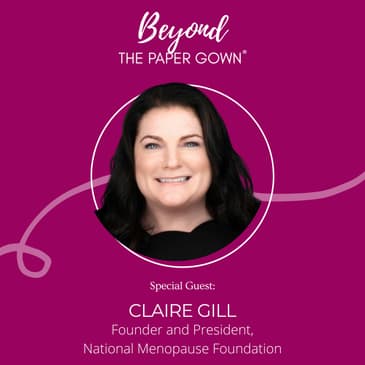

In this enlightening episode, we sit down with Claire Gill, the founder of the National Menopause Foundation and CEO of the Bone Health and Osteoporosis Foundation, to demystify menopause and bone health. Claire breaks down complex topics into understandable insights, discussing how women can navigate menopause in the workplace, effectively communicate with their doctors, and choose the right menopause products. She emphasizes the importance of early education on bone health to prevent osteoporosis and shares practical advice for women of all ages on maintaining strong bones. This episode is a treasure trove of information and encouragement for women looking to take control of their health and wellness during midlife and beyond, presented in a way that's easy to grasp and empowering.
Please visit Beyond the Paper Gown to join our community and to learn more about achieving your optimal health.
[00:00:00] Welcome to Beyond The Paper Gown, I'm Dr. Mitzi Krockover. Today we're diving into a topic
[00:00:13] that touches the lives of countless women navigating midlife. So let me ask you, have
[00:00:19] you been experiencing hot flashes? Moot swings, changes in your skin and hair or even challenges
[00:00:26] in your intimate life. And are you wondering where to find reliable information or a healthcare
[00:00:32] provider who understands and can recommend solutions? Well our guest today, Claire Gill, faced
[00:00:38] the same questions and she took a remarkable step forward by establishing the National
[00:00:44] Menopause Foundation. This foundation focuses on supporting women seeking to understand
[00:00:49] the myriad changes that come with midlife, from finding help to successfully managing
[00:00:54] the transition at work. And in her dual role as CEO of the Bone Health and Osteoporosis
[00:01:00] Foundation, Claire also tackles the critical aspect of bone health, including its connection
[00:01:07] of osteoporosis to many women's menopause journey. We'll explore how these incredible
[00:01:12] organizations educate consumers, healthcare providers and policymakers about this phase
[00:01:18] of life. We'll also talk about the importance of education, programs and policy in addressing
[00:01:24] menopause and osteoporosis challenges. I am so glad you're here as we discuss how to
[00:01:30] make the most of these services offered by these organizations and what steps you can
[00:01:35] take to advocate for yourself, be it in your doctor's office or on Capitol Hill. And
[00:01:42] just a reminder that this podcast is for informational purposes only. Please consult your healthcare
[00:01:47] provider for any personal issues you may have. However, I encourage you to share this
[00:01:52] information with your healthcare provider so that you can have a robust conversation
[00:01:57] focused on your own healthcare needs.
[00:02:06] I am very happy and excited to welcome our guest today. You're going to get kind of
[00:02:19] a toofer. We're going to certainly talk about menopause, but we also are going to slide
[00:02:25] right into talking about osteoporosis. Let me welcome Claire Gill. Claire, please go ahead
[00:02:31] and introduce yourself. Hi, so nice to be here. I'm Claire Gill. I'm the founder and
[00:02:36] president of the National Menopause Foundation. And I'm also the CEO of the Bone Health
[00:02:41] and Osteoporosis Foundation. Wow, those are two big hats. So let's talk about the
[00:02:50] menopause foundation first and then we'll talk a little bit more about the osteoporosis
[00:02:56] foundation later on. And so how did you come to found the menopause foundation?
[00:03:03] Yeah, so it was very interesting and it's really very just like happens dance that this came
[00:03:12] to my attention as far as a real need in the nonprofit space. So I've been working in my
[00:03:18] background is actually marketing public relations and I have done that for more than 20 years
[00:03:23] in nonprofit and for-profit companies. And I was working in a nonprofit in the health
[00:03:30] space when it became to my attention that there was no patient advocacy education organization
[00:03:38] dedicated to menopause. And I was at the life stage where I was a parent and a puzzle and
[00:03:47] you know interested and confused about what was happening in that stage of life myself.
[00:03:54] And so did a little more background checking and worked with some of my close medical advisors
[00:04:01] and decided that this was a real gap and a real need. And so at the end of 2019 we launched
[00:04:09] the National Menopause Foundation and we've been really really pleased to see that menopause
[00:04:17] is getting much more awareness and attention these days in just a few short years.
[00:04:23] What does the foundation do? What are some of its programs and activities?
[00:04:28] Yeah, well our mission was we launched the organization was be attested in relatable
[00:04:33] resource to raise awareness and understanding of menopause through education, activism
[00:04:39] and community building. So all of our activities really center on those three areas. And basically
[00:04:46] we wanted to start with the education, providing a place where anyone can go to get information
[00:04:54] about menopause and the journey to and through menopause. And that website is the National
[00:05:01] Menopause Foundation.org. From there we also have a podcast called The Positive Pause where
[00:05:07] we take a look at one of those topics that are most important to women as they make that
[00:05:12] journey through menopause and interview experts around the symptoms of menopause but also
[00:05:18] empowering women to explore this stage of life in a very positive way. We also have a newsletter
[00:05:25] and we worked with several partners to come up with different types of programs that we
[00:05:30] felt were of most need and that could make the most difference for women as we try to improve
[00:05:37] women's health at midlife. So we last year partnered with Bank of America on a menopause
[00:05:43] in the workplace study, it's called Breaking the Stigma and it looked at what both employers
[00:05:49] and employees felt and experienced about menopause and where again were the gaps in what
[00:05:57] the people's knowledge was about menopause and also getting at what women's needs were
[00:06:02] to feel more secure and more appreciated and more understood in the workplace during this
[00:06:09] time of life. And then from there we created tools and resources that both women and employers
[00:06:15] can use to be able to have the conversation within the workplace about menopause and then
[00:06:22] again just a natural stage of life but one that does come with complications that people need
[00:06:28] to be aware of and so we were pleased to do that. We also just launched the Women's Midlife Health
[00:06:35] Policy Institute and we'll be doing a Women's Health Summit in March of this year bringing together
[00:06:41] leaders in clinical area, in business area and in the policy area to talk through not just menopause
[00:06:50] but all of women's midlife health and how can we advance it by collaborating and working together
[00:06:57] on a real agenda for what it's going to take to improve women's midlife health.
[00:07:03] So those are some of the things that we want to be on at least.
[00:07:07] Wow those are terrific and you know it really speaks to my heart because one of the things
[00:07:14] that I've always wanted to focus on is the multifactorial impact of various factors that impact
[00:07:25] on women's health and you just named a number of them. Not only you know just the physiological
[00:07:31] things that are happening to our body but also the impact at work and how that can
[00:07:37] make an impact as well as what we do know now maybe even in technicolor that policy really makes
[00:07:46] a difference in terms of how we get our health and healthcare and are able to be healthy.
[00:07:54] One of the other things I just wanted to add to that where you talk about that area is family life.
[00:07:58] We don't talk enough about the journey that women are experiencing and how that impacts the people
[00:08:05] that not only we work with but the people we know are in our relationships and I think that's an
[00:08:09] important aspect to talk to as well so that women know it's very normal to have those changes
[00:08:14] happening within your family and your relationships as well.
[00:08:17] That is so very true. Let's go back to the Bank of America study. What were some of the headlines?
[00:08:25] The headlines were really that what the employer felt they were doing to support women at midlife
[00:08:33] was far exceeded what with a woman and the employees were experiencing. Only 8% I think of women
[00:08:41] said that they felt comfortable or able to talk about menopause within their workspace and I think
[00:08:48] something like 30% of 30% to 40% of employers said they had support for women at midlife.
[00:08:56] And so again just that differing of where the two sides were on the comfortableness,
[00:09:04] the culture to talk about menopause and menopausal symptoms was very very different.
[00:09:11] I think that was really the biggest headline for us is that it's far off and then a lot of the rest
[00:09:15] of the insights from the study focused on what women wanted as far as support within the workspace
[00:09:24] and I think the good news is that there are things that we can take advantage of that companies
[00:09:31] aren't doing but that menopause is not named as one of the reasons you can benefit from one of
[00:09:37] those accommodations that are already in place. So when we think now about telework or flexible
[00:09:43] hours those things have become a little bit more mainstream in our post-COVID, mid-COVID wherever we
[00:09:51] are you know lives and so but it's not known that or stated that if you were experiencing
[00:10:01] you know symptoms of menopause you are allowed to benefit from those accommodations that are
[00:10:07] already in place in many workforces. So really it's more of a raising awareness and education
[00:10:12] within businesses about the needs of women at menopause and again fostering a culture where they
[00:10:19] feel confident to be able to mention menopause and to not have that negatively impact them based
[00:10:28] on again well if you're talking about menopause we can get a general gauge of your age you know
[00:10:34] again unless it's surgically induced or surgically required menopause then that's something
[00:10:41] that women are concerned about these days so we have that twofold thing it's a health issue
[00:10:45] but it's also an age issue. Well but you know it's really interesting when you say that because
[00:10:51] when the symptoms are more problematic it's really perimenopause. That's right. You know and
[00:10:59] that can start as early as you know it can start earlier than 40 but you know around 40 plus so
[00:11:06] you're really not that old you know but I do resonate with your comment that there is ageism
[00:11:13] because we don't think anything for example of seeing a 70-year-old male executive but
[00:11:20] we're not really seeing the same with respect to women. But that's more of a better
[00:11:25] state. In their 70s and 80s like you said that's very normal and there's like there's just no way
[00:11:32] that a woman would be considered you know for those positions at that age so you're right that is
[00:11:38] it. And you're right too about when the menopausal symptoms start and as we have changed a little bit
[00:11:46] if you think about the demographics of this of our society and even some of the societal trends
[00:11:51] where women are having children later in life you know rather than 20s it's 30s for me and many
[00:11:57] others it was early 40s and then you immediately go into perimenopause it's very confusing. It's like
[00:12:04] I just had a baby now telling me I'm perimenopausal so they're like you said we don't feel or think
[00:12:10] that we're old but when those symptoms start and even at 45 as we say well that's not old but if
[00:12:15] you're starting to exhibit its symptoms of menopause then there is the ages and attached to that that oh
[00:12:21] she's she's reacting to that and this is you know what's happening. And so we have a lot to tackle
[00:12:26] just from a societal point because again it's a healthy perfect stage of life if it's basically saying
[00:12:34] that we're living long enough to experience this stage of life which is you know really amazing when
[00:12:39] you think that you know how far we've come as far as extending the lifespan of people these days
[00:12:47] that's all good news and we just need to make sure that these medical questions that come up and the
[00:12:53] things that we're experiencing kind of catch up with where we're going. Sure and to your point I
[00:12:59] too had my second child in my 40s and I was having all of these symptoms that I assumed were part
[00:13:05] of the postpartum period and I'm a women's health expert. Yes.
[00:13:11] quote unquote but when you're in the midst of it you just don't know that so I would assume that
[00:13:16] even just increasing awareness in the workplace for women to know that you know they're not
[00:13:22] going crazy they can manage this. And so what comes up though is that women say I don't want to be
[00:13:30] the one that out you know that raises my hand and talks about this to my employer. So what are your
[00:13:36] suggestions that I know you said you had some tools from this study about how women can advocate
[00:13:43] for themselves without kind of putting themselves on the line. Well that's a very important point
[00:13:48] and that was the other thing that came out of the Bank of America study we did the Breaking the
[00:13:53] Stigma study is that it can't be incumbent on the woman to initiate this conversation. It really
[00:14:01] needs to be a thing that the corporate you know workforce puts into place and then allows that
[00:14:10] conversation to happen. So that was really stressful too because like you said it's no woman's going
[00:14:15] to jeopardize her job or her position by raising her hand and saying oh I'm you know having a hot
[00:14:20] flash I need to step out of the room right now. We need to have that already in place where
[00:14:25] women feel comfortable to be able to make adjustments as needed so that was one of the things and the
[00:14:31] tools in place are there's several things that are coming out which is terrific because thankfully we
[00:14:37] are no longer the only nonprofit in the menopause space and not the only nonprofit in women's health
[00:14:43] who were talking about menopause as part of overall women's health. So the Bank of America
[00:14:50] and National Manopause Foundation did create a sort of guide for the managers and the women to talk
[00:14:59] about how to initiate the conversation and that's available like free to download. We also created
[00:15:06] for women a symptoms checklist, a menopause symptom checklist. I know we'll talk a little bit more
[00:15:11] about what those some of those symptoms are but when we think about it again in a society and what's
[00:15:16] joked about are those hot flashes right? Oh women are experiencing the hot flash but there are so
[00:15:21] many symptoms of menopause. We focus on 34 of the common but in a format that we can
[00:15:30] track what symptoms we're experiencing, the duration of the symptoms and the intensity
[00:15:36] and to use that to have a conversation with the healthcare providers about what we're experiencing.
[00:15:41] And I know we've been focusing on workforce but the other big education area is with healthcare
[00:15:46] providers. There are far-shifu experts who know how to treat women at menopause. Women are experiencing
[00:15:56] these symptoms and they bring it up to their doctor and then they're dismissed. Either you're too
[00:16:01] young for this to be happening because perhaps you are in your early 40s and the doctors aren't aware
[00:16:06] about how early some of these these symptoms can happen or they get it's just menopause
[00:16:14] and they're sent on their way without any discussion about how to treat the symptoms of menopause.
[00:16:21] Some of it can be very severe and very debilitating unfortunately for women, other women
[00:16:27] have no bad experience with it. So it really is a very personal and individual thing and so we need
[00:16:33] to provide these tools for women again track what's happening in your body and as these changes
[00:16:38] are happening and then being able to take that to your you know your healthcare provider
[00:16:44] That's terrific and we will have links to all the resources that you're talking about
[00:16:48] in our podcast notes so thank you for that. Before we leave the workforce issue
[00:16:54] what would be the argument for the bottom line benefit for these employers even if they
[00:17:00] over and above it's the right thing to do? Yes, unfortunately in our society it's the right
[00:17:07] thing to do is not the impetus that we need so there is always that economic aspect to business.
[00:17:14] So it's twofold one is we do have plenty of data that shows the loss of productivity
[00:17:23] that businesses are left with when women in the workforce are experiencing a
[00:17:28] menopausal symptoms and I sort of have a love hate relationship with those statistics
[00:17:34] because what we need in addition to what the loss is that happens when women
[00:17:41] of our experiencing the menopausal journey what we don't have in data is what we bring
[00:17:47] to businesses at this stage of life and I think we need both of those to make an accurate
[00:17:53] comparison as to why businesses should pay attention to women at men life.
[00:17:58] Again when we say the average age of a woman entering menopause is 51 in the United States
[00:18:06] but those symptoms begin much earlier and we're really an oftentimes at the height of our careers
[00:18:12] then so the capacity that we bring to our employers as far as our knowledge or expertise the
[00:18:19] ability to make decisions be able to perform in a timely manner the ability to manage.
[00:18:25] We need to quantify those because what we've done is started with oh women are missing this many
[00:18:31] days of work due to these symptoms and you know some statistics are up to 30% of women leave
[00:18:38] the workforce at this stage of life and many will then say it was due to symptoms of menopause
[00:18:44] and not feeling capable of being able to perform at the level that they were performing at
[00:18:49] because of the symptoms and so we need that balance so right now we do have the look you're
[00:18:55] losing some of your best employees because they're leaving the workforce and you have to replace
[00:18:59] them and retrain them etc so retention of employees retention of some of our best
[00:19:04] and most capable employees is really the bottom line incentive I think for most
[00:19:10] companies to consider addressing this in addition to it's the right thing to do.
[00:19:16] I want to underline the importance also that I'm sure that you're addressing and that is not just
[00:19:24] to educate women but certainly all the people around them and because I do think that if
[00:19:33] everyone understands what the issues are then it makes it a lot easier. I'm going to add a little
[00:19:39] dendom because I had a guest on who from the UK who has a menopause education program she goes
[00:19:47] into the schools and teaches kids about menopause and it was a light for me that says I have two girls
[00:19:56] in their 20s. I didn't even think about talking to them about menopause you know shame on me
[00:20:01] so I think to the extent that we can increase everyone's awareness it's valuable.
[00:20:10] You brought up an interesting point about education in schools and such and it's absolutely true
[00:20:16] and I talk about this all the time we learn about puberty and we learn about reproduction
[00:20:22] in school and yet that's where it stops there's no conversation we don't even do that very well right
[00:20:28] about but there's but there's basic education and I share this often so again later in life mom
[00:20:35] as we're called my daughter is only 12 now and last year in sixth grade they were learning
[00:20:41] about puberty and so she raised her hand class and said and at the end it's menopause and this
[00:20:50] is what happens. Oh that bless her. Well that's great like we said one school with why isn't that part
[00:20:55] of the curriculum right to be able to discuss the full life spectrum and that again if we want
[00:21:00] to we get to do a whole nother podcast about oh women's value ends when our reproductive years ends
[00:21:06] and therefore why teach people about what comes at the end. I do think we will get to that stage
[00:21:12] but there's sometimes it's overwhelming let me see I have to say because I think
[00:21:18] there's just basic education that women who are experiencing menopause need to get right now
[00:21:25] about what's happening to our bodies that we don't know about so I sort of feel like that's the
[00:21:30] immediate audience and then clinical providers so that when they are if they do figure out oh this
[00:21:36] is what's happening to me and this one when they can go to a clinical provider who doesn't tell them
[00:21:40] I won't prescribe hormone replacement therapy or menopause therapy because of a study that is long been
[00:21:48] corrected the Women's Health Initiative about the risks of HRT and then there's again the immediate
[00:21:55] the workforce issue that we have to address for the women who are currently experiencing it so I
[00:22:00] feel like we're in stages right we have the good news is we have now attention with even celebrities
[00:22:06] on Capitol Hill and celebrities on television talking about the fact that they've gone through this
[00:22:12] journey and they didn't know and why don't we know and asking all the same questions that we're
[00:22:16] talking about and then that's important that needs to be the general awareness but it's still a bubble
[00:22:25] right there's still only certain levels of women in our country who are having this conversation
[00:22:30] and we need to make sure that there's access to that information for all women and I said the
[00:22:35] same thing about our Bank of America study I love that we did the study it was so important and
[00:22:40] we're learning so much and we're hopefully going to take some really positive steps to
[00:22:43] continue to work to change that but that's really only talking about women in offices right
[00:22:49] we haven't we're not addressing hourly wages or the hospitality industry or you know all of those
[00:22:55] other women who are working moms at home you know all of that needs to be addressed as well
[00:23:01] so while you know we pat ourselves on the back for coming forward and having these advanced studies
[00:23:06] and working on these guides for the workforce which is incredibly important there's still so much
[00:23:10] work to do even within that space and so I think it'll be a while honestly before we turn our attention
[00:23:18] to getting menopause added to the curriculum of every health program and grade school you know
[00:23:25] across the country but we will get there and how are you addressing getting education to
[00:23:33] making it more accessible to women well the we right now are working on a self-directed learning
[00:23:41] program that women can get at their convenience about the symptoms of menopause because great
[00:23:52] information available you know on our website and on other websites and there's great webinars
[00:23:56] happening but many of the women that we talk to and I know even how I like to learn is a little bit
[00:24:01] more of a deeper dive into well why is this happening to my body and well what is the research that
[00:24:06] shows that this is the right treatment etc. And so we're creating that curriculum in self-directed
[00:24:12] learning modules we're going to have four initial modules we're going to work through all the
[00:24:17] symptoms of menopause that we focus on in the checklist but the first four are our basic
[00:24:22] menopause 101 vast of motor symptoms which are technical clinical term which just means hot flashes
[00:24:29] in night sweats those are the symptoms that we call vassar motor symptoms sleep disruption
[00:24:34] which another big one for as far as the number of people who experience that symptom going through
[00:24:40] menopause and then things that have to do with the pelvic floor and the things that we experience
[00:24:46] as far as urinary infections vaginal dryness sexual health issues all of the things that we don't
[00:24:54] talk about and don't help women understand so those will be the first four modules that we
[00:24:58] will launch hopefully at the end of the first quarter of this year and then we'll again start building
[00:25:04] onto all of the others and as I said the basic information is available on our website but those
[00:25:10] modules will be available and we're also partnering with other companies to do local tours
[00:25:15] local events that will be particularly focused on democratizing menopause and making the information
[00:25:25] available in communities and in places that we're not normally having these conversations so
[00:25:32] we want to go to churches and community centers and you know areas that any women can access
[00:25:37] to find out information about her journey which is also really interesting about women and our
[00:25:46] uniqueness and our power is the menopausal symptoms actually different depending on our ethnicity
[00:25:52] and so that's just right in my mind that was my next question yeah that's something really important
[00:25:57] for people to understand and so again it's really important to speak to people within their
[00:26:02] community from people they trust and provide access to local experts that they can follow up with
[00:26:08] I've been to some fantastic events and again i'm so excited that this is you know becoming
[00:26:15] something that is more mainstream and that there are these events happening both like I said
[00:26:19] there's celebrity companies that are now producing events or other great nonprofits we work with
[00:26:25] they're preventing events but you know again they think there's a cost associated with them and
[00:26:31] you know a time commitment like you know again having it during the middle of the day so
[00:26:36] that again is accessible to certain women but not all and so we're trying to work with
[00:26:41] and focus on partnerships where we can get into community and provide either free or very low-cost
[00:26:48] events where again local experts are made available to help women and so we're
[00:26:52] hope to be launching that tour this year um and so lots of really important things happening and I
[00:26:58] know it's like well they should have been been going on for years but remember we had the pandemic
[00:27:02] we were all indoors for a number of years and so we're now just able to take this from a virtual
[00:27:09] setting into live settings around the country that's very exciting you also mentioned that you do
[00:27:17] some policy work I'm very interested in that yes so again one of those gaps that we saw strategically
[00:27:25] as we thought through what do we need to do to advance women's health and particularly at midlife
[00:27:32] was um this need to both do top down and bottom up that's what we call it you need the grassroots
[00:27:39] effort from women demanding that there be attention paid to midlife women's health but then you
[00:27:45] also have to start with the federal agencies and congress and making sure that they're aware and
[00:27:50] that they too are advancing some of these so the good news there lots of activity happening as well
[00:27:57] there are several members of congress um who are enacting and putting forward legislation to address
[00:28:05] the menopausal journey and both from a research aspect but also from a access to care
[00:28:13] that the other big thing is we have treatments available many of them are generic
[00:28:19] that women have access to that should have access to and yet they they aren't getting access to
[00:28:24] and it's a very complicated situation for why that's happening as I mentioned earlier a lot of people
[00:28:32] or you know even clinicians are still confused about hormone replacement therapy and
[00:28:37] I should probably say what that confusion is just for those listening that may not be aware but
[00:28:41] the women's health initiative which was so fantastic and is fantastic and continues to this day
[00:28:47] was the first real federally funded study that looked at women's health and a fascinating fact for
[00:28:54] me is that it was only 30 years ago last year where it was federally mandated that women be included
[00:29:01] in clinical trials prior to that just for all of us to know studies were done on men and then they
[00:29:07] just applied it to women because we white men yeah we were too complicated to study too expensive
[00:29:16] to be involved in it so really it was only 30 years ago that it was federally mandated that
[00:29:20] in any federal research women be included in the clinical trials so the women's health initiative
[00:29:25] obviously then was another giant step forward where it was looking at and tracking longitudinally
[00:29:31] long-term women's midlife health well sorry women's health what happened then was when they
[00:29:36] were looking at hormone replacement therapy some big headlines came out and it's based it said
[00:29:42] that women on hormone replacement therapy had an increased risk of breast cancer
[00:29:46] and heart disease of two of many and that those were the headlines and for those of you who are
[00:29:53] my Joe Harat midlife or beyond you probably remember the big discussion about it and then again
[00:29:58] everyone went off hormone replacement therapy because oh we stopped prescribing it and I just
[00:30:03] you know and then I started feeling guilty exactly it was just a cold hard stop the good news on
[00:30:11] that is again the study continues and then we learn more and now they have come forward and made
[00:30:18] the people aware of that oh there was a flaw in that study when it was when they the announcement
[00:30:23] or the outcome of it when they said you know that hormone replacement therapy was a risk
[00:30:28] that was looking at women who were on hormone replacement therapy like when there have been
[00:30:32] 60s and beyond well for those of us who would be starting hormone replacement therapy at the
[00:30:38] onset of manopause like in the symptom time you know paramanopause manopause there was no increased
[00:30:44] risk of either of those diseases so as you said we stopped cold turkey and that whole generation
[00:30:51] of women suffered through those symptoms and like you said lost bone density other things that
[00:30:57] we would have benefited from had they been on hormone replacement therapy and now we know that this
[00:31:01] is the case but the problem is there's no big headlines there's no giant campaign telling people
[00:31:09] hey we now know this from the study she'll find both women and many clinicians still will not
[00:31:17] consider taking any type of hormone replacement therapy because of the risks that were associated
[00:31:22] with that study which we now know were not related to women actually entering manopause so that
[00:31:29] again when we talk about policy stuff and things yes policy is one aspect of it but it is not the
[00:31:34] only reason that women aren't accessing the treatments that are readily available and effective
[00:31:40] you know we have a lot of work to do again on those education but back to the policy just even having
[00:31:46] women's midlife health the menopause be mentioned in legislation is super important and one of the
[00:31:51] ones that we were very pleased to be part of with the another nonprofit that is focused on menopause
[00:31:57] called let's talk menopause we partnered to how bring forward a menopause research and equity
[00:32:06] act that to female congresswomen brought forward that Clark in New York was the spearheader of this
[00:32:15] legislation and there are many many co-sponsors and again with this podcast you can get access to
[00:32:23] you know the legislation and who's involved and that basically said directing the national
[00:32:28] institution of health to direct some of their funding towards studying research gaps for women
[00:32:34] at menopause and that's really really important since then there are several more members of congress
[00:32:43] who have put together very interesting very in-depth legislation that is also looking at other
[00:32:50] areas workplace access etc in addition to research that is so important and so all of that is very
[00:32:57] good news and we're going to kind of continue to follow that and see where that goes but part of
[00:33:02] the impetus of it starting the women's midlife health policy institute was to bring together all
[00:33:10] the organizations and stakeholders focused on women's health at midlife across the board not just
[00:33:15] menopause but heart disease bone cancer diabetes fibroids you know there's so many things that change
[00:33:24] and have an impact on us as we you know journey through midlife but that collaboration portion is
[00:33:31] really key when it comes to making a difference the whole were stronger together you know kind of
[00:33:36] motto is is really what's what's meant for that absolutely if an individual is listening today and
[00:33:45] they said god i want to do something how can i help push this forward what would you suggest to
[00:33:52] them in terms of some of this legislation should they get in touch with their congressperson yes
[00:33:57] I mean there's several ways to get involved in general in supporting and educating about menopause
[00:34:01] across the board and on the legislative side absolutely get to know your members of congress offices
[00:34:09] call them we talk about i go i'm just outside Washington DC i do spend a lot of time going doing
[00:34:14] education you know programs on the hill and i'm told by all of the staff they prioritize what
[00:34:22] they're focused on based on their constituents interest and outreach so we need to be calling our
[00:34:28] members of congress getting on their list that they know oh Claire gale is called again and she wants us
[00:34:35] to focus on this particular legislation again it really matters i mean i can bring all the best
[00:34:41] experts to Washington and to sit with them and i do but obviously the way congress works is they
[00:34:49] are responsive to their voters and so your power as a constituent from you know
[00:34:56] demoing to your senator and to your member of congress is far more influential than mine going
[00:35:02] to your member of congress and senate right so yes to do that again i mentioned let's talk menopause
[00:35:08] our colleagues in new york they actually if you go to their website they we have a sign-up sheet
[00:35:14] where you can be involved in it'll help direct you and let you directly contact your member of
[00:35:19] congress from their website but you can just google your member of congress and get both their
[00:35:26] district office information and they're Washington dc office information and i would say email and
[00:35:31] call and just let them know get on their radar and say hey i'm a woman in your district and i vote
[00:35:37] and this is what's you know important to me getting involved in other things too is really important
[00:35:42] we are um work often with medical education and training programs for health cleric professionals
[00:35:48] where they want the patient voice they want the woman's voice to be included in that training
[00:35:53] and we tap into the women that are part of our network and they volunteer or not to
[00:35:59] that's actually sometimes a paid um option where they become involved in sharing their story
[00:36:05] to help educate clinicians so again having that younger woman who said at i went through five
[00:36:13] years of suffering with these things because no doctor even mentioned to me that could be
[00:36:18] menopausal i was checked for dementia i was checked for cancer i was checked for this and then
[00:36:21] and then it turns out i was in pariamanapause and i really just needed hormone replacement therapy
[00:36:27] and so hearing that directly from women is super important so they can just email info at national
[00:36:35] menopausefoundation.org and express their interest in that and we again sort of coordinate how to
[00:36:41] share those stories with medical providers um and and get involved so like i said lots that we can do
[00:36:47] to immediately engage um and and create that space for uh raising awareness and influencing
[00:36:55] legislation that's coming down the pike. Terrific when do you sleep?
[00:37:01] well you know we don't sleep at midlife that's one of the symptoms.
[00:37:04] so my eyes won't put your word put it toward. we can be very productive at two o'clock in the morning
[00:37:12] that is very true so i want to talk a little bit because you know i've been immersed in this
[00:37:18] ecosystem and there's been so much going on in the last few years especially with menopause
[00:37:25] programs for profit menopause programs services devices supplements and all of that so talk a
[00:37:34] little bit about some of the things that you're really excited about then also how do consumers
[00:37:42] make sense of the quality and the effectiveness of some of these things.
[00:37:46] that's a very very good question. there are lots of um companies now interested in
[00:37:57] this particular life stage because it's been already excited on the economics being tagged as a
[00:38:04] multi-billion dollar potential industry. the first foray into it where people were really
[00:38:10] being vocal about it tended to be around skin care which i find particularly interesting and
[00:38:16] funny in another statement to our society right that that's how we we tackle what women are
[00:38:21] experiencing at midlife is you know what do we look like. i would say skin issues are an absolute
[00:38:28] symptom and dry skin is a symptom of menopause and the impact that that loss of estrogen has on our
[00:38:35] you know our physical physiology is just incredible so dry skin is an issue so you will find a lot
[00:38:40] of things out there as far as creams and moisturizers etc etc it's up to you on those
[00:38:46] instances to judge for yourself whether or not you need something specific to menopause
[00:38:50] or whether the moisturizer you generally use will also help with your dry skin so i don't see
[00:38:56] just be cautious on that. the thing i'm most excited about is and when probably the least exciting
[00:39:04] for the population though are the therapeutics i mean like i said the fact that we now know that
[00:39:08] hormone replacement therapy can address so many of these major debilitating symptoms that we're
[00:39:14] having that's really exciting to me and making more women aware of the fact that that's available
[00:39:19] and again because with hormone replacement therapies run around for so long it's almost always
[00:39:23] you know genetic and so and there's so many different delivery mechanisms for hormone placement
[00:39:29] it can be a patch it can be you know a pill it can be a topical ointment you know there's so
[00:39:34] many different ways of women getting it and then it really is up to you and your health care provider
[00:39:38] to choose what works for you best and what do you want an experiment with and that's really great
[00:39:42] but the other aspect of that is for those who really can't do hormone replacement therapy
[00:39:48] for whatever medical reasons we now have non-hormonal solutions that are on the market
[00:39:54] and that's really important and um one of the the newest ones just got approved by the FDA last year
[00:40:01] so really again there's there's so much need and we just haven't had these and the fact that
[00:40:06] that hadn't been in the you know that there's not tons of these options and the pipeline coming
[00:40:09] through is really you know disappointing and the fact that now we have those is really terrific
[00:40:14] so there are there are one that's already done just been approved by the FDA and another that is
[00:40:23] you know finishing its clinical trials with the FDA that are both again non-hormonal
[00:40:30] treatments for vascular motor symptoms and I think can really exciting as far as devices and things
[00:40:37] again new things coming on the market every day that can you know check your temperature regulate
[00:40:43] you know your your pulse you know all of those kinds of things um good and bad right I think it's
[00:40:50] going to be very individual I think some woman will really benefit from being able to have those
[00:40:55] tracking mechanisms that help them you know detect when they're having a hot flash and you know
[00:41:00] provide that opportunity to do well I think you kind of know when you're having a hot flash but this
[00:41:04] is more to help provide some relief as you're as you're starting you know to your body temperature
[00:41:09] is changing maybe and being aware of it and I think some of those are are um are interesting and useful
[00:41:15] one of my cautions would be probiotics there are a ton of probiotics and supplements that have
[00:41:23] are coming to market and are coming to market and the reason that's not that happens so often is
[00:41:29] because they're not regulated by the FDA so their process of bringing to market is a lot quicker
[00:41:36] than it would be for something that was actually regulated by the FDA and um that means there's not
[00:41:42] the oversight that there would be of um of other kind of treatments that would be you would take
[00:41:48] so you have to be very very careful with that and I would say if you're considering it it's still
[00:41:56] important that you talk to your health care provider about the type of probiotic or supplement
[00:42:00] that you're considering um and what the benefits and what the risks are I think one of the really
[00:42:07] terrific ones that again do know harm but actually can do good are sort of the wick clothing
[00:42:13] that we think about that when you're having a flat-fash or a night sweat you know pajamas that
[00:42:18] provide breathability or that that it's almost like the same um the same material that we use for
[00:42:24] sports you know to like take off the sweat as we're working out and stuff like that cooling sheets
[00:42:29] you know all of cooling pillows cases you know those kinds of things that I think were never around
[00:42:35] or never considered before and the fact that those are available to women should they need them
[00:42:42] should they be in a position to be able to get them are things worth considering
[00:42:47] sure and also I think another area that has come into its own perhaps is sexual health
[00:42:56] and so again with a lot of uh menopausal symptoms include what you talked about earlier genital
[00:43:03] urinary and let's just call it vaginal dryness yep but you know when we think about it
[00:43:08] lube has been on the market for decades right and so do we need something specific to menopausal
[00:43:15] vaginal dryness not so sure right maybe you do and if you want to do that that's terrific but also
[00:43:20] again the fact that we don't have that sexual health education for women anyway and men
[00:43:27] and talk about what that is and the importance of that and it's it's interesting because
[00:43:32] I would say of all the events I go to there's there's probably at least three of the sessions
[00:43:38] about sexual health as a symptom and um it's interesting to have that being discussed because
[00:43:45] you couldn't say the word vagina you still can't say the word vagina on television and in other
[00:43:49] areas in many cases and so the fact that we're talking about women's sexual health and pleasure
[00:43:56] and what that means and how how important that is to our overall health and well-being
[00:44:02] is is really fantastic and I think that's a great advancement and we need more of it as we have
[00:44:08] this conversation about what does midlife health mean and going to your point about policy
[00:44:14] and I hear this from entrepreneurs all the time especially in the sexual health area but even in
[00:44:20] just menopausal area as well when they're addressing vaginal dryness is that they get censored
[00:44:27] on social media so they can't even get their products out can't get the education to women
[00:44:34] there are things that are really like you said it's really important to to health from the
[00:44:41] sexual health aspect of it and the benefits of it and that it should be something that is considered
[00:44:46] as part of the what does healthy aging mean healthy aging also includes sexual health and being
[00:44:52] able to explore that part of our you know our journey and our needs is really important and as you
[00:44:59] said yes there's barriers put up everywhere on social media on on television as I said on things
[00:45:05] that you can't do um in can't say and so it was exciting to see a menopause as a super bowl
[00:45:11] commercial thanks to one of the new or um non-human normal placement companies talking about it
[00:45:18] that's a big stride right that's a that's a positive that that was happening and so we just need
[00:45:22] to make that more mainstream and I think that's really part of again what I hope our purpose and
[00:45:28] our journey will be at the national menopause foundation is by the time my daughter is approaching
[00:45:34] this stage of life it should be something that she completely understands and can get access to
[00:45:40] the care she needs and clinicians know how to address whatever symptoms she might be experiencing
[00:45:45] I want that for all women and all people who are experiencing menopause symptoms
[00:45:59] so shifting topics because I want to talk about your second hat and that is as the executive
[00:46:06] director of the boat health and osteoporosis foundation did I get that name you did because I
[00:46:13] know it changed the name we changed the name we branded in 2021 we were the national osteoporosis
[00:46:19] foundation and when I took over as CEO although I'd been with the organization for 10 years uh when
[00:46:25] I when I came on and uh a CEO one of the things again given my marketing and PR background was to
[00:46:32] look at what we've been doing over the past 30 years at the time 30 plus years and what people
[00:46:38] thought of us and looking landscape and it was really interesting to you know do the research and
[00:46:44] dive into all of this opinions in of all of our stakeholders including people who did not know
[00:46:50] of our organization or what we did and everybody wanted to keep osteoporosis in the name
[00:46:56] the feedback we got was they wanted prevention and bone health to be discussed as much as we
[00:47:03] discuss managing the disease of osteoporosis and so that's how we became the bone health and osteoporosis
[00:47:09] foundation so talk a little bit about what BHOF does in its mission so BHOF is the nation's leading
[00:47:17] patient advocacy education organization and bone and osteoporosis in the US and we're a hybrid
[00:47:24] organization in that we are not only the leading patient education organization but we also provide
[00:47:31] continuing medical education for healthcare providers about bone and osteoporosis and so those
[00:47:37] are our two areas of focus as well as policy we also run the National Bone Health Policy Institute
[00:47:44] again knowing that that's the third leg of the stool in what we need to do to make sure we're advancing
[00:47:51] bone health in America so when we talk about the connection between menopause and osteoporosis it's
[00:47:57] that when we go through menopause and postmenopausal women can learn of lose up to 20% of our bone density
[00:48:06] in the first five to seven years postmenopause so one of the things we truly are at greatest risk for
[00:48:13] as we approach menopause is osteoporosis and I think that's something that so many women who
[00:48:22] have osteoporosis say to me as a you know on the see as a CEO of BHOF why didn't I know
[00:48:29] why didn't someone tell me when you know at menopause that I needed to change my diet and get more
[00:48:34] calcium and vitamin D and work on these weight bearing exercises and do all of these things and
[00:48:39] we all have that same question too why don't we you know currently you can get a bone density
[00:48:46] scan as a woman at age 65 if once you're on Medicare it's free to all people on Medicare
[00:48:54] and that's terrific but by 65 you are likely you know in a matter of either already osteoporodic
[00:49:01] or in a much higher risk for osteoporosis and so we are working to change some of the
[00:49:09] the ways that we address screening for osteoporosis in bone health on the policy side lots for people
[00:49:16] need to be involved in saying you need to pay attention to the you know bone health and osteoporosis
[00:49:22] and fractures um to their members of congress but those are the things that we're working on that's
[00:49:27] what the organization does I feel like there's so many connections between that menopause again
[00:49:33] the basic education and awareness about how our bone and structural are you know skeletal
[00:49:37] health works something that many of our clinical experts have said was as osteoporosis is a
[00:49:43] pediatric disease that manifests as we age because we build the densest strongest bone we're going to
[00:49:52] get by the time we're in our mid-twenties and that's why we need to tell the tell kids
[00:49:59] that even though they may or may not listen because if you miss it by 30 then exactly then
[00:50:05] you're already deficient and then the body it's a living tissue that remodels throughout our lives
[00:50:12] you know so I think people know like your skin you know you slump the skin you get new skin
[00:50:16] it regenerates so do our bones and that remodeling process is healthy and happens throughout our life
[00:50:24] it does slow down a little bit as we age so we don't build bone as fast as we make bone and so
[00:50:30] sometimes that is why people think oh it's just a normal part of aging no that's minor it is much
[00:50:37] more impacted by people who have both controllable and uncontrollable rexpectors and so like you said
[00:50:45] really important to pay attention to if you're you know at a life stage where you have grandchildren
[00:50:51] your grandchildren need to be getting calcium and they need to be doing weight bearing exercise
[00:50:56] jumping running all the things that we did you know before we got on computers and just played on
[00:51:00] iPads or games and stuff you know they had to do that to be that and then again we built
[00:51:05] throughout our lifespan and then bringing it back to our menopause discussion the reason people think
[00:51:10] bone and osteoporosis is a woman's disease is because it happens more rapidly and more frequently
[00:51:18] to women due to the loss of estrogen at menopause for men it it's absolutely a men's condition as
[00:51:24] well it just happens a little bit later in life because they don't have a huge drop off in progesterone
[00:51:29] the way we do of estrogen and so those are the kinds of things that we need to pay attention to
[00:51:35] and another reason why again I think the collaborative look at women's health is so important
[00:51:41] because all of these things play from on one another if women were getting the estrogen they needed
[00:51:47] at the onset of menopause they would be continuing to build their bone strength and maintain
[00:51:53] their bone strength for a lot longer then we currently have it because women aren't taking any
[00:51:59] estrogen replacement and so it really is important that we work together to figure out how do we
[00:52:05] advance all women's health at midlife and make sure women are aware of all of these different
[00:52:11] conditions that play such an important role in active healthy aging and then there's other things
[00:52:19] too as far as what we know is good for our overall health and I say this too I need to practice
[00:52:27] what I preach but exercise movement healthy eating all of those things play such an important role
[00:52:37] in our health and adjusting to every stage of life including menopause they'll really have to pay
[00:52:45] attention to it and I think if we do again if we do those things there are many many ways that we can
[00:52:52] address the menopausal symptoms that we're having it doesn't mean it's going to clear them up entirely
[00:52:58] but it will help you manage and that's what it's all about right you know being productive and healthy
[00:53:04] and living through it and being able to manage whatever it is you're experiencing so I would
[00:53:09] encourage women to first look at all of those those habits those healthy habits things that we maybe
[00:53:15] have let slack or that we just like me need to put into practice and do those things and then again
[00:53:25] if there's you know continuing of symptoms that are just really debilitating to please please seek out
[00:53:33] experts who can help you to address them because there's no first look there's no prize for suffering
[00:53:40] and there's no need to suffer so as we're wrapping up what did I not ask you that you wanted to make
[00:53:49] sure our listeners were aware of well we covered a lot menopause and we could probably do several more
[00:53:58] obviously on these topics so I would say there's nothing that you didn't ask I would just like to
[00:54:03] reinforce for women that you know menopause is a natural stage of life it is not something to be
[00:54:09] embarrassed or shamed by regardless of whatever society tells us about aging it is a spectacular
[00:54:16] time of life and you will hear more and more from women talking about which I love to see and I've
[00:54:21] just was watching so many influencers and celebrities talking about man how great they feel at this
[00:54:30] stage of life I think Jody Foster just did it Michelle Obama just did it really recently talking
[00:54:34] about this is an amazing life stage and so try to keep that in mind as you approach this stage of
[00:54:41] life that it is again there are there are so many positives that come with it in addition to the
[00:54:48] symptoms that we keep talking about and then you know again to try to find a trusted healthcare advisor
[00:54:56] who is you know really will listen to you about your symptoms and help you address them if you are
[00:55:02] suffering again there's no need to suffer and becoming aware in general of what's happening
[00:55:09] to your body at this stage of life and again on our website you can see those symptoms checklist
[00:55:14] and know that you're not alone we didn't cover so many of the things that you know women talk
[00:55:20] about when we talk about brain fog or anxiety and depression where you've never had it in your life
[00:55:25] you're not that type you know you never been an anxious or depressed person and all of a sudden
[00:55:29] you're having these feelings and wondering what's happening to me and all that's happening is
[00:55:35] you're going through the next life stage um so I think just knowing what to expect knowledge is power
[00:55:43] right we talk about that all the time in so many things and it's the same with this learn to
[00:55:48] know your body and what's different in your body and then being able to address that and I hope
[00:55:53] women will reach out for all of the great resources that are available to help them with their journey
[00:55:59] well Claire Gill who is the UN Founder of the National Menopause Foundation as well as the executive
[00:56:07] director of the Bone Health and osteoporosis Foundation I can't thank you enough for
[00:56:14] this conversation as well as what you're doing for women thank you so much for covering this
[00:56:20] topic i'm so delighted to have been here
[00:56:28] the transition to menopause can be a significant change for a woman but as you heard from Claire
[00:56:34] Gill today it is not all doom and gloom it can be a wonderful new phase of life with many possibilities
[00:56:41] the challenge for all of us is to manage our symptoms so that they don't get in the way of our
[00:56:46] enjoyment and that means finding solutions and recommendations through our health care providers
[00:56:52] and through other resources such as the National Menopause Foundation and the Bone Health
[00:56:56] and osteoporosis Foundation I encourage you to check out both of these organizations
[00:57:02] and the resources we've provided you in the podcast notes you can also check out our website
[00:57:08] at beyondthepaparegound.com for articles and other resources and while you're there please subscribe
[00:57:14] to our newsletter we not only alert you to our latest podcast but you'll also find information
[00:57:19] on resources articles events and news focused on the health of women you can also tell us what
[00:57:27] topics you want to hear about next by sending an email to infoatwomencenter.com or just ping us on
[00:57:33] the website thank you for joining me today and please take good care
[00:57:50] our episode was produced by Patrick Shabayati and myself and our associate producer is
[00:57:55] Kyla McMillion