
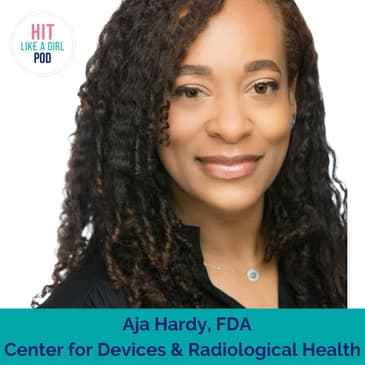

In this episode, Joy Rios delves into the intricate world of healthcare with guest Aja Hardy, a seasoned professional with a diverse background in software development, marketing, and regulatory affairs for medical devices. Aja shares her unconventional journey, from initially aiming to become a doctor to finding her niche in the healthcare industry through opportunities like the American Hospital Association fellowship and a pivotal role at Cerner. The conversation touches on the challenges of balancing work and personal life, the significance of visibility and transparency in the healthcare sector, and the evolving landscape of regulatory processes for medical devices.
Episode Highlights
[00:01:23] Aja Hardy's Background and Experience
[00:05:17] Transitioning to Regulatory Affairs
[00:10:32] Balancing Work and Personal Life
[00:15:20] Importance of Visibility and Transparency
[00:20:42] Opportunity with Cerner
[00:25:15] Learning and Contributing in Different Roles
[00:31:37] Connecting with Aja Hardy
Stay connected to Aja Hardy:
[00:00:00] Hello, podcast listeners! Are you ready to advance your career in health care? Then join us at the Women in Medicine Summit, a two-day power-packed event designed to propel you forward. The HIT Like a Girl Pod crew will be there cheering you on at the Drake Hotel in Chicago,
[00:00:16] happening on September 13th and 14th. Get ready for skill-building workshops, inspiring talks, and actionable strategies to help you thrive in your health care journey. Here's the best part. Use code, referral5 at checkout to snag your ticket at a special discount.
[00:00:32] We can't wait to see you network, learn, and grow alongside other amazing women in medicine. Secure your spot now at womeninmedicine-summit.org and enter the code, referral5, to unlock your exclusive discount. Hello there, and welcome to the HIT Like a Girl show. My name is Joy Rios.
[00:01:01] I'm this podcast host, and this is a place where we talk about the complicated world of health care. I liken it to like a 30,000-piece puzzle that we're all trying to figure out, like, what makes up the US health care system? How can we make sense of it?
[00:01:15] And each one of our guests brings their piece of the puzzle and their expertise to share with our audience. So very excited to have you today as our guest, Aja. Would you please take a moment to introduce yourself and your piece of this crazy puzzle?
[00:01:30] Thank you for having me. My name is Aja Hardy. I have been in, I guess, the health care crazy journal for about like 20 years now. And I like to tell people that I developed software, implemented software, sold it,
[00:01:45] marketed it, and now I'm in the process of regulating with the idea that I'm looking at medical devices and I work currently for the federal government, CDRH in particularly. Okay. So what is your role? That sounds like a lot. I feel like we're going to learn a lot.
[00:02:01] We're going to learn a lot from you today. But as far as the regulatory side of things, what prepared you for that? And tell us a little bit, like, what is involved on that side of things?
[00:02:10] I guess starting from if I know nothing about how a medical device gets approved and then shared out into the world, what's its journey and how are you involved in that? Yeah. Yeah.
[00:02:24] Well, first I have to say that my opinions on my own and not reflective of my current employer previous, so I had a kid that disclaimer out there. But yeah, definitely I can say that I've been on the side working on a vendor.
[00:02:35] So I started my career with Abbott and Pharma and then also in Thurner, which is a healthcare IT company recently was bought by Oracle. So I was creating electronic medical record looking at those solutions, those devices that tied to that.
[00:02:49] And we worked with the federal government and the idea that you were a publicly traded company at the time and we were looking to kind of, how do you put your device? How do you put your solution out to market?
[00:02:58] We have certifications that you have to adhere to. You have to show proof of concept when you're doing a device or IE solution, like a healthcare IT solution as I mentioned. And then there are guidelines.
[00:03:11] So these things that we push out at the A push is out is called a guidance that essentially lets you know what you will have to include in your package in order to submit to us and say, hey, you know,
[00:03:24] I would like to put this device on market and make sure that you are staying close to what you said the device was going to do for the population that you said it was going to be done for. And then it does what it's going to do.
[00:03:36] I mean, you have proof of concept as I mentioned, which typically includes probably a clinical trial or some other form of trial that you've done, which also shows our results. And so when I worked in Thurner, I was on that side where I had to put
[00:03:50] all that package together and had to be sure that we were figuring out if it wasn't a clinical trial, that we actually had tested it in the market and that it did what it's supposed to be doing.
[00:04:01] It worked well with others in terms of other devices and that we had at that time positions or nurses that actually wanted to use it. So we also had a market case because again, I was making a product at that time.
[00:04:16] And so then we submit that package to the government FDA. They take a look at it, they go through it, they scrub it, make sure that everything is where it says it's supposed to go. There's conversations that are had back and forth between the manufacturer
[00:04:30] and the FDA in reference to if there's anything they need to be edited or changed and then hopefully you go through and you get an approval and you get to put your device or your product on market and say that it is quote unquote FDA approved.
[00:04:47] And that's kind of how it works in a nutshell. And if you were going for like best case scenario, how long would that process take? Ooh, that's the tricky question because it depends upon what you're putting out there
[00:05:00] because we have various avenues of, well, I would say various submission processes of the different types of products that you may have and you may want to put out there. And it depends on when if you have any revisions or edits that are coming through that process,
[00:05:16] like once you get in front of us, then it could take quite a bit. We also have a thing called and I didn't notice at the time when I was a developer myself, but like novel medicine, novel devices
[00:05:29] and which means that, hey, this is something totally that we haven't seen before. So we're going to have to take some more time and looking into this. Right? So but it's typically runs the gamut for maybe like up to a year or more about certain things.
[00:05:41] And so we think when you're a consumer, like I'm a consumer as well, but when you're a consumer and you're out there and you're in CVS or if you're in the Walgreens of the world, the right aides of the world
[00:05:51] and you're looking at the devices even over-the-counter stuff, you know, you don't really think about how long it takes for that to physically go and be in front of you. Right? Similar to if you were thinking about even consumer goods, right?
[00:06:03] You know, how long does it take for that cereal to be in place in front of you? You don't really think about that when you're just consuming, but I think that right now we're finding it rapidly the bridge between
[00:06:14] and working to form that bridge between consumer and developer. So that individuals like my are myself would know, hey, if I see this heart monitor, you know, or over-the-counter like blood cuff, you know, that's out there that it took quite a while for it to get out there
[00:06:29] and for it to be physically, you know, approved to do so. OK, I have like four questions running around in my brain. And if I open up the five games. Yeah, well, and it's partly because of the pace of innovation and especially when it comes to AI.
[00:06:46] So when it comes to like the beginning of that process of trying to get FDA approval by the time you're done through or completed with that process, how often is it that the technology has changed or do you have to start over again?
[00:07:00] Yeah, well, we haven't we're taking a look at that right now, I would say to organizations, I mean, on both sides, right? So manufacturers are taking a look at that. Developers are taking a look at that.
[00:07:11] And we are well within the state of federal government taking a look at that. And I would be remiss to say that there probably wasn't. I mean, I'm only two years in my role and before I was in industry, right?
[00:07:21] So I remiss to say that, you know, before I got here, that all things went through or all you think didn't go through because I really don't know. But even chat, GPs really only been available to the public for like less than a year.
[00:07:32] And I imagine that so many devices are going to be including AI. Well, yeah, I think that definitely happened. You're seeing the inclusion of AI even in the things that we use currently right now, like LinkedIn, right? Like LinkedIn has one component, I wouldn't say as an element,
[00:07:49] but like a component of AI in there. I was recently, we're talking about general wellness, which we don't regulate right now, but general, general wellness and wellness apps. And I was speaking to one of my friends who's within the yoga circle,
[00:08:04] and she was telling me about balance and how they have like the meditation app in itself is AI infused in that, you know, it kind of crafts a different journey for you based off of the questions that you say.
[00:08:16] Like, do you want to know about mindfulness right now? No, I'm OK. Do you want to do five to 10 minutes? I'll just do 10 minutes. And then it crafts an actual meditation for you based off of that. I think so being that those, those are all new apps, right?
[00:08:29] Like balance is new. It's just it's out in the market. It's doing what we call like volume test right now. But I mean, they've given it out in some cases free or even half that type of thing to get this knowledge that you're talking about.
[00:08:41] Like how long does it take to adapt to certain things? We haven't. We are obviously looking at, you know, what we will take, where products are going with, you know, AI ML. That's part of what the division and office that I'm in right now,
[00:08:54] the Digital Health Center of Excellence, like what we look at is, you know, AI and artificial intelligence and machine learning. So we're definitely taking a good look at that. Have we seen that type of, you know, inclusion into existing products as of yet? It's coming.
[00:09:10] We know it is. But again, like that development process, if you were, as I talked about, like the volume testing of say balance, right? That volume testing is being done right now, you know,
[00:09:23] and it's being done, as I said, with allure, you know, what we call the FOMO allure. Like you can get this free or we can get it half to you for a whole year because they're want they need to have a what we call a proof of concept
[00:09:35] or an intent to use for a whole year. They need to have that data. So that think about if that was going to happen with a device that's going to be asking someone to use a meditation app
[00:09:46] versus asking someone to use a device for, you know, a year or more. Just to test it out. Like that's going to be a larger ask. And so we'll see, you know, that inclusion of AI or thought process
[00:09:59] of that AI come in and come in definitely to medical devices where thinking is coming, but it won't be as quickly as what you've seen possibly within say these already existing, you know, tools that you're using
[00:10:10] that are maybe more consumer based on the medical device side of things. How much does interoperability come into play? Yeah, it comes in quite a bit. You know, because if you remember like when I got into the game on on
[00:10:22] cheat, which is now, you know, the office of national coordinator, you know, high tech act was out there. It was, you know, helping to nudge hospitals and health systems to be automated, you know, by way of whether it be like China medical record
[00:10:36] or, you know, we had this thing way back in the day, me myself now called National Health Information Networks, you know, and we had those and ACOs and auto things. And so that was a start of the interoperability larger discussion, right?
[00:10:51] And being a part of that time when I was in the part of Turner, we help, you know, start that conversation by way of lab data because Turner was a lab solution to start. Right.
[00:11:04] We started in a lab and so lab data is highly numerical and it's not necessarily one that could be, you know, that subjective, right? So it's easier to start the interoperability conversation there and lab core, you know, you familiar part of lab core, like the large
[00:11:21] institution was like, you know, working with us on that. And so the first, the first like data elements that even came into like that interoperability discussion and was able to transfer even between electronic medical records was lab data.
[00:11:34] So we, you know, with that start of that of that conversation of lab data, then the next thing came about was, OK, what other biomarkers or what other data could we use maybe from, you know, when you get your initial temperatures and things like that?
[00:11:48] Like the numerical data, like hard set data is definitely easier to do interoperability wise than it is, say, subjective, you know, maybe achievement data. Yeah, pretext, yeah, pretext, yeah, subjective free text. And so when you're thinking about that with the devices, you know,
[00:12:07] the first, and this is even before I came to my current, you know, employer was talking to think of it like IDX and they were essentially thinking about like radiology was the first clinical modality to look at this whole like interoperability and machine learning and AI because
[00:12:25] of the idea that it's like so many images, so many things that you have to take into consideration or even like diagnosed. And so radiologists have had it way before we even thought we were going to and who would have thought, right?
[00:12:39] I for one didn't think that I don't have any radiologist friends. But you know, if I did, maybe I would know. But when you think about that stuff, you're like, OK, interoperability, machine learning tech, yeah, I got to be the physicians.
[00:12:49] The physicians are out there and it got to be, you know, but it wasn't even it was it was really truly this individual's the one, sometimes and not in the basement of the hospital because radiologists don't have like a really nice
[00:13:02] working pharmacy and pharmacy is always in the basement. Like we were all all of the other people that are kind of working together or all of the basement, but radiology and pharmacy are like one of the top ones, right?
[00:13:13] To be a pharmacy has a set formulae as we call it. That formulae is designed and determined by the hospitals. And so it's not necessarily numeric data, but it is an actual hard set data set because of the fact that it's already your
[00:13:28] formulae is your formulae and doesn't really change or fall to that much, right? So now we know we can build upon that for interoperability pieces. And if we're getting lab work that says, you know, that your blood pressure is this and we say, oh, wait,
[00:13:42] we'll look at your treatment plan to see if you're on any medication, then medication we know will be something that was hard set within the pharmacy. So that's how that interoperability discussion and how it's physically happening right now.
[00:13:54] We do have as you probably heard about HL7, the fire project. Yeah. So those things are rapidly coming into fruition on C just a lot just released some documentation around that, too. But what's happening with fire and what's going on? So we have an interoperability group.
[00:14:12] You know, we have a working group that is a multi disciplinary cross functional. If not just doesn't just sit where I am. And so, you know, that interoperability is a big piece of what we're looking at. And it definitely even I would say like is the factor
[00:14:26] of translational science as well, too. Like how well does this work out in the actual population and what you want to do once you serve it? Like the pre pre post, as we call it pre market before
[00:14:38] it gets to market and post market after it gets to market. And that post market is really where all the magic happens and where we're looking at going forward. And imagine the world in which you live in. Like when you're imagining the effect that you're having,
[00:14:51] it's on a scale. Like you're not dealing with anything in small quantities because you're kind of the I'm not going to not gatekeeper, but basically holding things back until they are ready for the bigger a bigger population. Like it's a huge responsibility.
[00:15:08] And I imagine, I don't know, is there anything that you feel like particularly proud of that you're like, oh, like I had a hand in helping that get out. I'm just like, like you're saying right now in terms of thinking about the 50,000 foot level, like
[00:15:20] I'm just happy about how many people are at the table and wanting to have the conversation. You know, it's a totally different it's a totally different ballgame from where I was before. We're not built. We're not creating products. Right. We're not a money making institution.
[00:15:38] We're essentially really just serving the public. And we are there to serve the public. And you're right. It is a large responsibility to look at and not just I'm in medical devices, but not just medical devices. We have like tobacco. We have food. We have cosmetics even.
[00:15:54] I mean, I'm interested as a woman who probably who now wears makeup. Interested in like, you know, what I put on my body, what I put on my body, like the cosmetic pieces of it. I was talking to some friends that are working in that space,
[00:16:06] you know, not too long ago and all of those elements, all those things are ran by or have people in them that really, truly care. And it is just amazing to see how much breath like all of your organizations and agencies have.
[00:16:25] And then also, you know, the people who are in, I mean, I think I'm pretty I'm pretty smart. I guess I got two master's degrees, but there's people here to have like PhDs and this has been their life. You know, like this is they're really dedicated to it
[00:16:40] in terms of, I guess, anything that a woman like kind of may be even point out. I mean, just just the standing up of this whole I mean, we're the Digital Health Center of Excellence is like five years in existence. We are a baby as well.
[00:16:54] And we're, you know, we've gone through our growing pains, our ebb and flows and just the idea and the thought that, you know, within all of the iterations of whom we are, there's people on the team that again
[00:17:06] are just really truly here like myself to stand up something that makes a difference and will continue to do so, you know, and move forward to this. And these people are people who come into tables. We just had a conversation around synthetic data not too long ago.
[00:17:22] And it was just like, whoa, like these people are, you know, I'm learning something all the time and I'm hoping that, you know, that I'm bringing stuff to the table too, because like I said, my experience is being in
[00:17:32] being in a vendor development space and going into big four consulting and going to be in a startup and then being in DC and then coming back full circle. I mean, I've seen a lot of different lenses.
[00:17:43] So hoping that, you know, we all bring our skill sets and our experiences to the table and we're heard, you know, and be able to, you know, put that put that's a good use and help serve the public in this process too.
[00:17:56] I have a special affinity for public servants and just like they I find them to be so humbling of just like, wow, the people who are very, very educated and are dedicating their life to making, you know, life better hopefully for the public. Hopefully, yeah.
[00:18:12] Yeah, that's the goal. That's the goal. I'm curious about your journey. So you have two master's degrees. Like, did you think that did you have an idea of where you wanted to end up and are you there? Are you past there?
[00:18:25] Are you not there yet? Where do you land in your map? Yeah, I do have two master's degrees. I have a very I tell people like typically my path has not been linear, but you know, innovation rarely is right.
[00:18:37] And I also say that there is a method to the madness. So I took a detour from my path was to be a doctor and I took a detour from that path and it led me to an American Hospital Association Fellowship.
[00:18:51] The program, I think it's still in existence to this day, diversity and health management, you know, shout out to them, you know, but did the fellowship in my undergrad had no idea about it. And I was exposed in that fellowship to like Abbott Laboratories,
[00:19:06] like I mentioned, I'm from Chicago originally. And so it's crazy enough that either I mean, they have their own zip code. It's Abbott Park, Illinois. Wow. So crazy that I heard of Abbott, but you know, I knew some friends like older than me and worked there,
[00:19:19] but didn't really know that much about it. But just through the fellowship was able to get connected there, had a tenure in Abbott. And then we also got a chance to like view different types of hospitals.
[00:19:30] And one of those hospitals was the VA and the VA at that time was going through automation, like, you know, putting in their electronic medical record and things of that nature. Again, as you think about it now, kind of archaic technology
[00:19:41] and that there was wires coming down and you had cows, you know, computers and wheels. But I looked at that and I was like, well, I was like, this is I decided then that I could impact more people by like figuring out this health texting
[00:19:55] instead of putting out a single shingle as a sole physician. And so that's kind of where my journey detoured. And it was at a time when, you know, my my school is known for producing people who go into medical school and half of us
[00:20:08] who were pre-med ended up going in and going straight to getting a master's in public health. And the other half went straight to medical school. And I think at that time, like our Chancellor was very concerned about that change.
[00:20:21] But I think it's but I also feel like it showed something of a difference in the industry, right? That we understood there is a business to health care and that there also is, you know, it was around the time
[00:20:31] a lot of people talking about like physicians had bad bedside manners, you know, all this thing didn't do business. So going into public health, I think was one of those avenues where we said, hey, we want to understand more about,
[00:20:41] you know, not just the treating of the disease, but the treating of the patient. Exactly. And understanding what the environment had it impact it. And so I'm proud that that was one of our shifts. But I did do the, you know, MPH.
[00:20:53] I got my degree is in international health systems management. It's like a dual degree. So I have like some domestic, some international stuff is crafted from two lanes. Those crafted you can run a hospital anywhere in the world if you go type of thing.
[00:21:07] And then when I graduated, I did look at government crazy enough. I applied to like the, I think it was called a PMI, Presidential Management Internship thing at that time, which kind of like your entryway into government. And I applied to, you know, several other companies.
[00:21:22] And I thought I was going to go into government. I got the PMI, but they had to place you with like a matching process, you know, similar to if you were in physician getting a going to med school and it took forever. Took a lot.
[00:21:34] It took a long time. And I was, I was living off of my savings at the time waiting for waiting for it to happen. And I was like, I was, I guess, the clock is ticking. I can't. I was like, oh my gosh.
[00:21:46] And then at that time, I was, you know, still talking to other interested parties. And it just happened that Turner was one of those interested parties and they were like, hey, you know, well, we'll bring you on board and you can do an executive development program.
[00:21:59] We'll rotate you through and just that and the other. And that's great. Yeah. So that's how I ended up, I tell people I fell into tech. So that's kind of really how it would happen. Whenever I say this out loud, I'm like, I need to
[00:22:09] check this stat, but I'm pretty sure it's true that a third of the economy in the US is somehow related to healthcare. Wow. A significant portion. And of course, that's not all doctors and nurses, you know, it's software and technology and policy
[00:22:22] and like a million other things of people that are all trying to do better. And I also like the interest, the difference between like public health and medicine. And sometimes those two feel so divorced the way that we treat them. It should not be.
[00:22:35] It's like never the two show meat, right? It should not be. It was very, as you can imagine, like when I started and I was doing this electronic medical record thing, it was looked upon in academia as like, woo, woo.
[00:22:46] Like, well, no, like this will never catch on. It was like kind of how, how some physicians and nurses felt, you know, and we were, I was in the health administration section like for a PHA like in my professional association, which is the American Public Health Association.
[00:23:01] And I was telling them, I was like, hey, I like, I'm not really an administrator, but I work with a lot of administrators. But I think that what we're doing, you know, what we're doing is public health informatics. And I was like, no, it's not.
[00:23:12] And I was like, yeah, it is. It's like, no, no, it's not, you know, and I, and I was like, it's a story. So I'm not going to like prefix it. But essentially, I did think about going back to or going to government and never say going back
[00:23:26] because again, I started to go and work. And so my second foray in the trying to get into government again was doing the CDC public health informatics fellowship. Right. Cool. And I applied for that, got it. And then the gentleman said at that time,
[00:23:41] who would do like the people who were in charge at the time said, hey, we don't think you do public health informatics. Whereas though I was, whereas though when I did my actual, I guess like presentation when I interviewed, you know, the other people there were interviewing us
[00:23:54] as well. And there was a nurse that was interviewing using a presentation of a Turner implementation that she was on that I was, yes, yeah, I was a part of the implementation team. And she was presenting her work there
[00:24:10] because we do have, we have to work hip and hip. It's what kind of what it's called like the consulting method was hip to hip. So we really was working truly with the nurses. Really was working truly with the physicians, crafting their workflows,
[00:24:20] what people now call user experience and user design is what we were doing at that time. And she, you know, was the head, was like the head nurse of one of those, you know, work threads and she presented her stuff as like,
[00:24:33] this is what I did at my people blah, blah. And I was like, oh my God, this is great. This is great. And I'm like, hey, I worked with Turner and that was my client. You know, they didn't even know
[00:24:42] that we were going to be there at the same time. So yeah, so when the gentleman said like, hey, what you do is not public health informatics. I mean, I think the scientist and me just like took the definition of public health informatics
[00:24:52] from the Webster dictionary and outlined it and gave every example that was underneath the definition and then sent that back in. Good for you. Yeah, I was like, no, I'm okay. I'm not going to see CDC right down at this time.
[00:25:03] But that's, but that was my second chance into getting into government. So the FDA is actually your third attempt. It was like your third time as a chime. Yeah, it's like my third attempt. Yeah, it's kind of crazy, right? What would you say, like what is the experience
[00:25:21] like working for the government? Like some people are like, oh, you're the bad guy or you're the good guy. It depends on people's perspective, right? Yeah, yeah. I mean, I think anywhere you would get like similar, I mean, we'll put it this way.
[00:25:34] I would say anywhere I'll use my own personal. When I was a Turner, it was like, I was a good guy. Some I was a bad guy when I worked at, you know, before consulting firm, I was a Deloitte and Huron.
[00:25:45] You can only imagine, you know, you come in in suits. That's an indication that something's going to happen. You are a manifestation of change management and you know that individuals do not, even myself, I can't say that I love change all the time. Well, that's scary.
[00:25:58] You represent change and that's scary by definition. Yeah, you represent change and it's scary by definition. And so just think that, just to think that in your career sense, you have been, or I have been, if I look at my tell my third personally,
[00:26:14] these half of my time in my career, by like 15 years, about 10 or so years ago, I've been the manifestation, the personal manifestation of change. And I have experienced people's reaction to that personal manifestation of change in all degrees and forms and fashion.
[00:26:31] I used to tell a story about how I was like 20 something working in the hospital and doing again, implementation, working in registrar's office. So like even just the basic kind of keen in of like the registration information and a nurse told me that she had been working
[00:26:49] for this hospital longer than I've been alive. Wow. So what do you do with that information? You know, like do you just like take that personally and be like, well, hey, well, I'm here and this is like, you know, no, I was just like,
[00:27:02] okay, you're right, that's probably true. That's more than likely true. Not even this, you know, this credit in that. I was like, yeah, I'm here to help, right? The idea is that this change is coming. I know it's scary, but I'm here to help you through it.
[00:27:16] And we're going to be here as long as you need, you know, and once you get this, which is easy, peasy, you're going to get it. Like once you get this, then you'll be able to manifest that and change that to other things, right?
[00:27:30] Just like so in the idea of like, you know, what we look like in the market. I mean, before I came to federal government, I was a city government and city government same type of probably, you know, view that the public has.
[00:27:46] And to the point where I would walk around and go to, well, not walk around, but I would go to like public engagements or even create public engagements and I'm talking to people and I would get comments like, why are you so happy? Oh, how dare you?
[00:28:00] Or I'd be like, are you sure you work for the government? You're very personable. You know, and I'm like, yeah. You know, but this is the message that I crafted then and this is what I would say we're probably still doing here in the federal government space
[00:28:14] that we understand that we have been transactional in nature, right? But we're looking to be transformational and in order to be transformational, we have to be relational, which means I need to work with you. I need to be in front of you.
[00:28:28] I need to see, I need to meet you where you are. That's pretty much what I use when I was in city government and it was transactional to transformational has to be relational. And that's where I think we are here.
[00:28:40] Okay, well you touched on something briefly a minute ago which had to do with your yoga practice. So I'm like, how much of that comes into your play as far as just like mental health piece, you know, knowing where to find your peace
[00:28:54] and your balance and bringing that with you where you go? Does that fall into the ingredients of your life and making things? Yeah, thanks for that. I know a couple of times we were talking about like, you know, possible like hobbies and what keeps you balanced.
[00:29:06] And I would say that I wouldn't be honest with you if I said that sometimes the balance is not, you know, it's not really where I want it to be, right? You know, sometimes you can wig out. Sometimes you're like, oh my God,
[00:29:19] it's like, I don't know if I'll be able to accomplish this or what. I would guess that there's a lot of pressure. I would imagine that there's a lot of pressure in your work. So I imagine you also have to be able to come
[00:29:29] from a place that you can handle it. There's a lot of pressure. Just like every, I mean, people's jobs, everybody's job has like some form of pressure, right? And then I think with ours in particularly, and scooting up because I'm thinking my light.
[00:29:42] I was going to my light here. But yeah, just, like I'm originally from Chicago and I'm from Chicago, I'm from High Park and High Park is a very diverse neighborhood, interesting neighborhood. And so I needed balance and some decompressor even at an early age.
[00:29:59] So I adopted a meditation practice at an early age. I didn't know what it was. I just, this is what exactly I would do. I would go, I lived across the street from the University of Chicago. So I would run in the weekends
[00:30:11] on the University of Chicago campus with my mom and then when she would go back to the house, I found this statue of some general on a horse. Who knows? I don't know what it is, but it was a statue and it was able, it was like,
[00:30:27] in a big placement, I think it's still there in the park where you can essentially kind of like, you know, walk on it, get on it, whatever. And then there's like a CT, there was like a CT all around it.
[00:30:37] And I would go and sit in the direction of the sun and I would just close my eyes and just relax for a minute. I was doing that at like 12 years old. I didn't know what it was at that time.
[00:30:50] I just knew I liked the sun in my face. I liked being able to just drown out everything. I liked the space and the time just kind of being still. And, you know, realize as I got older, that oh, I was meditating. I didn't know what that was.
[00:31:04] So I've tried to keep that adoption of a meditation practice in the rest of my life. It's, do I meditate every day? I try to, I mean it happened, but you know, I try to get at least a meditation in a week if I can.
[00:31:21] The other piece of the puzzle is that I think being a creative, you know, it extends beyond just like the digital health side and me being a physical like developer and implementer and that type of thing. It also extends to like my hobbies.
[00:31:33] And so I like physical activity, but one that I can choose if you will, but that's ranged from karate to kickboxing, salsa dancing, and now yoga. I love childhood. Yeah, and now yoga. So the yoga practice is something that's structured
[00:31:49] and at pride this could be from my mom's a teacher. She's an educator. So, you know, I was one of those kids that had like, you know, here's your choice Monday Tuesday. I mean, I had a structure when I was a kid.
[00:31:59] So it could just be something that's like that. I'm sure my therapist friends were probably telling me that's something like that at coping mechanism. I don't know, but I think like a healthy coping mechanism. So that's fine. Yeah, but the practice is structured
[00:32:11] like some type of structured exercise that I feel like I can attain to is helpful for me. And so that's what yoga is doing right now as I'm sitting with you in a little bit sore, but that's what it's doing. The good kind, hopefully.
[00:32:25] Well, Aja, thank you so much for sharing your journey and all what you do. And hopefully like I feel like I've learned a little bit more about just like the role of the government in helping bring products to life and to the public.
[00:32:37] And thank you for helping to make it all safe. No, thank you for having us. Yeah, thank you for having me. And I appreciate that and the knowledge and just trying wanting to know about what we do. Right. Knowing this has to battle, right?
[00:32:51] We're trying to work on our visibility and our transparency and this is part of it. Yeah, well, I appreciate you being open. If people want to connect with you or follow you, where do you direct them? Sure, sure, sure.
[00:33:01] If you want to connect with me, LinkedIn is best and I'm at my full name Aja Hardee, so that's A-J-A-H-A-R-D-Y and it has M-B-A-N-P-H in the end of it. And that's all one word. If you want to find out more about the agency
[00:33:17] or even the office I belong to, please look up, whatever your search apps are, I won't say Google, but just look up whatever your search apps are. Just look up CDRH, the Office of Strategic Partnerships and Technology Innovation. And our webpage will come up,
[00:33:34] you can even say CDRH-OST and the webpage will come up with everything in reach. And so you'll hear about, you can get the chance to hear about the division at I-Man, digital health and all the other divisions that we have that are doing similar activities
[00:33:47] and we're gonna help make things safe for you all. Well, thank you again. This has been lovely. Yeah, thank you, appreciate it. Thanks for having me. Yes. Thanks for listening. You can learn more about us or this guest by going to our website
[00:34:00] or visiting us on any of the socials with a handle hit like a girl pod. Thanks again. See you soon. Again, thank you so much for listening to the hit like a girl podcast. I am truly grateful for you
[00:34:12] and I'm wondering if you could do me a quick favor. Would you be willing to follow or subscribe to this podcast or maybe leave us a rating or review or if you're feeling extra generous, would you share this episode on your Instagram stories or with a friend?
[00:34:25] All of those things help us podcasters out so much. I'm the show's host Joy Rios and I'll see you next time.