

🎙️ What does it take to revolutionize healthcare with data?
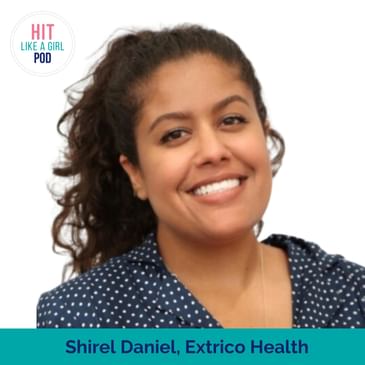
In this episode of the HIT Like a Girl Podcast, guest host Demi Radeva sits down with Shirel Daniel, a leader in the healthcare startup space, to uncover her unique journey and the transformative work she’s directing at Extrico Health.
From her roots at Syracuse University and Tel Aviv University to her impactful roles with the UN Environment and Philadelphia International Medicine during the COVID-19 pandemic, Shirel’s path to healthcare innovation is anything but traditional. Now, as a leader at Extrico Health, she’s harnessing the power of data analytics, AI, and clinical phenotypes to tackle some of healthcare’s biggest challenges—from Revenue Cycle Management to Clinical Documentation Improvement—all while keeping patient privacy and outcomes at the forefront.
Tune in to hear Shirel share:
- How Extrico Health is using AI-driven insights to improve hospital performance and patient care.
- The delicate balance between innovation, security, and regulatory compliance in the age of AI.
- Why value-based care is the future—and how Extrico is paving the way.
- A roadmap for overcoming patient privacy barriers and aligning AI policy language across the industry.
Key Moments:
⏱️ 00:00 | Shirel’s Nontraditional Path to Health Startups
⏱️ 04:56 | Aligning AI Policy Language for Industry-Wide Impact
⏱️ 08:35 | Breaking Down Patient Privacy Barriers
⏱️ 09:48 | Balancing AI, Security, and Innovation
⏱️ 13:08 | The Shift to Value-Based Care and Better Patient Outcomes
⏱️ 17:06 | Shirel’s Vision for the Future of Healthcare Improvement
💡 This episode is a must-listen for anyone passionate about the intersection of data, AI, and healthcare innovation. Shirel’s insights are a masterclass in navigating the complexities of the industry while staying focused on what matters most: improving patient lives.
Stay Connected:
👉 Follow Shirel Daniel on LinkedIn
👉 Learn more about Extrico Health
🎧 This episode was recorded live at #ViVE2025—where the future of healthcare comes to life.
[00:00:08] We're on HIT Like a Girl and I'm Demiradava. I'm Shirel Daniel. Let's start with a quick intro. Can you share a bit about your background and your role in healthcare? Absolutely. So I had a bit of a non-traditional way of joining the startup universe. I got my undergrad degree at Syracuse University in the public health program, then continued on to Tel Aviv University for the MPH program. And I was always really curious about the intersection of healthcare and design, healthcare and business, healthcare and technology.
[00:00:38] Because I feel like as an industry, we have so much opportunity to connect with everything around us. And so my first step was like, okay, how do I learn about NGOs? How do I learn about the international community in terms of healthcare? And so my first official stint was at UN Environment, where I worked on disaster recovery programs from a public health perspective in Geneva, which was an amazing experience. It was a great way to get exposed to so many different things. From there, I went on to work on the international
[00:01:08] development side of things for the city of Philadelphia. I worked at a organization that was owned and operated by 10 health systems in the region. And I got to work on partnerships, international branding and positioning for the city. And it was at the time when COVID was in full swing.
[00:01:28] And I basically, so I officially joined the company in the first week of March. And by the third week of March, what was that? March 16th or something like that. The whole world was turned over. I was like, oh my God, what did I do? Like, where am I supposed to be? And I was like, so confused. And I had an amazing mentor and really was like, okay, like you can do whatever you want. Like, what do you want to do? Where do we start?
[00:01:53] And a lot of that was around positioning the city and branding the organizations that were working internationally. So that's a lot of the hospitals in a way that presented them properly and told a real story about the city of Philadelphia. And so that was an amazing experience. And then from there, I joined the company that I'm at now called ExtraCo Health. ExtraCo is in a unique space because we are, you know, on the surface, a data analytics company.
[00:02:21] But what makes us special is that it was founded by two clinicians outside of UCLA. A lot of our stuff has been validated by peer-reviewed papers. And really what it means is that like we are able to surface clinical evidence for a lot of different things. So one of our main use cases right now is revenue cycle management CDI, which is like a big thing walking around this conference. I'm sure you've seen.
[00:02:45] And what we do is we're able to go into the EHR, integrate, clean the data, unify it, normalize it, and then integrate these clinical phenotypes that have been built and validated. And these phenotypes are able to really take that data to the next level in a meaningful way. And so what I mean for CDI is like 30% of the EHR has hidden clinical data in it that doesn't get used, doesn't get touched.
[00:03:10] And what we know is that 3% of that 30% impacts DRGs and impacts like reimbursement for the hospitals. And so what that means is that hospitals are leaving a lot of money on the table, a lot. And it has been a really unique experience telling that story, figuring out what is meaningful to these hospitals and meaningful to us. Because at the end of the day, that's not the only thing that we do.
[00:03:36] There are so many use cases for ExtraGo, and there are so many things that we can support on, be that research, operational analytics, quality improvement metrics. So there is so much that we can do, and it's a matter of telling the story in the right way and being able to present the information in a way that's meaningful to the people who are sitting in front of us. Lovely. We are here at Vive discussing what's coming with the new administration.
[00:04:01] I'm curious from your perspective, what are the biggest policy shifts or industry changes on the horizon? So that's a really good question. And I think that a lot of us are hearing a lot of buzzwords around here. One of the biggest, which I'm sure that you've seen, is AI. Every single booth has some sort of mention of AI on their collateral materials and their conversations and the talks here. It's everywhere.
[00:04:29] And I think that we have a really hard time defining what AI is. And the more I'm sitting and chatting with people and speaking to them, like, what is AI? What does it mean to you? And I feel like I've gotten like probably 30 or 40 different answers about what AI is and what it means to people. And I think a lot of the challenge will be how do we define things? How do we actually speak the same language? And a lot of that is related to marketing and branding.
[00:04:56] So how do we speak the same language when it comes to building policy so that we have a full understanding of what our goals are, what the return can be, and what we want to invest in? Because if we think that we're talking about the same thing, but we're not, and there's a lot of different definitions of AI, I think it can create a lot of challenges for us. So I think let's speak the same language. Let's align from that sense and really be able to understand that we're really at a turning point here.
[00:05:25] We are at a time where people are excited to adopt AI. But if we let them down, it's just going to create a harder time for us in the long term to be able to actually make an impact through these automations. So that's like one thing that I can just, I could talk about it for hours. But I do think that's why at Extrico, we have been so proactive about sharing the peer-reviewed aspect of the business,
[00:05:50] to share that we really have done a lot of research and validating that these clinical phenotypes, that these models work, and that the proof is really there. And that's also why the aspect of the business that does the clinical evidence surfacing, that every analytic that's shared with you from a CDI perspective for RCM has clinical evidence exactly there, to show a lot of these people who are working with our data that we have it.
[00:06:19] It's here. It's here for you. It's found. It's been written. And it's just a matter of finding it in the right place. I'm curious to unpack the term clinical phenotype. And what is that? And how do you leverage it? That's a big one. And I think that I could probably spend hours with you talking about it. But I think something that's really important for us is that a lot of the people that interact with clinical data don't necessarily have a clinical background. What are some examples? I'll share with you.
[00:06:48] So, for example, the coders, people who are working very hard, very hard, and they're presented with a huge volume of data and might not have the full training to understand. And someone gave a great example of this on a talk actually just yesterday. And she's like, you know, people receive a blood gas. You know, it takes years of training to understand somebody's respiratory status from a blood gas. A coder might not have that background. They don't have the information to be able to say, okay, so this, check this.
[00:07:17] Okay, okay, okay. This is what the ICD code should be. This is the MCC. This is the CC, whatever. They don't have all that information. They don't have the training to be able to do that. So what we empower these teams to do with the clinical phenotypes is that we take all this clinical knowledge, all these definitions, and we're able to build them into our platform so that it takes the data that is in the EHR, and we're able to streamline it, organize it, normalize it, infuse this clinical knowledge.
[00:07:44] So now somebody who is not a clinician can actually use clinical data in a meaningful way. So it's basically just like a power-up tool. You know, it's like we're bumping up what you can do and empower you to do more with what you have. And it's not about replacing these teams. These are really vital parts of the hospital ecosystem. It's not about replacing. It's about empowering teams to do more with what they have because the volume of data is not going to stop growing.
[00:08:11] I'm curious from a regulatory or policy perspectives, are there any things that are blocking you from or blocking certain stakeholders from accessing and using this data or these clinical phenotypes and making better informed decisions? Are there any changes that need to happen from a policy perspective to enable wider adoption of what you're doing? One of the biggest barriers that we've experienced is always like, okay, well, what about patient privacy?
[00:08:40] Which is really important. And so what we've done to mitigate that is we sit within the firewall of the hospital. So whatever security systems you guys have built, we are within them. We support you guys. And I think that that is really a vote of confidence for a lot of these hospitals because it's like, if you've built the proper infrastructure, we're inside. We're supporting you. We're doing the best that we can to do that because really at the end of the day, you know, it's unfortunate.
[00:09:07] But, you know, the security and the cybersecurity aspect of this, especially when we saw a change healthcare. What was that? Like almost a year ago now coming up. Yeah. It's not a matter of if. It's a matter of when, unfortunately. So we have to set up all of the proper, you know, firewalls, all the infrastructure to be able to protect patient data and to also give, you know, the hospitals the tools to use the data in a meaningful way. And so that's why we live inside the firewall.
[00:09:32] From your perspective, would you say that interoperability and patient data privacy are oxyborons? And or how do they work together? How do we have security, have privacy and achieve interoperability? I wish I had the technical expertise to really share something meaningful about that. I mean, a lot of the conversations that I've heard have been really interesting for me to learn that information.
[00:09:58] And is there really a world in which generative AI, you know, security, all of that coexists? And, you know, I think there's been a lot of debate. You know, I was just listening to a talk yesterday and someone said something along the lines of, we have, I have to, every time I travel, I bring like seven different cables to charge all my stuff. Like, we can't even get this figured out. How are we going to get generative AI in the healthcare space with patient data,
[00:10:25] all of that figured out in a way that also we don't have unintended negative outcomes for adopting this kind of technology? So, and there was another comment there. And, you know, I feel like I'm stealing people's ideas, but I've just been so inspired. I'm like, what does this mean for me and for Extrico and for all of these really amazing startups that are building out technologies? And he said, you know, we disrupt, right? When every time you disrupt, every time something you add into a workflow, it disrupts somewhere else.
[00:10:53] We're impacting more than just the square that we work on. And so Extrico is really unique in that sense that we are an all-in-one platform. So when we connect into the EHR data and we support revenue cycle management, or we support CDI, that's really having like meaningful impact on research because the clinical documentation is done properly. It means that you have a full understanding of quality metrics.
[00:11:21] And it's like, oh, well, this is an opportunity for us to invest in improving this thing. So I hear it, you know, I understand that we have sometimes unintended consequences that happen when we adopt, but we feel that we've really built out, you know, a good infrastructure and a good platform that's able to mitigate some of that because we really work in every aspect of the hospital at Extrico. Coming from a payer background, I'm very curious. So we've talked a lot about the provider side of things,
[00:11:50] and that seems to be the most immediate implication in our space that your technology applies into. But I'm curious, when you think about all the different stakeholders and healthcare, like payers, for example, what are potential implications given this technology? We think about this often. We just had a little bit of a short conversation. I think in the long term, it's going to, you know, it's going to basically eliminate some of the work that we do, right?
[00:12:15] Because we are about giving hospitals the tools to make the necessary improvements, to make the necessary adjustments. It's like almost like we are, are we like building a platform that cuts us out of the, you know, out of the equation? I think that's, I don't think that's right. You know, I think that we want to evolve in partnership with our hospitals. We want to give them the tools to be able to really make an impact within their data, like use their data to make an impact within their infrastructure.
[00:12:44] So I think at the end of the day, of course, there are implications with payers, you know, from a revenue cycle management standpoint. But I think what we're able to do is we surface evidence. Like everything is there. It's just a matter of being able to share it and frame it properly and make sure that these payers are getting all the information so they can make a decision and pay out the hospitals for the care that they've delivered. So it's about giving them the tools. How does the whole movement toward value-based care affect what you're doing?
[00:13:12] Does it change your value prop and or what you're able to deliver and the insights you generate? With value-based care, this is something, a conversation that we have quite often at our organization because I think we really, our goal ultimately is to improve patient outcomes. Like that's above all, that's what we believe in. That's why this company was started. I don't think, I don't know if I mentioned this earlier, it was originally as a research program, it was a department that was built out of UCLA.
[00:13:38] And then we realized that this was a pain point for a lot of different hospitals. And so really at the root of the company, we are about improving patient outcomes. We want to give hospitals the tools to put a patient first. They already are, but like let's empower them to the best of our ability. And so value-based care is a big conversation. I think we will evolve. We will evolve as the needs evolve if we move in that direction. Can you share an example or two of how you've improved patient experience?
[00:14:07] Is there a specific case you can highlight from your work? Everything that we are doing at the end of the day is to get to that point. As we stand now, I think a lot of our work is in the CDI space, is in the revenue cycle space, because what it does is it empowers these hospitals to take that, shake those funds that they've missed because it was hidden in the clinical data, to actually be able to invest those monies into making an impact for their community, to invest in innovation, to invest in research,
[00:14:35] to invest in opportunities for operational and quality metrics. So what we see this as a phase one, where we are right now is a phase one, and there's so much opportunity for growth. But what you can see in the peer-reviewed papers that are powered by Extracore Health Technology, and I can share with you the link if you want to put it in the show notes, to 50 peer-reviewed papers that are impacting patient care, and it's all powered by Extracore Technology. Do you guys use AI? That is such a good question. Are we AI?
[00:15:03] And so it's like, comes back to how do we define AI? So we, I'll be honest with you, from a marketing and branding standpoint, we have avoided the word AI, because I think it's really scary, and I think it's really difficult for people to say, oh yeah, like I trust you. And so I think from our approach, it's always been our clinical phenotypes, front and center, the fact that we're built by clinicians, and more than anything, that we are an evidence-based solution.
[00:15:31] And so generally, I don't like to use the word AI. And I think most of my, most of the team and my colleagues would agree that it's not the best word to describe what we do. But we do have automation, and we do surface clinical evidence with our clinical phenotypes that could be interpreted as, or categorized, you know, within the AI space. So it's a hard word, and you know, and I was saying it earlier, I was like, we need to define AI. But it's like, I think everyone's also scared to define AI, you know?
[00:16:00] Because I think it's like, you know, like, will it cut some people out? Will it make more difficult for policy, for things like that? And so I think it's like a, it's a hard line to walk where it's like, how do we define in a way that, define AI in a way that is both as close as possible to correct or, I don't know, to most accurately and closely to what we're doing. And also like, builds trust. Because I think a lot of the fear around it is like,
[00:16:28] well, how do we trust that the information is done properly? Or how do we trust that the AI, then people actually engage with it? And it's not done mindlessly. So I think we are a phase one, two, before we truly adopt a fully automated low-touch system. We are the best way to empower your teams with clinical evidence at the center of everything that we do. I love that you touched on the phase one. I'm very curious on the phase three, four, five.
[00:16:55] I'm curious in a world where your solution is adopted by everybody, what does the world look like? What do we all experience as patients and our clinicians or coders? Phase one for us, like I said, is like CDI and revenue cycle. It's to build out the opportunity for hospitals to invest in the long term in things like operational improvements, like research, to be able to, in the long term, also impact their quality scores and metrics.
[00:17:25] So phase two really is about, so we're now almost like in a pre-bill, right? Sorry, in a post-bill. We do a longitudinal review of somebody's chart. We're able to present to the hospital the information. Phase two might be, okay, here is pre-bill. Phase three, we see also not only making the changes before the bill goes out, but it's about giving the physicians, the nurses, all of the practitioners,
[00:17:52] the tools to be able to improve before sometimes care is even given. So it's about being able to ask of the data what you need, being able to produce an answer that has clinical evidence, and then in the long term being able to go into that improvement cycle and say, okay, here where we know the things that you're missing, here is where you have opportunities for improvement. That might be encounter level, that might be department specialty level, that might be hospital-wide,
[00:18:21] but we can get as specific as the encounter and we can go as big as the health system. So the opportunities for improvement are really endless. Great. Thank you so much for that. If you could send one message to policymakers about the future of healthcare, what would it be given the stage that you're in? Beyond everything, you know, I think we interact and we see so many, you know, startups, tech companies, these huge organizations that are working towards a united goal, which is health is not, health is a right.
[00:18:51] It's not a privilege. And so we have to create and give people the tools and the policies that put patients first. And that would be my, that would be my parting words today. Where can our audience find and follow your work? Absolutely. So I work for Extra CoHealth, if I haven't mentioned it enough, on our last couple of minutes together. And you can find us on LinkedIn, on our website, and I'm Sherelle Daniel, and you can find me on LinkedIn as well. Thanks so much for being here. Thank you for your time. Thank you. Appreciate it.
[00:19:21] Thanks for listening. You can learn more about us or this guest by going to our website or visiting us on any of the socials with the handle HitLikeAGirlPod. Thanks again. See you soon. Again, thank you so much for listening to the Hit Like a Girl podcast. I am truly grateful for you, and I'm wondering if you could do me a quick favor. Would you be willing to follow or subscribe to this podcast or maybe leave us a rating or review? Or if you're feeling extra generous, would you share this episode on your Instagram stories or with a friend?
[00:19:50] All those things help us podcasters out so much. I'm the show's host, Joy Rios, and I'll see you next time.