
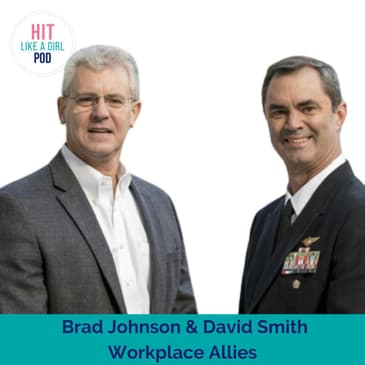

Join Joy Rios as she welcomes Brad Johnson and David Smith, authors of "Athena Rising: How and Why Men Should Mentor Women" and "Good Guys: How Men Can Be Better Allies for Women in the Workplace." Recorded at last year's Women in Medicine summit, this episode delves into the importance of male engagement in promoting gender diversity and inclusion.
Discover practical strategies for men to show up as allies, the benefits of diverse workplaces, and the personal and professional gains men can achieve by advocating for gender equity.
Episode Highlights
[00:02:37] Importance of Men Engaging in Gender Equity Work
[00:09:44] Potential Penalties for Advocating for Gender Equity
[00:12:30] Importance of Listening and Learning in Gender Equity Efforts
[00:13:45] Addressing Fear in Men Mentoring Women
[00:16:49] Eye-Opening Experiences of Gender Disparities in the Workplace
Stay connected to Brad Johnson & David Smith:
[00:00:00] Hello podcast listeners, are you ready to advance your career in healthcare? Then join us at the Women in Medicine Summit, a two-day power-packed event designed to propel you forward. The HIT Like a Girl Pod crew will be there cheering you on at the Drake Hotel
[00:00:15] in Chicago happening on September 13th and 14th. Get ready for skill building workshops, inspiring talks and actionable strategies to help you thrive in your healthcare journey. Here's the best part. Use code REFERRAL5 at checkout to snag your ticket at a special
[00:00:31] discount. We can't wait to see you network, learn and grow alongside other amazing women in medicine. Secure your spot now at womeninmedicinesummit.org and enter the code REFERRAL5 to unlock your exclusive discount.
[00:00:46] Hey there and welcome to the HIT Like a Girl Podcast. My name is Joy Rios and we talk about how complicated the U.S. healthcare system is. I liken it to a 30,000 piece puzzle
[00:01:07] and each one of our guests brings in their piece of the puzzle so that we can hopefully start to figure it out and do better with the big picture that we see. I'd like to
[00:01:16] give two special guests today. I'd like them both to have an opportunity to introduce themselves. So go for it. Yeah, I'm Brad Johnson. I'm a psychologist and a professor at the U.S. Naval Academy.
[00:01:28] I'm David Smith. I'm a sociologist and a professor at the Johns Hopkins Carey Business School. Great to be with you. And I will share with our listeners that we are hearing male voices. We don't often
[00:01:38] hear from male voices on this podcast. Can you please speak to why you think you might be here and what it is that you two are bringing to the table today? There's a few reasons. One is that Brad and I both have a personal motivation to
[00:01:52] do this work around creating equity, especially gender equity in the workplace. So our personal reasons related to family members in both cases for us. We had to watch for me. It was my spouse and partner. We had parallel careers and
[00:02:07] seeing the challenges and the headwinds that she faced as we were, again, following parallel careers. Seeing those differences was really hard to watch. And it really opened my eyes to look back into my own organizations and see
[00:02:20] how other women were facing the same challenges. And I know for Brad, it was very similar for him. He has a sister who followed in his footsteps in the military and again, facing a lot of these challenges that we never
[00:02:33] experienced. And it is really eye opening. And it really gets in touch with that sense of fairness and justice I think a lot of people have, including us. The other thing is researchers and academics is Brad as a
[00:02:44] clinical psychologist has done all of his work in the area of mentoring relationships, developmental relationships. And for me as a sociologist looking at gender work and family issues. And we know in the research, the inequitable practices, all the inequities around wage gaps and access
[00:03:00] to all sorts of things that promotion opportunities, advancement. It just really, again, a sense of why can't we move the needle faster on changing the workplace? And in particular, why aren't more men, majority people
[00:03:14] involved and engaged in doing the work around this? And so that set us off on our journey to start doing the research on how do we get more men, in this case, engaged in doing gender equity work?
[00:03:24] So you guys wrote a book. Is that correct? Can you speak to that? We have written two books together. I spend all of my professional time as a researcher looking at mentoring relationships. So back in 2016, we were curious about the data showing men don't mentor women as much,
[00:03:42] and they certainly don't sponsor them when they're mentoring them. So we were curious about why that is. So we undertook a big research project looking at what do women say? It really looks like when a male shows up
[00:03:55] as a great mentor sponsor. And so we asked for examples, illustrations, we aggregated all of that. And that led to our first book, Athena Rising, How and Why Men Should Mentor Women. And wanted to give men a tool book
[00:04:07] for how to do this. And then in 2017, me too went widespread, as you remember. And Dave and I found ourselves being pulled into the broader conversation. It's just about how can men show up generally in the workplace and be better colleagues, better allies with women?
[00:04:23] So we undertook another big study, at this time focused on allyship, and asked women across industries and professions, what does it look like to you when a guy really shows up as someone you'd call an ally? What are the micro behaviors? Can you give us examples?
[00:04:38] And again, we aggregated all of that and put it together in our second book, Good Guys, How Men Can Be Better Allies for Women in the Workplace. General question, why should guys care? What does it matter for men to be a good ally to women?
[00:04:54] Why should men care? Really important question. And there's research actually addressing this. So you go out and ask women, and there are some big studies that have done this. Is your organization making real progress on gender diversity and inclusion?
[00:05:09] By far the strongest predictor of whether women say yes or no to that is whether or not they see men in their organization championing this. When that's the case, something like 96 percent of women say, yep, we're making progress. I see it.
[00:05:24] Versus only 30 percent if they just don't see men engaging here. And let's not forget men hold the power. They often hold the position. They're in a spot where they have the privilege to actually create change. And whether that's leaning into developmental relationships
[00:05:41] or advocating for women or looking at systems that are working for everybody, men are in a position to do that more often. I want to ask why would men want to change? Because if things have been working out great for them,
[00:05:57] if systems have been built for their success, why would they want to let go of any of that or advocate for somebody else to come into a position of power? Great question. And I think this is an important one in terms of understanding that, yes,
[00:06:11] work for so long has been built by men, designed by men for men to do their work. And so it was a very comfy world in that way. What we didn't realize is what we were missing out on.
[00:06:22] And I think this is important on a variety of different levels. And so let me just start the topic work down and just thinking about it from an organizational or even a societal perspective that, again, the research is really clear that over and over again across industries
[00:06:36] and professions that we know that the more not just diversity we have, but also how inclusive, how much belonging this there is in the organization. Our organizations are better places to work. They're more successful, more innovative, you're more creative.
[00:06:50] You measure your bottom line in terms of profits and losses. You're making more money. And a lot of that research used to be just correlational. But in the last few years, we've actually got a causal relationship now as we increase the percentage of women on senior leadership teams.
[00:07:03] They're outperforming their competitors. You don't have as many women there. Yeah, we still find, again, all these inequities continue to persist and hold us back at the micro level. I think it's really important. What's in it for men beyond your paycheck?
[00:07:16] Hopefully, as you begin to understand that, hey, there's something in this for you as a employee and as a leader. But we know that when men engage in more of these interpersonal relationships and more diverse relationships in the workplace,
[00:07:27] they have a lot to gain in terms of that personally. And we see that we saw it in our own research for Athena Rising. So for male mentors, in this case, when they had female mentees, they were they had all this increased access to information
[00:07:40] wouldn't otherwise had in their organization. They had more diverse networks. And I think the best part of this was really the interpersonal skills. We saw an increase in interpersonal skills like empathy or EQ, communication skills, all things that made them better leaders.
[00:07:54] Great thing about that is at the end of the day, you get to take that home with you. And so it makes you a better partner and parent as well. So there's definitely something in this for men at whatever level you're looking at it.
[00:08:03] I love all of that. And there's a concept I like to think about is like we don't need to hoard. A lot of us, we will do better if we are supporting our communities or those around us, like whatever it is that we give to others.
[00:08:16] We receive back tenfold. Can we talk about some of the micro top, like the micro things that people can do to show up? It's they're not necessarily a huge deal. What are they? I'll mention a few. So on the interpersonal level, this is where I can begin.
[00:08:33] I can self educate. There's so much out there on the experiences women have in the workplace. As a male majority male, in my case, I get to have access to podcasts and books and conferences like Wim. And I can learn. Then I can take it into the workplace
[00:08:49] and I can have relationships, friendships with women, establish trust and then do what we call the ask to ask. Hey, I was reading about some of the headwinds women encounter. Would it be OK if I asked you, have you had any of these experiences?
[00:09:04] Am I missing things in our workplace? If you feel comfortable sharing that, I'd really love to hear that from you. So I think it would make me better and more aware. Noticing who's included, who's not included are certain voices getting all the airtime in meetings
[00:09:19] or people feeling uncomfortable. And why are they? Who's being interrupted all the time? Who's having their great ideas stolen? I can just pay more attention to those things. And then once I start to notice it, now I have, I think, an obligation to begin saying something.
[00:09:35] And I think sometimes we men think if I'm going to disrupt or challenge somebody who's just made a sexist comment or an inappropriate joke, we think we have to go to Defcom six. Right. We have to become really aggressive. But you don't.
[00:09:49] It can be as simple as saying, hey, Holly was onto something there. Really like her to finish her thought or great idea there, Bob. But how is that different than what Tanya said five minutes ago? I'm a little confused.
[00:10:02] There are all of these strategies or just using humor. Hey, that's five yards from interrupting yet again in this meeting. A lot of strategies. And it doesn't mean that you need to get aggressive or confrontational. You just need to be courageous enough to say something and disrupt
[00:10:20] because when people like David and I do that as majority men in the workplace, we pay no price at all. When women do the same, they're likely to suffer a penalty. Right. They get more negative evals. Can you speak to that at all?
[00:10:33] Have you received any penalties at all for showing up in areas that you might have been too shy to do so before you had done any of this research? I think I can speak for both of us.
[00:10:44] Neither of us have at least we've never noticed or felt that. In any way, have we received pushback from men and women? Yes, in both categories. But it's been really isolated. And I would actually tell you that we actually appreciate it
[00:10:59] when we're with audiences and we get the opportunity for somebody to push back a little bit on this because it gives us an opportunity to address some of the challenges that we face out there today.
[00:11:08] And I think part of the problem we have in our society today is the inability to engage in these kinds of conversation where we maybe we don't initially agree, but we can find eventually probably some common ground there
[00:11:20] and maybe do a little educating back and forth on what works and what doesn't. I love that. I also wanted to ask you about showing up. So you are at the Women in Medicine Summit. And I think it tends to happen.
[00:11:33] And I've had this conversation before of like, how do we stop preaching to the choir? Like, it's great when we find our voices and we find people that share our passion. But if they all look like us or have so much in common,
[00:11:46] it doesn't necessarily move the needle. How does it feel to be one of the, I don't know, five percent of men who are an event like we're at? Right. I think you're being very generous.
[00:11:59] But I can tell you that I think Brad and I just being very candid about this. We started doing this work and started doing it very publicly and showing up at, again, lots of women's events and major conferences where there might be 15000 women there and 40 dudes like us.
[00:12:16] Then it could feel a little uncomfortable because you do stand out. But I think it's also it was eye opening for us because I look back at that and I go, this is what she feels all the time. Yeah, she is. Yeah.
[00:12:27] Because women are so often in male centric, male dominated industries, professions, occupation. This is what it feels like. And that's part of the challenge for I think for men is that we don't have an awareness sometimes of how other people may experience
[00:12:43] the workplace differently because we don't feel it that way. We don't see it that way. And so we don't understand. And so developing this awareness, Brad was talking about before, I think is really key. And so showing up at these places is part of that.
[00:12:55] It's just experience it, feel it, see what it feels like. Understand it. You can begin to then work with that and maybe develop some begin to develop some empathy there. But how we show up in these spaces is really important. And I think again, for most men,
[00:13:10] we needed to show up and be there, be present, be visible. Listen, listen a lot more and then keep listening even more. Yeah. Don't take charge. You don't need to take any action when you're in these settings. We just listen and learn.
[00:13:24] And when you feel like you have an understanding of maybe some things or maybe you're curious about some other things, is maybe engage some of your trusted colleagues there and women that you trust in a conversation about, hey, I saw some of these things happening too.
[00:13:38] And I have a better understanding now. And I really, really think about how I could better show up and support collaborate with you or with our organization. And what would that look like? But it's not about me taking over.
[00:13:51] It's not about me taking charge and fixing things for her or fixing the overall system itself. I feel like that might be a little bit of the hard part. Listening, it's such it's so much more important than talking.
[00:14:03] And I feel like we have a imbalance a little bit sometimes with just like feeling the need to fill the room or if there's a quiet, like I've got to say something. But listening and being empathetic is one of the more important,
[00:14:16] I don't know, traits that I see in the world. I wanted to address also mentorship and sponsorship. So you had mentioned something in your talk about there's a little bit of fear or there has been fear in the past for men to mentor women. Can we address that?
[00:14:32] Yeah, absolutely. And as we mentioned today, there have been so many reasons why men can feel anxiety, fear of making a mistake, concern they're going to do or say the wrong thing. Maybe fear of rumors or gossip, right? If they're leaning into a mentoring connection
[00:14:48] with a younger woman, potentially. We talked about implicit bias around leadership. I just don't see her as a leader, so I'm not offering mentoring or sponsoring. And really, for all of this anxiety and all of the concern that men have,
[00:15:05] I think genuinely there's only one real solution to that, and that is taking responsibility to treat your own anxiety. And we had some fun today talking about exposure therapy. That's how you address it. You have more coffee, you have more mentoring, you engage.
[00:15:24] And the last piece around this, sometimes I hear men using anxiety to have disparate rules for men and women in the workplace. So, for example, they'll say, I won't take a closed door meeting with a woman, it's just not safe.
[00:15:37] I'm sorry you feel that way. If you do, I think that's based on some fraudulent thinking. I don't think it's true. But if you have enough anxiety, you won't do that. Then for goodness sake, don't have closed door meetings with men.
[00:15:50] It's not fair because then one group's getting access to you in a way that another is not. And I think you also, when you say I won't be with a woman, you communicate something to everyone in the workplace about women.
[00:16:02] And I think realize you're communicating something about yourself too. Maybe you don't trust your own impulse control. So neither of those are very flattering impressions. So have it be equal, whatever that policy is. I wanted to ask you about if you don't mind getting personal.
[00:16:18] You said that you and your wife had very similar tracks. What did you witness and maybe speak to your sister as well? But like what were some of the things that showed up to you that were perhaps an aha moment where you realize, oh,
[00:16:31] there's only one difference here and it's that she's a woman? Yeah, I can start. I have not witnessed it myself, but my sister has been active duty for 30 years in the Navy as an officer. She is amazing. All these combat deployments. I mean, she is something else.
[00:16:47] I was also in the Navy and I never had any of these experiences, which I hear from her all the time. Men often tell her to smile more. Men tell her when she gives really direct feedback. She is prickly, emasculating. You name it. Maybe your favorite B word.
[00:17:05] No one ever said anything like that to me. And she and I have a very similar leadership style. And then she's even been made to feel maybe guilty about overperforming. Plus, I put that word in quotations, meaning
[00:17:19] maybe she ran too fast on a physical fitness test and beat all the men. She feels a little ashamed when they all feel bad. Well, I'm sorry. No one has ever made me feel that way. So listening to my sister's experiences in the workplace
[00:17:33] has just been an epiphany, a light bulb moment for me. Dave? For me, it was a little bit different and at least initially was looking at her access to information, opportunities, mentoring, sponsoring. It was really hard for her to find that.
[00:17:50] It didn't come. And I just think about it for myself. For me, those things were not things that I had to spend any time or energy on. They came to me. And that was just a part of again, I think it was a gender difference.
[00:18:01] And it really impacts your performance in terms of, again, your career and the projection of your career moving forward in that career path. It just makes it twice as hard, if not more than twice as hard, to shine and to get, again, to grow in your career.
[00:18:17] And I think for me, the eye opener was really as she was telling me these things and explaining them, going back into my own organization and talking to other women about this and finding the exact same experiences. Across the board.
[00:18:31] And so clearly, there was something more systematic going on here that it wasn't about it wasn't something about her or just individual women or in particular areas, this was broadly across our profession. Gentlemen, I want to be respectful of your time.
[00:18:45] Thank you so much for showing up today and having this conversation with me and sharing with our audience. If they would like to follow you, connect with you, read your book. Where would you direct them? You can find us on our website at Workplace Allies.
[00:18:59] So all one word, Workplace Allies dot com. And we hope you get a chance to read either Athena rising or good guys. Wonderful. Thank you again. Thanks for listening. You can learn more about us or this guest by going to our website
[00:19:12] or visiting us on any of the socials with the handle Hit Like A Girl Pod. Thanks again. See you soon. Again, thank you so much for listening to the Hit Like A Girl podcast. I am truly grateful for you.
[00:19:24] And I'm wondering if you could do me a quick favor. Would you be willing to follow or subscribe to this podcast or maybe leave us a rating or review? Or if you're feeling extra generous, would you share this episode on your Instagram stories or with a friend?
[00:19:37] All of those things help us podcasters out so much. I'm the show's host, Joy Rios, and I'll see you next time.