
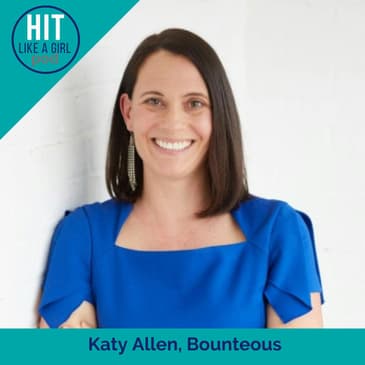

In this episode, Joy Rios explores the complexities of the healthcare industry with guest Katy Allen, EVP, Managing Director at Bounteous, a digital experience company. They discuss how the industry is filled with various point solutions that need integration into a cohesive platform. Katy highlights the roles of caregivers, both always-on caregivers and crisis caregivers, and the challenges they face in managing multiple solutions for their loved ones' healthcare. The conversation also touches on the importance of involving the caregiver's voice in healthcare solutions and the need to value and support caregivers more within the system. It's a thought-provoking discussion on the intricacies of healthcare and the evolving role of caregivers in it.
[00:00:00] Hello, podcast listeners! Are you ready to advance your career in healthcare? Then join us at the Women in Medicine Summit, a two-day power-packed event designed to propel you forward. The HIT Like a Girl Pod crew will be there cheering you on at the Drake Hotel in Chicago,
[00:00:16] happening on September 13th and 14th. Get ready for skill-building workshops, inspiring talks, and actionable strategies to help you thrive in your healthcare journey. Here's the best part. Use code, referral5 at checkout to snag your ticket at a special discount.
[00:00:32] We can't wait to see you network, learn, and grow alongside other amazing women in medicine. Secure your spot now at womeninmedicine-summit.org and enter the code, referral5, to unlock your exclusive discount. Hello there and welcome to the HIT Like a Girl Podcast.
[00:00:59] This is a show where we get to talk about how complicated the world of healthcare is. Every time I do this intro, I talk about how the puzzle has gotten bigger. A thousand-piece puzzle. I'm growing. A 3,000-piece puzzle.
[00:01:12] A 30,000-piece puzzle and it just keeps getting bigger and bigger. So as many guests as we get to have, we're still trying to figure it all out. So all of our guests get to bring one of their expertise to the table to help,
[00:01:24] honestly, me and our audience try to figure it all out. So I would like to give you a minute to introduce yourself. Great. Thanks. I'm Katie Allen. I'm the director of our healthcare practice with Bownious, which is a digital experience company that focuses on innovation and health.
[00:01:41] We work a lot with our clients to think about innovation in two ways. First by doing things better. There's things that we can do right now that will change both the member and the patient experience in the industry and then doing better things, thinking big about innovation
[00:01:53] and how we just change the healthcare delivery system overall. I like both of those aspects. What can we do better right now? Oh, there's so much we can do better. One thing that comes to mind, you were just saying, ever complicated growing puzzle pieces
[00:02:05] and we've had so many great innovators and disruptors come to the market with point solutions to solve problems usually that people are experiencing on their own in that moment. Now we have this vast opportunity of solutions and we're starting to struggle about how
[00:02:23] we integrate those into a platform. Which is a good problem to have, right? It is a good problem to have. It's a complex problem. Yeah. Complex problem to solve. How are you solving them and what are some of those solutions?
[00:02:34] I'm going to talk about this from the perspective as a caregiver. Okay. So many women play the role of caregiver in their family's lives and even beyond their families, there's actually, this is a staggering kind of, I think, statistic which is about
[00:02:47] 60% of women who are unmarried and don't have children are still acting in the role of a healthcare provider or giver for someone who they love. What? Which is just, I mean, that's a lot. That is a lot.
[00:03:00] And I've recently, I was on a panel yesterday with this woman. She's fantastic. Her name is, her name is Naomi Adams and she's from League, which is also a consumer experience platform that is integrating a number of these point solutions.
[00:03:14] And she and I were talking about the women's role as a caregiver and thinking about this role in two ways. The first being kind of this always-on caregiver and the second being a crisis caregiver. Okay.
[00:03:27] So the caregivers are very different and the way you interact with your loved one, but also with the healthcare delivery system is also very, very different. And I personally, we talked about this a little bit last time. I'm the mom of three neurodivergent children.
[00:03:41] I'm managing a seizure disorder of my own. And I have aging parents. I interface. I'm always on when I'm interfacing with the healthcare system. And I am one of those women who is managing point solutions all over the place. One point solution for medication management.
[00:03:57] I have another one for health journaling and ticks and seizures. I have multiple patient portals because my kids see specialists that are both in and out of network all the time, multiple patient portals that we're grappling with, still
[00:04:09] very analog systems around like paper claims, submission in the pay or space for out of network providers. So I am personally always on and I am struggling with point solutions every day. Well, I mean just what you just said right now, how many different portals do you
[00:04:23] have to access on a regular basis to take care of yourself and your loved ones? Exactly. And it's also a little surprising I have to find time in my day during the week to actually schedule appointments. I mean, I hate talking on the phone now.
[00:04:36] I don't think anybody enjoys it. But I actually have to call offices to make appointments because I'm not able to do that online. So that's just another, you know, you have to do it in their office hours and another moment in your day.
[00:04:46] So there's just so much opportunity when you think about that always on caregiver role. So can we talk about the differences between somebody who's a crisis caregiver and somebody who's constantly caregiving? Absolutely. Yeah. So many women, you know, they're not mutually exclusive. We'll put it that way first.
[00:05:01] But many women also find themselves in a moment of crisis for the loved one, a health care crisis. And they're, you know, I'm managing the health for the health for dependents. So I have access to the necessary medical records and everything that I need for them.
[00:05:15] Women who are in these moments of crisis don't necessarily have access to what it is that they need to coordinate and even just receive updates on care for a loved one. Some of that can be as I will say as simple, it's not as as simple, but as
[00:05:30] just understanding the insurance that they have in that moment. That's not simple at all. No, it's not simple at all. And often we're dependent on finding a plastic card, right? Right. To be able to do that, to be a steward of that for someone that you're caring for.
[00:05:43] So I think that experience is very different connectivity if you're caring at a distance or from a distance. What are the services? Let's say it's a parent, what are the services they're going to get as an inpatient? How do we help facilitate and support outpatient care post discharge?
[00:05:58] We're still a lot of us leaving the hospital with a stack of papers. And that's not helpful if you're managing the care of a parent from a different state. Yeah. So there's so much opportunity to kind of bring those things together.
[00:06:08] How about bringing in the caregivers voice to a lot of these people who are providing solutions? How do we do that? Do you have opinions? I have opinions. I always have an opinion. Well, I think kind of, I think the good news is that the more that I'm
[00:06:21] working with clients, the more the caregiver is becoming part of that stakeholder audience. We can talk about this in a second. There are some headwinds that they face around investment and telling that value story for caregiver engagement.
[00:06:32] So we cannot put that aside for a minute, but the conversation is starting to happen. Someone recently told me about United Health Care has this beautiful campaign going on right now in Los Angeles, a big bill board, big billboard.
[00:06:46] And I think it says something like, I stay strong for the people I love. And it's a woman with two of her children or family members around her and it's targeted towards the caregiver. The conversation that we had was like, wow, what a beautiful campaign.
[00:06:58] I can't wait to see what United Health Care is going to do to like get behind that and really improve that caregiver experience. But the conversation is starting and that's fantastic. That's fantastic. Well, you're making a really good point about having to take care of yourself, right?
[00:07:12] You have to be healthy yourself in order to be caring for others, ideally. Absolutely. But we have not put an emphasis on self care or respite for caregivers. It's not a fundamental, it's not part of the conversation we're having in the health industry.
[00:07:27] And when we think about, I'm going to take this back a little bit to kind of like digital investment. When we think about organizations who are starting to invest in a consumer experience strategy and engagement strategy and they're thinking about the digital component of that experience.
[00:07:41] We talk a lot about stakeholders and we talk a lot about ROI on investment and ROI. And that is more easily equatable to an employer group on the insurance side or a member or a patient in a hospital.
[00:07:56] Less obvious and maybe a little more difficult to make tangible is that value realization and the ROI on investment in that caregiver journey. The conversation is starting, but it is not as easy as an extension. I mean, there's yeah.
[00:08:13] And are we talking about caregivers who are doing it out of the kindness of their heart because they are the mom or relative or somebody? Or are we talking about caregivers who that's their actual profession? I think you make such a great point.
[00:08:25] For the context of this conversation, I was really thinking about the unpaid caregiver who often is like the best care coordinator in the industry, right? Who is completely undervalued by the health care industry and is often has the most insight and the most input,
[00:08:41] but is rarely considered part of the patient's care team. I have a sister and Denise who work as caregivers and when they tell me about their experience and how much they have to do, how much they do as part of their work versus like the time commitment
[00:08:56] and also like the access they get to people's lives and what they are responsible for when I think about it. I'm like, oh, I could never do that. It's a very intimate experience. It's a very intimate experience. Insanely intimate.
[00:09:09] I'm like, oh, they are seeing sides of people literally that like, yeah, it's a hard job. It's a really hard job. We should really value it a lot more than we do in our society. It's an underpaid job. It has a high rate of turnover.
[00:09:24] And there's a reason for that, right? And often we don't necessarily, we don't, what should I say, facilitate or we don't support patients who are learning to work with a caregiver, right? It feels you're very vulnerable. There's someone in your space.
[00:09:38] You don't know how to do it, right? For folks that do it for a living, there are a lot of times like in somebody's home, 24 hours or 48 or 72 hours at a time, you know, like they're essentially dedicating their lives to be there for these people. Absolutely.
[00:09:52] We do need to value it more. I don't know how we do that and build that into the system, but that's one of the big problems. Well, I mean, it's heartening that the dialogue is starting. Yeah. And I'll say it's not every organ,
[00:10:04] like organization is thinking this way or having this conversation yet, but I'm happy that it's beginning. Yeah. And we actually do see some large enterprise organizations starting to value that caregiver in a different way and are really thinking seriously about them as part of an engagement strategy
[00:10:20] and how that will help drive clinical outcomes, right? And it's better for the caregiver as well. And so you started out this conversation saying that there's things that we can do better now and then you had the flip side of it that we could just do better.
[00:10:31] Can we go into that aspect of it? Into doing better things. Thank you. Yes, into doing better things. The doing better things is challenging ourselves to think about the way that we deliver care in this country to challenge ourselves in ways that seem like impossible.
[00:10:47] For example, everybody has this like bill pay kind of experience. I don't think anyone has ever said it's good, right? You get a bill from a provider. A lot of them still come in the mail for which you have to write a check or you can pay online.
[00:11:00] They're usually bigger than you'd anticipate. That's a problem in and of itself. But that whole like experience of that payment process is really unsatisfying. And again, I hate calling people and I really don't like writing checks either. But it's a world we live in now.
[00:11:16] How about we just figure out a way never to send a bill again? Oh, that'd be nice. Most people are like, that's impossible. But is it really impossible? How would you make that happen? How would we do that thing better? I don't have the answer to that
[00:11:27] but I want people to think about it, right? Let's think about what that might look like. So I think inciting that kind of innovation, allowing for that kind of conversation. I mean, there were years ago we never thought that we would be thinking about payments
[00:11:42] in the healthcare space differently. And now there's conversations about Venmo and PayPal. And so that kind of innovative thinking and frankly pulling from other industries like consumer driven industries I think is gonna be really important for healthcare in the coming years. Well, when we've talked,
[00:12:01] I just got out of a conversation around talking about data and access to it. And whether or not we can, speaking to how many portals you have to get into to get like the, Oh yeah. Like all of that conversation
[00:12:13] and just like we need to be doing better on that over the long term. And it hopefully has gotten better in your experience even in the last few years but I mean, we have so far to go. It has gotten somewhat better
[00:12:25] and I often think about like an aggregator, right? Is there one place I could go that wouldn't able me to see and work with and leverage all of my children's health information that is disparate right now within different health systems and different portals.
[00:12:42] I don't know the answer to that but what I can tell you is I am absolutely one of those people who'd be like, take it all. I'll sign it all away. Take all of my data and make this experience better. And maybe that's over like too much trust.
[00:12:54] No, I don't think so. But I think we have, we're seeing that trend. We are seeing more people saying if you can make this better for me, please take my data. Yeah, I think that's the conversation. I mean literally the conversation
[00:13:04] I just came out of was a Tefka one in Q-Hins where it's like, okay, it would be really nice to be able to capture birth to death information. So considering multiple people, multiple doctors, maybe multiple places that you've lived that you have one place that you log into
[00:13:18] and can see all of your information aggregated. Yes, aggregated. Yes. And for the people that you're caring for too, right? Yeah. That would be tremendous. So tell me what's on the horizon for you. And also I've like since we have spoken last, like tell me everything.
[00:13:33] Tell you everything. What are you after? Don't leave anything out. I'm continuing to work in my role with Bownious. I will say things have been great. I'm healthy. Congratulations. I've been seizure free for two years. Okay. That's a little personal, which is wonderful. My kids are doing great.
[00:13:48] Also all neurodivision children doing great. Can I ask about more about that? Yeah. Cause I'm just out of curiosity. So, okay. On the seizure side of things, I didn't know that about you. I didn't. So how do you handle that?
[00:14:00] And what is the experience like of having a seizure? I've fainted before. I can't imagine it's anything similar, but like... I think it's similar in that you fainted but you probably don't remember the fainting. Right. That you know that maybe you weren't feeling great
[00:14:15] and then the next thing you knew you were like on the floor. Yeah. The thing about having a seizure disorder is that it's incredibly traumatic for the people around you. But for the person who's having the seizure, I mean when you regain consciousness
[00:14:29] then often what you feel is like just terrible that all of the people around you had to experience that seizure. Right. And witness that because it's not great. I mean the first time that I had a seizure and my husband explained to me what it was like.
[00:14:44] I mean I was... I cried. It was horrible to think about my husband and my children kind of like witnessing that and the helplessness that they may have felt and obviously the concern and the panic. And the time that it takes like to... Do they last?
[00:14:56] Is it seconds? Is it minutes? Yeah. So I have what's called general epilepsy which is it's kind of like when you think about a movie and you think about someone falling to the ground and having a grand mal seizure. That's what general epilepsy is.
[00:15:07] And they can last anywhere from 30 seconds to five minutes or longer. It just kind of depends on the individual and the event. And the thing about I think seizures, one of the things about seizures that's difficult is the seizing may last just a few minutes or 30 seconds.
[00:15:24] It feels like forever for the people that are with you but then there could be anywhere 20 minutes or more where your body's just shut down and there's heavy slow breaths before you regain consciousness. And in some ways that is just as concerning
[00:15:38] and worrying for the people around you as well. Yeah, it is. And especially what happens if you're by yourself, right? Yes. So unfortunately people who die from epilepsy often die because of an accident, right? So there's a lot of kind of like don't swim by yourself,
[00:15:55] don't take baths. There's things that are precautions in life. But as somebody who's living with epilepsy, I can tell you that I've just gotten to the point where I'm like I have to live my life. Like I cannot live in fear.
[00:16:07] For a long time I wouldn't get on a treadmill, I wouldn't go running, I was scared to be in the house by myself. I did not wanna be alone with my children. I was very, very concerned about that. And then we all adapted and I was like,
[00:16:18] I just have to live. I just have to live. So that's hard for a lot of people who are managing a chronic condition to get their head around, but... And I imagine it's not routine. It's not like oh I can anticipate it happens once a month
[00:16:30] and it might happen once a year, once every five years or... That's exactly right. And typically there's no warning. So everyone has triggers. I know my triggers which is lack of sleep, dehydration and stress, no big deal. Yeah. Yeah. All the things that professional mom
[00:16:48] who's traveling for work, I don't experience any of that. But you have to pay close attention. It's like someone who has diabetes has to pay very close attention to their blood sugar and you just have to know your body. You have to know how you're feeling.
[00:17:00] Is it something that you can manage through medication or is it through meditation? Meditation, I do not know. Medication, yes. Okay. Absolutely. Many people who live with a seizure disorder can be managed through medication. Some have disorders that just cannot be managed
[00:17:18] through medication and that's a much harder road than I've had to travel for sure. But I would say there's very few of us, I think it's like maybe one in 13 people have epilepsy. That sounds like a lot. That sounds like a lot. It's too many.
[00:17:31] I don't know, we'll Google it but... It is definitely, it varies across, it varies types of epilepsy vary across people who are struggling with it. Well, I'm glad to hear that you haven't had one for two years and I hope that trend continues. Yeah, me too.
[00:17:45] I have every reason to believe it well. If you don't mind my asking a little bit on the neurodivergent side, because at another event similar to the one that we are at, I was able to talk to somebody, a neurodivergent CEO where she was talking about providers
[00:17:59] who are neurodivergent taking care of neurodivergent patients and it was really interesting. That is interesting. Yeah, and it was really great to just hear even in places like this that were in Vegas, it's pretty overstimulating of like how you can care for yourself and things like wearing glasses
[00:18:16] or like sunglasses inside sort of thing to kind of help with the lighting or making sure that you take some quiet time but how do you manage having, I'm sure it's three different types of neurodivergence, like that's a lot to manage too. It is.
[00:18:31] And depending on whatever their needs are or types of sensory, you know, sensitivities how do you go about that? My two older children who are 15 and 12 or have learned kind of like the skills that they need the coping skills that they need, they know they're pretty self starters
[00:18:47] they know how to self advocate they can pretty much self direct in that space. My youngest who's eight years old he has different sets of challenges than they do and sensory is a significant one. And you know, we struggle with like even just socks like finding socks
[00:19:04] we go through lots of socks, lots of shoes we can't find like the right pair of shoes has to be just right. So even if you find one pair of socks that like, oh this is the brand, you're not just gonna buy like 40.
[00:19:14] No, because then we go through the entire package to find just like two socks that you know that work in that package and every child's different. No, no, no, but this is still fascinating. So what's the difference between if they're all the same socks?
[00:19:27] Like how are they different? Only he feels the difference. Only he feels the difference. Yeah, wow. Only he feels the difference. Okay. And we can buy, you know, multiple shoes that are the same brand but we can only find like one set of shoes.
[00:19:39] I think Zapo's actually told us that we weren't allowed to return any more shoes because we were buying them in such high volume to try and find a pair that fit him and then setting them all back. It's kind of funny.
[00:19:48] But yeah, so that is like a challenge for him but also he's fantastic. We go to the movies, he knows he needs his headphones in the movies. So he also is kind of learning how to cope with that. However, I will say for kids who are neurodivergent
[00:20:02] and for my youngest son there is emotional regulation is really difficult. Usually occupational therapy and PT and behavioral therapies are all kind of required for that intervention to help with emotional regulation and to help connect. This is a difficulty for him to connect
[00:20:17] his, what he's feeling to an tangible, like to be able to describe a descriptor. Right. Because often he'll, the way he'll react to something and I'll say, honey, what are you feeling? And he's like, I don't know but I don't like the way my body feels. Okay.
[00:20:30] That's how he's able to... Can he identify it? Like, oh, it's in my chest. It's in my tummy. Usually in my tummy. Or sometimes it's the whole body. Yeah. The whole body. And if you use the emotion wheel where they're looking at, like, is that helpful for him?
[00:20:43] He does some of that, like colors with his therapists. Yeah. But at home, it's a lot harder at home. You're with your parents. I mean, these kids like take liberties with their parents. I'm sure. That they don't like in school and with therapists and what have you.
[00:20:56] But, you know, he's great. He's also learning those skills but it's hard for those little ones. And I imagine just growing up trying to understand that about yourself and knowing... And I'm sure he doesn't experience himself as different from anybody, anyone.
[00:21:10] Because how we only get to experience our own body. You get to that age and you see. He starts to see the way kind of the rest of the world is reacting and that kind of thing. You know, one of the... Since kind of, you know,
[00:21:22] he was born into my life, one of the things I've often thought about is two things actually. One is it's incredibly frustrating how the healthcare system doesn't necessarily recognize the need for interventions in a child of his age and do not cover services like OT, PT
[00:21:39] unless you are diagnosed like on the spectrum. Okay. So that is really frustrating, a very frustrating process as you can imagine for families that can't afford to pay for out-of-pocket services. It just seems impossible. And one thing that we do know about young boys and men
[00:21:55] who have ADHD or other like severe sensory or neurodivergent divergencies, they don't cope well as adults if they don't receive intervention early on. And that leads to a whole list of bipolar disorder, you know, employability, homelessness. I mean, it's a sad path
[00:22:13] and it's just one of the things that I don't understand why the medical community cannot just make a commitment to providing that kind of intervention. And then I also think about workplace. Like what kind of job will my son have when he grows up?
[00:22:25] Right? That's based in the world. I should introduce you to that, to the woman that I'm talking about at least. Yeah, I love that. Yeah, because the lens in which she is working and it was just so powerful to hear them is like, oh, she's turning it in
[00:22:37] from the medical community and reaching this particular population. And I was like, oh, that we need more of that. There's so many people that experience. I mean, honestly, I questioned myself. I was like, oh, maybe I am. Yeah, you never know. You don't know. Especially like this generation,
[00:22:56] this younger generation has like, there's like a level of awareness, right? Amongst practitioners and we're able to diagnose more readily and identify opportunities for intervention. I feel like when I was growing up, it was like all the kids who had ADHD
[00:23:10] or neurodivergent in some way were like the bad kids in class. Yeah, they got labeled a certain way. Yeah. I mean, how do you handle that? If your kids are labeled, does that still happen? Are they? It does still happen.
[00:23:20] And actually my husband and I were talking about this. My youngest, he's so cute. He's just so adorable and sweet and people love him because he's adorable. But he's started to grow over the summer and get bigger and go up in height. And he no longer looks eight.
[00:23:32] He's probably like trending closer to like 10 years old. It becomes the behaviors become less tolerable when you it's an older child. Right. People react to him differently. They have different expectations of his behavior. So that's when you start to see kind of like the world
[00:23:47] kind of, you know, I said closing in Yeah. and making his community really small because he's becoming very self-aware of that. There's so many children like him. If you could wave a magic wand, what would your magic wand do? In terms of your kids really.
[00:24:02] In terms of my kids? In terms of anything. I wouldn't change them for a second. I would change the world around them. I would just change the world the way the world interfaces with them and supports them and provides community to them and they're perfect. Yeah.
[00:24:14] I'm sure that they are. That's lovely. Thank you for sharing all of this and being opened. I'm like, oh, let me tell it. Let me ask all these questions. Absolutely. I really appreciate it because it's nice to be able to learn what your experience is and, you know,
[00:24:27] on a professional and of course on a personal basis. So thank you. I really appreciate it. Katie, if people want to follow your work, connect with you or, you know, be inspired by all that you're doing out in the world, where would you direct them? LinkedIn. OK.
[00:24:40] Easy enough. All right. Thank you so much. Thank you. Thanks for listening. You can learn more about us or this guest by going to our website or visiting us on any of the socials with the handle hit like a girl pod. Thanks again. See you soon.
[00:24:54] Again, thank you so much for listening to the hit like a girl podcast. I am truly grateful for you and I'm wondering if you could do me a quick favor. Would you be willing to follow or subscribe to this podcast or maybe leave us a rating or review?
[00:25:07] Or if you're feeling extra generous, would you share this episode on your Instagram stories or with a friend? All of those things help us podcasters out so much. I'm the show's host, Joy Rios, and I'll see you next time.