
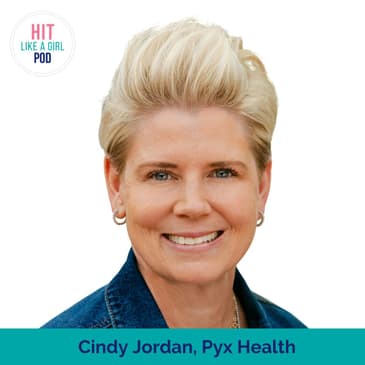

In this episode, Joy Rios is joined by Cindy Jordan, co-founder and CEO of Pyx Health. Cindy shares her personal journey and the inspiration behind Pyx Health's mission to combat loneliness, highlighting the profound impact of social isolation on mental well-being. Together, they explore the absence of a formal diagnosis for loneliness in healthcare and the role of technology in both exacerbating and alleviating this epidemic. Tune in for an insightful discussion on the intersection of technology, community, and mental health.
Episode Highlights
[00:00:00] Calling all Swifties and Champions of Change, Like a Girl Media is rolling out the red carpet
[00:00:05] for you with our Thrive Like a Girl contest.
[00:00:08] We're all about celebrating powerful women leaders who inspire us to dream big and push
[00:00:12] boundaries.
[00:00:13] And who embodies that spirit more than Taylor Swift herself?
[00:00:16] Here's your chance to see her live in concert.
[00:00:19] We are giving away two tickets to Taylor Swift's show in London on Saturday June 22nd.
[00:00:24] Imagine being part of the magic, all thanks to Like a Girl Media.
[00:00:28] Entering is easy.
[00:00:29] Subscribe, share and show us which episodes inspired you the most.
[00:00:33] Visit our website or check our social media for all the details.
[00:00:37] Don't just dream it, be it.
[00:00:39] Thrive Like a Girl and make this summer unforgettable.
[00:00:43] Contest opens globally.
[00:00:44] Voidware prohibited must be 18-year-old or to enter.
[00:00:47] No purchase necessary.
[00:00:48] Subscribe and share with hashtag ThriveLikeAGirl and tag us at LikeAGirlUnderscoreMediaforEntry.
[00:00:55] Unlimited entries means unlimited chances.
[00:00:57] Order chosen at random after contest closes May 20th, 2024.
[00:01:02] We'll be notified via DM.
[00:01:03] Make sure your profiles are not private.
[00:01:06] Check full rules on our site.
[00:01:07] This is your shot to see Taylor Swift live.
[00:01:10] Don't miss it.
[00:01:11] Hello there and welcome to the Hit Like a Girl podcast.
[00:01:25] My name is Joy Rios and on this show we talk about how complicated the world of
[00:01:29] healthcare can be.
[00:01:30] I often liken it to a 30,000-piece puzzle and each one of our guests comes to share their
[00:01:35] expertise and more about the piece of the puzzle that they hold on to.
[00:01:40] And so with every guest we get to understand a bigger picture.
[00:01:44] So today's guest is very special.
[00:01:46] I'm going to give you a moment to introduce yourself.
[00:01:49] Please, Cindy.
[00:01:50] I'm Cindy Jordan and I'm the co-founder and CEO of PixHealth.
[00:01:54] And I know we're going to talk about it but PixHealth is a company that treats loneliness.
[00:01:59] And because we treat loneliness, we often end up doing a lot of other things like helping
[00:02:04] people go to the doctor, make sure they have food on the table, that they're taking
[00:02:08] their medicine.
[00:02:10] So anything that you can think of in this social health space, we do through loneliness.
[00:02:15] That is such important work.
[00:02:16] But I mean, it's something that I've been talking about on a regular basis just
[00:02:20] about the loneliness epidemic and the importance of community and thinking about stats.
[00:02:24] It's almost as harmful to us as smoking.
[00:02:29] And more than anything, I would love to hear...
[00:02:31] Let's start with your journey.
[00:02:33] How did you get on to this path and was this part of your plan?
[00:02:36] I'd be surprised if many entrepreneurs like myself have plans like this.
[00:02:41] But my partner and I started a company and sold it I think in 2015 and really
[00:02:48] ended up working.
[00:02:49] I sold it to the advisory board and I worked for them for two years.
[00:02:54] And when I was finished, I was kind of finished.
[00:02:56] Like, I mean, for the reasons that you address on this podcast Joy, like healthcare is both
[00:03:01] great and also very frustrating because it's one of the most regulated industries in business
[00:03:08] really.
[00:03:09] But in 2017, my stepdaughter who was an adult at the time ended up having a very
[00:03:14] bad year.
[00:03:15] She was going in and out of the emergency room.
[00:03:17] I'm benounced to us because she was 18.
[00:03:19] And she ended up in an inpatient facility.
[00:03:22] And when we sat down as a family and I asked her, hey, you know, I'm a fixer.
[00:03:27] I would really like to get ahead of having a year like this.
[00:03:31] What comes first?
[00:03:32] And she told us that it starts with feeling lonely.
[00:03:35] Now she ended up being diagnosed with bipolar.
[00:03:38] So she had a serious behavioral health disorder.
[00:03:41] But the point was is that it really was stemming from this profound feeling of
[00:03:46] loneliness.
[00:03:47] And I didn't understand that because this is pre-pandemic.
[00:03:50] Like, you go to college, you have a roommate, you come to family dinner.
[00:03:54] Why are you lonely?
[00:03:56] And when I started researching it at the time, we were the only developed country in
[00:04:00] the world that didn't treat loneliness like a diagnosable, treatable mental health condition
[00:04:06] like depression and anxiety.
[00:04:08] And generally what you need to do that is you need to prove an evidence based
[00:04:11] screening which loneliness has.
[00:04:12] And then you need a way to intervene.
[00:04:15] So what we've learned post-pandemic, because now there's a lot of money going to research
[00:04:19] for loneliness, is that actually when you are mid to chronically lonely, there are
[00:04:24] degrees just like there are degrees of depression, just like there are degrees of anxiety.
[00:04:29] There are degrees.
[00:04:30] So when you're mid to chronically lonely, the brain actually starts to rewire and it
[00:04:35] starts to believe that nothing and no one can help you.
[00:04:38] Like your doctor can't help, your medicine won't work, no one understands.
[00:04:42] And so as opposed to depression, which is really a chemical imbalance, loneliness is rewiring
[00:04:49] the hardwires of the brain.
[00:04:50] And so for Riley that sort of never went away.
[00:04:55] And then when the pandemic hit she ended up losing her struggle and died at the age
[00:04:59] of 26.
[00:05:00] And so Picks has really become not only her legacy, but my personal journey in trying
[00:05:07] to help families not have to go through what I went through.
[00:05:09] Well, first of all, I want to say thank you for sharing your story.
[00:05:12] I know that it is, I'm so sorry that Riley is no longer with us.
[00:05:16] Me too.
[00:05:17] I'm sure it's difficult to talk about.
[00:05:18] So thank you for being here to talk about her journey and what the impact that
[00:05:24] it has had.
[00:05:25] I'd love to learn more about is there actually a diagnosis for loneliness?
[00:05:29] Is that what you're telling me?
[00:05:30] Not yet.
[00:05:31] But if you've gone to the doctor probably in the last year, you know how
[00:05:35] they'll ask you social determinants of health questions like are you safe in
[00:05:38] your home?
[00:05:38] Do you have food?
[00:05:39] There's starting a lot of doctors are starting to ask the three questions
[00:05:43] associated with loneliness that the evidence based screening is the UCLA
[00:05:47] screening is what it's called.
[00:05:49] And they can tell that you're lonely, but often and this is the fragmented
[00:05:54] system of health care.
[00:05:55] Like a doctor doesn't know what to do for you.
[00:05:57] There's not a pill that can fix it.
[00:05:59] There are very few companies out there even talking about it, let alone one
[00:06:02] like mine that actually is addressing it.
[00:06:05] And there's no billing code.
[00:06:06] And as you and I both know, the minute a billing code comes for loneliness,
[00:06:11] this whole landscape is going to change.
[00:06:13] Of course.
[00:06:13] Yeah.
[00:06:14] Well, so okay, what are those three questions?
[00:06:16] Oh my gosh, I actually couldn't say them to you off the top of my head.
[00:06:19] What I can tell you is that they're not, they never ask, are you lonely?
[00:06:24] They'll ask about feeling like does anyone in your world, do you
[00:06:27] feel like people understand you?
[00:06:29] Have you felt like you've been able to engage like those kind of
[00:06:32] questions, but the way that mental health conditions get found is
[00:06:37] through evidence based screenings because they've been proven
[00:06:39] through clinical trials to actually diagnose a condition.
[00:06:44] And we've had that for loneliness for a long time.
[00:06:47] It's just that nobody until we all experienced it as a collective
[00:06:51] population actually believed that loneliness was a killer.
[00:06:55] And in fact, then I bet you a lot of people who are listening to
[00:06:58] this will say, well, yeah, you know, my grandma's lonely.
[00:07:01] We, we then pigeonholed it into a senior problem.
[00:07:04] But the AARP did a huge study.
[00:07:07] I think it was two years ago now that said, that found that the
[00:07:10] most lonely population in the world is 13 to 24 year olds.
[00:07:14] And are of a specific demographic or just in general 13 to 24 year olds?
[00:07:18] I mean, there are demographics that influence like if you live
[00:07:21] in a rural area that obviously leads to more actual physical isolation,
[00:07:25] which then of course can impact loneliness living at or below
[00:07:28] the poverty line can impact, but it does not have statistical
[00:07:32] differences between men and women, between race, nationality.
[00:07:36] It is one of those very, very, very sneaky conditions that
[00:07:41] doesn't really impact folks differently.
[00:07:44] You can be a multi-billionaire and still be chronically lonely.
[00:07:49] Sure. Yeah.
[00:07:50] I think about like Taylor Swift and they're like, oh, having
[00:07:52] no one to call at that, you've made it to the top
[00:07:54] and then who do you call?
[00:07:56] And you've made it to the top by yourself.
[00:07:59] But when I think about this, I'm thinking about, well, several things.
[00:08:03] If do you believe in the statement that technology has actually
[00:08:07] contributed to the loneliness epidemic like the use of phones
[00:08:12] and social media and like the feeling of closeness without
[00:08:17] really having a relationship to be close with somebody.
[00:08:20] And then counter question is there a possibility that
[00:08:25] technology is also part of the solution?
[00:08:27] Thank you. You set that up beautifully for me, but the truth is,
[00:08:30] of course, I mean, if you look at 13 to 24 year olds, like, you know,
[00:08:34] I'm 52, right? When I grew up, I had four friends and we fought
[00:08:38] and we made up and we loved each other and we had this what I
[00:08:41] call a mild deep relationship.
[00:08:43] I learned things about engaging with people like forgiveness,
[00:08:48] like gratitude, like the whole cycles of interacting with humans.
[00:08:52] Now, you know, you have a hundred friends, but it's a mild wide
[00:08:57] and inch deep. You know, it's very, you know, we've I'm sure
[00:09:01] you've talked about this before, but it's very easy to be a
[00:09:03] keyboard warrior, even if you're someone's friend, like
[00:09:06] you'll say things that you would never say if you were
[00:09:08] in person. The flip side of that is you don't get any of
[00:09:12] the real benefit of like being close with a community or
[00:09:17] friends that through social media that you do when you
[00:09:20] when it's in person. So the answer is unequivocally. Yes.
[00:09:24] You know, I have a 15 year old son and this I we I literally
[00:09:27] literally just gave him one social media app this year
[00:09:31] because he's a freshman. There's no reason for it.
[00:09:34] Really, there's very, very little that's a creative.
[00:09:37] Do you mind asking which one? Which one did you give him
[00:09:39] permission? Instagram mostly because I can follow him.
[00:09:42] Secondly, because like just looking at the stats, it's
[00:09:46] one of the fewer from a what I would call like a
[00:09:49] detriment side for teenagers in particular. And then
[00:09:52] lastly, because that's his friends are on that, you know,
[00:09:55] the other thing though, I mean, I'm going down a rabbit hole
[00:09:58] here and then we'll talk about how technology is also has to
[00:10:00] be a part of the solution. Like we as parents give our
[00:10:03] teenagers phones and then talk about privacy with them.
[00:10:06] There's no privacy on that phone. He doesn't get to
[00:10:09] keep a single thing. I can take it at any point. And
[00:10:11] it's not because I don't trust you. It's because I
[00:10:13] love you. It's because I want to protect you. There's
[00:10:16] this idea that there's somehow a stigma attached to
[00:10:19] looking at your kids phone. It's it's quite the opposite.
[00:10:22] The creative and multiple ways that they can get find
[00:10:25] themselves in trouble or even adults, we're all at risk
[00:10:29] and unknowingly. Yeah, we see what happens to seniors
[00:10:32] all the time through technology, you know, but the
[00:10:35] reason it has to be a part of the solution is that
[00:10:37] phones are here to stay. So when you said phone and
[00:10:39] social media, I kind of separated them in my mind,
[00:10:41] right? We're not going backwards on accessibility.
[00:10:44] We're not going backwards on ease ability. We're not
[00:10:46] going backwards on any of that stuff. Information at
[00:10:50] our fingertips. So when you talk about addressing a
[00:10:53] problem is pervasive and big as loneliness, you
[00:10:56] have to have a technology presence. Now, what
[00:11:01] picks as business model is the technology is
[00:11:03] important because it serves people 24 seven. We
[00:11:06] do not use any kind of AI interaction with
[00:11:09] humans like we're not relying on a robot to
[00:11:12] conversation to help solve loneliness, right? We're
[00:11:15] giving people self management. There is a bot in
[00:11:18] there, but he's more he's directed conversation. You
[00:11:21] can't free chat with him. But what happens on the
[00:11:24] technology is within three interactions we can tell
[00:11:27] you who's in trouble. And when they are in trouble,
[00:11:30] a flag gets thrown and I have a whole staff,
[00:11:33] hundreds of them across the country literally that
[00:11:36] we call Andy and that stands for authentic
[00:11:38] nurturing dependable your friend. And when you
[00:11:41] are suffering from loneliness or you don't have
[00:11:44] food on your table or you don't have
[00:11:46] transportation or daycare for your kids, Andy is
[00:11:49] going to call you and Andy's going to help you
[00:11:51] through it. So Andy is a peer support model. All
[00:11:55] of my folks are certified all of them are
[00:11:57] employed, but they're not physicians. They're
[00:12:00] not psychiatrists because there is no way to
[00:12:03] address the pervasiveness of that problem
[00:12:06] through nurses doctors and psychiatrists. We've
[00:12:08] got to start leveraging models like ours, like
[00:12:11] a peer model. Actually, I'm so heartened to hear
[00:12:14] that there's not an AI aspect of it because
[00:12:16] they feel like there's so much bias in the
[00:12:20] current versions of AI that if you're trying
[00:12:22] to train a model on human behavior in such a
[00:12:25] way, like it just feels like a recipe for
[00:12:27] disaster for disaster for now. Maybe it
[00:12:30] won't be like that forever. We use AI on the
[00:12:32] back end, right? Like what we'll analyze
[00:12:34] the things we do to be to be better. But
[00:12:37] really the AI just helps our humans be
[00:12:40] smarter when they're on the phone. We don't
[00:12:42] let the AI have the conversation. Plus, if
[00:12:44] you're lonely, I mean... You can go talk to
[00:12:47] chat GPT, but that's not the thing that's
[00:12:48] going to be heartwarming or really like
[00:12:50] scratch that itch. Is it addressing mostly
[00:12:53] with a phone call? Is there ever any face
[00:12:55] to face either virtual face to face or
[00:12:58] in person face to face? And I guess I'm
[00:13:00] curious about how you would implement a
[00:13:03] community for somebody because ultimately
[00:13:05] community is what we're all lacking in
[00:13:08] many ways and is one of the ways to
[00:13:10] address it. So I guess that's open-ended,
[00:13:12] but I'd love to hear your thoughts. I
[00:13:14] totally agree with you. But the way I
[00:13:15] look at the continuum is we find these
[00:13:18] folks that are like I told you in the
[00:13:19] mid to chronic phase. So that means
[00:13:21] they are really either already very
[00:13:25] sick with comorbidities, both physical
[00:13:27] and mental health comorbidities, or
[00:13:29] they're on what we call a rising
[00:13:31] risk. Like they're getting there.
[00:13:32] Like they've stopped taking their
[00:13:34] medicine if they're a chronic diabetic.
[00:13:35] They've started using the emergency room
[00:13:37] in ways that they don't need to be.
[00:13:39] They've pulled away from their family.
[00:13:41] So when people are there, we call them
[00:13:44] stuck in mud. Right? Like you can't
[00:13:46] engage in community until we get you
[00:13:48] through that. It's think of it as like
[00:13:51] the episode, right? Whereas engaging
[00:13:54] in community is the long term self
[00:13:55] management. So the answer to your
[00:13:58] question is I really do believe that
[00:13:59] an in person solution is important and
[00:14:01] frankly, PIX is looking at growing
[00:14:03] into that space. But right now
[00:14:05] everything we do is telephonically or
[00:14:07] through the platform.
[00:14:08] Okay. And then what's the experience
[00:14:09] of the platform? Like how do they
[00:14:11] engage? The bot really is like, you
[00:14:14] know, again, not AI. He's machine
[00:14:16] learning. So we program what he says
[00:14:19] ahead of time. But he acts like a
[00:14:21] friend in a coffee shop. He tells
[00:14:22] jokes. He like he asks all of the
[00:14:25] important questions without being
[00:14:28] like what I call health health care
[00:14:30] greedy. If the last piece of
[00:14:32] technology that all of us have used
[00:14:34] for health care, I bet you 99 out of
[00:14:36] 100 of us will raise our hand and say
[00:14:37] that we were told to answer 700
[00:14:39] questions. It gave nothing to me.
[00:14:41] There was not that that platform
[00:14:43] did nothing for me. And so frankly,
[00:14:46] I'm just like, well, forget it.
[00:14:47] I'll just all fill out the paper
[00:14:48] forms when I get in there or
[00:14:50] there's nothing helping me here.
[00:14:51] What the bot does is like ask
[00:14:54] about sentiment. How are you
[00:14:55] feeling today? Like, so while I
[00:14:58] may be diagnosed bipolar and I
[00:14:59] may be suffering from chronic
[00:15:01] loneliness today, I feel good.
[00:15:03] I'm happy. You know, I'm happy in
[00:15:05] my space. And so the bot will
[00:15:06] celebrate that. And but what the
[00:15:08] bot is doing is develop as
[00:15:11] capturing information, important
[00:15:12] information, particularly around
[00:15:14] social health and loneliness.
[00:15:15] And then the Andy aspect of it,
[00:15:18] do people engage with the same
[00:15:20] Andy over and over again?
[00:15:22] Like are they a sigh? We definitely
[00:15:23] try to do that. The only time
[00:15:25] you may get an Andy that's not
[00:15:26] your Andy is if you dial in to
[00:15:29] have a hotline and, you know,
[00:15:31] your Andy doesn't happen to be
[00:15:33] on that day, right?
[00:15:34] So yeah, because if you think
[00:15:35] about the peer model and when I
[00:15:37] say peer, because this people
[00:15:39] get confused, it doesn't mean
[00:15:40] we have to look like each other.
[00:15:42] It doesn't mean we both have to
[00:15:43] be 52 year old women.
[00:15:45] It means we have to have a
[00:15:46] shared experience.
[00:15:47] We take a lot of great care
[00:15:49] in pairing people with shared
[00:15:51] experience. How does somebody
[00:15:52] become an Andy? Because I would
[00:15:54] also imagine that it is just
[00:15:56] as is probably just as
[00:15:58] important for the people on the
[00:15:59] other side, like you're creating
[00:16:01] community in both ways and
[00:16:02] connection.
[00:16:03] How did you kind of open that
[00:16:05] up? And who are these folks?
[00:16:06] And if somebody wanted to be
[00:16:08] one, how would they sign up?
[00:16:09] What we actually I mean with
[00:16:10] our growth because right now
[00:16:12] we're in 83 markets and cover
[00:16:14] almost 7 million people.
[00:16:15] So we hire Andy all the time.
[00:16:18] We take very good care in
[00:16:20] reaching out to people through
[00:16:21] like traditional employment,
[00:16:23] like LinkedIn and Indeed,
[00:16:25] but actually mission
[00:16:27] forward.
[00:16:28] So we tend to pull folks in who
[00:16:30] may have been like retired
[00:16:31] school teachers or social
[00:16:33] workers or something
[00:16:36] like that. And then we will then
[00:16:37] once we hire you, we'll get you
[00:16:39] certified and trained because we
[00:16:41] serve a lot of CMS business
[00:16:42] meaning Medicaid and Medicare
[00:16:44] where we're of the utmost when
[00:16:46] it comes to compliance.
[00:16:47] So we sort of go on
[00:16:49] the search of finding folks
[00:16:52] that can be like
[00:16:53] mission driven in their work
[00:16:55] and to be totally candid.
[00:16:57] Our number one referral for
[00:17:00] hiring Andy is Andy.
[00:17:01] It's something like 87 percent of
[00:17:03] all of our hires come in from a
[00:17:05] referral of a current Andy.
[00:17:06] I can imagine that it gives
[00:17:08] them a lot of the word I'm
[00:17:10] searching, but it's not pleasure.
[00:17:11] It's just satisfaction.
[00:17:12] And then it's got to feel good
[00:17:14] to be able to support somebody
[00:17:15] in that way, especially if
[00:17:16] they're reaching out for help
[00:17:18] and don't have anywhere else to
[00:17:19] go and you get to be their
[00:17:21] lifeline to a degree.
[00:17:22] And generally, if you look at
[00:17:23] other companies in health care
[00:17:25] because everybody's about the
[00:17:26] margin and the bottom line in
[00:17:27] everything else.
[00:17:28] And don't get me wrong, I run a
[00:17:29] healthy company, but you can do
[00:17:31] that. Generally, these folks
[00:17:32] are treated as 1099s
[00:17:35] or they'll
[00:17:36] they'll be given 32 hours
[00:17:38] worth of work or 31 so they
[00:17:40] don't have to get what we offer
[00:17:41] full benefits for
[00:17:43] a one K we give every other
[00:17:44] Friday off.
[00:17:46] We have a full time therapist
[00:17:47] on staff only
[00:17:48] for our andies
[00:17:50] because that's what you hear
[00:17:52] on a daily basis.
[00:17:53] Yeah. I mean, so
[00:17:55] like I actually think that we're
[00:17:57] doing something like that is
[00:17:58] kind of breaking the mold on
[00:18:00] how to serve these folks.
[00:18:02] It sounds like it. That's what
[00:18:03] I mean, you're like you're not
[00:18:04] only helping the the technical
[00:18:06] demographic, but even the
[00:18:07] people that are supporting
[00:18:08] I'm confident that they get
[00:18:10] support as well. It's got to
[00:18:11] be self fulfilling in some way.
[00:18:14] And so you're doing good on so
[00:18:15] many levels. That's amazing.
[00:18:17] If you've been in this
[00:18:18] business long enough, you have
[00:18:19] to believe in like the tail
[00:18:20] winds, right? Like why does
[00:18:22] one company that has an amazing
[00:18:24] idea supersede the other
[00:18:26] company that has an equally
[00:18:27] amazing idea? And then so the
[00:18:29] first thing you do is look at
[00:18:30] people and that's important,
[00:18:31] like who's running the company?
[00:18:33] Where are they? What's their
[00:18:34] motivation? And then the next
[00:18:35] thing you look at is like that
[00:18:37] untangible. The thing that
[00:18:38] you can't see or put your
[00:18:40] finger on, but it's the tail
[00:18:41] winds and that has to come
[00:18:43] from being like from being
[00:18:45] good employers from doing
[00:18:47] business fairly and from not
[00:18:50] always just chasing the
[00:18:52] dollar. Like I like to tell
[00:18:53] my staff, it's one thing for us
[00:18:55] to be a company that's doing
[00:18:57] well and making money. But
[00:18:58] it's another thing to punch a
[00:18:59] hole in the earth in a good
[00:19:00] way. And so that's first.
[00:19:02] I love that. I was listening
[00:19:04] to a podcast over the weekend
[00:19:05] and it was talking about
[00:19:07] touching our heart and how
[00:19:08] much of like our heart
[00:19:09] strings are actually tied to
[00:19:11] our health in some ways. And
[00:19:13] how like you actually might
[00:19:15] get more benefits from
[00:19:16] listening to a song that
[00:19:18] makes you feel something or
[00:19:20] like taps into an emotion
[00:19:22] that you might otherwise have
[00:19:23] a hard time tapping into.
[00:19:25] And that might be better for
[00:19:26] your health than taking a pill
[00:19:28] right or a vitamin.
[00:19:30] And that's not the kind of
[00:19:31] thing that in our health care
[00:19:33] system is set up to measure.
[00:19:35] But those intangibles of like
[00:19:38] heartwarming things, things
[00:19:39] that make you feel connected
[00:19:41] and just like on a human
[00:19:42] level, you know, feeling
[00:19:45] deeply and with somebody
[00:19:47] else as having that shared
[00:19:48] experience has got to be
[00:19:50] part of our wellness culture.
[00:19:52] No doubt. If we don't
[00:19:53] understand the value of social
[00:19:55] health at this point, you know,
[00:19:57] if you look at the new CMS
[00:19:58] guidelines for 2024, what they
[00:20:00] do is they send out like not
[00:20:01] only the things that got new
[00:20:03] billing codes, but like things
[00:20:05] that are can be reimbursed
[00:20:06] in different ways and I won't
[00:20:08] get into all of that.
[00:20:09] And the majority of them are
[00:20:10] around social health because
[00:20:12] there are not enough doctors
[00:20:14] in the world. There are not
[00:20:15] enough nurses and there are
[00:20:16] not enough therapists to treat
[00:20:18] this pervasive problem, this
[00:20:20] huge gap that we're creating
[00:20:23] around social health.
[00:20:24] The more we advance in
[00:20:25] technology, the wider the gap
[00:20:28] gets. And so there's going to
[00:20:29] have to it's not just pics.
[00:20:31] I mean, of course, I'm
[00:20:31] shamelessly like promoting
[00:20:33] and believe in my company, but
[00:20:35] there are companies like mine
[00:20:36] and these are models that are
[00:20:38] going to have to be embraced
[00:20:39] as a part of like care.
[00:20:42] I totally understand where
[00:20:43] you're coming from. I feel
[00:20:44] similarly in like in my
[00:20:45] mission of trying to tip the
[00:20:47] scale of like people at
[00:20:48] positions of power and who gets
[00:20:50] a voice and all that.
[00:20:51] But when I see other people
[00:20:53] doing the same thing that I'm
[00:20:54] doing, I don't I zero percent
[00:20:56] feel threatened. I'm just like,
[00:20:57] good, we need more of that.
[00:20:59] If there are more people out
[00:21:00] there that are after a similar
[00:21:03] mission than we all win
[00:21:04] because there's it probably
[00:21:06] would be impossible if you
[00:21:07] were able to tackle every
[00:21:09] single lonely person in the
[00:21:10] world with your business model.
[00:21:12] It is important that we one
[00:21:14] of the things like prepping
[00:21:15] for the podcast is some of
[00:21:16] the questions that you've asked
[00:21:17] before. And one of them was like,
[00:21:19] you know, what would you change
[00:21:20] in health care?
[00:21:20] And the short answer would be I
[00:21:22] would have a billy coat around
[00:21:23] loneliness. But the longer
[00:21:25] answer would be that right
[00:21:27] now, the way that we
[00:21:29] incent folks to provide care,
[00:21:31] it needs to move.
[00:21:33] It's disparaging, firstly.
[00:21:34] Number one, hospitals get paid
[00:21:36] a lot of money when people
[00:21:37] show up at their ED, but health
[00:21:38] and plans aren't incentive to
[00:21:40] send people the ED.
[00:21:41] The ED is really supposed to
[00:21:43] be for emergencies, right?
[00:21:44] Right. Incentives are not
[00:21:45] aligned and fee for service just
[00:21:47] has to go away.
[00:21:48] It can't just be I did
[00:21:49] something so I should get paid.
[00:21:51] Outcomes should be a part of
[00:21:52] everything that we're doing.
[00:21:54] And when you talk about outcomes,
[00:21:55] there's there's no more powerful
[00:21:57] model than a peer model.
[00:21:59] And one of the things that
[00:22:00] I've always had a hard time
[00:22:01] understanding how to measure is
[00:22:02] prevention because you want
[00:22:04] people like how do you have a
[00:22:06] way to do it? Because it's
[00:22:07] like that would be the best
[00:22:09] outcome as somebody not getting
[00:22:10] sick or not needing to
[00:22:12] you know, use the system in
[00:22:13] the first place. But that's
[00:22:14] a really hard to put on a
[00:22:16] spreadsheet and say I saved you
[00:22:18] X amount of dollars insurance
[00:22:20] company. The only way really to
[00:22:21] do it is self reported, right?
[00:22:23] You asked the member, hey, do
[00:22:24] you feel better? Did it stop
[00:22:26] you from using a higher level
[00:22:27] of service? We actually do
[00:22:28] that. But is that valued
[00:22:30] because you know, all pretty
[00:22:31] much all of my clients are
[00:22:33] health plans? No, it's not.
[00:22:34] That's not something that an
[00:22:36] actuary can put into an ROI
[00:22:38] calculation and say, oh, look
[00:22:39] look with this.
[00:22:40] So look, you have to follow
[00:22:42] the money in health care
[00:22:43] very, very unfortunately. But
[00:22:45] you know, we've got to start
[00:22:46] putting more value on to your
[00:22:49] point. Like if I got you into
[00:22:51] the doctor and I made sure that
[00:22:52] you were back on your medicine,
[00:22:53] I probably stopped you from six
[00:22:55] months from now having an
[00:22:57] expensive emergency room or
[00:22:58] God forbid inpatient admission.
[00:23:00] But how do you quantify that?
[00:23:02] Okay, so I love everything
[00:23:03] that you're doing. How do
[00:23:04] people get involved if they
[00:23:06] want if they are feeling
[00:23:07] lonely or and kind of
[00:23:09] address the Andy aspect. But
[00:23:11] I mean, if somebody wants to
[00:23:12] be involved in your sphere,
[00:23:14] where do you direct them?
[00:23:15] Well, we do have a free version
[00:23:17] of pics on the on, you know,
[00:23:20] the stores, the Google and
[00:23:21] you know, the Play Store and
[00:23:23] the Apple Store. Admittedly,
[00:23:24] it doesn't have the
[00:23:25] Andes attached to it. Like one
[00:23:27] of the things I'm doing is
[00:23:28] like kind of growing up as
[00:23:30] a company is my goal is that
[00:23:32] a consumer will never pay for
[00:23:33] this. So going through health
[00:23:35] plans is an insurance is one
[00:23:37] of the ways that I'm doing
[00:23:38] that. But that's great because
[00:23:39] you said earlier that you're
[00:23:40] tied to Medicare and Medicaid
[00:23:42] so for the populations that
[00:23:44] are in probably a need of
[00:23:45] your services most are how
[00:23:48] many states have you been able
[00:23:49] to tackle through Medicaid?
[00:23:51] I think we're in at this point
[00:23:53] 37 or 38 December is our
[00:23:56] biggest month. So we've closed
[00:23:58] like a lot. So we're in and
[00:24:00] you know, if you look at the
[00:24:01] map, guess what states were
[00:24:02] not in fee for service states?
[00:24:03] Well, congratulations on that.
[00:24:05] That's massive. Yeah. You
[00:24:07] know, there's an OK. We're
[00:24:08] kind of approaching time,
[00:24:10] but I actually have another
[00:24:12] set of questions if you are
[00:24:13] available. Oh, sure. And it's
[00:24:15] sort of has it has to do with
[00:24:17] entrepreneurship and I'm
[00:24:18] wondering if you have any
[00:24:19] advice for others. And I'm
[00:24:21] just going to say like I'm
[00:24:22] like other entrepreneurs who
[00:24:24] are LGBTQ plus like do you
[00:24:27] have any advice for them?
[00:24:28] Because I imagine that
[00:24:29] navigating health care as a
[00:24:32] business person and all of
[00:24:34] what is available and not
[00:24:35] available. All of the whole
[00:24:37] landscape is kind of
[00:24:38] intimidating. Do you have
[00:24:40] advice for folks? I think
[00:24:41] that my advice is probably
[00:24:43] not earth shattering, but I
[00:24:45] and the other reason I can
[00:24:46] give this advice is because I
[00:24:47] did it sort of wrong. I think
[00:24:49] in my first company in the
[00:24:50] very beginning, but part of
[00:24:53] I think being a successful
[00:24:54] LGBTQ entrepreneur is to be
[00:24:57] LGBTQ. Like I used to worry
[00:24:59] when I was pitching investors
[00:25:01] that if they knew I was a
[00:25:02] lesbian, then they wouldn't
[00:25:03] give money to me. And the
[00:25:05] truth is those are folks I
[00:25:06] don't want their money.
[00:25:07] Right. There is a lot of
[00:25:09] about being out, you know,
[00:25:11] candid. Like there's not
[00:25:13] enough of us that are being
[00:25:15] represented in the
[00:25:15] entrepreneurial space to begin
[00:25:17] with debunking some of the
[00:25:19] stereotypes around what LGBTQ
[00:25:22] entrepreneurs look like. And
[00:25:23] frankly, I don't even know
[00:25:24] what those are, but you
[00:25:26] know, it's
[00:25:27] Lawned.
[00:25:29] Where's glasses?
[00:25:31] We just did a private
[00:25:33] equity recap in July. And
[00:25:35] we ended up getting quite
[00:25:37] a bit of interest. And I was
[00:25:38] meeting with a private equity
[00:25:39] firm and the gentleman sitting
[00:25:41] across the table for me said,
[00:25:43] the majority of your
[00:25:44] management team is women. Do
[00:25:45] you hire men? And I said, well,
[00:25:47] firstly, said no human ever
[00:25:49] that has that comment ever come
[00:25:51] out of anyone's mouth. But I'll
[00:25:52] entertain it anyway is that
[00:25:55] we just hired the best people
[00:25:56] for the job. And what he was
[00:25:58] in effect doing was being like,
[00:26:00] do you like men or are you a
[00:26:01] manhater?
[00:26:03] And in his like self way. And
[00:26:05] so my point to him was like,
[00:26:06] we're not meant to do
[00:26:07] business together. Yeah. And
[00:26:09] that's okay. There's plenty of
[00:26:10] business out there to be had.
[00:26:12] That's right. Yeah. Well, and I
[00:26:14] guess given the fact that
[00:26:16] there's so few people that are
[00:26:18] out, I think that there's a
[00:26:20] connection between this
[00:26:21] conversation around loneliness
[00:26:23] because I think people on the
[00:26:24] queer spectrum feel there's
[00:26:26] a shame, unfortunately still
[00:26:28] for a lot of people in stigma.
[00:26:30] And I'm just how do we take
[00:26:31] this away? How do we make that?
[00:26:32] I mean, that's not an easy
[00:26:34] question to answer. I don't
[00:26:35] expect you to have the
[00:26:36] answers because I think that
[00:26:38] when you see the onslaught of
[00:26:39] bills being presented that are
[00:26:41] countering, you know, people's
[00:26:43] existence, it's really hard to
[00:26:45] just see like to say like, oh,
[00:26:46] just let it go. Just be yourself.
[00:26:48] And, you know, there's not any
[00:26:50] consequences to that because
[00:26:51] unfortunately there are, but
[00:26:53] it's a tough space to
[00:26:55] navigate. And I love to be
[00:26:58] able to bring our audience to
[00:26:59] something that is hopeful.
[00:27:01] And so if you have any, you
[00:27:03] know, words of encouragement
[00:27:04] for people that it's worth
[00:27:06] to be authentic and be
[00:27:08] themselves out in the world,
[00:27:10] I would love to hear it.
[00:27:11] Well, I can tell you that the
[00:27:12] most encouraging thing is that
[00:27:13] it feels better for you.
[00:27:15] It feels better for me to walk
[00:27:17] authentically through this
[00:27:18] earth. And then secondly, I
[00:27:20] know that and oftentimes,
[00:27:21] like particularly when we think
[00:27:22] about politics and stuff, we
[00:27:24] can feel insignificant. You know,
[00:27:25] we always talk about one vote
[00:27:26] or one I know, I know
[00:27:29] for a fact that in the two
[00:27:30] businesses I've done and the
[00:27:31] investors that I've
[00:27:32] interacted with in the people
[00:27:34] that I've employed, that being
[00:27:36] an out lesbian has changed
[00:27:38] people's minds. And so maybe
[00:27:40] it was 10 people, maybe it
[00:27:42] was 20, maybe it's 100. I don't
[00:27:44] know the number, but those 10
[00:27:46] will affect another 10 who
[00:27:47] will affect another 10. And
[00:27:49] that's the best way I can. Is
[00:27:51] it easy? No, it's not easy.
[00:27:52] I feel bad for my son, you
[00:27:54] know, because he's like when
[00:27:56] they make Mother's Day gifts
[00:27:58] at school, like he's there
[00:27:59] the longest, you know, but
[00:28:00] we also like we also gave
[00:28:02] him permission to be proud
[00:28:04] about his family. And I know
[00:28:05] that that has impacted his
[00:28:07] little group of friends. And
[00:28:08] so I guess what I'm trying to
[00:28:10] say is it might feel
[00:28:12] inconsequential to like, if
[00:28:15] I'm on an airplane and someone
[00:28:16] asked me where my husband is,
[00:28:17] I correct them, oh, my wife.
[00:28:19] And that small one thing
[00:28:22] can make a difference. And you
[00:28:23] just never know where it's
[00:28:24] going to go next. And so I'm
[00:28:26] not trying to say that this
[00:28:27] is easy. It's not. I grew up
[00:28:29] in the 80s. That wasn't easy.
[00:28:31] But it is impactful.
[00:28:33] Yeah, I 100% agree with you
[00:28:35] that every single one of us
[00:28:37] like what we do matters. And
[00:28:38] even if it doesn't feel like
[00:28:40] it at the time, but it
[00:28:41] absolutely does. And even if
[00:28:43] you can affect one person
[00:28:45] in the form of like being
[00:28:47] empathetic, being a good
[00:28:48] listener, accepting being true
[00:28:50] to yourself, being a good
[00:28:51] example, or showing
[00:28:54] kindness and supporting a
[00:28:56] friend in need. You know,
[00:28:57] those are the types of
[00:28:58] things that connections and
[00:29:00] relationships and ways of
[00:29:02] walking through the world that
[00:29:04] even if it's a small circle,
[00:29:05] like it matters a lot.
[00:29:07] Like the whole starfish theory,
[00:29:09] right? You're like 100%.
[00:29:10] I just want to say thank you
[00:29:11] for what you are doing in the
[00:29:13] world because it really
[00:29:15] matters. And thank you
[00:29:17] for opening up and talking with
[00:29:18] me about this. And I'm excited
[00:29:20] to share your journey and all
[00:29:22] you're doing with our listeners.
[00:29:23] Well, thanks for having me.
[00:29:24] I mean, it's it's wonderful
[00:29:26] to be like invite. You know,
[00:29:28] I've done a lot of podcasts
[00:29:29] in the last however many
[00:29:30] years and not all of them
[00:29:32] are as encouraging and open
[00:29:34] as you are. So thank you for
[00:29:36] letting me be my pleasure.
[00:29:38] So can I if people want to find
[00:29:40] you online, if they want to work
[00:29:41] with you, if they just want to
[00:29:43] follow you and admire you, where
[00:29:44] would you send them?
[00:29:45] LinkedIn is probably the best.
[00:29:47] Although I mean, you can always
[00:29:49] reach out to me directly.
[00:29:50] I'm Cindy at picks health
[00:29:52] p y x health dot com.
[00:29:54] I will include that in the
[00:29:55] show notes. Thank you for
[00:29:56] everything that you're doing
[00:29:57] and I appreciate you as well.
[00:29:59] Thanks, Joy. Thanks for having me.
[00:30:01] Thanks for listening.
[00:30:02] You can learn more about us
[00:30:04] or this guest by going to our
[00:30:05] website or visiting us on any
[00:30:07] of the socials with the handle
[00:30:09] hit like a girl pod.
[00:30:10] Thanks again. See you soon.
[00:30:12] Again, thank you so much
[00:30:14] for listening to the hit
[00:30:15] like a girl podcast.
[00:30:16] I am truly grateful for you
[00:30:18] and I'm wondering if you could
[00:30:19] do me a quick favor.
[00:30:20] Would you be willing to follow
[00:30:21] or subscribe to this podcast
[00:30:23] or maybe leave us a rating
[00:30:24] or review? Or if you're feeling
[00:30:26] extra generous, would you
[00:30:27] share this episode on your
[00:30:29] Instagram stories or with a
[00:30:30] friend? All those things help us
[00:30:32] podcasters out so much.
[00:30:34] I'm the show's host Joy Rios
[00:30:36] and I'll see you next time.