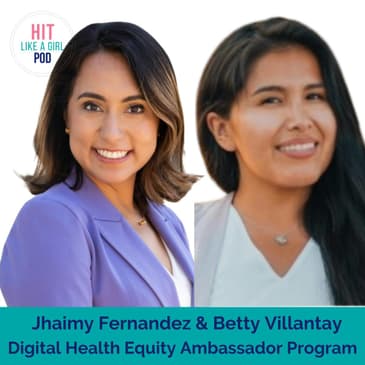

In this episode, Joy Rios welcomes Dr. Jhaimy Fernandez, a family medicine resident and digital health equity leader, and Betty Villantay, an aspiring physician and advocate in the digital health equity space. The episode delves into the complexities of healthcare, with a particular focus on digital health equity and the challenges of telemedicine, especially in underserved communities. Dr. Fernandez shares her journey from being the first in her family to attend medical school to recognizing the importance of giving back and supporting non-traditional, underrepresented students in medicine. Betty's story highlights the obstacles of navigating a career in biomedical engineering and medicine without a clear guide. Together, they discuss their collaboration in hosting a digital health conference aimed at bringing together people of color to share their experiences in the digital health space. The conversation also touches on the practical aspects of implementing telemedicine, addressing biases from healthcare providers, and the importance of communicating effectively with patients to overcome language barriers and technological challenges. This episode sheds light on the necessity of digital health equity and the power of innovative communication strategies like leveraging common platforms such as WhatsApp to improve patient engagement and access to care.
[00:00:00] Hello there and welcome to the HIT Like a Girl podcast.
[00:00:12] My name is Joy Rios and on this show we talk about how crazy, crazy, crazy complicated
[00:00:17] the world of healthcare is and each one of our guests gets to share their area of expertise
[00:00:23] to help us put the big picture together, the big crazy puzzle.
[00:00:26] So if you don't mind we have two guests today and I would like you both to take a minute
[00:00:31] to introduce yourselves and I'm going to start with you.
[00:00:33] Hi Joy, thank you for having us on your podcast today.
[00:00:37] My name is Dr. Jamie Fernandez.
[00:00:39] I'm the family medicine resident at Harbor UCLA and digital health equity leader.
[00:00:44] Okay.
[00:00:45] And hi my name is Betty Vellante.
[00:00:47] Thank you again so much for I'm honored to being in here.
[00:00:50] Well, my journey is long but let's just cut it short.
[00:00:53] I'm a very non-traditional pre-med.
[00:00:57] I do aspire to become a physician one day in this health equity, digital health equity
[00:01:02] space in mindset and yeah if anything put me as an advocate that'd be more my label.
[00:01:09] Okay and can you guys tell me how you know one another?
[00:01:12] Sure, I'm happy to share a story.
[00:01:14] So just a little bit of background about myself.
[00:01:17] I was born in Los Angeles.
[00:01:19] I'm a Latina American.
[00:01:21] I'm the first one in my family to go to medical school and the path to become a doctor has become
[00:01:25] has been quite challenging to say the least.
[00:01:28] So by the time I got to medical school, I realized how important it is to give back.
[00:01:33] So since then I've been collaborating with organizations like Mime and Thor and the Latino
[00:01:38] Medical Student Associations and hold either webinars or speeches just to talk to other
[00:01:44] non-traditional underrepresented students going into medicine and sharing my path.
[00:01:48] So last year I was sharing my journey on a woman in medicine webinar for Mime and Thor
[00:01:54] and part of my journey I shared that I was interested in health tech and telemedicine
[00:01:58] and Betty was in the audience.
[00:02:02] And usually people reach out to me with questions about how do I study for my MCAT
[00:02:05] or I'm really not nervous about applying to medical school but Betty reached out with
[00:02:10] a different purpose.
[00:02:11] Yeah, so I was in Los Angeles and Charles Drew that's where they were hosting Mime
[00:02:16] and Thor.
[00:02:17] It was actually a hybrid conference so yeah we were very small of us and when you made
[00:02:22] that announcement I was like, oh my word.
[00:02:26] I think I found someone that thinks like me because for such a long time my background
[00:02:32] being biomedical engineering I coming into UC Irvine I didn't even know the word engineering
[00:02:38] because as a child my roles was confused between being an adult translating for my
[00:02:44] parents and my family and then so I had no space to really think about what I really liked
[00:02:51] or what I'm into.
[00:02:52] So when I got into college, knock on wood that everything worked out for me getting
[00:02:58] into a good school but still I had no clue what the term engineering was and yet my
[00:03:03] counselor said you're good in math I can see that maybe you should consider it
[00:03:08] And so he had to break it down for me and so since then moving forward I kind of paved
[00:03:15] the way for myself trying to pretty much you know find answers and I just felt like a lone
[00:03:21] wolf for such a long time and so when Jamie said hey there's this opportunity in a heart
[00:03:28] beat I just I contacted her right away.
[00:03:30] And what was the opportunity?
[00:03:31] So at the time we were hosting a digital health conference and Betty is also a very
[00:03:37] talented videographer and photographer so she joined on board and that was a very successful
[00:03:42] conference where we brought people of color digital health leaders coming in and kind of
[00:03:47] sharing their experience in the space.
[00:03:49] So one thing I did want to you know bring up is that Betty's experience is not is
[00:03:54] it's quite quite unfortunately quite normal in the healthcare field throughout in all
[00:03:58] of medical school pre-med I went to UCLA for undergrad and medical school I wasn't
[00:04:04] taught about digital health equity.
[00:04:05] It wasn't until my fourth year at med school when COVID came that they realized oh we should
[00:04:10] do a really quick course on telemedicine and we did like a two days of like this is how
[00:04:15] you sign in and that's it you're done.
[00:04:17] And then I graduated went to residency and the first couple of years I was doing
[00:04:22] some phone visits and then mainly in person but I noticed that a lot of my patients
[00:04:27] I saw so I work in Harbor UCLA which is Alley County serves 80% Medicaid medical
[00:04:32] patients majority black and brown like Spanish speaking patients and I noticed that
[00:04:39] I out of seven patients I was seeing on my panel I would always have about three or
[00:04:43] four no shows and those were patients that I really needed to see like patients
[00:04:48] with really uncontrolled diabetes patients who I really needed to see me and
[00:04:53] I started digging through their chart and realized that they had a really big
[00:04:56] pattern of no shows and they will be the perfect patients to do telemedicine
[00:04:59] with so the next time I did see them I offered the services to them and it was
[00:05:04] actually quite interesting some of them had never didn't even know we had those
[00:05:08] capabilities this was already two years after the pandemic and for me that
[00:05:12] was just such an eye-opener and really start got me to start thinking about
[00:05:15] telemedicine digital health equity.
[00:05:18] So is that in terms of communication like they weren't communicated to or was
[00:05:23] it a language barrier or was what was it that they like what were the
[00:05:27] reasons behind them not under not knowing what was available to them.
[00:05:31] Yeah that's a really good question so usually a doctor patient interactions
[00:05:36] the patient walks into the room and are just okay I'll see you a follow-up in
[00:05:39] three months so doctors have the option at least at my clinic to offer either
[00:05:42] a video or a phone visit but a lot of times doctors don't offer the other
[00:05:46] options if they don't believe that the patient has the internet capabilities
[00:05:51] or the technological expertise to actually do this so it's easier just
[00:05:54] not to offer it.
[00:05:55] Gotcha.
[00:05:55] So one aspect could be biased from the physician part the other aspect could
[00:05:59] be mistrust from the patient side as well and also the way we communicate it
[00:06:04] so for instance the word portal is medical jargon.
[00:06:07] Okay.
[00:06:07] It does not translate in Spanish.
[00:06:09] What's the right word?
[00:06:10] What would you say?
[00:06:11] I don't know.
[00:06:12] I saw the way I pitch this telemedicine to my patients is I say how do you use
[00:06:17] WhatsApp and they all use WhatsApp.
[00:06:19] Of course they all use WhatsApp.
[00:06:20] Yeah they're on Facebook they're messaging their family and other countries
[00:06:23] and I was like you know what you can message me the way you talk to your
[00:06:26] family on WhatsApp and their eyes open they're like what my doctor's on
[00:06:29] WhatsApp and then I say okay not it's not called WhatsApp but something similar.
[00:06:33] I love it.
[00:06:34] So you utilize it like that and then they're intrigued of it and then
[00:06:37] that's how I get to start the conversation let's continue speaking
[00:06:40] like this so that when you do have those high blood sugar you can
[00:06:42] message me right away.
[00:06:43] And how has that translated as far as usage since you started pitching
[00:06:48] it?
[00:06:48] Yeah a really really big uptake in my class there's three classes
[00:06:53] each class with 12 residents and as a digital health equity lead I get to
[00:06:57] actually bring in students to work with me and shadow me as I do the telemedicine
[00:07:01] visits and the students are the ones helping the patient enroll and getting
[00:07:05] them through the process.
[00:07:06] So I've actually had this project started about two months ago so we've had
[00:07:10] two full two to three full clinic days so that means 12 patients that were
[00:07:13] old video who had never done it before.
[00:07:15] And how have they gone?
[00:07:16] You know Iraqi just say the least but it's been a really great up and
[00:07:22] down because when a patient opens up their home to you in a telemedicine
[00:07:28] visit you learn so much.
[00:07:29] Yeah well once when you're as soon as you said what's up I'm like oh that's
[00:07:35] what we'll click with the Latin community like 100% and I'm sure others
[00:07:40] as well and so once you're able to like put that in their in their mind of
[00:07:44] course they're gonna pick it up that's much more I totally feel you
[00:07:47] that's much more like at home and where people would feel comfortable
[00:07:51] than saying hey log into your patient portal.
[00:07:53] Yes can I add a little bit on that actually because like exactly what
[00:07:57] Jamie said she it was the best way to communicate with the patient of
[00:08:02] explaining what a software is in their language and I think that is the
[00:08:06] biggest thing of educating and communicating and creating that
[00:08:11] initial trust at first impression because some doctors will say oh well
[00:08:16] do you have internet and that internet is a confusing word for some people
[00:08:21] they'd be like oh wi-fi broadband in my home no.
[00:08:24] They're not thinking of their phone.
[00:08:26] Exactly and so that is a big thing and frankly enough like in
[00:08:30] terms of like I can speak a little bit more of like the Latin community
[00:08:33] we're very shy and we fear a lot and we honestly do not become very
[00:08:39] honest even if we are like the same ethnicity practitioner who
[00:08:44] you know is communicating with you you're in the same
[00:08:47] ethnicity but it's still it's a challenge that even till this day
[00:08:51] I even face it I see it every day at community clinics
[00:08:55] and I try to communicate with them what is the best way for them to
[00:08:59] understand me and how can I teach them especially with technology
[00:09:03] so yeah I like that idea with WhatsApp so I'm probably gonna use that too
[00:09:07] yeah. I think it's really smart so as you are creating
[00:09:11] curricula around digital health equity what does that look like
[00:09:15] and as you're trying to teach people because it sounds like it's education
[00:09:19] on the provider side as well as the patient side.
[00:09:22] Yes yes and this this curriculum has designed very intentionally
[00:09:27] so through my path learning about digital health equity
[00:09:31] started really at vibe which was earlier this year in February and
[00:09:34] learning about the TechWidi for the Health Foundation's TechWidi
[00:09:39] for TechWidi Coalition and then I started doing research
[00:09:42] about other medical schools and whether or not they have a digital
[00:09:45] health equity or telemedicine curriculum and I actually found
[00:09:49] that in the year 2000 in Health and Tech published
[00:09:52] did a systematic review of telemedicine curriculum undergraduate
[00:09:55] schools and they only found 28 programs and of those I did a quick search and
[00:10:00] only three of them mentioned the word equity. Wow. Yeah so that opened like
[00:10:04] a huge it was a huge red flag for me and then I started really
[00:10:07] wanting to understand the program the problem a little bit more
[00:10:10] so like I said I like to speak to groups of students
[00:10:13] so I recently gave a speech at the Summer Urban Health Fellowship
[00:10:16] which consisted of 45 underrepresented Black and Brown students
[00:10:21] going into the health fields and I just did a survey how many of you have
[00:10:24] ever heard the term digital health equity?
[00:10:27] Want to guess? Zero maybe one. 10% had heard the term. Okay.
[00:10:30] Yeah yeah 10% had heard the term and then I gave my presentation
[00:10:34] it was very simple of you know the cold digital health equity
[00:10:37] just to be very inclusive build trust in a way that people understand
[00:10:40] it was a very easy concept for Gen X millennials to understand
[00:10:43] and after after the presentation I surveyed the GEM
[00:10:47] and 90% of the students felt a responsibility as future providers to use
[00:10:52] digital health to enable care with their patients.
[00:10:55] That's amazing so one of the things that I have been
[00:10:58] thinking about a lot lately and talking with people that I know is like
[00:11:02] digital health is such a term that we throw around
[00:11:07] but can we speak to ways that has actually made a difference
[00:11:11] and when the theory versus the practice
[00:11:15] of that concept of digital health bringing equity
[00:11:19] do you get to see that in play? Do you have any evidence
[00:11:22] and even in this short amount of time that you've been talking about it
[00:11:25] can you share any stories or experiences around
[00:11:29] how digital health has made a difference or made things more equitable?
[00:11:34] Yeah I have a one patient story particularly comes to mind
[00:11:38] I had a patient to have a patient he's a construction worker 45 year old man
[00:11:43] multiple chronic conditions but we were working on hypertension
[00:11:46] when he sees me he's always really nervous his blood pressure is through the
[00:11:48] roof but he swears at home it's normal so I said okay that's fine
[00:11:53] so let's do a video visit go home take your blood pressure and we'll
[00:11:56] we'll see what you know what it is
[00:11:58] so I had my student work with them connect him he was like wow this is
[00:12:01] great I don't have to miss work I can just like kind of step out and it'll be
[00:12:04] fine so we're like okay so the day of the visit
[00:12:07] he's at home that morning and I was like okay
[00:12:09] it's time to check your blood pressure can you get your machine please and
[00:12:12] show me how you check your blood pressure
[00:12:14] so he's like okay so he's really excited to show me how he is at and I
[00:12:17] see him take the blood pressure machine and put it around his wrist
[00:12:20] oh
[00:12:23] I was like no wonder your blood pressure is low I hope
[00:12:28] so because I was looking through the video I was able to really
[00:12:32] course correct him at the moment and you know really instruct him
[00:12:35] to sit by his side make sure his arm is in 90 degrees and take his blood
[00:12:38] pressure correctly and that was like a really good teaching moment
[00:12:42] and having the students there by my side I just you know turned around and
[00:12:45] looked at them they were like oh my goodness this is so easy
[00:12:47] and if we hadn't had this experience that patient would have been in my
[00:12:51] office and I might have taken out of blood pressure medication right which
[00:12:54] was the wrong course of action right that's incredible yeah can you tell
[00:12:58] me a little bit more about your journey as pre-med I would love to hear just
[00:13:02] like pull out what it is because it's it's a journey that we haven't heard much
[00:13:07] about on the podcast and I would like to bring light to it.
[00:13:09] Yeah of course so actually non-traditional pre-mence is now
[00:13:13] becoming more common than we think especially now this day in age
[00:13:17] I think a lot of medical students do state like oh if I can go back in
[00:13:21] time I wish I've done a gap year to just
[00:13:24] on other things so I took that advice entering into
[00:13:29] this biomedical engineer world when I took a class in coding
[00:13:33] it even in this is a mandatory class
[00:13:37] right it was not an elective it was a requirement for me to graduate
[00:13:41] and it opened up my world once again because I didn't know
[00:13:45] what coding was someone told me okay I just said to my counselor
[00:13:50] whatever that takes me to get into medical school
[00:13:53] and he's like I know just the one biomedical engineering I was like okay
[00:13:57] but no one ever told me like I think as soon as I express it to people they're
[00:14:00] like no that is so tough this is going to be really really tough and
[00:14:04] I switched out from biology out to undeclared because I didn't fit I
[00:14:09] didn't feel that this was just for me I loved math too much and it was just
[00:14:13] my comfort zone it's a universal language
[00:14:16] and I can go back to also like tying it with images
[00:14:20] so yeah so coding I was like okay maybe I want to switch on my major
[00:14:26] but it was I just you know what I'm just going to stick to this course
[00:14:29] and then as I finished I worked as a medical scribe you know and this is
[00:14:34] what in my home country or my parents home country in Peru they call it
[00:14:39] professional years so more I like that better
[00:14:43] I worked at a medical scribe as a medical scribe at breastlink
[00:14:46] and through this experience I was able to learn more of what it is in the clinical
[00:14:52] setting learn a bit about the routine and just saving up for myself as a premed
[00:14:57] to prepare for my applications as I study for the MCAT and everything
[00:15:02] and I took it I I tried I was applying back in 2019
[00:15:06] I realized that I wanted to do a dual program
[00:15:10] that for sure was something I wanted to do and as I was doing my research
[00:15:14] at the time there was no dual programs that involved
[00:15:19] like masters of science with the medical degree
[00:15:23] so it was very you know public health masters of business
[00:15:28] I think Stanford has one for being a Juris Doctor
[00:15:32] but nothing that involved masters of science and I asked myself
[00:15:35] why not like computational biology is is important it's big or maybe someone
[00:15:41] who wants to go and you know I just tapped a little bit but I could only
[00:15:46] imagine the opportunities in what the world we're going to enter into
[00:15:50] right and so I said to myself no I don't feel ready
[00:15:56] there's a big curiosity in me and that's what this gap year is about
[00:16:00] is to answer those curious questions and go with that gut
[00:16:04] so I took the chance and I went to apply I was fortunate enough to study
[00:16:11] in London so University College of London got my masters in biomaterials and
[00:16:15] tissue engineering and for my thesis I said to myself okay
[00:16:19] if we said coding you wanted to almost switch out your major in software
[00:16:24] here we are starting abroad let's knock out two birds one stone see how this is
[00:16:27] going to play out and boy was it challenging
[00:16:31] but exciting at the same time to see the end
[00:16:35] of just finishing it and reflecting on it saying
[00:16:39] wow there is potential now I have this mindset
[00:16:43] and now I could only imagine getting into like medical school
[00:16:47] introducing this and figuring out a way to provide a curriculum
[00:16:52] to provide a chance for medical students that have you know curiosity with
[00:16:58] computational science and software or something because
[00:17:02] AI this that's the buzz in this conference as we all know
[00:17:05] and so why not come and provide that sort of opportunities for a lot of medical
[00:17:13] programs and it has received positive feedback is there anybody
[00:17:17] else that's going to be able to follow in your footsteps I really hope so
[00:17:21] again I think when the more I share I realize like say for example
[00:17:25] I'm volunteering how to free health clinic it's called Orange County
[00:17:29] I project I'm also an AI program manager where
[00:17:32] I'm trying to implement an AI tool to community
[00:17:36] serve clinics but apart from that mainly I'm also utilized as a
[00:17:41] Spanish translator in this space that's a big thing
[00:17:45] and what I realize is that sometimes when I'm explaining and teaching
[00:17:50] students and training them how to translate in Spanish
[00:17:53] with medical terms and then being concise in the intake
[00:17:57] right so that physicians can look and read so that they can do the next
[00:18:01] steps you know sometimes I ask myself like
[00:18:04] what are you into you know like I you know when we have some downtime
[00:18:07] and when I tell them what I'm into everyone seems like
[00:18:11] whoa whoa you're so smart I'm so intimidated yeah
[00:18:15] everyone's intimidated and I was like no don't be like you know how to use
[00:18:19] a computer as well as I I'm sure you took one stats class that made us
[00:18:24] force us to learn this one software called R
[00:18:27] you know like you've done it it's okay I know it was a challenge but
[00:18:31] give yourself that chance again or maybe dabble in other softwares and don't be
[00:18:35] afraid and that that's what I want to do I want to
[00:18:39] be that sort of person to give that support because I understand
[00:18:42] but I don't know what it is about this fear with medical students I think
[00:18:46] they're so caught up with like trying to do all the other things
[00:18:49] patient care and bedside manner which are of course they're so important
[00:18:53] but with AI entering into healthcare space we are noticing right now that
[00:18:57] everyone is trying to create an educated Ginn
[00:19:00] program for physicians where is it for pre-meds
[00:19:04] and how that way how can we make a better net positive forward to making
[00:19:09] the system healthcare better well having just come out of
[00:19:13] your training or even being part of it I think you guys have an interesting
[00:19:17] perspective and if you could wave a magic wand as far as
[00:19:20] wish list of what you wish was included or content or
[00:19:25] curricula that you would like others to learn what would you
[00:19:29] add let's start with Jamie yeah sure yeah so I always say the mission ever
[00:19:35] every student that comes to work with me I start off was like I want to change
[00:19:38] your mindset of what wellness means I think a lot of people in underserved
[00:19:42] communities do think that health only happens when you see a doctor because
[00:19:45] you feel sick but a lot of our community is walking around with
[00:19:48] three or four chronic diseases so they're always sick
[00:19:51] so by doing telemedicine and by a person being able to access a doctor more
[00:19:57] than one having multiple touch points and at the time that they need it
[00:20:00] all of a sudden health becomes a continuous way of life right and I
[00:20:05] think that telemedicine has a really good
[00:20:08] promise to do that and by teaching medical students in the new generation
[00:20:12] of doctors to think in that way then you start
[00:20:15] questioning oh of course I need to talk to them in between visits because that's
[00:20:18] what health is it's all the time there's just so much like even in
[00:20:21] community service like health centers there's always a shortage with
[00:20:26] translators I think that's one of the biggest things that I'm noticing
[00:20:29] and sometimes like if I'm not there and patients come and ask for
[00:20:33] for me I there's so many other Spanish translators that come to
[00:20:37] volunteer as pre-mands but sometimes when all of us are not
[00:20:41] present because of course we're volunteers I feel this is where the
[00:20:44] digital health space comes into play because it's saying well I'm sure there's
[00:20:48] so many other pre-mands in Texas or in rural areas that know how to
[00:20:52] translate they have a big dream to becoming a
[00:20:55] physician they probably don't have as much access to having these
[00:20:58] opportunities why can we bring them much closer to this sort of
[00:21:01] opportunity in those clinical setting space when we need them I love that
[00:21:05] ladies I'm really excited to see and follow your journey
[00:21:09] I mean you've come a long way even in just a short amount of time
[00:21:13] what you're saying is like oh we've got a new idea since February and look where
[00:21:17] we've taken it so I can't wait to check in with you
[00:21:20] a year from now and five years from now and to see where you all have gone
[00:21:24] and so if people if we want to if I would like to connect with you and
[00:21:28] follow you how can I and our listeners do so
[00:21:32] you can connect me on instagram engineer to pre-med
[00:21:36] also on linkedin beddie valante yeah that's like so it's the best two
[00:21:40] ways to contact me and I'll be providing more content I'm hoping to
[00:21:44] provide more of my journey because it took a long time to just
[00:21:48] finish where I'm at and figuring out completing certain things but now
[00:21:52] that I just now feel ready feel ready I just have to take that
[00:21:56] MCAT in which I can share a little bit more at another time but
[00:22:00] if you have any other questions as well with like
[00:22:03] software how do I do this especially now with UCLA that's all Jamie's
[00:22:07] department but I'm hoping to learn more about this so that I can tell
[00:22:10] these two pre-meds saying this is possible for you the you didn't
[00:22:14] you didn't have to go the way I did now because that added a lot of years under
[00:22:17] my belt but I'm glad that it's it's reducing and it's
[00:22:20] making it possible so people can get into the space
[00:22:23] you can always follow me on Jamie Fernandez on
[00:22:27] tiktok or on instagram or on linkedin my first name is Bob Little Funny
[00:22:32] so jh a i m y but you'll find it there
[00:22:37] but yes I'm happy to connect with any pre-health student who's
[00:22:41] listening to this podcast and is interested in digital health like Betty
[00:22:44] will say I'm like really good at message answering DMs and I'm
[00:22:48] always talking to students on the phone and you know referring
[00:22:51] different things so like Joy wanted this this podcast is the
[00:22:54] first thing I refer I love anybody wants to know about
[00:22:57] digital health equity listen to Joy's podcast it's a really good
[00:23:01] introduction of voices that are not represented elsewhere and then after
[00:23:04] that you just become very curious well thank you so much for
[00:23:07] sharing with us and also thank you Cherise for joining in
[00:23:11] I appreciate your insights because you have a really great perspective as well
[00:23:17] and this has been a great conversation so thank you ladies
[00:23:20] we will talk soon yes thank you thank you
[00:23:25] thanks for listening you can learn more about us or this guest by going to
[00:23:29] our website or visiting us on any of the socials with the handle hit like a
[00:23:33] girl pod thanks again see you soon again thank you so much for
[00:23:37] listening to the hit like a girl podcast I am truly grateful for you and I'm
[00:23:42] wondering if you could do me a quick favor would you be willing to follow or
[00:23:45] subscribe to this podcast or maybe leave us a rating or review or if
[00:23:49] you're feeling extra generous would you share this episode on your
[00:23:52] instagram stories or with a friend all those things help us podcasters out
[00:23:57] so much I'm the show's host Joy Rios and
[00:23:59] I'll see you next time