
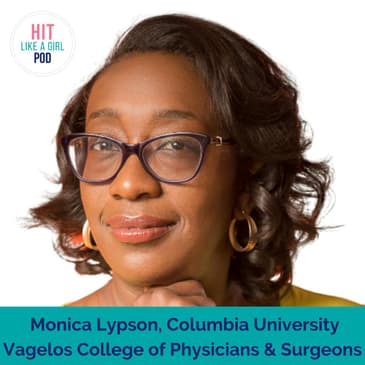

In this episode, Joy Rios engages speaks with Dr. Monica Lypson, Vice Dean for Education at Columbia University Vagelos College of Physicians and Surgeons. Dr. Lypson shares her inspiring journey from the south side of Chicago to a prominent role in medical education, emphasizing the importance of mentorship, diversity, and effective communication in healthcare. The discussion delves into the challenges of expressing emotions and setting boundaries in a medical setting, as well as the value of learning from the next generation of healthcare professionals.
Episode Highlights
00:00:28 - Meet Monica Lypson
00:01:05 - Monica's Journey in Medicine
00:05:42 - Comfort in Patient Interactions
00:06:06 - Teaching Communication Skills
00:10:14 - Diversity in Medical Training
00:15:14 - Setting Boundaries and Emotions
00:16:19 - Learning from the Next Generation
00:17:41 - Embracing Discomfort in Learning
00: 18:12 - How to Connect with Monica
Stay connected to Monica Lypson:
[00:00:08] Welcome to the HIT Like a Girl Podcast. My name is Joy Rios. I'm really excited to be here at the Women in Medicine Summit with so many incredible leaders in healthcare and beyond. And I would love it if you could take a moment to introduce yourself and speak to your area of expertise so that our listeners can learn from you.
[00:00:28] Monica Lipson, I'm a general internist. I have spent a career really thinking about how to educate the next generation of physicians and actually all health professions to have really a better experience than I had. And right now I serve as the Vice Dean for Education at Columbia University Vagilates College of Physicians and Surgeons and I'm the Rolf Schuldecker Professor of Medicine.
[00:00:55] Monica Lipson, Okay, quite a big deal. And storied history. Do you mind telling us a little bit about your journey and why it matters to you to make a difference for others?
[00:01:04] Monica Lipson, Yes. And this is probably parental input. So I am the product of two public school K-8 teachers in Chicago and was told that I could do anything in my career except for be a teacher.
[00:01:20] Monica Lipson, Really?
[00:01:21] Monica Lipson, Really?
[00:01:21] Monica Lipson, Okay.
[00:01:21] Monica Lipson, Okay.
[00:01:22] Monica Lipson, Okay.
[00:01:23] Monica Lipson, Okay.
[00:01:23] Monica Lipson, Okay.
[00:01:24] Monica Lipson, Okay.
[00:01:25] Monica Lipson, Okay.
[00:01:25] Monica Lipson, Okay.
[00:01:31] Monica Lipson, Okay.
[00:01:34] Monica Lipson, Okay.
[00:01:41] Monica Lipson, Okay.
[00:01:44] And one of the great things about that program that has some vestiges today is that it was an opportunity to be on the campus of all the medical schools here in Chicago,
[00:01:54] starting as a middle schooler and realizing that I enjoyed medicine. And so really thought that was
[00:02:03] my career. One of the interesting things I think when you think about it, sometimes you do get
[00:02:08] disrailed. And when I went away to college at Brown University, I really thought a little bit
[00:02:15] about a public health career and really got involved in this idea about health is not equally
[00:02:23] distributed. The opportunity for health is not equally distributed and really was drawn there.
[00:02:30] At the same time, when I went away to medical school at Case Western in Cleveland, I was very
[00:02:36] disappointed in the education that I was getting and spent a lot of time in the vice dean's office
[00:02:40] complaining. So I think about that every day when the medical students are in my office complaining
[00:02:46] that I used to be that person. And the fact that my parents were school teachers, I did understand
[00:02:52] that you could fundamentally change a generation of people with education.
[00:02:57] Okay. So what I'm hearing is conversations around health equity and access and making sure that people
[00:03:03] have access to the healthcare system in an equitable way and also an influence on those who are within
[00:03:11] the system and what education that they get. So do you have a magic answer on how to actually
[00:03:19] improve things? Because clearly, even based on what you've said, we have so much room for improvement.
[00:03:26] So what are you building into the education that is making that impact?
[00:03:31] So I spend some of my time supporting pathway programs because I actually think that us in the
[00:03:38] profession, if we actually aren't thinking about exposures, you can't be what you can't see.
[00:03:45] 100%. And so I continue to support those because they were important to me, but I think it's an
[00:03:51] opportunity. It's really about algebra by seventh grade. And if we want to be active about how to get
[00:03:57] more diversity in the STEM fields, we actually need to be on school boards and thinking about access that
[00:04:02] early. On the other hand, I've actually spent a lot of time thinking about as a journal internist,
[00:04:08] access to primary care.
[00:04:09] Okay. So here I think about access on multiple levels and the idea of, do people have a medical
[00:04:17] home through which that they can access care? And it doesn't have to be the model necessarily that we
[00:04:25] see. It just needs to be a model that people can really understand how the system works. Our system
[00:04:31] is complicated, extremely off-putting. And how do we actually help people navigate that in terms of
[00:04:40] health literacy, in terms of just, I feel comfortable walking in the door and asking somebody for help.
[00:04:46] And so within the educational paradigm, I spend a lot of time and thinking about one, how do we assess
[00:04:54] medical students and residents in particular, and even faculty about how do we assess their expertise
[00:05:00] in communication skills? How do we assess their expertise in delivering care? I am a big proponent
[00:05:08] of measuring those things, giving feedback and improving those things because those things are
[00:05:15] directly related to the access issue. Do patients feel comfortable entering our system? Do students feel
[00:05:22] comfortable in our system? So that's where I have built various places of expertise. I've spent a lot of time
[00:05:31] in the Veterans Health Administration, and that experience showed me, in fact, that integrated
[00:05:38] healthcare actually does deliver better quality. So I'm curious about how you assess that information
[00:05:44] based on one of the talks that we were both listening to a moment ago. Interruptions can happen
[00:05:50] within 11 seconds of a patient speaking with a clinician. And so I was thinking about that,
[00:05:56] just like, what do you say in those 11 seconds to really make an impact? And if it's starting from
[00:06:02] a med school and their education, how do you teach that and how do you assess it?
[00:06:06] So I spent a decade running the standardized patient program at the University of Michigan
[00:06:13] and actually teaching those techniques. And I can only speak for myself because I teach those.
[00:06:17] And so I teach people, for me, I actually sit on my hands so that I actually don't interrupt
[00:06:24] in that 11 seconds. And it actually takes that physical maneuver sometimes when my issue is I got
[00:06:33] 15 minutes and I need to get out of here to actually say, because I also expose our learners to know that
[00:06:40] actually your patients value your time and their time just as well. And if you let them speak,
[00:06:46] they're not going to speak longer than 90 seconds. Really?
[00:06:49] Like, so that's the other interesting piece of the puzzle that the data actually says,
[00:06:53] if you just let the patient speak, it's usually in 90 seconds. It's not,
[00:06:58] they're not going to go on forever because they understand that they're for your expertise.
[00:07:03] So in the, I guess you just practice that, you do mock.
[00:07:08] Yeah, we invite people in. And here, I'll give you an example. I spent a lot of time
[00:07:13] making sure that the people, the actors, the standardized patients that we bring in
[00:07:18] are diverse, like our patient population. Cause that's also an issue that I think is in the
[00:07:24] literature. And so when I was at Michigan, spent a lot of time about how do we actually diversify
[00:07:29] even those folks that we bring in to help us educate.
[00:07:34] Okay. That is something I've never actually talked to anybody about yet. And if you're somebody who
[00:07:39] gets to like brainstorm around how to comprehensively have those conversations and
[00:07:45] bring the right people in and design those programs, one, how does somebody get involved
[00:07:49] to be like a standard patient, like an actor? Can I volunteer or can other people volunteer
[00:07:56] to participate in that?
[00:07:57] There's cadres of people who are really good at it. I would say that traditionally across
[00:08:04] the nation, you will see actors, right? Cause you want them to portray a role and actors are pretty
[00:08:11] good at portraying roles. The other cadre that I spent a lot of time thinking about are retired
[00:08:17] health professionals because they understand the assessment piece. So you got to work on their
[00:08:23] acting skills, but in general, they understand the other side of it. School teachers, because they
[00:08:29] understand both sides. And so you can try to actually really think about. And some of the
[00:08:36] reasons why I point out those professions is that actually it's, there is diversity in those
[00:08:43] folks who might come to it. Some people are just drawn. I want to help the next generation,
[00:08:48] but those tend to be actually people of upper middle class backgrounds. And so you actually
[00:08:56] have to do outreach if you want to diversify even that. And so those are things to be thinking about,
[00:09:03] but pretty much you can train anybody to do that activity.
[00:09:07] But even not knowing that it exists, that's like, you can't be what you don't see. I'm just like,
[00:09:11] oh, I didn't even know that was an opportunity.
[00:09:13] Wherever you live, you can find the medical school and you can usually find the simulated
[00:09:19] patients or standardized patient program and sign up.
[00:09:22] Okay. That is very cool. Empathy. That's a big conversation. One that it is needed in
[00:09:28] the healthcare. And how do you infuse that? And it sounds like it is part of your programming,
[00:09:34] but that's a hard thing to teach. So I don't know. Let's talk about it.
[00:09:39] And there's theories like, can you teach it? I don't actually know the answer to that.
[00:09:44] I know that right now here, if I think about myself, most physicians who are in medicine now
[00:09:49] would never get into medical school right now. The level of academic and interpersonal excellence
[00:09:56] that the folks who are applying to medical school are bringing to the table is beyond belief. So
[00:10:03] actually it is in fact, the people who are applying to medical school and matriculating to medical school,
[00:10:10] they actually have many of those. Okay.
[00:10:14] They've worked in community settings. They've been active in marginalized communities, right? So
[00:10:22] we actually do a really good job, I think, recruiting people with high levels of empathy.
[00:10:29] I think the question is, what is our system doing that changes that high level of empathy
[00:10:36] such that at the other end, they don't look as empathetic as they started at the beginning?
[00:10:42] I think that's the more critical question that we as a profession have to ask.
[00:10:47] And do we have any answers to that? Because I think I've read some studies that after a certain
[00:10:51] amount of time, med students lose their empathy. And I imagine like what they have to hold on to
[00:10:57] as a doctor, everything that happens, like you can't be emotionally affected to your core about
[00:11:03] every single patient because you would just be heartbroken all the time.
[00:11:07] I think we heard a little bit from Jesse Gold, right? Like there's probably your life is about
[00:11:12] moderation, right?
[00:11:13] Right.
[00:11:14] And I think unfortunately, paradigm as a profession has been actually swinging to one end of that,
[00:11:21] of I must detach. I must not be human to some extent to be able to get through my day. And I think
[00:11:29] we're learning as a profession that pendulum at that end is actually a disservice to our patients,
[00:11:36] but a disservice to ourselves. And she gave a great example about you have a code, somebody's
[00:11:43] basically died near death. You brought them back or they've died and we walk away and go to lunch.
[00:11:49] That was her example that she used today at the conference. And I've been in those situations.
[00:11:55] And I have to tell you how hard, even now as an attending, I was on service this summer.
[00:12:00] And I have to remember, I have learners and I will stop and say, I know what just happened probably
[00:12:08] affects you. And sometimes I'll say, let's talk about it in an hour because we've got all the stuff
[00:12:15] that we've got to do, but I'm going to put a pin in it because I did see, right? Like us going on
[00:12:21] about our normal day is not normal. And sometimes just even calling that out, because sometimes you
[00:12:27] actually have to do that.
[00:12:29] Sure.
[00:12:29] But calling it out to say, I am not so inhumane that I don't realize that we just witnessed a moment
[00:12:38] and a moment that as an early learner, you probably aren't prepared for. And so if I unpack it then,
[00:12:47] or at some point later, really spending time to say, and I hear it, we had this event,
[00:12:53] whatever you're feeling right now is totally normal. That's my sentence, right? Like,
[00:13:00] I can't tell you how you're feeling. Some people have detached.
[00:13:04] Yeah. And you want to give them the ability to say that's normal. Some people are feeling every
[00:13:10] single emotion that is happening and that's normal. And so we need more role models that will allow
[00:13:18] the folks in the profession to feel whatever they're feeling in that moment of extreme trash,
[00:13:23] because a stranger would have been in that moment and would not.
[00:13:26] Right. No, I think that even the act of just acknowledging it and realizing having emotions
[00:13:34] it's got to be challenging to do that on a regular basis, especially if every day in a healthcare
[00:13:40] or health system, tragedies are happening. Yeah. And then sometimes I think we are,
[00:13:46] I have worked with a patient population and my patients get to know me pretty well. And I'm pretty blunt.
[00:13:53] Sometimes I'll say things like, I'm really mad at you right now. And I will say that also to
[00:13:58] actually show the therapeutic relationship. I actually feel comfortable with you enough right
[00:14:03] now to say, I'm angry. Yeah. And they're all, I didn't mean that. Right. Especially I didn't mean,
[00:14:08] I was like, but that's how you're coming off. And like, let's unpack that. But I also realized
[00:14:13] that's a skill that I've developed. So I think a lot about how do I teach that skill? How do I teach
[00:14:19] a skill to women who are getting harassed by patients? And now, right? Like I keep reminding our
[00:14:27] younger women. I'm like, you have the power in the room. You have the white coat. It's actually
[00:14:31] very easy to say that's not acceptable. And I have to remember that they don't have that skill.
[00:14:38] Right. Like I have to remember to tell them, like, you don't have to accept that. And it's actually
[00:14:43] okay to say, and actually, if you take the power in the moment to redirect that inappropriate behavior
[00:14:50] on the part of your patient, they actually will respect it. Absolutely. That's the piece.
[00:14:56] You don't have to create a program. You just say, that was unacceptable. And we're not going to have
[00:15:03] a relationship based on that. But those are things I think about. How do you teach that? How do we
[00:15:08] make a system that we can have those conversations? I can't change every patient that walks into the
[00:15:14] room. No, but I think one of the conversations we've been having, even in the last 48 hours through
[00:15:19] these interviews, has been around setting boundaries and also owning your emotions,
[00:15:25] knowing that it's okay to express emotion. And once you feel it, it actually continues through you and
[00:15:31] moves on. It's not a permanent, I am angry and will be angry forever. No, I had the emotion. Once I get
[00:15:37] to feel the feeling, it can now, you know, move out of my way.
[00:15:41] And I've gotten better. I'm a black woman in medicine where I do say I'm angry, but I actually
[00:15:47] say it just like you've heard it. Like my facial expression doesn't look angry. Yeah. You don't
[00:15:52] hear the anger in my tone because I can't do that. That I don't have permission to do. Okay. I understand
[00:15:59] that I don't have permission to do it, but I think over time I've at least learned to verbalize it.
[00:16:04] That's very important. And it sounds like you have so much responsibility that you are
[00:16:08] imparting and wisdom on the next generation of both women leaders and just medical leaders in
[00:16:15] general. Is there any parting wisdom you would like to offer?
[00:16:19] Well, I think Vinnie Aurora just mentioned at the panel, to be sure some of my learnings are not
[00:16:26] coming from me. They're coming from the generation that I'm educating. So I think one of the lessons is
[00:16:32] we need to be open to their ideas and suggestions, even when it makes us feel uncomfortable. Even when we
[00:16:38] say that's not the way it was, okay. Times are changing. That was a long time ago. And it's hard.
[00:16:46] It's hard when somebody's calling you out, Dr. Lipson, and saying you're wrong. But I really
[00:16:52] recommend that we all sit in that discomfort. We all sit at that moment of learning. Learning is not
[00:16:59] comfortable. We forget that. And we need to move on. So that's one of the things I would recommend.
[00:17:05] One, you should listen to everybody, especially those who dissent from your opinions. Because one,
[00:17:12] either your argument's going to get better. I spend a lot of time with people whose opinion I dissent.
[00:17:17] And what I realize is that it makes my argument stronger because I've actually listened to their
[00:17:22] point of view. Or I realize the holes in my argument and I change, right? Like I have to be open-minded
[00:17:30] as well to the potential that somebody is giving me feedback. And then on the flip side is also just
[00:17:37] that feeling okay with feeling uncomfortable.
[00:17:41] Yeah. All of that is incredible. So thank you very much for your wisdom and your imparting it on us
[00:17:47] and our listeners. If Dr. Lipson, if somebody wants to get in touch with you, if they want to follow
[00:17:52] your work or take your classes or be involved in your school, how would you recommend folks following?
[00:17:58] You can find me on LinkedIn. That's probably the easiest place. There's a Twitter account that
[00:18:03] I have. How about that?
[00:18:07] And I sit on a lot of national committees and people can reach out and find me that way.
[00:18:12] Wonderful. Thank you for your time today.
[00:18:14] All right. Thank you.
[00:18:28] Thank you so much for listening to the Hit Like a Girl podcast. I am truly grateful for you. And I'm
[00:18:33] wondering if you could do me a quick favor. Would you be willing to follow or subscribe to this
[00:18:37] podcast or maybe leave us a rating or review? Or if you're feeling extra generous, would you share
[00:18:42] this episode on your Instagram stories or with a friend? All of those things help us podcasters out
[00:18:48] so much. I'm the show's host, Joy Rios, and I'll see you next time.