
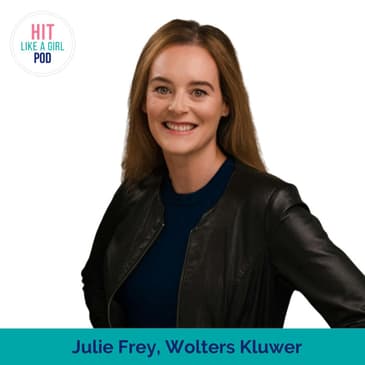

In this episode, Joy welcomes Julie Frey from Wolters Kluwer Health, who heads the Provider product division. They explore Wolters Kluwer's role in healthcare, focusing on clinical decision support tools like UpToDate, which provide clinicians with timely and accurate information at the point of care. Julie highlights the company's mission to alleviate clinician burnout by empowering them with efficient tools and discusses the future of healthcare, emphasizing the importance of connecting clinicians and patients for holistic care.
Episode Highlights
[00:01:01] Overview of Wolters Kluwer Health and its global presence
[00:02:04] Clinical decision support and patient engagement tools
[00:06:16] Clinician challenges and the importance of patient engagement in healthcare
[00:16:33] Julie Frey's journey into healthcare, starting from corporate strategy to a focus on health division projects
[00:19:34] Julie Frey's motivation and excitement about the intrinsic purpose in healthcare
[00:19:59] Ways to connect with Julie Frey and Wolters Kluwer Health
Stay connected to Julie Frey:
- LinkedIn | Twitter
- Wolters Kluwer | LinkedIn
[00:00:00] Hello podcast listeners, are you ready to advance your career in healthcare? Then join
[00:00:06] us at the Women in Medicine Summit, a two-day power packed event designed to propel you
[00:00:10] forward. The HIT Like a Girl Pod crew will be there cheering you on at the Drake Hotel
[00:00:15] in Chicago happening on September 13th and 14th. Get ready for skill building workshops,
[00:00:21] inspiring talks and actionable strategies to help you thrive in your healthcare journey.
[00:00:26] Here's the best part. Use code referral five at checkout to snag your ticket at a special
[00:00:31] discount. We can't wait to see you network, learn and grow alongside other amazing women
[00:00:36] in medicine. Secure your spot now at womeninmedicinesummit.org and enter the code referral five
[00:00:43] to unlock your exclusive discount.
[00:00:46] Hello there and welcome to the HIT Like a Girl Podcast. My name is Joy Rios. This
[00:01:01] is a show where we get to talk about how the crazy complicated world of healthcare
[00:01:05] is. We all trying to put the 30,000 or 300,000 however big you think it is, the
[00:01:12] puzzle pieces together. So each one of our guests gets to bring a piece of their
[00:01:16] expertise and share their piece of the puzzle with our listeners. So I'm excited
[00:01:20] for today's guest. Julie, can you please take a moment to introduce yourself?
[00:01:24] Hi everybody. I'm Julie Frey and I head up the provider product at Welter's Cuba
[00:01:29] Health. And I'm super, super excited to be here today and to talk all things
[00:01:34] healthcare and women in healthcare. It's very exciting.
[00:01:37] All right. Can you please share the name of your organization again? Because I
[00:01:41] feel like people and I'm including myself in this, it's like hard to pronounce
[00:01:46] and want to understand what you guys do there because you do a lot.
[00:01:49] Of course, of course. It's Walter's Coover is how you say it. It's originally
[00:01:53] a Dutch company, hence the spelling. I actually made an internal push that I
[00:01:58] said maybe we should just rebrand as WK. I feel like people would like feel
[00:02:02] more comfortable saying the name but that didn't get any traction. So we are
[00:02:06] a company that's actually much broader than healthcare. We have four
[00:02:09] different divisions. We're global in nature so just order of magnitude
[00:02:13] things like 20,000 employees. Originally, as I said, a Dutch
[00:02:17] company. We specialize in all things information and technology for
[00:02:23] professionals and so healthcare is one of them. We have another one
[00:02:27] that's tax and accounting, another one that's legal and a final one that's
[00:02:31] compliance and related assets. And yes, I'm in the healthcare division.
[00:02:36] We have a number of product categories but just in terms of orienting
[00:02:39] yourself around where I work, we're focused on clinical decision support.
[00:02:43] So really solutions at the point of care for clinicians. We also have a
[00:02:48] set of patient engagement tools so just the patient component of that.
[00:02:52] Okay. So now when we think about the assets that you have, can you
[00:02:55] explain what that is? Because I'm bringing this up for two reasons.
[00:02:59] We do, so like a girl pod, we have a book club and our book club is really
[00:03:02] geeky. Like we do federal rules and their
[00:03:06] drafts and there's two women that are from your
[00:03:08] organization that have done a little bit of
[00:03:11] helping me understand what you guys do but I want to hear from you too.
[00:03:14] Sure, I'm excited too. Let me tell you something when you tell me
[00:03:18] if I can help give other examples. We have evidence-based content
[00:03:22] which is integrated into a set of tools and it is available at the point of care
[00:03:26] to help clinicians make decisions. So if you think of it as an example,
[00:03:31] you're a clinician, you have a patient in front of you, the patient has,
[00:03:34] you've diagnosed the patient that's having a certain condition and you
[00:03:38] either want to double check or you want some support in trying
[00:03:41] to decide what is the best treatment path for that patient. You go
[00:03:45] into our tool, there's clinical components of our
[00:03:47] tools, there's drug components. A lot of it is kind of making decisions
[00:03:51] around drugs and dosing but it's well beyond that.
[00:03:54] We provide you that guidance in those answers and so at the most simple
[00:03:58] that's what it is. It's all point of care related.
[00:04:00] If you think of it more broadly around different types of tools that a
[00:04:04] clinician might access, these are the ones where you've got
[00:04:07] 15 minutes with a patient and you need to quickly get to
[00:04:10] get to a decision. So it's got to be like massive
[00:04:13] amounts of data like a data library that is pointing a clinician to the
[00:04:17] right piece at the right time. You've got it. So that's why the
[00:04:22] interface is actually intentionally very, very simple.
[00:04:25] Maybe this helps you just have a search bar effectively and you search
[00:04:28] for something fairly specific and that's what
[00:04:31] comes up and like there's no bells and whistles, there's nothing else
[00:04:34] there we're trying to declutter and not add any more burden onto the
[00:04:37] clinician. We see ourselves kind of we're
[00:04:40] squarely on the side of the clinician. It's kind of in some ways
[00:04:43] recreating what I think many clinicians experienced 30 years ago
[00:04:47] if you were in a small institution and you weren't sure about something you
[00:04:50] know stick your head out the room and you'd ask
[00:04:53] your colleague, hey I was thinking of
[00:04:55] treating with this drug what do you think and that you could consult
[00:04:59] for a second informally and you could come back.
[00:05:01] That's effectively what we're working to do at scale.
[00:05:04] Okay so that's super powerful. Imagine like I'm just thinking of the
[00:05:08] amount of information that if I could ask anybody
[00:05:11] okay is this the right choice? Is this the right
[00:05:13] Well in any direction like that's insanely
[00:05:17] powerful at the time of care. Maybe just for those in the audience that
[00:05:21] are in healthcare, the main the flagship brand in this
[00:05:24] portfolio is up to date. I'm so impressed that they
[00:05:28] got that name probably 30 years ago or more it's such an effective name it
[00:05:31] literally is that so it's this huge library of content and then one
[00:05:36] of our other assets is incorporating new information so as
[00:05:39] things change bringing in new information and helping doctors
[00:05:42] literally stay up to date. Well and it's something that
[00:05:47] one of the reasons that I've been so excited to work with these products
[00:05:50] is it's such a mission-driven organization
[00:05:53] and clinicians really love it. So one of the fascinating
[00:05:57] things here is I think clinicians today have to deal with so many tools
[00:06:00] they have to spend so much time in the EHR.
[00:06:03] Much of it let's say is begrudgingly so what's so special about working
[00:06:07] on up to date is clinicians love to use it.
[00:06:09] We're not making them jump through hoops we're just there to build their
[00:06:12] confidence to help them to help them help the patients.
[00:06:14] That's really our mission. I imagine that there's a play there on
[00:06:17] burnout too right if you're in a position to help the clinician get
[00:06:21] what they need and help them do what they need
[00:06:24] faster and with more confidence like you're
[00:06:27] playing into their own well-being. Absolutely absolutely
[00:06:31] and we hear that consistently we run surveys and another type of
[00:06:35] kind of structured survey called the Net Promoter Score which is
[00:06:38] really trying to understand kind of how our users think about us
[00:06:42] every year consistently. I've never I've worked across many products in my
[00:06:45] career and I've never seen anything like this. People really feel
[00:06:48] really good about using our tool and like we're helping them. That's amazing
[00:06:52] tell me more. I mean I guess like ultimately what I mean is like
[00:06:57] technology is playing a role in alleviating burnout
[00:07:01] so pull that threat. Clinicians have more patience than they've ever had
[00:07:07] they have more pressure on other kind of administrative steps
[00:07:11] around documentation connecting with a pair, reporting
[00:07:14] all kinds of metrics coming from all directions. They have less time than
[00:07:18] ever to consult they have less time than ever
[00:07:21] to refresh themselves. The kind of body of knowledge and evidence is
[00:07:26] growing at exponential rates so even if it didn't have all those other
[00:07:29] pressures I mentioned you can't your journal once a month
[00:07:33] you know in your specialty and scan it and feel like you're up to date
[00:07:36] things are changing faster and in a much more complex way and again as I
[00:07:40] said just the volume. Our mission is to reduce that
[00:07:45] and to support them at scale. I think the next frontier because
[00:07:49] I'm always saying I mean I'm really proud of our history and
[00:07:52] our legacy and the relationship that we have with you know over two million
[00:07:56] clinicians globally but the next frontier I think is if you
[00:08:00] want to reduce that burden further and you're not an EHR or
[00:08:05] another kind of documenting tool the next frontier is connecting it more to
[00:08:08] the patient piece and that's kind of one of the
[00:08:11] philosophies of why we've been investing on the patient education and
[00:08:14] engagement side because I think if you want to reduce it further
[00:08:17] it's how do you support that shared decision making between the clinician
[00:08:20] and the patient, how do you enable confidence on the
[00:08:23] patient side and the decisions that the clinicians making
[00:08:26] how do you empower the patient to take more control themselves
[00:08:29] a lot a lot of conditions that clinicians are treating in the US in
[00:08:33] particular is chronic based there's a big big big patient component of those
[00:08:37] conditions and I think if we start to support
[00:08:41] and empower them in line with how we're empowering clinicians that's when
[00:08:44] you kind of unlock the next level of helping helping a bit on clinician
[00:08:49] clinician burnouts and related struggles. I love that I mean it's
[00:08:52] basically well is that a whole different set
[00:08:55] of data because you're like okay they've got up-to-date data about a
[00:08:58] particular condition but then there's a whole other
[00:09:01] library about what do you do with that like those are two
[00:09:04] very different conversations. We have a huge
[00:09:07] internal project we talk about internally as like a harmonization project
[00:09:11] but it's really thinking through if you have these disparate assets and
[00:09:14] historically I think vendors have thought of you know there's patient
[00:09:17] things and there's clinician things again as I said the future to me it's
[00:09:20] all the care team and I think the patient is part of that care team
[00:09:24] and I think for a long time we've heard buzzwords of you know patient
[00:09:26] centricity and and kind of digital tools enabling them
[00:09:30] and there's great progress on that but I think the kind of way you like unlock
[00:09:34] the next level is where you start to think about connecting the clinician
[00:09:37] the patient and that's a big part of what we're doing so
[00:09:39] if we're advising the clinician in this way and we're guiding them
[00:09:43] what kind of challenges do they face in actually being able to
[00:09:46] to treat the patients if they if we can give them the right guidance and
[00:09:49] they buy in and they support our recommendations
[00:09:52] then how do we get that to the patient how do we facilitate the
[00:09:55] conversation there's all kinds of different nuances there and I think
[00:09:59] that's kind of the the next big set of work that we're doing
[00:10:02] okay so something that's coming up for me is whole patient care
[00:10:07] and the way and and so when we talk about like okay in a patient journey
[00:10:11] if they come in something's wrong with their head
[00:10:13] but they're going to see the doctor but they actually also have something
[00:10:16] wrong with their stomach or their foot like that person that doctor that
[00:10:19] they're they're talking to might not be able to
[00:10:22] support them in their whole care and their how does what you guys do
[00:10:27] a wk is what i'm going to say you're perfect I love it
[00:10:32] support that like can the patient's whole experience and
[00:10:36] you know setting up a clinician to better care for
[00:10:39] the entire human and not just a special part of them
[00:10:43] what you're describing I think what we see in our customer base is this is
[00:10:47] particularly happening in primary care
[00:10:49] so there's this huge supply as you i'm sure you're familiar huge supply
[00:10:52] demand gap between you know providers and patients
[00:10:56] the kind of nexus of that is happening in primary care when you can't get to a
[00:10:59] specialist when you can't get the help you need
[00:11:01] or you go to primary care these pcps are now dealing with a
[00:11:06] range of conditions you have another you have a couple of other factors
[00:11:10] that are playing in here we have an aging population
[00:11:13] we have a greater greater percent of our population that has multiple
[00:11:16] chronic conditions and other ailments that are happening
[00:11:19] these primary these pcps have 15 minutes and so when we speak to them
[00:11:23] and we say like how are you dealing with this
[00:11:25] they say to be candid we have folks with five seven things that we could
[00:11:29] we could you know we could support them on and i'm just thinking about like
[00:11:32] what is the most acute what is the most critical and i just do not have
[00:11:36] time to deal with the rest like i don't have time if it can kind of
[00:11:39] mean if there's a kind of a maintenance type situation i'm like
[00:11:42] letting that continue until i can see them next which is just so sad i
[00:11:46] don't think that's what how pcps want to make patients
[00:11:50] better they want to provide the best care
[00:11:52] they want to provide evidence-based care and they're limited when those sorts of
[00:11:55] things happen so one of the ways that we're thinking
[00:11:58] about it is particularly on our patient engagement tools we're thinking
[00:12:01] about how do we no matter what the support is
[00:12:06] so let's imagine a clinician is providing some patient
[00:12:10] engagement around a chronic condition because that is as i said a lot of
[00:12:13] what care is about these days we are thinking about the whole
[00:12:17] patients in that context and one of the big components that comes up all
[00:12:20] the time is mental health and mental health challenges and need for mental
[00:12:24] health so as while this is a a product for the
[00:12:27] patient around a particular chronic condition
[00:12:30] we're kind of embedding components of mental health and other things to
[00:12:34] kind of support the whole patient as they you know make decisions about
[00:12:37] treatment and things like that for chronic conditions so i think we're
[00:12:40] trying to infuse it in everything we're doing i
[00:12:43] don't think you can compartmentalize i think that's kind of
[00:12:47] where things start to break down or how how things were thought of before you
[00:12:50] know in a kind of siloed manner so it's the
[00:12:53] whole care team including the patient and it's thinking about the whole
[00:12:56] patient as opposed to just the most acute
[00:12:58] acute thing well and i love the idea of also leading a little bit with
[00:13:01] the mental health aspect because i feel like you know regardless
[00:13:04] of what's going on with your body if you can't like wrap your head
[00:13:08] around it exactly that's a major issue so can we
[00:13:11] talk about like basically the mental health
[00:13:14] perspective too because that seems to be one that is
[00:13:17] more prominent these days for good reason
[00:13:20] what is like the increased demand specifically for mental health care on
[00:13:25] primary care physicians you know it goes back to supply demand gap
[00:13:29] that's certainly one component of it historically
[00:13:32] well there's multiple comments historically many patients wouldn't see
[00:13:35] care and i think a little bit kind of
[00:13:37] accelerated by covered there's more of an acceptance and a support of
[00:13:41] treating patients with mental health conditions and so patients are more
[00:13:43] comfortable coming forward i think covered exacerbated
[00:13:46] many components of mental health as well so the supply to
[00:13:50] the mod gap has exacerbated and now again as we describe this becomes a
[00:13:54] pcp problem i saw a incredible stat i think
[00:13:59] approximately 80 percent of antidepressants are prescribed by pcps
[00:14:04] which i was just like shocked by again there's
[00:14:07] there's many other more complex mental health conditions that
[00:14:10] specialists are prescribing for but you know kind of unipolar depression
[00:14:14] 80 percent of antidepressants are prescribed by pcps
[00:14:17] so the pressure on pcps here is particularly acute
[00:14:21] and exactly as you said what they what our customers say to us is if we
[00:14:25] can't support them on mental health when we're trying to manage a bunch
[00:14:28] of other chronic and other conditions it becomes so much harder medication
[00:14:31] adherence becomes harder it exacerbates all kinds of other
[00:14:35] conditions and so when we speak this is kind of interesting but
[00:14:38] there's a disconnect if you speak to kind of
[00:14:40] executives in some of these health systems their perspective is
[00:14:43] pcps can only do so much they've only received so much mental health training
[00:14:47] as part of their border training and you know they need to they need to
[00:14:51] refer and to refer out to specialists when it becomes
[00:14:54] too tough for them but if we speak to our users they say
[00:14:57] they say something else which is they say like there's no one to refer
[00:15:00] them to if i refer them they're just going to come back or
[00:15:04] they're not going to take the other medicines that we've prescribed
[00:15:06] by the conditions we have to be better equipped to support them in
[00:15:11] the short term at least while there's this demand supply gap it's the only
[00:15:14] way to move forward and so it's been interesting to hear
[00:15:16] that and so what we've been thinking about a lot is
[00:15:20] we have for many many years had a huge library of
[00:15:23] clinical and drug content and patient engagement tools around mental health
[00:15:27] that's not new what we're what we've invested in
[00:15:30] significantly and continue to invest is how do we build out that set of
[00:15:34] tools how do we make it more comprehensive
[00:15:36] one of the things that's been very interesting recently and it's a project
[00:15:39] i'm working on just to make this kind of more specific and pointed is
[00:15:44] one of the specific challenges pcps are facing is around
[00:15:48] cross-tapering so a patient's on a drug you want to move them to the drugs
[00:15:53] not working you want to move them to another drug
[00:15:56] you've got to remember all the different combinations of the different
[00:15:58] drugs you can move them one to the other the different dosing as
[00:16:02] you're tapering them from one and ramping up from the other one what you
[00:16:05] have to do you have to do a bunch of math in your head there's many
[00:16:08] many drugs that you could take and so as an example we've always had
[00:16:11] information around cross-tapering but we're now like building a cross-tapering
[00:16:15] tool where they don't even have to think
[00:16:17] you know so i think we're trying to get really pointed at helping
[00:16:20] some of the areas that have been particularly difficult for pcps
[00:16:23] i think that one thing that we all suffer from i'm definitely including
[00:16:27] myself in this is just like drinking from the fire host like
[00:16:30] there's just so much to know and understand if you
[00:16:34] really want to be supportive and helpful of people it's just like you
[00:16:37] also have to be thoughtful about you know what is accurate information
[00:16:41] what is useful information and how can you get it to at the right time
[00:16:44] at the right time to the right people and it sounds like that's what
[00:16:48] you guys do just we're not inventing medicine we are trying to
[00:16:52] distill it and focus it and give clarity and transparency around the
[00:16:57] grade of the evidence and the source of the evidence so
[00:17:01] that clinicians can build confidence in the decisions they're making and
[00:17:05] then that supports kind of the patient engagement piece as well okay so can i
[00:17:08] ask you a personal question of course of course absolutely what did you
[00:17:13] study how did you get your job like what is your own trajectory
[00:17:17] in like how you got to where you are now to get to do what you get to do
[00:17:21] i heard some of your prior podcasts and i think maybe
[00:17:25] i got here the same way some of some of you other guests i kind of
[00:17:28] found my way into health care so it wasn't like a calling i mean i
[00:17:31] studied economics i grew up in south africa i studied
[00:17:34] economics i worked in different industries unrelated to health care
[00:17:39] i actually joined walter's clover in corporate strategy and so i was
[00:17:43] thinking about mna and business turnarounds and
[00:17:45] portfolio management and all these these things
[00:17:49] and one of our four divisions is health as i as i said
[00:17:53] and i ended up just doing a lot of work in our health division
[00:17:56] and i loved it and i never felt such intrinsic motivation
[00:18:01] and i felt really proud about the mission-driven nature we really really
[00:18:07] while we're a public company you know there's pnls that i would pretend
[00:18:11] otherwise but there's such a philosophy around
[00:18:14] doing the right thing for the clinician doing it in an unbiased way
[00:18:18] we have so much energy and thought has been put into
[00:18:22] how to ensure that we lead by the evidence and we lead by what's most
[00:18:26] critical for the clinician and it was just so inspiring to see
[00:18:30] and it was so inspiring to see the reach that we had and so anyway i worked on
[00:18:34] multiple projects i worked on projects looking at our international strategy i
[00:18:38] worked on many different things and in corporate
[00:18:40] strategy which was what i spent a couple of years in at walter's clover
[00:18:43] before you do this really interesting project
[00:18:46] you come up with a recommendation and then you have to hand it over to
[00:18:49] the business right and you say here this is what we should do we did
[00:18:52] this analysis like we recommend this like you know whatever it is
[00:18:55] you'd like hand your baby over you know and then you've got to move on
[00:18:58] to the next thing and at one point probably almost three years ago two and a
[00:19:02] half years ago the the priusy of the current business
[00:19:06] unit i'm in she was like aren't you tired of doing that aren't
[00:19:09] you like are you ready to come and get your
[00:19:11] hands dirty and move to the operating side
[00:19:14] i had since i had at that point spent several years working
[00:19:17] specifically in healthcare strategy and i was like you know i'm i'm so
[00:19:21] ready i'm so ready and uh and so i moved over that was
[00:19:25] really it and i i moved over and i um have been focusing on our provider
[00:19:29] strategy ever since that's what i live and
[00:19:32] breathe and it's been very inspiring walter's clover health is is run by
[00:19:36] women and actually in fact walter's clover
[00:19:39] overall is run by a woman nancy mckinstry is incredibly inspiring and
[00:19:42] so i don't know i never thought i would
[00:19:44] end up here to be honest it wasn't like
[00:19:46] you know when i was six years old this was my dream but it it happened
[00:19:49] very organically and what feels right about it as i
[00:19:53] mentioned is the intrinsic motivation i have
[00:19:58] so much energy this doesn't feel like a burden it doesn't feel like i
[00:20:02] i'm really really excited about it and i feel like there's just so much
[00:20:06] opportunity to do good and we have i feel like we also
[00:20:08] have a responsibility there's such a reach
[00:20:11] we're in like really all the big health systems in the u.s we're in
[00:20:14] many many internationally and so the decisions we make impact
[00:20:17] you know millions of clinicians and and as a result many more millions of
[00:20:21] patients i mean that's a really empowering place to
[00:20:24] sit right and one thing i love about health care i feel like oh once you're
[00:20:27] in it's so hard to get out because of that
[00:20:30] intrinsic purpose that you feel like wow we are faced with some really big
[00:20:34] challenges but then the flip side is that there's
[00:20:37] also some really good opportunities to do
[00:20:40] good yeah well julie if people want to follow your work and
[00:20:43] work with you or somehow get involved like how would you direct
[00:20:46] them probably these days the best way to reach me is on linkedin
[00:20:49] i'm julie fray on linkedin i don't believe there's many many others i
[00:20:53] would be so happy to engage i've figured out a way to connect with
[00:20:57] lots of women within waltz's cuvr and again it's like a very female
[00:21:01] oriented organization and that's one of the reasons i stayed and i loved
[00:21:04] it i have not cracked the knot i'm like
[00:21:07] beyond that and i would so love to do that
[00:21:09] yeah i'll share with you we actually do have a linkedin group for
[00:21:12] guests and listeners to connect it's the whole intention behind it is
[00:21:17] just to expand people's networks there's not that much activity that goes on
[00:21:21] but it's allowing people to kind of connect on linkedin to get to know
[00:21:25] people and expand our networks so i can help you crack that nut
[00:21:29] thank you that's fantastic thanks so much thanks yeah my pleasure well
[00:21:33] thank you for joining and thank you for sharing your
[00:21:35] expertise i really appreciate it yes thanks for having me it's been a
[00:21:38] pleasure thanks for listening you can learn more about us or this
[00:21:43] guest by going to our website or visiting us on any of the socials with
[00:21:47] the handle hit like a girl pod thanks again see you soon again thank
[00:21:51] you so much for listening to the hit like a girl podcast
[00:21:54] i am truly grateful for you and i'm wondering if you could do me a quick
[00:21:58] favor would you be willing to follow or
[00:22:00] subscribe to this podcast or maybe leave us a rating or review
[00:22:03] or if you're feeling extra generous would you share this episode on your
[00:22:07] instagram stories or with a friend all those things help us podcasters
[00:22:11] out so much i'm the show's host joy rios and i'll see you next time