
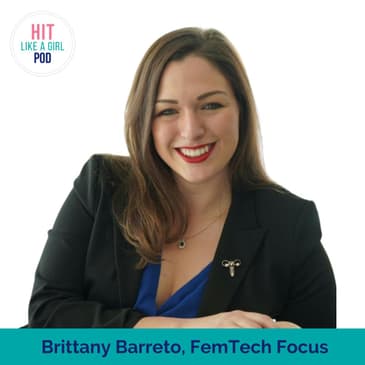

In this episode, Joy Rios and Dr. Brittany Barreto engage in a dynamic conversation recorded live at HLTH Europe in Amsterdam. They explore the significance of authenticity in content creation, particularly on platforms like TikTok, and discuss the groundbreaking advancements in Femtech, including the integration of gendered medicine into educational curricula. Brittany shares her innovative approach to writing her book, "Unlocking Women's Health," utilizing AI to enhance productivity and clarity. The discussion also delves into the critical need for policy changes in women's health, emphasizing the importance of education and advocacy in creating lasting impact.
Episode Highlights
[00:00:12] Introduction to HLTH Europe in Amsterdam
[00:02:10] The Importance of Authenticity in Content Creation
[00:09:02] Exciting Developments in Femtech Education
[00:10:29] Utilizing AI in the Book Writing Process
[00:24:36] Advocating for Policy Changes in Women's Health
[00:25:04] The Legacy of Education and Policy in Femtech
Stay connected to Brittany Barreto:
- LinkedIn | Twitter
- FemTech Focus | LinkedIn
[00:00:02] [SPEAKER_01]: Calling all health care innovators, it's Joy Rios from Like a Girl Media.
[00:00:07] [SPEAKER_01]: This October the action is not just in the front line, it's in Vegas!
[00:00:11] [SPEAKER_01]: Health 2024, healthcare's hottest event, brings together the brightest minds shaping
[00:00:16] [SPEAKER_01]: the future of health care innovation.
[00:00:19] [SPEAKER_01]: Ready to learn from the top names, network with change makers and be part of the health
[00:00:23] [SPEAKER_01]: care revolution?
[00:00:25] [SPEAKER_01]: Health is your destination.
[00:00:26] [SPEAKER_01]: Plus, join our exclusive podcasters reception on October 21st and connect with fellow industry
[00:00:32] [SPEAKER_01]: voices.
[00:00:34] [SPEAKER_01]: And score a sweet $250 discount with code LAGM250OF, that's LAGM250OFF.
[00:00:43] [SPEAKER_01]: Don't miss out!
[00:00:44] [SPEAKER_01]: Get all the details and secure your spot at likeagirlmedia.com slash HLTH.
[00:00:51] [SPEAKER_01]: Vegas might be known for its lights, but this October it'll be the future of health
[00:00:55] [SPEAKER_01]: care that shines brightest.
[00:01:08] [SPEAKER_01]: Welcome to the HIT Like a Girl podcast!
[00:01:10] [SPEAKER_01]: We are here at Health Europe.
[00:01:12] [SPEAKER_01]: This is awesome, we're in Amsterdam.
[00:01:14] [SPEAKER_01]: We're in Amsterdam.
[00:01:15] [SPEAKER_01]: And I am with Dr. Brittany Beretto again, lovely to see you again.
[00:01:19] [SPEAKER_01]: I love every single time that we run into each other.
[00:01:21] [SPEAKER_00]: It's always a blast.
[00:01:22] [SPEAKER_01]: Yeah.
[00:01:23] [SPEAKER_01]: And it's mostly because I'm so impressed with like how much of a badass you are
[00:01:26] [SPEAKER_01]: and how much you get to accomplish in all of the worlds that you're in and
[00:01:31] [SPEAKER_01]: everything you see.
[00:01:31] [SPEAKER_00]: I love my life.
[00:01:33] [SPEAKER_00]: I really, I just travel the world and I ask people did you consider sex and gender in your
[00:01:38] [SPEAKER_00]: research and your product design?
[00:01:40] [SPEAKER_00]: I really feel like I'm influencing people and that makes me so happy.
[00:01:43] [SPEAKER_00]: You really are.
[00:01:44] [SPEAKER_01]: I mean you make a huge difference and I know that it shows up because when you go places
[00:01:48] [SPEAKER_01]: now and I get it probably a fraction the way that you do of people that feel like
[00:01:52] [SPEAKER_01]: they know you.
[00:01:53] [SPEAKER_01]: Yeah.
[00:01:54] [SPEAKER_00]: People really, they're like, oh I'm Brittany!
[00:01:56] [SPEAKER_00]: And I'm like, oh my gosh, oh my gosh, who is this?
[00:01:58] [SPEAKER_00]: Who is this?
[00:01:58] [SPEAKER_00]: And they're like, oh you don't know me.
[00:01:59] [SPEAKER_00]: Yeah.
[00:02:00] [SPEAKER_00]: And actually just yesterday there was a girl in our workshop, she was like, you've come
[00:02:04] [SPEAKER_00]: on so many runs with me.
[00:02:05] [SPEAKER_00]: And at first I was like, oh and I was like, oh she listens to my podcast and her runs!
[00:02:09] [SPEAKER_00]: That's so nice.
[00:02:10] [SPEAKER_00]: So cool.
[00:02:11] [SPEAKER_00]: I'm a companion.
[00:02:13] [SPEAKER_00]: I love that.
[00:02:14] [SPEAKER_01]: I love it when people feel that they get to know you but they also respect you.
[00:02:18] [SPEAKER_00]: Yeah.
[00:02:19] [SPEAKER_00]: It's so fun.
[00:02:20] [SPEAKER_00]: You know I think that it's this mixture that I've, and it's not just kind of
[00:02:24] [SPEAKER_00]: how I am.
[00:02:25] [SPEAKER_00]: I'm a scientist so I like I know what I'm talking about and I have all these
[00:02:28] [SPEAKER_00]: data and facts that I can get really nerdy.
[00:02:30] [SPEAKER_00]: But like at the end of the day I'm just some lady who enjoys talking about women's
[00:02:34] [SPEAKER_00]: bodies and anatomy and I make it just really comfortable and fun and people are
[00:02:38] [SPEAKER_00]: like, what a special combo!
[00:02:40] [SPEAKER_00]: And for me it's just natural.
[00:02:42] [SPEAKER_01]: Well it's very authentic and I love that you bring us with you because I feel
[00:02:46] [SPEAKER_01]: like I've seen you at your doctor's office, in bathrooms, and all of the
[00:02:50] [SPEAKER_01]: different like TikToks that you do that you're like, I am going to share
[00:02:53] [SPEAKER_01]: with you the absurdity that I am seeing.
[00:02:55] [SPEAKER_01]: Yes.
[00:02:56] [SPEAKER_01]: And in such a catchy way.
[00:02:58] [SPEAKER_01]: So it's great.
[00:02:59] [SPEAKER_01]: It's very educational and I feel like that's what we kind of all need is
[00:03:03] [SPEAKER_01]: like accessibility to the reality and not something that is you know super
[00:03:07] [SPEAKER_01]: polished to be honest.
[00:03:09] [SPEAKER_00]: I actually love that about TikTok now is authenticity is doing the best.
[00:03:14] [SPEAKER_00]: Like in fact videos where you're looking directly at the camera are
[00:03:17] [SPEAKER_00]: not doing as well as if it's just like a side angle and you're like
[00:03:19] [SPEAKER_00]: living your life.
[00:03:20] [SPEAKER_00]: In fact my best videos are demos even with the audio off.
[00:03:24] [SPEAKER_00]: Like just put a trending song on and it's me like messing around with
[00:03:27] [SPEAKER_00]: some medical device and people are loving it.
[00:03:29] [SPEAKER_01]: OK, so I want to talk to you about all of the things that you see
[00:03:33] [SPEAKER_01]: because you have insights to medical devices and softwares and
[00:03:37] [SPEAKER_01]: technologies and women's health in general.
[00:03:39] [SPEAKER_01]: And so I don't know top five that you see in top three if you can
[00:03:43] [SPEAKER_01]: think of them.
[00:03:44] [SPEAKER_01]: But like what are the things that have left lasting impressions
[00:03:46] [SPEAKER_01]: that you feel like other people need to know about?
[00:03:48] [SPEAKER_01]: I am pausing because there's so many.
[00:03:50] [SPEAKER_00]: Let me decide what I want to pick.
[00:03:53] [SPEAKER_00]: I'm a big fan of Neua Surgical.
[00:03:55] [SPEAKER_00]: It's a medical device out of Ireland and it is for C-sections.
[00:04:01] [SPEAKER_00]: So essentially when you have a C-section or a cesarean where your
[00:04:05] [SPEAKER_00]: whole abdomen is cut open, they're literally using hands to hold
[00:04:09] [SPEAKER_00]: your abdomen open.
[00:04:11] [SPEAKER_00]: And in fact I've even heard of cases where they use tape,
[00:04:14] [SPEAKER_00]: where they tape the woman's body down to the table to get the baby out.
[00:04:17] [SPEAKER_00]: This is crazy in 2024 that that's the standard of care.
[00:04:21] [SPEAKER_00]: And so Neua Surgical, it fits into one of my favorite categories
[00:04:24] [SPEAKER_00]: of femtech which is called Duh.
[00:04:28] [SPEAKER_00]: Obviously why did this not exist yet?
[00:04:31] [SPEAKER_00]: And it's literally just like a deep oval that helps open the
[00:04:34] [SPEAKER_00]: abdomen and it takes into account all the different layers
[00:04:36] [SPEAKER_00]: of the skin, the muscle, the uterus, you know, and then it
[00:04:40] [SPEAKER_00]: opens up big enough for the baby to come out.
[00:04:43] [SPEAKER_00]: And it's like Duh and it's going to decrease infection
[00:04:46] [SPEAKER_00]: because you're no longer using hands.
[00:04:48] [SPEAKER_00]: It's going to increase your recovery time because your body
[00:04:51] [SPEAKER_00]: is literally being pulled apart, right?
[00:04:53] [SPEAKER_00]: And so if you have a device that's making it more of a
[00:04:56] [SPEAKER_00]: gentle experience, the woman's going to recover faster just
[00:04:59] [SPEAKER_00]: because she can't feel it in that moment.
[00:05:00] [SPEAKER_00]: She's going to feel it for the next few weeks.
[00:05:02] [SPEAKER_00]: I mean, it's muscle tissue.
[00:05:03] [SPEAKER_00]: It's not just going to return to normal in a few weeks.
[00:05:06] [SPEAKER_00]: That's right.
[00:05:07] [SPEAKER_00]: That's right.
[00:05:07] [SPEAKER_00]: Yeah.
[00:05:07] [SPEAKER_00]: I mean, I don't know if anyone's ever had like a scar
[00:05:09] [SPEAKER_00]: that itches, but can you imagine your entire abdomen
[00:05:12] [SPEAKER_00]: has the giant one on it, you know?
[00:05:14] [SPEAKER_00]: Like that's just so uncomfortable.
[00:05:15] [SPEAKER_00]: So that's what I'm really excited about.
[00:05:18] [SPEAKER_00]: Another company I'm really excited about is Kegg.
[00:05:21] [SPEAKER_00]: So it's a cervical mucus monitor for fertility and they've
[00:05:25] [SPEAKER_00]: helped over 25,000 couples have kids in the last few years.
[00:05:29] [SPEAKER_00]: And that founder is just she's skyrocketing.
[00:05:31] [SPEAKER_00]: She's doing so well.
[00:05:32] [SPEAKER_00]: What are we tracking with mucus?
[00:05:34] [SPEAKER_00]: So sperm actually can't enter through the cervix
[00:05:37] [SPEAKER_00]: into the uterus unless the cervix called fluid
[00:05:40] [SPEAKER_00]: is in certain alignments.
[00:05:42] [SPEAKER_00]: Actually quite cool.
[00:05:43] [SPEAKER_00]: So your cervix, which I like to think of as like the knot
[00:05:46] [SPEAKER_00]: on the bottom of the balloon, the balloon being your uterus.
[00:05:48] [SPEAKER_00]: The cervix is the thing that's holding the air, i.e.
[00:05:52] [SPEAKER_00]: baby inside.
[00:05:53] [SPEAKER_00]: OK.
[00:05:53] [SPEAKER_00]: And it does have an opening where the menstrual effluent
[00:05:56] [SPEAKER_00]: can come out and this semen can come in.
[00:05:59] [SPEAKER_00]: But it actually has glands in it.
[00:06:02] [SPEAKER_00]: I just recently learned this.
[00:06:03] [SPEAKER_00]: It has glands.
[00:06:03] [SPEAKER_00]: So when you're quote unquote wet, you know, sexually aroused,
[00:06:07] [SPEAKER_00]: that's actually where that's coming from.
[00:06:08] [SPEAKER_00]: I never knew that.
[00:06:10] [SPEAKER_00]: Yeah.
[00:06:10] [SPEAKER_00]: There's glands in your cervix that are releasing this fluid.
[00:06:12] [SPEAKER_00]: And depending on its viscosity, if it's thick,
[00:06:16] [SPEAKER_00]: then the sperm can't swim through it.
[00:06:17] [SPEAKER_00]: But if it's very liquidy, then the sperm can swim through it.
[00:06:21] [SPEAKER_00]: And it's actually set up that way specifically to block
[00:06:25] [SPEAKER_00]: sperm from entering when you're not fertile.
[00:06:27] [SPEAKER_00]: Oh, wow.
[00:06:29] [SPEAKER_00]: Our bodies are amazing.
[00:06:30] [SPEAKER_00]: Women's bodies are so amazing.
[00:06:32] [SPEAKER_00]: And so they're measuring the viscosity of your cervical fluid
[00:06:36] [SPEAKER_00]: using this.
[00:06:36] [SPEAKER_00]: It looks like a kegel ball with a little gold ring on it
[00:06:39] [SPEAKER_00]: that measures the fluid.
[00:06:41] [SPEAKER_00]: So you put it into the vagina.
[00:06:42] [SPEAKER_00]: They actually promote like brush your teeth, put it in,
[00:06:45] [SPEAKER_00]: brush your teeth by time you're done, brush your teeth.
[00:06:47] [SPEAKER_00]: It Bluetooth connects to your phone and it has a monitor that says
[00:06:50] [SPEAKER_00]: whether or not your viscosity is, you know, for fertile or not.
[00:06:53] [SPEAKER_00]: So cool.
[00:06:54] [SPEAKER_00]: That's amazing.
[00:06:54] [SPEAKER_01]: Yeah.
[00:06:55] [SPEAKER_01]: So all right, there's two.
[00:06:57] [SPEAKER_01]: There's at least two.
[00:06:59] [SPEAKER_00]: I know we have other stuff to talk about.
[00:07:01] [SPEAKER_00]: I want to talk about my book too.
[00:07:02] [SPEAKER_01]: Yes, I know.
[00:07:03] [SPEAKER_01]: Well, OK, so you've been doing a ton of research.
[00:07:05] [SPEAKER_01]: I want to hear how you are transitioning all of that
[00:07:08] [SPEAKER_01]: information that is in your mind out into the world.
[00:07:10] [SPEAKER_01]: How has been the book writing process going for you?
[00:07:14] [SPEAKER_01]: For one, because that's a huge undertaking.
[00:07:15] [SPEAKER_00]: It is. Thank God for AI.
[00:07:17] [SPEAKER_00]: And I'll tell you more about how I've used AI to write it.
[00:07:19] [SPEAKER_00]: But the book is called Unlocking Women's Health, FemTech and the Quest
[00:07:23] [SPEAKER_00]: for Gender Equity, and it's an introductory book to innovation
[00:07:26] [SPEAKER_00]: in women's health.
[00:07:27] [SPEAKER_00]: So anyone who's like, how what is FemTech?
[00:07:29] [SPEAKER_00]: Or I'm interested in this topic.
[00:07:30] [SPEAKER_00]: This is the book they should read.
[00:07:32] [SPEAKER_00]: Essentially, what I've done is given introduction to what is FemTech?
[00:07:34] [SPEAKER_00]: And then I cover 16 categories of health in women's health.
[00:07:38] [SPEAKER_00]: And it's essentially not a deep book in terms of like there's only,
[00:07:42] [SPEAKER_00]: you know, 20 pages on breastfeeding and there could be 20 books
[00:07:44] [SPEAKER_00]: on breastfeeding, right?
[00:07:46] [SPEAKER_01]: Only 20 pages.
[00:07:47] [SPEAKER_01]: Yeah.
[00:07:47] [SPEAKER_00]: Come on.
[00:07:48] [SPEAKER_00]: Yeah.
[00:07:48] [SPEAKER_00]: Right.
[00:07:49] [SPEAKER_00]: But it's so it doesn't go through all the examples and all the innovations,
[00:07:52] [SPEAKER_00]: but it gives you an introduction to all these things.
[00:07:54] [SPEAKER_00]: And then you can go and deep dive further into whatever topics interest you.
[00:07:58] [SPEAKER_00]: But essentially what I did was I took 100 founders from my podcast,
[00:08:03] [SPEAKER_00]: transcribed their episodes and then put them into the book.
[00:08:06] [SPEAKER_00]: So it has 100 founders that are highlighted.
[00:08:08] [SPEAKER_00]: And that's really honestly like my whole business is I prop up FemTech founders.
[00:08:13] [SPEAKER_00]: I see what they're doing.
[00:08:15] [SPEAKER_00]: I think it's incredible and I just provide them a platform to be seen.
[00:08:18] [SPEAKER_00]: So that's essentially the book is the same, same concept.
[00:08:21] [SPEAKER_00]: And I wrote it because I wanted to read a book on FemTech and couldn't find one.
[00:08:26] [SPEAKER_00]: Today, if you look on Amazon, right?
[00:08:28] [SPEAKER_00]: FemTech, there is nothing.
[00:08:29] [SPEAKER_00]: Are you serious?
[00:08:29] [SPEAKER_00]: There's literally nothing.
[00:08:30] [SPEAKER_00]: So it'll be the first book on FemTech.
[00:08:32] [SPEAKER_01]: Well, I can imagine it's already going to be a bestseller
[00:08:34] [SPEAKER_01]: because everybody's looking for information on that.
[00:08:37] [SPEAKER_01]: It's huge.
[00:08:38] [SPEAKER_01]: And especially opening up the trillion dollar opportunity in women's health.
[00:08:43] [SPEAKER_00]: Yeah, by the way, not to diminish.
[00:08:46] [SPEAKER_00]: I anticipate it being a bestseller and not to diminish that title.
[00:08:49] [SPEAKER_00]: But did you know that to be a bestseller,
[00:08:51] [SPEAKER_00]: you have to select certain categories that your book falls under?
[00:08:54] [SPEAKER_00]: Guess how many books you have to sell in menopause to be considered a bestseller?
[00:08:58] [SPEAKER_00]: How many?
[00:08:59] [SPEAKER_00]: Eleven.
[00:08:59] [SPEAKER_00]: Shut the front door.
[00:09:02] [SPEAKER_00]: Eleven.
[00:09:02] [SPEAKER_00]: That's how underserved it is that like there's like not a lot of books
[00:09:06] [SPEAKER_00]: and publications coming out.
[00:09:07] [SPEAKER_01]: And that actually makes me wonder, like, what are the actual categories
[00:09:11] [SPEAKER_01]: that you is FemTech a category?
[00:09:14] [SPEAKER_00]: No, no.
[00:09:14] [SPEAKER_00]: Right.
[00:09:15] [SPEAKER_00]: No, yeah.
[00:09:16] [SPEAKER_00]: Yeah.
[00:09:16] [SPEAKER_00]: So what categories do you choose?
[00:09:17] [SPEAKER_00]: We're going to do like administration.
[00:09:19] [SPEAKER_00]: My publisher will pick them, but she I was like,
[00:09:21] [SPEAKER_00]: I want to really make sure we get bestseller.
[00:09:24] [SPEAKER_00]: She's like, oh, girl, don't worry.
[00:09:25] [SPEAKER_00]: And I was like, I know, but I'm still worried.
[00:09:26] [SPEAKER_00]: She was like, let me tell you, she's like,
[00:09:28] [SPEAKER_00]: we select menopause, for example.
[00:09:30] [SPEAKER_00]: She goes, let me look 11 books.
[00:09:32] [SPEAKER_00]: I was like, are you kidding me?
[00:09:33] [SPEAKER_00]: My mom will buy 11 books for me to get that.
[00:09:35] [SPEAKER_01]: I can't believe that there's that little information even
[00:09:38] [SPEAKER_01]: for like publicly available.
[00:09:40] [SPEAKER_01]: Yeah.
[00:09:41] [SPEAKER_00]: So not to, again, like not to diminish
[00:09:42] [SPEAKER_00]: that I'm going to be a bestselling author.
[00:09:44] [SPEAKER_00]: I'm definitely putting that on my LinkedIn,
[00:09:45] [SPEAKER_00]: but it actually really speaks to how underserved our industry
[00:09:48] [SPEAKER_00]: is because you only have to sell 11
[00:09:51] [SPEAKER_00]: and be considered bestseller.
[00:09:52] [SPEAKER_01]: OK.
[00:09:53] [SPEAKER_01]: Well, when I think about just the underserving
[00:09:56] [SPEAKER_01]: the aspect of it, is that changing?
[00:09:59] [SPEAKER_01]: No.
[00:09:59] [SPEAKER_01]: I mean, yes, there is momentum, but what is it
[00:10:02] [SPEAKER_00]: that you're saying?
[00:10:03] [SPEAKER_00]: Something I'm really excited about
[00:10:04] [SPEAKER_00]: is actually universities are going
[00:10:05] [SPEAKER_00]: to use my book for courses on FemTech now.
[00:10:08] [SPEAKER_00]: Yeah, the first ever introduction to gender medicine studies.
[00:10:13] [SPEAKER_00]: And yeah.
[00:10:13] [SPEAKER_01]: I mean, because that's a conversation
[00:10:14] [SPEAKER_01]: that shows up a lot, is that there's not
[00:10:16] [SPEAKER_01]: that much curriculum for women's health.
[00:10:19] [SPEAKER_01]: And so if we want to change the discourse,
[00:10:22] [SPEAKER_01]: we actually have to change the root of the problem.
[00:10:24] [SPEAKER_01]: How do we get that?
[00:10:25] [SPEAKER_01]: So congratulations on making that happen.
[00:10:28] [SPEAKER_01]: That's massive.
[00:10:28] [SPEAKER_00]: I'm so excited.
[00:10:29] [SPEAKER_00]: So I used a lot of AI for transcribing the podcast
[00:10:33] [SPEAKER_00]: episodes and chat GPT is seriously
[00:10:37] [SPEAKER_00]: the best thing for my productivity.
[00:10:39] [SPEAKER_00]: It is amazing.
[00:10:41] [SPEAKER_00]: So essentially what I did here's a little like inside AI
[00:10:43] [SPEAKER_00]: secret that I did.
[00:10:44] [SPEAKER_00]: I transcribed the episodes.
[00:10:46] [SPEAKER_00]: And I mean, you can hear this.
[00:10:47] [SPEAKER_00]: This is around on sentences.
[00:10:48] [SPEAKER_00]: We're laughing or saying whatever.
[00:10:50] [SPEAKER_00]: That's not very easy to read if I just put directly
[00:10:53] [SPEAKER_00]: the words into the book.
[00:10:54] [SPEAKER_00]: So what I did was I dropped the entire interviews,
[00:10:57] [SPEAKER_00]: 45 minute interviews into chat GPT.
[00:11:00] [SPEAKER_00]: And then I said, respond to the following question
[00:11:02] [SPEAKER_00]: as if you are Joy and her tone of voice.
[00:11:05] [SPEAKER_00]: And I asked the question that I had asked in the episode.
[00:11:07] [SPEAKER_00]: So the answer that Joy said in the interview is in there.
[00:11:11] [SPEAKER_00]: But it gave me like a three paragraph
[00:11:13] [SPEAKER_00]: succinct, like complete sentence answer
[00:11:15] [SPEAKER_00]: in your tone of voice.
[00:11:17] [SPEAKER_00]: So the book has different attitudes and words
[00:11:20] [SPEAKER_00]: or whatever based on their interviews.
[00:11:24] [SPEAKER_00]: But now it's succinct.
[00:11:25] [SPEAKER_00]: So that's how I wrote the book.
[00:11:28] [SPEAKER_00]: Yeah, it's incredible.
[00:11:29] [SPEAKER_01]: Go AI.
[00:11:29] [SPEAKER_01]: I know we are so fortunate that like at least
[00:11:32] [SPEAKER_01]: for our own productivity half the time, a lot of times
[00:11:35] [SPEAKER_01]: I'm like, I'm about to interview so and so.
[00:11:37] [SPEAKER_01]: What questions would make here is her LinkedIn profile?
[00:11:39] [SPEAKER_01]: Here is her about section.
[00:11:41] [SPEAKER_01]: Here's all information about her or her company.
[00:11:43] [SPEAKER_00]: I mean, LinkedIn, like I do have a lot of interns
[00:11:46] [SPEAKER_00]: and fellows that work for me.
[00:11:48] [SPEAKER_00]: And they're always looking for like recommendation letters.
[00:11:50] [SPEAKER_00]: I mean, it's so easy now.
[00:11:51] [SPEAKER_00]: I'm just like Ryan a recommendation letter
[00:11:53] [SPEAKER_00]: for so and so for this program.
[00:11:55] [SPEAKER_00]: She is these five characteristics
[00:11:57] [SPEAKER_00]: and she was really great at this.
[00:11:58] [SPEAKER_00]: And it's like, bloop, amazing professional thing.
[00:12:01] [SPEAKER_00]: So yeah.
[00:12:02] [SPEAKER_01]: Look, when you think about just running a business
[00:12:03] [SPEAKER_01]: and being an entrepreneur,
[00:12:05] [SPEAKER_01]: the amount of administration
[00:12:07] [SPEAKER_01]: and things that need your attention.
[00:12:09] [SPEAKER_01]: And you're like, okay,
[00:12:10] [SPEAKER_01]: oh just try to write an about section about yourself
[00:12:13] [SPEAKER_01]: but in 30 characters are left.
[00:12:15] [SPEAKER_01]: That's right.
[00:12:16] [SPEAKER_01]: Oh.
[00:12:16] [SPEAKER_00]: Hell yeah.
[00:12:18] [SPEAKER_00]: You know what I'm really excited for
[00:12:19] [SPEAKER_00]: is when they finally come out with a plugin
[00:12:21] [SPEAKER_00]: for dating apps so that AI can chat
[00:12:23] [SPEAKER_00]: with people on my behalf.
[00:12:25] [SPEAKER_00]: And then they can like ping me when they're like,
[00:12:27] [SPEAKER_00]: okay this person's qualified enough.
[00:12:29] [SPEAKER_00]: Like you can start talking to them now.
[00:12:30] [SPEAKER_00]: Every funny year I start talking to their AI.
[00:12:33] [SPEAKER_01]: Well yeah, AI should just check with each other.
[00:12:36] [SPEAKER_01]: And then you know.
[00:12:37] [SPEAKER_01]: Infit, they're a match.
[00:12:39] [SPEAKER_01]: I love it.
[00:12:40] [SPEAKER_01]: Well yesterday we were part of a pretty interesting
[00:12:42] [SPEAKER_01]: ideation session.
[00:12:44] [SPEAKER_01]: And so it was day zero at Health Europe
[00:12:47] [SPEAKER_01]: and we were three hours with how many people were in
[00:12:50] [SPEAKER_01]: my gosh, at least 75.
[00:12:52] [SPEAKER_01]: Yeah.
[00:12:52] [SPEAKER_01]: Maybe even 100.
[00:12:53] [SPEAKER_01]: I would say 100.
[00:12:54] [SPEAKER_01]: And broken up into five different categories
[00:12:56] [SPEAKER_01]: and addressing like how do we change
[00:12:59] [SPEAKER_01]: and address the biggest problems of these five
[00:13:01] [SPEAKER_01]: is that I think it was five different.
[00:13:02] [SPEAKER_01]: It was five, yeah.
[00:13:04] [SPEAKER_01]: Major conversations.
[00:13:05] [SPEAKER_01]: I was in menstruation and reproductive health.
[00:13:08] [SPEAKER_01]: There was also brain, cancer.
[00:13:11] [SPEAKER_01]: You were in.
[00:13:12] [SPEAKER_01]: There was autoimmune.
[00:13:13] [SPEAKER_01]: Thank you.
[00:13:13] [SPEAKER_01]: And then I was in investment.
[00:13:14] [SPEAKER_01]: Okay.
[00:13:15] [SPEAKER_01]: Can we, that tended to have the biggest conversation.
[00:13:18] [SPEAKER_01]: I mean we all, we all ideated,
[00:13:20] [SPEAKER_01]: came up with all of our ideas,
[00:13:22] [SPEAKER_01]: presented what we thought was the best one at the end.
[00:13:24] [SPEAKER_01]: And it was obvious that the investment conversation
[00:13:28] [SPEAKER_01]: warranted the most conversation and questions
[00:13:30] [SPEAKER_01]: and discussion at the end.
[00:13:32] [SPEAKER_01]: That's right.
[00:13:32] [SPEAKER_01]: And I feel like that might be a hint at
[00:13:35] [SPEAKER_01]: part of the biggest changes that need to be made
[00:13:39] [SPEAKER_01]: in order to make an impact on women's health.
[00:13:42] [SPEAKER_01]: And I just want to get your feedback on that.
[00:13:45] [SPEAKER_01]: I mean what was it like being part of that conversation
[00:13:47] [SPEAKER_01]: and what did you take away so far?
[00:13:48] [SPEAKER_01]: And I know that conversation's not done yet.
[00:13:51] [SPEAKER_00]: Yeah, yeah.
[00:13:51] [SPEAKER_00]: Well, before I say anything,
[00:13:53] [SPEAKER_00]: let me say that I was so grateful for the experience.
[00:13:56] [SPEAKER_00]: I thought it was really well thought out,
[00:13:58] [SPEAKER_00]: well organized, executed.
[00:14:00] [SPEAKER_00]: And I was grateful that the organizers put it on.
[00:14:03] [SPEAKER_00]: Okay.
[00:14:03] [SPEAKER_00]: With that being said,
[00:14:05] [SPEAKER_00]: there was definitely even discourse within our groups
[00:14:08] [SPEAKER_00]: and even the organizers of it
[00:14:11] [SPEAKER_00]: in terms of like what they thought was important
[00:14:13] [SPEAKER_00]: or prioritized or even there were some comments made
[00:14:16] [SPEAKER_00]: that it was like, we have more work to do.
[00:14:18] [SPEAKER_00]: That very sexist comment that was just made.
[00:14:21] [SPEAKER_00]: We were, someone actually came up to our table and said,
[00:14:25] [SPEAKER_00]: and this is one of the organizers came up and said,
[00:14:27] [SPEAKER_00]: you should think about women's health
[00:14:29] [SPEAKER_00]: in terms of the fashion industry because,
[00:14:32] [SPEAKER_00]: if you can make the case to investors
[00:14:34] [SPEAKER_00]: that fashion has so much money
[00:14:36] [SPEAKER_00]: because women dominate that field
[00:14:38] [SPEAKER_00]: and try to make the case
[00:14:39] [SPEAKER_00]: that women are participating in healthcare.
[00:14:41] [SPEAKER_00]: And I was like, what are you talking about?
[00:14:44] [SPEAKER_00]: Like we're talking about medical gaslighting,
[00:14:47] [SPEAKER_00]: reimbursement codes,
[00:14:49] [SPEAKER_00]: grant money for scientific research.
[00:14:51] [SPEAKER_00]: Like how is any of this gonna relate to,
[00:14:53] [SPEAKER_00]: there is no one-to-one fashion.
[00:14:55] [SPEAKER_00]: Yeah, like literally the only thing is that
[00:14:59] [SPEAKER_00]: likely a woman is making a decision on fashion
[00:15:02] [SPEAKER_00]: for her family.
[00:15:03] [SPEAKER_00]: Or more likely a woman's making decision
[00:15:05] [SPEAKER_00]: on medicine for her family.
[00:15:07] [SPEAKER_00]: That's literally like the only crossover.
[00:15:09] [SPEAKER_00]: Like I'm not gonna make a whole thesis about that.
[00:15:12] [SPEAKER_00]: So even within the leadership that was so well intentioned
[00:15:16] [SPEAKER_00]: there was still some perception of women's health
[00:15:19] [SPEAKER_00]: that was just so off the mark.
[00:15:21] [SPEAKER_00]: So we have a lot of work to do,
[00:15:22] [SPEAKER_00]: but we did come up with some really cool stuff.
[00:15:25] [SPEAKER_00]: And I was really excited with the idea
[00:15:26] [SPEAKER_00]: we came up with at my table
[00:15:28] [SPEAKER_00]: because what we were talking about
[00:15:30] [SPEAKER_00]: is one of the biggest barriers to investment
[00:15:32] [SPEAKER_00]: is that really early stage investment,
[00:15:35] [SPEAKER_00]: that first big round of investment
[00:15:37] [SPEAKER_00]: because most FEMTech founders are actually spending
[00:15:40] [SPEAKER_00]: their first round of funding on basic scientific research.
[00:15:43] [SPEAKER_00]: The reason they're doing that
[00:15:44] [SPEAKER_00]: is because we're 100 years behind them.
[00:15:46] [SPEAKER_00]: And we don't have the data.
[00:15:47] [SPEAKER_00]: We don't have the data.
[00:15:47] [SPEAKER_00]: And so we can't even make the product
[00:15:49] [SPEAKER_00]: because we don't have the data.
[00:15:51] [SPEAKER_00]: Like for example, endometriosis diagnostic.
[00:15:53] [SPEAKER_00]: We still do not know the markers of endometriosis.
[00:15:56] [SPEAKER_00]: So we can't even create the diagnostic test.
[00:15:58] [SPEAKER_00]: So the first round of funding
[00:16:00] [SPEAKER_00]: is actually going into research.
[00:16:01] [SPEAKER_00]: And so our argument is that
[00:16:03] [SPEAKER_00]: that's actually not investors responsibility.
[00:16:06] [SPEAKER_00]: That's the government's responsibility
[00:16:07] [SPEAKER_00]: to put on grants to fund research, right?
[00:16:10] [SPEAKER_00]: And so we're like, all right,
[00:16:11] [SPEAKER_00]: well, how do we make government fund
[00:16:13] [SPEAKER_00]: early stage research?
[00:16:15] [SPEAKER_00]: And we were like, what if there was some
[00:16:16] [SPEAKER_00]: like grant matching program
[00:16:18] [SPEAKER_00]: where if you're investing in women's health,
[00:16:20] [SPEAKER_00]: if a company gets a million dollars from investors,
[00:16:22] [SPEAKER_00]: governments will match it with another million
[00:16:24] [SPEAKER_00]: or something like that.
[00:16:26] [SPEAKER_00]: And the idea we actually, at the end of the day,
[00:16:29] [SPEAKER_00]: boiled down to was in the United States,
[00:16:31] [SPEAKER_00]: we're actually just started a lobbying group,
[00:16:34] [SPEAKER_00]: a PAC, that is going to be influencing policy
[00:16:37] [SPEAKER_00]: at the capital to say,
[00:16:39] [SPEAKER_00]: be in every room and every conversation,
[00:16:42] [SPEAKER_00]: essentially forcing the conversation
[00:16:44] [SPEAKER_00]: around sex and gender and medicine.
[00:16:46] [SPEAKER_00]: What if Europe had something similar
[00:16:48] [SPEAKER_00]: where there was a lobbying group
[00:16:49] [SPEAKER_00]: that's lobbying the EU,
[00:16:51] [SPEAKER_00]: lobbying the European investment fund,
[00:16:53] [SPEAKER_00]: which is a giant, giant trillions of dollars fund
[00:16:57] [SPEAKER_00]: that invests in funds around Europe.
[00:16:59] [SPEAKER_00]: What if they actually said,
[00:17:00] [SPEAKER_00]: hey, if you get money from us,
[00:17:02] [SPEAKER_00]: we require that 10% of your healthcare investments
[00:17:05] [SPEAKER_00]: are in women's health, right?
[00:17:06] [SPEAKER_00]: So how do we lobby them?
[00:17:07] [SPEAKER_00]: So that was our idea that we came up with
[00:17:09] [SPEAKER_00]: that I was pretty excited about.
[00:17:10] [SPEAKER_01]: Well, I mean, I'm a huge advocate for policy
[00:17:12] [SPEAKER_01]: being a driver of change.
[00:17:14] [SPEAKER_01]: And if things aren't mandated,
[00:17:16] [SPEAKER_01]: a lot of times they won't change.
[00:17:18] [SPEAKER_01]: Like change doesn't just,
[00:17:19] [SPEAKER_01]: and it's similar with power.
[00:17:21] [SPEAKER_01]: It's not given, it's taken.
[00:17:22] [SPEAKER_00]: Yeah, it's kind of similar to,
[00:17:25] [SPEAKER_00]: we can look at the climate tech industry.
[00:17:28] [SPEAKER_00]: So much climate tech startups
[00:17:29] [SPEAKER_00]: actually allocate some of their budget to lobbying.
[00:17:32] [SPEAKER_00]: Maybe not so much anymore,
[00:17:33] [SPEAKER_00]: but they used to, right?
[00:17:34] [SPEAKER_00]: Because we were literally fighting the perception
[00:17:36] [SPEAKER_00]: that global warming wasn't real, right?
[00:17:39] [SPEAKER_00]: Now we're all accepting it, okay?
[00:17:41] [SPEAKER_00]: I feel like we're in the same boat with FemTech right now
[00:17:43] [SPEAKER_00]: where people are like, is it really that bad?
[00:17:45] [SPEAKER_00]: And like in 20 years, no one is gonna say that it's niche
[00:17:48] [SPEAKER_00]: or that it's not that bad.
[00:17:50] [SPEAKER_00]: Like everyone's gonna be on board and pushing it.
[00:17:52] [SPEAKER_01]: And one of the conversations I think with investors
[00:17:54] [SPEAKER_01]: or the investment conversation
[00:17:56] [SPEAKER_01]: is the mindset shift of thinking,
[00:17:59] [SPEAKER_01]: okay, let's stop complaining about the problem
[00:18:01] [SPEAKER_01]: and start thinking about the opportunity
[00:18:03] [SPEAKER_01]: because if the investment folks in their mind
[00:18:06] [SPEAKER_01]: are just thinking numbers, numbers, numbers,
[00:18:08] [SPEAKER_01]: well guess what?
[00:18:09] [SPEAKER_01]: There is so much opportunity to be made
[00:18:11] [SPEAKER_01]: from all of the advancements that could happen.
[00:18:14] [SPEAKER_01]: And when one thing that stuck with me
[00:18:15] [SPEAKER_01]: from the conversation was the amount of money
[00:18:18] [SPEAKER_01]: that has been committed to women's health
[00:18:19] [SPEAKER_01]: and I think it was something like $100 million, right?
[00:18:23] [SPEAKER_01]: And the lady in the back was like,
[00:18:24] [SPEAKER_01]: can we just talk about how much it costs
[00:18:27] [SPEAKER_01]: to house an elephant in the Zurich Zoo
[00:18:30] [SPEAKER_01]: and it's $70 million?
[00:18:33] [SPEAKER_01]: $70 million a year.
[00:18:35] [SPEAKER_00]: And Switzerland, that same country
[00:18:37] [SPEAKER_00]: that pays $70 million a year for the one elephant,
[00:18:40] [SPEAKER_00]: it dedicated $11 million for five years for women's health.
[00:18:44] [SPEAKER_01]: But it's like, how can we not be,
[00:18:45] [SPEAKER_01]: we're just like, thank you?
[00:18:47] [SPEAKER_01]: Like thank you for half of the population
[00:18:49] [SPEAKER_01]: to just sort of have a fraction of the budget
[00:18:51] [SPEAKER_01]: that one elephant gets.
[00:18:53] [SPEAKER_01]: Yeah, and I love elephants.
[00:18:54] [SPEAKER_01]: I do too.
[00:18:55] [SPEAKER_01]: Like pro-elephants.
[00:18:56] [SPEAKER_00]: So your main tree article, love it, love elephants.
[00:19:00] [SPEAKER_00]: No, they keep their budget.
[00:19:01] [SPEAKER_00]: Well also give us budget.
[00:19:02] [SPEAKER_01]: Yeah, and it's just wild to think
[00:19:05] [SPEAKER_01]: that that is the absurd conversation that we are having
[00:19:09] [SPEAKER_01]: and it feels like half the time,
[00:19:12] [SPEAKER_01]: like are we taking crazy pills?
[00:19:13] [SPEAKER_01]: Yeah.
[00:19:14] [SPEAKER_00]: Another thing I felt like we got too hung up on
[00:19:17] [SPEAKER_00]: and I actually disagreed and I was like,
[00:19:20] [SPEAKER_00]: I'm not in charge here.
[00:19:21] [SPEAKER_00]: How much do I pipe up?
[00:19:23] [SPEAKER_00]: But people kept saying like,
[00:19:24] [SPEAKER_00]: well we just need the data to show the exits.
[00:19:27] [SPEAKER_00]: We need the data to show the market value.
[00:19:28] [SPEAKER_00]: We need the data because as long as we have the data
[00:19:31] [SPEAKER_00]: and the key studies, then the investors' emotions
[00:19:33] [SPEAKER_00]: will be taken out and they'll just invest.
[00:19:35] [SPEAKER_01]: And I just disagreed with that so much.
[00:19:37] [SPEAKER_01]: I don't think that the emotions do get taken out.
[00:19:38] [SPEAKER_00]: No, they never get taken out.
[00:19:39] [SPEAKER_00]: No.
[00:19:40] [SPEAKER_00]: I thought honestly, so I got a job in venture capital
[00:19:43] [SPEAKER_00]: about six years ago and I thought I was gonna learn
[00:19:46] [SPEAKER_00]: about all this financial modeling
[00:19:47] [SPEAKER_00]: and I was gonna see the real like
[00:19:49] [SPEAKER_00]: quantitative investment decision making.
[00:19:52] [SPEAKER_00]: There was that existed but it was honestly
[00:19:54] [SPEAKER_00]: at the end of the day not the thing that made it.
[00:19:56] [SPEAKER_00]: It was important to get it to the deal
[00:19:59] [SPEAKER_00]: to the table to show the market was there.
[00:20:00] [SPEAKER_00]: That the business model was, da-da-da-da.
[00:20:02] [SPEAKER_00]: But the actual decision was based on how cool
[00:20:05] [SPEAKER_00]: our general partners thought it was
[00:20:07] [SPEAKER_00]: because most of in venture capital
[00:20:09] [SPEAKER_00]: is about recruiting your friends to also invest
[00:20:12] [SPEAKER_00]: because if you're the only investor, it's not gonna work.
[00:20:14] [SPEAKER_00]: So you need to actually sell the deal to your peers
[00:20:17] [SPEAKER_00]: and then you also need to sell the deal
[00:20:19] [SPEAKER_00]: to your investors and your fund
[00:20:20] [SPEAKER_00]: so that they continue to fund you.
[00:20:22] [SPEAKER_00]: And if you're talking about heavy menstrual bleeding
[00:20:24] [SPEAKER_00]: and you have three white guys running a fund,
[00:20:28] [SPEAKER_00]: how are they, they don't even feel like,
[00:20:30] [SPEAKER_00]: even if they do feel passionate
[00:20:31] [SPEAKER_00]: about heavy menstrual bleeding,
[00:20:33] [SPEAKER_00]: there's not that many other people
[00:20:34] [SPEAKER_00]: that are passionate about it.
[00:20:35] [SPEAKER_00]: And so they need to think about their own success rate
[00:20:37] [SPEAKER_00]: of like how can I recruit other people to care about this?
[00:20:41] [SPEAKER_00]: And so data or not, like I also here's on a hot take.
[00:20:45] [SPEAKER_00]: I honestly thought I think the Me Too movement
[00:20:47] [SPEAKER_00]: has hurt us in terms of I think
[00:20:50] [SPEAKER_00]: that men are afraid of saying something stupid
[00:20:52] [SPEAKER_00]: whether they are intentional or not.
[00:20:55] [SPEAKER_00]: It's actually a risk factor
[00:20:56] [SPEAKER_00]: that they need to take into account
[00:20:58] [SPEAKER_00]: in terms of if I'm on a board
[00:21:00] [SPEAKER_00]: of a vaginal microbiome sequencing company
[00:21:03] [SPEAKER_00]: and I say something stupid, I might get sued.
[00:21:06] [SPEAKER_00]: My fund might dissolve and it's a big PR thing potentially.
[00:21:10] [SPEAKER_00]: You know what?
[00:21:10] [SPEAKER_00]: It's safer for me to just not be in a company
[00:21:13] [SPEAKER_00]: where I have to say the word vagina.
[00:21:14] [SPEAKER_01]: Right. So a couple things have shown up for me.
[00:21:17] [SPEAKER_01]: One has been conversations where specifically in investing,
[00:21:21] [SPEAKER_01]: men have this opportunity to fail forward.
[00:21:24] [SPEAKER_01]: And a lot of times like they fail
[00:21:26] [SPEAKER_01]: and you're like, oh guess what?
[00:21:27] [SPEAKER_01]: Or we raised half a billion dollars
[00:21:31] [SPEAKER_01]: and we still went down.
[00:21:33] [SPEAKER_01]: And guess what?
[00:21:33] [SPEAKER_01]: I'm still going to make that person
[00:21:34] [SPEAKER_01]: the CEO of the next company.
[00:21:36] [SPEAKER_01]: I'm like, we don't get that privilege.
[00:21:38] [SPEAKER_01]: Elon Musk, Adam Newman, like yeah.
[00:21:41] [SPEAKER_01]: Yeah. And then the other one was on the teams of folks
[00:21:44] [SPEAKER_01]: writing the checks for investment
[00:21:46] [SPEAKER_01]: that like somebody mentioned that
[00:21:48] [SPEAKER_01]: when you can see where people spend their time
[00:21:51] [SPEAKER_01]: that like for women founded companies
[00:21:53] [SPEAKER_01]: they spend the majority of their time
[00:21:55] [SPEAKER_01]: looking at the team slide.
[00:21:57] [SPEAKER_01]: Who is in charge?
[00:21:58] [SPEAKER_01]: However, for male founded companies
[00:22:00] [SPEAKER_01]: they look at the vision and or the numbers.
[00:22:03] [SPEAKER_01]: And so we're like we're just getting scrutinized
[00:22:06] [SPEAKER_01]: when completely different things.
[00:22:07] [SPEAKER_00]: I thought that was so interesting that DocSend,
[00:22:10] [SPEAKER_00]: they said DocSend.
[00:22:11] [SPEAKER_00]: So for those who don't know
[00:22:12] [SPEAKER_00]: a lot of founders will send out their pitch deck
[00:22:14] [SPEAKER_00]: using DocSend because then you can tell
[00:22:16] [SPEAKER_00]: who's looked at it.
[00:22:17] [SPEAKER_00]: You can see what pages they looked at.
[00:22:20] [SPEAKER_00]: And that's what they said.
[00:22:22] [SPEAKER_00]: That female founded decks,
[00:22:23] [SPEAKER_00]: the investors are spending most of their time
[00:22:25] [SPEAKER_00]: on the team slide, but male founded decks
[00:22:27] [SPEAKER_00]: are spending their time on the business model slide.
[00:22:29] [SPEAKER_01]: And I almost feel like, hey, if you're looking for data
[00:22:30] [SPEAKER_01]: there's some data.
[00:22:32] [SPEAKER_01]: Like hey, we're looking that
[00:22:33] [SPEAKER_01]: like we're getting judged totally differently.
[00:22:36] [SPEAKER_01]: Yeah.
[00:22:36] [SPEAKER_00]: And I mean I'd like to think that they're
[00:22:38] [SPEAKER_00]: looking at our qualifications I guess,
[00:22:40] [SPEAKER_00]: but who knows what they're actually,
[00:22:42] [SPEAKER_00]: I don't know.
[00:22:42] [SPEAKER_01]: And I think that we're really like
[00:22:44] [SPEAKER_01]: there's no doubt about it.
[00:22:45] [SPEAKER_01]: We're up against the Yuck factor.
[00:22:47] [SPEAKER_01]: Like we have a Yuck factor just of people
[00:22:49] [SPEAKER_01]: and it has to do with how we name things.
[00:22:51] [SPEAKER_01]: And you know, half of the population,
[00:22:54] [SPEAKER_01]: the males don't menstruate.
[00:22:55] [SPEAKER_01]: So if they don't understand it,
[00:22:56] [SPEAKER_01]: they don't like they don't experience it.
[00:22:58] [SPEAKER_01]: Then like why should we prioritize it?
[00:23:00] [SPEAKER_01]: Yeah.
[00:23:01] [SPEAKER_01]: Well, because they're the other half of us.
[00:23:03] [SPEAKER_00]: Yeah.
[00:23:03] [SPEAKER_00]: Some people were arguing like,
[00:23:05] [SPEAKER_00]: well if we can just educate them about it,
[00:23:07] [SPEAKER_00]: then they'll know more about it
[00:23:08] [SPEAKER_00]: and then they'll invest.
[00:23:09] [SPEAKER_00]: And I'm like investors don't know anything
[00:23:11] [SPEAKER_00]: about like how to fly a drone on Mars
[00:23:13] [SPEAKER_00]: and they'll still invest in that company.
[00:23:15] [SPEAKER_00]: You know, like they trust that you are the expert in it.
[00:23:18] [SPEAKER_00]: And they, and again, if it's cool,
[00:23:20] [SPEAKER_00]: like then they'll fund a crypto or blockchain or whatever.
[00:23:23] [SPEAKER_00]: Like they don't actually know how that works.
[00:23:26] [SPEAKER_00]: So I mean we can tell them all the day long
[00:23:28] [SPEAKER_00]: about volvas and breasts and how fallopian tubes work.
[00:23:32] [SPEAKER_00]: That actually might not be,
[00:23:33] [SPEAKER_00]: I think it's important to even try
[00:23:35] [SPEAKER_00]: to get an investment from them.
[00:23:36] [SPEAKER_00]: But if they don't even know what a fallopian tube is,
[00:23:39] [SPEAKER_00]: but they don't need to know
[00:23:41] [SPEAKER_00]: how it works to make the investment decision
[00:23:43] [SPEAKER_00]: because they make investments
[00:23:44] [SPEAKER_00]: in things they don't nothing about all the time.
[00:23:46] [SPEAKER_01]: And you can say the same about policy.
[00:23:48] [SPEAKER_01]: And I brought this up about like ectopic pregnancies.
[00:23:51] [SPEAKER_01]: And I'm just like, okay, so a lot of women's health
[00:23:54] [SPEAKER_01]: conversations have to do with medical conditions
[00:23:57] [SPEAKER_01]: regardless of whether they want or don't want that child.
[00:24:00] [SPEAKER_01]: And that doesn't seem to be taken into account.
[00:24:04] [SPEAKER_00]: So I love to have audacious goals.
[00:24:06] [SPEAKER_00]: And I have an audacious goal for changing policy
[00:24:10] [SPEAKER_00]: around abortion and pregnancy.
[00:24:13] [SPEAKER_00]: Big, that's big, right?
[00:24:15] [SPEAKER_00]: So here's the angle I want to work on.
[00:24:16] [SPEAKER_00]: We today consider the first day of pregnancy
[00:24:19] [SPEAKER_00]: as the last day of your period,
[00:24:22] [SPEAKER_00]: which is on average 10 days before an egg
[00:24:26] [SPEAKER_00]: is even released from your ovary.
[00:24:28] [SPEAKER_00]: So we're calling you pregnant for almost two weeks
[00:24:31] [SPEAKER_00]: before an egg is even able to be fertilized.
[00:24:34] [SPEAKER_00]: And so when we talk about a six-week ban,
[00:24:37] [SPEAKER_00]: we're actually talking about a four-week ban
[00:24:38] [SPEAKER_00]: because two of those weeks are,
[00:24:40] [SPEAKER_00]: you weren't even actually pregnant.
[00:24:42] [SPEAKER_00]: And the reason that they made this the standard
[00:24:44] [SPEAKER_00]: was because back like 80 years ago or 100 years ago,
[00:24:48] [SPEAKER_00]: they decided that women wouldn't be able to remember
[00:24:51] [SPEAKER_00]: when they had sex or when they ovulated,
[00:24:53] [SPEAKER_00]: but they would remember the last day of their period
[00:24:54] [SPEAKER_00]: because they'd be so happy it was over.
[00:24:56] [SPEAKER_00]: That's how women would remember.
[00:24:58] [SPEAKER_00]: And so that's what they created the standard of care was
[00:25:01] [SPEAKER_00]: when was the last day of your period?
[00:25:02] [SPEAKER_00]: We're going to call the next day
[00:25:03] [SPEAKER_00]: day one of your pregnancy,
[00:25:04] [SPEAKER_00]: even though you weren't even ovulating yet
[00:25:06] [SPEAKER_00]: because we don't trust that you would remember,
[00:25:08] [SPEAKER_00]: know that or like remember having sex
[00:25:10] [SPEAKER_00]: with your partner or whatever.
[00:25:12] [SPEAKER_00]: Is that wild?
[00:25:13] [SPEAKER_00]: And unintended consequences of things like that.
[00:25:16] [SPEAKER_00]: Yes, because if you think about it,
[00:25:17] [SPEAKER_00]: a four-week ban, then you're not missing your period yet.
[00:25:20] [SPEAKER_00]: And so that's the policy I want to change.
[00:25:23] [SPEAKER_00]: I'm going to go in there and be like,
[00:25:25] [SPEAKER_00]: this is literally just science.
[00:25:26] [SPEAKER_00]: Whether you think I'm pro-choice or pro-life,
[00:25:29] [SPEAKER_00]: like obviously everyone knows what I am,
[00:25:32] [SPEAKER_00]: but I'm just making an argument for science.
[00:25:34] [SPEAKER_00]: Yeah, I agree with you.
[00:25:35] [SPEAKER_00]: I agree with you.
[00:25:36] [SPEAKER_01]: So I love the audacious goals
[00:25:38] [SPEAKER_01]: of changing curriculum and education.
[00:25:40] [SPEAKER_01]: So I love that you are like common.
[00:25:43] [SPEAKER_01]: And then also policy.
[00:25:45] [SPEAKER_01]: I'm like, you are speaking my love languages.
[00:25:47] [SPEAKER_00]: Yeah, yeah.
[00:25:48] [SPEAKER_00]: Yeah, Brittany.
[00:25:49] [SPEAKER_00]: Because this is, you know, we,
[00:25:51] [SPEAKER_00]: I love podcasting and I love having 3D printed
[00:25:53] [SPEAKER_00]: uteruses at conferences and stuff.
[00:25:56] [SPEAKER_00]: But if we're really going to like
[00:25:57] [SPEAKER_00]: leave a legacy, change the world,
[00:25:59] [SPEAKER_00]: really move mountains,
[00:26:01] [SPEAKER_00]: these are education and policy are huge.
[00:26:03] [SPEAKER_01]: Yep, I'm here for it.
[00:26:05] [SPEAKER_01]: I'm here for it.
[00:26:05] [SPEAKER_01]: I'm here for you.
[00:26:06] [SPEAKER_01]: Thank you for being here.
[00:26:07] [SPEAKER_01]: This was so fun.
[00:26:09] [SPEAKER_01]: Fantastic.
[00:26:10] [SPEAKER_01]: Thank you.
[00:26:10] [SPEAKER_01]: Yeah, my pleasure.
[00:26:12] [SPEAKER_01]: Thanks for listening.
[00:26:14] [SPEAKER_01]: You can learn more about us
[00:26:15] [SPEAKER_01]: or this guest by going to our website
[00:26:17] [SPEAKER_01]: or visiting us on any of the socials
[00:26:19] [SPEAKER_01]: with the handle hit like a girl pod.
[00:26:22] [SPEAKER_01]: Thanks again.
[00:26:22] [SPEAKER_01]: See you soon.
[00:26:23] [SPEAKER_01]: Again, thank you so much for listening
[00:26:25] [SPEAKER_01]: to the hit like a girl podcast.
[00:26:27] [SPEAKER_01]: I am truly grateful for you
[00:26:29] [SPEAKER_01]: and I'm wondering if you could do me a quick favor.
[00:26:31] [SPEAKER_01]: Would you be willing to follow
[00:26:32] [SPEAKER_01]: or subscribe to this podcast
[00:26:34] [SPEAKER_01]: or maybe leave us a rating or review?
[00:26:36] [SPEAKER_01]: Or if you're feeling extra generous,
[00:26:38] [SPEAKER_01]: would you share this episode
[00:26:39] [SPEAKER_01]: on your Instagram stories or with a friend?
[00:26:42] [SPEAKER_01]: All of those things help us podcasters out so much.
[00:26:45] [SPEAKER_01]: I'm the show's host Joy Rios
[00:26:46] [SPEAKER_01]: and I'll see you next time.