
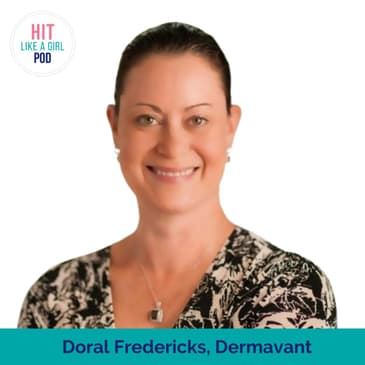

In this episode, Joy welcomes Doral Fredericks, Senior Vice President of Medical Affairs Strategy at Dermavant Sciences, to discuss her extensive experience in the biotech industry and the innovative dermatological product, VTAMA 1% cream, designed for adult plaque psoriasis. Doral emphasizes the critical role of medical affairs as a bridge between clinical development and product commercialization, while also shedding light on the importance of patient education and advocacy. Throughout the conversation, she shares valuable insights on skin care, the significance of proactive patient involvement, and practical tips for maintaining skin health, including the necessity of sunscreen and hydration.
Episode Highlights
[00:02:55] Role of Medical Affairs in Biotech
[00:03:40] Understanding Psoriasis and Skin Care
[00:04:30] Importance of Sunscreen in Skin Health
[00:05:15] Overview of Psoriasis Symptoms
[00:06:50] Resources for Psoriasis Patients
[00:10:00] The Role of Healthcare Providers in Patient Education
[00:12:30] The Need for Patient Advocacy
[00:15:00] The Impact of Timely Medical Intervention
[00:18:04] Importance of Patient Proactivity
[00:19:12] Tips for Being a Good Patient
Stay connected to Doral Fredericks:
[00:00:00] You're listening to a Health Podcast, which means you probably care about health and you enjoy podcasts.
[00:00:05] I'm Dan Kendall, the founder of Health Podcast Network, and I want to invite you to join me in thousands of healthcare professionals and leaders at the annual Health Event taking place in Las Vegas, October 20th to 23rd.
[00:00:16] When you're there, I'd love to meet you at our exclusive reception on Monday, October 21st.
[00:00:20] In fact, the host of the show you're about to listen to plans to be there too.
[00:00:24] Reserve your spot. Visit healthpodcastnetwork.com slash health.
[00:00:28] That's healthpodcastnetwork.com slash HLTH, and save $250 with our special discount code.
[00:00:35] Again, that's healthpodcastnetwork.com slash HLTH.
[00:00:40] I look forward to seeing you there.
[00:00:50] Hello there, and welcome to The Hit Like a Girl Podcast.
[00:00:54] My name is Joy Rios. I'm this shows host, and this is a show where we talk about the 30,000 piece puzzle of healthcare, where each one of our guests gets to bring in one of their areas of expertise and share that puzzle piece with our audience.
[00:01:10] So I'm very excited for today's guest who's going to be bringing on a piece of the puzzle that we have yet to uncover, Darrell Redrix.
[00:01:18] Can you please take a moment to introduce yourself?
[00:01:21] Sure, Darrell. Thanks so much for having me. I'm very excited to be here and I have to say I've listened to a number of your podcasts and have really found them to be.
[00:01:30] I think not only educational but inspirational, so thank you for having me.
[00:01:34] As you said, my name is Darrell Redrix, and I am the Senior Vice President of Medical Affairs Strategy at Durmathian Sciences.
[00:01:42] Durmathian is a Muto Dermatology Company, and we launched our first product actually in 2022.
[00:01:49] It's called Vitama 1% cream, and it's for adult practices.
[00:01:55] But the cool thing about it is it was a really unique mechanism of action and really new in the space.
[00:02:02] So we can talk more about that if you're interested.
[00:02:04] I have a clinical pharmacist by training and have been in Viotech for about 25 years.
[00:02:11] So have a lot to share on medical affairs.
[00:02:14] Oh, that's great. I can't wait to pick your brain.
[00:02:18] And all right. So your job title, tell me your job title again.
[00:02:22] Senior Vice President from Medical Affairs Strategy.
[00:02:24] Okay, can we start there? And can you please tell me how does one get involved in medical affairs?
[00:02:30] And also let's set the level of the plane field. What exactly does that mean to be a VP of medical affairs?
[00:02:38] What does that role do?
[00:02:40] Well, medical affairs in general is sort of we always think about it as the bridge between the clinical development process.
[00:02:48] So the clinical trials that are done and then the commercialization of the product.
[00:02:53] So generally we have a lot of field medical people that go out and educate physicians. That's really what our job is is education.
[00:03:04] And then I would say sort of data generation and dissemination, right?
[00:03:09] So we write the articles that you'll see in New England Journal of Medicine and things like that.
[00:03:13] Typically people that join medical affairs organizations have a clinical background.
[00:03:18] So we have MDs or DO's positions pharmacists. I'm a clinical pharmacist by training and that was sort of my path PhDs that have a science background or then things are other what we call advanced practice providers.
[00:03:33] So nurse practitioners, physicians assistants like that.
[00:03:37] So you're really dealing with the information after a clinical trial.
[00:03:42] So research has been done. You're helping to make that understandable and easy to understand for clinicians and then turning it into something that is a product.
[00:03:51] I'm understanding that correctly.
[00:03:52] Oh, yeah, I think that sums it up nicely. Sometimes it will be involved earlier on in helping clinical trials also be developed.
[00:04:01] So we'll bring sort of the face of the patient and the practitioner into the clinical trials about, you know, really things to think about while we're conducting those.
[00:04:10] And then we'll work with the commercial organization to come up with and work with them on the marketing messages or helping the sales organization understand the clinical data.
[00:04:22] Okay, and in the world that you are living and spending your time. It's a lot related to dermatology. So can we help our audience understand more about psoriasis? Like what is some of the education that you would like the general lay people to know about taking care of their skin?
[00:04:39] Well, to stay in care of your skin in general is really important. And so I'll say sunscreen super important just from the baseline, but psoriasis is really a disease or activity of the skin.
[00:04:54] And so patients will tend to have what we call plaques. So they look like thick in the areas of skin that are a lot of times looks kind of scaly with some pink around it, and they can be very, very thick and painful and you'll have patients that get it on the souls of their feet or on their hands and they can crack and bleed.
[00:05:16] I think the most important thing to realize for people is that psoriasis is not contagious because we hear that a lot of women will go in to get our hair done and she'll have a plaque on her scalp. And hair dressals will be like, I don't want to, I don't really want to work with you.
[00:05:31] And it just creates so much anxiety in patients. It's the disease that, again, is chronic and so they'll have to work with it for their entire lives, but there are a lot of different ways to take care of it.
[00:05:46] And it can be done. It just, it does take a lot of, I think, proactiveness of the patient in working with her clinicians to find the right balance of treatment.
[00:05:54] Now, is psoriasis, you said the word disease? Is it disease or is it something that happens occasionally? This is really thinking to my understanding or lack of understanding.
[00:06:05] No, I mean, it is a disease. You hear things like XMR, a topic dermatitis, right? That may be known to more people and psoriasis is in that. It's it's a over, like I said, it's a imbalance basically in the way that the skin turns over and grows. So it's it's a thing that occurs in a lot of patients over time.
[00:06:29] And it's just something that they have to deal with for their entire lives. So yeah, it is a chronic disease and it's important because I think a lot of a lot of people think about dermatologic conditions as being, you know, cosmetic and something that's not really serious, but this can be very serious.
[00:06:46] When you have it, it feels serious, especially if you've got something that people are responding to or even just the way that you think of your, when you're looking in the mirror at something, but I'm sorry to interrupt you go ahead and finish that.
[00:06:57] That's fine. You finished it well. Well, I keep thinking about so a friend of mine has stress blotches like she's just been going through a lot of changes right now in life and like just a lot of heavy and it's been really interesting and sad really to see that how stress it presents in our skin and how it can show up. And I'm sure that that is something like okay. So if we can treat psoriasis this also stress related is it's something that if you take better.
[00:07:27] care of yourself and like to your point of being proactive that you can prevent it. I wouldn't see that you can prevent it from emerging originally, but certainly diet and stress can affect how severe it becomes at certain times.
[00:07:45] So patients tend to be really sensitive to certain things in their environment that can exacerbate things or like you were saying stress can certainly bring things on.
[00:07:58] So, you know, like everything else as much as you can have a healthy lifestyle that will certainly help the disease.
[00:08:06] Yeah, but it's still something that you can't well I don't know. Some people say that they can control and I think in milder psoriasis that maybe the case with certain dietary changes.
[00:08:17] But over time the majority of patients need medications.
[00:08:20] God, can you tell me more from a pharmacist perspective? Oh, Lord, because we haven't had too many pharmacists on the show. The show. So I'm curious to know what your career trajectory has been like.
[00:08:31] What have been some of the highlights of unexpected and expected? I'm sure that you might have had a plan of where you were going, but I would also guess that you didn't plan to end up where you are.
[00:08:41] 100% true. I don't know that I wanted to be in health care and it sort of changed from veterinary medicine to human medicine.
[00:08:50] And I ended up in pharmacy just I don't know, I liked the pharmacology, I like the chemistry of things.
[00:08:56] And so ended up doing actually a doctor of pharmacy and I combined with an MBA program, which was sort of unique.
[00:09:06] And then I did a residency and and practiced in actually adult primary care. So I took care of diabetic patients in health maintenance organization kind of setting in Southern California where I live.
[00:09:19] We never really learned a lot about industry. I didn't know anything about it in pharmaceutical industry and I happened to be participating.
[00:09:27] We had a clinical trial going on in the clinic and at that time we just had a couple of representatives that that came in and I started digging war into what industry was because I thought,
[00:09:38] that might be a great way to put together not only the medical knowledge that I have at the business knowledge.
[00:09:46] And so interestingly, I, after finished residency and was working came into this, I saw an ad. I'm going to date myself here, but it was in the LA times of all things newspaper right in the job section.
[00:09:57] And it was for medical science liaison, which is what we call a field medical personnel.
[00:10:04] And basically the job was to work for this company, learn about the products and go out and talk to other clinicians about the product answer their questions.
[00:10:15] And then that was really sort of my first foray into it. I originally didn't even think that I was going to be applying for the job because they said, oh, you need and I think this is a good learning.
[00:10:25] The job description said, you need three to five years of experience on my home at there yet. So never mind my husband's like, just try you never know what you're going to get.
[00:10:33] And it's true. So I did, I got the job and that was the start of really my career. So you just never know where opportunities are going to come from now. I also am curious. So born and raised Southern California that's like my territory moved from San Diego several years ago, but I'm curious about when you got into health care how much of it has been static where you've basically been in the same place or hasn't taken you to places that you might not have expected and the reason I say that is because when I
[00:11:03] got a job in health care, I then began traveling 80% of the time and it was like a road warrior scenario. And I'm curious if that happened to you too. So yes, to all of you, Bob, I have for been fortunate in for the most part, I've always been based out of my home no matter what my role is, which is a little unique. And I've always been in Southern California, but I will agree. I've definitely I haven't been had to be a road warrior, which I am thankful for.
[00:11:30] But I have definitely got to see a lot of places that I had never been to. I mean, I think I've been to every state at this point.
[00:11:39] Been to a lot of international conferences, which is great and it's so wonderful to connect with people from all over and hear about the regional differences in how health care is delivered.
[00:11:51] I really enjoyed that piece of it, but I agree. I think there's a point when it becomes so much it consumes your life. Unfortunately, I haven't been there.
[00:11:58] I just keep feeling like it's never enough. We're just like, doesn't matter how much you're doing, it doesn't seem like it's ever enough for health care. The health care is a hungry industry.
[00:12:07] It is definitely a hungry industry and it's 24 seven, you know, technology. I think has really changed things to where I am always attached to my phone and you have my company work on my phone.
[00:12:18] And it just I'm not good necessarily as good as I should be about putting it down and that is something you have to definitely put your own guard rails on.
[00:12:28] But I also think that it opens up opportunity to your point about travel and to see like, I think that when people enter health care they might not necessarily make that connection of how far it can take you because obviously health care happens everywhere.
[00:12:42] Yeah, and so I'd be interested in some of the places that it's taking you that have been the most unsuspecting or that you have, you know, memorable. And I can share.
[00:12:50] I mind is, and two hours north of Fairbanks, Alaska, I think it's called Chaskafaults, but I'm just like, oh yeah, I'm out in the middle of winter with the moose.
[00:13:00] But talking about dermatology. Okay.
[00:13:06] One of the things that I had really enjoyed was when I was sort of a field medical person part of my territory and I know I get this all the time was Hawaii.
[00:13:15] Oh, so hard to work in Hawaii, right? And it was great. It really was but I did get to spend a lot of time with the local individuals that a lot of times were native to the Hawaiian Islands and learn a lot about their just how different they are.
[00:13:31] You kind of, I think we group everything out, you know, just it's Hawaii. It's a great topic tropical location, but there's so much difference in between in micro planets and just history and culture in all of the islands.
[00:13:44] And that's been one of the kind of the coolest things they did that for a number of years. So really got to spend time there.
[00:13:50] That's great on all of the islands. It's just the main. Yeah, I think that's what made it unique is, you know, you tend to have one or two that's your favorite ego vacation to, but I spent a lot of times and even the really small lines.
[00:14:01] Well, considering that's actually been a topic of conversation that's shown up in my world of a little bit lately is just the remote and rural communities specifically to Hawaii.
[00:14:12] And so like how do we bring healthcare and get it more accessible for them? And I didn't do have any commentary on how to do that well.
[00:14:21] I don't know that I can comment on well, but what I will say I think is happening is they're definitely in dermatology especially, but in all of medicine.
[00:14:30] Well, really seeing telemedicine become more mainstay and I think that's a really important piece for rural communities or areas that don't necessarily attract a lot of clinicians just in the area.
[00:14:44] And so we've seen a really large uptake in telemedicine, you know, teledog platforms in the dermatology space and what's interesting is I think you'll also see the emergence of a lot more on skin apps.
[00:14:58] So applications on the phone that can help diagnose different disease states even through artificial intelligence and they're going to couple of studies looking at that and to show them that the AI is as good in some cases better sometimes than the human element of it.
[00:15:14] Of course, you still need the human element for treatment but that may really help I think close that disparity in different areas.
[00:15:23] I love that and I was going to ask about that as far as like skin checks and whatnot can we start relying I mean it's one thing to look at a clinician over zoom and have a conversation but to be able to do skin checks is that something that's reliable and where that's happening now that's our reality.
[00:15:41] It is actually yeah that is actually how a lot of the teledog platforms started which is some of these I have this rash or.
[00:15:52] This weird mole and you could get really close to that and share pictures and things like that so absolutely that's incredible you just can't do any.
[00:16:00] If they need to go in to see a doctor to get something removed obviously that requires a human touch and a follow up that's fantastic what else is it that you're seeing and excited about in the in dermatology and are there.
[00:16:11] At their specialties that you work with are you full time dermatology I am full time dermatology now I've done a lot of different therapeutic areas in my past but yeah right now totally dermatology and it's it's an interesting question because.
[00:16:28] I think we could spend the whole podcast just talking about the future of what we're I think dermatology is going and it's an a pretty dynamic space right now that we talked about we have the teledogs we have.
[00:16:40] The artificial intelligence with regards to some of the apps there's really interesting work going on I mean even Google and IBM are investing in this type so really large companies are investing in these technologies but we're seeing things like artificial skin being.
[00:16:58] Developed something about that it is crazy but for like burn victims or just even being able to do studies on skin where you don't necessarily have to do patients I mean this is off futuristic but.
[00:17:10] Yeah that you have 3D printing that's really kind of changing medicine as well there's research going on it to nanoparticles and nanotechnology and how those things can affect skin healing or disease so there's a lot of research going on in these areas a lot of it's really early phase but I think it's really going to revolutionize dermatology and probably other areas over the next decade.
[00:17:35] Imagine from where you sit that you get to see like one research that is being conducted and also how it is being connected what that must be a really fascinating place to spend your time.
[00:17:47] Why do you so right now? Okay now I want to know more about nanotechnology and I'm just like okay what are the things like that's not even on my radar of how it could be supportive of skin health.
[00:17:57] I am certainly not an expert in that. I just sort of read on this side but I imagine it's beyond our own like ability to even really truly comprehend as an individual like you don't need to be an expert in all of the things but just being able to understand where the technologies going and it must be very, very different than it was even five years ago.
[00:18:17] Oh absolutely the advancement that we've seen in just sort of being able to crunch big data and learn from that is changing the way we view the future of health care and where we apply our resources because right rice resources are always finite.
[00:18:34] And so you need to think about where it is that you can have the most impact and I think also look at underrepresented groups or disease states that haven't been looked up before and how you can approach that differently.
[00:18:46] All right so I'm thinking about our audience and I want to ask with two final questions and they both go in different directions. So one is what do you want to choose which direction do you want to go in?
[00:18:56] When the patient direction or do you want to go in the career direction.
[00:19:00] No, they're both really good.
[00:19:03] Well probably end up with both of them to be honest it just will start with one.
[00:19:07] Okay, let's start the patient then.
[00:19:09] Okay, so then I wanted to ask for listeners what should we be doing it like to be good patients.
[00:19:15] I think I'm like okay prioritize sleep we should always be prioritizing sleep and taking good care of ourselves having a healthy diet and understanding that having a healthy diet can't necessarily if you don't have a healthy diet then you can't necessarily exercise enough to counter it like there's a balance there.
[00:19:34] But like a part from wearing sunscreen and the things that we can get into a routine of doing is there any advice that you have for folks of just like maybe drink more water, you know, and how much that affects your skin.
[00:19:46] Yeah, water's definitely important.
[00:19:48] The majority of people in favor of myself probably do not drink enough.
[00:19:52] I think part of it's just being mindful of all those things that you mentioned and it's hard in today's world right and you have to give yourself some grace.
[00:20:00] So I think part of it too is we try to be so good at everything and we can't.
[00:20:07] So you gotta give yourself some grace, but I think one of the other things I mentioned this earlier too is being a proactive patient.
[00:20:14] You are your own best advocate.
[00:20:17] So when you go in ask the questions, your clinicians and your farm, you know, your pharmacists just any healthcare professional they want you to ask questions.
[00:20:26] The most frustrating thing is passive patients.
[00:20:30] If there's a disease that comes up or you think something is going on, learn about it and learn your treatment options.
[00:20:38] I'm amazed even with all the resources out there for example in psoriasis.
[00:20:44] There's the National psoriasis foundation and they have a great website talks about the disease talks about different options for therapies and it still amazes me how many patients don't know even for some of them they've been diagnosed with.
[00:20:58] What's available for them and they depend on their healthcare provider to kind of give them all of the information but it's too much.
[00:21:07] I mean, it's just too much to go over so you have to be your own best advocate that's the thing that I'd like to leave people with.
[00:21:12] From a patient perspective.
[00:21:14] It's interesting I can imagine a lot of times people find stuff out about themselves and then just get quiet about it and don't reach out like and how much of an impact even time is of the essence right that if you find something
[00:21:27] that's going to be the sooner you address it the better off you're going to be and the better off you know we can manage it hopefully.
[00:21:32] Don't rely on Dr. Google.
[00:21:35] So do your research but validate your research with your healthcare professional that's another two thing yeah for sure.
[00:21:41] All right, so now transition into career career if somebody wants to buy for your job right like you would said that you're like,
[00:21:47] it said that you needed three to five years of experience with your like, okay, let's push past that and try anyway.
[00:21:54] But what it thinks and if somebody was interested in pursuing a career that led them to medical affairs,
[00:21:59] it sounds like there's multiple paths so they could follow in your footsteps but what advice would you have knowing what you do now versus when you first started.
[00:22:08] So there's a lot of different roles I think within medical affairs.
[00:22:12] There's the field group there's what we call the headquarters teams which do a lot of the scientific communications and things like that.
[00:22:21] So number one is I think the openness to where you start.
[00:22:25] You may have an idea that I wanted I want to do this but if you can just get your foot in the door and industry,
[00:22:31] that's a really important thing and networking is incredibly important it's a very for a very large,
[00:22:38] you know, I always think of healthcare and part of the pharmaceutical industry is being a very large sort of net.
[00:22:44] It's a really small group of people that do this and it's amazing that people that come back into your life over time so.
[00:22:52] Make sure that you're really leveraging that network that you have you know my role has taken me I've had different roles in industry obviously over the last 25 years and it's taking me a while to get to this role.
[00:23:05] But the open for experiences you heard me say that I was really open to a lot of different therapeutic areas they've worked in in many many just be open for those opportunities as experiences don't limit yourself.
[00:23:20] Because every door that opens is something really spectacular can happen.
[00:23:25] Yeah, I definitely have experienced that working in healthcare will take you to places that you wouldn't have ever predicted and it's not the kind of thing that it would have been on your vision board.
[00:23:34] But it might even better than what we have been on your vision board and I definitely agree with you in terms of networking and making sure that you get a name for yourself.
[00:23:44] I've met a lot of young folks who don't yet like they don't see because of social media and the social media platforms that are out there that they'll heavily invest in like an Instagram profile,
[00:23:55] but not too much in a LinkedIn profile. And I'm like, oh you need to build that up. That is like an area that showcases your history and is also a great place to network with other professionals. It's not the same as showing your picture of whatever your eating or your dog.
[00:24:11] Absolutely true. And there's a lot of good organizations out there too. You know, there's for us the healthcare business women's association.
[00:24:18] There's the industry pharmacist association, you know, there's just a lot of one. So I really recommend that people look into those opportunities and get involved because that's how you meet people that are in the roles that you want to be in and learn from them.
[00:24:31] And that's where you get some great mentors too that you can leverage to help your career over time.
[00:24:36] Do you ever mentor folks is that something? Have you transitioned from mentee to mentor?
[00:24:42] I have definitely and I think the great thing is when people come and sort of ask, can you, can you mentor me? Can I learn from you?
[00:24:51] And I love doing that. I don't do it formally through any like organizations or things like that. It's really for me happened just organically organically.
[00:25:05] I think that's the great compliment because it sort of means that you've touched somebody's life in the career and they see something that they want to emulate and learn from.
[00:25:16] But I love that. I wish I could do it more.
[00:25:18] Okay, well on that note, I have been to people reaching out to you and if people did want to reach out to you, where would you point them?
[00:25:26] Absolutely. I talk to students a lot and I'm definitely would love to help out anybody that I can. I think two ways that you could do it that are pretty easy is I do have that link did profile that you just talked about.
[00:25:39] So, you know, he's looked me up on LinkedIn and can contact me through that or through my email address at work, which is Dorale. Fredricks at Don'trevan.com.
[00:25:49] Awesome. Thank you so much for sharing all of this information and getting just giving your insight to where you stand. So I really really appreciate your time and you're sharing your expertise in the piece of the puzzle that you hold in health care. It means a lot to me.
[00:26:03] Thanks for having me.
[00:26:05] Thanks for listening. You can learn more about us or this guest by going to our website or visiting us on any of the socials with the handle hit like a girl pod.
[00:26:13] Thanks again. See you soon. Again, thank you so much for listening to the hit like a girl pod cast. I am truly grateful for you and I'm wondering if you could do me a quick favor.
[00:26:23] Would you be willing to follow or subscribe to this podcast or maybe leave us a rating or review?
[00:26:28] Or if you're feeling extra generous would you share this episode on your Instagram stories or with a friend?
[00:26:34] All those things help us pod casters out so much. I'm the show's host Joy Reos and I'll see you next time.