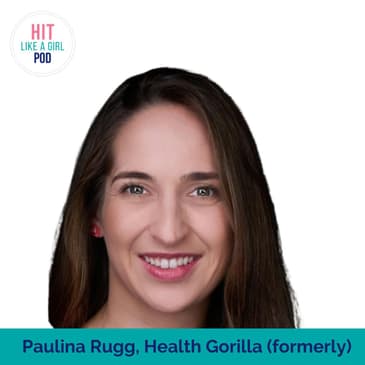

In this episode, Joy welcomes Paulina Rugg, former Director of Event Marketing at Health Gorilla, as they discuss Paulina's journey from Mexico City to her current role in the healthcare industry. From her fascination with trade shows to navigating the convoluted realm of pharmaceutical events, Paulina shares insights into the multifaceted nature of healthcare and events management.
Episode Highlights:
[00:01:18] Paulina's Experience: Paulina shares her background and experiences since joining the company.
[00:14:02] Event Planning Process: Insights into the detailed planning process for events.
[00:15:28] Measurement Metrics: The importance of measuring event success and outcomes for up to a year.
[00:21:30] Data Management Tool: Use of a voice-to-text tool for efficient data collection & CRM integration.
[00:22:48] Balancing Investments: Challenges of allocating resources effectively in healthcare events.
[00:26:06] Connecting with Paulina: How to follow, connect, or work with Paulina Rugg via LinkedIn.
[00:00:00] Calling all Swifties and Champions of Change, Like a Girl Media is rolling out the red
[00:00:05] carpet for you with our Thrive Like a Girl contest.
[00:00:08] We're all about celebrating powerful women leaders who inspire us to dream big and push
[00:00:12] boundaries.
[00:00:13] And who embodies that spirit more than Taylor Swift herself?
[00:00:16] Here's your chance to see her live in concert.
[00:00:19] We are giving away two tickets to Taylor Swift's show in London on Saturday, June
[00:00:23] 22nd.
[00:00:24] Imagine being part of the magic all thanks to Like a Girl Media.
[00:00:28] Entering is easy.
[00:00:29] Subscribe, share and show us which episodes inspired you the most.
[00:00:33] Visit our website or check our social media for all the details.
[00:00:37] Don't just dream it, be it.
[00:00:39] Thrive like a girl and make this summer unforgettable.
[00:00:43] Contest opens globally.
[00:00:44] Voidware prohibited.
[00:00:45] Must be 18 or older to enter.
[00:00:47] No purchase necessary.
[00:00:48] Subscribe and share with hashtag Thrive Like a Girl and tag us at Like a Girl
[00:00:52] underscore media for entry.
[00:00:54] Unlimited entries means unlimited chances.
[00:00:57] Enter chosen at random after contest closes May 20th, 2024.
[00:01:02] We'll be notified via DM.
[00:01:03] Make sure your profiles are not private.
[00:01:06] Check full rules on our site.
[00:01:07] This is your shot to see Taylor Swift live.
[00:01:10] Don't miss it.
[00:01:11] Hello there and welcome to the Hit Like a Girl podcast.
[00:01:25] My name is Joy Rios.
[00:01:26] I'm the show's host.
[00:01:27] This is a place where we get to talk about how crazy complicated health care is.
[00:01:31] We're all trying to figure it out.
[00:01:33] So I liken it to a puzzle and the puzzle keeps getting bigger and bigger.
[00:01:37] And each one of our guests essentially brings their piece of the puzzle to help us all
[00:01:42] make sense of it.
[00:01:43] So we all have different experiences and things that we can bring and contribute
[00:01:47] to help each other learn and grow and get better.
[00:01:50] I selfishly learn a lot and like to be able to share it all with our listeners.
[00:01:55] So I would like to give you a moment to introduce yourself and tell us about your piece of
[00:02:01] the puzzle.
[00:02:02] Wonderful.
[00:02:03] Well, thank you very much for having me here.
[00:02:05] My name is Paulina Rugg.
[00:02:07] I'm the director of event marketing at Health Gorilla.
[00:02:11] We are a health information network and I've been with the company for about
[00:02:15] two years now.
[00:02:16] I'm originally from Mexico City and I came here back in 2001.
[00:02:21] So I'm loving being here at Health.
[00:02:25] This is my second year.
[00:02:27] Lots of great opportunities networking and just enjoying my time here.
[00:02:33] It is pretty intense, right?
[00:02:35] There's a lot going on and a lot to pay attention to for sure.
[00:02:38] There is.
[00:02:39] It definitely I don't think that there's enough time to be able to do everything
[00:02:43] I wanted to like go ahead and sit in all the different sessions.
[00:02:46] There's like so many really good speakers, but thankfully we're being very busy in our
[00:02:51] booths.
[00:02:52] And it is impossible just to absorb it all.
[00:02:55] There's not enough, literally not enough hours in the day.
[00:02:58] And if you could clone yourself 10 times, you still wouldn't be able to do it all.
[00:03:02] Exactly.
[00:03:03] And even like they record the sessions and all these like you don't have time.
[00:03:07] Yeah, exactly.
[00:03:08] Then you just have to block out your weekend and just be like, OK, I'm going
[00:03:10] to catch up for where I was.
[00:03:11] That's correct.
[00:03:12] I would love to hear more about your journey.
[00:03:14] And of course, selfishly, I want to hear all about from the beginning back from
[00:03:18] Mexico City because I'm just like, OK, what was it like?
[00:03:21] One, growing up and growing up there and then moving to wherever you moved to when
[00:03:27] you moved to the States and then however you got to where you are now.
[00:03:30] I mean, I know that's a lot to cover.
[00:03:31] It's a lot.
[00:03:32] Definitely. I mean, it's like 22 years that you're telling me to go over.
[00:03:36] So where to start?
[00:03:37] I mean, I was born and raised in Mexico City, biggest city in the world or one
[00:03:42] of the biggest cities in the world.
[00:03:45] I was very fortunate to have like a fantastic childhood.
[00:03:49] Love my country.
[00:03:51] It's I don't know if you had like the word.
[00:03:53] I don't know if you had the opportunity to actually go to Mexico City.
[00:03:56] I was there in February.
[00:03:57] Yes. And it was fantastic.
[00:03:58] It's like such a cosmopolitan area.
[00:04:00] So I was very fortunate enough to be born in a place where there's every type
[00:04:05] of food, every type of people and religion.
[00:04:07] And there's so much to offer.
[00:04:10] But my journey really began in the United States in 2001 when my dad was asked
[00:04:16] to move. He used to work for IBM and he was asked to move to the U.S.
[00:04:20] to manage Latin America, like portion of Latin America.
[00:04:24] And it was just like easier to travel for him.
[00:04:26] It was like less expensive, I guess.
[00:04:27] I don't know. And that's really what brought us to the U.S.
[00:04:29] We always have that desire of moving to the United States.
[00:04:34] My dad saw it as an opportunity to have a better lifestyle,
[00:04:38] better opportunity in education, even though that Mexico education is
[00:04:42] really top notch.
[00:04:43] It was just like it was an opportunity to like brother up our careers,
[00:04:47] our minds.
[00:04:49] And once we moved here, I mean, I came with the idea that it was going
[00:04:53] to be like a two year deal.
[00:04:54] We were going to...
[00:04:55] I was going to study here for two years, go back to college over there.
[00:04:59] But once we stayed, came, was like no way back.
[00:05:01] I mean, I lost a lot of my friends and they're on the...
[00:05:04] I mean, I didn't lost them.
[00:05:06] They're still there. I still like...
[00:05:07] My best friends are still living in there and they're like my sisters.
[00:05:11] I have actually my part of my family that is still there and I go back
[00:05:13] and forth and see them.
[00:05:14] But once that I moved here, I did see the world a little bit
[00:05:18] in a different way.
[00:05:19] It was a different lifestyle, a little bit like not as hectic
[00:05:22] and crazy as in Mexico.
[00:05:24] And during the U.S., I mean, it opens up to opportunities around
[00:05:28] the globe.
[00:05:28] So my journey really started.
[00:05:30] I studied hospitality management.
[00:05:32] It was hospitality and tourism management.
[00:05:34] And in there, my career began in the tourism industry.
[00:05:37] I worked for the Mexico Tourism Board for a few years.
[00:05:41] I mean, actually for a year.
[00:05:42] So I was there.
[00:05:43] I was in charge of putting like all their events together
[00:05:46] to promote tourism to Mexico.
[00:05:48] OK.
[00:05:49] And that was such a unique experience.
[00:05:51] That's how I started like in the events part of it.
[00:05:54] Like, I mean, I still do events, but never thinking
[00:05:57] that I will be in health whatsoever.
[00:05:59] I always thought that it was going to be completely different.
[00:06:01] And it was like very several years until I came to health.
[00:06:06] But I was in the tourism industry at the Mexico Tourism Board
[00:06:10] when we had an event at the Convention Center in Miami Beach.
[00:06:14] And I fall in love with trade shows.
[00:06:17] How does that happen?
[00:06:18] You saw a trade show and you're like, I'm in love with this.
[00:06:20] It's just like a lot of information in the same place.
[00:06:22] Was that what it was?
[00:06:23] Just like to see like how many people come from all over the world,
[00:06:27] all with a different goal, but at the same time, like
[00:06:30] they have very same journey, same goal.
[00:06:33] In this case, I mean, the trades are like just very focus oriented.
[00:06:37] So you have in this trade show was like Japan
[00:06:40] and Colombia, and you have like every single country in the world
[00:06:43] that they're trying to promote tourism to their own countries.
[00:06:45] And it was such a great experience just to see
[00:06:49] the different narratives of like how things,
[00:06:52] how to bring people to the booth to really have create excitement
[00:06:56] and create an educational piece to really promote something in return.
[00:07:01] So when I was working at the I mean, when I was at the Convention Center,
[00:07:04] I was like, I think that this is a great opportunity for me
[00:07:07] to really get a better understanding of everything that events have to.
[00:07:10] Because like events is such a vast industry,
[00:07:13] like you have your social events, you have your health events,
[00:07:17] treaches and conventions.
[00:07:18] So I decided to start on that journey.
[00:07:21] I applied for a job there and they hired me like right on the spot pretty much.
[00:07:25] I worked. I was very fortunate because I was actually under a visa.
[00:07:29] OK, yeah.
[00:07:29] So I came here originally with my father with an ill visa
[00:07:34] and that only allowed us to stay here for a certain period of time.
[00:07:38] And I was dependent on my dad.
[00:07:40] What does the L stand for?
[00:07:41] The L stands actually, you know, honestly, I don't know.
[00:07:44] But it is a work visa.
[00:07:46] So only a company from the US
[00:07:50] brings you to the United States to allow you for a certain period of time.
[00:07:54] What the difference is that you are able to apply for a green card.
[00:07:56] That was the whole thing.
[00:07:57] So my dad started applying for the green card.
[00:07:59] But I turned 21.
[00:08:00] And the moment I turned 21, it was like, OK, well, now you're on your own.
[00:08:03] The rules change, right?
[00:08:04] The rules completely change.
[00:08:05] It's like you're on your own.
[00:08:06] Even if your dad had it, it doesn't come back down to you.
[00:08:10] You didn't come back to me.
[00:08:11] So I was like pretty much as you're 21, you're starting college.
[00:08:14] I was like go on your own.
[00:08:16] So I was there.
[00:08:18] I had a student visa.
[00:08:19] And then the moment that I graduated,
[00:08:22] I found this job opportunity that at the convention center
[00:08:25] where they sponsor my visa.
[00:08:27] Oh, that's great.
[00:08:27] So it was fantastic.
[00:08:29] And I worked there for several years.
[00:08:32] I learned a lot of the parts of the industry and events
[00:08:35] and the conventions and the trade shows.
[00:08:36] And it allowed me to see so many different type of events
[00:08:40] from consumers to trade shows and a lot of them in the health industry.
[00:08:44] And I remember one clearly that it really like impacted me.
[00:08:48] And I thought that it was like such an incredible experience.
[00:08:50] And that was like the Academy of Cardiology.
[00:08:54] They have actual hearts like indexed seaview floor,
[00:08:57] just steel like pumping, pumping and then outside of a body,
[00:09:02] and it was just like amazing to see.
[00:09:05] And during that journey, I was like, OK, I have been here for five years.
[00:09:08] Like I really want to do something else.
[00:09:10] I want to try different.
[00:09:12] And I decided to go to the other side of the industry.
[00:09:14] Like we're still in events, but I wanted to be more on the business side.
[00:09:18] So in the pharmaceutical with Anda, which was a pharmaceutical distribution company,
[00:09:22] we distribute product to generic pharmacies or brand pharmacies,
[00:09:28] independent pharmacies.
[00:09:30] So like more on the corporate side, like your Walgreens, your CVS and all of these.
[00:09:34] Then you have your independent pharmacies, your mom and pops.
[00:09:37] You have your hospital pharmacies.
[00:09:39] So we went to different type of events depending on the market that we were serving.
[00:09:43] And I was there for five years.
[00:09:45] I'm curious about OK, so let me ask you some things.
[00:09:47] One about the event part and the convention center.
[00:09:50] I'm like, if you are in I have just we've been to a lot of convention centers.
[00:09:55] So the prep for getting all of these boots set up.
[00:10:00] And like it's a whole industry in and of itself, just like booth makers.
[00:10:05] Oh, it is crazy.
[00:10:07] I mean, it's the whole industry, right?
[00:10:08] Like the reason why the conventions are centers are there is what is the whole reason.
[00:10:12] Yeah. That's what I always say is like it's to create jobs.
[00:10:14] And the beautiful thing about like these events is like the amount of money
[00:10:20] revenue generating for a whole city brings.
[00:10:24] So what comes from these events?
[00:10:27] It's massive. I mean, for us to
[00:10:30] like right now, I'm talking about health care, like to come to the event is
[00:10:34] it starts from like putting a strategy together to then what is it that
[00:10:38] how are you going to achieve those goals?
[00:10:40] Yeah. And then like bringing like our partners to really have like that vision
[00:10:44] and put it into paper and then put it into OK, this is going to be
[00:10:48] our boots done like what is going to be our footprint and what is it
[00:10:52] that we're going to be doing in all of these sections?
[00:10:54] And it's the amount of preparation that takes.
[00:10:57] It's it seems so simple.
[00:10:59] But it's not. No, it's very complicated.
[00:11:02] And not because this isn't the only event that you do.
[00:11:04] Right. So how many events do you are you guys part of per year?
[00:11:09] So you really depends on like we felt like we have about 20 events
[00:11:14] that we either participate or exhibit.
[00:11:16] We have like four large events like the Hiems five HLTH.
[00:11:20] But already that's more than one a month.
[00:11:22] Right. That's like two a month almost.
[00:11:24] So we do like exactly.
[00:11:25] Then the other ones are like on the smaller scale.
[00:11:27] Some of them we attend, but there's still a whole preparation
[00:11:30] to just to attend to make sure that we are sending like the right
[00:11:32] messaging, the right people.
[00:11:34] We are not just going there to just attend and just like walk the floor.
[00:11:38] It's really like being strategic because otherwise they they're not meaningful.
[00:11:41] Yeah, I know. It needs to be purposeful and you're in
[00:11:44] and have a solid strategy of like who is going to be there?
[00:11:48] What conversations do you want to have?
[00:11:50] What goals do you have to get out of that event?
[00:11:52] And I'm sure that is different based on the topic of the convention itself.
[00:11:57] Absolutely. So just as an example, like right now, like for HLTH,
[00:12:02] we are here and we're starting to prep for next year.
[00:12:05] Like we're here. It's like, OK, what's working?
[00:12:06] What's not working? What are we going to do?
[00:12:07] Let's start thinking about it.
[00:12:09] We're going to be doing like for our next event to see what makes sense.
[00:12:13] So it's also like one of the beautiful things about it.
[00:12:16] And I want to see events is that it's a channel between all
[00:12:19] the different departments within our organization.
[00:12:21] We have like to have a very cohesive relationship
[00:12:24] and understanding of our common goals are in order to bring them together
[00:12:30] and decide what are going to be like our goals and objectives
[00:12:33] for each particular event and how we are going to all work together
[00:12:37] towards that same goal.
[00:12:38] And we're going to be like our campaigns,
[00:12:42] what it's going to be like, how it's going to work out
[00:12:44] to make sure that is going to be successful.
[00:12:46] So you are a person that I could probably ask this random logistics
[00:12:49] questions like how often are boots reused?
[00:12:51] That's a good question. It really depends.
[00:12:53] I mean, we actually have like our own booth that we purchased
[00:12:58] not so long ago. We actually just used it for the first time at Hems.
[00:13:01] And we went through a whole process of like, is it more coming into rent?
[00:13:05] Is it more coming into own?
[00:13:06] Because renting the easier thing with like renting it
[00:13:10] is that you use it once you can get like move on.
[00:13:13] Yeah, still expensive.
[00:13:14] Now, if you know that you're going to be using the thing over and over,
[00:13:18] it might be better.
[00:13:19] Like if you got to kind of have like using like
[00:13:21] the same footprint for several years,
[00:13:24] your investment is going to be better worth.
[00:13:26] Yeah. If you have like that single one.
[00:13:29] But so much goes into that decision.
[00:13:31] It does. So we have to go to our fees.
[00:13:33] We have to have like, again,
[00:13:35] our vision cannot just be like our vision for the next six months.
[00:13:38] But what is going to be like our vision for the next five years?
[00:13:40] What kind of events we're going to be attending?
[00:13:43] In our case, we decided to purchase like a large space
[00:13:46] that could be divided into different sections.
[00:13:49] So it's like a puzzle.
[00:13:51] Yeah. So it gets like we can use it for either a configuration of a 20 by 20
[00:13:56] or we can use it for a master, like a 50 by 40 square feet.
[00:13:59] So that's the beauty of it, because otherwise
[00:14:03] buying like these massive things and just using it for one to do
[00:14:07] is not a good investment.
[00:14:09] We know, but there are so many things of like, OK,
[00:14:10] how many meetings do you want to have?
[00:14:12] How quiet do you want those meetings?
[00:14:13] Are you doing demonstrations?
[00:14:15] Are you going to have a theater?
[00:14:16] Exactly. Some of them are two stories when they get really
[00:14:20] on the bigger side of things.
[00:14:22] And depending on the event itself, like the footprint, like you said,
[00:14:26] that all of that, I'm sure that it's not cookie cutter.
[00:14:29] It cannot be cookie cutter.
[00:14:30] It's not.
[00:14:31] So like in this case for this event, like we we start planning
[00:14:35] probably like heavily, like really involved, like about six months ago
[00:14:39] where we decided, OK, we want to have like in-boot sessions.
[00:14:42] What kind of in-boot sessions?
[00:14:43] And I have to be very close with our communications team
[00:14:46] to decide what is it that we're going to market?
[00:14:48] What is it that we either we are putting like more educational content?
[00:14:52] Is it going to be more salesy?
[00:14:54] Do we want to invite our partners or we want to invite some of our customers?
[00:14:57] We did a mix of everything, right?
[00:14:59] Like we try to keep like entertaining.
[00:15:01] We want to use that content that we put there, like not just for the event,
[00:15:04] but we can also like repurpose it.
[00:15:06] So we made that decision ahead of time in order to be able
[00:15:09] to build the booth around to have like that space specifically for that.
[00:15:15] And then it's like, OK, how many salespeople are we going to be bringing?
[00:15:17] Who are going to be bringing from that?
[00:15:19] We also very data driven.
[00:15:21] Yes. So in our case, we utilize the tools that help us measure
[00:15:27] everything that is happening at the event.
[00:15:29] So coming back from the event, we'll be measuring all of that
[00:15:32] for the next six months, sometimes up to a year.
[00:15:34] Wow, really? Yes.
[00:15:36] So what types of things do you mind?
[00:15:37] What types of things do you measure?
[00:15:38] So we are very targeted on our numerical.
[00:15:42] How many meetings happened at the event on the sales side,
[00:15:47] from the leads that we collected, what actually became actionable,
[00:15:51] how many meetings translated into sales.
[00:15:53] Right. And that takes like a sales cycle.
[00:15:56] And it really depends on the type of market that we have.
[00:15:58] Like sometimes it takes three months, sometimes it could be a year or even more.
[00:16:01] So depending on the event that we go or like that.
[00:16:04] And these events are tough because we are hitting a lot of different markets.
[00:16:09] So it's not like we can just say like three months and that's it.
[00:16:12] So we are measuring that.
[00:16:14] We're also like measuring like on our current customers, like we can do upselling.
[00:16:18] So we're looking at that.
[00:16:19] We are measuring our own staff.
[00:16:21] Like how are they doing?
[00:16:23] Are they being productive?
[00:16:24] Are they following up?
[00:16:25] Are they meeting with the times?
[00:16:26] So I think we have a certain amount of pre-skilling meetings.
[00:16:29] We try to be ahead of the game.
[00:16:32] So we start like doing our outreach probably like about a month ahead,
[00:16:35] two months ahead, trying to promote the event.
[00:16:38] And we have like our amazing SDR team, which is part of the marketing team,
[00:16:43] that they start reaching out to the attendees way ahead of the event,
[00:16:47] trying to promote and to get those meetings in place.
[00:16:50] So we're starting to like say like, OK, do they actually come to the event?
[00:16:54] Can we reschedule them if they didn't come?
[00:16:57] And then once they start, like it's just like beginning on that cycle.
[00:17:00] Well, the other part.
[00:17:01] OK, so here's my other questions around attracting people.
[00:17:04] Right. So of course, if you have sessions that are in public
[00:17:08] and you have an audio visual and people can come by and sit that, that makes sense.
[00:17:11] But I've seen some, and especially in Vegas, where people are like,
[00:17:14] oh, we have a magician or we have like the things that will attract somebody there
[00:17:19] and also what you decide to distribute and give away
[00:17:22] like the either collateral versus like swag or gifts.
[00:17:27] Right. And so are you part of those conversations?
[00:17:30] Are you part of those decisions?
[00:17:32] Yes, we're like all these decisions.
[00:17:33] So it's like I do.
[00:17:34] I'm like the one that makes like the final decision pretty much
[00:17:37] on a lot of these things.
[00:17:38] So he's looking into like and also like thinking, right?
[00:17:41] Like if the type of things that we're going to be giving,
[00:17:43] like people have to take it back. Right.
[00:17:45] Do we want to give like this massive thing or do we want to just be also
[00:17:49] more friendly approach, I would say, like something that they kind of easily
[00:17:53] transport and that is going to be meaningful.
[00:17:55] They're not going to get there.
[00:17:56] Like I love coming to these convention centers like and these conventions.
[00:17:59] And we come back with like so many like really good like gadgets.
[00:18:03] And like I give it to my kids or I give it to my husband and all that.
[00:18:06] But a lot of times I come back and I'm like, why?
[00:18:08] Yeah. And you're just going to throw it out.
[00:18:10] And I feel that we're polluting the world.
[00:18:12] And it's just like, why?
[00:18:14] So it's like we try to be very mindful of the things that we are giving
[00:18:18] to make it attractive and then also like being a little bit like playful.
[00:18:22] I think about that a lot as I'm going through the halls.
[00:18:25] I'm like, OK, well, what?
[00:18:26] And also with my own stuff, right?
[00:18:28] If I'm creating anything, I'm like, what I don't want to do is
[00:18:31] put all this effort into creating trash. Right.
[00:18:34] Essentially, like somebody is going to hold it.
[00:18:35] That's cool. And then throw it away.
[00:18:37] Like, well, that feels like a big waste of money. Yes.
[00:18:39] And the same like I mean, that in and of itself.
[00:18:42] Like going back to the polluting area and I just like probably not
[00:18:45] the topic to be here.
[00:18:47] But I do think that it's like it's very important because like when I'm
[00:18:50] putting this like when going back to your question about like the rentals
[00:18:53] and like the owning a lot of these boots are not going to be reduced again.
[00:18:58] It's just like it pollutes like the conventions, like they pollute so much.
[00:19:01] So I've been very mindful as well on that is like, OK,
[00:19:04] let's try to minimize like the collateral pieces like this go digital
[00:19:08] like the carpet. Let's reuse it.
[00:19:10] Let's not go in a white color because the white is going to get trashed.
[00:19:13] So I was thinking the same thing, like even the signage of any of these things.
[00:19:17] Right. Like how much of it actually has an opportunity to get reused?
[00:19:20] A lot of times it doesn't.
[00:19:22] It doesn't. A messaging change.
[00:19:23] So it's just like even if I want to try it,
[00:19:27] then our team decides like, no, we're no longer going to do this message
[00:19:31] for next time. Like, oh, it hurts.
[00:19:32] I know it does.
[00:19:33] One of the things that I noticed in this particular convention
[00:19:36] is that they do a little bit more digital advertising
[00:19:40] so that that way you can just use screens and then you can update the screen.
[00:19:43] Absolutely.
[00:19:44] There we go. So much better.
[00:19:45] We're in a digital world now.
[00:19:46] Yeah, exactly.
[00:19:47] Digital convention.
[00:19:48] And of course, with like QR codes for everything, like help people.
[00:19:52] Even business cards.
[00:19:53] Yeah.
[00:19:53] I'm trying to start like not doing business cards.
[00:19:55] I mean, I know that now we have the lab, but still some people want to.
[00:19:58] And it's like, OK, well, we have like a QR code that we just like
[00:20:02] not have like multiple.
[00:20:03] One of my favorite networking tricks is showing people how to do this scan,
[00:20:06] scan the QR code for LinkedIn.
[00:20:08] And you're just like, look, we're already connected.
[00:20:10] Scan it and the business.
[00:20:11] It's cool when people have business cards.
[00:20:13] But again, what do you do with it?
[00:20:15] You're going to end up transferring that information and then throwing it away.
[00:20:19] Yes.
[00:20:20] Oh, I'm talking about like that.
[00:20:21] We have like our own lead retrieval system.
[00:20:23] So like that sounds like one of the things that I actually work with.
[00:20:26] The way that we measure our success is like our lead retrieval system
[00:20:30] connects to our CRM platform.
[00:20:33] So everything gets integrated like right away.
[00:20:35] So we have like a whole system.
[00:20:36] Tell me more about that.
[00:20:37] So I love the system.
[00:20:39] We have a great partner that it integrates with mostly like all the different
[00:20:43] lead retrievals that exist out there.
[00:20:45] So it is based on an API with that system.
[00:20:50] It connects to the event organizer lead retrieval system.
[00:20:53] So rather than me using like HLTHS app, I have my own one that I can then build.
[00:20:59] It's not just the contact information that I collect.
[00:21:01] I can do like a whole workflow behind it.
[00:21:04] So depending if it's a sales prospect, like a prospect that is going to be for sales
[00:21:08] or if it's a current customer, if it's going to be like for a strategy team,
[00:21:12] there's a different set of questions that we put that we build
[00:21:15] that we can have like meaningful conversations.
[00:21:17] So we're meeting like with hundreds of people that we're meeting.
[00:21:20] It's really tough to just keep up with all of these sessions.
[00:21:23] So it actually has like a really nice voice to text tool
[00:21:26] that you can actually just speak to it.
[00:21:28] It puts all your notes there and then automatically sends it to our CRM system.
[00:21:33] Yeah.
[00:21:33] So then our sales team can really follow up in a quicker and more fashionable way.
[00:21:37] I mean, that's absolutely and you guys are such a data rich company.
[00:21:40] So it makes sense that you would have something like that.
[00:21:42] I swear. One thing I struggle with them like I don't have that sophisticated
[00:21:46] of a system to keep track of everybody.
[00:21:48] And then I don't have an encyclopedic memory either. Correct.
[00:21:53] So being able to like not like being able to recall all that information
[00:21:57] that you get, you know, that comes your way, especially at an event like this.
[00:22:00] I mean, it's like a flood of information.
[00:22:02] So to be able to make sense of it is it is very challenging.
[00:22:06] I don't understand like back in the day how they used to do it.
[00:22:08] Like you'll come and you'll have like a piece of paper on business cards
[00:22:11] and you'll come with your stack of business cards.
[00:22:14] I'm like, that was crazy.
[00:22:15] How do people do it? Yeah, I know.
[00:22:17] So OK, so this has been fantastic just as far as like
[00:22:20] learning the event side of things.
[00:22:22] Are there any other things that you think other people should know
[00:22:25] about what goes into events that I'm not even asking about?
[00:22:28] Because I'm like, this is a huge part of health care.
[00:22:30] A lot of health care happens and conversations and meetings
[00:22:34] and connections happen at these types of events.
[00:22:37] I mean, first of all, I find them that they're so valuable, right?
[00:22:40] I feel that COVID like really put like an assessment
[00:22:42] of how incredible value these events are.
[00:22:45] Like they tried to go to virtual and it's just it's not the same.
[00:22:48] That connection that happens like on the show floor
[00:22:51] where you're like, it's just it's exceptional.
[00:22:54] I know. But my like I have had some my own criticism
[00:22:58] where like it's not a matter of whether this is all needed.
[00:23:00] And like how much actually happens here?
[00:23:03] We're having a ton of conversations and people meet.
[00:23:05] And all of these things are really great.
[00:23:07] But when it comes to the problems we're trying to solve in health care
[00:23:11] specifically and trying to support patients and outcomes,
[00:23:14] they're like a lot of times to the point of what we're talking about,
[00:23:17] like, is this the best use of our money and what we're spending it on?
[00:23:20] You're like, oh, if you spent five thousand dollars on coffee
[00:23:24] when it could have gone to, I don't know, a patient program
[00:23:27] that supported them somewhere.
[00:23:29] But like it's really hard to make that balance, both and are important.
[00:23:32] And I don't know.
[00:23:34] And you're like, it's worth the investment, essentially.
[00:23:37] And that's why we are very data driven.
[00:23:40] Because events are very hard to to see the ROI.
[00:23:44] It's a very gray area that if you don't do it the right way,
[00:23:47] you really don't know if you're getting like your return on investment.
[00:23:50] And I think that back a few years ago, it was like even harder.
[00:23:54] I do think that with technology, it has advanced to just say like, OK,
[00:23:58] we went to this event.
[00:23:59] This is the amount of money that we spent.
[00:24:01] But this is the amount of sales that we got.
[00:24:03] These are the amount of opportunities.
[00:24:04] And it's not just about how many sales you got,
[00:24:08] but it's like how many brand impressions they use,
[00:24:10] how many times did we repurpose our content?
[00:24:12] Like that goes a long way.
[00:24:13] Like how much like how many partnerships did we build?
[00:24:17] So it's like those connections cannot be replicated
[00:24:19] like in a different type of setup.
[00:24:20] I really don't think so.
[00:24:22] The other thing is that like sending like the connections,
[00:24:25] like in a Zoom meeting, it's not going to be the same.
[00:24:27] And sending people to like the other side of the country,
[00:24:31] you're not going to send like all your sales team.
[00:24:32] It's like these are like really good opportunities
[00:24:35] where you can have like the right people meet the right people.
[00:24:39] I love that.
[00:24:40] So I find these events being extremely important for the industry.
[00:24:45] This is where bright minds come together
[00:24:49] to try to come with solutions to make a better world.
[00:24:53] And in this case, like health is such an important part of our society.
[00:24:58] I think that we all want to be better, expand the life, the lifespan.
[00:25:04] And I just find it fascinating, like what we're doing here
[00:25:07] to try to get into a better place.
[00:25:10] I mean, something came across my feed recently that is like,
[00:25:13] no, not only will we live longer, which is great,
[00:25:15] but we want to be healthier.
[00:25:17] Absolutely. I don't want to be mighty, but I'm like,
[00:25:19] yeah, you know, with a terrible health and I'm not able to walk.
[00:25:22] Exactly. What's the whole point?
[00:25:23] Yeah, no thank you.
[00:25:24] We want to have like a healthy lifestyle.
[00:25:26] Yeah. One of the things that I was like actually very fascinated
[00:25:28] about, like on the sessions that I was like looking is how
[00:25:31] like these technologies now allowing us to be proactive
[00:25:35] and get ahead of the game.
[00:25:37] It's like it's not just, oh, I have diabetes.
[00:25:41] How can I get my life better?
[00:25:42] It's like, but how can I prevent it?
[00:25:44] Yeah, that's one of the biggest things.
[00:25:46] How can we not get sick in the first place instead of have to
[00:25:50] deal with all the aftermath?
[00:25:51] Correct. We do.
[00:25:52] It's lovely to hear your passion about the events and thank you
[00:25:55] for sharing everything that you know, because I feel like I've learned a lot.
[00:25:58] And this has been given me an opportunity to ask a bunch
[00:26:00] of questions that I've had about it because I've been to a million of events.
[00:26:04] I mean, as have you, but I mean,
[00:26:07] I have never really had an opportunity to sit with somebody.
[00:26:09] The whole event marketing, I mean, just like, again,
[00:26:11] like you see events and it's like, oh, it's just another event.
[00:26:14] It's just so convoluted.
[00:26:15] Yeah, it's a lot.
[00:26:16] So thank you for making some sense out of it.
[00:26:19] I really appreciate your contribution, Paulina.
[00:26:21] Well, thank you so much for having this been a lot of fun.
[00:26:24] If people want to follow you, connect with you, work with you,
[00:26:27] plan an event with you, where would you direct them?
[00:26:30] I will say LinkedIn.
[00:26:31] I should know my LinkedIn profile, but I honestly I'll have to actually look for it.
[00:26:37] That's OK. What's your first name and last name?
[00:26:39] So you can look for me at Paulina Ragh.
[00:26:42] And that is P-A-U-L-I-N-A Ragh R-U-G-G.
[00:26:46] Gotcha. All right.
[00:26:47] We will include that in the show notes.
[00:26:49] Thank you so much for being here.
[00:26:52] Thanks for listening.
[00:26:53] You can learn more about us or this guest by going to our website
[00:26:56] or visiting us on any of the socials with the handle hit like a girl pod.
[00:27:00] Thanks again. See you soon.
[00:27:02] Again, thank you so much for listening to the hit like a girl podcast.
[00:27:06] I am truly grateful for you, and I'm wondering if you could do me a quick favor.
[00:27:10] Would you be willing to follow or subscribe to this podcast or maybe leave us
[00:27:14] a rating or review?
[00:27:15] Or if you're feeling extra generous, would you share this episode
[00:27:18] on your Instagram stories or with a friend?
[00:27:21] All those things help us podcasters out so much.
[00:27:24] I'm the show's host, Joy Rios, and I'll see you next time.