
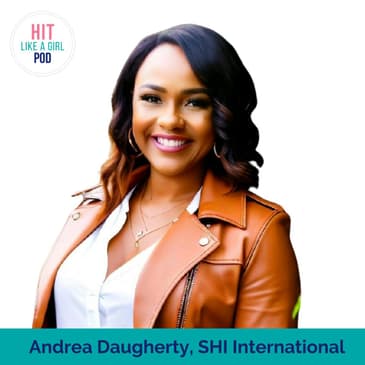

In this episode, Joy welcomes Andrea Daugherty, Head of Digital Health at SHI International. Andrea shares her journey from caregiver to healthcare executive, highlighting the challenges and bold moves that shaped her career. The discussion spans from navigating male-dominated spaces to the critical importance of cybersecurity in the ever-evolving healthcare landscape. With insights into workforce shortages and the necessity of technology in combating cyber threats, this episode offers a glimpse into the frontline defense of healthcare data protection and the empowerment of women in IT leadership roles.
00:11:42 - Building a Supportive Network in the Industry
00:12:25 - Owning Confidence in a Male-Dominated Environment
00:20:41 - Educating the Workforce on Cybersecurity
00:21:37 - Establishing SHI as a Trusted IT Solutions Provider
00:22:45 - Bringing Joy and Wellness to Healthcare Events
00:23:31 - Connecting with SHI and Andrea Daugherty on LinkedIn
[00:00:00] Calling all Swifties and Champions of Change, Like a Girl Media is rolling out the red carpet
[00:00:05] for you with our Thrive Like a Girl contest.
[00:00:08] We're all about celebrating powerful women leaders who inspire us to dream big and push
[00:00:12] boundaries.
[00:00:13] And who embodies that spirit more than Taylor Swift herself?
[00:00:16] Here's your chance to see her live in concert.
[00:00:19] We are giving away two tickets to Taylor Swift's show in London on Saturday June 22.
[00:00:25] Imagine being part of the magic, all thanks to Like a Girl Media.
[00:00:28] Entering is easy.
[00:00:29] Subscribe, share and show us which episodes inspired you the most.
[00:00:33] Visit our website or check our social media for all the details.
[00:00:37] Don't just dream it, be it.
[00:00:39] Thrive Like a Girl and make this summer unforgettable.
[00:00:43] Contest opens globally.
[00:00:44] Voidware prohibited must be 18-year-old or to enter, no purchase necessary.
[00:00:48] Subscribe and share with hashtag ThriveLikeAGirl and tag us at LikeAGirlUnderscoreMediaforEntry.
[00:00:55] Unlimited entries means unlimited chances.
[00:00:57] Winner chosen at random after contest closes May 20, 2024.
[00:01:02] Will be notified via DM.
[00:01:03] Make sure your profiles are not private.
[00:01:06] Check full rules on our site.
[00:01:07] This is your shot to see Taylor Swift live.
[00:01:10] Don't miss it.
[00:01:11] Hey there and welcome to the Hit Like a Girl podcast.
[00:01:24] My name is Joy Rios.
[00:01:25] I'm a host of this show and today we are joined by somebody very, very special.
[00:01:29] I'm going to let her introduce herself in a moment.
[00:01:31] But let you know in our audience this is a show where we talk about the 30,000-piece puzzle
[00:01:36] of healthcare and how complicated it can be.
[00:01:39] And so everyone of our guests brings a piece of their puzzle to kind of help us understand
[00:01:44] the big picture.
[00:01:45] So can you please share with us your piece of the Health IT puzzle?
[00:01:49] Thank you so much for having me Joy.
[00:01:51] It's a pleasure to be here.
[00:01:52] So I'm Andrea Dardy.
[00:01:54] I serve as the head of digital health, SHI.
[00:01:57] I've been with the organization just about nine months, which is just crazy to think about.
[00:02:03] I joined SHI to really be a part of something special in healthcare.
[00:02:08] I think you really hit the nail on the head.
[00:02:11] Healthcare is so fragmented and having spent majority of my career on the provider side.
[00:02:16] I've obviously seen a lot of things I've grown up in healthcare.
[00:02:19] And so being able to bring that perspective over to the IT solution provider side I think
[00:02:24] allows us to really build something that's purpose built and purpose driven.
[00:02:29] At the end of the day, hopefully we'll really help our healthcare organizations and improve
[00:02:35] how they deliver care to the patient populations they serve.
[00:02:37] Can I learn a little bit more about your journey?
[00:02:39] And I also want to know how crazy the last nine months have been.
[00:02:42] Yeah, absolutely.
[00:02:43] Well, how far do you go back?
[00:02:45] No.
[00:02:46] You know, it's interesting.
[00:02:47] I think healthcare, honestly, my mom was a nurse and she went back to school for her master's
[00:02:52] and when I was in elementary school.
[00:02:54] And so I've always had healthcare somewhere, some way, some shape form throughout my life,
[00:03:01] I think influencing me.
[00:03:02] It was really during my teenage years, my sister who's 11 years older than me, she
[00:03:07] was type one diabetic but she suffered a lot of medical issues.
[00:03:11] In stage renal failure was one of the big ones.
[00:03:14] And so I started taking her to her dialysis appointments.
[00:03:17] And so it was like little sister actually turns into caregiver in a lot of ways.
[00:03:22] But doing that, right?
[00:03:23] I was really in the thick of like acute care, but also just like helping her navigate some
[00:03:28] of the challenges of appointments and rescheduling and medication management.
[00:03:32] I think that's what really initially sparked an interest.
[00:03:35] And so I always knew I wanted to be in healthcare, just didn't know what capacity.
[00:03:39] I started out in pharmacy school and quickly learned I did not want to be a pharmacist.
[00:03:44] Nope, I take it back.
[00:03:45] Yeah, I'm like science and math.
[00:03:47] I'm really good at that.
[00:03:48] Is this what I want to do for the rest of my life?
[00:03:50] Absolutely not.
[00:03:51] So fast forward, once I graduated, I was born and raised in Kansas City.
[00:03:54] Obviously, that's where Cerner was headquartered.
[00:03:57] And so I had an opportunity to go work for them.
[00:04:01] And my first role there was a learning consultant where I was responsible.
[00:04:04] This is during the CPOE era, right?
[00:04:06] So everybody's going from paper to their electronic health record.
[00:04:10] And so I was responsible for actually designing and delivering the education for physicians.
[00:04:16] Big deal.
[00:04:17] Yeah, big deal.
[00:04:18] But a lot of exposure to different specialties and subspecialties and the fragmented healthcare
[00:04:24] system that we have did that for a couple years really wanted to learn more about the
[00:04:29] tech.
[00:04:30] And so I transitioned into an integration architect role where I was responsible for
[00:04:33] leading the actual technical parts of the implementation.
[00:04:38] Did that for a couple years, started a family and decided I did not want to travel anymore
[00:04:42] after that.
[00:04:43] And that's when I went to the provider side.
[00:04:45] It was very fortunate actually here in LA to land at an organization that was very
[00:04:50] supportive of all of my aspirations.
[00:04:53] I started as a consultant for their lab information system led that implementation
[00:04:59] in 11 months.
[00:05:00] They went live.
[00:05:01] I was a director position for me.
[00:05:02] I'm the manager of the lab information systems.
[00:05:05] It was a brand new position, never existed.
[00:05:07] So I built out a team there, did that for a couple years and really wanted to get into
[00:05:11] cybersecurity.
[00:05:13] And so I went to my boss, my boss is here at the time he's VP of infrastructure.
[00:05:17] And I said, Hey, Kevin, if I go obtain my CISSP and I create the strategic roadmap,
[00:05:24] will you create a director position for me?
[00:05:26] We kind of laughed and I'm like, well, we're a $3.4 billion organization.
[00:05:31] We don't have a dedicated cybersecurity team.
[00:05:33] Like it's not a matter of if it's a matter of when.
[00:05:36] So you should let me do this.
[00:05:37] And he kind of laughed and I was like, I'm gonna, he's like, okay, if you go get your
[00:05:40] certification, Andrea, I'll do it.
[00:05:42] And I did and he did.
[00:05:44] And so a move from a manager of clinical applications to a director of information
[00:05:49] security.
[00:05:50] I love that such a bold move where you're like, I have a vision and no, I'm not
[00:05:54] joking.
[00:05:55] This is needed and you need somebody and guess what?
[00:05:58] I'm the person.
[00:05:59] Yeah.
[00:06:00] I have to say it was very bold and I kind of, there were a lot of times as I was
[00:06:04] building out the information security program, I thought to myself like, what did
[00:06:08] I get myself into?
[00:06:09] Like why am I doing this?
[00:06:12] But you know, there were a lot of lessons learned along the way.
[00:06:14] And I had amazing support from the organization.
[00:06:18] Kevin Torres, Julie Eastman, she's actually the CIO at UC Irvine Health Now.
[00:06:23] Okay.
[00:06:24] Still keep in touch with her.
[00:06:25] She's fantastic.
[00:06:26] A big part of my journey actually into leadership and big reason why I've had
[00:06:31] the success that I have always cheering me on, which I love that.
[00:06:36] But as I was doing that and kind of getting more in the circuit and doing
[00:06:39] speaking engagements, I met Aaron Mary and he was like, Hey, I heard you've
[00:06:44] done some really cool things.
[00:06:45] I was leading an innovation lab here with Memorial Care and series
[00:06:49] computer solutions at the time.
[00:06:51] He's like, I'd love for you to come down to UT University of Texas and
[00:06:54] build out an information security program for the medical school and
[00:06:57] the healthcare enterprise.
[00:06:58] And I'm like, I'm not really, I don't think I'm ready to move.
[00:07:01] Like I'm okay.
[00:07:03] I'm not really looking for another role.
[00:07:04] Maybe not.
[00:07:05] Yeah.
[00:07:07] He's like, no, you it's it's academic medicine.
[00:07:09] You absolutely should just come down and meet the team.
[00:07:12] And so I did, you know, I remember being in Vegas.
[00:07:14] I was actually on my way to Vegas to go speak at a conference.
[00:07:18] And then that following week, I went down to Austin, Texas and met
[00:07:22] with him and the team.
[00:07:23] And I remember walking through, it was a full day.
[00:07:25] And I remember walking through the airport calling my husband and
[00:07:28] I was like, Hey, I think I just got a job.
[00:07:30] Do you want to move to Austin, Texas?
[00:07:33] And he's like, what?
[00:07:34] You're the only person I know that like goes somewhere and ends up
[00:07:38] with a job offer.
[00:07:39] And I'm like, well, we've been talking about leaving California.
[00:07:43] And so it was a few weeks later, it was actually that Friday.
[00:07:47] Got that call and there was an offer and, you know, we talked
[00:07:49] about it over the weekend and decided to take a leap.
[00:07:51] We're doing it.
[00:07:52] Yeah.
[00:07:53] Yeah, so I did that and, you know, Erin, Mary was very gracious
[00:07:59] and kind of let me build the team the way that I wanted to.
[00:08:02] And, you know, it started out actually as a director
[00:08:04] security role there, but that quickly evolved into, I had
[00:08:09] analytics, I had DevOps, you know, we did some really
[00:08:12] impressive things as a team had never let a DevOps team
[00:08:15] before, but stood one up and built a contact tracing app
[00:08:18] off of the open source code that the World Health
[00:08:22] Organization used during the Ebola outbreak so we could do
[00:08:25] contact tracing for COVID.
[00:08:27] I've always done really bold things.
[00:08:29] I can identify an opportunity and just lean into it.
[00:08:32] I just think that's what makes it exciting, but that's also
[00:08:34] what's needed in this industry if we're ever going to drive
[00:08:37] any sort of or lead any sort of change.
[00:08:39] Well, I think you also have evidence of trusting yourself
[00:08:41] to do big bold things.
[00:08:43] Yeah, yeah.
[00:08:44] You know, I think my mom for that, I think, you know,
[00:08:46] seeing her go back to school when I was in elementary,
[00:08:49] right?
[00:08:50] I'm one of seven, I'm one of seven kids.
[00:08:51] So busy household, but you know, there was just never
[00:08:55] anything that my mom didn't do.
[00:08:58] And just I think having that inspiration was a big part
[00:09:01] of that I've certainly carried that forward in my life.
[00:09:03] OK, so let's talk about the last nine months.
[00:09:05] Yeah.
[00:09:07] Well, I mean, I went to, I was in the CI,
[00:09:09] Erin Mary left, I was in the CIO role at UT
[00:09:13] until spring of last year and then decided to make
[00:09:16] the leap.
[00:09:16] And I tell you what, you know, when I first joined
[00:09:18] the organization, obviously being a part of the cells
[00:09:20] organization coming from the provider side,
[00:09:22] it was just a lot of listening and learning.
[00:09:24] I had a lot of ideas of what I wanted to do,
[00:09:27] but I didn't want to come in guns blazing.
[00:09:30] I really wanted to learn the organization
[00:09:32] and learn the folks and be very intentional.
[00:09:35] You know, I think what we have, the opportunity
[00:09:37] that we have at SHI is really something special.
[00:09:40] And so I wanted to be very purposeful and intentional
[00:09:43] about what we were building.
[00:09:44] It's been so crazy.
[00:09:46] One for the first time in my career,
[00:09:48] I have a complete upline of all female leaders,
[00:09:51] which is so exciting.
[00:09:54] You know, SHI is the largest privately held
[00:09:56] minority owned business in the United States,
[00:10:00] which it's just like all of these things
[00:10:02] it's like I couldn't have asked for to land
[00:10:04] at a better organization.
[00:10:06] The culture is fantastic.
[00:10:09] Everyone there is just so eager to help and learn.
[00:10:12] And you know, one of our, the mantra as is,
[00:10:14] you know, we're ridiculously helpful
[00:10:15] and people really are, you know,
[00:10:17] I think there's a lot of curiosity around healthcare.
[00:10:20] And so it's been a lot of conversations
[00:10:22] about how can we help you and your business unit
[00:10:25] be successful, obviously leaning into a lot
[00:10:28] of my CIO peers and industry just saying,
[00:10:32] hey, you know, I know what challenges I had as a CIO.
[00:10:35] What are your challenges
[00:10:37] and what are you looking for in an IT solutions partner?
[00:10:40] Right.
[00:10:40] So I want to make sure that I'm actually meeting the need.
[00:10:42] I don't want to be just like another value added reseller.
[00:10:45] I want to do something that's actually
[00:10:47] going to make a difference.
[00:10:48] And I think coming in with that perspective
[00:10:50] that I have as a healthcare CIO
[00:10:52] is a really pivotal part of that.
[00:10:54] It just makes me really excited to know
[00:10:56] that there is an IT service out there
[00:10:59] that is WMB like women heavy.
[00:11:01] Like that is so counter culture
[00:11:03] of what we have been taught.
[00:11:05] So I don't know culturally wise,
[00:11:07] you're speaking to it,
[00:11:08] but can you speak to it more
[00:11:09] of the differences of just an IT organization
[00:11:13] that might be male lead versus female lead?
[00:11:16] I've been fortunate in my career,
[00:11:17] even when I have worked for men,
[00:11:19] I've had very supportive men.
[00:11:21] But I will say, you know,
[00:11:22] I've certainly experienced my own challenges throughout
[00:11:25] and you're right.
[00:11:26] I mean, like when I stepped into the cybersecurity space,
[00:11:29] I can't tell you how many conferences I walked into
[00:11:32] and I was probably one of a handful of men.
[00:11:34] Of women.
[00:11:35] Of women.
[00:11:36] And certainly even, you know,
[00:11:37] and minority women like forget about it, right?
[00:11:40] Right.
[00:11:40] There's certainly some negative connotations, right?
[00:11:43] People are just like, what are you doing here?
[00:11:44] You don't belong here, right?
[00:11:45] There's that aspect of it.
[00:11:47] And then there's just like, you know,
[00:11:49] people until you actually open your mouth
[00:11:52] and have a conversation
[00:11:53] and the people are like, oh wait,
[00:11:55] she actually does-
[00:11:55] She knows her staff.
[00:11:56] Yeah, she does know what she's talking about.
[00:11:58] You know, I think the biggest thing for me,
[00:12:00] the biggest observation that I've made
[00:12:02] and kind of now having been on both sides of the fence,
[00:12:05] if you will, and working for male leaders
[00:12:06] and female leaders is, you know,
[00:12:08] the female leaders really do lean into
[00:12:11] and support you.
[00:12:12] We've all had some challenges throughout our careers
[00:12:16] as we've come up
[00:12:16] and so I think being able to share those experiences
[00:12:20] I think provides a more empathetic environment
[00:12:24] to operate, move in.
[00:12:25] And you know, we as women too,
[00:12:27] we tend to be so much harder on ourselves anyway.
[00:12:29] Exactly.
[00:12:30] Right?
[00:12:31] And so, you know, I think just having,
[00:12:33] it's almost like you have cheerleaders
[00:12:34] like Jennifer Emery, fantastic.
[00:12:36] I've known her for years.
[00:12:37] We met through time.
[00:12:38] And Laura Rogers, right?
[00:12:40] We met through time too.
[00:12:40] But it's like having our own little cheerleading squad.
[00:12:43] Like we're always hyping each other up
[00:12:45] and like even on the tough days when we're just like,
[00:12:48] oh, this is just not going the way that I want.
[00:12:50] Like, you know, we're leaning into it
[00:12:52] and supporting each other.
[00:12:53] And it just feels like a sisterhood honestly.
[00:12:55] I love that.
[00:12:56] And I also look kind of like,
[00:12:57] I'm sure traveling with a squad
[00:12:58] is a little bit helpful.
[00:13:00] Yeah.
[00:13:00] We have our like girl squad.
[00:13:02] I love it.
[00:13:03] I mean, we show up in numbers
[00:13:05] and it's just like,
[00:13:05] I've never had that in my career, right?
[00:13:07] It's a big deal.
[00:13:08] Yeah.
[00:13:09] I'm usually traveling with the guys
[00:13:10] and it's like,
[00:13:11] you know, I have five brothers.
[00:13:12] So I used to it,
[00:13:14] but also it's just,
[00:13:15] it's so different, so nice.
[00:13:17] I feel like you might have a really solid piece of advice
[00:13:20] for people who walk into seas of men
[00:13:23] and are maybe the only either woman or minority woman
[00:13:27] and any like,
[00:13:28] how do you own that confidence
[00:13:30] and add it without being too arrogant or whatever?
[00:13:34] Like, I know my stuff, right?
[00:13:35] But like having to prove yourself
[00:13:37] but in a subtle way.
[00:13:39] Yeah.
[00:13:40] I think helping,
[00:13:42] it certainly helped me having brothers.
[00:13:44] You know, I have thick skin.
[00:13:45] Yeah.
[00:13:46] As a result of that,
[00:13:47] a lot of tussling coming up.
[00:13:49] But I think it's really just,
[00:13:51] you have to know like,
[00:13:53] you belong there, right?
[00:13:55] You be confident in who you are
[00:13:57] and what value you add.
[00:14:00] I haven't always exuded the amount of confidence
[00:14:02] that I have now.
[00:14:03] It's calm,
[00:14:04] but I think as I've taken some pretty bold steps
[00:14:08] throughout my career and been successful
[00:14:12] and continued to do that
[00:14:14] and be successful and have an impact.
[00:14:16] And when you do those types of things,
[00:14:18] like that confidence continues to grow
[00:14:21] and other people see it too and recognize it.
[00:14:24] And so I think being authentic
[00:14:26] is another part of that too, right?
[00:14:28] Like show up as your true self.
[00:14:30] I am not the typical,
[00:14:33] you know,
[00:14:34] see a healthcare CIO or healthcare executive, right?
[00:14:37] She's got sparkle.
[00:14:38] She's got a sparkly, shiny dress on you guys.
[00:14:41] She's shimmering individual.
[00:14:43] And I eat my noses pierced
[00:14:45] and I wear sneakers with everything.
[00:14:47] And I just, I am who I am.
[00:14:49] And that's all I can be.
[00:14:51] And I think that's a part of it too, right?
[00:14:52] Like when you're comfortable,
[00:14:54] you come as you are
[00:14:55] and you're comfortable as yourself.
[00:14:57] I think that allows you to,
[00:15:00] that helps build that confidence.
[00:15:02] And I think that radiates naturally.
[00:15:04] 100%.
[00:15:05] I like the idea of the evidence that we attain
[00:15:08] when we do bold things.
[00:15:09] It's not necessarily being scared
[00:15:11] of whatever is gonna happen.
[00:15:12] It's like getting a trust in yourself.
[00:15:15] I might not trust the environment,
[00:15:16] but I trust myself to be able to figure it out
[00:15:19] or navigate whatever is on its way.
[00:15:22] Yeah, absolutely.
[00:15:23] I mean, you just,
[00:15:24] I know what I can achieve, right?
[00:15:26] And I know what I'm capable of.
[00:15:27] And so I just really kind of keep that mindset
[00:15:30] going forward.
[00:15:31] Obviously, you know,
[00:15:32] I think your network is a big part of that as well.
[00:15:35] You know, surround yourself with people
[00:15:37] who are doing the things that you wanna do
[00:15:39] or are doing and can be a sounding board for you.
[00:15:43] I have so many peers and friends in industry
[00:15:47] as I was kind of navigating these things
[00:15:50] and taking these bold steps
[00:15:52] that I called and said,
[00:15:52] okay, hey, this is how I'm thinking about this.
[00:15:54] Like does this make sense?
[00:15:56] What am I missing?
[00:15:57] That's a big piece of it too.
[00:15:58] I think just having that network of folks
[00:16:01] that you can trust and that also believe in you
[00:16:04] and will encourage you and push you
[00:16:07] to continue to move forward.
[00:16:09] Okay, back to IT stuff.
[00:16:11] Can we talk cybersecurity?
[00:16:12] What do we, what?
[00:16:13] Oh my gosh.
[00:16:14] Like it feels like it's getting scarier
[00:16:18] as far as the amount of data that is out there
[00:16:21] and ways in which it can be shared
[00:16:24] and also used against us.
[00:16:25] Yeah, right?
[00:16:26] Absolutely.
[00:16:27] You know, it was interesting.
[00:16:28] There was a picture deep fake, right?
[00:16:31] Imaging AI generated in what, 15 seconds
[00:16:34] of like the Pentagon getting blowed up.
[00:16:36] Oh my gosh.
[00:16:37] Right?
[00:16:38] And so it was started to circulate it.
[00:16:40] The AP picked it up.
[00:16:42] The stock market started trending down
[00:16:44] and this was all just off of an AI generated picture.
[00:16:47] So like the technology that we have access to right now
[00:16:52] literally has the ability to impact our markets
[00:16:57] to start panic on social media.
[00:16:59] And so it's really scary right now.
[00:17:02] You're absolutely correct.
[00:17:03] What every other day there's a headline
[00:17:05] about, you know, a cyber event somewhere
[00:17:07] obviously coming off the hills of this change
[00:17:09] healthcare cyber event that a lot of folks
[00:17:12] are still dealing with here today, right?
[00:17:14] I think we have to do our due diligence
[00:17:16] and it's sad but also just the world that we live in
[00:17:22] and we know that it's not going to get any better.
[00:17:24] And so there's a couple of things that we can do.
[00:17:27] One, it's workforce, right?
[00:17:29] How do we continue to build a workforce
[00:17:32] that's going to be there that hospitals can hire and afford?
[00:17:36] I can remember when I started my cyber security career
[00:17:42] you know, just trying to attract talent in that was
[00:17:46] it was so hard and that was
[00:17:47] and the shortages only gotten worse
[00:17:49] because share they attacks continue to happen.
[00:17:52] But even in healthcare, right?
[00:17:54] I mean just looking for people
[00:17:55] that want to be in healthcare and stay
[00:17:57] and trying to compete with other industries
[00:17:59] or like big tech, right?
[00:18:01] It's hard to do in healthcare.
[00:18:02] It's hard to keep people to attract
[00:18:05] and retain the workforce that's needed.
[00:18:07] And so I think we're gonna have to rely on technology.
[00:18:10] We're gonna have to rely on technology
[00:18:12] to combat technology quite a bit
[00:18:15] but it's something that's not going away
[00:18:17] and it should be on, I say this
[00:18:19] and I've always said that it should be
[00:18:20] on the forefront of everybody's mind
[00:18:21] because cybersecurity isn't just a CISO's job.
[00:18:24] It's not just a CIO's job.
[00:18:26] It's everyone in the organization, right?
[00:18:27] Your workforce is your first line of defense.
[00:18:30] So everybody really needs to be educated on it
[00:18:32] and doing their part.
[00:18:33] I have two examples
[00:18:34] and they're one that is healthcare related
[00:18:36] and one is not but my sister basically just got frotted
[00:18:39] and it was the people trying to fraud her from her bank
[00:18:42] sounded exactly like the fraud department
[00:18:45] and it was basically verbatim.
[00:18:47] The systems, the phone number came from her bank.
[00:18:50] They said all the things
[00:18:51] and so when she was, she basically got wiped out
[00:18:54] of a whole bank account.
[00:18:55] Thankfully it got fixed, it was fine
[00:18:57] but when she was going through the legitimate fraud control
[00:19:00] it sounded verbatim word for word
[00:19:02] what the folks that scammed her were
[00:19:05] and like that is a little part
[00:19:06] and she's like I'm officially old now
[00:19:10] I got suckered into it
[00:19:11] and it's like oh it's so, it's heartbreaking.
[00:19:15] Well and think about the opportunities
[00:19:17] I mean like that's great
[00:19:18] that she was able to recover those funds
[00:19:20] but there's so many people
[00:19:21] that do fall victim to scams like that
[00:19:24] and aren't able to recover that
[00:19:25] or maybe they've lost other things.
[00:19:28] I know that it's really heartbreaking to think about
[00:19:30] especially when we think about different generations
[00:19:33] obviously older generations are gonna be
[00:19:36] a lot more susceptible to falling victim
[00:19:38] to some of that stuff.
[00:19:39] But we always thought that was so far away
[00:19:40] like grandma's age and she's like nope it's me now.
[00:19:43] Yeah, it's here and it's oh my gosh
[00:19:47] well I'd love to hear the other.
[00:19:48] Okay so the other one has to do with
[00:19:50] after the Super Bowl that there wasn't
[00:19:53] the IT department did their fake test
[00:19:56] if the workforce would pass the phishing email
[00:19:59] and they put out a link that had something to do
[00:20:02] around Taylor Swift right around the Super Bowl
[00:20:04] and of course somebody was like click immediately.
[00:20:08] Immediately yes.
[00:20:09] You failed, you failed.
[00:20:14] Yeah it's amazing you we've gotten some pretty
[00:20:17] I had that was one thing I did have a lot of fun
[00:20:19] with the phishing campaigns.
[00:20:21] Okay tell me about that because you get to design them
[00:20:24] and you're like how am I gonna trick the workforce?
[00:20:27] Yeah absolutely I'd love to share.
[00:20:29] One of the favorite ones that I did were like e-cards.
[00:20:32] Yeah, of course, you let somebody so thoughtful thank you.
[00:20:36] E-cards did that and the click rate on that
[00:20:39] was out of this world right?
[00:20:41] So there was a lot of education there around that.
[00:20:44] Did some that were dating sites
[00:20:47] it was very interesting to see how much of the workforce
[00:20:49] was actually interesting in dating sites
[00:20:52] on your hospital computer or your hospital device
[00:20:54] issue device.
[00:20:56] We've mimicked bank accounts as well.
[00:20:58] It's amazing to see people click on like that Chase link
[00:21:01] and subtle differences or just like fake emails
[00:21:05] from our CEO, COO or direct supervisor right?
[00:21:10] Asking for something like here click this file
[00:21:13] or I need you to check out the spreadsheet right?
[00:21:16] And people are just I think a couple of things
[00:21:19] that we learned from that one is the world moves so fast.
[00:21:22] We move so fast in our day to day
[00:21:24] that sometimes we just need to stop and pause
[00:21:27] and actually pay attention especially when it comes
[00:21:29] to cybersecurity, fishing, things of that sort.
[00:21:32] The other thing we learned is people do a lot of things
[00:21:34] on their work devices that they should not be doing.
[00:21:36] They should not be doing yes they do.
[00:21:39] So but yeah I really enjoyed that
[00:21:41] and it was really an opportunity
[00:21:43] to educate the workforce and we made it fun right?
[00:21:47] It wasn't punitive by any means.
[00:21:48] It was really, we saw it as an opportunity
[00:21:50] to really educate folks and bring them up to see
[00:21:52] and they appreciated that too.
[00:21:54] Sure well especially if there's no punishment right?
[00:21:57] It's literally a learning opportunity of like
[00:22:00] oh I need to be more cognizant
[00:22:01] I need to be more thoughtful.
[00:22:03] Yeah I mean unless we have repeat offenders
[00:22:04] then like all right come on now.
[00:22:06] But how interesting to have that job to be
[00:22:08] like let me design the tricks of things
[00:22:11] that you're not supposed to click on.
[00:22:13] That sounds fun actually.
[00:22:15] Yeah it was really fun.
[00:22:17] And again right like having that experience
[00:22:20] and bringing that over to the IT solution provider side
[00:22:24] and being able to have these conversations with vendors
[00:22:27] about how they're packaging and marketing their solutions
[00:22:30] and how they're having conversations
[00:22:32] with healthcare customers.
[00:22:34] What they shouldn't shouldn't be saying too right?
[00:22:36] And I think it gives you a really unique opportunity
[00:22:39] to have an impact on industry in a way
[00:22:41] that I probably you know a year ago two years ago
[00:22:44] you would have asked me if I would ever done a position
[00:22:46] or considered a position like that
[00:22:47] and I would have been like no I'm never leaving
[00:22:49] the provider side and here I am.
[00:22:51] Here you are okay so when people think about SHI
[00:22:53] what is the image or what should they have
[00:22:56] in their back pocket?
[00:22:57] Yeah well that's changing.
[00:23:00] A year ago I would have conversations with folks
[00:23:04] or I say nine months ago having just joining SHI
[00:23:07] you know people will be like oh what is she?
[00:23:09] What is shy?
[00:23:10] What is that right?
[00:23:11] And now we've done such a great job of really
[00:23:16] you know getting our name out there
[00:23:17] and focusing on our branding
[00:23:19] and so now it's like oh my gosh it's SHI healthcare
[00:23:22] and Andrea's there and Jennifer's there
[00:23:24] and like you guys have this A team
[00:23:26] and Laura's done such a great job
[00:23:29] of finding great partners such as yourself right?
[00:23:32] To partner with.
[00:23:33] So we really just want to become known
[00:23:36] as a trusted IT solutions provider.
[00:23:38] We have industry experts that have set in the seats
[00:23:41] of our healthcare customers and so we understand
[00:23:44] the challenges operating in that ecosystem
[00:23:48] and having to do more with less
[00:23:50] and so when think about SHI
[00:23:52] we really just want to be that trusted partner.
[00:23:54] I also want to point out that you guys
[00:23:56] are sponsoring the puppy park.
[00:23:58] Yes it's my favorite.
[00:24:00] So anytime you're at the Vibe or health events
[00:24:02] it's like SHI puppies.
[00:24:04] Yeah credit to Jennifer Emory for that one
[00:24:07] and that was her idea.
[00:24:09] And it was such a hit last year
[00:24:11] that we just like that's our thing now.
[00:24:13] I mean how could you not?
[00:24:13] It's great.
[00:24:14] It brings so much joy to people.
[00:24:17] And it's just, it's nice.
[00:24:19] Yes it does.
[00:24:21] It's nice right?
[00:24:22] We're so busy running around the floor
[00:24:24] on these things and having meetings
[00:24:26] and so focused on metrics
[00:24:28] and all sorts of things
[00:24:30] and so it's just nice to kind of get
[00:24:31] a daily dose of dopamine, serotonin,
[00:24:34] break it up and I mean at the end of the day
[00:24:36] we are healthcare, it's all healthcare related
[00:24:38] so brings a wellness into it.
[00:24:40] Exactly.
[00:24:41] Yeah absolutely.
[00:24:42] Well thank you so much for being here
[00:24:43] and sharing your journey.
[00:24:44] If people want to follow you connect
[00:24:45] or connect with SHI where do you lead them?
[00:24:47] Yeah connect with SHI you can follow us
[00:24:51] on LinkedIn, SHI International.
[00:24:53] I'm on there as well, LinkedIn, Andrea Aldardi.
[00:24:56] But yeah, thank you so much for having me
[00:24:58] this has been a pleasure.
[00:24:59] I appreciate it.
[00:25:00] It has been great.
[00:25:01] It's great to get to know you
[00:25:02] and I'm glad that our audience
[00:25:03] gets to know you as well.
[00:25:04] Thank you so much.
[00:25:05] Yeah, pleasure.
[00:25:07] Thanks for listening.
[00:25:08] You can learn more about us
[00:25:10] or this guest by going to our website
[00:25:12] or visiting us on any of the socials
[00:25:14] with the handle hit like a girl pod.
[00:25:16] Thanks again.
[00:25:17] See you soon.
[00:25:18] Again, thank you so much for listening
[00:25:20] to the hit like a girl podcast.
[00:25:22] I am truly grateful for you
[00:25:24] and I'm wondering if you could do me a quick favor.
[00:25:26] Would you be willing to follow
[00:25:27] or subscribe to this podcast
[00:25:29] or maybe leave us a rating or review
[00:25:31] or if you're feeling extra generous
[00:25:33] would you share this episode
[00:25:34] on your Instagram stories or with a friend?
[00:25:36] All of those things help us podcasters out so much.
[00:25:40] I'm the show's host Joy Rios
[00:25:41] and I'll see you next time.