
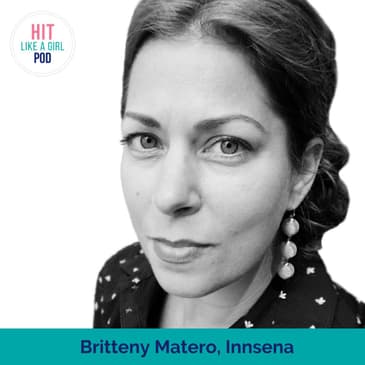

In this episode, Joy Rios welcomes Britteny Matero, Vice President at Innsena, a women-owned consultancy specializing in healthcare technology. Britteny shares her passion for maternal health and discusses the impactful work of Innsena in the healthcare space, focusing on improving patient outcomes and supporting the healthcare ecosystem. The conversation delves into the challenges of the healthcare system, the importance of event notifications for high-risk conditions, and the team's formalized approach to sharing subject matter expertise. They highlight team members' diverse passions, such as reproductive health rights and substance use disorder, emphasizing the power of collaboration and networking for driving positive change.
Episode Highlights
[00:00:36] Britteny Matero's role at Innsena and passion for maternal health
[00:01:06] Impactful work of Innsena in the healthcare space
[00:08:24] Discussion on fixing the broken healthcare system
[00:09:08] Implementation of event notifications for high-risk conditions
[00:16:38] Formalized sharing of subject matter expertise within the team
[00:17:38] Team members' passions including reproductive health rights and substance use disorder
[00:18:12] Emphasis on networking and collaboration for positive change
Stay connected to Britteny Matero:
[00:00:00] Hello there and welcome to the Hit Like a Girl podcast. I'm so excited to be with you today. Yes, so excited that you're here. My name is Joy Rios. This is a show where we get to talk about the 30,000 piece puzzle of healthcare and health IT.
[00:00:21] It is a complicated world we live in and each one of our guests brings their expertise on the piece of the puzzle to our audience. So thank you for being here. I hope you're here.
[00:00:30] Brittany, I'd love it if you would take a moment to introduce yourself and let our audience know about your piece of the health IT puzzle. Yes. Well, again, thank you for having me. I'm Brittany Matero.
[00:00:39] I am a vice president with Incena, where women owned consultancy in the healthcare space, health technology, and I'm here today to talk about maternal health, which is my personal passion. Tell me more about what it is. Well, first of all, you guys are a badass woman owned organization.
[00:00:56] I just like if people do not know about you, they should because you guys are making waves in so many ways. And I'm always floored and impressed by the impact that you all have. We are.
[00:01:07] I feel really privileged to be part of a team that is just everyone is so passionate about this space. And they really bring that into all the work that they do. And so we really have the privilege of working with clients in a unique way where we become
[00:01:21] a little bit part of their team and we choose clients that are just as passionate about this space as we are. So we work with health technology companies, health information exchanges, we're advising state agencies.
[00:01:32] We are in conversations with our federal partners really looking at how do we move the dial on patient outcomes and support for the overall ecosystem of healthcare. You all are doing so much. So what are the things that you're most proud of?
[00:01:45] And I know you're here to talk about maternal mortality and that initiative. But I mean, I just want to give you a minute to talk about all of the ways in which you guys have been impactful. Thank you. I think that we're doing really cool things.
[00:01:58] So it was recently announced that we donated $100,000 to the Cancer Moonshot Initiative, which is an HHS and White House initiative, which is exciting looking at how do we reduce cancer deaths by 50% over the next, I think 20 years. Big deal. That is exciting, right?
[00:02:18] Like how do we think about innovation in this space? How do we really move the dial for cancer patients to have better outcomes? So important work, right? Like so many of us are impacted. We've known somebody that's gone through cancer.
[00:02:29] We have gone through cancer and we want to make a difference. We want to do something that actually changes lives for the better. So we are doing that work. We're involved in some pretty exciting work right now with the ONC and SAMHSA around
[00:02:41] behavioral health information technology and an initiative that they have going on to really better the exchange of patient care and patient information, the collection of reporting. And we are doing like some really cool stuff just around health data utility, health information exchanges. How are we supporting communities?
[00:03:00] How are we supporting women minority populations? Those that are disadvantaged. We love the Medicaid space, the public health space. So involved in lots of projects, lots of initiatives there. Okay. Now for the one that you're here to talk to about today, tell me more. Yes.
[00:03:16] So we just announced HHS had a racial equity and postpartum care challenge. We won the first phase back in 2020, and we were just awarded the phase two for it. So it's really looking at reducing maternal mortality and morbidity in black, African-American, American Indian and Alaska Native women.
[00:03:35] And how do you think about innovation in this space and what can be replicated in other communities to have really great impacts in reducing maternal mortality? As we know, maternal mortality is on the rise, which is terrible and should not be happening.
[00:03:52] It was already in a terrible space. It was already in a terrible space. And then it just keeps getting worse. And in fact today, the number one cause of maternal mortality in the United States is actually mental health.
[00:04:03] And we know that about 80% of outcomes related to maternal mortality are actually preventable. And so we need to be stepping up and doing something. Can we be specific about that when we say mental health? What exactly do we mean? Yes. So we're talking about suicide.
[00:04:20] We are talking about drug overdose. So all the ways that women are trying to cope with postpartum depression, the changes in their body, the things that are around them and impacting their lives. They say that about one in five women have mental health challenges in the
[00:04:38] postpartum phase, which I think is probably very underrepresented. I think you're right. Especially when you think about my personal journey in my maternity and after. I was sad. I was struggling with like a new baby and the emotions. And a huge change in your life.
[00:04:56] And I would go in and they would say, are you having suicidal thoughts? Well, no, I'm so excited about being a mom. No, I'm not like depressed and wanting to take my own life. But I am sad. Everything's on fire and you're like, it's fine. Everything's fine. Yes.
[00:05:10] And they were asking me questions that I don't think I ever really answered appropriately or maybe they weren't asked in a way that made me feel comfortable and safe enough to say, well, yes, this is really hard for me. And that is mental health, right?
[00:05:25] Well, think about transitions. Any transition changes hard in like literally the transition of being pregnant to then not being pregnant. And you're like, OK, and now I'm a mother and you're just supposed to adjust. And now instead of taking care of yourself, you have a whole other
[00:05:40] being and probably others to take care of. Like, yeah, that can be easy. It's a transition. And the expectation that we expect women to just, you know, fit right in and just be like, OK, I know you just I read that the equivalent
[00:05:52] of like creating a baby in your body is like running 46 marathons. And then like, OK, 24 hours later, you just did that. And now you're expected to be of service and get up. Are you ready to make dinner? You know, like you look great, you know, like, sure,
[00:06:08] you can like do all the things that you normally do. And and yes, like running a marathon, but then think about how many women today are now getting C sections, right? Because C sections are on the rise.
[00:06:19] A major surgery that a major surgery and you're not supposed to lift a car seat and yet women are scheduled to go in for follow up exams. And they have to think about like, great, OK, I have to how am I going to get there?
[00:06:30] My husband's back at work. I don't have anybody to help me. I guess I will carry this car seat and what if I don't have transportation? Now I have to figure out a bus and a car seat. You know, I mean, there's just so many things.
[00:06:40] Gentle through the whole thing. Just be gentle, gentle to yourself and can you imagine? I'm just I'm holding it together. Just sounds like the challenge of a lifetime. And women are doing it and we should be supporting them, right? Like they always say it takes a village, right?
[00:06:57] And yet we more and more expect women to kind of do it on their own. And they're trying to figure out how to be a mom, how to be a wife, how to have a career, how to do all of these things.
[00:07:09] And you know, and some of us are privileged in that, you know, we have great health insurance. We are able to pick a midwife, you know, that we want to walk through our journey with us. But then think about all of those that don't, right?
[00:07:25] And the project that we won the award for is in Nebraska. And, you know, 35 percent of the births in Alaska, the women are on Medicaid. There are so many things already impacting their lives. And we're expecting them to just pick it all up and keep going.
[00:07:41] And they're trying to figure it out. And about 40 percent now of women don't go to their first follow up appointment after having a baby. But think about that. Like at six weeks, you have your first follow up visit. And we're supposed to have your first follow up visit.
[00:07:57] How many of us go back to work before six weeks? Right? Many. And we can't just put our jobs on hold to go to an appointment. So all of these women are falling through the cracks.
[00:08:07] And then we wonder, like, why are rates rising when it comes to mortality or negative outcomes associated? Because there aren't the supports in place to make sure that a woman's journey is healthy, that she is supported, that she is connected into care.
[00:08:21] And we're not meeting them where they need to be met, either. One of the things that crosses my mind is like, OK, you mentioned coping mechanisms and how many we all need to do better. But like the coping mechanisms that we have, how important they are.
[00:08:34] But you're coping from a system that's broken. Like instead of like, why don't we fix the system? Exactly. Why don't we fix the system? And why don't we think about like there are many ways that are great for care? It doesn't have to just be one way, right?
[00:08:48] We don't have to only see an OBGYN. We can have a midwife. We can have doulas involved. Like there are so many paths to it being the right way and the right thing that is needed to support it. And there's so many things that are needed.
[00:09:03] So tell me what happens with phase two? What do you get to do? What solutions do you get to bring to the table? The phase two award actually happened because so we started local. We started in Omaha back in 2022 with a couple of FQHCs with a hospital.
[00:09:19] And what we did was we started making event notifications available to the clinics to be able to see when women who had high risk conditions. So hypertension, diabetes, SUD, substance use disorder, mental health challenges when they had an emergency department visit.
[00:09:36] Because so often, you know, women go in to these emergency departments, have these visits. Maybe they couldn't get in to see their primary care. Maybe they went back to the job, right? And they have all these things that impact. And now the emergency department is their primary care.
[00:09:48] And so the primary care physicians don't know when that is happening. And we wanted to make it transparent so they could do all the wrap around care. Oh, I see that you have needs. Let me let me help you and support this.
[00:10:00] And the case managers loved it at the FQHCs. They were like, we've never had transparency into the data when women went somewhere else or had health needs. And so they were very excited and they started talking to their peers about it.
[00:10:13] And so we were able to take it statewide as part of phase two. And so it now is in place across the state of Nebraska in the hospitals that sync health, which is the health information exchange in in Nebraska, that is the state data subcane health information exchange.
[00:10:29] And they have it in the hospitals. They have it in the FQHCs. They are in other clinic areas being able to bring this tool to them. And then hopefully we'll start expanding it even further into thinking about like, how do we hook midwives into this?
[00:10:46] How can we maybe make this available for doulas and others that are part of the care team? How do we start to think about the social determinants of health side? Right. Like it's not just about the clinic visit for a mom.
[00:10:55] Right. It's about all these other things, you know, like, do they need help with transportation? Do they need diapers delivered to their house to support them? Right. Like, do they have food insecurity? How can we help them there?
[00:11:06] And so expanding it even further to begin really supporting women in ways that they need to be supported. I feel like you guys also have a really great understanding of the Medicaid, of Medicaid in general. And where it is lacking, where it needs to be built up.
[00:11:21] Can we talk about your expertise in that area? And can you help teach my audience and me on all of that? I would appreciate that. Thank you very much. So I mentioned that, you know, about 35% of women in Nebraska are on Medicaid, right?
[00:11:35] And so, you know, these are women who are facing barriers with, you know, lower levels of income, not even to mention when we think about, like, race and ethnicity and the challenges that are happening there. And so we're really trying to get upstream in Medicaid
[00:11:51] and start to think about the overall system of how do we think about whole person care? And what does that look like? And what do we need to do here? And Medicaid is one of those spaces where there is so much opportunity to engage
[00:12:05] and start to think about health equity, start to think about, again, like those social determinants of health, health-related social needs. All of the different pieces that really come together to impact and create better outcomes in the Medicaid space.
[00:12:20] But I feel like if you know Medicaid in one state, you know Medicaid in one state. Yes, it is so different. Every state is different in the way that they think about Medicaid. They roll it out. I'm sure, you know, many who are listening to this
[00:12:32] have seen the news about, you know, like postpartum care has traditionally been covered under Medicaid, you know, only for several months. And almost every state now has moved to actually cover it for the full 12 months postpartum, which is just like fantastic. Yes, we should be doing this.
[00:12:49] When you say almost, who are we missing? We want to shame them. I know we should shame them. And I cannot remember what that list looks like, who's left. So we will figure that out. We will shame them in the future.
[00:13:00] But yes, there are still states out there that have not taken that step to do that. And so every state is different. Every state is different in how they decide that they're gonna spend their money, what they're going to invest in.
[00:13:12] And so it's really working for each state within each state to recognize like, what are the opportunities? What are the barriers? How do we like move the dial? And you guys have spent a lot of time in Nebraska, correct? We have. Alaska as well?
[00:13:25] Yes, there's actually like numerous states. So I come from the Oregon Health Authority. So Medicaid in Oregon and was involved in a lot of different work that was happening there around interoperability and public private partnerships and how do we do things in Oregon? But we're working in Iowa.
[00:13:45] We have clients that are really all over the map now. So partnerships with Chrisp and in Maryland and Connecticut and Vermont, all sorts of places where... So think about the impact you guys have. That's incredible. It's really exciting. And it's a lot of work, right?
[00:14:01] And there are so many people, I feel like their intentions, they have such good intentions, they want to do things. We still need to see funding. We still need to see policy changes, right? And the way that states are told, yes, you can do work in this area.
[00:14:18] I love some of the recent, state Medicaid director letters that have come out around individuals that have been incarcerated and are being released and some of the state Medicaid director letters around social determinants of health and how can you really think about
[00:14:33] leveraging Medicaid funding to really transform the space. I'd love for you, if you don't mind, to talking about, because you guys are women led and a team of powerhouses, like it's just, y'all are passionate and hardworking and I don't know how you don't burn out.
[00:14:49] And speaking of coping mechanisms and like how do you manage going full force on all of the things and also maintaining that momentum? I definitely think passion is part of it, right? We truly believe like we only hire individuals who are really passionate about this space
[00:15:06] who want to be in this space, want to make a difference. And I think that that is something that we are very blessed to be able to do. The other thing that we do that we don't talk a lot about, but I think contributes to this is
[00:15:18] we work to give all of our staff 10% of their time to devote to a passion project of theirs. So we encourage, if you want to go and be part of different boards or committees or you want to volunteer your time or you want to just research the area
[00:15:36] that you are passionate about, like get involved in that and we will support that. And that comes out of the time that you actually spend on the clock for our business because we recognize that when you are tapped into your passion and the things
[00:15:48] that you truly care about, you will go harder, faster, you will be more willing to work harder on other things because you're getting to do what you love. And so we really encourage that in all of our staff.
[00:16:02] Do you have any sort of limitations on what that could be? You're like, what if my passion is Nadine? It has to be connected to healthcare. Okay. No, good question, good question. Yeah, it definitely has to be connected to healthcare and we talk about it.
[00:16:14] And then, you know, we are able to bring that back internally as well. And so Melissa Danina who is on our team, she's passionate about incarcerated individuals. And I know if I ever need to know anything, she knows everything that there is to know
[00:16:25] and I can go and she shares what she's learning. And so there's a lot of really strengthening all of our subject matter expertise because we are sharing lessons learned with each other as well. Is that formalized? Like the really cool model, because it's one thing to be passionate
[00:16:42] and have the opportunity to go follow that, but is it an expectation that you're gonna share with the team? It is, yes. I love that. So we actually have OKRs within our team about having a passion project. So people who don't know what OKR is, what is it?
[00:16:58] It's your initiatives, your indicators, what you're tracking your performance by. So it's performance indicators. Well, it'd be interesting if like, oh, today's presentation on our passions and everybody does a talent show of sorts. Yeah, we do so. So we talk about it at our team meetings.
[00:17:15] We have town halls. We use Slack to communicate. It's like our way to look around the cubicle since we all are remote. So we are constantly slacking what we're learning, what we're passionate about, what we're working on. That's fantastic.
[00:17:31] So if some of them are interested in prison reform or that population, what are some of the other passions that people care about? We have an individual who is really passionate about reproductive health rights. We have someone who's really passionate about the SUD Substance Use Disorder space.
[00:17:48] We mentioned I'm really passionate about maternal health. Our fearless leader, Kat, she is passionate about the opioid space. So lots of different, lots of different passions. I love what you guys are doing. I really do. I want to just say, like, congratulations
[00:18:03] on how far you have come and all that you have accomplished. And I can just tell that the ripple is going to just get bigger and bigger. And I love that for you guys. Thank you. We love it. And we also love the fact
[00:18:15] that we truly are about networking, lifting each other up, raising all boats. How do we work together? It takes all of us, right? Like to actually truly make a difference, to see true change. It takes all of us and we're so appreciative for your show
[00:18:31] and for what you're doing and for highlighting and championing women in this space who are doing incredible things. Like, we need that voice. I think more than anything, we have to challenge the status quo. Like we cannot do more of the same.
[00:18:42] That will, we are going to be in trouble if we keep doing more of the same. We already are. Yes. And we need to be brave. And we need to, like, it doesn't even have to be a big idea. Sometimes the small things make the biggest impact, right?
[00:18:53] Absolutely. I love being able to share with people like what you do matters. If you think it doesn't matter, I could just start collecting evidence and even if it's just right out your front door with your next door neighbor, that counts. You're making a difference
[00:19:05] and people carry that with them and there is that ripple effect. I tell my husband all the time, I'm like the biggest impact I could possibly make is actually with our kids. And if I can create two boys who are love others and are passionate,
[00:19:18] then, you know, I've done my job. And you're creating a good example for them too. Yes. So if people want to work with you, they'd be inspired by you connect with you. How would you direct them? Please get on to LinkedIn. Check out InSenna.
[00:19:32] You can check out my page, which is Brittany Matero. We have Kat McDavid, Melissa DeNino. There's just so many of us in the organization. Like, come connect with us through LinkedIn. We'll return your messages. We will email you back. We'll get on the phone with you. That's great.
[00:19:49] Well, thank you for everything that you do. I really, really, really mean it. You guys are amazing. Thank you. Thank you again for having me here today. Thanks for listening. You can learn more about us or this guest by going to our website
[00:20:00] or visiting us on any of the socials with the handle hit like a girl pod. Thanks again. See you soon. Again, thank you so much for listening to the hit like a girl podcast. I am truly grateful for you.
[00:20:12] And I'm wondering if you could do me a quick favor. Would you be willing to follow or subscribe to this podcast or maybe leave us a rating or review? Or if you're feeling extra generous, would you share this episode on your Instagram stories or with a friend?
[00:20:25] All of those things help us podcasters out so much. I'm the show's host, Joy Rios, and I'll see you next time.