
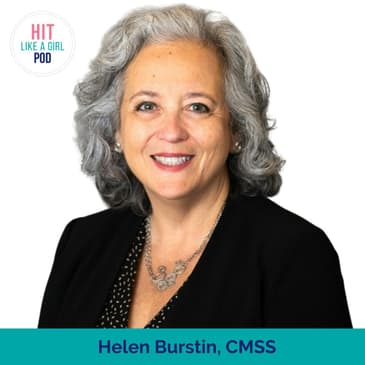

In this episode, Joy Rios talks with Helen Burstin, the CEO of the Council of Medical Specialty Societies. Helen shares her extensive career journey, highlighting her pivotal roles in healthcare quality and her commitment to improving care for patients and physicians. The discussion delves into the challenges women face in advancing their careers, particularly in leadership positions, and emphasizes the importance of mentorship, sponsorship, and transparency in the workplace. Helen also addresses the significance of selecting impactful quality measures in healthcare practices and encourages women to leverage their experiences and support networks to navigate their career trajectories successfully.
Episode Highlights
[00:01:30] Helen Burstin's Career Highlights
[00:05:45] The Importance of Interoperable Healthcare Platforms
[00:10:00] Addressing Pay Discrepancies and Transparency
[00:15:20] The Challenges Women Face in Career Advancement
[00:18:16] Strategies for Negotiating Salary and Promotions
[00:20:30] The Role of Experience in Career Progression
[00:25:00] Encouragement for Women in Leadership Roles
Stay connected to Helen Burstin:
[00:00:09] Welcome to Hit Like a Girl Podcast.
[00:00:11] Thank you. Delighted to be here.
[00:00:12] Yeah. Can you please take a moment to introduce yourself? I know about you, but I want our audience to know about you.
[00:00:18] And if you can share a little bit about your career highlights and how you got there. You did a great, fantastic opening keynote this morning.
[00:00:25] It's always good to share career trajectories. I think it helps people see themselves in your...
[00:00:29] I'm Helen Burstyn. I am the CEO of a group called the Council of Medical Specialty Societies, which is a coalition of more than 50 specialty societies across medicine,
[00:00:37] primary care to surgery, everything in between. Really working together to share expertise and do what's right to improve care for patients and physicians.
[00:00:45] Okay. And from what I understand, you have done some work with creating quality measures.
[00:00:50] In my prior life, I was the Chief Scientific Officer of the National Quality Forum. So I've done a lot of work in healthcare quality.
[00:00:56] I was also head of quality measurement at the Brigham many years ago and then ran one of the research centers at AHRQ, which also had a lot around quality and equity.
[00:01:04] So I have done quite a bit of MIPS and meaningful use and PQRS and teaching people about quality measures and how to implement them in their practices.
[00:01:15] So I feel like I might be speaking to a little bit the source sometimes. I'm just like, oh my gosh, what goes on the back end of those?
[00:01:22] And I know that there's typically a menu of... I tell doctors, I'm like, there's about 400 you can choose from.
[00:01:29] We need to focus on six to get you through this year. And what do you want to teach your practice on?
[00:01:34] Like, what matters to you, to your patient population?
[00:01:37] That's the biggest thing is really picking measures that you feel like will actually have an impact on your practice.
[00:01:42] And I think one of the hardest things right now, given the interest in health IT, but there's still a lot of measures that are completely based on claims data.
[00:01:49] Frankly, you can check the box, but they're not very interesting.
[00:01:52] And I think we'd really prefer to have docs be focusing on measures that are of interest for improving care.
[00:01:57] I often say when I talk to audiences about healthcare quality and measurement is that if somebody's sharing their results with you and you don't immediately want to look to the doc on your right and your left to find out if they did better and why, then it's not a good quality measure.
[00:02:11] Right? So there's some real opportunities here.
[00:02:13] I think patient report outcomes, for example, did you get better is something that really resonates with both patients and clinicians, which I think is powerful.
[00:02:20] But I'm a big fan of obviously, given so many of our specialty studies have registries that the clinical registry allows us to collect the real clinical information that comes from electronic health records, the voice of the patient to really understand how we're doing and make care better.
[00:02:34] So as somebody who understands all the different types of quality measures, and I love outcome measures and patient reported outcome measures.
[00:02:40] Do you have any special favorites that are really meaningful for you or that you have seen a signal?
[00:02:46] Because they come and go, right?
[00:02:47] Like they get introduced.
[00:02:49] Some come and go.
[00:02:49] Yeah.
[00:02:49] Some have stayed.
[00:02:50] I think just the whole family of the suite of patient experience measures are powerful.
[00:02:55] Okay.
[00:02:56] It's a lot you can criticize about them, but go back to the early days of it.
[00:03:00] Actually, just knowing what patient's experience is like, I think is very powerful.
[00:03:04] I think there are outcome measures that get at complications, for example, that are really meaningful to have patients and physicians for your procedures, I think are really great.
[00:03:12] I just think there's some real, for me, I'm not one of those people who just says throw out the process measures.
[00:03:17] They're useless.
[00:03:18] I don't agree at all.
[00:03:19] I think they just have to be really proximal to outcomes such that if you move the needle on the process, you'll move the outcome.
[00:03:25] Otherwise, why are we doing it?
[00:03:27] If it's too distal from the outcome, we should just stop measuring them.
[00:03:30] And that's one of my biggest gripes is there are thousands of quality measures and a lot of them should just not be used anymore because they don't add value.
[00:03:36] I'm also a strong proponent that I feel like we have ignored equity.
[00:03:40] Yes.
[00:03:41] And I think if our data systems are finally moving the direction we're moving, and I think given your background, if given the deadlines that are on TAFCA and FHIR, and we can really move to have a truly interoperable healthcare platform, then we can create quality measures that we can really use that come out of the byproducts of the care that we provide without a lot of burden on clinicians that will provide meaningful information.
[00:04:33] We just have to get there.
[00:04:34] And I think that's how they can be really useful too.
[00:04:37] It's been really interesting to see progress year over year.
[00:04:40] And I have been talking with clinicians about this since 2012.
[00:04:45] It has been going on for a bit.
[00:04:47] Yeah.
[00:04:47] We really have to stop measuring things that don't add value.
[00:04:51] It's the difference, like differences across measures that everybody spends too much time putting effort into collecting that don't add value.
[00:04:57] And that has to stop clinicians to say, if I use this measure, the information I get back would be valuable such that I'm actually going to build a quality improvement initiative around it.
[00:05:06] Or one of my favorite ones, for example, IRIS, which is the I registry, has a whole series of measures embedded within it in their registry.
[00:05:15] And you get benchmark against your peers.
[00:05:18] If you don't do well in a particular quality measure, it immediately offers you a CME module through the American Academy of Opinion.
[00:05:24] How smart.
[00:05:24] That to me is the ultimate vision, right?
[00:05:27] You provide information that's actionable, meaningful.
[00:05:30] And if you don't do very well, you immediately use that teachable moment to say, hey, you can learn right now how to make this better.
[00:05:36] That's really smart.
[00:05:38] Yeah.
[00:05:38] It sounds like you've done a lot of work in systems thinking.
[00:05:41] Yes.
[00:05:42] And like leaning back to the talk that you gave this morning, it's a lot about conversations about women in the workplace and their leadership and getting to different parts of it.
[00:05:51] So if you don't mind, can we transition to a little bit more of that conversation?
[00:05:56] Because you've also looked at plenty of data around either challenges that women faces or opportunities that they have.
[00:06:03] And can you give us a brief overview of that?
[00:06:06] Oh, absolutely.
[00:06:06] I'd be delighted.
[00:06:07] It's been something.
[00:06:08] We actually have a group we formed about a year ago now called the GEMS Alliance.
[00:06:11] It's just the Gender Equity in Academic Medicine and Science group.
[00:06:15] And we are specifically pulled together an organization of organizations.
[00:06:19] We don't want to recreate a new nonprofit.
[00:06:21] This is really intended to be a way for organizations to learn what everyone else is doing to make things better.
[00:06:26] So as part of that, we've really been honing in on what are the issues that are limiting people at every step along their career.
[00:06:32] And what I tried to do today as part of the session here at the WIM Summit was really focusing on one particularly high risk time for women in medicine, which is that mid-career.
[00:06:41] And interesting, it's not just women in medicine, like the data from McKinsey and Lena and others would suggest it's for everyone.
[00:06:46] It's that next level manager director job.
[00:06:49] And that in particular, for women of color, they're being denied those positions.
[00:06:53] But getting what does it take to get that next job, which is what I was really honing in on.
[00:06:58] And we know well that the way to get there is to have the right kind of sponsorship, mentorship, to be in institutions that are very transparent about what opportunities are, what your responsibilities will be, what your pay will be.
[00:07:10] So really just try to be very practical about this is what it takes to get to your next position and to get to it in a place that you can really thrive.
[00:07:17] But I do think a big part of that is making sure you have the right group around you, both in terms of mentors, supporters, but also peer mentors.
[00:07:25] Because you can gain so much from those around you who are doing similar things.
[00:07:30] And I think both Jenny and I both said something similar this morning as well, that how much we have all learned as well from the junior folks coming up,
[00:07:36] who at times don't bring some of the inherent biases we've lived in our career and just don't have some of those same assumptions about what they can and cannot do.
[00:07:45] I love that.
[00:07:46] What have been some of the lessons that you've learned from them?
[00:07:49] I think there's just this idea that they don't accept the status quo.
[00:07:52] I kind of love that.
[00:07:53] Which I love as well.
[00:07:55] But why do we do that?
[00:07:56] One of my favorite examples, and it's not about women in medicine in particular, but we're doing a lot of work now on a new initiative called Encoding Equity.
[00:08:02] In clinical research and practice, we're really trying to think about how to remove race as a biologic construct from guidelines and clinical algorithms.
[00:08:10] Remarkable things was this was driven by medical students at Harvard Medical School sitting in a classroom going,
[00:08:15] but why do we have race in a calculation for kidney function?
[00:08:18] Why is black race in there?
[00:08:20] And then this has been unroofed to really understand what went into it.
[00:08:23] So it's that idea that they challenge assumptions that we just took for granted that I think creates an opportunity for us to learn from them and with them.
[00:08:32] But then does that actually impact the changing of the guidelines?
[00:08:35] Yes.
[00:08:35] Yes.
[00:08:36] It literally led to, and it's a wonderful series this past week or so, Stat News put out a whole series called Embedding Bias, where they went through the history and what's happened around equity and bias and clinical algorithms and clinical guidelines.
[00:08:49] And it has, there has literally been movement.
[00:08:52] The kidney function one has changed.
[00:08:54] The pulmonary function ones are changing.
[00:08:56] There's still a lot more work to do.
[00:08:57] But I just love the fact that the first author on that New England Journal of Medicine paper in 2020 was a medical student at Harvard Medical School.
[00:09:04] It's great to hear that there's actually good progress being made in that.
[00:09:07] There's good progress being made.
[00:09:09] We're going to be leading a big coalition to make even more progress because to really do this right, we have to go back to research and data and AI and clinical.
[00:09:18] And we've got to work across all of those.
[00:09:21] I think it's really important just to be aware as a system how much bias is actually embedded into everything.
[00:09:29] And so a lot of, I feel like, oh, we can put a Band-Aid on something, but we really need to tackle the system itself to either unlearn or undo a bunch of harm that has been done and is probably still being done.
[00:09:41] So how can people support you in doing this work because it just feels like the most important work.
[00:09:47] It impacts so many folks.
[00:09:49] So we're just pulling together this coalition.
[00:09:51] We're naming our advisory group about a week or so.
[00:09:53] We're going to have a series of task forces that are still open.
[00:09:55] So if you go to our website, CMSS.org, you can look for Encoding Equity.
[00:09:59] Okay.
[00:10:00] Sign up.
[00:10:01] Even if you want to follow it, we'd love examples of where you've been able to do it and how it's happened.
[00:10:05] But it really is, I think, also just the power.
[00:10:07] And I think some of this, again, goes back to younger folks.
[00:10:10] So I think also have greater respect for what we can do when we step across lines.
[00:10:15] So we recognize that it's going to take a village to get this done.
[00:10:19] Like, I can't just have my specialty societies change the guidelines if there's not a receptive implementer site at the health systems.
[00:10:26] And my guidelines can't be changed if the data and the research is still being done with race embedded as a biologic construct.
[00:10:32] So you've got to really look systemically at these issues and really start to say we need end-to-end solutions rather than just jumping in and thinking we could fix one piece of it and the rest will follow.
[00:10:43] No, and it absolutely won't.
[00:10:45] So it's changing hearts and minds, I imagine, in addition to guidelines.
[00:10:49] Yeah, and I also think it's just a great way to talk about equity with medical students.
[00:10:54] I think when they see how much of the basis of some of the pulmonary function test differences, in fact, go back to Jefferson's assessment of pulmonary function of slaves.
[00:11:04] Like, there's no evidence for any of that, and yet it got embedded in lore in ways that it needs to be extracted.
[00:11:10] I'm so glad to know that there's momentum around that because it's such important work.
[00:11:15] Yeah.
[00:11:16] So when we talk about what, let's get back to women leaders and that position as they are trying.
[00:11:22] If they know that they want to be a leader, I'm sure that they already are wherever they are, but if they want to continue down that path.
[00:11:29] And what you were mentioning earlier made me feel like, oh, there's a lot of personal responsibility and accountability to make sure you invite the right mentors and coaches and peers and sponsors and to be part of your journey.
[00:11:45] Do you have advice for people on how to get that team together?
[00:11:50] Yeah, so I think some of it is really being very thoughtful about where you want to go.
[00:11:55] And I think that was part of what I was trying to emphasize this morning as well.
[00:11:58] You can't just walk into a coach's office or a mentor's office and say, help me fix me.
[00:12:02] You have to walk in having done your homework.
[00:12:04] You need to know where you want to go.
[00:12:05] You need to know what you need help with, where your goals are, and very specifically how they can help you.
[00:12:11] Because people can help you in very different ways, right?
[00:12:13] A mentor could help you get promoted.
[00:12:15] A sponsor could make sure to connect you to somebody who maybe knows about a sponsorship opportunity through your specialty society or health system.
[00:12:23] A coach is going to be very different.
[00:12:24] Coaches are really when you're at the precipice of trying to get to that higher level position.
[00:12:29] But you have to be ready to do the work.
[00:12:32] And as I said this morning, they're not life coaches.
[00:12:34] They're not therapists.
[00:12:35] They're really about, if I'm going to move to this next step, I have to gather these experiences.
[00:12:40] And I think one of the things I also talked about is I think sometimes women get promoted, but they don't necessarily get promoted in title, but not in responsibility.
[00:12:48] And I think the way to get appointed to that next position, for example, as a CEO, you have to be able to say, I've managed large budgets.
[00:12:56] I've managed large staff.
[00:12:57] And so making sure that your trajectory includes elements of that where you get more and more responsibility and then demonstrate an outcome that you can say you're responsible for.
[00:13:09] Right.
[00:13:10] Because of all this happened and be able to use that then when you go for your next position.
[00:13:15] And I think some of this is also just being very open to working with different kinds of people.
[00:13:20] I've had lots of mentors over the years.
[00:13:22] It doesn't just have to be one.
[00:13:23] And I do think in spite of as much as we're all tired of Zoom, the fact that you can now have a mentor who lives anywhere in the country is magic.
[00:13:32] It is.
[00:13:33] In my era, they had to be somebody in Boston or somebody down the hall.
[00:13:36] The fact that you can have people everywhere.
[00:13:38] And I think you can also have people who periodically, episodically come in and out of your life depending on what you're trying to do.
[00:13:45] Right.
[00:13:46] And that's incredibly useful.
[00:13:48] You gave some really great advice about speaking of that, like responsibility and what you have the authority to do and like to advise people to really have a clear understanding of what they can and cannot do.
[00:14:01] Or perhaps will they be set up for success or set up for failure?
[00:14:06] That's Cliff.
[00:14:06] And I think it is well known that women tend to be brought into positions that are places where anybody who took that position will fail.
[00:14:15] And yet they specifically put a woman in it.
[00:14:17] And it's supposed to be complimentary in the sense of like, oh, I've got this new position of leadership.
[00:14:22] Correct.
[00:14:23] Yeah.
[00:14:23] Correct.
[00:14:24] Be careful of those.
[00:14:25] Make sure you have the support to succeed because it doesn't help when you have to leave in flames.
[00:14:30] And people won't always recognize the fact that you were brought into a glass cliff.
[00:14:34] They'll think you just screwed up.
[00:14:35] Mess up your own personal and professional reputation.
[00:14:38] Correct.
[00:14:38] So how could somebody identify if they find themselves on a glass cliff?
[00:14:42] This is where your mentorship and your coach is critical.
[00:14:46] Sometimes you can't see it, but there are some hints.
[00:14:48] When you get a position of leadership and the responsibilities are fuzzy or it's not clear who reports to you or what your line of authority is or what you can and cannot make decisions about without having to go to higher ups.
[00:15:01] Those are warning signs that maybe you need to talk to somebody else before you take it on.
[00:15:05] Now, that being said, sometimes if you're the turnaround specialist, man, you get kudos for that in a big way.
[00:15:10] I've really worked hard over the last six years.
[00:15:12] CMSS is a very different organization.
[00:15:14] And I get huge kudos for the fact that it's a different organization.
[00:15:17] It could have gone the other direction.
[00:15:19] I was blessed.
[00:15:20] I had a phenomenal board who supported me every step along the way, wanted us to succeed and willing.
[00:15:25] When they hired me, they knew they were hiring a change agent.
[00:15:28] And so be careful.
[00:15:29] They may say they want a change agent, but if there's no evidence that system or company or nonprofit has ever actually changed before, or if you don't have any evidence that it's not just window dressing, then you can be in real, it could really be in a difficult situation.
[00:15:45] Yeah, I can imagine a lot of people might find themselves in that situation.
[00:15:49] And how does one either, if you're not able to prevent it, what about damage control?
[00:15:53] Is it really just get out of it as soon as you can?
[00:15:55] First step, right?
[00:15:56] So that's where I think your mentors, your sponsors try to find somebody within that organization as well as somebody outside that organization who can help you navigate it and figure out if there is a path forward that you can come out.
[00:16:07] Even if the organization isn't totally successful, you come out looking good.
[00:16:11] Yeah.
[00:16:11] And I think that's key.
[00:16:13] Sometimes you've got to write about it.
[00:16:14] Sometimes you've got to talk about it.
[00:16:15] The more you're public about it, the easier I think it is to say, hey, I took on this really tough role.
[00:16:20] I was talking to somebody earlier actually at this meeting who was saying she was in a glass cliff environment.
[00:16:24] And I said, write about it, talk about it, get out there, make people understand that this is a dysfunctional organization who put you into this role knowing you'd fail.
[00:16:33] But then they could point that it was your failure.
[00:16:35] No, it's their collective failure.
[00:16:37] It's not just yours.
[00:16:39] Can we talk about that for a second?
[00:16:41] Just because there's got to be risks in speaking up too, right?
[00:16:45] That could definitely improve somebody's personal brand, but it could also potentially backfire.
[00:16:51] Correct.
[00:16:51] That's why you have to do it in a way with external allies.
[00:16:54] And oftentimes they're the ones who are out there talking about it rather than you.
[00:16:57] Okay.
[00:16:58] You're right.
[00:16:58] You have to be incredibly careful.
[00:16:59] You can't blow up a place you're still working in.
[00:17:01] Some of this is also like after you've left.
[00:17:04] Yeah.
[00:17:04] Like being able to share some of that.
[00:17:05] But it's difficult.
[00:17:06] NDAs are complicated.
[00:17:08] People often get asked to sign NDAs.
[00:17:09] So I think the more you can use your network of peers and mentors to explain what's happening,
[00:17:15] get advice all the way through.
[00:17:16] And sometimes those are amazing opportunities because you can turn something around and then
[00:17:20] you've got a huge reputational bump from having taken it on.
[00:17:24] But I think more than anything else, eyes wide open.
[00:17:27] What are the responsibilities?
[00:17:29] What are your lines of sight?
[00:17:30] What are your lines of command?
[00:17:31] What decisions can you make?
[00:17:33] Who do you have to look to for others?
[00:17:34] And I think it's the same thing when you take on one of these sort of middle rung positions
[00:17:38] as well.
[00:17:38] Be really clear.
[00:17:40] Have full transparency about what it will take you to succeed at that job.
[00:17:44] What are the responsibilities and recognition that'll take you to the next level?
[00:17:49] We talked a little bit about getting promoted, for example.
[00:17:51] We have a lot of academics in this group.
[00:17:53] You need to know exactly what it takes to get promoted.
[00:17:56] And if that's your pathway, then you need to make sure that whatever position you're taking
[00:17:59] on will still allow you time to publish.
[00:18:01] Right.
[00:18:02] Because if you can't publish, you can't move forward.
[00:18:04] So be crystal clear about what's the opportunity?
[00:18:07] What resources do you have?
[00:18:09] If they give you no resources to succeed, that should be a warning sign too.
[00:18:12] But more than anything else, don't take it until you've really enlisted support of your
[00:18:16] network.
[00:18:16] There was one last thing I wanted to ask about, which was the transparency and writing imbalances,
[00:18:22] where if you find out that your male counterpart is making $30,000 more than you for doing the
[00:18:29] same job, once they find out about that, take steps to correct it.
[00:18:33] And sometimes it is interesting.
[00:18:34] Some of it's transparent and you need to look.
[00:18:36] Look at the 990s.
[00:18:37] If it's a nonprofit, look at the 990s online.
[00:18:39] It's all available.
[00:18:40] You can see exactly how much they pay each senior staff member.
[00:18:42] And then go to the CEO.
[00:18:44] And if you need to go to the board and be like, this is a problem.
[00:18:48] You cannot have this degree of discrepancy.
[00:18:50] And sometimes it's justified.
[00:18:52] But when it's not, it needs to be called out.
[00:18:54] And I also mentioned this morning, know your worth.
[00:18:57] Right.
[00:18:57] If you know your worth and you're not getting paid that, it's a really good time to start
[00:19:01] chopping yourself around.
[00:19:03] A counteroffer can be powerful.
[00:19:05] Even if they just know you're looking, they get nervous.
[00:19:08] And when they get nervous, their pocketbooks open.
[00:19:11] Their wallets are mostly men.
[00:19:13] But yes, they potentially will open to write that ship and give you the, pay you what you're
[00:19:18] worth.
[00:19:18] But don't be afraid.
[00:19:19] And I mentioned this morning as well.
[00:19:20] I do think women in particular tend to have a little bit of sticky feet.
[00:19:23] We get comfortable.
[00:19:25] We like the people around us, a nice place to work and taking on something new, especially
[00:19:30] if you have family at home or kid responsibility, it can just be very daunting.
[00:19:33] And so I think at least being open with yourself, sometimes it's okay.
[00:19:37] I turned down two big jobs when my kids were really little.
[00:19:40] And one of them was driving to Baltimore every day.
[00:19:43] And I lived in DC in front of you who know the Beltway, like an hour each way with like
[00:19:47] a two-year-old and a four-year-old.
[00:19:48] And they're like, how could you turn that job down?
[00:19:49] Like, how can I take that job?
[00:19:50] I barely get to see my kids before they go to bed.
[00:19:54] I don't want to live my life that way.
[00:19:56] And there was another job in Chicago that I turned down and they just kept calling.
[00:19:59] You could come like once a week or you could come a week a month.
[00:20:03] And I'm like, no, I like my husband.
[00:20:05] I like my kids.
[00:20:05] I don't want to be there.
[00:20:07] Now, am I at the point now in my life, my kids are in their 20s and in college and
[00:20:11] like, yes, I could potentially think to do that if I wanted to.
[00:20:14] But some of it is also just being true to yourself.
[00:20:16] Yeah.
[00:20:17] And if those opportunities come when you're 35 and 40, they're going to come when you're
[00:20:21] 55 and 60, right?
[00:20:23] You just have to keep that path, those doors open and tell people I'm not taking it not
[00:20:27] because it's not a good opportunity.
[00:20:29] Just not the right place for my family right now.
[00:20:31] It's not the right place for me.
[00:20:32] And I was blessed to be an older mom.
[00:20:34] I didn't get married and have kids so I was in my late 30s.
[00:20:36] And I want to savor every minute of it.
[00:20:39] And I didn't want to waste it sitting on the damn Beltway.
[00:20:42] I think that's really smart.
[00:20:43] I've actually had several conversations recently with women who have been offered jobs that
[00:20:49] would take them on the road.
[00:20:51] And you're like, you think it'd be such a great opportunity, but you're actually going
[00:20:53] to be traveling 80% of the time.
[00:20:55] And for somebody who might be a single mom, like that is not an option.
[00:20:59] And even if you're not a single mom.
[00:21:01] Even if you have a dog or anything, like you're just like away from home for that long.
[00:21:06] It's a big life change and commitment.
[00:21:08] It is.
[00:21:08] And I do think making sure people keep their child care in place as long as possible.
[00:21:12] I was at a meeting fairly early on in my career and this deputy editor of a general walk up
[00:21:17] to me and asked me, she said, do you still have your wife?
[00:21:19] And I went, what?
[00:21:21] No, I have a husband.
[00:21:22] She's like, no, you're a nanny.
[00:21:24] And my kids were in middle school or something at the time.
[00:21:25] And I went, yeah.
[00:21:26] She goes, never give her up.
[00:21:28] And it was just an interesting moment of like, it's true.
[00:21:31] She works for us only part time now.
[00:21:33] But would I have clean suits to wear if she didn't go to the dry cleaners for us twice a week?
[00:21:36] I'm not sure.
[00:21:38] So it's okay to like acknowledge that it does take help.
[00:21:41] And fortunately, if you get to a spot in your life where you can afford those resources,
[00:21:45] take advantage of them because it does take a village.
[00:21:47] It does.
[00:21:48] And I was very blessed that she helped raise our kids and that she's spectacular.
[00:21:52] And my husband and I often joke that our kids were blessed to have three parents and
[00:21:55] one of them was really good.
[00:21:58] Incredible.
[00:21:59] Helen, thank you so much for all of your work that you've done.
[00:22:02] You've really actually made an impact on even my work.
[00:22:05] And it's just nice to get to see you and look you in your eyes and say thank you.
[00:22:09] Oh, truly an honor.
[00:22:10] If people want to support you and they want to get involved and specifically with the GEMS,
[00:22:14] it sounds like there's an opportunity to do something.
[00:22:16] Where would you direct folks?
[00:22:18] GEMSalliance.org.
[00:22:19] We have a website now.
[00:22:20] Please go on, get your organization signed up.
[00:22:22] We have occasional webinars and a couple of sponsors, a couple of opportunities right
[00:22:25] now.
[00:22:26] We have a survey in the field that's going to be surveying residents about home care responsibilities
[00:22:30] and childhood, which is great.
[00:22:32] And then for CMSS, CMSS.org, including the link to the Encoding Equity Initiative, we'd
[00:22:37] love people to get engaged.
[00:22:38] This is going to take full court press across all of our sectors, including yours.
[00:22:43] The tech and AI space has to be at the table for this encoding equity work.
[00:22:47] Okay.
[00:22:48] You can count me in on checking it out.
[00:22:50] Wonderful.
[00:22:51] Wonderful.
[00:22:51] Thanks for your time.
[00:22:52] Oh, my pleasure.
[00:23:03] Thanks for listening.
[00:23:04] You can learn more about us or this guest by going to our website or visiting us on any
[00:23:09] of the socials with the handle hitlikeagirlpod.
[00:23:12] Thanks again.
[00:23:12] See you soon.
[00:23:14] Again, thank you so much for listening to the Hit Like a Girl podcast.
[00:23:17] I am truly grateful for you and I'm wondering if you could do me a quick favor.
[00:23:21] Would you be willing to follow or subscribe to this podcast or maybe leave us a rating or
[00:23:26] review?
[00:23:26] Or if you're feeling extra generous, would you share this episode on your Instagram stories
[00:23:31] or with a friend?
[00:23:32] All those things help us podcasters out so much.
[00:23:35] I'm the show's host, Joy Rios, and I'll see you next time.