
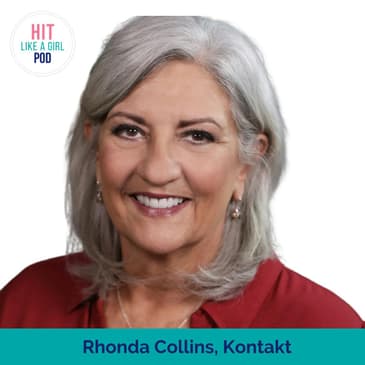

In this episode, Joy Rios sits down with Rhonda Collins, a seasoned clinical informatics nurse, now with Kontakt.io, focusing on revolutionizing healthcare safety and efficiency. Delving into the pressing issue of workplace violence and stress faced by healthcare professionals, Rhonda sheds light on Kontakt's innovative solutions, including precise location tracking and duress buttons, aimed at enhancing staff and patient safety. The discussion underscores the practical approach of addressing fundamental operational challenges in healthcare environments to create a conducive workplace that promotes better patient care.
Episode Highlights:
[00:02:18] Workplace Stress and Safety Concerns
[00:03:32] Utilizing Technology for Safety in Healthcare
[00:05:25] Solving Real Problems in Healthcare Environments
[00:08:00] Importance of Precise Location Tracking for Support
[00:21:18] Delivering Relevant Information in Healthcare
[00:22:11] Connecting with Rhonda Collins and Kontakt.io
Stay connected to Rhonda Collins:
[00:00:00] Hi there! Welcome to the HIT Like a Girl podcast. Hi Joy, it's good to see you again. I know! Welcome back Rhonda! Rhonda Collins was a guest a couple of years ago, but her journey has changed a little bit. Will you please take a moment to reintroduce yourself?
[00:00:24] Sure. I'm an old clinical informatics nurse. That's been around for a while. In the last 8 and a half years of my active career, I was the Chief Nursing Officer at VOSARA. VOSARA was acquired and subsequently did some consulting. As of December, I am now with contact.
[00:00:44] Our work is focused on finding people and things, which really got me excited because there are some basic problems in healthcare that have never been solved, and that's one of them. And that's part of the reason why we're here is to try to understand the problems
[00:01:02] and what solutions there are. So I want to hear more. What do you mean you guys find people and things? What does that mean? Right. Back up and say workplace violence is a huge issue in healthcare, as you know, fully one-fourth of all nurses.
[00:01:17] I don't know. Tell me more. No, I need to know more about this and our audience needs to know more about it. I was at a conference last week. Press Ganey did a presentation and they said two nurses every single day are assaulted in the United States.
[00:01:32] By patients? And then American Nurses Association has reported that one-fourth, one in four nurses experiences workplace violence. The flip side of that is that culturally aggressive patients have sort of gone with the job. So there is an estimation that around 80% of all violence incidents are not reported.
[00:01:54] Because they're just like, oh, you handle it. Yeah, you handle it. There has been a culture of, why are you reporting that? You know, it's like you need to learn to manage that. And so we're starting to see the culture shift.
[00:02:08] It's a welcome shift where nurses are not expected to put up with that. And you know, we're living in a society where mental illness and drug addiction, people are just mad. Yeah. Especially after, I mean people are angry all the time. They're shorter fuses.
[00:02:23] And that shouldn't be the kind of thing that we're just like, oh, handle it. That's on you. Yeah. I was talking to an 80 nurse and she said every night when I go to work, I kiss my husband and children and I wonder if I'll ever see them again.
[00:02:36] And so you look at things like that and you think this is a problem that we need to solve. And along with that, why do we have to have all these disparate technologies or processes?
[00:02:46] Because half the time I'm at work, I'm looking for an IV pump and I can't find it. Sometimes patients disappear out of the room and you can't find them. And so why don't we use the same technology that can give us data that shows repetitive
[00:03:01] routes and routes and ideas and things and where and whatever. So that's what we're doing at contact. People and things. People and things. We use the same technology like nurses have a hard plastic badge that they can slide their
[00:03:17] badge into and on the back is a duress button, but they simply press for instant contact because we're not working off of Wi-Fi, which is just a general location. We can actually find you like find me on the iPhone. Is it that specific? Yes. Like location services?
[00:03:32] She's in that particular room? Yes. She's in room 218 and she's calling for help. And then we've had stories just in the last couple of months of patients who could not be found and you could see that they were in cardiac arrest.
[00:03:46] I know somebody who passed away and that happened in San Francisco, maybe six or seven. That was my friend's friend. Yes. The patient was in a stairwell for a week before they found her. Yeah. And everybody's running around trying to find them and they can't find them.
[00:04:02] And so what we do is then tag on the patient's bracelet. We call it a nano tag, but you can tag and find people and things. So if you need medical equipment and our focus is really to simplify the workflow
[00:04:18] and the operations of the hospital, we have to find a way to make it cost less. Yeah. Well, if you're losing 5-10% of your medical devices and you can't find them and they've wandered off and they're in a closet somewhere, things happen.
[00:04:31] Then that's always a constant churn of healthcare dollars, those things. So when people ask me, why is this something that you're... Because I've been in the software informatics business for a long time. And because I think it can make nurses work so much better. They can be safer.
[00:04:47] Their patients can be safer and their environment can be easier to work in. And after COVID, that's what nurses said. We were working so short staff, but what made it really hard was just how messed up the environment was that we didn't have what we needed.
[00:05:00] We had to look for what we needed. So I'm sort of at this point where it's like, let's solve the ground floor problems that make people want to come to work because it's easy to work. I understand the visionary, you know, the whole universe that's out there
[00:05:15] within the world of software, cloud, IT, everything, IoT. But we're part of that, but we're solving very real practical problems. I love the practicality of it. Okay, questions about the number of things that you're tracking. So if you're tracking people and things, do they get stratified?
[00:05:33] Like, okay, patients are all on maybe one line of things and then staff on another and whatever equipment on another. Yeah, assets. Like the freaking dashboard must be incredible. We can do that. We actually map the hospitals, the rooms so you can security can pull up
[00:05:52] and if someone's pressing duress, then the secrecy that's in room, you know, X, Y, Z. And we go right there. They can actually call to the nurses at the desk to say, go surround your coworker. There's an issue.
[00:06:05] And then with patients, we can track them anywhere in the hospital after it's mapped. And it is AI allows us to study these paths and these tracks and understand when does this happen? Does this happen more on certain shifts or certain days of the week, et cetera,
[00:06:21] during a full moon? Right. They say, is it true that there's more admittance to the emergency department at Full Moon? Well, you're talking to a former labor and delivery nurse and I'm going to tell you the full moon is real. Okay, tell me.
[00:06:33] We had way more babies during the full moon. We would come to work at night and go, oh my God, it's a full moon. We're going to be slammed. No way. And it was always true. Yeah. That's so wild. Yeah.
[00:06:46] I'm a full believer in the full moon theory that people get crazy. Babies are born the whole thing. I thought it had to do with like there's more light. And so that means that, okay, if there's more light out,
[00:06:56] then people can be more active and get into trouble and get themselves into trouble. Yeah. It could be a change in biometric whatever. I don't know. I'm not going to get into conspiracy. Yeah, but there is a pattern, right? You could throw it into AI. Yeah.
[00:07:10] If you talk to any ED doctor or nurse or labor and delivery, we're all going to tell you the full moon thing is real. That is so funny. So, okay, can you tell me some stories about how that particular technology has been effective and, you know, let's like,
[00:07:25] let's bring it to life. Yep. Already we're hearing reports from some of our very large hospital systems that they're saving up to 10%, which can equate to hundreds of thousands of dollars just on asset tracking, being able to find their devices when they need them.
[00:07:40] We believe that as more and more adopt for the duress, for keeping nurses safer, that we're going to see a real reduction. What many, what I would call the location badges do right now is work off Y-5, which is an access point.
[00:07:56] You know, it says, well, that's somewhere on the second floor near this point. But if somebody's really in trouble, you need to know precisely where they are so you can support them. It takes almost no time to pull out a weapon of some kind or to hit somebody.
[00:08:10] Janice Walker, who was the C&E for the Baylor Healthcare System, she's since gone to atrium, but she was a huge proponent and just a major force in changing how we handle violence against nurses. And it happened because she had a patient in the emergency room,
[00:08:30] the nurse leaned across the patient to adjust something. And that's the last thing she remembered for about five days. Wow. We see and hear all of these. So as we're sort of breaking through this right now to get
[00:08:42] in there and really start collecting data and how we are going to be able to see the reduction and poor outcomes and getting help when they need it and finding patients when we need to find them. So we already know that just tracking things,
[00:08:58] we save lots of money. Tracking people, we believe that we're going to create a safer environment. And as it's used more and more. And I would imagine that on the nursing and staff side, they have some control. They can press a button.
[00:09:13] Obviously assets cannot and patients probably cannot either. Correct. Okay. Patients are banded. Yeah. And so we can just understand where they are. You know, for so many years with HEPA, we worried about, you know, patient confidentiality and privacy. And now with virtual nursing,
[00:09:29] there's a camera and a microphone in every room. And it's really changed our approach and it's actually just part of consent to treatment. There'll be a camera or a microphone in your room. We have these taggings so we can find you if you wonder off
[00:09:43] or if your mother who's slightly senile decides to wonder off. Yeah. So we can find them and patients are certainly more tolerant. I would say even five years ago. Sure. You know, we're far more tolerant of technology
[00:09:57] that can be assistive and support us than we were back then. So have you guys been adopted by major health systems? Can we find you everywhere? You can. You can find us everywhere. We just, we're in one health system that has almost 200 hospitals
[00:10:12] and we're working across the board with other large health systems and even small community based hospitals, you know, whoever has a need. And I do think that that's one of the things, you know, that I went through an experience with my husband
[00:10:26] and his motorcycle crash and all of that and being in the hospital for 70 days and watching how people work and it was stunning to me. I'll just say, I came home with five reusable grocery bags
[00:10:41] full of stuff out of the room because once it's brought into the room it can't be taken out. And what do you mean by just stuff? He had five C colors because his neck was broken in the accident. Well, why does he need five C colors?
[00:10:52] Because somebody would come in and go, I don't see it so they would go get another one. Okay. He came home with two knee braces because I remember the day that PT came in and said, where did that go? Someone had stuffed it in a closet.
[00:11:04] So, and they just didn't look in the closet so he went and got another one. And the rule is once it's in you can't take it out. Can't be used for anybody else. Correct. That's infection control. So I just saw all of this
[00:11:15] and I kept thinking you could pack a truck up with all of the waste and I mean I came home with rings and rings and packages of gauze and tape and all of the stuff. And I just kept thinking, what can we do to make this better?
[00:11:29] How do we let people know that's already in here? Right. You don't need to go get another one and you know, charge the system, charge the patient, et cetera. Our industry is known for the amount of waste that it creates
[00:11:42] and at any point that we're in a position to lessen that, it has got to be quite impactful. I realize it's not, you know, it's not these visionary conversations about what we can do all out there. But it's essential to, I would say, just making healthcare sustainable. Right.
[00:12:00] I agree. The path we're on right now is not sustainable. Right. And we have to do something, we have to make it a better environment to work in. We have to make it a better environment that is affordable to all of us
[00:12:10] and make sure that when patients come back out of the hospital, they're better than when they went in. Well, in some ways it's a very high, like in some ways it's a very high tech solution. But in other ways it's a really, 100% It's very practical. Yes.
[00:12:25] I love that about it. And it's like, I am often thinking like the lowest technology solution might sometimes be the best in like, because if it's so high tech, then if something breaks or doesn't go, I don't know.
[00:12:41] What you look at is why can't you use the same technology to do many things? You can protect people, you can protect patients, you can protect your assets, you can find what you need. Yeah. People and things. And then on top of that,
[00:12:52] we have the software with the AI capabilities that allow you to see trends and patterns to create data to understand where do I need to spend money? Where should I not be spending money? Okay. You also are affecting, I don't know if it would be your competition,
[00:13:06] but other vendors in the space, you're affecting their bottom lines. Yes. In so many ways. Yes. And in fact, that's part of our strategy is having these partners that we can work with, that our technology can then embed with them
[00:13:20] and they can find what they need to find in what they're doing. Okay, so if somebody wants to start tracking an asset, is that a decision that's made by the hospital or is it made by the supplier or is it? It's made by the hospital. Okay.
[00:13:34] And here's the great thing about us. We're a service. I mean, it's like we can go in and do a 500-bed hospital in two weeks. There's no downtime, there's no anything. We can just get in there, get it done and move on.
[00:13:48] And we carry the burden of that and because we are committed to streamlining the healthcare experience for everyone. That's so wonderful. I remember you saying that you're feeling like this really truly makes a difference where you're at and I feel it. That's exactly,
[00:14:04] you know, because it's really satisfying to look at where I've been, what I've done, you know, and the practical and the growth and everything in this company is really growing. It's really energetic. We really have a plan, you know, to really just change healthcare because we have to.
[00:14:24] We can't keep on like this. And you know, I live in a state that is very rural. I live in Texas and so fully 60% of Texas is rural and all these small hospitals are closing down and then people are driving 500 miles to get healthcare.
[00:14:39] We have to stop that. We have to be able to provide it and the way we do that is make it economically feasible and make it where people can afford to keep their hospitals open to keep them staffed. And you do that by streamlining the operational environment,
[00:14:56] just making it work better. We have been in the business world for a long time. We're coming into the healthcare world to share what we've learned and what we know and how we have made it a better place for things and people in other businesses and other verticals.
[00:15:11] Can you share with us? I mean, you have decades of experience in not that many decades. I don't want to say. Oh, it's a lot. It's okay. But you've seen so much change in the industry in your career so far. I know you can't predict the future
[00:15:30] but what are some of the things that have been really, like that some folks might not be aware of how it used to be versus how it is now and also what it might look like in the future that we can't even consider.
[00:15:41] But let's talk about the past first. Like past to present, what are some of the biggest changes that you've seen in your career that might shock, you know? I don't know, Gen Z. I think it might shock. I mean, the first time I saw computers,
[00:15:55] we were talking about this out there. The first time I saw computers come into the hospital, we had one computer at each nurse's station and it was DOS. You literally had to type in code to get to the lab. And I remember that
[00:16:09] that was very normalized to us. And then, of course, when we started with electronic medical records and doing EHR, as I said, we didn't trust that it was going to go inside all there and come back out so we would double document. You know, we'd write it down
[00:16:25] even though we had typed it in. And then we started to look at how do we get other systems to work with what we have. And then there was that whole change management with EHR, the kicking and the screaming and the chaos and everything. People were running entire
[00:16:44] conferences off of the EHR has made life difficult for practitioners. And I remember standing at the back of the room one day with my hand on my face going, you know what? The train has left the station on this. We need to start figuring out how
[00:17:00] to make it work because it's here and it's not going to change. And of course, that's where we are now. It's here. We're working with it. You know, we've spent the last 10 years trying to get the bugs out and all of those things.
[00:17:12] And you know, as a whole, I think that we've accomplished that. I do think that then we started layering in mobile devices because mobile devices power our personal lives. And so it was always weird to me that a nurse could sit in the car and pay the baby
[00:17:28] center on Venmo order groceries and had to go in the work and put away their cell phone. Right. I just always like, why can't we make this work the same convenience in health care? So we have really adopted that. It's been normalized into the environment
[00:17:44] and I think that we still have a lot of growth on that. But I do believe the next thing is patients will be treated in very non-traditional places with very non-traditional ways using technologies. Like we've started the hospital at home and we're looking at
[00:18:04] the whole virtual nursing where nurses maybe miles away in a bunker but yet they're observing patients in a hospital bed. I do think that there are some things that we have to change in this country to sustain and one of them is post-acute care for adults.
[00:18:20] It's poorly reimbursed, it has poor oversight and access is dismal and it's not the same for pediatrics. Pediatrics has a good post-acute care experience. But I do think that we need to start using technologies and the technology we use such as the Bluetooth can work anywhere. Yeah.
[00:18:44] It doesn't require, you know, the lockdown environment of the hospital so I do believe it's outside the four walls it's virtual, it's tracking and finding technology to our benefit. So that's what I see in the future. We've come a very, very long way from not having
[00:19:02] to mistrust, to adopting. When I was doing my doctorate one of the things I wrote about was nurse adoption of mobile technology for the purpose of patient care. And I just remember it was the craziest conversation with nurses they just, they couldn't get
[00:19:18] there in their heads how using mobile device was safe and allowed them to care for their patient. And then so then I broke it down to are you texting the doctor to promote the care or to ask questions about the patient. And they're like
[00:19:32] well not really, we go back to the phone and I kept talking through the workflow and workflow. What I learned was any technology will be adopted as long as it fits within the context of their work. If it doesn't fit within the context
[00:19:44] of their work, they quickly abandon it especially in healthcare. It's like it is razor fine. I mean that's understandable actually. Yes. It's like a hair thin yes or no. It glitches one time and they're through with it. That's why I think making things that work within their workflow
[00:20:00] that fit into their experience that work in the context is where we really need to focus. Okay, last question having to do with the train leaving the station do you think we're there yet with AI? It's already like everybody. The guy who sells doorknobs is talking about AI.
[00:20:18] You need an AI and you're a toaster and you're a refrigerator and you're doing up. I know it's we get a little funny on these things and everybody is talking about it. I do think that it's here but I also think that we need to
[00:20:36] put some practicality around it and usefulness around it. I mean the thing with software is of course we can. The answer is yes. Yeah, of course. The answer is yes. But should we? 100% yes. But is that actually
[00:20:48] going to solve a problem? Is it going to make it harder for them to work? Is it actually going to provide information and I've had a CNO say to me just recently no more dashboards. She's like, oh I do a Sterret dashboards, no.
[00:21:02] So I think that we need to figure out how to just deliver relevant information to the customer. They shouldn't have to go mining for it. Those are all things that we need to look at more what we do as a service provider rather than, you know, here
[00:21:16] take all of this and use it dashboard for all of your dashboards. I mean won't that solve the problem? I know, right? And I do think that AI the intelligence that we can take to find, you know, trends and assumptions and all of that that we
[00:21:32] can do will make a huge difference. But I think that right now we're in the billions and billions stage of it. Exactly. Well Rhonda, I am so happy to catch up with you again. Thank you for yeah this has been great. If people want
[00:21:50] to follow your work connect with you or you know implement your technology where do you send them? I've come to LinkedIn. I'm on LinkedIn and then our website is contact.io k-o-n-t-a-k-t .io And you can learn all about us and the different verticals that we work in
[00:22:10] fantastic. Thank you for all of the work that you do and for being an inspiration for people like me. Thank you, Joy. Y'all have really inspired me too. I'm just so happy we're leaving it in capable hands all of us whole dogs are leaving eventually. We'll try.
[00:22:26] We're doing our best. You're doing great. Thank you. Thanks for listening. You can learn more about us or this guest by going to our website or visiting us on any of the socials with a handle hit like a girl pod. Thanks again. See you soon.
[00:22:42] Again, thank you so much for listening to the hit like a girl podcast. I am truly grateful for you and I'm wondering if you could do me a quick favor. Would you be willing to follow or subscribe to this podcast or maybe leave us
[00:22:54] a rating or review or if you're feeling extra generous would you share this episode on your Instagram stories or with a friend? All of those things help us podcasters out so much. I'm the show's host Joy Rios and I'll see you next time.