
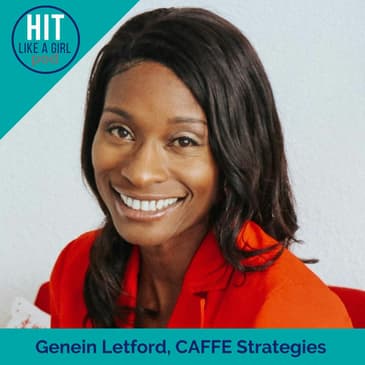

Join us for a re-release of this insightful episode featuring Genein Letford, Founder and CEO of CAFFE Strategies and speaker at the 2023 Women in Medicine Summit. Discover the importance of creativity and cultural competency in addressing healthcare challenges.
Learn how:
- Leaders' mindsets can influence team innovation.
- AI and technology can complement human creativity, not replace it.
- Cultural understanding is essential for effective healthcare solutions.
[00:00:02] Colleen All Healthcare Innovators, It's Joy Reo's from Like A Girl Media.
[00:00:07] This October, the Actions Not Just In The Frontline, It's In Vegas.
[00:00:12] Health 2024, Healthcare's hottest event, brings together the brightest minds shaping the future of healthcare innovation.
[00:00:19] Ready to learn from the top names, network with change makers and be part of the healthcare revolution?
[00:00:25] Health is your destination.
[00:00:27] Plus, Joy Narrow Exclusive Podcastors Reception on October 21st and connect with fellow industry voices.
[00:00:34] And, score a sweet $250 discount with code L-A-G-M 250-Off.
[00:00:39] That's L-A-G-M 250-F.
[00:00:44] Don't miss out! Get all the details and secure your spot at likeagurlmedia.com slash H-L-T-H.
[00:00:51] Vegas might be known for its lights, but this October it'll be the future of healthcare that shines brightest.
[00:01:08] Hello and welcome to the hit-like-girl podcast. My name is Joy Reo's and on this show we talk about basically how complicated healthcare can be.
[00:01:17] I call it a 30,000-piece puzzle because it is so freaking complicated and every one of our guests brings on an area of their expertise.
[00:01:25] And so the idea of being able to just share what we know so that other people can learn from and make sense of the big picture.
[00:01:34] So, if you wouldn't mind taking a moment to introduce yourself and tell me a little bit about the piece of the puzzle that you all.
[00:01:41] Sure I'm Jeanine Lefford. I'm an educator by trade.
[00:01:44] I'm just so excited to be here at the Women in Medicine Summit and I hold an interesting piece because I'm coming in from the outside.
[00:01:52] So I'm not in medicine this isn't my chosen field, but I'm bringing in the topic of creativity innovation and something new called intercultural creativity.
[00:02:01] So how can healthcare workers and just practitioners really look at the prismatic abilities and gifts of their team, of their patience and create for a better tomorrow?
[00:02:13] I love all of that, just because we do need to be creative in this creative problem solving which is what we need to do. We've got some major problems.
[00:02:23] So how does this work and how did you get into it? Can you tell us a little bit about the history of what you do?
[00:02:29] Sure because I'm an educator. I get a chance to look at the entire pipeline.
[00:02:33] So I worked with elementary ed and started a nonprofit called Alumni 360 so that was 6th grade through 12th grade.
[00:02:38] I taught at the university level for teachers getting their masters as well. And now I do a lot of corporate training and healthcare training. I just did a training at Boston Medical Center.
[00:02:49] So I get to see everyone, basically from zero to 99 and really just looking at the lower amount of creative thinking.
[00:02:58] A lot of it coming from the school system because we just lower curiosity and creativity just the way it was built.
[00:03:05] And then we're sending in all these adults into the healthcare fields who need to like you said, answer these big questions.
[00:03:12] And so I left the classroom in 2019. I didn't know there was a pandemic around the corner.
[00:03:16] But and I just started doing the research. And so I saw the overlaps. So cultural competences, people's ability to work with different types of people to be aware of differences in culture,
[00:03:28] not necessarily just ethnic culture and national culture but culture just groups of people who have the group group on beliefs and attitudes.
[00:03:36] And I looked at what cognitive skills are need for cultural development, but also what cognitive skills are need for creative development.
[00:03:43] And they overlap. So I was like, okay, well, I can teach one or the other, but I can teach them both because they affect one another and so I'm doing the keynote.
[00:03:52] The closing keynote here today and we'll be looking at how people who are actually highly creative haven't worked on their cultural competency in their development as well.
[00:04:02] They are meeting people from different lived experiences. They're curious. They're open minded. They're taking initiative to say, okay, maybe I don't know it all right.
[00:04:10] The word humility has been thrown out in some of your breakouts a lot and your speeches and we're looking at the effect of being humble. It increases your curiosity and your creativity as well.
[00:04:20] I love all of that. So I was having a conversation recently about communities and of course there's communities where you live in cities and there's diversity to build in, but then there's a lot of small town communities where people are born and raised and they are surrounded by the same set of people potentially for their whole life.
[00:04:38] And how do we kind of help those folks with incentive curiosity around different cultures if they don't know any different?
[00:04:46] That's a great question. And so I think a lot of why, number why I'm here and why your audience probably loves my work because everything is based in neuroscience and I'm a UCLA Bruin. So everything's well-sighted.
[00:04:58] We're here research. And so that speaks to this crowd a lot and what we're looking at is the neural science of how neural networks are set up based upon experiences.
[00:05:10] The person has. That's the way life was living in small towns. Let's say, 1500 years ago, that was just it. But because we have so much technology now, we have to tool our kids and definitely adults with ways to make these connections outside of their cultural norm.
[00:05:28] Because it's affecting, we're looking at perception, right? So new research coming out on the way my census perceive just data is highly influenced by what's already in my brain.
[00:05:40] If your listeners want to go deeper in that they can watch the brain by Dr. David Eagleman, he's a neuroscientist out of Stanford and it's a PBS special episode five on the social brain. Amazing. So go check it out.
[00:05:53] Okay, but let's get into that a little bit more. So like we in healthcare talk so much about data and it's important and it's important and also the stories behind it.
[00:06:03] But what you're getting at is really important too as far as regardless of what the data tells us sometimes where stuck it isn't fluent by what we already believe.
[00:06:13] Yes, and the work of Dr. Nina Krauss out in Northwestern University she has this beautiful thing that I now bring into my trainings that I did a Boston medical and and I'm in every field.
[00:06:23] I just got fluent from a keynote in tech and then education in the now I'm here the same week by the way.
[00:06:29] And she looked at how the brain is looking for what it's already expecting to see.
[00:06:34] So let's say I'm biased against people with like blue eyes and I think they may not perform well. If I meet someone with blue eyes my brain is expecting to see low performance from this particular person because I'm coming into it without it. So this is so important for leaders because the work coming from Carol Doeck growth mindset fixed mind mindset.
[00:06:56] The mindset of the leader impacts the success of the student or team member. So if leaders are going in with assumptions that they haven't really checked childhood experiences formed of years experiences they haven't really reflected upon it's impacting the way that they are leading their constituents.
[00:07:12] So thinking about leaders in the necessary the necessity to be self aware.
[00:07:19] Yeah, absolutely need to have some reflection and be thinking about how am I leading this team are there resources that you would recommend for people who are in a position that want to do better and maybe don't know where to start sure well besides my own book.
[00:07:35] The seven gems of integral to creativity are logos the diamond and so I'm a metaphorical teacher. So shine bright like a diamond your multi-faceted how diamonds come to be there's so many lessons you can learn from the diamond.
[00:07:48] Yes, yes, and there's a song about that too.
[00:07:50] But we I have this image that I show and it's the diversity diamond. So on all the facets they're different facets of diversity so yeah, so your gender ethnicity things like that but also your birth order.
[00:08:04] And one of the healthcare institutions that I did a training at some part of somebody looked at that and he was of Asian descent.
[00:08:11] And he's like, yeah, and we're at where I grew up birth orders everything and he was the youngest.
[00:08:16] Wow, and it affected the way you know, he's well out of that situation he's grown in leading people.
[00:08:22] But he has some issues with his leadership because of the form of years.
[00:08:26] And so yes, that self awareness is huge looking at the diversity diamond or looking at there's a different other graphs out there that they can use and just having a lot of self reflective.
[00:08:37] I could be called a default mode network time for those people who know the brain right turning on that default mode network which means you're just mind wandering you're just kind of internally just reviewing this it's key.
[00:08:49] Especially for this new future of work where AI and automation and all of the technology is doing that heart doing that eat those things that could be done we need to do the deeper work.
[00:08:59] So that's a really interesting conversation around AI and new technologies because I keep thinking like how crazy is it that AI gets to be the one to write poetry and do artwork.
[00:09:10] And like how do we build in, like how do we keep the creativity for the humans to like I don't want to outsource that and yeah that's it for so first of all I say Aristotle said the beginning of wisdom is a definition of all terms.
[00:09:25] So we do define creativity because I know there's some people out there who think creativity is only artistry so but you are to use the term problem solving and so that's what we do problem finding right highly creative people are not just waiting for issues come to them they're out there like, well why did this way?
[00:09:40] Why can't we do it this way they're very curious and they're hopefully in a psychologically safe place where they can speak up right those two impact one another.
[00:09:48] But yes, AI is doing a lot of artistry creativity and I believe AI should put us in a position to go either further and deeper.
[00:09:56] So they're not taking our place they should help us look at things from other perspectives and just to be a larger springboard a higher springboard to jump off but our brain is the most beautiful thing I believe brain in our mind together there are two different things but they're very much connected.
[00:10:13] And earlier this morning you had a practitioner due lead a well-known as Hapa like yoga stress stretching time and the somatic.
[00:10:22] Our work is also called neural somatic creativity how does our brain in mind and our body affect our creative thinking and the way we perceive the creativity of other people.
[00:10:31] It's all connected and so I hope AI will help us do better and not replace.
[00:10:37] Can you help me and our listeners better understand the difference between the brain and the mind?
[00:10:42] Sure the well the brain is it's an empirical object is there.
[00:10:46] Yeah, you can see it you can hold it you can toss it up and it's beautiful but to the mind to me and I believe the thought leaders in the scientists are still out the jury still out on the clear definition of the mind so this is what I believe
[00:10:59] And so I just want to make that disclaimer since this is a summit of disclaimer that the beginning of people's presentations not like oh they do that okay.
[00:11:06] And to me the mind is so it's part of the brain because the brain informs the mind and if something's going on in the brain it does affect thinking processing and our ability to come to conclusions but to me the mind is all it's the cognitive, the affect effective.
[00:11:25] The co-native abilities your ability to take initiative it is perception but also how I interpret the perception it's my body.
[00:11:35] A lot of times like if I see a snake my body will react before my brain actually knows what's going on.
[00:11:40] Yeah, it's me listening to my body it's the past because a lot of what happened in the past is informing how I move to the future.
[00:11:48] It's the present and the future so the mind is in probably a lot of other things that I haven't listed because this could be an hour to our conversation about just what is the mind but I will end it's the inner world.
[00:11:59] There's a quote from Rabbi John Johnson Sachs where he says each human is a universe unto themselves now so I had that's true and the neuroscience is just said that the neural structure of the brain is a lot like the galactic structure in outer space.
[00:12:15] Yeah, yeah so there's still debating about that science is always debating about stuff something but.
[00:12:20] Yeah, we're a universe within ourselves and so for leaders to get some tools to manage 20 universes on their team that's going to take some new skills.
[00:12:31] Well thinking about the curiosity of every other person on your team's universe like you don't have to go very far to be thinking about all the possibilities of.
[00:12:40] Of or diversity of thought or perspective or experiences and even people perhaps sitting next to each other and in the same room have completely different.
[00:12:49] The universe it's going on in there brain right it's amazing even coming here by the way so this has been a crazy week and I'm very into like connections like okay why does happening.
[00:13:00] So I was booked to do a keynote for women in electronics on Wednesday in San Diego California then I drove up to Newport California to do women in educational leadership so these are super tendons principles district leaders.
[00:13:11] Then I drive to Phoenix with my son the creative kid Sean and then I get on a plane to come to Chicago and to do the women in medicine.
[00:13:19] So I'm like wow and I'm the target my target isn't necessarily women there's some speakers who only speak to women I speak to humans but like why is this all this week and then on the plane.
[00:13:30] Two women are flying me here isn't that great.
[00:13:32] I've never been on the plane with two women pilots like one one woman one man.
[00:13:37] And well she just spoke over the thing and was like is that a woman because it's not my norm right in the brain to expect the norm so that was huge and then what was your question.
[00:13:46] Well just thinking that we all have different experiences right that like even we could be in the same room in the same time.
[00:13:53] Yes.
[00:13:53] I wanted to profess that because on the plane my husband and I are in the process of building a new home our first home that we would purchase.
[00:14:05] And I could and I was sitting next to this older white man just very like country-looking ish very tan and I could just mind my business read my book for two hours.
[00:14:14] But I just heard him talking to his neighbor and it turns out he was a bill builder he builds houses or fun.
[00:14:20] And so for me to tap into his mind and say okay well what would you tell him first home or someone who's building their first home what should I look into I have the wealth of his wealth of knowledge.
[00:14:32] For two hours right didn't really tap into until about a 30 minutes before we're about to land and I could have lost all of that had I not reached out and made a connection.
[00:14:41] And so we need leaders to understand this your people are walking in with a wealth of ideas new ways of looking at things especially this new generation coming up and if we put them to their job description and don't ask anything of them.
[00:14:55] So like how how else would would you do this or what connections are you because creativity is all about connections associations right metaphorical thinking imagination.
[00:15:03] And so we have to understand that leadership is going to look a lot different when I do my trainings I bring legos five cleaners you might if you're coming to the keynote you'll see some five cleaners and that's for a reason because I have to get people out of their normal thinking and that's why your event team the leadership here brought me in because I'm not one of you.
[00:15:23] I'm not a health care worker. I'm not a doctor at least not in medicine. I'm trying to get my doctor to education but this is what you need you need someone from the outside to spur your thinking so you go back into your field with a new way.
[00:15:37] Well you're having a conversation about play honestly my team and I were doing tiktoks this morning and it was a really nice way to start the day and with a little bit of creativity and fun.
[00:15:48] And laughter and just feeling like oh how does that set me up differently for the space that I am taking up and how I show up in the world and honestly it's one that's more relaxed like probably more open to connecting with people like one that laughs at myself a little bit doesn't take things too seriously and I feel like that is actually.
[00:16:07] A skill that we need to get over the ego aspect of like what it is we bring to the table and like okay if we do need to creatively problem solve.
[00:16:17] We kind of had to get out of our own way.
[00:16:19] There's so much there and as you're talking I'm like oh the neuroscience behind everything she say right and so we're looking at that and it's a push in because as the speaker was just saying now in the breakout or the opening keynote she was talking about old power and new power and the old power.
[00:16:34] Doesn't play the old power you started meeting you get right to work the old power looks that your job description do your job description and nothing else the new power.
[00:16:43] It's like we're not in a linear world we're not non linear world we need to look at how things interact if differently we need to be able to be adaptable right there's a study coming out of stand Stanford where they looked at 243 companies and in the culture the company.
[00:16:57] They found the ones with an adaptive culture.
[00:17:00] We're rising to the top and just the bottom line financially called culture rise but it's not just changing strategy.
[00:17:08] It's changing belief systems and that's where I come in because you need to psychologically understand how our people thinking where is it coming from.
[00:17:16] I tell people I kind of have an edge on corporate training because I spent 15 years in elementary ed so I spent 15 years with a human being in their formative structural time.
[00:17:27] How do you help people not be defensive because that's one of those things that of course if people have done things a certain way and over time that they just want to keep doing it that way and you're like oh time to think differently.
[00:17:41] And how do you keep people from not wanting to be protective of the way the things have always been.
[00:17:46] You have great questions thank you so much.
[00:17:49] Because that's a concern right because you're dealing with humans so even though we do intercultural creativity so we do touch on inclusion and equity but I've learned that sometimes when you use some of these terms like bias they feel like.
[00:18:02] Yeah, she's saying I'm bias well everyone is bias is what the brain does it's a normal function of of the brain it saves energy keeps a brain safe quote quote unquote however you define that so instead of coming in hey we're doing bias training.
[00:18:16] And half the group is already coming in defensive the other half isn't listening to you because it's never worked work before and they're that's a whole other conversation.
[00:18:24] I'm saying hey let's do intercultural creativity because who doesn't want to be more creative right and so that's in looking at how assumptions affect the way that I interact this key.
[00:18:35] Another thing is once we show people there something called internal model and if your audience watches the brain documentary on PBS.org episode five they'll learn more about the internal model I was like all these people I'm like sending them to like you owe me what royalty right Dr Michael Plats book as well I'm like get this book it's great called the leaders brain is great.
[00:18:56] But when people understand that they have an internal model and more of what you're perceiving is more on the inside than actually what's going on outside.
[00:19:05] It lowers defensiveness because they understand that hey this is how my brain works in order to be a better leader I have to take control and then work on some things.
[00:19:14] But it's not like just because you're in your particular demographic you're automatically bad and sometimes people can shoot that way it's something we all have and I have it it's sometimes even with my own demographics.
[00:19:27] It's the subconscious Dr David Eagleman says your subconscious is actually running the show your conscious brain the part of your brain that wakes up when you wake up is the broom closet in the mansion of your brain like that's how big your conscious brain is the rest of it is subconscious.
[00:19:44] So if the leaders don't tap into what has been program and their subconscious they're going to be leading without truly thinking well.
[00:19:53] So I've been become familiar with another model I'm confident that it's not the same one but I would love your feedback on it.
[00:20:00] And as one that says okay you're gonna look at your circumstances your circumstances are gonna influence your thoughts your thoughts are gonna influence your feelings and your feelings are gonna influence the actions that you take.
[00:20:13] Now what you might be able to have some control over your circumstances if you like oh I'm in this room you know what I'm having weird thoughts about this I can go into another room.
[00:20:23] But sometimes you can't change your circumstances but you can't change your thoughts and that is a self awareness thing where you're like oh look in my brain thinking this thing.
[00:20:31] I should be thinking something else that might be more helpful for me or help me have a different feeling about whatever state it is which within change my actions and then also my results to that speak to anything about what you're talking about.
[00:20:44] It's connected and you're missing one other layer your biofeedback your physiological reactions right.
[00:20:51] That's at the very bottom there's a wonderful TED talk that your people might want to go watch called being brilliant every day by Dr. Alan Alan Watkins and he basically runs down what you just said like we're looking at.
[00:21:03] What's high performers and then we're looking at their behavior a lot of times we just want to change behavior but behaviors driven by thoughts right and thought are driven by feelings and then he separates feelings from emotions.
[00:21:15] He calls in two separate things right emotions is the energy and motion right that's the word actually says put up but emotions are is the energy coming together so you can in the mood right Dr. Lisa Philman Barrett has a lot from her book on emotions and the brain.
[00:21:32] But underneath the motions is your physiological reaction that's why neural somatic creativity is going to be so big and that's why I love the fact that you had a somatic doctor here running everyone through some practices to get their somatic connection in line with their brain and their mind.
[00:21:52] And so he's saying if leaders want to be in their tip top shape they have to get their biofeedback in line which feeds into their emotions and to their feelings feelings are just how you title them right you and I can be going on stage.
[00:22:05] You and you may be excited like yeah and I'd be maybe nervous just because we use to different titles of the same energy energy coming into our bodies it changes how we respond to the event.
[00:22:18] So leaders who are more aware of this whole line and brain heart coherence right keeping all that breathing breathing so important is seems to get all this.
[00:22:27] We forget we do it we have to do it say alive but it is your top tool right to turn your pre frontal cortex back on to make good choices.
[00:22:35] So for good leaders one connecting with the body to maybe having a different way of interacting with other people put infusing a little bit of play doesn't have to be like every single meeting now we have some like a fidget spinner or something that is going to play model play that people can fidget with like I don't think that's.
[00:22:56] Well there's different types of play and there's different types of social interaction the work of Dr Matthew leave her man out of use you see a talk about the social brain right our brain.
[00:23:05] So the brain is able to connect and our brains are built for music by the way that's a whole other pod podcast.
[00:23:11] Yes so any musicians out there and if you're not a musician try to start singing or and dance or something but because that's another part of my research how the arts inform leadership.
[00:23:21] But we need to give people time to connect first so but I want to if there's any leaders what you're all leaders out there because you are the CEO of you.
[00:23:30] But if are there any leaders out there who have direct reports right give five ten minutes before you get to work.
[00:23:36] I have a image of just different pictures and like hey what how do you feel right now I feel like the iron because so I'm sharing who what I'm feeling or what I did the weekend or a funny way a cool way of.
[00:23:49] Sharing a point but I'm also using my creativity because a metaphorical connection is a creative tool that's why I use the diamond right and a lot of great speakers use metaphor to push their point.
[00:24:00] And so it's that doing scape rooms just playing small quick games and another reason why play is so important because you get to see the essence of a person.
[00:24:11] How they respond to stress to pressure how they lead how they communicate under pressure yes you're playing a game but it's going to be the same was kind of like money money just amplifies whoever the person is inside if they were didn't have any money there still giving and caring.
[00:24:28] They'll probably be the same way if they have a lot of money just amplifies their essence so play.
[00:24:34] This is the first time I've said it this way that's good I should write it down.
[00:24:37] I'll put you in my next book.
[00:24:41] Yeah so yeah play amplifies their essence and also highlights things that they should work on.
[00:24:48] Oh I love that. Well so then as leaders and identify that actually be me taking notes as far as like the curie like the characteristics or traits of your team and how.
[00:24:58] And maybe there's books on that strength finder. Well I'm writing the next book.
[00:25:05] Yeah like how to compliment one another and pull out more creativity because ultimately that's what we meet we there's so many big problems to solve and it's we can't get out of them by thinking the same way they got us into them.
[00:25:18] Yes yes and we use jazz.
[00:25:20] Okay.
[00:25:21] That's another thing I know.
[00:25:22] I know jazz has no.
[00:25:25] So there's a great book called something like like embrace the mess or something but he used the elements of jazz.
[00:25:32] Like when I was the Miles Davis Jazz Duke, Elington right?
[00:25:34] Elif is Gerald Jazz as leadership like a leadership protocol.
[00:25:39] So the beauty about Duke, Elington which I studied him coming up and I taught music for 10 years when I was teaching is he could bring people together.
[00:25:49] And instead of making the trumpets all sound exactly the same he would pinpoint their essence and bring out their own color.
[00:25:57] So he was bringing out the colors of his musicians in order to form a new sound and that's why his work was so pivotal.
[00:26:06] Miles Davis as well.
[00:26:07] And that's what prismatic leadership is about and then I'll be talking about that on stage at three is leaders need to operate under the seven gems of intercultural creativity which are mindset observation curiosity,
[00:26:22] perspective shifting and adaptation right?
[00:26:25] That's a few of them.
[00:26:26] But how can I be observant to see where their strengths are but also where their strengths are in different situations, right?
[00:26:35] And sometimes they're not even aware of their own strengths that's a good leader that you can pinpoint and put them in situations in education we call it the zone of proximal development, right?
[00:26:44] Where it's not too stressful where there's paths and out and just but it's not too easy where they can do it with their eyes, their eyes close.
[00:26:50] Right?
[00:26:50] So we do that with students there's own a proximal development but how can leaders do it with their team members to pull out their greatness that they may not even know about.
[00:26:59] I am learning so much. This is awesome. If people want to read your book and like in any of the library, hopefully you're writing a library of books.
[00:27:08] Trying to.
[00:27:09] Yeah. Where can they go to follow you or follow your body of work?
[00:27:14] Sure. Short. Well, I'm very active on social, social, mostly on LinkedIn. So I do share a lot of the new research coming out and the research that's already out there from other thought leaders and then I just incorporated into what I'm trying to do.
[00:27:26] And GEN, EEN, Gene, Ledford, LET, FRD. My company's cafe strategy so we do a lot of corporate training and then we do work in K-12 education as well because I'm an educator by trade. So my isle stay in education but what I'm filling is we need to make sure our kids are set up coming into the work workforce.
[00:27:44] But I need to get adults back to their child like imagination and curiosity levels. So sometimes Frederick Doug was said it, it's easier to build strong children than repair adults who need that in it is because you're dealing with a lot of think structures that are already there.
[00:28:03] Yeah. I'm just dead. Thank you so much for the work that you're doing and for your time today. This has been fantastic.
[00:28:08] All day. It like a girl. My isle just do it.
[00:28:11] Go for it.
[00:28:13] Thanks for listening. You can learn more about us or this guest by going to our website or visiting us on any of the socials with the handle hit like a girl pod.
[00:28:22] Thanks again. See you soon.
[00:28:24] Again, thank you so much for listening to the hit like a girl pod cast.
[00:28:28] I am truly grateful for you and I'm wondering if you could do me a quick favor.
[00:28:32] Would you be willing to follow or subscribe to this podcast or maybe leave us a rating or review?
[00:28:37] Or if you're feeling extra generous would you share this episode on your Instagram stories or with a friend?
[00:28:42] All those things help us pod casters out so much.
[00:28:46] I'm the show host Joy Reos and I'll see you next time.