

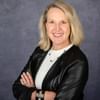
Join Inspiring Women Host Laurie McGraw as she sits down with Dr. Karen Knudsen, the groundbreaking first female CEO of the American Cancer Society. In this episode, Karen shares her journey from oncology researcher to leading one of the most influential organizations in cancer care. She sheds light on the staggering statistics that show one in two men and one in three women will face a cancer diagnosis in their lifetime, and discusses the ACS’s mission to improve the lives of cancer patients and their families.
Karen reflects on her transformative leadership at the ACS, moving the organization from a federated model to a unified strategy focused on health equity and patient support. With personal stories and insights, she emphasizes the importance of access to care and innovative programs that assist patients during treatment.
Addressing the gender gap in healthcare leadership, Karen talks about the mentors who guided her and the pivotal moments that shaped her career. As she looks to the future, she shares her vision for a “golden age of oncology,” highlighting the potential for early detection and technology to revolutionize cancer care.
Tune in for an inspiring conversation that blends personal anecdotes, professional insights, and a hopeful outlook on the future of cancer treatment.
[00:00:00] We are in this golden age of oncology where the toolbox, if you will, the therapies that we have are now just unbelievable. We're using words like cure and precision medicine is a reality. So two things I would say that we need to work on. One is to swing to earlier disease, shift to the left we call it. We don't want someone to get a diagnosis of stage four colorectal cancer. There's every reason if we get people into screening that it can be detected earlier where there is a lower colorectal cancer.
[00:00:30] We have a better cost of care and a better outcome. Everybody wins when that happens. So we've got to really work on that front end, early detection and prevention. But it's also the case that if we just took the what we have right now is our own research. If all innovation stopped today and we could just get people to the advances that we know about right now, we could reduce the cancer mortality rate by another 20 to 30%.
[00:00:59] This is inspiring women. I'm Laurie McGraw and I'm very excited today because I'm speaking with Dr. Karen Knudsen, who is the CEO of the American Cancer Society as well as its advocacy affiliate, the ACS CAN.
[00:01:14] Karen is a very well-recognized leader in the area of oncology and healthcare leadership. And she is the first female CEO of the American Cancer Society in its over 100 year history. Karen, thank you for being on Inspiring Women.
[00:01:31] Oh, absolutely. My pleasure. Thank you for having me.
[00:01:33] Yeah. Well, I am excited to talk to you. We have a lot to talk about. First of all, I think before we even get into all of your background, all of your accolades, deep research in prostate cancer, all the work that you've done from both a research perspective, advocacy perspective, as well as the many, many awards.
[00:01:54] Tell us about cancer. What are you trying to do at the American Cancer Society?
[00:01:59] Yeah. So, you know, right now, cancer in the United States is expected to hit one in two men and one in three women over their lifetime.
[00:02:08] So this, if you do the math, this is truly every family. So this is a significant problem. It's not diabetes. It's not heart disease.
[00:02:17] It's 200 different diseases with 200 different reasons that they arise and 200 different ways to treat.
[00:02:26] So the magnitude of the problem is exceptionally high. Two million Americans this year will hear you have a new cancer diagnosis.
[00:02:34] Yet, because of innovation, it is the case that we have now significant hope.
[00:02:42] So the high watermark for cancer mortality rate in the United States was 1991 for cancer death rate.
[00:02:50] Since that time, we as a cancer community have reduced overall mortality from cancer by 33%.
[00:02:58] And the pace of that decline continues to be enhanced every single year.
[00:03:03] So I am buoyed by what we've been able to do to take science along the cancer continuum from prevention and early detection to management, to survivorship, and convert that into improving lives.
[00:03:18] So at the American Cancer Society, I transformed our goal to what it is that we do every day, improve the lives of cancer patients and their families as our two key stakeholders.
[00:03:28] And to keep our eye on the prize, the vision to end cancer as we know it for everyone, which I think is achievable.
[00:03:36] Well, it's a big vision.
[00:03:37] And the American Cancer Society is the preeminent organization in this space.
[00:03:43] And I think we've all been touched by cancer.
[00:03:46] I've been touched by cancer.
[00:03:48] We've lost people in our family from cancer, personal experiences.
[00:03:54] And so, and the word is frightening.
[00:03:58] You know, when you hear the word cancer, sort of like the world stops.
[00:04:03] But before you joined the American Cancer Society, Karen, you are a researcher.
[00:04:09] You're known for your research.
[00:04:10] You've done so much in this space.
[00:04:12] Where did it all begin?
[00:04:15] When did deep science become part of the person that you are?
[00:04:19] Yeah.
[00:04:20] So, you know, I came into ACS with a very different kind of lens.
[00:04:24] I'm not only the first woman in the hundred plus years of ACS to take the helm of ACS.
[00:04:29] I'm actually the first one to come from oncology.
[00:04:33] So, which actually is what I think.
[00:04:35] What?
[00:04:36] That doesn't make sense.
[00:04:37] Wow.
[00:04:37] Yeah.
[00:04:38] So here's some mind-blowing things.
[00:04:40] And even I didn't know when I was first approached to the ACS role.
[00:04:44] So, yes, I'm an oncology researcher.
[00:04:46] I had a funded active research program right up until the time that I stepped into being
[00:04:51] the CEO of ACS.
[00:04:52] My area of expertise is in advanced prostate cancer, which I'd love to talk about if we
[00:04:56] have time.
[00:04:58] And I've been fortunate enough to convert scientific discovery into clinical practice.
[00:05:03] I also was a healthcare executive.
[00:05:06] So I oversaw one of the major cancer centers in the United States, the Sydney Kimmel Cancer
[00:05:13] Center, one of the National Cancer Institute designated centers of excellence in the United
[00:05:17] States, overseeing all of the science and all of the clinical care downstream of diagnosis.
[00:05:24] And what started off as a three hospital system in Center City, Philadelphia.
[00:05:28] And by the time I left under a truly transformative CEO that is still a great mentor to me, Steve
[00:05:35] Clasco, we were a 16 hospital wholly owned and incorporated system across two states.
[00:05:40] So I was able to expand access to innovation through clinical care and clinical trials across
[00:05:47] this system, as well as fold in community practices, align with other community practices,
[00:05:53] because I strongly believe that you've got to take that innovation and get it to people.
[00:05:58] That's the ethos of what it is that I do and what drives me to work as hard as I do.
[00:06:04] The cancer problem for me is one that I think we can gain ground on and I'm committed to both
[00:06:11] the innovation and the access.
[00:06:14] So I loved what I did and really every day started off by going to the clinics and talking to the
[00:06:23] patients.
[00:06:24] There are two patients that from Jefferson, I still talk to every single day by text.
[00:06:29] I mean, that's how I started off and it's been years, right?
[00:06:31] But this is what I, yeah, John and Lou, they, if they're watching or hearing, they know who they are.
[00:06:36] And we lovingly call each other the A team.
[00:06:39] We always have an administrator who worked with me, really talented guy, Dr.
[00:06:43] Husser.
[00:06:44] The four of us connect every single day, keeps you grounded.
[00:06:46] And nothing keeps you more grounded than seeing that every day.
[00:06:51] And that keeps you having this sense of urgency to do more.
[00:06:54] So along comes the American Cancer Society.
[00:06:57] They had been great partners for me as a scientist, but also as a healthcare executive.
[00:07:03] So they came and they said, you know, we're looking for someone to take the helm and transform
[00:07:09] the organization.
[00:07:10] And what I didn't know at the time is that ACS up until very recently was a federated model,
[00:07:17] truly 12 separate organizations with 12 separate CEOs and 12 separate strategies.
[00:07:23] And the CEO before me had put it together in one organization.
[00:07:27] So I'm a business person too, right?
[00:07:29] I'm a PhD and an MBA.
[00:07:31] So for me, like it's, I love science and I love the business of science.
[00:07:34] So the challenge for me was to take this former federated model that had been put together
[00:07:41] financially and legally and give it a strategy and have it excel and perform and grow.
[00:07:47] So that's what I've been doing since 1990 or like 2021.
[00:07:51] And I've loved it.
[00:07:52] I had no idea that what I was touching and feeling in Philadelphia was the Philly version
[00:07:58] of ACS.
[00:07:59] And that what someone was touching and feeling in Los Angeles was altogether a completely separate
[00:08:05] strategy.
[00:08:05] But it's also a hundred year old organization.
[00:08:09] And, you know, even though, you know, it's been a couple of years, that is a very short
[00:08:13] amount of time to say, to take something that has been working in its way, you know, for
[00:08:20] a hundred years perhaps, and now to really collapse it and do something, you know, directionally
[00:08:26] very different.
[00:08:27] So how are you making that happen?
[00:08:30] Well, so that's exactly how they got me interested in the role because I did so much M&A in healthcare
[00:08:36] that I really felt passionately.
[00:08:39] And also because I had so much experience firsthand with ACS, both as a recipient of ACS activities, research and patient support that helped me in our clinics, but also as a volunteer.
[00:08:53] So because I knew this organization, but didn't understand the governance and executive management structure.
[00:08:59] It was like putting catnip in front of a kitten.
[00:09:01] I could see where it could go.
[00:09:04] And I was excited about that.
[00:09:06] And in the interview process, there were two interviews with executive management that really stood out to me.
[00:09:15] One was with our CFO, who was not a traditional CFO.
[00:09:19] He's actually not an accountant.
[00:09:21] He had come from the fintech world and is just brilliant.
[00:09:25] I knew it the minute we started talking during the interview.
[00:09:28] And what we, I think, aligned on really quickly was how we build strategy, how we implement strategy and how our personal preferences lead to a whole.
[00:09:38] And I knew I had two months on my contract at Jefferson that I was going to honor, right?
[00:09:43] If I was going to leave and still, but at the same time, I could work with this person to start to understand, look under the hood of these entities that are ACS and understand what the strategy looked like.
[00:09:53] And then the second was with the president of ACS CAN, Lisa LaCasse.
[00:09:58] That's our 501c4 fancy tax code way of saying we can and do lobby.
[00:10:02] And for our advocacy arm, we have operations at the federal level and in all 50 state capitals.
[00:10:08] And those are the durable solutions to the cancer problem.
[00:10:11] So the opportunity to move beyond into the C4 strategy as well, to really be able to affect change to advocacy, really jazzed me.
[00:10:19] And I thought, okay, we can make that.
[00:10:21] Like if we can align on a strategy, we're going to make magic happen.
[00:10:24] So in those two months, I learned a lot.
[00:10:27] But we, I came in with the, we're going to change the mission and the vision to what we just talked about.
[00:10:32] And then we're going to structure this organization, form follows function, around the things that truly differentiate us, that we are uniquely poised to do.
[00:10:42] So what are they?
[00:10:43] One, innovation.
[00:10:44] What does that look like?
[00:10:45] That's research.
[00:10:46] So we're the largest funder of research outside the U.S. government.
[00:10:49] We're set up a lot like the National Institutes of Health.
[00:10:52] They have our own scientists that lay the single book of truth for the state of cancer in the country.
[00:10:57] And then we are the largest funder of research outside the country of best and brightest ideas.
[00:11:02] We must innovate.
[00:11:03] And then the other two pieces of ACS are dedicated to getting those innovations to people.
[00:11:11] My smallest team is that mighty team.
[00:11:13] It's the advocacy team.
[00:11:14] And I'm not, everybody's on both.
[00:11:16] I am the CEO of both.
[00:11:18] My CFO is on both.
[00:11:19] But it is incredible that the profound changes that we can make across the country when we do things like have federal policy change so that patient navigators are a funded component of cancer care.
[00:11:35] Things like ensuring that people don't pay a penalty for their colonoscopy if they tested positive at home for colorectomy using stool-based testing.
[00:11:43] Like these are huge federal wins.
[00:11:44] And then at the state level, it's things like biomarker reimbursement.
[00:11:49] It's how we match patients to therapy right the first time.
[00:11:53] It's precision medicine.
[00:11:54] But it wasn't being reimbursed.
[00:11:55] So, you know, going state by state, working with the legislatures to get that passed, that's how we create durable solutions.
[00:12:01] So that's my smallest but mightiest team.
[00:12:04] But I also think just, you know, if we could just like, you know, pause on this a second.
[00:12:08] One of the things that is just like so, I think for most people who aren't in the area of healthcare, you know, and sort of grown up there, like the level of pace of change of science and innovation in cancer, I think there is broad understanding that that has just accelerated in a very exciting way.
[00:12:28] And the innovations are amazing.
[00:12:31] But then there's this brick wall of where, you know, excitement meets reality in terms of the delivery of care.
[00:12:39] And just from what you're saying, it sounds like you with the American Cancer Society are able to perhaps accelerate that pretty significantly is what I'm gathering.
[00:12:51] I think so.
[00:13:21] We're going to have a policy play or whether it's a program we want to run across the country.
[00:13:24] And one has an opportunity to expand access to quality cancer diagnosis and care to a greater number of people or to people who are traditionally left behind.
[00:13:34] We're going to choose that.
[00:13:35] That's what for everyone.
[00:13:36] So for me as CEO, one of the things that I definitely learned from reporting to our CEO at Jefferson, who is just a brilliant mind.
[00:13:44] I know Steve Clasco.
[00:13:46] Yeah.
[00:13:46] He's crazy great.
[00:13:47] I mean, so.
[00:13:48] He is crazy great.
[00:13:50] And I just like what an incredible man who has just changed the world of health care.
[00:13:55] But what he instilled in us at Jefferson was that those mission and vision statements are not words on a page.
[00:14:01] It truly guided our decision making.
[00:14:03] We had 33,000 employees at Jefferson Health.
[00:14:07] And every single person knew our values.
[00:14:11] Be bold.
[00:14:12] Think differently.
[00:14:12] Do the right thing.
[00:14:13] I will never forget them.
[00:14:15] And we used them in executive team meetings.
[00:14:17] Well, is that doing the right thing?
[00:14:18] Are we being bold enough?
[00:14:20] Are we thinking differently?
[00:14:21] So these are the kinds of things that I wanted to pour in and bring to ACS.
[00:14:25] But Steve also had a very strong commitment to health equity in all of the decision making that we did at Jefferson.
[00:14:32] It was part of that do the right thing.
[00:14:35] So, you know, for ACS to be constructed toward innovate, you must do that.
[00:14:41] Get it to people through policy.
[00:14:43] And then there's the biggest team is patient support.
[00:14:48] We have operations in 5,000 communities across the country to provide direct patient support where people fall through the cracks.
[00:14:55] Things like our Hope Lodges where we house cancer patients and families during care free of charge.
[00:15:01] Some people stay 200 days.
[00:15:02] Things like transportation programs.
[00:15:04] We provide hundreds of thousands of rides across the country every year.
[00:15:09] Because if I can go to the chemotherapy center five days a week and you can only go three because you don't have a ride, which is a reality for a lot of people.
[00:15:17] Who's going to have a better outcome?
[00:15:19] So these are the things that we have to solve for.
[00:15:22] And just that part of ACS, the patient support that's prevention and screening programs, education, transportation, lodging, patient navigation.
[00:15:31] Just that part of ACS touches 55 million unique lives every year.
[00:15:35] So the scope is not small.
[00:15:39] But what I found when I came is that because it was relatively new as an entity is there was not even that internal self-awareness of what do we do?
[00:15:48] So when I come in and ask questions like, all right, how many people stay at a Hope Lodge every year?
[00:15:53] And how far do they come from?
[00:15:55] And what are they there for?
[00:15:57] And how long do they stay?
[00:15:59] And are they men or are they women?
[00:16:00] And what ages are they?
[00:16:02] An individual Hope Lodge could tell me what we've been doing.
[00:16:05] Yep.
[00:16:05] Not the strategy as a whole.
[00:16:07] And I just use that as a parable of like we had to, in the first year, we had to learn some self-awareness about our current state and where we could grow.
[00:16:15] And then set ambitious like any business goals for growth.
[00:16:20] And so we've done that.
[00:16:21] We've grown revenue by more than-
[00:16:23] And what you're doing, Karen, is like you're giving us a master class in what it means to take the helm of a very significant organization to supercharge on a vision.
[00:16:34] Your mission of ending cancer as we know it for everyone is so clear in everything that you're saying.
[00:16:42] The programs are big.
[00:16:43] And again, that like bringing together of science and innovation and bringing it into the care and delivery is no small feat.
[00:16:51] And so maybe if I could just like take us in a little bit of a different direction.
[00:16:56] It's no secret to you, it's no secret to many that, you know, in the area of science and in the area of leadership at the level that you are at, there is not as many women.
[00:17:08] And there's actually quite a few, there's a lot less women.
[00:17:11] These are male-dominated areas.
[00:17:14] So for you personally, in terms of like, you know, how you became the leader that you currently are, what were some of those breakthrough moments?
[00:17:23] What drew you into this very powerful place that you currently are?
[00:17:27] Yeah.
[00:17:28] I mean, I've made plenty of mistakes along the way.
[00:17:31] Everything you're saying is true.
[00:17:33] Women are so underrepresented in leadership in the medical and scientists community, yet they are the majority going into MD and PhD programs.
[00:17:42] It tells you you have a problem right there.
[00:17:44] And, you know, yesterday we heard Dr. Lori Glimcher step down from being the head of Dana-Farber Cancer Center.
[00:17:50] And, you know, I think at our peak, there were nine of us that were women heading major cancer centers of the 72, and it's on decline again.
[00:17:58] So it's concerning.
[00:17:59] Why do women not want to do it?
[00:18:02] Or do they not feel like they have the support to do it?
[00:18:06] I think for me, I had some things in my favor.
[00:18:10] One, I'm a military brat.
[00:18:12] I grew up in an army family.
[00:18:14] You grow up with a mindset of service.
[00:18:16] Service trumps all, and you just don't let things get in your way.
[00:18:20] And so for me, that really helped.
[00:18:24] I had a mother who, as a result of being in a military family, had to reinvent herself every two or three years.
[00:18:31] Brilliant woman.
[00:18:32] And every two or three years had to reinvent herself when my father was redeployed.
[00:18:36] So I saw what, you know, the resiliency that she had.
[00:18:42] And then ultimately, when, you know, when they parked in one place, and my mother quickly then escalated to become one of the first women executives of Williams-Sonoma, a gourmet cookware place.
[00:18:51] Like, cooking with your passion.
[00:18:52] I learned a lot from that of, you know, from my own mother, whom I still speak to, you know, every single day.
[00:18:58] She's an amazing 86-year-old woman who could set the world on fire if she needed to.
[00:19:02] Like, she could take the helm of any major organization.
[00:19:04] I feel convinced.
[00:19:06] But she, she really was a force of nature.
[00:19:10] And what I learned from her is to see a solution and be part of a solution.
[00:19:17] Like, if you see something that can be better, if you see something, say something.
[00:19:20] And then that somehow, almost against your own plan, starts to put you in a position where people ask you to lead a thing.
[00:19:29] And then if you agree to do it, then you have to make sure that you're going to do it well.
[00:19:33] And then that leads to you to get asked to lead the next thing.
[00:19:36] And so for me, I felt like I've always been the kind of person who wanted to identify solutions and say, let's go.
[00:19:43] And here's how it could go about it.
[00:19:44] And I want, if I'm going to come into your office and tell you that we can do things differently about something,
[00:19:48] then I want to help be part of that solution.
[00:19:51] I don't want to just dump it on you as the person that I report to.
[00:19:54] So that helped.
[00:19:55] But then also having people like Steve, you know, who said to me,
[00:20:01] I was the only service line leader, the only health leader who reported directly to him as the CEO at Jefferson Health.
[00:20:09] Cancer is a large operation.
[00:20:10] And he said to me, Karen, I want you to run this like the CEO of cancer.
[00:20:17] And I'm not going to, he goes, I'm going to help you.
[00:20:20] If you need something, I want you to call and help, but I'm not going to micromanage you,
[00:20:23] but I'm going to hold you accountable.
[00:20:25] And if you've got a problem, you need to come to me.
[00:20:28] And so giving me the license to lead and arguably the license to fail as well and learn from that along the way allowed me to take measured risks.
[00:20:39] And I think I bring that to ACS.
[00:20:41] Karen, I'm just wondering, most very powerful women, you know, have some of those things in their favor,
[00:20:47] like you're talking about fantastic mentors, people who push them early on or were able, you know, to look up to them.
[00:20:54] Can you remember a time where maybe earlier in your career where you took some, you know, you took something that was maybe you were a little afraid that to take that big risk?
[00:21:06] Because usually there's some initial moment where, you know, okay, I've got this, even though you're maybe over your skis or scared to take that.
[00:21:16] What was your sort of like, you know, one of those first stories for you?
[00:21:19] Yeah, you know, I think one that comes to mind for me, which actually as a former department chair at a school of medicine, I would never do this to someone.
[00:21:28] But my first faculty appointment was in the University of Cincinnati School of Medicine.
[00:21:32] And I was, you know, had put my laboratory there, it was growing, I had a lot of grants, and I had a lot of responsibility at PhDs and MDs that I was training and doing the work in my lab.
[00:21:43] And there was a faculty member who left who ran the PhD program.
[00:21:48] Well, your PhDs are the lifeblood of your program.
[00:21:51] Your PhDs are in the lab 80 hours a week doing the actual work alongside you.
[00:21:56] So this is the lifeblood of everyone's program.
[00:21:59] So the head of the PhD program left and my department chair at the time came to me and said,
[00:22:04] Karen, you know, we really want you to run the PhD program.
[00:22:08] Well, if I'd had a mentor at the time and asked them, I'm sure they would say, you have no business doing that yet.
[00:22:14] You're way too early in your career.
[00:22:15] You don't have tenure yet.
[00:22:17] You need to be focused on grants and publications and going to conferences.
[00:22:21] But I thought, service-minded, this is going to be really important to everybody.
[00:22:27] So I should do this.
[00:22:29] Yeah.
[00:22:29] It did it.
[00:22:30] I created the, and I morphed it.
[00:22:31] I took it and I changed it into being an overall kind of cell biology program to a cancer biology program.
[00:22:37] I'm the first one in the state of Ohio.
[00:22:39] Changing things from the start seems to be a little theme here.
[00:22:41] Well, that was the condition of me taking it.
[00:22:43] I was saying, you know, like, if we're going to do this, we're going to focus on our core competency.
[00:22:46] And that is cancer.
[00:22:48] And so I'm going to, I'm going to change this around.
[00:22:50] If you, if that's the license to operate, then I'm going to do it.
[00:22:53] And I did it and I won awards in Ohio and it really grew.
[00:22:56] And I still, it's funny.
[00:22:58] I, there's someone at, in my fold, who's in leadership at Jefferson that I met a long time
[00:23:03] ago at Cincinnati who came through, you know, that program.
[00:23:07] And so I feel, I feel very proud of it today.
[00:23:09] I would never as a department chair, ask an assistant professor to do this.
[00:23:14] I'm like, borderline horrified that I was at and that I did it.
[00:23:18] But, but it did allow me at an earlier stage than one would normally do have an opportunity
[00:23:25] to work with university medical school leadership and either succeed or fail.
[00:23:30] And, and I love, I love how you just like, you know, took the bull by the horns and changed
[00:23:35] things up.
[00:23:36] You know, Karen, as we close out and I could just ask you so many more questions and I would
[00:23:40] love to, but as we close out on this inspiring women conversation, just because you're doing
[00:23:47] so much work and leading the charge for us in this important area of cancer, I would
[00:23:52] just love it.
[00:23:52] If you would give us sort of like your future vision of what might be possible just from
[00:23:58] your point of view.
[00:23:59] Yeah.
[00:24:00] So we are in this golden age of oncology where the toolbox, if you will, the therapies that
[00:24:06] we have are now just unbelievable.
[00:24:09] We're using words like cure and we have precision medicine as a reality.
[00:24:13] So two, two things I would say that we need to work on.
[00:24:17] One is to swing to earlier disease, shift to the left.
[00:24:20] We call it.
[00:24:21] We don't want someone to get a diagnosis of stage four colorectal cancer.
[00:24:25] There's every reason to, to, if we get people into screening that it can be detected earlier,
[00:24:29] where there's a lower cost of care and a better outcome.
[00:24:32] Everybody wins when that happens.
[00:24:34] So we've got to really work on that front end early detection and prevention, but it's
[00:24:39] also the case that if we just took the, what we have right now is our own research.
[00:24:44] If all innovation stopped today and we could just get people to the advances that we know
[00:24:51] about right now, we could reduce the cancer mortality rate by another 20 to 30%.
[00:24:56] So when I think about my next, my next future, right beyond the walls of ACS, I really think
[00:25:05] that it will be focused on using technology to get access to innovation to people.
[00:25:13] I think that is within our grasp.
[00:25:15] And I think, you know, as we're seeing AI and Gen AI come through, that that is going to
[00:25:21] be part of our future and to get, and to same, use those technologies to get cancer care and
[00:25:26] cancer detection in the home.
[00:25:29] That is, um, that is such a hopeful vision and just the strength and understanding of
[00:25:35] what it's going to take that you already started to describe for us, um, is amazing and encouraging.
[00:25:41] And I want it to happen, um, alongside you.
[00:25:45] This has been a great inspiring women conversation.
[00:25:48] I've been speaking with Dr.
[00:25:49] Karen Knudsen and Karen, thank you so much.
[00:25:53] Absolutely.
[00:25:53] My pleasure.
[00:25:54] Come back.
[00:25:55] I'll come back anytime.
[00:25:56] All right.
[00:25:56] This has been an episode of inspiring women with Lori McGraw.
[00:26:01] Please subscribe, rate and review.
[00:26:03] We are produced at executive podcast solutions.
[00:26:06] More episodes can be found on inspiringwomen.show.
[00:26:10] I am Lori McGraw, and thank you for listening.