
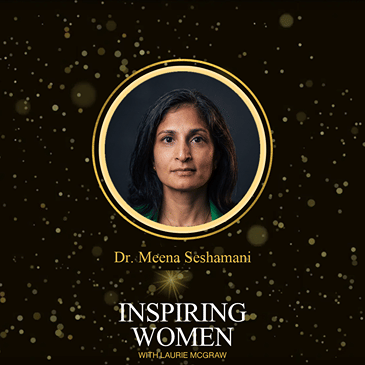

She led Medicare when it negotiated drug prices for the first time since the program began in 1965. Now she runs Maryland's $20 billion health department.
Dr. Meena Seshamani is Maryland's Secretary of Health, appointed by Governor Wes Moore in April 2025 and the first Indian American to hold the post. She is a head and neck surgeon with a doctorate in health economics, helped pass and implement the Affordable Care Act in the Obama administration, and ran Medicare in the Biden administration.
She explains:
◼️ How one econ class turned a future pediatrician into a surgeon and health economist
◼️ Why she paused her surgical residency for two years to work on the Affordable Care Act
◼️ What it took to stand up Medicare drug price negotiation, through multiple lawsuits
◼️ The advice from Secretary Sebelius she still lives by: "There are people who do half as much as you do and talk about it twice as much"
◼️ The one question that makes her a better boss: "What homework do you have for me?"
◼️ How Maryland's vaccine law works, and why people trust neighbors, faith leaders and pharmacists over websites
◼️ Why being a single parent never held her back, and what it will take to get more women into leadership
◼️ The question she stopped asking, and the one she asks instead: "What if I can?"
00:00 Trailer
00:41 Intro
01:40 From pediatrician to economist to head and neck surgeon
04:12 Leaving residency to write the Affordable Care Act
07:20 The patient who would call the president
08:08 How she decides between two doors
09:39 "Half as much, twice as much"
11:29 Be a good person to work for
13:30 "What homework do you have for me?"
15:08 Vaccines and Maryland's new law
18:24 Earning back trust
20:23 Hard calls and who she turns to
21:24 Medicare's first drug price negotiation
24:32 Blind spots in big decisions
25:05 "I would follow you into battle"
26:10 Getting more women into leadership
28:55 "What if I can?"
Inspiring Women with Laurie McGraw: conversations with women leaders in health, technology and business.
#InspiringWomen #Leadership #Medicare #HealthPolicy #WomenInLeadership
[00:00:00] [SPEAKER_01] I was leading Medicare when we stood up drug price negotiation. First time in the history of the Medicare program, which started in 1965. I remember, again, talking to Secretary Sebelius at one point. She made a comment to me that sticks with me to this day. She said, Mina, there are people who do half as much as you do and talk about it twice as much. If someone has figured out the silver bullet to solving all of our healthcare issues, I want to know what that is.
[00:00:26] [SPEAKER_01] What is it going to take to bring more women into leadership? I have been a single parent pretty much for my kids' entire lives and have done all of these jobs. I stopped asking the question, what if I can't, and started asking myself, what if I can't?
[00:00:46] [SPEAKER_00] This is Inspiring Women. I'm Laurie McGraw. And today I am honored to be speaking with Dr. Mina Sashimani. She is the Secretary of Health for the state of Maryland. She is a physician. She is a health policy expert. She is an economist. And she's also the first Indian American to hold this post as Secretary of Health. Dr. Sashimani, thank you so much for being on Inspiring Women.
[00:01:14] [SPEAKER_00] Thank you so much for having me. Well, this is going to be an incredible conversation. You are leading $20 billion of an important budget. You are serving the state that you're in. And you're also quite the advocate for health policy as well as taking care of yourselves. And those views are not always in line with what is coming out of the federal government.
[00:01:41] [SPEAKER_00] So, Dr. Sashimani, if we could just start first, can you just give us a little bit of your backstory? How did you get to this post which you took in April 2025, appointed by Governor Westmore?
[00:01:54] [SPEAKER_01] Well, to be honest, when I started off on my career path, I thought I was going to be a practicing pediatrician. So instead, I ended up, I switched majors from biology to economics because I took an econ class in undergrad and just fell in love with that academic field.
[00:02:14] [SPEAKER_01] I continued through medical school, but realized that there was a real opportunity to bridge healthcare in the way that you can really impact people's lives one-on-one with the systemic issues and environment in which that kind of care happens. And being able to bridge economics and health became very important to me. So that's why I pursued my doctorate in health economics.
[00:02:39] [SPEAKER_01] And, you know, I'm a surgeon. I'm a head and neck surgeon. And again, that's where just doing my clinical rotations, I realized that I really liked working with my hands and liked taking care of patients that way. So I think for me, ultimately ending up here has been an opportunity, finding opportunities to bridge where I have various interests and how do they align to really ultimately drive impact for the people around me in my community.
[00:03:09] [SPEAKER_01] And so, you know, having had an opportunity to leverage my economics background to help with the passage and initial implementation of the Affordable Care Act in the Obama administration, I then went back to practicing medicine and was working in the leadership at MedStar Health, one of the big health systems in the Washington, D.C. area.
[00:03:31] [SPEAKER_01] And then, you know, was able to take those learnings leading community health and palliative care and geriatrics and primary care to the Medicare program to then again take what I've seen on the ground and learned on the ground to really impact national policy. And now being able to bring that to what is my home state. I've lived in Maryland longer than any other state in the country.
[00:03:57] [SPEAKER_01] I'm raising my two kids here. And it's really amazing to be able to bring all the varied experiences that I've been able to have to really protect and advance the health and well-being of all Marylanders, especially in challenging times like what we're in.
[00:04:14] [SPEAKER_00] So, Dr. Sashamani, any one of those things is an incredibly impactful thing. Let's sort of like pick that apart just a little bit. So, so back when you wanted to be a pediatrician, so like wherever that dream was to being a head and neck surgeon, which is one of the more complicated surgeries that is out there and enormous amount of training and residency and all that you need to do to be that.
[00:04:43] [SPEAKER_00] To then being part of the Obama administration and helping to be one of the creators of the Affordable Care Act. And what does that look like? Massive legislative change that was out there. Can you pick any one point in time where you were doing one of those things and then made a pivot to do something also significant, but other than the path you were on?
[00:05:07] [SPEAKER_01] Well, I actually think there wasn't necessarily a specific path that I was on. I mean, I was, you know, I, I did my doctorate in health economics. I had to make a choice at that point. Do I go back and finish medical school? What do I want to do? Because academically, I really intellectually, I really enjoyed the economics. But I think I realized that I missed people and just being able to take care of patients. And so I went back and finished my training.
[00:05:37] [SPEAKER_01] And then when I was in residency, I had done research on how the U.S. health care system is financed. And that's what led to people asking me if I would be interested in going into the administration. And to be honest, I didn't think I could because I was in the middle of my residency training. And really, it was my mentors. It was, you know, Lloyd Minor, who was the chair of my department, who said, wait a second, this is an incredible opportunity.
[00:06:06] [SPEAKER_01] And we need surgeons to be part of the conversations around broader health policy. And so, you know, again, I think that was a pivot. I didn't start residency expecting that I was going to take a two-year leave of absence to work on the Affordable Care Act. And then similarly, as my time was drying to a close for those two years, I actually was asked about working in the White House.
[00:06:32] [SPEAKER_01] And I talked with Secretary Sebelius, who to this day, again, is a close mentor of mine. And she said, I know how much joy you get out of taking care of patients because when you are sharing stories as we are grappling with various policy things, she's like, this is your chance to do that training, to have that experience. And that led me to kind of finish my training and then practice.
[00:06:56] [SPEAKER_01] And so really, it has been, you know, from that point, where are there those opportunities to be able to have the greatest impact that I can, to be a total econ dork about it? Where is my comparative advantage, right? I mean, where can I put my shoulder to the wheel to really drive improvements in our health care system? And that can be helping someone at the bedside.
[00:07:21] [SPEAKER_01] I literally, when I was going to go back into the Biden administration and run Medicare, I had an elderly woman give me a hug and tell me that she was going to call the president and tell him that he couldn't have me so that I could still be her doctor, right? Like, I mean, I think that is valuable, both for, you know, just that personal experience that you have, caring for someone.
[00:07:45] [SPEAKER_01] And then what that gives you when you are then thinking at a more macro level about how to improve the way the entire system works. So, you know, I feel like there have been multiple pivots in my journey, but the continuous through line is how do I try to make things better? You know, plain and simple.
[00:08:06] [SPEAKER_00] At a very, very significant level. So when you are just like keeping the focus on you for a moment, when you are sort of, you know, provided with options, door one, door two, or pursuing door one, door two, sounds like there's probably door three or door four out there. How do you go about that decision making?
[00:08:27] [SPEAKER_00] Are these things that come to you and you're, because they're, they're positions that are sometimes time bound, you know, with administrative changes, being asked by the governor to serve in the capacity you're currently in. Are these presented to you and then you go through your economic, you know, sort of evaluation? How do you go about that? And then also, when do you decide to pursue something versus just having to decide about something that's being presented to you?
[00:08:58] [SPEAKER_01] Well, I think first, I have felt very fortunate to be able to have various journeys along my overall journey. And also, I think there's a saying, the harder I work, the luckier I get. I mean, I do think it's a combination, right? It's about putting myself out there, trying to do the best work that I can, and seeing then with open eyes where there might be opportunities to put my shoulder to the wheel.
[00:09:28] [SPEAKER_01] So I don't think that, like, stuff just kind of came to me, right? And I actually think that is something that I think in particular for women can be challenging, right? I mean, I remember, again, talking to Secretary Sebelius at one point. This was after, you know, the Obama administration and everything, and I was kind of thinking about what do I want to do next? Where do I want to, you know, put my shoulder to the wheel?
[00:09:56] [SPEAKER_01] And she made a comment to me that sticks with me to this day. She said, Mina, there are people who do half as much as you do and talk about it twice as much. And I think there is something to that, right? It is about what we do in our work, and it's about how we put ourselves in those places to do the best work that you can do. Like, literally putting your body out there.
[00:10:24] [SPEAKER_01] Like, I mean, one of the things that I love about my job now is that I get to go out to all the parts of my state and visit with people and hear from them and really engage in oftentimes tough conversations about changes that are happening with Medicaid coverage, about the challenges of access to care in rural areas. And that's not me sitting at my desk waiting for things to come to me.
[00:10:51] [SPEAKER_01] That's me going out there and being like, I want to learn, I want to hear, and I want to figure out where I can put myself and put my talents and my hard work to the best use. So I do think it's a combination.
[00:11:05] [SPEAKER_00] Well, for the hundreds of women that I've spoken with on Inspiring Women over the years, leaders like yourself, what I hear very consistently, the larger the position, the larger the impact, you have always worked hard. You're only working harder. And I love this expression, shoulder to the wheel. Sounds like an everyday kind of mantra. I want to talk a little bit about leadership in terms of just like along these different things.
[00:11:35] [SPEAKER_00] So writing the rules of the Affordable Care Act, then MedStar, then Medicare, now an entire state's health department, $20 billion. So what have been the leadership things that have been consistent for you? And what is newly needed from you that you're either bringing to the table or knowing you need to learn more about or that you're finding as the Secretary of Health at the state of Maryland?
[00:12:04] [SPEAKER_01] So what's interesting, building off of the last question you asked about, like, where do opportunities come? Like, I think for me, part of it has been just being a good person to work with, right? Like when I was at earlier stages of my career, being someone who was willing to roll up her sleeves and figure out how to get stuff done.
[00:12:27] [SPEAKER_01] And I think when you take that to the leadership side, it's about being a good person to work for, right? I mean, I think in health care in particular, we are so fortunate to have an area that we work in that is about helping people, right? And like everyone who goes into health care ultimately has that mission that they want to improve people's lives. And how do we tap into that?
[00:12:54] [SPEAKER_01] As we are leading teams through very challenging, very complex situations, how do we always come back to that core part of who we are that led us to go into the work that we do? And so it's that core part for me that led me to be someone who was recognized as someone who could be put, you know, to take on these roles.
[00:13:17] [SPEAKER_01] But I think now is also a place where I can recruit a really strong team, where I can really engage everyone in a collaborative way, in brainstorming about where do we go from here. And also to what we talked about with the last question, really engaging the community. Because I don't know about you, if someone has figured out the silver bullet to solving all of our health care issues, I want to know what that is. Until that time, like we are all in this together.
[00:13:46] [SPEAKER_01] And so it's all about continuous learning. It's about having that humility that, you know, of all things, right, the more you know, the more you realize you don't know. And having that humility, to your point, as you go into bigger jobs, realizing that ultimately you are one person. And where I feel that in a leadership role that I can have the biggest impact is honestly by supporting everybody around me. Because I could try to do all the work myself, one person.
[00:14:16] [SPEAKER_01] Or I could empower my team to think creatively about finding solutions, to tell them, I have your back. You tell me, I tell my team. I'm like, what homework do you have for me? What do you want me to do to help you to accomplish what you want to accomplish? And I think the same goes not just for my team within the department, but for the broader team of everybody in the state of Maryland.
[00:14:40] [SPEAKER_01] You know, yesterday we had a roundtable with community leaders on the upcoming federal changes to Medicaid. You know, this is an all hands on deck where we are all having to work together. And just how important it is that we can have those dialogues of what are our community partners seeing on the ground? What can we at the state do to support them? And then what is homework that we can give each other, right, as we move forward?
[00:15:09] [SPEAKER_00] So as a leader for 9,000 people across the department in terms of what you're leading, challenges are different. The challenges, I mean, you have held very big positions. Nothing new is about that. You're holding a very significant position now, but you also, as a physician, you have a point of view steeped in science. And I'm saying this from many of your public appearances that is not necessarily in line with what you're seeing coming from,
[00:15:38] [SPEAKER_00] what we are all seeing coming from federal policy, from CMS, from the national HHS. So let's start with something like a simple, I would think it's simple. It is not. Vaccines. Vaccines in terms of vaccines policy, guidance. And we know that it states and not necessarily the CDC who is providing this consistent level of guidance that I grew up with.
[00:16:07] [SPEAKER_00] So how are you dealing in today's environment where things have shifted quite significantly?
[00:16:15] [SPEAKER_01] Yeah, I think a lot of it comes back, Laurie, to those connections on the ground, right? I mean, there clearly is mistrust questions about what is recommended, what isn't. And I think we at the department have really tried to emphasize we are here to provide you with information that you can use and to remove barriers to you getting the care that you need.
[00:16:44] [SPEAKER_01] We are clear at the department that vaccines continue to be a very important tool in preventing diseases. And it's not just us getting out there on a soapbox and telling that to everyone.
[00:17:00] [SPEAKER_01] It's actions that we take, like, for example, Maryland is unique in the country that we passed a law where the Department of Health makes recommendations for vaccines that are based on the guidance from the American Academy of Family Physicians, American Academy of Pediatrics, Obstetrics and Gynecology. Importantly, those recommendations, those recommended vaccines, state regulated health insurance plans have to cover them at no cost.
[00:17:30] [SPEAKER_01] So what we're doing there is, number one, we're providing some recommendations that someone can take to talk to their clinician about and figure out what's best for them. But then we're also removing the financial barriers that can otherwise result if someone decides they want a vaccine but now can't afford it. And so what we're trying to do is make sure that we are maintaining access for people and providing information and really engaging in a dialogue.
[00:17:57] [SPEAKER_01] It comes back to our community partners where I have traveled to all parts of the state and talked with them about, OK, what are you hearing on the ground? What is it that people need to be able to navigate what's going on right now? And that is what drives then and informs the work that we're doing at the state level to, again, provide clear information that people can use and also removing the financial barriers.
[00:18:25] [SPEAKER_00] Which is critically important. But in today's environment, that alone is not enough because there is so much misinformation. So just sticking with vaccines because it's a hot topic. You know, I know I have to go get like my shots, you know, and it's like, OK, it's harder to do that now. It's harder to do things that I know I need to do right now. So in removing the barriers but also dealing in an environment where sort of like the confidence in science,
[00:18:53] [SPEAKER_00] there has been mistrust that is newly at levels that are out there. How are you what new things are you needing to do? What new leadership things are you needing to lean into to deal with that environment?
[00:19:08] [SPEAKER_01] I think that's a great question. It comes back to it cannot just be us putting out something on a website and saying, OK, there is the information. There is a ton of partnership that we are doing on the ground because at the end of the day, people want to talk with their neighbors. They want to talk with their faith leaders. They want to talk with, you know, their community organizations to get information. They want to talk with their doctor, their nurse, their pharmacist.
[00:19:37] [SPEAKER_01] And so it's been very important to us that we are partnering locally with our local health departments, with our pharmacists, with our faith leaders, so that people have somewhere local that they can go where they do have that tangible community feel and trust. That really has been key to our efforts as well to make sure that we are reaching people and having things feel accessible
[00:20:06] [SPEAKER_01] and not just like you're being lectured at because nobody wants to be lectured at. And nobody just wants to hear me talk. My teenage children don't want to hear me talk. So it really is about, like, how do we how do we get out there in the community and address what people's pain points are in health care?
[00:20:24] [SPEAKER_00] So leadership is defined, Dr. Sashimani, as you well know, by like having to make the hard calls. And so you started talking about, you know, the issues that you're facing with all hands on deck with Medicaid, Medicaid cuts, Medicaid, and still needing to provide care for the many people, the hundreds of thousands of people, if not millions in the state that need to be protected by Medicaid.
[00:20:49] [SPEAKER_00] So maybe not on that particular issue, but what is a hard call that you're needing to make today? And who do you turn to, you know, beyond your team when you're struggling with making or not struggling, but whether you're trying to figure out what the best option is for a difficult decision that you need to make?
[00:21:12] [SPEAKER_01] Well, do you want an example from Maryland or you want an example from where I was in Medicare? Well, we have spoken quite a bit about Maryland. So maybe I can give an example from Medicare to give something a little bit different. So as you may know, I was leading Medicare when we stood up drug price negotiation, right? First time in the history of the Medicare program, which started in 1965. Very high profile.
[00:21:39] [SPEAKER_01] Well, it was also, you know, controversial, right? We had multiple lawsuits, et cetera. And here I am trying to stand up this program. How am I going to do it? I think number one was getting a really good team in place, right? Like we brought in people who had worked on drug pricing in pharmaceutical manufacturers, brought in people from health plans, right?
[00:22:08] [SPEAKER_01] Like building that team. But I think to your point, it is not just about the team that you have. It's about where you are reaching out. And I think that's where like the drug price negotiation is a good example where it's not like I had, okay, you know, recipe. Do this, then do this, then do that. It was like, okay, there were guidelines from the law that we were following, but there was also a lot of, okay, how do we actually implement this?
[00:22:36] [SPEAKER_01] And that's where I turned to the very stakeholders who were going to be impacted by it, right? To the pharmaceutical manufacturers, biotech, patient groups, clinicians, health plans. And I said, okay, tell me what you think I should know. What are you thinking about with implementing this? Because then you get all of those perspectives together.
[00:23:01] [SPEAKER_01] And that enables you, I think, to see where the common goals are right at the end of the day. And finally, from all those conversations, it became very clear to me that everybody, no matter what seat they were sitting in, wants people to have access to innovative cures and therapies at a price they can afford. Okay, so now we have a common goal. So now how do we go about achieving that? And being able to gather that information, not only from my own team of experts,
[00:23:31] [SPEAKER_01] but also from the entire ecosystem, then enables you to have the information that you need to be able to make a decision like what is going to be our initial offer price, you know, to a pharmaceutical company. And again, I think the other piece of that is having that humility, right? I didn't know coming out of the gate, this is exactly what I'm going to do. This is the framework I'm going to set up.
[00:23:59] [SPEAKER_01] This is the price I'm going to offer. This is where we're going to land. It was very much a work in progress that involved multiple rounds of meetings. It involved putting out draft, you know, program instructions, draft guidance, getting comments on that. And I really think it is that iterative process that enables you to have the best decision that you can make. And again, with the humility of, and we will continuously learn.
[00:24:29] [SPEAKER_01] And if there are adjustments that need to be made, then we will, then we will make it.
[00:24:33] [SPEAKER_00] I can almost see like the health economist in you with like your spreadsheet of decision making of like, whose opinion did I not consider in the, you know, the cumulative nature that needs to go into a decision as significant as that?
[00:24:50] [SPEAKER_01] I mean, I think it is really important, right? Because I will also say, when do things go awry? It's when you have a blind spot, right? And you don't know what you don't know. And I think that is the thing that is so important with any, with any large decision. And I will say one of the, one of the, the biggest compliments I got from my time, two, two biggest compliments I got from my time leading the Medicare program.
[00:25:16] [SPEAKER_01] One was a very powerful stakeholder through all the drug price negotiation actually told me as I was getting ready to transition out. I just want you to know how professional you and your team were. And we certainly didn't agree with all the decisions that you made, but we understood why you made those decisions. And then the, the other one that I will always take back with me was someone who worked on
[00:25:44] [SPEAKER_01] the Medicare team who sent me an email said, hi, you probably don't know who I am. And I don't normally email like the leadership out of the blue, but I just felt I should to tell you that I would follow you into battle every day. And like right there, I was like, okay, I must be doing something right.
[00:26:05] [SPEAKER_00] That's, I'm sure that's one that you've saved because like those, those are really meaningful. Dr. Sashamani, I, um, I want to close out our conversation on inspiring women. Um, we, in healthcare, it is really, it is women who are making the majority of the healthcare decisions for their families, for their others, um, in their lives. Um, we know that women are the majority of the workers in healthcare from, um, across
[00:26:33] [SPEAKER_00] the many positions that are out there, but yet there are still much, many fewer women at the levels that you are currently in, um, of leadership. What is it going to take to bring more women into leadership? It is certainly my view that when women lead, we have a more just and equitable society. I stand by that. It is, um, well studied, but what's it going to take to bring more women into leadership from your perspective?
[00:27:01] [SPEAKER_01] Well, I think it is providing that example that it can be done. Right. And that the things that traditionally maybe have held women back don't need to be like, I'll give the example of parenting, right? I have been a single parent pretty much for my kids entire lives and have done all of these jobs. And I share that. Like, I know that we all have things that we have to juggle.
[00:27:27] [SPEAKER_01] And I very firmly believe that parenting has enabled me to be better at my job. Um, you know, just all the things that I've learned about human nature. And, you know, but I think it's important that we, that we are open to that, um, open to those conversations. And we really embrace the strength that comes from people being able to show up to work with their entire self, especially in healthcare.
[00:27:53] [SPEAKER_01] Um, I think the other thing is I'll come back to what Secretary Sebelius told me. I think it's important to do good work and to put yourself out there, to take that risk, to, to raise your hand, to take that tough assignment and to also raise your hand, to ask for help and support that you don't have to do it alone. And in fact, the strength really is in that collaboration.
[00:28:22] [SPEAKER_01] Um, and I think that's another key area that people can sometimes doubt themselves, right? You hear about imposter syndrome, et cetera. None of us are operating alone. And I think there are huge opportunities to leverage mentors, to get advice and to engage others in solving complex problems that that is also a source of strength, not a sign of weakness.
[00:28:47] [SPEAKER_01] So I think we can really flip the narrative on what potentially has held women back, um, in the past.
[00:28:55] [SPEAKER_00] So last question, um, on inspiring women here and just like one thing that you did that helped you propel into all of these unbelievable places where you are and have had impact. If there was one thing that you would like other women to just repeat something that you did, um, that they can just like take as a little nugget, um, to help themselves.
[00:29:20] [SPEAKER_01] So I think I would say I stopped asking the question, what if I can't, and started asking myself, what if I can, right? I think it's so common when we think about like, okay, what opportunity there might be to say, well, what if I can't do it? And I was like, wait, but what if I can do it? And that has been really, as someone who always was asking, what if I can't, what if I can't, like it was really powerful for me to finally, no, wait a second. But what if I can?
[00:29:48] [SPEAKER_01] And look, I may, I'm able to do things. Right. And I think that was something that was really a pivotal, um, moment for me, uh, several years ago.
[00:30:00] [SPEAKER_00] I love that. What if I can, what a great mantra. This has been an incredible, inspiring women conversation. I've been speaking with Dr. Mina Sashimani and Dr. Sashimani. Thank you so very much.
[00:30:13] [SPEAKER_01] Thank you for this great conversation.