
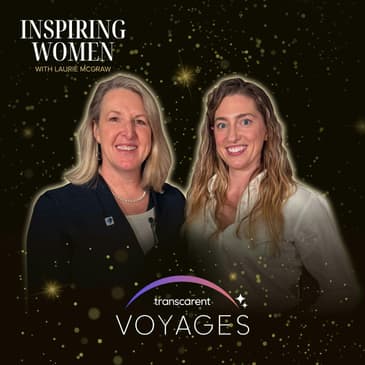

When Colleen Bowman didn't get into her dietetics internship—twice—she thought her career was over before it began. Instead, that rejection became the catalyst that launched her into becoming a transformative HR leader at one of the most unique companies in America.
"I had a little too much fun in college," Colleen admits with a laugh. But that social experience—building networks, connecting with people—turned out to be the foundation of everything that followed. Today, as VP of Human Resources at IAC, she oversees benefits for a portfolio of brands you know and use every day: Angie's List, People Magazine, Food & Wine, and dozens more.
This conversation with host Laurie McGraw isn't just about climbing the corporate ladder—it's about how the detours define us. For Colleen, those detours included a boss who told her she wasn't ready for a promotion (spoiler: she was), mentors who took chances on her, and the realization that sometimes you have to stop waiting for opportunities and start creating them.
What makes Colleen's leadership philosophy unique? "Empathetic with expectations." She leads with understanding but refuses to treat her team "too preciously." She believes in them too much for that. She sets high standards because she knows they can meet them.
Now, as healthcare costs explode and benefits become the single largest line item on corporate balance sheets, Colleen is tackling one of business's biggest challenges: How do you get employees to care about their health before it's a crisis? How do you communicate complex benefits to diverse populations—from magazine editors to home repair professionals? And how do you treat a benefits program like the multi-million dollar business it actually is?
In this episode of Inspiring Women with Laurie McGraw, Colleen also speaks about:
- Why saying "yes" to everything early in your career is essential—and when you need to start saying "no"
- How to build trust and partnerships that actually move the needle in organizations
- What happens when benefits become too big for leadership to ignore
- Why HR's "seat at the table" debate misses the real point
- How to navigate the coming healthcare crisis with transparency and trust
- What "fake it till you make it" really means for women leaders
Chapter Markers
03:37 From Nutrition Dreams to Benefits Reality
08:17 When Your Boss Says You're Not Ready
10:51 Building Relationships as a Leadership Superpower
14:49 Raising Your Hand vs. Reaching for Opportunities
16:24 Empathetic with Expectations: A New Leadership Model
19:38 The Business of Benefits in Divisive Times
Guest & Host Links
Connect with Inspiring Women
Browse Episodes | LinkedIn | Instagram | Apple | Spotify
[00:00:00] I still Google things. If I don't know the answer to something in a meeting, I'm Googling it, right? Like, you can't know everything. So, a fake it till you make it is kind of a cliched term. But if you're nervous about something or scared about something just because it's new, you know, just put on a face. Like, if you act like you know what you're talking about and what you're doing, then people will believe you.
[00:00:24] This is Inspiring Women, and I'm Laurie McGraw. And today we are at the inaugural Transparent Voyages Conference. And I am speaking with Colleen Bowman, and she is the Vice President of Human Resources at IAC. Colleen, thank you for being on Inspiring Women. Thank you for having me, Laurie. So, this is, you said that this is sort of like, this is the inaugural conference that we're doing here called Voyages. And this for you is a little bit of an inauguration because like it's your first podcast. It is, yes. Bear with me.
[00:00:54] This is going to be great. So, why don't we start, Colleen, just tell us a little bit about you. Tell us what you do at IAC. Sure. So, I sort of have a jack of all trades, I guess one might put it, IAC, we're an interesting kind of company. We are sort of a, almost a tech holding company, I would say. So, we own a lot of different brands, but then we have one sort of internal corporate department or team, I suppose, which is the IAC corporate company.
[00:01:24] And so, my role is to work sort of in partner with all of our different brands to make sure that they are getting the HR and benefit and, you know, TA support that they need basically to run their own organizations. So, a large part of my job right now is benefits. The interesting part of, you know, sort of the corporate world is that there aren't many pieces that are shared.
[00:01:49] All of our different organizations have their own accounting teams or they have their own, you know, CFO, their own CEO, et cetera. And one of the only shared items across all the companies is the benefits. So, healthcare, 401k, sort of all of those ancillary benefits. So, you're sort of like bringing it all together in an organization that is otherwise not sort of like, you know, working in more siloed departments?
[00:02:12] Correct. Yes. And so, every, you know, company has their own needs. They have a very different type of population from, you know, Angie, from Angie's List is one group. So, we have, you know, the folks that are out there actually doing sales that are doing some of this work, the handy work. And then we have, you know, a dot-meredith, which is a publication company. And so, they own People Magazine and Food & Wine and all of that. Oh, wow. And so, all of the, you know, populations are incredibly different. Brands we all know.
[00:02:41] Yes. That's the funny thing about IAC is that many people don't know IAC, but they know all of the brands that we've owned or that, you know, that we currently own. Yes. And Colleen, how long have you been there? Only about seven months now. Oh, okay. So, this is fairly new because your background, I mean, you've come from big brands before Revlon and others. So, give us a little bit of the trajectory from the, you know, being in human resources.
[00:03:06] I want to do a little bit go back, but tell me about the, like, the human resources, like why now IAC? Yeah, of course. I started off my career sort of more in the nutrition and corporate wellness space, kind of, you know, 15 years ago when corporate wellness was sort of what everybody thought was going to be the big new thing. And all the insurance carriers were hiring, you know, health improvement people. Isn't that funny? It's like the big new, it's always been an important thing. Of course. Can we just like stop for a second? Yes. But it's, you know, it was sort of this big fad that had come out and I was interested in it.
[00:03:35] And so, I ended up working at Cigna for only about a year and realized that I loved the benefit side. And so, I moved on from Cigna to Saks Fifth Avenue and ran some of their wellness programming and then sort of broadened my scope while I was there into some of the other benefits and perks and rewards and all of that.
[00:03:56] And then from there, I moved into Tiffany & Co., which was probably my sort of first, it felt like my first real benefits experience, I guess, where I was managing a team and, you know, leading others and sort of being the SME on site, etc., which was great. But I realized sort of that I was more interested or not more interested, but I was also interested in the other parts of HR. Yeah.
[00:04:25] And so, I was looking for an opportunity that would kind of expose me to those. And so, when I moved to Revlon, I actually had this incredible boss who kind of took a chance on me. I wasn't necessarily probably the most qualified person, but him and I really connected and had a lot of the same sort of views and values about what to do, you know, within the total reward space while we were there. And so, he, you know, took a chance and hired me and it worked out. I bet it was not that big of a chance. So, Colleen, I want to like sort of go back a little bit because you started off in nutrition.
[00:04:55] And we're at this conference and it's a conference of leaders. Yeah. And so, back before you were on the leadership journey and where you are today, you started out. Aren't you a nutritionist by training? Like, wasn't that the early days? I'm not a dietitian, but I am, I suppose, could still call myself a nutritionist. Yeah. Yeah. So, I went to my undergrad at BU. It was one of their sort of first couple of years of dietetics, their newer program back then.
[00:05:24] And then I spent a couple of years working for Head Start, which is, you know, a federal nonprofit that provides preschool and family resources. Yeah, great early stage education for people who need it or young children that need it the most. And so, I managed for the nutrition programs around the city of Boston and helped support that, which was a really great opportunity.
[00:05:47] And, you know, I guess to be candid, I was also applying for dietetics internship for two years in a row and I actually didn't get in. Oh. Yes. Wow. Yes. It's very competitive. And also, I just, you know, I... There are a lot of companies who are thanking their lucky stars that didn't happen. As am I. I was doing it because I thought that that should be my next step. I was like, I finished undergrad. This isn't the normal next step. And I just didn't get in.
[00:06:16] My grades weren't, you know, 100% of everybody else's, I guess. You didn't go through Head Start. Yeah. Exactly right. Exactly right. I had a little too much fun in college, but it was, you know... And that's probably actually the truth is that I... Obviously, I did fine, but I had such a great social experience and such a... It really helped me build sort of my networking and my... Just how I approached people that I think that was probably my biggest learning out of, you know, college, honestly. Yeah.
[00:06:43] And that has certainly served me well throughout this. But yeah, I didn't get in. So I was like, okay, I guess what's my next step? So I applied to grad school in New York. I'd always wanted to live there. And I went there and did nutrition and public health. Yeah. Because I realized that as I was going through it and maybe the hospital was not like the setting for me. And I was very interested in sort of the analytics and the data of how the work that the nutritionists
[00:07:09] and all the other healthcare providers do sort of impacts a larger population. Yeah. And so from there, you know, I realized that I could translate that into even working for employer groups or insurance carriers, you know, and looking at that and getting access to that data and sort of helping evolve that conversation as well. And now in the, you know, as a leader of HR with that, I would just say non-traditional path in terms of how you found yourself into the space of HR and now benefits and now a leader of IAC.
[00:07:36] How does that perspective and background for you, what are the sort of issues that you're facing or thinking about, whether it's at IAC or just like HR issues in general, because it's a complex world, only becoming more complex. We spent this morning talking about, you know, the forces of AI, responsible AI. We've talked about fiduciary responsibility. So in a very litigious culture that we find ourselves in, in the United States, we talked
[00:08:06] about trust and things like that. What are the issues that you think about as a leader? Well, I think, and this has been a conversation for years, I think, especially since sort of the pandemic heightened things, but sort of what role or what value is placed on HR in general within an organization? And sort of, you know, do you have the quote unquote seat at the table or not? Yeah. And so I think that is still sort of a battle that we are probably all fighting. Um, but I do think from the-
[00:08:35] Meaning HR has a seat at the table. Yes. Interesting. Yes. Um, and just, you know, there's a lot of sort of, you know, conversation out there about who should a CHRO or CPO report into sort of who is sort of the best C-suite sponsor to actually help HR provide value, et cetera. Well, what's the answer? Tell us. It's a, it's a tough question. Um, you know, it is, it's very interesting.
[00:09:05] And I've one of sort of the challenges, particularly on the benefit side that I have been experiencing lately. Um, and I think it's an opportunity as well, but is that as sort of these costs increase and your benefit plans become such a massive line item on your balance sheet, um, you know, at, at IAC, we're talking hundreds of millions of dollars, right. And, you know, there are companies much larger than that. And so it is becoming to the, or we're getting to the point where finance teams, I think, you know, our, our chief accounting officer, our CFOs are being like, wait a minute, we
[00:09:35] should be a little bit more strategic about this and we need to support our benefit teams. I think that, that, um, uh, comment is backed up by the trends and the stats that we're seeing. So in terms of, um, you know, the, um, role of HR, many people think about it as, you know, the culture, you know, or culture police or, you know, um, issues that are certainly important
[00:09:58] hiring and, and, and management in that, um, capacity, but the level of cost or cost containment, the opportunity to provide health and care to people, you know, your team members and keeping them engaged that issue. We've seen costs exploding, um, and is the single largest, most likely out of control item on anyone's balance sheet of a large, um, employer. And then the other aspect of what you're talking about is just the risk.
[00:10:28] So, um, you know, it's one thing to, um, be in the area of HR. It's another thing to have your general counsel or your CEO or your CFO who you're suddenly, you know, responsible for the single largest areas of, um, the organization. How equipped do you feel to be able to navigate these complex issues in a changing landscape? Well, I think that, you know, almost bridging back to my social time at BU sort of,
[00:10:58] the most important part I think of being a leader for me right now is building those relationships and those partnerships. You know, you have to be aware that you can't know everything. This is just like amazing. Isn't it funny how just like things that you would think, like you would started with, started with like, Oh, maybe I had too much fun. And now here it is like that. That is an absolute, you know, power zone for you. Completely. Yeah. And it's just, you have to recognize that, you know, I don't know everything.
[00:11:24] I can't do everything, but I can be selective and choosy about the partners that I work with and that I hire. And also that, you know, if I build relationships internally as well, that those people can help support the cases that I'm trying to make, you know, you need to build the trust and give them something, you know, and then they'll give you something back in return. And so, you know, I do feel equipped sort of to handle those conversations and those scenarios because I trust the people that are behind me and that are, you know, supporting me as well, you know?
[00:11:54] So I think a lot of, a lot of sort of being equipped is having, you know, the leadership skills as much as having sort of maybe that knowledge or those facts behind you. In terms of being a leader in that leadership journey, at what point during this trajectory from, you know, starting in nutrition and wellness and then having an interest in the area of benefits and HR at a different scale, at what point did leadership become something that you identified with? It's like, hey, I am the leader here. Was that something?
[00:12:24] Was it a particular point or was it just a natural evolution? I actually can think back to probably sort of a couple of, you know, leaders or previous leaders of mine that have impacted sort of how I turned out maybe. You know, one was many years ago when I was first getting into the benefits world. I was managing sort of just the wellness programs at this company and had expressed interest in learning more about the administration and sort of the policies and the compliance and all of that.
[00:12:52] And all of a sudden, sort of that role opened up at the company. And my boss approached me even after we'd had these conversations. And my manager said, you know what? I just don't think that you're ready for that job. So that's why I'm not going to interview you. You agree with that, right? But I was almost in a moment of surprise that I didn't voice that, right? And I'd always thought of myself as someone who, you know, you fake it till you make it. Like you have to assume you can do something, you know, you'll figure it out.
[00:13:23] You just have to say yes to things. But I realized that I was going to have to be more proactive about doing that. And so sort of that conversation made me realize that, A, that's not the leader that I want to become. I want to become somebody that boosts up your team rather than just makes sort of negative assumptions and brings them down. And I also realized that I, like I said, I need to start being more proactive about what I need. And that will help me learn how to do the same for people, you know, that work for me eventually. Yes.
[00:13:49] And then I did have a sort of, like I said, at Revlon, I had a great connection with my manager there and considered him a mentor. He gave me, you know, a lot of opportunities and chances to get involved in things. And even my most recent manager at IAC, actually, I worked with her at our previous company related and just found her to be such an incredible support system. You know, I felt that I could go to her for something. I could ask for something.
[00:14:18] There were sort of no boundaries in terms of, you know, if I had an idea or an opinion or a suggestion, she was always open to listening to it. And so I think that I've taken a lot of that sort of in as well. Um, but yeah, when I, when I started off, I always thought, you know, maybe benefits will just be my thing. And then I grew to, you know, total rewards and comp and all of that. And then came communications and TA and all of these other pieces, just everybody, you
[00:14:44] know, when, when times are difficult or somebody leaves, an opportunity does arise. I'll take that. And you just have to say yes, you know, you have to, exactly. You have to raise your hand. And I think in the beginning I did sort of rely on the opportunities coming to me, um, which was great. And I was so fortunate for that, but eventually you have to kind of get to that next step. You have to be the one reaching for them. Right. I think that's such an interesting point because, you know, many that it's very true in the
[00:15:10] early stages of your career, the opportunities come to you for advancement. You raise your hand, you're a person that can be counted on and, um, go to, but then as you progress in your leadership journey, then you actually like the, it, it doesn't just come to you. You actually have to push for it. Yes. You have to, you know, raise your hand louder in a more proactive way. I think that's a really excellent point. You also talked about Colleen, the, um, you know, people who have inspired you to be a better leader.
[00:15:39] Um, but you are now a senior leader. So how are you inspiring others? Um, you know, I, I think that sort of the way that I explain my leadership style is I guess empathetic with expectations might be a way to put it. Oh, I like that. Um, I, I generally lead with empathy. I want to understand the position that somebody is in, but I also, you know, you can't treat your employees too preciously. You have to like enable them to believe they can do something and set those expectations.
[00:16:08] And then also, you know, sort of be, I guess it can be difficult to have difficult conversations, but you have to, you know, practice and get better at sort of maintaining those expectations and making sure that people realize that, you know, they have so much potential and they can do all of this. Um, but you know, there are also, there are kind of, I guess, guidelines or, or rules, or, you know, like expectations is a great word for that.
[00:16:36] You know, you, you want, it's an expectation for a team member because I know that they can do it, you know? So it's not like I'm setting anything unrealistic. I, you know, again, lead with sort of the empathy piece. Um, but you know, you want, you want to be able to, like you said, inspire and acknowledge to people working for you that you believe that they can do this. Yeah. And that's why you're asking them to do it. Right. Yeah. So Colleen, I wanted to actually sort of close out some of this conversation with, um, we're heading into, you know, challenging waters.
[00:17:04] We, you know, again, we've got trust issues and we know that actually trust is increasing, um, with employers if you lead with transparency and everything else. And that comes from, you know, what you are doing specifically. We also know that we're heading into divisive times and the, what's happening with workforces in general. And you have multiple different ones that you're dealing with. So as you look ahead, maybe the next one year or two years, is there any predictable things
[00:17:32] that you are like, I am really going to solve for this one, or I'm really going to begin to, um, you know, manage an area differently than you previously have? What are your thoughts there? Yeah, I think, I think all of those are incredibly sort of valid observations and things that will be that, you know, we're in the midst of right now and probably will be for, for years. Um, but I, I do think that, as you said, sort of the place, the trust that is being placed
[00:18:00] in employers, especially as we just listened to sort of women in general are making healthcare decisions and they're trusting their employer more for that information. I think it's a huge opportunity, but also we have to be very careful with, you know, what, what we're saying and, and how we're presenting information. Um, but sort of also going back to kind of the cost piece and sort of the, the line item, you know, one of the sort of best kind of, um, I guess lines that I've, that I heard about
[00:18:27] benefits a year or two ago was that, you know, it's such a large cost item. You could run a business with this amount of money. And so why are you not treating it like one? Why are you, why do you not have P and L? Why do you not have a communications department? Why are you not basically advertising and, and acting like this is its own business? Because it could be, you know, with, with the money that you're spending on it. And so I think just a huge part that is very hard to navigate is the employee education and communication because everyone ingests
[00:18:56] information differently. Everyone, you know, they, they might have children that are on TikTok and they're getting information. They may have, you know, parents that are listening to a news program that's, you know, or a podcast. Yes. Um, and so I really just think that the, the biggest focus I think that I would like to sort of put on, um, sort of our team this year
[00:19:20] is really how do we get simple and clear information out to employees so that they start caring about their healthcare and their own health before it's a problem, right? We need people to understand what their benefits are, what their plans are, what's offered to them, how they can take advantage of all of this before they're in a crisis mode where they're panicking. They're not sure how anything's working because all they can think about is sort of their own health or their family members' health.
[00:19:44] So how do we get employees or consumers in general to just be thinking about, you know, their healthcare and taking advantage of the dozens of things their employers probably offer? Well, that is such a full circle. So to starting with your focus early on in terms of wellness and nutrition, and now in terms of understanding that the business of healthcare and what employees actually have to deal with and accessing healthcare, which comes through benefits, um, giving them the
[00:20:13] understanding and education of the financial, um, aspect of it is just incredible. Last question. I promise Colleen, um, this is inspiring women. I'm always interested in helping the next generation of women leaders come forward. What's your advice to them? Oh man. I think, you know, just assuming that you can do something is, you know, such a huge,
[00:20:43] I'm struggling with the word, I guess, but it is just like feeling confident that you can do something, even if you've never done it before. Um, even if you're, and I've done this my whole life, I still Google things. If I don't know the answer to something in a meeting, I'm Googling it, right? Like you can't know everything. So a fake it till you make it is kind of a cliched term, but if you're nervous about something or scared about something just because it's new, you know, just put on a face. Like if you act like, you know what you're talking about and what you're doing,
[00:21:11] then people will believe you, right? You're the subject matter expert. You're the leader in the room or becoming a leader. Um, and just sort of presenting yourself in a way that is confident, even if you don't necessarily feel it behind can make such a big difference. And I do think that practicing that makes you start to actually feel that way. You know, I think, um, one of the best compliments that I've ever gotten from a friend is she was sort of in a difficult, I guess, toxic
[00:21:37] work situation, thinking about whether to leave. She didn't have a job lined up. Um, and sort of, we were talking through it and she said, you know, I think the sort of one of the best qualities of you is that the confidence that you sort of seem to feel in yourself about being able to get through any situation inspired me to have the same confidence so that I felt like I could leave and still be okay. Yep. And I think sort of, it takes, I guess my, maybe the real nugget here is that I think
[00:22:06] building that confidence takes practice and sometimes you do have to fake it until it becomes sort of a normal and or comfortable feeling. Um, well look out because here it is on display and this has been an excellent, inspiring women conversation. I've been speaking with Colleen Bowman and Colleen, thank you so much. Thank you so much for having me. It's been a pleasure.