
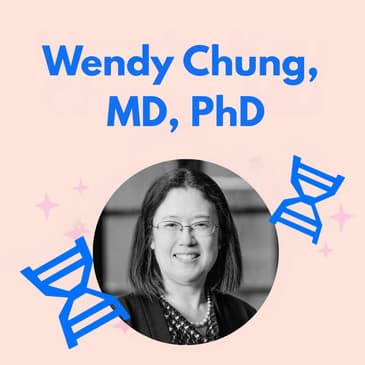

In this conversation, Wendy Chung discusses the evolution of understanding genetic conditions, particularly in relation to autism, and the role of Simons Searchlight in patient advocacy. She emphasizes the importance of community support, global inclusion, and the hope for future therapies. The conversation highlights the significance of family connections and the collective effort in advancing research and treatment options for neurodevelopmental disorders.takeaways
- The understanding of autism has evolved significantly over the years.
- Community support is crucial for families dealing with genetic conditions.
- Simon's Searchlight aims to leverage collective knowledge for better outcomes.
- Language equity is essential for global participation in research.
- The importance of early detection and intervention cannot be overstated.
- Families play a vital role in providing feedback for research.
- The future of treatments looks promising with ongoing research.
- Building a supportive community can lead to better advocacy for children.
- The collaboration among researchers worldwide enhances the potential for breakthroughs.
- Celebrating milestones like 15 years of Simons Searchlight fosters hope and motivation
[00:00:03] I'm Effie Parks. Welcome to Once Upon A Gene, the podcast. This is a place I created for us to connect and share the stories of our not-so-typical lives. Raising kids who are born with rare genetic syndromes and other types of disabilities can feel pretty isolating. What I know for sure is that when we can hear the triumphs and challenges from others who get it, we can find a lot more laughter, a lot more hope, and feel a lot less alone.
[00:00:31] I believe there are some magical healing powers that can happen for all of us through sharing our stories, and I'll take all the help I can get. Once Upon A Gene is proud to be part of Bloodstream Media. Living in a family affected by rare and chronic illness can be isolating, and sometimes the best medicine is connecting to the voices of people who share your experience.
[00:00:56] This is why Bloodstream Media produces podcasts, blogs, and other forms of content for patients, families, and clinicians impacted by rare and chronic diseases. Visit BloodstreamMedia.com to learn more. Hi Wendy Chung, welcome back to the show. I'm glad to be here. Yes, I'm glad to have you back. I was just saying earlier that it's early here on the West Coast for me and I've had a lot of coffee, so I will try not to speak too fast.
[00:01:21] So, I'm really excited. It's 15 years for Simon's Searchlight, so let's go back in time a little bit. Wendy, what inspired the creation of Simon's Searchlight 15 years ago? Gosh, I can hardly believe it's been 15 years, but we started trying to understand autism and neurodevelopmental conditions, and we did it because there wasn't much to anchor us in terms of understanding the biology.
[00:01:47] So, we used genetics as a tool at the Simon's Foundation, and there was a cohort called the Simon's Simplex Collection, and the first genetic factor that came out of that was 16P11.2, a copy number variant. And we realized that not everyone with autism was the same, and we need to have greater homogeneity, in other words, defined by individual genetic conditions to better understand.
[00:02:12] Again, at the time, it was to understand the brain and behavior and to start thinking about it sort of individual condition by condition. And 16P11.2 as being about 1% of individuals with autism, we thought that was probably enough individuals to be able to study that one condition deeply. So, 15 years ago, that was the major one we knew about. Times have changed. We certainly have better methods of analysis, but that was what we had at the time.
[00:02:40] Wow. So, you started with that one, and now Simon's Searchlight includes nearly 200, including CT and NB1, conditions that are associated with autism and other neurodevelopmental disorders. So, what does this kind of growth mean for families, patient advocacy organizations, and researchers worldwide? So, I think one of the things we've learned is that, to me, we're better together in the sense that,
[00:03:05] even though there are many different conditions and each of them are unique in their own special way, there are many things that are common. And by when we're in the rare disease community, we're individually rare, but we're collectively common. And so, we've tried to leverage that from Simon's Searchlight to think about being the tide that helps many boats float collectively, and what things can we do that both help us learn across conditions more efficiently, more effectively,
[00:03:31] and take those learnings and spread them around, disseminate them more rapidly. So, we've tried to leverage that in terms of, again, being judicious with the generous resources that we've had from the Simon's Foundation to be able to support the community, but think globally, because for rare diseases, we've got to use everyone around the world. We've got to have everyone have the opportunity to engage and to help each other as we're learning on this journey. And over the years, what kind of impact has Simon's had on rare disease research?
[00:03:59] Are any moments you're especially proud of come to mind? So, I guess it's a learning process constantly. We clearly don't know everything. And early in the days, although, as I emphasize, the ways in which we're similar, it always impresses me the ways in which the conditions are different. And I try and, and literally, I still, I'm a physician, physician-scientist, and I still see patients.
[00:04:24] And I learn together from, I think of it as Dr. Mom and Dr. Dad, that are 24-7 living this and sharing with me what their experiences are. And as an example, I always, there are particular things that I pay particular attention to from a medical point of view, trying to discern which conditions might have special things associated that wouldn't leave them as just, you know, how do we support individuals who have epilepsy? How do we support individuals who have developmental differences?
[00:04:54] So, just to be concrete, are there conditions in our community that might be associated with cancer, for instance? And I say this because many of the same genes that are involved in development, neurodevelopment in particular, can also go awry in individual cells with cancer. And I think about that both from the point of view of trying to make sure that we're monitoring for cancer if it should be necessary. And I want to reassure people, for the most part, that isn't a concern.
[00:05:21] But there are rare conditions within Simon Searchlight that we do see cancer in association. And this is something that we know with early detection, we improve outcomes. And especially for individuals who may not be able to tell us when something hurts, when something's wrong, where they may tell us, we may not pay attention to it in the same way. It may sort of require an additional level of urgency before doctors are paying attention to it. How can we be more sensitive to those factors?
[00:05:50] The other side, on the therapeutic side in particular, is if doctors or industry or scientists have been developing treatment largely in the area of cancer, but we can, if you will, repurpose or think about how to use those treatments, not just for cancer, but for individuals with neurodevelopmental concerns and autism. How do we take that energy, that investment that's already been placed, and make sure we can use it in other areas?
[00:06:17] And so now that I'm here in Boston being right next door to Dana Farber, we're trying to think about how do we use, again, a lot of the investment that's been made by the cancer research community and apply them to other use cases. So as we see the community coming together, one of the things that sometimes happens is that you have an aha moment. And sometimes this has happened as we see mostly younger people with the conditions coming together in Searchlight.
[00:06:44] But as the community grows, we realize that there are older people with these conditions out there. They just may not have accessed genetic testing as readily. And sometimes you have these aha moments when all of a sudden you identify older individuals with these conditions, and then you suddenly have insight into what that natural history is, we call it, but what happens over the course of time.
[00:07:07] And being able to see what happens for a five-year-old and seeing what happens when they're 50 or even beyond has been incredibly helpful. And so it's happened a few times in Searchlight where we've been able to see that and make connections. And with this, for the most part, we find that things are stable, and that's good to know and reassuring. We also sometimes see that there are particular areas that individuals we know can, you know, you sort of look back and you kind of hit your head and said, wow, if I'd only had a V8, there used to be a commercial about that.
[00:07:37] And you say to yourself, you know, if I'd only known. And so those moments can be incredibly helpful for the next generations. And we had that kind of moment for a condition for mutations in a gene called PPP2R5D. And I know that sounds like a mouthful, but we realized that it's associated with Parkinsonism later on. And thankfully, this is not the typical sort of thing that happens with most of the Simon Searchlight conditions. But it ended up, even though it's concerning, and I won't deny that,
[00:08:07] by being able to see what's happened to the older individuals and the medications and the treatment strategies that have worked for them, we've been able to now take this to the younger generations and proactively look for things and then start treatments earlier with, I think, benefit and being able to not feel like you were, you know, sometimes parents wonder, am I imagining this? Is this real? And sometimes doctors don't take them seriously. And it's not something that's sort of in the medical literature. And so you don't really know what to make of it.
[00:08:36] But by having these relatively rapid feedback cycles to be able to both gather the information, disseminate the information, and make sure doctors trust the information has been one of the powerful things that we've been able to do. And I hope we're able to do that even more when it comes to treatments or understanding, you know, as we understand what either medications or treatment strategies work, it's going to become even more important to have those distribution channels, dissemination channels.
[00:09:04] Oh, yeah. So tell us how families contribute their data and why that's so important. Yeah. So this is a process of evolution, I'll say. So Simon Searchlight has certainly evolved over the last 15 years, both in terms of being more global, including more languages, being to be able to be more inclusive to patients and families, including English, Spanish, French, Dutch, German, Italian, Portuguese. And, you know, we will continue expanding as time goes on.
[00:09:33] And we've tried to make it increasingly convenient for people to do at the time and the place that they want to do it. So in the early days, we had this where you would talk with a genetic counselor and be able to provide your data. And we still have that option. So for people who like to speak with someone, someone who's knowledgeable, that's still an option. But we heard from families that it was really much more convenient to be able to do it on their own time, their own pace. And especially when you think about around the world, again, being able to hit all the different time zones.
[00:10:03] But I say it's a process of evolution because over the years, families have noticed things and said things. And we've added things that have been just to right size this for things that families were observing. Again, I consider them Dr. Mom and Dr. Dad in terms of being frontline direct observers. And we need to be able to figure out ways to continue to iterate on that. And I will admit with a more rapid time cycle. So I'll just give you one example.
[00:10:31] I remember being at one of the family meetings and one of the parents was a dentist. And in this particular case, literally was a doctor, Dr. Mom in that case. But she'd been noticing, just because she professionally was a dentist, you know, about the kids at the family meeting and what she was observing in terms of their dentition and suggestions that she was making. Because many of our kids obviously have challenges by going to see a dentist and not everyone has a special needs dentist in their neighborhood.
[00:10:57] And within this, she designed a standardized questionnaire that we could use across Simon's searchlight, not just for the one condition her child had, but really thinking across the conditions. And I have to admit, I'd never really thought too carefully about the dental or sort of oral issues, oral health issues. And when we started looking at it with some of professionally, some of our dentists, and again, led in this case by a parent, we realized that there really were widespread dental issues,
[00:11:25] some of which were literally developmental conditions where teeth weren't coming in or teeth were formed abnormally or the enamel was forming abnormally. And so people were having more problems with caries or cavities. And in some cases, this was compounded or made more difficult just by sensitivities, you know, being able to get in and brush the teeth very well. And so we've developed strategies over time about everything from, again, you know, what types of toothbrushes even to use to be able to, you know,
[00:11:54] get in and clean the teeth more effectively, some strategies in terms of sensory issues. And for some conditions where we have to put sealants on teeth to be able to make sure that those teeth that are more susceptible to cavities have extra layers of protection. So there's some things that, you know, not everything, thankfully, is cancer. In fact, that's a rare thing. Not everything's neurodegenerative. That's also a rare thing. But there's some practical everyday things that we're realizing are more and more important. And it always, I have a saying for me,
[00:12:23] it starts with one of the individuals and it ends with one of the individuals. For me, it's sometimes a patient or a family, but it always starts with them in terms of spurring the ideas. And then it just needs to be able to get some structure and some sort of robustness and some rigor to do it in a more standardized scientific way. So it'll be acceptable. But the ideas almost always come from the families that really are the, like I said, the ones who are have the insight. And I trust what you guys see. Wow. Bless that dentist.
[00:12:54] And yeah, like you just said, I think we discover as we go along that even just in our conversations in our Facebook groups, that we start to put pieces together of some of the same symptoms that the kids are having and then what's happening afterwards. And we've connected it to a lot of really weird things. And I think that's how you find it out and you bring it to your doctors. And thanks, Simons, for listening and adding that to it. I think for us too with CT and MB1, these kids have microdontia and then they also have a lot of missing adult teeth.
[00:13:20] And I really feel that it helped me knowing that ahead of time rather than hitting the dentist, you know, a year, two years, three years, four years in and finding that out over and over. So that's really valuable. Might need those toothbrush hacks though. Yeah. It's hard to get in those little things. It is hard. But, you know, I think personally, this has been my experience and every child's a little bit different, but the electrical or battery powered toothbrushes,
[00:13:45] if you can get kids used to it early, some kids, you know, again, with the sensory issue, there may be issues. But being able to do that just helps a little bit to be able to get way, way back in the back teeth and be able to do a better job. And then some folks, you know, just need to have more frequent cleanings, but then becomes, you know, like an issue sometimes, like I said, in terms of whether or not the dentist is good with kids. And then ultimately, and we hope we don't have to do it very often, but being able to have kids that have, you know, are actually sedated,
[00:14:14] if there are things where they need to be able to take care of cavities or pull teeth or things like that. But hopefully we get there before that happens. Totally. I think I will go back to the electric toothbrush. That's a good reminder. And tell me again how many languages Simons is in. It's like over 20, right? Well, we're not quite over 20. Although, you know, the thing that's going on from, I think of it as language equity is, it's just incredible to me how actually good things like Google Translate and other automated translations are. They're not perfect, and I will readily admit that.
[00:14:44] But right now we've got seven different languages, well, eight different languages, including English around the world. And we've done this really by frequency. We've tried to do it by frequency. So knowing who's out there and what language is spoken. So we've tried to be sort of logical in our approach that we've brought them on. But, you know, we're always working for more. I don't know how I made that 20 number up. It must have been something. I also appreciate the way Simons looks aesthetically and how you have the questionnaire set up.
[00:15:10] It's not super overwhelming for some reason compared to a lot of other ones I've taken over the years. And it just feels more manageable for whatever reason as a parent. Oh, I appreciate that feedback. I think it is everyone's got incredibly busy lives. And oftentimes with, you know, not just one child who might be on Simon's Searchlight, but other kids and other family members and some people even juggling a job. So we know how challenging that is. But the other thing realizing, and again, I pointed to this,
[00:15:38] but I really am hopeful that therapeutics are coming down the road for many of the groups and maybe accelerating. And it's important that I sometimes say this, that everyone is counted, both in terms of numbers, just absolute numbers around the world, is incredibly important for those that are thinking about developing treatments. They just look at the numbers and it's a numbers game. The bigger, I'll be blunt, the bigger the market is, the more likely they are to, you know, want to try and develop a condition. And the more that it's been, I'll use the term, de-risked.
[00:16:07] So in other words, the more that they know about the condition and feel like they've got a good handle on it and that they understand what some of the endpoints might be that they would test in a clinical trial, the more that's already done for them, the more confident they feel that they can, you know, plan this out and know what they're doing in terms of going forward with the treatment. And many of these companies or scientists, even if they might be,
[00:16:31] even at one of your private foundations, are trying to do the most that they can with limited budgets, especially these days. Anyway, the more that we can be counted and especially for conditions where there might be many, many different mutations, making sure that your mutation, your child's mutation is represented so that they can really think about everyone as they're designing this treatments, especially if they might become treatments targeted to specific mutations. It's important for people to have accurate information as they're planning.
[00:16:59] Anyway, hopefully, even if it's, you know, even if you don't do every single survey, at least doing the first initial thing so that you can stand up and be counted is important. Yep. Amen. I'm going to go update our census. Thanks for that reminder. So, Wendy, what are some of your most memorable moments connecting with families at conferences and what's on the horizon for Simon Searchlight? Like, what are you most hopeful for? Yeah. You know, the thing that just watching kids grow up or watching people just both them changing
[00:17:29] and achieving more and watching generationally how I feel like it's getting better. So what I mean by that is I have the privilege many times of being able to be in person at the family meetings and watching the community come together. There's just a certain magic. And I don't know how else to describe it, but you literally get chills down your spine by people being able to come together and feel like there's someone who gets it and gets them and knows what it is. And you don't have to
[00:17:59] explain it. It's just this sort of unspoken thing where you feel like you're home in some way. And in doing that, it creates a sense of community that's different from, you know, your own blood relatives and your family in that way. But it creates a different set of community that as you're going, as you have particular questions, as you have challenges, as you even have answers, sometimes you've got a place and a group to share it with. And then watching those communities grow up and
[00:18:26] watching those kids grow up and watching them, that information transfer from the sort of generation to generation is what it feels like to me, but from some of the older individuals and those life hacks, basically, tricks and tips that they've learned to how to navigate things. I really do watch the younger generation grow up benefiting from that. And that to me is exciting that even in absence of,
[00:18:51] you know, a gene therapy or, you know, something that would edit and fix a gene, just being able to do that, learning how to advocate successfully for your kids at school, being able to make sure the right medical or dental issues get taken care of. It's just seeing that new younger generation grow up stronger, healthier, being able to do more. And what excites me is the opportunity to continue both that process and, as I said, the hope that we're going to have, whether it's technologies to be able
[00:19:20] to support people, whether it's medications, pills that people are going to be taking, and we're trying some of those now in clinical trials, or ultimately things like genetic therapies or gene therapies. And all those fronts, I really am hopeful that there are many, many opportunities for the, you know, not just the next generation, but the current generation as well. And so, and I really can feel it accelerating in terms of the same, again, sort of the tide floating many boats, that many of
[00:19:46] these same strategies are going to be applicable to many of the searchlight conditions. So as one group figures this out, transferring that knowledge and that experience to the other groups is going to be much easier, much faster. And so we all just have to pay attention to each other. Because if someone figures something out, I'd love to be able to see all the other groups be able to use that same, whatever the trick or tip is, no matter how small or how big.
[00:20:11] That is such a profound reflection, Wendy. And I really love thinking about that, that the kids that are ahead of you, the families that are ahead of you have passed so much down, whether it even be hope or whether it be tips and tricks, like you said, even without any sorts of treatments available, these kids are actually healthier than the ones before them, because of all of this love and attention that has been worked for so hard by every stakeholder
[00:20:37] involved. And that as we wait, these kids are still doing a little better and a little better. That's really beautiful to think about. Okay, Wendy, well, I'm so thankful for you and the entire team at Simon Searchlight. And I love what you're doing. And hopefully we can continue to find more people. I'm excited to see you at our CTNNB1 conference this summer. I know your team and our wonderful president. Emily, you've been working so hard managing that to get you to our natural
[00:21:02] history study. So thank you. And our families are looking forward to it. And we're all so grateful. And congratulations on 15 years for Simon Searchlight. You should all be so proud. Thank you. We're looking forward to 15 more years. And gosh, it's just a few days away. So looking forward to seeing everyone very soon. Yes, it's coming up quick. Okay, great. Well, Wendy, is there anything else that I didn't ask you that I should have about the 15-year anniversary?
[00:21:29] No, I'll just say that, you know, I love being able to talk with you. Thank you for everything that you do. You're an incredible force in terms of educating the community. And you just you do such a great job. And by the same token, I also want to say that we've got a huge team at Simon Searchlight working behind the scenes, getting everything done, hopefully making it easier, better. And at this point, it's just you may or may not realize it. But there's an incredible team both at Simon Searchlight,
[00:21:55] but there are also literally hundreds of investigators around the world who use the information that you provide. It's de-identified. It's safe. It's secure. We've never had any data breaches or anything like that. But in doing this, there are, at least to my knowledge, over 300 individual investigators around the world who are using the Simon Searchlight data. So it's a way of being able to essentially, you know, give once and a multiplier effect, being able to have many,
[00:22:23] many people work for you. So as you're doing it, hopefully that means you don't have to do the same things, you know, 300 times over. You can just do it once and have a lot of people be able to help your group and be able to make advances. And so that's what we'd like to do, be that leverage to be able to make your work work for you. I love that. That's so beautiful. All right. Well, thank you so much, Wendy. I hope you've been enjoying this podcast. If you like what you hear, please share this show with
[00:22:53] your people. And please make sure to rate and review it on iTunes or wherever you get your podcasts. You can also head over to Instagram, Facebook and Twitter to connect with me and stay updated on the show. If you're interested in sharing your story, or if you have anything you would like to contribute, please submit it to my website at effieparks.com. Thank you so much for listening to the show and for supporting me along the way. I appreciate you all so much. I don't know what kind of day you're having,
[00:23:21] but if you need a little pick me up, Ford's got you. Bye.