🌟 Fresh Episodes Drop Each Week!

Once Upon A Gene

As a new parent of a child with a rare genetic syndrome, I was lost. There was no guide. There was no rulebook. This was not what I had imagined. As I navigated my way through this new reality, I realized something that should have been simple, but was not. A truth that had always been there, but that I had lost sight of for a time - I am not alone. And neither are you. These are the stories of my family, and of families like ours. These are the stories of how we have persevered, cried, bonded, and grown. These are the stories of children who have been told that they cannot, and that have proved the world wrong.

ONCE UPON A GENE- EPISODE #281: Making Memories: A Mom of a Daughter with Friedreich’s Ataxia on Last Steps, Make-A-Wish, and Not Letting the Future Steal the Day w/ Laurel Frost Coffey
Laurel on Amelia, Friedrich’s Ataxia, and Choosing Joy in the Face of ProgressionLaurel shares her family’s experience raising Amelia, who was diagnosed with Friedrich’s ataxia at age 8 after early signs showed up around age 5. This conversation covers the path to diagnosis, the emotional reality of progressive illness, and how Laurel stays present with Amelia while making memories now.We discuss ...

ONCE UPON A GENE- EPISODE #280: Comparing Our Kids: Guilt, Milestones, and Connection in Rare Disease Parenting
Have you ever celebrated another child’s milestone while quietly wondering why your own child hasn’t reached it? Or caught yourself thinking, “Their kid can walk, talk, and eat - why do they think this is so hard?” We don’t love admitting it. But maybe we could talk about it. In this Effisode, I’m brainstorming about comparison in parenting our kids with disabilities, including my own moments of s...

ONCE UPON A GENE- EPISODE 279: Falling Into Place: A Pocket Bible of Wisdom from the Colorado Mama Tribe
Colorado Mama Tribe invited me out to talk about storytelling. What I found was even more than I had hoped for. They did it. They figured it out - at least some of it. And what hasn’t been solved yet already has bones. That’s the falling into place. Not one perfect click. More like dominoes. One mama tells the truth. The next one doesn’t have to start from nothing. The piece that was missing finds...
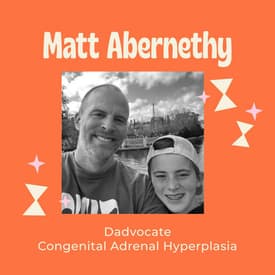
ONCE UPON A GENE –EPISODE 278: His Son Was Diagnosed with Congenital Adrenal Hyperplasia (CAH) — A Dad’s Honest Story of Overwhelm, Faith, and Finding Hope Through Treatment w/ Matt Abernethy
Effie welcomes Matt Abernethy, a father and biotech executive whose story feels almost too perfectly timed to be real. Matt’s youngest son, Ian (now 13), was diagnosed with classic congenital adrenal hyperplasia (CAH) at age two. While navigating the overwhelm, fear, and daily stress of managing a rare disease, Matt received a cold recruiter call for a CFO role at Neurocrine Biosciences — a compan...
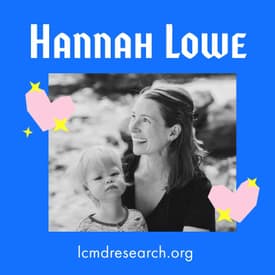
ONCE UPON A GENE – EPISODE 277: A Mother’s Son Was Diagnosed with the Rare, Debilitating Disease LMNA-Related Congenital Muscular Dystrophy (L-CMD) — A Mother’s Story of DNR Orders and How Those Decisions Change Over Time with Hannah Lowe
Hannah Lowe is back on the show. In this episode, Effie and Hannah discuss do not resuscitate orders for children with rare diseases. Hannah shares her experience with her son Austin and how the conversation around DNRs came up for their family. They talk about the decision-making process, how feelings around these choices can change over time, and why these conversations matter in the rare diseas...
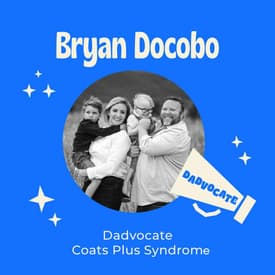
ONCE UPON A GENE – EPISODE 276: His Two Sons Were Diagnosed with Coats Plus Syndrome — One Father’s Story of Rare Disease Advocacy and Brotherhood with Bryan Docobo
Bryan Docobo — attorney, father, rare disease advocate, and founder of the Coats Plus Foundation. Bryan opens up about the devastating journey of losing his four-year-old son Ethan to Coats Plus Syndrome (a rare telomere disorder caused by a CTC1 gene mutation) in June 2024, while fiercely fighting for his older son Liam, who is also battling the same condition. Bryan shares the pre-diagnosis stru...
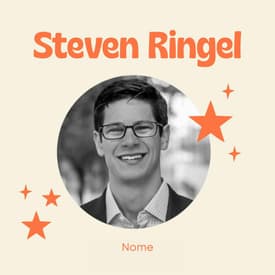
ONCE UPON A GENE – EPISODE 275: How AI is Making Personalized Therapies Faster, Cheaper, and Accessible for the World’s Rarest Diseases with Steven Ringel
Get your free Nome report at www.nome.bio – Families can upload a genetic report and receive a free personalized therapy feasibility report in minutes. In this powerful conversation, Effie Parks sits down with Steven Ringel — patient, sibling of a patient, founder of the Kizuna Foundation, and CEO of Nome to discuss how AI is revolutionizing personalized medicine for the smallest rare disease comm...
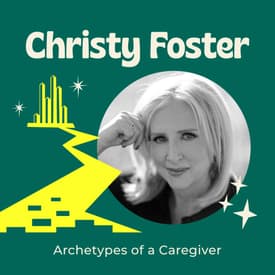
ONCE UPON A GENE – EPISODE 274: Caregiver Archetypes of Survival (Part 4) | The Victim Archetype: From Cowardly Lion to Roaring Warrior – Reclaiming Your Inner Courage Without Losing Yourself with Christy Foster
In the final episode of their four-part archetype series, Effie Parks and archetype expert Christy Foster explore the Victim Archetype—represented by the Cowardly Lion in The Wizard of Oz. They emphasize that archetypes are neutral energies (as taught by Carl Jung and Caroline Myss) that everyone experiences. The conversation is tailored for parents raising children with disabilities, focusing on ...
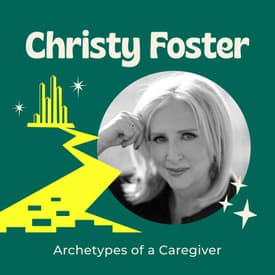
ONCE UPON A GENE - EPISODE 273 Caregiver Archetypes of Survival (Part 3) The Saboteur Archetype: Reclaiming Your Inner Authority Without Losing Yourself, w/ Christy Foster
In part 3 of our 4-part series on Caregiver Archetypes, my sister and somatic therapist Christy Foster returns to unpack the Saboteur — the clever inner voice that second-guesses you, overthinks everything, and talks you out of what you actually want and need. We explore how this archetype shows up for caregivers (especially around time, perfectionism, trusting your gut when doctors gaslight you, ...