

ONCE UPON A GENE - EPISODE 240
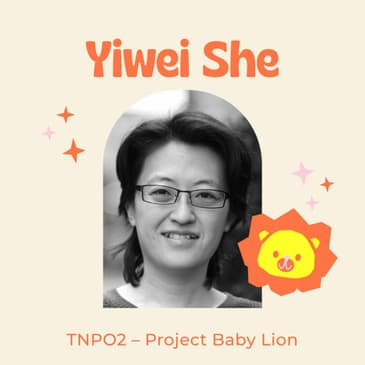
A Mother's Mission - Project Baby Lion, ASO Therapy and the TNP02 Foundation with Yiwei She
Yiwei She is a powerhouse mom to little Leo, the Founder of the TNP02 Foundation, a remarkable and brilliant advocate, and she's nothing short of extraordinary.
EPISODE HIGHLIGHTS
Can you tell us about Leo's diagnostic journey and how that inspired you to start the TNP02 Foundation?
Leo's head circumference wasn't what it should have been and then he had a seizure at two months old. Sequencing pointed to a mutation in a gene and we hit the ground running right away, tapping into our scientific backgrounds. At first, our world came crashing down, but we also had a very fortunate set of circumstances where we could maybe change Leo's outcome if we did the right things. We were thrown into the deep end, but we looked to others and learned a lot from the people who had already paved the way.
What is the process for developing an ASO therapy and how do you make the connections to launch it?
We had a friend that was in the biotech industry which proved to be a key link for us. We had other friends and parents that helped to connect us as well. Networking is really important because people can help guide you and advise on the best labs to work with.
Can you tell us about Project Baby Lion?
The idea behind Project Baby Lion is to take what I've learned and do it again better, in a more sustainable and systematic way. The first phase is to do diagnostics better, combining sustainability with urgency, starting with NICU whole genome sequencing. We hope to prove with data, the potential sustainability of personalized therapeutics within the ultra-rare populations. As early as possible, we want to connect patients and families with their advocacy groups, and where there isn't yet a community, we will try to put together a rapid program to develop a therapeutic plan.
What are the goals for Project Baby Lion and Leo's ASO therapy in the future?
The most helpful thing to come from Leo's trial will be the sharing of the data and clinical protocol so other families and foundations have a blueprint and recognize that it's possible. We want to put our data where our mouth is and share it out to catalyze a culture of sharing. For Project Baby Lion, I hope to attract investment and interest from the biomedical industry because we can solve the hard problems for our kids, and they're worth it.
LINKS & RESOURCES MENTIONED
https://www.tnpo2.org/project-baby-lion
Learn More and Register for Week in RARE
https://globalgenes.org/week-in-rare/
CONNECT WITH EFFIE PARKS
https://twitter.com/OnceUponAGene
https://www.instagram.com/onceuponagene.podcast/?hl=en
[00:00:03] [SPEAKER_02]: I'm Effie Parks. Welcome to Once Upon A Gene, the podcast. This is a place I created for us to connect and share the stories of our not so typical lives.
[00:00:14] [SPEAKER_02]: Raising kids who are born with rare genetic syndromes and other types of disabilities can feel pretty isolating.
[00:00:20] [SPEAKER_02]: What I know for sure is that when we can hear the triumphs and challenges from others who get it, we can find a lot more laughter, a lot more hope and feel a lot less alone.
[00:00:31] [SPEAKER_02]: I believe there are some magical healing powers that can happen for all of us through sharing our stories and I'll take all the help I can get.
[00:00:43] [SPEAKER_00]: Once Upon A Gene is proud to be part of Bloodstream Media. Living in a family affected by rare and chronic illness can be isolating and sometimes the best medicine is connecting to the voices of people who share your experience.
[00:00:56] [SPEAKER_00]: This is why Bloodstream Media produces podcast, blogs and other forms of content for patients, families and clinicians impacted by rare and chronic diseases. Visit bloodstreammedia.com to learn more.
[00:01:08] [SPEAKER_02]: Hey there, welcome to the show. This is Once Upon A Gene and I'm your host Effie Parks. Thank you so much for joining me today. I'm so, so happy you're here and I'm even more happy that I get to see some of you in real life very, very soon.
[00:01:22] [SPEAKER_02]: We're talking about the global genes week in rare. It's coming up. It's September 25th through September 28th in Kansas City, Missouri. Please come. I cannot wait to see you and hug you and squeeze you and listen to all these amazing speakers and the agenda is on fire.
[00:01:40] [SPEAKER_02]: So come register globalgeans.org and let me know if you're coming, send me a message. And if you're like, oh, I'm thinking about coming or oh, I wish I could come. Can you please send me a message so I can talk you into it?
[00:01:52] [SPEAKER_02]: Because there's a million reasons that you should come. And part of them is just being in person and feeling all of that love surrounded you. It invigorates you.
[00:02:00] [SPEAKER_02]: It gives you that little extra nudge to continue on. You will make friends and you will just have the best time I promise you. So if you're on the fence, get off, get off the fence. Go to globalgeans.org and register.
[00:02:14] [SPEAKER_02]: So also one more housekeeping thing. If you love once upon a gene, if anything has ever spoken to you, if one episode just really resonated, if one episode made you do something, can you send it to someone? Can you post it on your social media?
[00:02:28] [SPEAKER_02]: Can you leave a rating review on Apple? Please. Anything that you do is so, so helpful. It helps the show grow and reach the ears of so many more people that need to hear it. So thank you. And with that, I'm looking forward to introducing you to my guest today.
[00:02:44] [SPEAKER_02]: She's one of those powerhouse moms who was like, what? Nobody's doing anything? I'll take care of that. She's the founder of the TNPO2 Foundation. She's a remarkable, brilliant advocate. She's the mother of Lettaleo, who was born with this neural developmental disorder.
[00:03:00] [SPEAKER_02]: And she's nothing short of extraordinary. She's developed an ASO in record time. He's being dosed. He's doing so great. And she's also going to talk about her baby lion project.
[00:03:10] [SPEAKER_02]: So I hope you enjoy my conversation with Iwishi. Hi, Iwi. Welcome to the podcast.
[00:03:15] [SPEAKER_03]: Hi. Thanks for having me here.
[00:03:17] [SPEAKER_02]: Yes. I'm so grateful to learn from you and talk to you. I've seen your name and a couple crusader groups here and there.
[00:03:22] [SPEAKER_02]: So I'm excited to learn a little bit more about your project and your story so far.
[00:03:26] [SPEAKER_02]: So can you maybe share a little bit about the journey discovering Leo's condition and founding the TNPO2 Foundation?
[00:03:32] [SPEAKER_03]: Yeah. So I think discovering Leo's condition, it's very similar to a lot of the stories you've had on here.
[00:03:40] [SPEAKER_03]: We had an inkling that something was wrong when his brain or his head circumference wasn't growing at the right speed.
[00:03:48] [SPEAKER_03]: And then soon after that he had a seizure when he was two and a half months old.
[00:03:52] [SPEAKER_03]: We got Leo sequenced at Boston Children's and found out that he had this mutation in the alphabet soup of genes, right?
[00:04:00] [SPEAKER_03]: TNPO2 or whatever gene it is. And it turns out that it was a very, very newly discovered gene.
[00:04:07] [SPEAKER_03]: And so we kind of hit the ground running right away because we have a semi-scientific background and also friends who were very enthusiastic about helping us out.
[00:04:18] [SPEAKER_03]: And so we started doing a lot of research, contracting for outside services.
[00:04:26] [SPEAKER_03]: And we settled very quickly and I know Julia Vitarello has done a lot of work in this area.
[00:04:31] [SPEAKER_03]: So we followed in her footsteps and in other people's footsteps in many, many ways.
[00:04:37] [SPEAKER_03]: And that's what got us through most of the last two and a half years since Leo was born.
[00:04:44] [SPEAKER_02]: Can you maybe talk a little bit about or maybe inspire families who are listening,
[00:04:50] [SPEAKER_02]: who are maybe a little timid to reach out to other people or just don't know where to start in terms of that networking to maybe build off other people's projects?
[00:04:57] [SPEAKER_03]: Yeah, absolutely. So I think when Leo first got diagnosed it was just your world comes crashing down on you, right?
[00:05:06] [SPEAKER_03]: Like here's your child, his life is irreversibly changed and so is yours and everything you ever dreamed of that's just not going to happen anymore.
[00:05:13] [SPEAKER_03]: And so there's a lot of processing and a lot of reckoning internally.
[00:05:18] [SPEAKER_03]: And it's a really unhappy and that's like kind of to put it mildly, but it takes a village and in rare disease it takes an even bigger village and people who really know where you're at.
[00:05:33] [SPEAKER_03]: And so I think for Leo we were really, we felt you know we can't do this alone.
[00:05:38] [SPEAKER_03]: We have no idea what we're doing but you know we have a unique set of circumstances or we have a very fortunate set of circumstances where maybe we can affect changes outcome if we did the right things, right?
[00:05:52] [SPEAKER_03]: Because like you know a lot of people warned us right at the beginning that like you know if you work with the wrong groups like you'll spend all your money and you'll waste all your time and then at the end of the day you won't have anything
[00:06:03] [SPEAKER_03]: and maybe you'll have some publications but what you really want for your child is a therapeutic, right? Is a treatment.
[00:06:10] [SPEAKER_03]: And so we thought let's learn from, let's learn everything we can from the people who have done this before from the people who know you know who's effective who's not and so on things like that.
[00:06:20] [SPEAKER_03]: So I mean there's just so much to learn you're just thrown into the deep end right for rare diseases and even whether or not you try to develop a drug you're in the deep end regardless.
[00:06:29] [SPEAKER_03]: So you know reach out there's really nothing to lose. I mean pretty much everyone I've ever reached out to in the rare disease community has been just an absolute gem.
[00:06:38] [SPEAKER_03]: So you know we're here, we're here to help you the families and we have no other reasons you know to talk to you other than to try to help you.
[00:06:48] [SPEAKER_02]: Yeah totally and aside from all of the other gifts that you can get from Once Upon a Gene I always encourage people to use it as a Rolodex and now add Ewe to that Rolodex.
[00:06:57] [SPEAKER_02]: So really like if someone resonates with you more or has expertise or is further along or if you know you're just feeling like that's the person you want to reach out to there's so many amazing people who have already done this work and who are experts in certain areas so please feel free to reach out to these people.
[00:07:13] [SPEAKER_02]: I'm so blessed to have on this podcast so they can share their expertise with you.
[00:07:17] [SPEAKER_02]: So Ewe when you started the foundation how many how many patients did you find?
[00:07:21] [SPEAKER_03]: There were I think the original paper had 15 patients worldwide and we found our Facebook group or you know I found the TMPO2 Facebook group and I think only a small portion maybe like 5 to 10 patients were on the Facebook group.
[00:07:37] [SPEAKER_03]: So it's really not that many and you know TMPO2 like many of these other genes it's a very heterogeneous you know set of mutations so some kids are affected less some more.
[00:07:49] [SPEAKER_03]: It's very similar you know to other ultra rare diseases in that way and it's also you know ultra ultra rare so yeah Leo is one of two kids with his specific mutation and most of the other ones they only have one child in them.
[00:08:02] [SPEAKER_02]: Yeah Ewe well you've definitely accelerated at an amazing pace and kudos to you for that and networking and reaching out and getting the work done and I know there's an ASO therapy development for Leo so can you explain the process of developing this and how you connected with CrayonBot.
[00:08:19] [SPEAKER_02]: How did you get into bio and whomever else helped you sort of launch this?
[00:08:23] [SPEAKER_03]: We reached out like so many families to our through our personal networks and one of our friends or I think she was you know not a close friend but once she heard the story and what we were facing she really got to work connecting us with all manners of researchers and people.
[00:08:40] [SPEAKER_03]: And this was you know this was a personal friend and she was in the biotech industry right so that's kind of the she was kind of the key link because we weren't we had no kind of interest prior to Leo getting diagnosed.
[00:08:52] [SPEAKER_03]: We also had other friends who you know they just jumped in because they were all parents like you know all of our friends are in that stage of life where pretty much everybody has kids now.
[00:09:01] [SPEAKER_03]: And so they all really fully understood what it is we were facing and what had happened to us you know between CrayonBio and I think Charles River we contacted through the network of rare parents right so it was like it was Casey McPherson and Terry Piramalakis.
[00:09:18] [SPEAKER_03]: So you know another couple of really great people in this community who put us in touch with Charles River.
[00:09:24] [SPEAKER_03]: So I think networking is really important because they can you know people can tell you like which company and which labs do really good work which is not so easy to tell from the outside.
[00:09:37] [SPEAKER_02]: What were some of the key milestones in getting getting your ASO therapy.
[00:09:43] [SPEAKER_03]: The biggest milestones I think were I think getting through the actual pre-clinical development so like you know getting the actual data and then writing up the IND was a really big milestone and getting it submitted was a pretty non-trivial task because the FDA has this process or you know they have a requirement that if you want to do an investigator initiated IND which is considered the much faster path.
[00:10:10] [SPEAKER_03]: You need it to be sent in by a specific person right so we did a lot of work parallelizing all the tasks but that part you know turned out to be a very difficult challenge because you need to find a doctor who's willing to put their pretty much their entire career on the line
[00:10:29] [SPEAKER_03]: because there's still a lot of risk associated with these things. Yeah to you know say okay I am responsible for this trial you know not the sponsor not the biotech company but I the doctor and then of course getting the approval from the FDA to proceed was a really big milestone
[00:10:45] [SPEAKER_03]: and then I think you know the dose escalations were little mini milestones on their own but you know there was a lot of breath holding for each one.
[00:10:52] [SPEAKER_02]: I figured that the FDA thing would probably be one of your biggest obstacles that you'd encounter. Do you have any lessons learned from that or words of wisdom to share to everyone who knows that's in their future?
[00:11:03] [SPEAKER_03]: So I would say like you know find a good consultant. I think the two biggest components of your team are going to be your sponsor investigator if you have the N of 1 you know pathway.
[00:11:17] [SPEAKER_03]: Not everybody does and that's beyond me right if the N of 1 pathway is open to you as it is for I think you know cure rare disease had it for gene therapy you know ASOs have their own draft guidance and N of 1 you know
[00:11:33] [SPEAKER_03]: office in trials have been run all the time. So there is an N of 1 path and if you can make it somehow work for you that's probably the best way to go and in that situation having a doctor who is you know kind of your childs hero right they have to be
[00:11:48] [SPEAKER_03]: really really invested in your child getting this trial that is probably the most critical piece. So make friends, make up care tell your story.
[00:11:58] [SPEAKER_03]: It turns out that like this is all incredibly difficult.
[00:12:02] [SPEAKER_03]: So like we want people on your team who are going to stick with it, you know?
[00:12:05] [SPEAKER_03]: So like you're gonna stick with it because it's your child or my, you know,
[00:12:08] [SPEAKER_03]: I'm gonna stick with it because my child, but everybody else is busy
[00:12:12] [SPEAKER_03]: or they have this or they have that.
[00:12:13] [SPEAKER_03]: And so like the most critical thing turned out to be like,
[00:12:16] [SPEAKER_03]: can we make that connection where where the other person really got it
[00:12:20] [SPEAKER_03]: and like took it all on almost as if they were their own child.
[00:12:24] [SPEAKER_03]: And that's a lot to ask for, right?
[00:12:26] [SPEAKER_03]: But I hope the FDA could in some way take on that mindset that,
[00:12:31] [SPEAKER_03]: okay, this is someone's child.
[00:12:33] [SPEAKER_03]: You know, maybe whoever the viewer at the FDA is like,
[00:12:36] [SPEAKER_03]: if they could think this is my child facing this,
[00:12:38] [SPEAKER_03]: what would I do if I were my child?
[00:12:40] [SPEAKER_03]: Right?
[00:12:41] [SPEAKER_03]: And I don't know if FDA listens to this, but if they did, you know,
[00:12:44] [SPEAKER_03]: please hear it from the parents and that's, you know, that's what they want.
[00:12:47] [SPEAKER_02]: There are several FDA people who listen to it.
[00:12:50] [SPEAKER_02]: So I think they heard it.
[00:12:51] [SPEAKER_02]: Well, and it makes me think too what Ethan Perlstein always says, right,
[00:12:54] [SPEAKER_02]: is that the parent is going to be literally the best business partner
[00:12:58] [SPEAKER_02]: that you're ever going to have moving forward because they're never going to get
[00:13:00] [SPEAKER_02]: up and they're going to be the, they're never going to give up.
[00:13:02] [SPEAKER_02]: And they're going to be the most motivated people involved in the entire project
[00:13:06] [SPEAKER_02]: from start to finish.
[00:13:07] [SPEAKER_03]: Absolutely.
[00:13:08] [SPEAKER_03]: Yeah.
[00:13:08] [SPEAKER_03]: I mean, most motivated and like, you know, the motivation is the purest, right?
[00:13:13] [SPEAKER_03]: There's no profit.
[00:13:14] [SPEAKER_03]: There's no ego.
[00:13:15] [SPEAKER_03]: There's no nothing.
[00:13:16] [SPEAKER_03]: It's like, I want what's best for my child.
[00:13:18] [SPEAKER_03]: I would hope that, you know, that aligns exactly with what FDA wants.
[00:13:21] [SPEAKER_03]: Like they want what's best for the patients, right?
[00:13:23] [SPEAKER_03]: They have a huge mandate to, you know, regulate all of, I don't know,
[00:13:27] [SPEAKER_03]: you know, everything that they regulate.
[00:13:29] [SPEAKER_03]: But at the end of the day, you know, the patients are at the middle of this
[00:13:31] [SPEAKER_03]: and the parents are advocating on behalf of their patients.
[00:13:35] [SPEAKER_03]: I mean, the patients themselves too, but you know, for the children,
[00:13:37] [SPEAKER_03]: it's the parents.
[00:13:38] [SPEAKER_02]: So how did you feel when Leo was first dosed with his custom treatment?
[00:13:42] [SPEAKER_02]: Like what was that like?
[00:13:44] [SPEAKER_03]: Terrifying most of all, I think.
[00:13:46] [SPEAKER_03]: I mean, I think, you know, I have this, what are like,
[00:13:48] [SPEAKER_03]: I think like well worn wagon wheels in my brain thinking like,
[00:13:51] [SPEAKER_03]: oh my God, he could get hurt by this.
[00:13:54] [SPEAKER_03]: And then I would be like, we're proceeding because you know,
[00:13:57] [SPEAKER_03]: all the evidence blah, blah, blah science, blah, blah,
[00:13:59] [SPEAKER_03]: blah rationality and then, you know, we're going because we know,
[00:14:02] [SPEAKER_03]: you know, all of the reasoning that we wrote down a million times
[00:14:05] [SPEAKER_03]: and stuff, but then, you know, the lizard brain in the back of my
[00:14:08] [SPEAKER_03]: head is like, oh my God, he could, he could get hurt.
[00:14:11] [SPEAKER_03]: And the rational brain is like, you're doing this because
[00:14:13] [SPEAKER_03]: of a gazillion reasons.
[00:14:14] [SPEAKER_03]: And they're just having like this weird, you know, argument
[00:14:18] [SPEAKER_03]: constantly.
[00:14:18] [SPEAKER_03]: And I think I'm just sitting there like waiting for them to
[00:14:21] [SPEAKER_03]: come out, you know, to either get me or tell me, oh my God,
[00:14:24] [SPEAKER_03]: we had a reaction that was unexpected.
[00:14:26] [SPEAKER_03]: So, so I think like the nervousness died down as like nothing
[00:14:29] [SPEAKER_03]: happened, nothing happened.
[00:14:30] [SPEAKER_03]: And eventually, you know, I think like two or three hours
[00:14:32] [SPEAKER_03]: in they came and got me and said, okay, you can see him
[00:14:34] [SPEAKER_03]: now and you know, nothing, you know, everything went without
[00:14:38] [SPEAKER_03]: a hitch and I was like, this is amazing.
[00:14:40] [SPEAKER_03]: And then, you know, there's a groggy Leo, but
[00:14:43] [SPEAKER_02]: Yeah, so good, no bad things for immediate results.
[00:14:46] [SPEAKER_02]: Can you maybe elaborate on potential signs of efficacy that
[00:14:49] [SPEAKER_02]: you've seen since Leo's had the treatment?
[00:14:52] [SPEAKER_03]: Yeah, this is it's a bit tricky because like we saw the best
[00:14:56] [SPEAKER_03]: signs of efficacy during and immediately after the dose
[00:15:00] [SPEAKER_03]: escalation where he was getting it very frequently.
[00:15:03] [SPEAKER_03]: So like once a month and I think in the last two months,
[00:15:08] [SPEAKER_03]: two, three months of that, we were seeing him, you know,
[00:15:11] [SPEAKER_03]: he gained a lot of gross motor strength.
[00:15:13] [SPEAKER_03]: So we went from poor head control.
[00:15:16] [SPEAKER_03]: So like he had some here or there and he could hold his head
[00:15:18] [SPEAKER_03]: up for most a minute, maybe two to being able to hold his
[00:15:23] [SPEAKER_03]: head up for like 10 or 20 minutes, right?
[00:15:26] [SPEAKER_03]: And being able to support himself in a tripod position
[00:15:29] [SPEAKER_03]: whereas before that he had always been very, very floppy.
[00:15:33] [SPEAKER_03]: So like even at 18 months, 20 months old, he was only
[00:15:36] [SPEAKER_03]: rolling sometimes and if you tried to set him up,
[00:15:38] [SPEAKER_03]: it was like like a bag of rice, you know, there was
[00:15:41] [SPEAKER_03]: no, there was no attempt to hold himself up.
[00:15:44] [SPEAKER_03]: Whereas now he would bear weight.
[00:15:46] [SPEAKER_03]: He would also be able to I think just like hold his
[00:15:50] [SPEAKER_03]: attention on me or his sister or his family members for
[00:15:54] [SPEAKER_03]: much longer periods of time.
[00:15:55] [SPEAKER_03]: And so I think, you know, one important piece of context
[00:15:59] [SPEAKER_03]: is, you know, what does a prognosis look like without
[00:16:01] [SPEAKER_03]: intervention?
[00:16:02] [SPEAKER_03]: And what we were seeing was, you know, he was bouncing
[00:16:05] [SPEAKER_03]: around developmentally between say like zero and four
[00:16:09] [SPEAKER_03]: months of age, right?
[00:16:10] [SPEAKER_03]: So like we would, we would make a little bit of gains
[00:16:12] [SPEAKER_03]: like rolling or laughing or I don't know tracking,
[00:16:17] [SPEAKER_03]: you know, even following an object that was that we
[00:16:20] [SPEAKER_03]: were moving in front of him.
[00:16:21] [SPEAKER_03]: That was a skill, right?
[00:16:22] [SPEAKER_03]: That was developmental skill and we would hit some
[00:16:26] [SPEAKER_03]: regressions and so we would have been working on all
[00:16:29] [SPEAKER_03]: of these skills and then, you know, he would get
[00:16:31] [SPEAKER_03]: sick and then we would see seizures and we would
[00:16:33] [SPEAKER_03]: see developmental regression.
[00:16:35] [SPEAKER_03]: So that's where we're at.
[00:16:36] [SPEAKER_03]: So like these, these gains are, I'm describing
[00:16:38] [SPEAKER_03]: are they sound like, you know, big deal or whatever,
[00:16:41] [SPEAKER_03]: but like for him, you know, it really was a big
[00:16:45] [SPEAKER_03]: change over the baseline.
[00:16:46] [SPEAKER_02]: Yeah.
[00:16:47] [SPEAKER_03]: So like since then, you know, we've been on these
[00:16:49] [SPEAKER_03]: three month dosing intervals and it's been much
[00:16:52] [SPEAKER_03]: more challenging.
[00:16:53] [SPEAKER_03]: Good news is that the FDA finally allowed us to
[00:16:56] [SPEAKER_03]: go for much more frequent dosing.
[00:16:58] [SPEAKER_03]: So so they let us have the dosing interval and
[00:17:01] [SPEAKER_03]: we're excited to, you know, hopefully see more
[00:17:04] [SPEAKER_03]: compounded gains for him.
[00:17:06] [SPEAKER_02]: That's amazing.
[00:17:06] [SPEAKER_02]: Yeah.
[00:17:07] [SPEAKER_02]: And I think everyone can 100% relate to all of the
[00:17:10] [SPEAKER_02]: things you described in his development and his
[00:17:12] [SPEAKER_02]: regression, the getting sick and all of the stuff
[00:17:14] [SPEAKER_02]: and even just noticing what maybe seems small to
[00:17:16] [SPEAKER_02]: other people like a little bit more awareness is
[00:17:18] [SPEAKER_02]: such a huge milestone and that's amazing to see.
[00:17:21] [SPEAKER_02]: Have you been concerned at all?
[00:17:23] [SPEAKER_02]: Have you seen anything that you've had to
[00:17:24] [SPEAKER_02]: address safety wise?
[00:17:26] [SPEAKER_03]: Safety wise?
[00:17:27] [SPEAKER_03]: No.
[00:17:27] [SPEAKER_03]: I think, you know, our trial has all of these
[00:17:29] [SPEAKER_03]: tests like they measure all kinds of markers
[00:17:32] [SPEAKER_03]: like in his blood and in CSF in his urine.
[00:17:34] [SPEAKER_03]: None of that has picked up and in his MRI, right?
[00:17:38] [SPEAKER_03]: So I think my hydrocephalus is one of the one of
[00:17:41] [SPEAKER_03]: the like kind of most recent risk factors.
[00:17:44] [SPEAKER_03]: So we haven't seen any on any of the indicators and
[00:17:47] [SPEAKER_03]: you know, watching him day to day.
[00:17:49] [SPEAKER_03]: We also haven't, you know, noticed anything
[00:17:51] [SPEAKER_03]: out of the ordinary.
[00:17:52] [SPEAKER_03]: So fingers crossed that it'll continue through
[00:17:55] [SPEAKER_03]: the higher dosing intervals, but we're really
[00:17:59] [SPEAKER_03]: happy that I think, you know, I was going to
[00:18:01] [SPEAKER_03]: be extremely grateful no matter what happened,
[00:18:04] [SPEAKER_03]: but the most important thing was that he doesn't
[00:18:06] [SPEAKER_03]: get hurt and you know, both set us back and set,
[00:18:09] [SPEAKER_03]: you know, possibly other programs back, but you
[00:18:11] [SPEAKER_03]: know, we don't see anything that of that sword.
[00:18:13] [SPEAKER_03]: So fabulous.
[00:18:14] [SPEAKER_02]: How do you see the success of Leo's treatment
[00:18:17] [SPEAKER_02]: influencing, you know, other N of 1 projects?
[00:18:20] [SPEAKER_03]: I really hope that it gives people the confidence
[00:18:22] [SPEAKER_03]: to proceed and you know, the FDA, the
[00:18:26] [SPEAKER_03]: latitude of confidence to allow more people to
[00:18:29] [SPEAKER_03]: proceed because you know, there's not so many
[00:18:31] [SPEAKER_03]: cases out there and you know, every setback.
[00:18:35] [SPEAKER_03]: I think, you know, the field is a little over cautious.
[00:18:38] [SPEAKER_03]: So like none of us, especially in the parents,
[00:18:41] [SPEAKER_03]: you know, want to be careless with this.
[00:18:44] [SPEAKER_03]: We're only, you know, we all are kind of feel
[00:18:47] [SPEAKER_03]: a very strong urgency to proceed because we
[00:18:50] [SPEAKER_03]: see the true kind of risks and the day-to-day
[00:18:53] [SPEAKER_03]: of the diseases.
[00:18:54] [SPEAKER_03]: And so I hope that people will feel more
[00:18:58] [SPEAKER_03]: and more cautious to proceed and if there are,
[00:19:02] [SPEAKER_03]: you know, side effects that we not overreact,
[00:19:05] [SPEAKER_03]: you know, to them.
[00:19:06] [SPEAKER_02]: I'm looking forward to learning about the
[00:19:08] [SPEAKER_02]: significance and the goals of Project Baby Lion.
[00:19:12] [SPEAKER_02]: Can you tell us about that?
[00:19:13] [SPEAKER_02]: And maybe even what inspired its name?
[00:19:15] [SPEAKER_02]: Sure.
[00:19:15] [SPEAKER_03]: Project Baby Lion.
[00:19:16] [SPEAKER_03]: So the idea is like, I can share my story.
[00:19:19] [SPEAKER_03]: I can share, you know, one of the goals is
[00:19:21] [SPEAKER_03]: to publish the IND so I can share what we've
[00:19:24] [SPEAKER_03]: learned and try to help others that way.
[00:19:26] [SPEAKER_03]: And then, you know, that goes, that helps to an extent.
[00:19:31] [SPEAKER_03]: Right?
[00:19:32] [SPEAKER_03]: But, you know, at the end of the day, doing, you know,
[00:19:34] [SPEAKER_03]: there's more that we could do.
[00:19:36] [SPEAKER_03]: And so I guess what I thought was, well, how do I,
[00:19:39] [SPEAKER_03]: how do I try to, you know, take what I've learned
[00:19:42] [SPEAKER_03]: and do it again better?
[00:19:45] [SPEAKER_03]: And that's kind of the, what Project Baby Lion is,
[00:19:48] [SPEAKER_03]: is attempting to do and, you know, to also
[00:19:51] [SPEAKER_03]: do what I did but do it in a more sustainable
[00:19:53] [SPEAKER_03]: and systematic way.
[00:19:54] [SPEAKER_03]: So the first phase is to do diagnostics and,
[00:20:00] [SPEAKER_03]: and I think we can do diagnostics better because
[00:20:03] [SPEAKER_03]: Leo was diagnosed at four and a half months old.
[00:20:06] [SPEAKER_03]: And that's, that's four and a half months
[00:20:08] [SPEAKER_03]: that could be saved off of a diagnostic odyssey.
[00:20:11] [SPEAKER_03]: And, you know, I think the idea is that we want
[00:20:14] [SPEAKER_03]: to combine sustainability with urgency.
[00:20:17] [SPEAKER_03]: And that's not easy.
[00:20:18] [SPEAKER_03]: Right?
[00:20:19] [SPEAKER_03]: And so that's where we start with this NICU sequencing.
[00:20:21] [SPEAKER_03]: I know you had Dr. Stephen Kingsmore on a few weeks ago
[00:20:25] [SPEAKER_03]: and, you know, we're working with, with Dr.
[00:20:27] [SPEAKER_03]: Stephen Kingsmore to use his, his rapid whole
[00:20:30] [SPEAKER_03]: genome sequence test because it's been,
[00:20:32] [SPEAKER_03]: it's been proven through many, many studies
[00:20:35] [SPEAKER_03]: to be economically scalable.
[00:20:38] [SPEAKER_03]: Right?
[00:20:38] [SPEAKER_03]: And that's, that's amazing if you think about it
[00:20:41] [SPEAKER_03]: because ultra rare is supposed to be this,
[00:20:42] [SPEAKER_03]: this economic graveyard.
[00:20:45] [SPEAKER_03]: Right?
[00:20:46] [SPEAKER_03]: There's no way to make things sustainable.
[00:20:48] [SPEAKER_03]: Everybody's like trying to raise money and,
[00:20:50] [SPEAKER_03]: you know, but somehow this rapid sequencing is,
[00:20:54] [SPEAKER_03]: is not only clinically amazing,
[00:20:57] [SPEAKER_03]: but it's also economically, you know, positive ROI.
[00:21:00] [SPEAKER_03]: It's the story is because, you know, you're saving healthcare
[00:21:03] [SPEAKER_03]: resources that are going to the wrong interventions
[00:21:06] [SPEAKER_03]: that you don't know, you know, the root cause.
[00:21:08] [SPEAKER_03]: Right?
[00:21:08] [SPEAKER_03]: So, so let's be smarter and do the right thing
[00:21:11] [SPEAKER_03]: or at least not do the wrong thing and waste a bunch
[00:21:13] [SPEAKER_03]: of money doing that.
[00:21:15] [SPEAKER_03]: And then so, so now if you get a bunch of patients
[00:21:17] [SPEAKER_03]: who aren't being diagnosed at birth,
[00:21:19] [SPEAKER_03]: I think there is a possibility, you know, an opportunity
[00:21:23] [SPEAKER_03]: to make an intervention and administer it.
[00:21:26] [SPEAKER_03]: Let's say before they're 12 months old and,
[00:21:28] [SPEAKER_03]: and you know, I know like there's a combined brain
[00:21:31] [SPEAKER_03]: is out there and everybody seems to be understand
[00:21:33] [SPEAKER_03]: that, you know, urgency is very important for these neuro
[00:21:35] [SPEAKER_03]: developmental and neuro degenerative diseases.
[00:21:38] [SPEAKER_03]: Right?
[00:21:38] [SPEAKER_03]: So between zero and 24 months, 36 months of age
[00:21:42] [SPEAKER_03]: is enormous brain development.
[00:21:44] [SPEAKER_03]: And so like, you know, the difference between
[00:21:46] [SPEAKER_03]: intervening say at 6, 12, 18 months of age is going to be huge.
[00:21:51] [SPEAKER_03]: And so, you know, can we intervene at a time where
[00:21:55] [SPEAKER_03]: we can make a very big difference in a child's life
[00:21:58] [SPEAKER_03]: and in a person's life?
[00:22:00] [SPEAKER_03]: And that's where we hope to be able to prove with data
[00:22:04] [SPEAKER_03]: the potential sustainability of these kind of personalized
[00:22:08] [SPEAKER_03]: therapeutics for these ultra rare populations.
[00:22:11] [SPEAKER_02]: Amen to that.
[00:22:12] [SPEAKER_02]: Can you clarify for me?
[00:22:13] [SPEAKER_02]: So it is Project Baby Lion specifically looking for TNPO2
[00:22:18] [SPEAKER_02]: mutations from the rapid whole genome sequencing or is it also
[00:22:23] [SPEAKER_02]: going to be plucking out all of those rare diseases that don't
[00:22:27] [SPEAKER_02]: necessarily have a treatment so they aren't going to get told
[00:22:29] [SPEAKER_02]: if they have the whole genome sequencing in the NICU and then,
[00:22:32] [SPEAKER_02]: you know, try to make a path forward to get a precision
[00:22:35] [SPEAKER_02]: treatment in that first year.
[00:22:36] [SPEAKER_02]: Is that what you, what you mean?
[00:22:38] [SPEAKER_02]: Yeah.
[00:22:38] [SPEAKER_02]: So I should clarify that.
[00:22:39] [SPEAKER_03]: So we are, you know, disease agnostic.
[00:22:43] [SPEAKER_03]: That said, you know, we are not taking on the mantle of all
[00:22:46] [SPEAKER_03]: ultra rare diseases.
[00:22:47] [SPEAKER_03]: We are trying to give families a diagnosis at the earliest
[00:22:51] [SPEAKER_03]: possible, you know, time point, which is the NICU, their
[00:22:54] [SPEAKER_03]: first NICU admission.
[00:22:55] [SPEAKER_03]: And then, you know, what happens from there on?
[00:22:58] [SPEAKER_03]: It depends on the case.
[00:22:59] [SPEAKER_03]: So there are the luckiest patients who have some FDA
[00:23:02] [SPEAKER_03]: approved therapy and that's great.
[00:23:03] [SPEAKER_03]: Then there's the clinical trial space will try to connect
[00:23:06] [SPEAKER_03]: patients with, you know, the most appropriate trial if that's
[00:23:10] [SPEAKER_03]: possible.
[00:23:11] [SPEAKER_03]: And then, you know, when we exhaust kind of those more standard
[00:23:16] [SPEAKER_03]: options, we want to connect patients with existing foundations
[00:23:19] [SPEAKER_03]: that are already out there, right?
[00:23:21] [SPEAKER_03]: There's so many amazing patient-led advocacy groups
[00:23:24] [SPEAKER_03]: and research translations.
[00:23:26] [SPEAKER_03]: So we want to connect those patients, you know, with
[00:23:28] [SPEAKER_03]: their, with their homes, right, with their communities.
[00:23:31] [SPEAKER_03]: And then, you know, when we hit the so-called end of
[00:23:34] [SPEAKER_03]: one space where there's really nothing out there because
[00:23:36] [SPEAKER_03]: you're the first or second patient, then we will, you
[00:23:40] [SPEAKER_03]: know, fundraising is always difficult as a challenge, but
[00:23:43] [SPEAKER_03]: we will try to put together a very, very rapid program.
[00:23:48] [SPEAKER_03]: You know, we do have to be very selective about the patients
[00:23:50] [SPEAKER_03]: because, you know, the family has to be on board, the disease
[00:23:53] [SPEAKER_03]: has to have, you know, it has to be severe, you know,
[00:23:55] [SPEAKER_03]: it has to be severe enough and we have to be able to,
[00:23:58] [SPEAKER_03]: you know, develop the therapeutic in time.
[00:24:00] [SPEAKER_03]: But that's the goal and that's the idea.
[00:24:03] [SPEAKER_03]: And as everything, you know, the vision is limited
[00:24:06] [SPEAKER_03]: by the funding.
[00:24:07] [SPEAKER_02]: Well, that's really amazing and kudos to you for doing
[00:24:09] [SPEAKER_02]: that because I mean, it's frustrating that the NICU
[00:24:13] [SPEAKER_02]: whole genome sequencing situation at this point is only
[00:24:16] [SPEAKER_02]: going to inform families of the genetic reports that
[00:24:19] [SPEAKER_02]: have a treatment, right?
[00:24:20] [SPEAKER_02]: And then the other ones just aren't going to find out
[00:24:22] [SPEAKER_02]: until they, until they find out later.
[00:24:24] [SPEAKER_02]: So I don't really understand that gap whatsoever.
[00:24:26] [SPEAKER_02]: So it sounds like this could probably potentially fill that.
[00:24:29] [SPEAKER_03]: Yeah.
[00:24:29] [SPEAKER_03]: What's also frustrating is that this rapid whole genome
[00:24:32] [SPEAKER_03]: sequencing, it's not standard of care yet.
[00:24:34] [SPEAKER_03]: You know, it's just these things take time to percolate,
[00:24:38] [SPEAKER_03]: you know, through the entire healthcare system.
[00:24:40] [SPEAKER_03]: And so that's also part of our kind of push for equity,
[00:24:43] [SPEAKER_03]: right?
[00:24:43] [SPEAKER_03]: Equity is such a big challenge in rare disease as well.
[00:24:45] [SPEAKER_03]: And we're saying, okay, let's spread this practice
[00:24:48] [SPEAKER_03]: to kind of all NICUs and let's try to treat the patients
[00:24:52] [SPEAKER_03]: that get diagnosed, you know, with equity, which is,
[00:24:56] [SPEAKER_03]: you know, only the science and only, you know,
[00:24:59] [SPEAKER_03]: the, you know, what's available out there,
[00:25:01] [SPEAKER_03]: that should be the only determination.
[00:25:03] [SPEAKER_02]: Do you have any success stories or milestones yet
[00:25:05] [SPEAKER_02]: that you've achieved with Project Baby Lion?
[00:25:08] [SPEAKER_02]: We're at the very beginning.
[00:25:10] [SPEAKER_03]: So we're, we actually, we're about to launch it.
[00:25:13] [SPEAKER_03]: So we're going to start to sequence.
[00:25:15] [SPEAKER_03]: We have a small pilot and we're about to sequence
[00:25:17] [SPEAKER_03]: 20 patients.
[00:25:18] [SPEAKER_03]: So we don't have success stories yet, but we're hoping,
[00:25:21] [SPEAKER_03]: you know, for them to come.
[00:25:24] [SPEAKER_03]: And, and you know, I think if patient advocacy groups
[00:25:26] [SPEAKER_03]: are listening, if you get an email from us,
[00:25:29] [SPEAKER_03]: or if you get a, you know, a call, please,
[00:25:31] [SPEAKER_03]: please, please pick up because, you know,
[00:25:33] [SPEAKER_03]: there's a baby at the other end who could use your help,
[00:25:35] [SPEAKER_03]: right? Who could use your expertise and what you've paid.
[00:25:38] [SPEAKER_02]: Yeah. So maybe, maybe there's a call to action here too
[00:25:41] [SPEAKER_02]: to connect with the patient advocacy orgs that are
[00:25:43] [SPEAKER_02]: definitely at least active on social media
[00:25:46] [SPEAKER_02]: and through global genes in Nord who are listed.
[00:25:49] [SPEAKER_02]: So maybe there's some way that you can send out
[00:25:51] [SPEAKER_02]: a call sign here even through once upon a gene
[00:25:54] [SPEAKER_02]: to get them on your radar for sure.
[00:25:57] [SPEAKER_02]: Absolutely.
[00:25:58] [SPEAKER_02]: Are you doing anything at a specific location
[00:26:00] [SPEAKER_02]: for your first 20 patients?
[00:26:01] [SPEAKER_02]: Like is it at a hospital?
[00:26:03] [SPEAKER_02]: Are you, how are you picking the first 20 in terms of
[00:26:06] [SPEAKER_02]: who's getting a genetic test?
[00:26:08] [SPEAKER_03]: We're working with Stony Brook University.
[00:26:10] [SPEAKER_03]: And so that's not one of the traditional,
[00:26:13] [SPEAKER_03]: you know, genomic academic medical centers.
[00:26:16] [SPEAKER_03]: So that's the other side of this is that's where
[00:26:19] [SPEAKER_03]: Leo got a lot of his care, right?
[00:26:21] [SPEAKER_03]: Outside of Boston Children's or Children's Mercy
[00:26:23] [SPEAKER_03]: or, you know, Columbia, where have you,
[00:26:26] [SPEAKER_03]: or even Raidi, right?
[00:26:27] [SPEAKER_03]: These are the premier institutions outside of these
[00:26:29] [SPEAKER_03]: academic medical centers, genetics, clinical practice
[00:26:32] [SPEAKER_03]: and genetic research.
[00:26:34] [SPEAKER_03]: It's not spread evenly, right?
[00:26:37] [SPEAKER_03]: Across geographically.
[00:26:38] [SPEAKER_03]: So we would like to, you know, do our part in raising
[00:26:42] [SPEAKER_03]: awareness among the professional medical community
[00:26:44] [SPEAKER_03]: that, you know, that sequencing is here
[00:26:46] [SPEAKER_03]: as medical practice.
[00:26:48] [SPEAKER_03]: So that's, you know, we're partnering with both
[00:26:50] [SPEAKER_03]: Raidi and Stony Brook and that's where we're starting
[00:26:53] [SPEAKER_03]: out because you need a hospital.
[00:26:55] [SPEAKER_03]: You need a NICU to do this.
[00:26:57] [SPEAKER_03]: And so that's our partner.
[00:26:58] [SPEAKER_03]: For sure.
[00:26:58] [SPEAKER_02]: You know, I have a, I have an argument to that
[00:27:01] [SPEAKER_02]: because this is what I've been hearing for years
[00:27:03] [SPEAKER_02]: in every call and every presentation I've ever seen
[00:27:06] [SPEAKER_02]: is we have to educate the clinicians and the doctors
[00:27:08] [SPEAKER_02]: on genetic testing.
[00:27:10] [SPEAKER_02]: And I'm at a point to where I'm like,
[00:27:11] [SPEAKER_02]: this is taking too long.
[00:27:12] [SPEAKER_02]: There's too much bureaucracy and red tape.
[00:27:15] [SPEAKER_02]: Why don't we just educate the parents
[00:27:16] [SPEAKER_02]: to request what they need?
[00:27:17] [SPEAKER_03]: Yes, we absolutely, you know, the parents
[00:27:19] [SPEAKER_03]: absolutely should request what they need.
[00:27:21] [SPEAKER_03]: I think it's, it's, we should push on both
[00:27:23] [SPEAKER_03]: rocks at the same time because like as a parent
[00:27:26] [SPEAKER_03]: I've gone to the doctors many times
[00:27:28] [SPEAKER_03]: and they're just like, okay, you know,
[00:27:30] [SPEAKER_03]: they're barely listening.
[00:27:31] [SPEAKER_03]: Sometimes they're listening.
[00:27:32] [SPEAKER_03]: Sometimes they're, you know, they're just like,
[00:27:34] [SPEAKER_03]: okay, you're the mom, you know, your child is sick.
[00:27:36] [SPEAKER_03]: You're emotional.
[00:27:37] [SPEAKER_03]: You're this or that.
[00:27:38] [SPEAKER_03]: And I'm just like, okay, you know,
[00:27:40] [SPEAKER_03]: I think that's where I first learned to take a deep breath
[00:27:42] [SPEAKER_03]: and be like, okay, how do I,
[00:27:44] [SPEAKER_03]: how do I present myself in a way
[00:27:45] [SPEAKER_03]: that they will have to take me seriously?
[00:27:48] [SPEAKER_03]: Right.
[00:27:48] [SPEAKER_03]: And so I think we should, we should try to educate
[00:27:51] [SPEAKER_03]: both communities because yes, the doctors are,
[00:27:54] [SPEAKER_03]: you know, they're not the only people who have
[00:27:56] [SPEAKER_03]: who have a voice.
[00:27:57] [SPEAKER_03]: On the other hand, you know, we can't throw parents
[00:27:59] [SPEAKER_03]: into, into the woodchipper of doctors not taking them
[00:28:02] [SPEAKER_03]: seriously.
[00:28:03] [SPEAKER_03]: So if we could, you know, reach both people
[00:28:05] [SPEAKER_03]: and then the parents will talk to the doctors
[00:28:06] [SPEAKER_03]: and the doctors will listen to the parents
[00:28:09] [SPEAKER_03]: and you know, maybe we'll have more.
[00:28:10] [SPEAKER_02]: Yes, let's both rise.
[00:28:12] [SPEAKER_02]: Well, I love this.
[00:28:13] [SPEAKER_02]: I think it's really, it's a really forward
[00:28:15] [SPEAKER_02]: thinking initiative and I very much appreciate it.
[00:28:19] [SPEAKER_02]: So thanks for taking on 900 more jobs on top
[00:28:21] [SPEAKER_02]: of what you've already accomplished
[00:28:22] [SPEAKER_02]: and what you're doing.
[00:28:24] [SPEAKER_02]: I guess I would love to know like how you see this
[00:28:26] [SPEAKER_02]: evolve both all of your projects, including,
[00:28:29] [SPEAKER_02]: including Leo's therapy and, and of one work
[00:28:32] [SPEAKER_02]: that you're doing and the TNPO2 foundation.
[00:28:34] [SPEAKER_02]: Like how do you see it evolving and maybe what
[00:28:36] [SPEAKER_02]: are some of your upcoming goals for the future?
[00:28:39] [SPEAKER_03]: I think, you know, the most helpful thing
[00:28:40] [SPEAKER_03]: that would come out of Leo's trial is,
[00:28:43] [SPEAKER_03]: is the, is the sharing of the data,
[00:28:45] [SPEAKER_03]: you know, of the IND of the clinical protocol
[00:28:48] [SPEAKER_03]: of, you know, of all of his like lab work
[00:28:51] [SPEAKER_03]: numbers, what, you know, so that other families,
[00:28:53] [SPEAKER_03]: other foundations have a blueprint and know
[00:28:56] [SPEAKER_03]: that A, this is possible and B, you know,
[00:28:58] [SPEAKER_03]: what it looks like in practice.
[00:28:59] [SPEAKER_03]: And I know there's a lot of, you know,
[00:29:01] [SPEAKER_03]: a lot of people say they want to share data.
[00:29:03] [SPEAKER_03]: They want to share this or that,
[00:29:04] [SPEAKER_03]: but we want to put our data where our mouth is.
[00:29:08] [SPEAKER_03]: So our PI is on board with sharing the protocol
[00:29:10] [SPEAKER_03]: and crayon is on board with sharing the IND
[00:29:14] [SPEAKER_03]: or, you know, in some sense, it's our IND.
[00:29:17] [SPEAKER_03]: It's unclear who exactly owns IND,
[00:29:19] [SPEAKER_03]: but there is, there is annoying thing of we do have to redact it
[00:29:24] [SPEAKER_03]: for IP that is not ours.
[00:29:26] [SPEAKER_03]: That is not crayons.
[00:29:27] [SPEAKER_03]: That is not, you know, that is not the PI.
[00:29:28] [SPEAKER_03]: So, so there are, you know,
[00:29:30] [SPEAKER_03]: there are certain IP issues,
[00:29:32] [SPEAKER_03]: but we have to go through hundreds
[00:29:34] [SPEAKER_03]: and maybe thousands of pages of documents
[00:29:36] [SPEAKER_03]: to clearly, you know,
[00:29:37] [SPEAKER_03]: X out whatever's not ours to share and give away.
[00:29:40] [SPEAKER_03]: But after that, we want to, you know,
[00:29:42] [SPEAKER_03]: definitely publish this document
[00:29:44] [SPEAKER_03]: that seems to like gatekeep so many people
[00:29:47] [SPEAKER_03]: from, you know, moving forward.
[00:29:49] [SPEAKER_03]: Yes. Yes. Yes.
[00:29:51] [SPEAKER_03]: So I hope that'll catalyze, you know,
[00:29:53] [SPEAKER_03]: a bigger culture of sharing and, you know,
[00:29:55] [SPEAKER_03]: actually doing it for the baby lion project.
[00:29:59] [SPEAKER_03]: I'm hoping that we can attract, you know,
[00:30:01] [SPEAKER_03]: investment and interest from biomedical research
[00:30:04] [SPEAKER_03]: like from the industry, right?
[00:30:06] [SPEAKER_03]: Because like it's a really hard problem
[00:30:07] [SPEAKER_03]: and I hope investors and, you know, the big shots,
[00:30:11] [SPEAKER_03]: they look at this space and they should think like,
[00:30:14] [SPEAKER_03]: wow, you know, I'm a big shot.
[00:30:16] [SPEAKER_03]: Maybe I can solve this problem
[00:30:17] [SPEAKER_03]: because it's a really big problem.
[00:30:20] [SPEAKER_03]: It's a challenge, you know, and it's worth doing, right?
[00:30:23] [SPEAKER_03]: It's worth our children are worth it.
[00:30:25] [SPEAKER_03]: They're worth the work that we put in
[00:30:26] [SPEAKER_03]: and it's hard, right?
[00:30:28] [SPEAKER_03]: It's not one of those easy like I'm going to make,
[00:30:30] [SPEAKER_03]: I mean, no offense to like the tech people,
[00:30:32] [SPEAKER_03]: but like I'm going to make a software as a service,
[00:30:34] [SPEAKER_03]: you know, company.
[00:30:36] [SPEAKER_03]: That's kind of like, that's kind of easy, right?
[00:30:38] [SPEAKER_03]: People know how to do that.
[00:30:39] [SPEAKER_03]: Well, this is hard.
[00:30:40] [SPEAKER_03]: So, you know, the people out there,
[00:30:42] [SPEAKER_03]: we're trying to solve a hard problem.
[00:30:44] [SPEAKER_03]: So, you know, join us or, you know,
[00:30:46] [SPEAKER_03]: stand up your own solution, whatever it is, you know,
[00:30:49] [SPEAKER_03]: this is what the children need is people working on,
[00:30:52] [SPEAKER_03]: you know, a very, very challenging problem.
[00:30:54] [SPEAKER_02]: Yeah, you heard that big shots.
[00:30:56] [SPEAKER_02]: Ewi's calling in all of you
[00:30:58] [SPEAKER_02]: because remember what we also said as parents as partners?
[00:31:01] [SPEAKER_02]: Yeah.
[00:31:02] [SPEAKER_02]: We also need a catchy slogan for your put your data
[00:31:05] [SPEAKER_02]: where your mouth is.
[00:31:06] [SPEAKER_02]: So I'm going to noodle that one for you, Ewi.
[00:31:08] [SPEAKER_02]: Okay.
[00:31:09] [SPEAKER_02]: All right.
[00:31:09] [SPEAKER_02]: Well, do you have any words of encouragement for families
[00:31:12] [SPEAKER_02]: or a message that you really hope to convey to parents
[00:31:15] [SPEAKER_02]: who are kind of going through the work?
[00:31:17] [SPEAKER_03]: Don't be discouraged.
[00:31:18] [SPEAKER_03]: It's so hard and our family had so much help, you know,
[00:31:23] [SPEAKER_03]: we had so much help from so many places and, you know,
[00:31:26] [SPEAKER_03]: ultimately that's what got us, you know,
[00:31:28] [SPEAKER_03]: this far, this fast.
[00:31:30] [SPEAKER_03]: So A, don't be discouraged by the progress
[00:31:32] [SPEAKER_03]: that others are making, right?
[00:31:35] [SPEAKER_03]: You know, four years ago, you know,
[00:31:36] [SPEAKER_03]: I was in a very different place in life
[00:31:38] [SPEAKER_03]: or maybe I guess it's more like six years ago,
[00:31:41] [SPEAKER_03]: but like I would not have been able to do this for, you know,
[00:31:43] [SPEAKER_03]: six years ago and like a lot of lucky circumstances had to kind
[00:31:47] [SPEAKER_03]: of the stars had to align, right?
[00:31:50] [SPEAKER_03]: So not every family and not every foundation can be lucky.
[00:31:53] [SPEAKER_03]: And even if you're not lucky, like hard work, you know,
[00:31:56] [SPEAKER_03]: will pay off eventually.
[00:31:57] [SPEAKER_03]: And, you know, I think a lot of us are working
[00:31:59] [SPEAKER_03]: to kind of shorten this process so that this is the same
[00:32:03] [SPEAKER_03]: that it's not for if it's not for your child
[00:32:05] [SPEAKER_03]: is for the next child.
[00:32:06] [SPEAKER_03]: Well, I think, you know, things are changing enough
[00:32:09] [SPEAKER_03]: so that, you know, as a field, we're trying to make it
[00:32:11] [SPEAKER_03]: so that it could be for your child.
[00:32:13] [SPEAKER_03]: So keep fighting, you know, and take care of yourselves, right?
[00:32:19] [SPEAKER_03]: That's something that I've struggled with throughout this journey.
[00:32:23] [SPEAKER_02]: But, you know, we'll look at there slowly.
[00:32:26] [SPEAKER_02]: Thank you so much for all of that.
[00:32:27] [SPEAKER_02]: I appreciate you.
[00:32:28] [SPEAKER_02]: Is there anything that I didn't ask you, Ewee,
[00:32:30] [SPEAKER_02]: that I should have or that you wanted to mention?
[00:32:32] [SPEAKER_03]: No, I just, I do want to say like I love your podcast,
[00:32:35] [SPEAKER_03]: you know, when this started being able to listen to others
[00:32:39] [SPEAKER_03]: through your podcast was such a, I don't know,
[00:32:42] [SPEAKER_03]: it was so helpful and supportive that, you know,
[00:32:45] [SPEAKER_03]: thank you for doing this.
[00:32:47] [SPEAKER_02]: Oh my gosh.
[00:32:48] [SPEAKER_02]: Thank you so much for telling me that.
[00:32:49] [SPEAKER_02]: I really appreciate it.
[00:32:50] [SPEAKER_02]: And you're so welcome.
[00:32:51] [SPEAKER_02]: And like you, I know that like we need all the help
[00:32:53] [SPEAKER_02]: we can get.
[00:32:54] [SPEAKER_02]: We need our community and we have to share all of this
[00:32:56] [SPEAKER_02]: stuff no matter what, even if it's for the next generation
[00:32:59] [SPEAKER_02]: and especially for the next generation.
[00:33:01] [SPEAKER_02]: It has to be better.
[00:33:03] [SPEAKER_02]: Okay. Well, thanks for joining me, Ewee.
[00:33:05] [SPEAKER_02]: I look forward to sharing our conversation.
[00:33:06] [SPEAKER_02]: Thank you.
[00:33:07] [SPEAKER_02]: I hope you've been enjoying this podcast.
[00:33:09] [SPEAKER_02]: If you like what you hear, please share this show
[00:33:12] [SPEAKER_02]: with your people and please make sure to rate
[00:33:15] [SPEAKER_02]: and review it on iTunes or wherever you get your podcasts.
[00:33:19] [SPEAKER_02]: You can also head over to Instagram, Facebook
[00:33:21] [SPEAKER_02]: and Twitter to connect with me and stay updated on the show.
[00:33:24] [SPEAKER_02]: If you're interested in sharing your story
[00:33:27] [SPEAKER_02]: or if you have anything you would like to contribute,
[00:33:29] [SPEAKER_02]: please submit it to my website at effeparks.com.
[00:33:33] [SPEAKER_02]: Thank you so much for listening to the show
[00:33:35] [SPEAKER_02]: and for supporting me along the way.
[00:33:37] [SPEAKER_02]: I appreciate y'all so much.
[00:33:39] [SPEAKER_02]: I don't know what kind of day you're having,
[00:33:41] [SPEAKER_02]: but if you need a little pick me up, Ford's got you.