
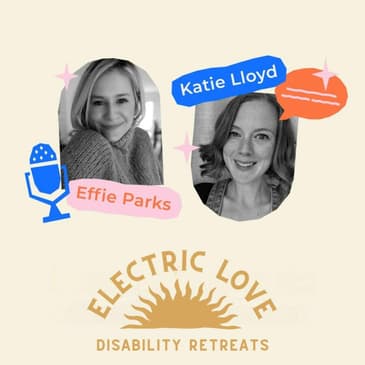

ONCE UPON A GENE - EPISODE 243
Chasing Glimmers - Electric Love Disability Retreats
Chasing Glimmers is all about finding the small, hopeful moments that shine through the darkest of times. Like you, Katie and I know how challenging the rare disease journey can be, but we also believe in the incredible power of connection, bravery and positivity. We're sharing inspiring stories from the community, life lessons we've learned and exploring how glimmers light our way forward. In this episode, we're joined by Colleen Jendreas, the Founder of Electric Love. Electric Love is a nonprofit resource and support for caregivers, with a focus on adventure retreats, hiking, river rafting and extreme outdoor activities. In the rare disease world, she is sparking change, connecting families and helping them find the glimmers, even in the toughest of times.
EPISODE HIGHLIGHTS
Can you tell us about yourself?
I am the Founder of Electric Love, a resource I developed for caregivers where we connect and go on adventure-style retreats. I'm also raising a kiddo, Owen, who has Lennox-Gastaut Syndrome (LGS), a severe form of Epilepsy. I was catapulted into this world in 2017 and I am out here trying to raise awareness and do something positive for the community that saved me when I was in a dark place.
What have you learned about serving others through raising Owen?
When you're getting a diagnosis, you go through an intense, emotional, traumatic journey and we realize things will be very different from what we imagined. When it happened to me, I was going through extreme depression and I couldn't even get out of bed. There were people I had met through various support networks who provided me guidance and encouragement and they were my lifeline. With their support, I climbed out of a horribly dark place and it changed a lot for me. I started reaching out to others who were going through the same things, and together, we built a connection that just grew from there.
Where did the idea come from to start Electric Love?
It started with me and a few other Epilepsy moms who I connected with on social media. We started video chatting and meeting up, realizing how healing it was to connect and build friendships. When we were talking about our shared interests, we talked about how healing it was to be in nature and how we missed having the time and ability to be outside. It all started with a small group of us going to Zion.
LINKS & RESOURCES MENTIONED
Learn More and Register for Week in RARE (use code FRIENDOFEFFIE)
https://globalgenes.org/week-in-rare/
https://www.instagram.com/electric.love.retreats/
https://www.instagram.com/raising_owen/
CONNECT WITH EFFIE PARKS
https://twitter.com/OnceUponAGene
https://www.instagram.com/onceuponagene.podcast/?hl=en
[00:00:03] [SPEAKER_03]: I'm Effie Parks. Welcome to Once Upon A Gene, the podcast. This is a place I created for us to connect and share the stories of our not so typical lives.
[00:00:14] [SPEAKER_03]: Raising kids who are born with rare genetic syndromes and other types of disabilities can feel pretty isolating.
[00:00:21] [SPEAKER_03]: What I know for sure is that when we can hear the triumphs and challenges from others who get it, we can find a lot more laughter, a lot more hope, and feel a lot less alone.
[00:00:31] [SPEAKER_03]: I believe there are some magical healing powers that can happen for all of us through sharing our stories, and I'll take all the help I can get.
[00:00:43] [SPEAKER_00]: Once Upon A Gene is proud to be part of Bloodstream Media.
[00:00:47] [SPEAKER_00]: Living in a family affected by rare and chronic illness can be isolating, and sometimes the best medicine is connecting to the voices of people who share your experience.
[00:00:56] [SPEAKER_00]: This is why Bloodstream Media produces podcasts, blogs, and other forms of content for patients, families, and clinicians impacted by rare and chronic diseases.
[00:01:06] [SPEAKER_00]: Visit bloodstreammedia.com to learn more.
[00:01:08] [SPEAKER_03]: Hello! Thank you so much for joining me. I'm so glad that you're tuning in today wherever you are.
[00:01:14] [SPEAKER_03]: Maybe you're on a walk, maybe you're on a jog, maybe you're in the shower, maybe you're on your couch, maybe you're in your car, maybe you're at an appointment.
[00:01:20] [SPEAKER_03]: You could be so many places, and you are here with me and a couple of my friends. So thanks. I'm glad to have you here.
[00:01:28] [SPEAKER_03]: Global Genes Rare Advocacy Summit is coming up in like less than two weeks in Kansas City.
[00:01:34] [SPEAKER_03]: I really hope that you can come if you're like feeling wild and you want to do some last minute registration.
[00:01:40] [SPEAKER_03]: Go to globalgenes.org, register, use code friendofethi for 15% off. I can't wait to see you there. The agenda is amazing.
[00:01:48] [SPEAKER_03]: Go check it out. Please come. Starting to go to conferences will change your life. It'll change the way you move through this.
[00:01:55] [SPEAKER_03]: It will make you feel less alone, and it will empower you to do something. I promise.
[00:01:59] [SPEAKER_03]: Okay. Today I have a really, really great episode for you so you know my girlfriend, Katie Lloyd from A Very Rare Adventure,
[00:02:06] [SPEAKER_03]: and I are doing these glimmer episodes. And one aspect to our glimmer episodes are highlighting people in our community who are shining bright.
[00:02:16] [SPEAKER_03]: So today is our very first one, and I'm so excited. And I can't wait for you to meet her. Some of you already know her.
[00:02:24] [SPEAKER_03]: She is the founder of electriclove.org, and we're going to plug into a special kind of energy and see how this electric love flows through the rare disease community.
[00:02:35] [SPEAKER_03]: It is bright, I tell you. So yeah, she's sparking change.
[00:02:39] [SPEAKER_03]: She is making more connection for families, and they are finding the glimmers in being together and being empowered even in the toughest of times.
[00:02:49] [SPEAKER_03]: So there's also something on her website, electric-love.org that I loved so much, so I had to bring it up here because we didn't talk about it.
[00:02:57] [SPEAKER_03]: She has a quote on there that I'm obsessed with, and it says, 100% challenge by choice. Always.
[00:03:02] [SPEAKER_03]: I love that so much because it just gives you a frame shift, a mind set shift, and you take the power back in being handed this platter of lots of bad things.
[00:03:18] [SPEAKER_03]: Anyways, I hope that you enjoy this conversation. I hope you are inspired by her story and her mission and what electric love is,
[00:03:25] [SPEAKER_03]: and I hope you can go check it out and sign up, maybe even start one in your area.
[00:03:31] [SPEAKER_03]: So without further ado, please welcome back my friend Katie Lloyd and Colleen from Electric Love.
[00:03:37] [SPEAKER_02]: Hello. Welcome to the podcast. Welcome back, my dear Katie.
[00:03:41] [SPEAKER_03]: And we also have our friend Colleen, which I'm so excited to introduce you to if you haven't met her yet.
[00:03:46] [SPEAKER_03]: And I'm sure many of you already know her from Electric Love and following her social media.
[00:03:52] [SPEAKER_03]: So you'll find out. But we have a really great little chat that we're going to have today and share about her mission.
[00:03:58] [SPEAKER_03]: And I'm really excited to learn more about it. So hello, ladies.
[00:04:01] [SPEAKER_03]: Hi. Hello. Happy to be here.
[00:04:04] [SPEAKER_03]: So Colleen, you have created something so spectacular, so needed in our community, so beautiful.
[00:04:12] [SPEAKER_03]: And I know it's been growing and growing.
[00:04:14] [SPEAKER_03]: Yesterday, you made an exciting social media post that you can talk about.
[00:04:17] [SPEAKER_03]: But first, maybe just give us a little intro for yourself and then we'll kind of get into it.
[00:04:24] [SPEAKER_05]: So my name is Colleen and I am the founder of electriclove.org.
[00:04:31] [SPEAKER_05]: I developed a resource for caregivers and we do adventure style retreats.
[00:04:36] [SPEAKER_05]: So happy to be here talking with you both and talking about people who are doing positive things in disability world because I'm so happy to be a part of that.
[00:04:46] [SPEAKER_05]: Let's see. So I'm also raising a kiddo with a disability. He has Lennox-Gastaut syndrome, which is a severe form of epilepsy.
[00:04:53] [SPEAKER_05]: So back in 2017, obviously was catapulted into this world.
[00:04:58] [SPEAKER_05]: And I'm just here trying to raise awareness and yeah, do something positive for the community that really that really honestly saved me when I was in a dark place.
[00:05:06] [SPEAKER_04]: I would love to jump in here and just say when me and Effie started with our idea for this podcast,
[00:05:12] [SPEAKER_04]: she said, you know, if you have any ideas for guests, anyone who you really think is doing great stuff in the caregiver community or the rare disease community.
[00:05:20] [SPEAKER_04]: And one of my first thoughts was Colleen because I am way on the other side of the world.
[00:05:26] [SPEAKER_04]: I do not I cannot participate in these retreats. Unfortunately, I haven't won the lottery yet, but I see them.
[00:05:32] [SPEAKER_04]: I see the videos. I see the excitement before and just the effect on social media that these retreats are having on parent caregivers.
[00:05:43] [SPEAKER_04]: I mean, especially only mothers, but mothers who are caregivers to disabled children.
[00:05:48] [SPEAKER_04]: And I just feel even though I'm so far away, I feel this excitement and this joy.
[00:05:52] [SPEAKER_04]: And I see this effect just from over here in my tiny country.
[00:05:56] [SPEAKER_04]: And I thought we have to bring you on Colleen. We have to talk about this because as Effie said, people need to know and because it's a beautiful resource.
[00:06:05] [SPEAKER_03]: Something you said in your post yesterday, something you said in your post yesterday when you were announcing that you're almost officially like a nonprofit in Las Vegas.
[00:06:13] [SPEAKER_03]: Serving the community quite literally saved you when you needed saving and you couldn't get out of bed because you were sad and you were in the trenches.
[00:06:22] [SPEAKER_03]: And the fact that you have stepped up to be of service to your community is something I talk about all the time here on my show about how I believe that giving back and that community service is not only healing for ourselves, but it continues to grow and branch out in so many different ways.
[00:06:40] [SPEAKER_03]: And I think that it is a prescription in a lot of ways for us.
[00:06:43] [SPEAKER_03]: So what have you learned about serving others in the face of what what you came from from raising Ellen?
[00:06:50] [SPEAKER_05]: We all kind of go through this just very intense, emotional, traumatic journey when we are getting these diagnosis and we are sort of like staring down the barrel of a life that's going to be very, very different than what we envisioned.
[00:07:04] [SPEAKER_05]: And I talk a lot about how when it happened to me and I have always thought of myself as kind of like a lighthearted, silly person.
[00:07:12] [SPEAKER_05]: And I didn't even recognize what, you know, things like extreme depression and trauma look like.
[00:07:19] [SPEAKER_05]: I was going through it.
[00:07:21] [SPEAKER_05]: And yeah, I talk about how literally I couldn't get out of bed and I didn't know what that feeling was.
[00:07:25] [SPEAKER_05]: I remember laying there and just facing the day raising a child with severe disabilities and like what that would be like.
[00:07:32] [SPEAKER_05]: I just I couldn't.
[00:07:33] [SPEAKER_05]: And it's such a strange feeling.
[00:07:35] [SPEAKER_05]: And at that time, there were a couple people that I had met kind of through the hospital and through various support networks that I would talk to.
[00:07:44] [SPEAKER_05]: And they would just provide me guidance and encouragement, but really not sugarcoat things or lie or, you know, give me platitudes.
[00:07:52] [SPEAKER_05]: And they were just my lifeline.
[00:07:54] [SPEAKER_05]: And I really felt like with their support, I was able to kind of climb out of this horrible dark place and get involved in this community.
[00:08:02] [SPEAKER_05]: And then just finding that connection really made a huge personal personal change for me.
[00:08:07] [SPEAKER_05]: It kind of turned me into what, you know, I hope to identify myself as, which is an advocate now.
[00:08:11] [SPEAKER_05]: And I started reaching out to others too who were going through the same things.
[00:08:15] [SPEAKER_05]: And we just built this beautiful little connection.
[00:08:18] [SPEAKER_05]: And it really just took off from there.
[00:08:20] [SPEAKER_04]: I would love to know, Colleen, how you came up with this idea.
[00:08:23] [SPEAKER_04]: So how did you go from being on the sofa and, you know, not even recognizing yourself anymore to being this kind of lighthouse and a beacon for all these caregivers looking for face-to-face community and a retreat and a break from our caregiver lives?
[00:08:43] [SPEAKER_04]: Where did this idea come from?
[00:08:45] [SPEAKER_04]: And how did it become what it is now?
[00:08:48] [SPEAKER_05]: Oh my gosh, Katie. It was like definitely not a change that happened overnight.
[00:08:51] [SPEAKER_05]: You know, it took several years to kind of develop electric love into what it is today.
[00:08:57] [SPEAKER_05]: But it pretty much started with me and a handful of other severe epilepsy moms.
[00:09:03] [SPEAKER_05]: And we started to chat a lot on social media.
[00:09:06] [SPEAKER_05]: I know it's always so a little bit embarrassing to admit how much social media has really impacted my life in such a positive way.
[00:09:13] [SPEAKER_05]: But I'm connecting with people on social media.
[00:09:15] [SPEAKER_05]: And we started realizing that it was just really healing to take our connection and friendship to sort of a more intimate place.
[00:09:23] [SPEAKER_05]: Like we started video chatting and then we started actually meeting up those that were local.
[00:09:28] [SPEAKER_05]: And then we just started talking about like shared interests.
[00:09:31] [SPEAKER_05]: And so it was really this small group of severe epilepsy moms that I was connected with.
[00:09:35] [SPEAKER_05]: And we all discovered that we really felt like nature was healing.
[00:09:39] [SPEAKER_05]: And we really missed being able to spend time in nature and do adventurous things because our new identity as caregivers were sort of like preventing that.
[00:09:49] [SPEAKER_05]: But it started with just like a small group of gals.
[00:09:51] [SPEAKER_05]: I think there were like 12 of us. We were like, oh, we're going to go to Zion.
[00:09:55] [SPEAKER_05]: But, you know, in the spirit of inclusivity, we obviously were going to open that up to anybody who wanted to come.
[00:10:00] [SPEAKER_05]: And I completely underestimated the just demand in our community for that sort of respite.
[00:10:07] [SPEAKER_05]: Right. I mean, we're we're still just just humans and we wanted to get out there and have fun.
[00:10:13] [SPEAKER_05]: And it just turns out that we feel a lot more comfortable doing so with with other caregivers.
[00:10:17] [SPEAKER_05]: And it really provides a healing experience.
[00:10:20] [SPEAKER_03]: Yeah. And I suppose maybe we'll even stitch this to the top of the show.
[00:10:23] [SPEAKER_03]: But can you give us the whole rundown of what electric love is and how it works exactly?
[00:10:28] [SPEAKER_05]: Yeah, well, electric love is still definitely growing and evolving.
[00:10:32] [SPEAKER_05]: But so it's a nonprofit and it's a resource for caregivers.
[00:10:37] [SPEAKER_05]: It's support services for caregivers.
[00:10:39] [SPEAKER_05]: And we focus primarily on doing adventure retreats.
[00:10:43] [SPEAKER_05]: I mean, we do things like hiking trips.
[00:10:46] [SPEAKER_05]: And I'm looking at river rafting and sort of kind of outdoor extreme stuff.
[00:10:51] [SPEAKER_05]: And the reason we focus on those types of adventures is because as caregivers, our lives are kind of high intensity already.
[00:10:59] [SPEAKER_05]: And so these sort of trips kind of match that intensity and really allow us to just decompress and be in a really safe place.
[00:11:08] [SPEAKER_05]: Not literally if we're zip lining or something like that.
[00:11:13] [SPEAKER_05]: But you know what I mean? We're in a safe place with each other.
[00:11:15] [SPEAKER_05]: We can experience joy and not feel awkward about it.
[00:11:19] [SPEAKER_03]: I love that. I really do believe that being together in person and also being out in nature or moving our bodies in general is such a key component to our overall wellness.
[00:11:32] [SPEAKER_03]: Yeah, no, I absolutely believe that.
[00:11:34] [SPEAKER_04]: It's a magical combination, really.
[00:11:36] [SPEAKER_03]: Yeah.
[00:11:37] [SPEAKER_03]: I did see that you have some updated stuff on your website.
[00:11:40] [SPEAKER_03]: Again, the next one I can't go to because it's during conference season.
[00:11:43] [SPEAKER_03]: But then there's a returning one that I could go to.
[00:11:45] [SPEAKER_03]: And I was just wondering if I could get on the list for returning just as like an honored returning guest from Audioland because I can get to that one.
[00:11:54] [SPEAKER_05]: Yeah, yeah. We'll hook you up, Effie. You've been an honorary member a long time so don't worry about it.
[00:12:00] [SPEAKER_05]: But yeah, so hopefully we add a few more trips next year.
[00:12:04] [SPEAKER_05]: I'm just starting the planning process. I kind of have to let all these vendors get through their busy summer seasons.
[00:12:09] [SPEAKER_05]: And then I start reaching out and I'm looking for collaborators and other organizations that want to get involved too and just be a part of this really special experience for this set of friends.
[00:12:20] [SPEAKER_03]: Great. Do you have any sort of specialties or company types top of mind that you'd like us to maybe start pinging that could help you put these on or sponsor you in any particular ways?
[00:12:30] [SPEAKER_05]: Yeah, I mean, I've been working with like a couple of companies that are pretty ingrained in like epilepsy world obviously since that's kind of my bread and butter.
[00:12:37] [SPEAKER_05]: So working with some pharmaceuticals and actually some other nonprofit organizations that they also have, you know, a mission that aligns with ours where they're trying to support caregivers.
[00:12:47] [SPEAKER_05]: So anybody that's looking for a way to impact sort of prominent voices in disability and rare disease world, this is a great opportunity to do so.
[00:12:58] [SPEAKER_04]: So Colleen, if someone was listening and thinking this sounds really great, this is something I want to do, but I don't know if I'm the right person.
[00:13:05] [SPEAKER_04]: You know who are the people who are coming to these retreats?
[00:13:09] [SPEAKER_05]: Okay, if you're a caregiver in any capacity, these are the trips for you. I always make them beginner friendly.
[00:13:16] [SPEAKER_05]: I always make them affordable and I strive for full inclusion.
[00:13:20] [SPEAKER_05]: So it's really important to me that everybody feels comfortable on the trips.
[00:13:26] [SPEAKER_05]: And I also believe in this philosophy called challenge by choice.
[00:13:30] [SPEAKER_05]: So once you're even on the trip and you've got the itinerary and the list of activities that we're going to do, if something doesn't work for you, absolutely allowed to sit it out.
[00:13:38] [SPEAKER_05]: We don't judge each other.
[00:13:40] [SPEAKER_05]: You know, there's nothing like that.
[00:13:41] [SPEAKER_05]: And I want to stress that on the trips too, we don't do any formal discussions about our children's specific diagnosis.
[00:13:50] [SPEAKER_05]: So you're not going to be asked to like stand up and give your spiel and talk like that.
[00:13:55] [SPEAKER_05]: And that's because I really want the friendships and connections to develop organically and because this is a girls trip ultimately.
[00:14:01] [SPEAKER_05]: And we're here to have fun.
[00:14:03] [SPEAKER_05]: But obviously those conversations do take place and I fully encourage them.
[00:14:06] [SPEAKER_05]: They're just not done in like a formal setting.
[00:14:08] [SPEAKER_03]: I love that.
[00:14:09] [SPEAKER_03]: So I know there's Katie and I were just talking about this on our last glimmer episode that there's always going to be parents who say no matter what, that there's no way ever possible of any planet Earth that they could ever go anywhere, which might be true.
[00:14:23] [SPEAKER_03]: But it also sometimes seems to not necessarily be true.
[00:14:27] [SPEAKER_03]: But we are so overwhelmed and we're so in it and we're so scared and stressed and poor and like all the things.
[00:14:34] [SPEAKER_03]: But what if?
[00:14:35] [SPEAKER_03]: Like, I wonder if if like you've had a personal experience with maybe perhaps even one of these parents who was a I could never and then did.
[00:14:44] [SPEAKER_05]: Yes.
[00:14:44] [SPEAKER_05]: You know what?
[00:14:45] [SPEAKER_05]: I'd love to touch on this because there's a lot of moms who are on the trip and this is their very first time away from their children.
[00:14:52] [SPEAKER_05]: And I think a trip like this really allows your village to step up because I heard so many just, you know, heartwarming stories from some of the moms on the trip who said, you know, this was the first time.
[00:15:07] [SPEAKER_05]: You know, my parents really got to get involved.
[00:15:10] [SPEAKER_05]: They've always wanted an opportunity to watch my son or my daughter.
[00:15:14] [SPEAKER_05]: And I never really felt comfortable doing that, but everybody would talk about their village just being so supportive and wanting them to do this and finally getting the opportunity to be with their child as well alone and take on that responsibility.
[00:15:28] [SPEAKER_05]: Like just I know people were saying, oh, my nurse was so encouraging and saying you've just got to do this.
[00:15:33] [SPEAKER_05]: I'll be here every day.
[00:15:34] [SPEAKER_05]: I'll do extra hours because I feel that this is so important for you and your healing.
[00:15:39] [SPEAKER_05]: Let me please, you know, be be the caregiver for your child while you're gone.
[00:15:43] [SPEAKER_05]: And I want to have this special time with them and I haven't had the opportunity to do so.
[00:15:47] [SPEAKER_05]: So there was a lot of really great stories like that.
[00:15:50] [SPEAKER_04]: That's great.
[00:15:50] [SPEAKER_04]: I also noticed, Colleen, that some of the moms who come are actually bereaved moms who've lost their children.
[00:15:57] [SPEAKER_04]: Is that something as well that you think will grow in the future that, you know, this is a welcoming space for moms whose children are still here or who have passed?
[00:16:09] [SPEAKER_05]: Yeah.
[00:16:09] [SPEAKER_05]: Oh my gosh. Absolutely.
[00:16:11] [SPEAKER_05]: And I hope to continue to serve that demographic as well.
[00:16:15] [SPEAKER_05]: I think it's really important.
[00:16:16] [SPEAKER_05]: I mean, if you've been in disability rare disease world long enough, there's going some people are going to have a journey that looks like that.
[00:16:23] [SPEAKER_05]: And you're going to be meeting people whose journeys look really different.
[00:16:26] [SPEAKER_05]: But the bereaved moms and the lost moms that came on the trip with us, they talk a lot about how the sort of grief supports and grief community that they will try to sort of enter didn't feel quite as inviting.
[00:16:41] [SPEAKER_05]: And quite as accurate, right?
[00:16:43] [SPEAKER_05]: As as disability rare disease, you know, moming world medical mom world feels because a lot of these people are are grieving a really different life experience.
[00:16:53] [SPEAKER_05]: And I'll touch on the fact that being a caregiver is like becoming a caregiver is a whole identity switch.
[00:17:00] [SPEAKER_05]: So when you're no longer, I'm not really sure that that will ever change for somebody who's been a caregiver, no matter what that journey looks like.
[00:17:09] [SPEAKER_05]: Once you're a caregiver and you've been in caregiver world and you've been in rare disease world and those experiences stick with you for life and it's part of your identity.
[00:17:16] [SPEAKER_05]: So absolutely, we welcome we welcome moms who have had who who have experienced loss.
[00:17:22] [SPEAKER_05]: They are absolutely one of us and included in every way possible.
[00:17:25] [SPEAKER_03]: I love that. And you're so spot on there.
[00:17:29] [SPEAKER_03]: That once a caregiver always a caregiver.
[00:17:32] [SPEAKER_05]: Yeah, absolutely.
[00:17:32] [SPEAKER_03]: Yeah, and I found some of the most powerful advocacy work is driven by those families who continue on and and show up for this community because it's so in their heart and soul.
[00:17:42] [SPEAKER_03]: Right?
[00:17:43] [SPEAKER_05]: Yeah, it's with you forever. It's it just walks beside you forever.
[00:17:47] [SPEAKER_03]: So do you do you take anyone who signs up and can go or do you have sort of themes or age groups?
[00:17:56] [SPEAKER_03]: Like I'm curious if there's any sort of like issue that arises about people comparing level of difficulties.
[00:18:03] [SPEAKER_03]: Like maybe it is the grieving parent versus the parent whose child has 100 seizures a day versus the parent who's dealing with mobility issues.
[00:18:13] [SPEAKER_03]: Like, I wonder, is that even visible or is it just this completely soul food experience of connectedness?
[00:18:21] [SPEAKER_03]: And we all know that we sort of have a very parallel day to day.
[00:18:26] [SPEAKER_03]: Like what do you feel like there's any any like cause for concern that there would be sort of that comparison dynamic, especially when you're really traumatized?
[00:18:35] [SPEAKER_05]: Well, I think to address that issue, that's kind of the main reason we we don't really dive into formal diagnosis discussions.
[00:18:42] [SPEAKER_05]: And we we really try to focus on we're here having fun and we're in nature and we're doing these challenging things together.
[00:18:49] [SPEAKER_05]: We're kind of not there to totally discuss what our day to day and the details of our children's diagnosis is.
[00:18:57] [SPEAKER_05]: We just yeah, I mean, it's just about accepting that everybody's on this journey and however you're whatever the specifics of your journey look like don't really matter.
[00:19:05] [SPEAKER_05]: We're just here. We're validating each other's caregiving traumatic journey experience.
[00:19:10] [SPEAKER_05]: You know, so I would say option B of the two you laid out kind of an eat, pray, love soul food thing.
[00:19:18] [SPEAKER_03]: That speaks to my soul and I know people are all different, but like when I go for my sort of retreat, I don't want it to be like a talking shop about my life.
[00:19:28] [SPEAKER_03]: That's already very intense and difficult and stressful.
[00:19:32] [SPEAKER_03]: I want to talk about Netflix and go hike that mountain and eat some eat some berries off of a bush without washing them right?
[00:19:39] [SPEAKER_03]: Like I don't want to do all that if it comes up great.
[00:19:42] [SPEAKER_03]: But like I don't want to sit down and have a mom talk the whole time.
[00:19:46] [SPEAKER_03]: I want to like I want to remember who I am. Yeah. Oh my gosh, exactly.
[00:19:50] [SPEAKER_05]: It's about validating your like identity as a person that wants to go out and experience joy and you're allowed to experience joy.
[00:19:59] [SPEAKER_05]: And then being around other caregivers, I think really elevates that that, you know, joyous kind of experience that you can have because you're around people that know what you're going through.
[00:20:11] [SPEAKER_05]: Nobody's sitting around worried about, you know, how that's going to be perceived.
[00:20:15] [SPEAKER_05]: And you just kind of get to lay your guard down a little bit and have a good time.
[00:20:19] [SPEAKER_05]: It's about fun. It's supposed to be fun. Right?
[00:20:21] [SPEAKER_03]: Well, I mean, your posts, I have so much FOMA all over because they're just like exactly where I want to be.
[00:20:27] [SPEAKER_03]: And they're having so much fun and everyone is just glowing and they're waking up like for themselves.
[00:20:33] [SPEAKER_03]: In the end, it's not even expensive.
[00:20:36] [SPEAKER_03]: I mean, for what they're getting and what's all happening, like it's pretty minimal.
[00:20:41] [SPEAKER_03]: And I don't know how what sorcery you get done with that, like when your agreements with the places and stuff.
[00:20:47] [SPEAKER_03]: But it's so affordable for what you're providing.
[00:20:50] [SPEAKER_05]: I try really hard to keep that price nice and low.
[00:20:53] [SPEAKER_05]: And because, again, I'm striving to be a nonprofit.
[00:20:57] [SPEAKER_05]: You know, there's there's not going to be any profitability whatsoever.
[00:21:00] [SPEAKER_05]: So any costs are totally shared 100 percent.
[00:21:03] [SPEAKER_05]: And yeah, I mean, because I think that's important. I'm trying to make the trips as inclusive as possible.
[00:21:08] [SPEAKER_05]: And obviously cost it will be a big barrier if that starts getting to be inhibiting for some folks.
[00:21:14] [SPEAKER_05]: So I try to keep it dirt cheap. But part of that means we're going to be a little rustic.
[00:21:19] [SPEAKER_05]: Like when we go to Zion, we're staying in yurts, we're staying in covered wagons.
[00:21:24] [SPEAKER_05]: They call, you know, they call themselves a resort where we stay.
[00:21:27] [SPEAKER_05]: But I think that's a bit of a stretch.
[00:21:30] [SPEAKER_05]: It's supposed to be campy and, you know, kind of Mother Earth style like just embrace it.
[00:21:36] [SPEAKER_04]: We have so many questions. Bring them on.
[00:21:39] [SPEAKER_04]: I'm literally picturing myself going down a river right now.
[00:21:43] [SPEAKER_04]: Like that's where I've gone. My brain is there.
[00:21:45] [SPEAKER_04]: Like physically I'm in Switzerland, but mentally I'm in Zion right now because you're just painting this incredible picture.
[00:21:53] [SPEAKER_04]: I would love to hear, you know, we see me and Effie are active on social media.
[00:21:58] [SPEAKER_04]: We see the videos that the participants make afterwards.
[00:22:01] [SPEAKER_04]: We see, as Effie said, the glowing.
[00:22:04] [SPEAKER_04]: But can you tell us some of the feedback you've had from the Mums afterwards?
[00:22:09] [SPEAKER_04]: What they say to you, how they feel, how it was significant for them.
[00:22:13] [SPEAKER_03]: And not only that, can you add on top of that like what they've done differently since?
[00:22:18] [SPEAKER_05]: I mean, the feedback I get from most people is just that it was absolutely life changing.
[00:22:23] [SPEAKER_05]: It was totally healing and they feel like empowered to get more involved in the community.
[00:22:28] [SPEAKER_05]: They feel encouraged to reach out to newly diagnosed and they just feel more connection even with themselves too.
[00:22:36] [SPEAKER_05]: Like that they feel like, wow, I was able to do these things and I did hard things and I went out there.
[00:22:41] [SPEAKER_05]: I took a big risk. My kid did fine. I can trust my village.
[00:22:45] [SPEAKER_05]: I mean, it's absolutely life changing for most people that come on the trip and that's exactly what we want.
[00:22:50] [SPEAKER_05]: We want just a fun, positive and totally life changing thing.
[00:22:55] [SPEAKER_05]: Someone once told me that they describe the trips as being like make-a-wish trips for caregivers.
[00:23:00] [SPEAKER_05]: And I just love that so much.
[00:23:02] [SPEAKER_05]: And I really hope that it is having that sort of impact.
[00:23:06] [SPEAKER_05]: And then also you talked about, you asked about what happened after the trip.
[00:23:09] [SPEAKER_05]: Well, after the trip, we always keep in communication.
[00:23:13] [SPEAKER_05]: I mean, we have Instagram threads that are a thousand posts deep where we're all just chatting with each other because we all got to know each other on the trip.
[00:23:23] [SPEAKER_05]: We do a lot of communicating and introductions and things ahead of time just on social.
[00:23:29] [SPEAKER_05]: And now that thread has become like a caregiver resource for people as well.
[00:23:36] [SPEAKER_05]: People are chiming in with treatment questions.
[00:23:38] [SPEAKER_05]: People are chiming in with frustrations with their IEPs and school and whatever it might be.
[00:23:45] [SPEAKER_05]: So beyond just the trip, we've now created a really tight little community that we can talk about caregiving with.
[00:23:52] [SPEAKER_04]: That's just such a vital resource and that it keeps your retreat is not just you go, you go home.
[00:23:58] [SPEAKER_04]: That's it. It's all over.
[00:24:00] [SPEAKER_04]: It continues to be an ongoing support for these caregivers who are in constant need of support, right?
[00:24:06] [SPEAKER_05]: That's confident. Absolutely.
[00:24:08] [SPEAKER_03]: Yeah, it's like a restorative rare reset.
[00:24:12] [SPEAKER_03]: I can only imagine how refreshed and completely ignited you are when you have that experience, especially again the in-person thing.
[00:24:23] [SPEAKER_03]: I mean, there is just so much magic in being together, especially even if it's a small group that literally changes you.
[00:24:33] [SPEAKER_03]: It's so different than the threads that we hold, right? That are so important and informative.
[00:24:37] [SPEAKER_03]: It binds you for life. It really does.
[00:24:39] [SPEAKER_03]: And I think that it really helps you shift your mindset in lots of ways when you get home.
[00:24:44] [SPEAKER_03]: Even like you said, like, oh, now I know I can leave and I don't have to be such a control freak because other people can do what I do,
[00:24:52] [SPEAKER_03]: even if they do it differently, it's OK.
[00:24:54] [SPEAKER_05]: Yeah. After the trip, there's always this just really profound decompression period where you're just processing everything you went through because while it's happening,
[00:25:04] [SPEAKER_05]: you're just so busy and it's a lot of physical activities too.
[00:25:10] [SPEAKER_05]: So we this is a funny story. But when we went to Zion, I decided to do this river float with everybody.
[00:25:16] [SPEAKER_05]: I had read about it. It looked amazing.
[00:25:18] [SPEAKER_05]: It turns out this river float is somewhere in between a lazy river and a river rapid kind of situation.
[00:25:26] [SPEAKER_05]: So we're all kind of expecting it's going to be this lazy river.
[00:25:30] [SPEAKER_05]: We'll have a few drinks while we float down and chit chat.
[00:25:32] [SPEAKER_05]: But it was like you had to be fully engaged, like don't look down at your phone while you're floating along because you're going to hit a rock.
[00:25:38] [SPEAKER_05]: And we were just bouncing off all over the place laughing so hard that our faces hurt.
[00:25:43] [SPEAKER_05]: And it just felt so right that a group of us, it was like so symbolic.
[00:25:49] [SPEAKER_05]: Right. Like we expected one thing, got something different.
[00:25:52] [SPEAKER_05]: But this is the most adaptable group ever.
[00:25:55] [SPEAKER_05]: And we just it was a blast. It was an absolute blast.
[00:25:58] [SPEAKER_05]: And yeah, I think my my face muscles are like still recovering from the amount of laughing that happened.
[00:26:05] [SPEAKER_03]: Well, you're making so many dreams come true.
[00:26:08] [SPEAKER_03]: I mean, I would love to help support this in any way I can, even if it's just helping to spread the message.
[00:26:12] [SPEAKER_03]: I always had this vision that Once Upon a Gene would have these types of meetups too.
[00:26:16] [SPEAKER_03]: And I'm so glad you're doing it and making it happen.
[00:26:19] [SPEAKER_03]: And it's just making such a profound impact on our community and it's spreading so much joy.
[00:26:25] [SPEAKER_03]: And I hope you get all of the money and all of the sponsors and all of the ability to make this so much bigger and spread it out maybe throughout the countries, you know, like to chapters.
[00:26:35] [SPEAKER_03]: Yes. Take it everywhere, Colleen.
[00:26:38] [SPEAKER_05]: We are evolving.
[00:26:40] [SPEAKER_05]: And I feel like the exact same way about you, Effie, and everything you do with your podcast and your presence online is really impactful and making a huge difference to a lot of people out here in Rare Disease World.
[00:26:51] [SPEAKER_05]: And, you know, I'm happy to be a part of it now.
[00:26:54] [SPEAKER_03]: It's so fun.
[00:26:55] [SPEAKER_03]: It's so fun when you kind of get to that point where like you always are going to have this sort of little despair thing sitting on you.
[00:27:05] [SPEAKER_03]: But you can see it for what it is and you can see it for what it has brought, right?
[00:27:09] [SPEAKER_03]: And how much you've changed and transformed and what you can do moving forward.
[00:27:14] [SPEAKER_03]: I just think it's I think it's a really important reminder to sort of have that that bit of adversity for us.
[00:27:20] [SPEAKER_03]: And I think it helps really grow gorgeous, connective, amazing communities and opportunities for each other.
[00:27:28] [SPEAKER_05]: Yeah, absolutely. There's really no nothing compares to the kind of connections that and friendships that have just grown out of this life experience than this journey that I'm on.
[00:27:38] [SPEAKER_05]: And I'm just, you know, absolutely blown away with the beautiful people that I've met along the way and just so excited about this this new resource that I'm developing to try to bring more positivity and bring more healing and more joy to this group that absolutely needs it.
[00:27:55] [SPEAKER_04]: Do you have any other questions, Katie?
[00:27:56] [SPEAKER_04]: I do. I have two things to say.
[00:27:59] [SPEAKER_04]: So the first one is, I think as caregivers, we very quickly realize that we are not in control and that we have to very quickly relinquish control.
[00:28:09] [SPEAKER_04]: And there are so many bumps in the road that we have just absolutely no grasp on.
[00:28:14] [SPEAKER_04]: And what I love about these retreats is that you are in the driver's seat so you can say, I'm going to do something scary today because I choose to and not because I am dragged there kicking and screaming right so you give back that control to caregivers which is kind of wrenched away early on.
[00:28:32] [SPEAKER_04]: And I wonder if that's also part of the healing that people can say, I'm going to do it for me. It's going to be scary, but I'm choosing.
[00:28:40] [SPEAKER_04]: And I just think that's really beautiful.
[00:28:42] [SPEAKER_04]: And I have one last question and it is, you know, you talked about how it's changed the lives of the participants for Electric Love but how has this changed your life or your outlook on life?
[00:28:54] [SPEAKER_05]: Oh my goodness, that is such a loaded huge question. But, I mean, just, I have found a completely new, how do I even phrase it like, I have found like a whole new passion in life, a whole new purpose.
[00:29:07] [SPEAKER_05]: And before I got involved in the epilepsy community, I was kind of floating around and just doing really typical things, typical mom things.
[00:29:16] [SPEAKER_05]: You know, I have two older kiddos and I was like, this is what my life looks like.
[00:29:20] [SPEAKER_05]: Two and a half kids and a dog or whatever and I was just going along that road until this big bomb got dropped in my lap in the shape of the cutest little seven year old and you know it gave me a whole new purpose and I'm so excited to try to use my skill set to serve this community.
[00:29:37] [SPEAKER_05]: And raise awareness. I'm so excited to have a new passion because like honestly, I don't know that I had one before and this feels so right.
[00:29:45] [SPEAKER_03]: Yes, by turning your journey into something that gives back you've just created such a beautiful space where these moms can find connection and joy and strength and you're making such a difference and I hope you're endlessly proud of the community that you're making feel seen and valued and also encouraged to have fun.
[00:30:04] [SPEAKER_03]: It's touching a lot of people and I hope it continues and grows and tell people how they can find you, how they can follow you, how they can sign up for electric love retreats.
[00:30:16] [SPEAKER_03]: If they need a little pep talk like where can they go?
[00:30:20] [SPEAKER_05]: Yeah, absolutely. Join us open to all so you can learn all about us on our website, which is electric-love.org.
[00:30:29] [SPEAKER_05]: You can follow me at raising underscore Owen, learn a little bit about me.
[00:30:35] [SPEAKER_05]: We've also got electric dot love dot retreats Instagram as well so check it out. The visuals are amazing.
[00:30:42] [SPEAKER_05]: We'd love to have you. I want to serve as many people as possible. I want to make these trips huge.
[00:30:48] [SPEAKER_05]: I want everybody, all the moms out there having a blast meeting each other and raising awareness together and just doing amazing things for our community. So let's do it.
[00:30:59] [SPEAKER_04]: One day one day I will come. That's a premise.
[00:31:02] [SPEAKER_04]: Oh you better.
[00:31:06] [SPEAKER_03]: Yeah, it's a contrast now. Yeah.
[00:31:08] [SPEAKER_03]: I hope you've been enjoying this podcast. If you like what you hear, please share this show with your people and please make sure to rate and review on iTunes or wherever you get your podcasts.
[00:31:20] [SPEAKER_03]: You can also head over to Instagram, Facebook and Twitter to connect with me and stay updated on the show.
[00:31:26] [SPEAKER_03]: If you're interested in sharing your story or if you have anything you would like to contribute, please submit it to my website at EffieParks.com.
[00:31:34] [SPEAKER_03]: Thank you so much for listening to the show and for supporting me along the way. I appreciate y'all so much.
[00:31:40] [SPEAKER_03]: I don't know what kind of day you're having, but if you need a little pick me up, Ford's got you.