

Links & Resources:
Follow Their Journey on Social Media
- Facebook: Paxtons Pioneers
- Instagram: Paxtons_Pioneers
KCAL News Story
- Watch the in-depth feature on their family’s advocacy here: KCAL Rare Disease Coverage
[00:00:01] Hello and welcome to the show. This is Once Upon A Gene and I'm your host Effie Parks. Thank you so much for tuning in to the very first episode of 2025. I am so grateful to be able to share these powerful stories with you. Thank you for your support and your friendship in making this podcast possible. We are doing a great job. Before we begin, don't forget to subscribe to the mailing list, head to my website and register for the revival.
[00:00:30] Leave a rating and review on your favorite podcast platform and just start 2025 outright. Seriously, the revival is going to be so much fun. It's on the 25th at 12pm Eastern. It's free. It's a three hour wellness mind, body and soul event. We're going to have so much fun. We're going to give away some prizes and you're going to meet some new friends probably. Head to my website and join that.
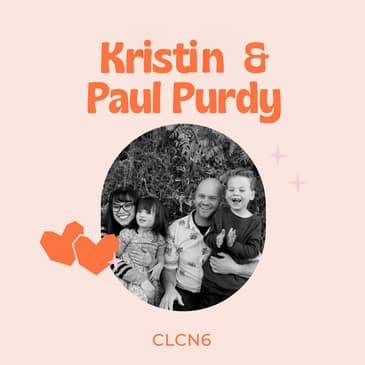
[00:00:55] Today, I have a wonderful, wonderful couple. I'm really honored to introduce them to you. After nearly eight years of searching, they finally received a diagnosis for their son's ultra rare disease called CLCN6. They're launching into advocacy with unstoppable energy and they're working toward an AAV gene therapy to help their son and others. They really touched my soul. They're really great storytellers. I know you're going to love our conversation. Please welcome Kristin and Paul Purdy.
[00:01:26] Hello. Welcome to the podcast. Hello. Hello. Thank you for having us. Thank you so much for having us. Yep. I'm really looking forward to having a conversation. I just watched a video this morning of Paxton's beautiful little face.
[00:01:38] Oh. And he made me smile so much and I heard all the things that I say about my own child in that video and I'm really looking forward to learning more about you. I know you're pretty fresh on the scene here so I'm excited to help introduce you and your family and your story for everyone else. So please, can I have a little introduction from the both of you?
[00:01:57] Sure. My name is Paul Purdy and this is also my wife Kristen Purdy is joining us.
[00:02:04] Yeah. And we are the, we feel like the very lucky parents of Paxton. He's such a wonderful boy and we're so happy that we can come on and talk about him.
[00:02:14] So give us a little information about Paxton. I know Paxton was diagnosed with an extremely rare disease called CLCN6.
[00:02:22] Yeah.
[00:02:22] Can you tell us a little bit about what led to that diagnosis and how it's going right now?
[00:02:27] Yeah. So Paxton just turned eight years old and when he was turning like one years old, we did a screening questionnaire at the pediatrician where they're looking for red flags for autism.
[00:02:41] And he had failed every milestone. So he got referred for early intervention services, speech, occupational therapy, even physical therapy at that time.
[00:02:53] And he always made very minimal progress. He ended up going on to receive an apraxia of speech diagnosis, childhood apraxia of speech, because he could say some words, but you could really see that motor planning with his mouth was a real challenge for him.
[00:03:12] As he grew, those motor planning challenges and those delays kind of persisted. And he really like plateaued specifically in terms of like gross motor, fine motor.
[00:03:22] He was always lagging behind his peers and could never seem to catch up. An example is you could sit him at a table and like give him like some yogurt and he could feed himself, but it would be really messy.
[00:03:34] And through all the therapies, he could never, he could never improve. Same with like the gross motor. He could walk. Running was very clunky. He could not go up the stairs though on his own.
[00:03:45] You have to, you'd have to hold his hand to help balance him for going up the stairs. All of those things though, were just kind of chalked up to the autistic experience.
[00:03:54] Well, when he turned five years old, so this is about two, just over two years ago now, cause it was in like July of 2022, he began having seizures and they seemed, I don't want to say benign, but they didn't seem like that big of a deal at first because it was more just causing like facial drooping, like eye fluttering.
[00:04:12] So we of course took him into the hospitals and you know, he underwent like CT scans. Nothing was discovered. They did more genetic testing with him. Nothing was discovered. And he was put on medications.
[00:04:26] The seizures eventually got so bad in about January of 2023 that he had to be hospitalized because he was beginning to have like the tonic clonic seizures every hour.
[00:04:36] We were able to get those under control by changing up some of his medications, but they've never been, they being the seizures have never been fully controlled because he always has them when he's sleeping multiple, multiple a night when he sleeps.
[00:04:51] That triggered our neurologist to make a referral to an epileptologist. And this epileptologist wanted to do more DNA testing. He ordered whole exome sequencing.
[00:05:04] So in November, December of last year, uh, me, Kristen and Paxton went in to get our blood work done.
[00:05:10] And I remember our genetics team when they were calling team schedules appointment, we're just kind of like, this is just the kind of check all the boxes.
[00:05:17] We just did genetic testing on you guys like a year ago, nothing was found, but you know, this doctor wants to be thorough. So we're going to do it.
[00:05:25] And I also remember what the day that they called us with, with the results. And it was just utterly shocking because we're hit with this news that your child has an ultra rare neurodegenerative mutation.
[00:05:42] And I remember asking, so what's the plan? How do we treat it? And the genetics counselor said, there's currently no treatment or no cure available.
[00:05:53] And she said, all the literature on this mutation is very limited. There's only about four children that are documented in the literature and that's all they had to go on for us.
[00:06:02] I'm annoyed about the genetic testing factor. If I can ask what genetic test you had before this last one that gave you the diagnosis.
[00:06:13] And if it wasn't like at least a whole exome sequencing, why hadn't anything else been ran?
[00:06:20] They did a microarray back in like 2018, looking for markers that would explain autism and intellectual disability.
[00:06:27] Nothing came up in the microarray. Once he began having the seizures, I think they just started testing for known genes that cause seizures that cause epilepsy and nothing came up.
[00:06:38] And it was the whole exome sequencing, as you had mentioned. That is what uncovered his mutation on the CLCN6 gene.
[00:06:47] Yeah, that really irritates me, especially since he's eight.
[00:06:49] You know, my son's eight and whole exome sequencing was the go-to answer even then for kids who were having symptoms like Paxton's.
[00:07:00] Anyways, I don't mean to digress. I just I get so frustrated with the lack of education and just, you know, pursuit of genetic testing that's still happening.
[00:07:11] It's very frustrating.
[00:07:12] Yeah.
[00:07:12] Yeah.
[00:07:12] I agree because, you know, parents like us and other parents out there with children who have these symptoms and they're not diagnosed yet or children that aren't even born yet, they're going to have mutations.
[00:07:24] It's wasting a lot of time.
[00:07:27] It's wasting more than time.
[00:07:28] Yeah. And how can we know what we don't know?
[00:07:30] You know, it's like so many parents are probably out there, you know, dealing with this stuff.
[00:07:34] And how could you know? Like we had no idea that this could be even a thing that we'd have to worry about.
[00:07:39] I know you sent me an email, Paul, and you described feeling overwhelmed by grief and both you, Kristen, obviously, and fear, especially when you receive a diagnosis like that.
[00:07:51] Can you talk about what it was like in those first days, in those first that blur probably of first weeks and months as a couple?
[00:08:00] And how have you began to find your footing in that?
[00:08:02] I remember the very moment that Paul told me and at first I didn't believe it.
[00:08:08] I was just like, what does this mean?
[00:08:10] You know, especially because they were like, oh, well, we'll reach back out to you in a few years and see how he's doing.
[00:08:16] And we were like, can we wait a few years? How is that going to work?
[00:08:20] So Paul, you know, he just started to spring into action and look for different research articles and start to take steps that we could find out more about this gene, if there was anything out there.
[00:08:33] So I actually contacted a group in Germany headed by a doctor named Thomas Gentz.
[00:08:40] They were the ones that had done first done research on CLCN6 mutations.
[00:08:45] So I sent them an email and they got back to me and they said that they wanted to do a study on him.
[00:08:52] So they have been working on that.
[00:08:54] We haven't been in touch with them for a little while, but yeah, we had just started emailing around and trying to get more information on these kinds of gene mutations,
[00:09:02] see if there was anything out there that could help to inform what Paxton had.
[00:09:07] Yeah, the grief is overwhelming.
[00:09:10] You know, as I kind of stated in the email that it consumes your life and you find yourself going through all the cycles except for acceptance because you are in denial.
[00:09:21] Like you're questioning, like maybe they made a mistake.
[00:09:23] Like why would it just come up, you know, now?
[00:09:25] And then there's obviously like the bargaining because there's nothing that you wouldn't do to try and get your child help or to try to make things right for them.
[00:09:33] That grief and that anxiety, though, as Kristen mentioned, while it consumed me to a point where there was just days, many days, many nights,
[00:09:43] you just wanted to go to sleep and not wake up in the morning because it's just too painful to deal with.
[00:09:49] But it's that reminder.
[00:09:50] It's like who's going to fight for them?
[00:09:52] You know, we have a daughter, you know, who needs us to.
[00:09:55] She's five years old.
[00:09:56] She is autistic, too.
[00:09:58] You know, so there's other people that need us.
[00:10:01] And now as our journeys kind of progress, like now we know that there's other families out there that are also going to be counting on us getting this research and this development done.
[00:10:10] But that anxiety and that guilt, I remember having a conversation with my younger brother over the summer.
[00:10:16] I said there was times I really contemplated contacting my doctor and getting an anti-anxiety, anti-depressant.
[00:10:22] But I stopped.
[00:10:23] I didn't do it because it is that exact fear and anxiety that drove me to keep looking to find someone that could help him.
[00:10:32] Because once I became equipped with the knowledge that the technology and the ability to develop treatments and even one day develop cures for these genetic mutations exist,
[00:10:43] I was determined to secure that for Paxton.
[00:10:45] Yeah, so we just tried to contact as many people as possible, researchers and doctors in the United States, out of the United States, you know,
[00:10:54] just emailing and trying to find out more information because we just had no idea what to do.
[00:11:00] Our medical team couldn't help us because they didn't have any information.
[00:11:03] So we were trying our best just to try to figure all of this out because it's just so scary not knowing what this mutation can do.
[00:11:12] And you asked us, you know, how did we find our footing?
[00:11:16] For me, once we found the researchers at University of Massachusetts, Worcester,
[00:11:21] and we found the Jackson Laboratory and were able to secure a mouse model to be funded through them through an NIH grant,
[00:11:29] that fear and anxiety still persist.
[00:11:31] But it's more managed because I know that there's a plan in place.
[00:11:36] And I know that if we can reach our goal, our fundraising goal, that Paxton can get the treatment, you know, that he needs.
[00:11:44] So our footing, I think, was found probably about April and then really became much more solid footing once things started progressing in terms of the mouse model and meeting with the UMass team.
[00:11:57] And I honestly feel like it wasn't until like two weeks ago when we had our last meeting with Dr. Miguel San Estevez at University of Massachusetts, Worcester's Chance School of Medicine,
[00:12:06] that I really felt like almost my old self again, almost my old self again, where I really felt like more optimism than dread.
[00:12:15] Grief and anxiety have such a powerful way to fuel your determination, right?
[00:12:22] And to help you pursue things that you don't even necessarily comprehend and understand yet.
[00:12:28] But you just know as a parent, right?
[00:12:30] Like that if there's a way, you can't unsee it.
[00:12:34] Right.
[00:12:35] Right, exactly.
[00:12:36] Well, you've done a really amazing job.
[00:12:38] I mean, getting a diagnosis in January and having a mouse model at Jackson Lab by April is extraordinary.
[00:12:44] Thank you.
[00:12:45] Yeah.
[00:12:46] The mouse model.
[00:12:47] Yeah, I think that was more like it was probably more like the summer that we got secured.
[00:12:51] But I do appreciate that nonetheless.
[00:12:54] Yeah, no, it's really impressive, especially when you're still kind of in the depths, right, of despair a little bit.
[00:13:00] And not that that ever really totally goes away, but it's really hard to function in a lot of ways.
[00:13:06] And I admire people who can just pick it up and go as quickly as possible.
[00:13:10] And I do understand the urgency, especially in your case.
[00:13:14] And I just you should be really proud of that.
[00:13:16] Thank you.
[00:13:17] We really appreciate it.
[00:13:18] Some days are really hard, but some days, you know, are better.
[00:13:22] And we try to just focus on what we can control and just try to stay positive and hopeful that what we need to get done can get done.
[00:13:29] I mean, the fundraising is obviously really stressful because it's a lot of money.
[00:13:33] But at the same time, we just have to keep going.
[00:13:37] Right.
[00:13:37] And you love your child so much like you feel like you have no other choice, even though it's so hard sometimes and you just feel so helpless sometimes.
[00:13:45] And I do want to add into part about the motivation and the drive.
[00:13:49] Since we kind of went public with this, like on social media back in September, we've been contacted by two other families.
[00:13:56] And Kristen can probably tell you about the one mother who's contacted her, but I've been contacted by a gentleman who's in Mexico.
[00:14:03] And both of their sentiments are just like ours.
[00:14:07] They were told that their child has this ultra rare genetic mutation.
[00:14:12] Not much is known about it.
[00:14:13] And that's all I get.
[00:14:15] There's not much we can do.
[00:14:15] I will say that knowing that there are other families out there, it's even like extra motivation.
[00:14:21] It's like Paxson's our son and we're going to do everything we can to help him.
[00:14:25] But now that we know that there are tangible other children out there who have been identified who would benefit from this gene therapy.
[00:14:34] I mean, it just really like drives you extra because now you feel like this extra responsibility to try to help these families.
[00:14:40] You know, we're in a position where we can contribute or we're going to at least try to contribute to the cell and gene therapy field by funding the development of this gene therapy.
[00:14:50] And not everyone can do that.
[00:14:52] So, you know, we I feel that we know we have a responsibility not only to our son, but to these other families to make this happen for them.
[00:14:58] The mother that reached out to me, she's really nice.
[00:15:01] She's been going through this with her daughter for a while.
[00:15:03] I think she's about five.
[00:15:05] She started having seizures when she was a baby and she had no idea what to do.
[00:15:10] And I obviously can't give her medical advice or anything, but I was just helping her.
[00:15:14] I was just telling her what we were going through and helping her explore what her next steps are.
[00:15:18] And she made me cry because she said, you may have well saved my daughter's life with these different kinds of ideas that you were giving me.
[00:15:27] You know, she was able to contact different hospitals and try to get this ball rolling for her.
[00:15:32] That was so touching to me that she had that response to me.
[00:15:36] I love both of those responses so much.
[00:15:38] One, that you realize that you're not alone and that you have even more conviction to make change because it's not just about your child.
[00:15:46] And two, the power of telling your story, right?
[00:15:49] And never knowing who it reaches.
[00:15:51] And then if you do magically find out that you've reached someone and to have them express their gratitude in a way like that.
[00:15:57] It is so true.
[00:15:58] And I hear this all the time.
[00:16:01] Once Upon a Gene definitely serves as like a guidepost in the rare disease community for these stories.
[00:16:06] And the impact and how far they go is immeasurable.
[00:16:10] And I wonder, are the two of you planning on continuing?
[00:16:14] Obviously, you are since you're here and you've messaged me.
[00:16:17] But since both of you have kind of had these experiences from telling your story just since September,
[00:16:23] what more do you want to do on that front?
[00:16:26] And what's your mission going forward with your story?
[00:16:29] We've already done a news story.
[00:16:32] So we did like a local news story, but we definitely want to reach out more to media, both locally and nationally,
[00:16:39] to see that if that can also help us tell our story.
[00:16:41] We also are just trying to post.
[00:16:44] Paxton has a page on Facebook called Paxton's Pioneers.
[00:16:47] So we try to post there regularly in the hopes that people will find us.
[00:16:51] It's on Facebook and on Instagram and on TikTok.
[00:16:54] So we try to be on social media consistently.
[00:16:58] Paul, do you have anything to add to that?
[00:17:00] Yes.
[00:17:01] I want to share a story with anyone who's willing to listen, frankly, because this is such a rare disease
[00:17:09] that not many people know about it.
[00:17:12] So I want to share with as many people as we can.
[00:17:15] And there's a couple reasons for that.
[00:17:18] One is to raise awareness that these mutations do exist and that there's likely handfuls, if not hundreds,
[00:17:26] or even thousands of other children out there who have this mutation, who are suffering,
[00:17:30] and they're not receiving the proper testing.
[00:17:33] And that's what you alluded to early, Effie, when you get frustrated with, like,
[00:17:36] why is whole exome sequencing not like the go-to, that there's other children out there.
[00:17:40] So if other parents hear this, that it could spark a thought in their head to seek out that whole exome sequencing testing for their child
[00:17:49] so that they can get some answers and start getting some direction and hopefully support that they will need in the coming years.
[00:17:56] Two other reasons.
[00:17:57] One is fundraising purposes for our mission, for our nonprofit, so that we can develop this gene therapy,
[00:18:04] which would benefit Paxton as well as these other children that we've expressed
[00:18:09] and the other children out there who have not been identified or diagnosed yet.
[00:18:13] And then the third part is to find those families so that we can form a group.
[00:18:19] Because collectively, if we can show that there is a need for research and development
[00:18:25] into therapeutics, into treatments for this mutation type,
[00:18:29] coming together, you know, as many to form a voice,
[00:18:32] is I think going to be much more impactful than just me and Kristen trying to do it.
[00:18:36] Or even including the other families, because we have two other families.
[00:18:40] We want to form a coalition so that we can advocate for more research into treating
[00:18:45] and even one day creating a cure for this mutation.
[00:18:48] Well, I'm going to give you both some homework today.
[00:18:51] Okay. So I need you to go listen to episode 94.
[00:18:55] Okay. It's the 12 commandments to guide you when you're starting your own rare disease patient advocacy group.
[00:19:00] I would say don't wait. I would say do it tonight.
[00:19:03] You don't need a bunch of patients and a bunch of interest or anything.
[00:19:08] You start now and collect your people now and be that lighthouse, right?
[00:19:13] My friend Mike always says, we're here, we're here, we're here.
[00:19:15] And that's what you need to do is you need to create that patient advocacy org now.
[00:19:18] So there's your homework. Okay.
[00:19:20] Got it. Well, thank you.
[00:19:21] We'll do that.
[00:19:22] That's great.
[00:19:23] Let's talk about that vision for the future that you have.
[00:19:25] You're already working really hard.
[00:19:26] You have a goal to raise millions of dollars.
[00:19:29] The plan is for an AAV gene therapy.
[00:19:31] So give us some information on your path ahead.
[00:19:34] Okay. So we are currently working with University of Massachusetts,
[00:19:38] Worcester Chan School of Medicine and their gene therapy center,
[00:19:41] the Hore Gene Therapy Center,
[00:19:43] to develop a gene therapy using the AAV9s.
[00:19:47] The mouse model, as I mentioned at the, in the beginning,
[00:19:50] is being completed by the Jackson Laboratory.
[00:19:52] And that was being funded through a grant through the National Institute of Health.
[00:19:57] To develop the kind of like the plan of how to study and treat this mutation,
[00:20:03] there was meetings with Jackson Laboratory,
[00:20:06] University of Massachusetts, Worcester's researchers.
[00:20:10] And as Kristen mentioned earlier,
[00:20:11] even the researchers in Germany at the Max Delbruck Center for Molecular Medicine
[00:20:15] got onto a couple of Zoom calls with us so that they could give their input as well.
[00:20:20] So it really kind of felt like an international, you know,
[00:20:23] effort to even start designing this plan of concept.
[00:20:26] So where we are right now was the last update from Jackson Laboratory was in,
[00:20:31] I think it was in like November.
[00:20:33] Early December, I think. Yeah.
[00:20:35] Thank you, Kristen.
[00:20:35] And a couple of the mice with the mutation that they want to study have been born.
[00:20:41] I also want to note that when the researchers were all meeting the three different groups I mentioned,
[00:20:47] they decided it would be best practice to not study Paxton's specific mutation,
[00:20:53] but to study one of the ones in the literature as that presented with a much more severe phenotype.
[00:20:59] The reason for that was they didn't want to wait for the mouse to start getting sick enough
[00:21:04] to where they could start testing the medicine.
[00:21:06] So they went with the more severe mutation type.
[00:21:09] We met with Dr. Miguel Sana Estevez about two weeks ago.
[00:21:14] I think it was on December 3rd.
[00:21:15] And Dr. Miguel, he was very pleased with the feedback on the mouse model so far
[00:21:20] because it looks like things are no hiccups so far.
[00:21:23] It looks like things are going along smoothly, you know, with that.
[00:21:26] And they, being UMass, are ready to begin the vector design in January.
[00:21:33] So just in a couple of weeks.
[00:21:35] We have raised about $53,000 so far.
[00:21:40] And that is mostly, in fact, that's all just been through like social media, family, friends,
[00:21:46] you know, a little bit of the media coverage, you know, that we've been able to get.
[00:21:48] But we're glad that we started doing that because we're going,
[00:21:52] we now have that $40,000 that UMass needs so that they can begin the vector design.
[00:21:57] So we're going to be sending that over to them before the end of the year.
[00:22:01] And from there, I'm not really sure what the next step is off the top of my head.
[00:22:06] They did send us like the budget and the projected timeline.
[00:22:10] But I know Dr. Miguel said the safety and efficacy testing takes the longest part.
[00:22:15] And that is going to be, and it takes about a year to complete the mouse model.
[00:22:18] So I think sometime in spring, like probably like summer, that the next phase would be getting.
[00:22:24] Yeah, again, just really impressed with this timeline.
[00:22:27] And it's exciting to talk to a new family who's jumped in in this way.
[00:22:33] And for those families listening who are maybe newly diagnosed or just finally coming up for some air,
[00:22:40] who can relate to this sort of emotional whiplash like you,
[00:22:44] what sort of advice do you have on one, how to support each other as husband and wife going through this,
[00:22:51] while also, you know, suddenly becoming advocates and researchers and fundraising, having another child.
[00:22:58] What would you say to that family who's finally thinking that maybe there's something they can start to do?
[00:23:04] That is a lot.
[00:23:05] And it's something that doesn't easily come to my mind because we're still going through it.
[00:23:13] Maybe I can try to answer them maybe like one at a time.
[00:23:16] So you asked, what can you do to support each other as husband and wife?
[00:23:20] You know, honestly, it's the first time that Chris and I have gone through something like this emotionally intense,
[00:23:27] where I felt like I was grieving the loss of my child who's sitting right next to me.
[00:23:31] You know, I feel like I was grieving someone that's still there.
[00:23:35] It's really easy to want to just close yourself off to the world and to isolate yourself even from your own wife.
[00:23:41] But it's not helpful.
[00:23:43] It's not a good idea.
[00:23:44] You have to be working together as a tandem because this is by far the biggest challenge that we've ever faced and hopefully will ever face.
[00:23:54] And you have to be a unified front.
[00:23:56] You have to stick together, you know, through it.
[00:23:58] And when it says through better or worse, you know, sickness and health, this is what it means.
[00:24:03] You know, you don't think it's ever going to happen to you, but any day it can.
[00:24:07] Chris, was there anything you wanted to add to that?
[00:24:09] Yeah, I mean, it's really hard sometimes, you know, Paul and I might be grieving on different days or going through different things.
[00:24:16] You know, I think it hit Paul a lot harder, especially at first because I'm a psychologist, so I'm often very busy and distracted.
[00:24:24] And I think it hit me a little bit later.
[00:24:26] So also just kind of meeting your partner where they're at and, yeah, just being there for them emotionally and trying to understand kind of where they're at emotionally in all of this.
[00:24:35] Knowing that some days are going to be really hard.
[00:24:39] But I also just think, too, like, you know, taking it one step at a time, you know.
[00:24:43] Sometimes we feel really anxious and really overwhelmed and sometimes hopeless.
[00:24:47] But I think it's just, you know, focusing on what do we have to do next and how can we do that together?
[00:24:53] How can we work with each other and be a team and all of this?
[00:24:56] And Effie, were you also asking us maybe what might be some advice to parents who are listening and they're kind of new to the rare disease world as well?
[00:25:03] Maybe they just received a diagnosis.
[00:25:04] Yeah, maybe they just received a diagnosis or maybe they finally just have some capacity and, you know, they've maybe come out of that dark, deep trench and maybe want to get involved.
[00:25:16] Okay.
[00:25:17] Yeah, my advice there would be every day is an opportunity.
[00:25:22] Every day is an opportunity to raise awareness of your child's challenges, to raise awareness of the work you're trying to do for your child.
[00:25:30] And you cannot do it alone.
[00:25:33] No matter how much you think you might, you cannot do it alone.
[00:25:37] And the good news is that you don't have to.
[00:25:40] We're very new to the rare disease community.
[00:25:42] But every time we have a conversation with someone, extremely empathic individuals who will do anything they can to try to help.
[00:25:51] And that is what we want to be as well.
[00:25:55] We want to give back to the rare disease community as well because that's what it means to be part of a community.
[00:25:59] It's like you're getting something from it, but you have to give something, you know, to it as well.
[00:26:03] The other thing I would tell parents, and I apologize because I cannot remember the name of the woman's foundation that she has for her child.
[00:26:14] A quote that she had on her page really stuck with me.
[00:26:16] And it said that the ability and the technology to develop treatments and one-day cures for all these genetic mutations exist.
[00:26:27] But we have to be the ones that spearhead it.
[00:26:29] Because when you're dealing with these ultra-rare diseases, the patient population is so small, they don't get invested into.
[00:26:36] But it doesn't mean that it can't happen.
[00:26:38] You just have to be willing to do the work.
[00:26:41] And if you feel that you're not able to do the work, find a community, find people who can help you.
[00:26:47] Because a treatment is definitely possible.
[00:26:49] A cure is probably possible just much further down the road based on what Dr. Miguel told me.
[00:26:53] But a treatment is definitely possible, you know, for your child.
[00:26:58] So don't stop fighting.
[00:26:59] I think starting with your podcast, Effie, Once Upon a Gene, would be a great starting point.
[00:27:05] Could also look at Global Genes and MyGene2.
[00:27:09] You were also some helpful resources for us along the way.
[00:27:13] Yeah, we're realizing more and more as we're going through this, what a community this is.
[00:27:17] I mean, there are a lot of other parents going through this, maybe not with our particular mutation, but with other mutations.
[00:27:23] And having to deal with all of this, all these families that have to, like, do all this work on their own.
[00:27:29] And I just wanted to kind of talk about how Paul had posted on social media about another foundation called the Raiden Science Foundation.
[00:27:38] And how they're doing great work in advancing the research into future treatments for neurological diseases.
[00:27:45] And they commented back, you know, that we all win when we advance science with this funding.
[00:27:52] And I just thought that was so powerful.
[00:27:54] And, you know, we're not alone.
[00:27:56] We're all in this together.
[00:27:57] And I'm realizing that more and more.
[00:28:00] Yeah, I'm very moved by you as people and parents.
[00:28:03] And I really look forward to helping you get plugged in even more.
[00:28:07] Also, I'm very happy to have another psychologist among families like ours sign up.
[00:28:12] Thank you for just embracing what's possible and for using that as sort of your guiding light.
[00:28:17] I really appreciate you sharing your story with me.
[00:28:20] And I hope it helps you find more families.
[00:28:22] And I hope it helps lift off what you're doing even faster.
[00:28:27] So I guess if there's anything else that you want to leave for the listeners,
[00:28:32] any ways that perhaps people can show up and support your efforts, just let us know.
[00:28:38] Yeah, I think there is one thing I want to end with.
[00:28:40] And Kristen, if you do as well, please do.
[00:28:43] Before I kind of give my closing statement of my mission,
[00:28:46] what's driving me in this journey.
[00:28:47] For more information on our foundation, you can visit CureClcn6.org.
[00:28:57] CureClcn6.org.
[00:28:59] Also on Facebook called Paxton's Pioneers.
[00:29:02] And we named it Paxton's Pioneers because we feel that we are blazing a trail
[00:29:06] to the new frontier of medicine, gene therapy.
[00:29:09] And the other thing I wanted to share was,
[00:29:12] I remember the moment that the genetics counselor gave us the diagnosis
[00:29:17] and being told your child has a neurodegenerative condition.
[00:29:23] There's currently no treatment.
[00:29:25] There's no cure.
[00:29:26] We'll follow up with you in two years to see how he's doing.
[00:29:29] No parent should ever, ever have to go through that experience.
[00:29:34] And as we know now, with the technology and the advances in science,
[00:29:39] one day they won't have to.
[00:29:42] It's a big field, but we want to do our part to contribute to it
[00:29:45] so that parents do not have to go through what we went through.
[00:29:49] They do not have to hear those words from their medical team.
[00:29:52] That is our mission.
[00:29:54] So even after we secure, you know, developing this gene therapy
[00:29:58] and helping Paxton get the help he needs,
[00:29:59] our mission doesn't end.
[00:30:01] Our journey doesn't end.
[00:30:02] We keep going to advocate and fight for the other parents,
[00:30:05] to be a voice for the voiceless,
[00:30:07] to fight for those who can't fight,
[00:30:09] to help those who need it.
[00:30:11] I think you said that perfectly, Paul.
[00:30:12] You really did.
[00:30:14] No, really beautiful.
[00:30:15] Thank you so much for sharing that.
[00:30:17] Well, Paul and Kristen, thank you so much.
[00:30:19] And keep it up and good job.
[00:30:21] And I'm sure I will see you sooner than later.
[00:30:23] Thank you so much, Effie.
[00:30:25] This was so amazing that we were able to have this opportunity to speak with you.
[00:30:28] Yeah, it's my absolute pleasure.
[00:30:29] Thank you so much, Effie.
[00:30:31] I hope you've been enjoying this podcast.
[00:30:34] If you like what you hear, please share this show with your people.
[00:30:38] And please make sure to rate and review it on iTunes
[00:30:40] or wherever you get your podcasts.
[00:30:43] You can also head over to Instagram, Facebook, and Twitter
[00:30:46] to connect with me and stay updated on the show.
[00:30:49] If you're interested in sharing your story
[00:30:51] or if you have anything you would like to contribute,
[00:30:54] please submit it to my website at effieparks.com.
[00:30:58] Thank you so much for listening to the show
[00:31:00] and for supporting me along the way.
[00:31:01] I appreciate you all so much.
[00:31:03] I don't know what kind of day you're having,
[00:31:05] but if you need a little pick-me-up,
[00:31:07] Ford's got you.
[00:31:09] Ha ha ha!
[00:31:10] Ha ha ha!
[00:31:11] Ha ha ha!
[00:31:11] Ha ha ha!
[00:31:12] Ha ha ha!
[00:31:12] Ha ha ha!