

ONCE UPON A GENE - EPISODE 245
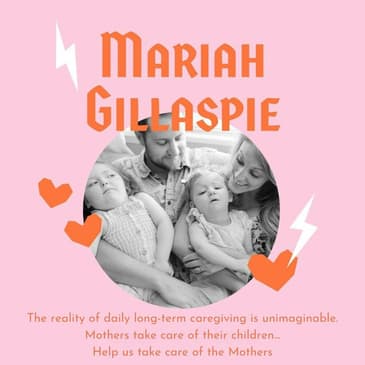
Finding Strength in Friendship - Building In-Person Connections for Special Needs Moms with Colorado Mama Tribe - Mariah Gillaspie
Mariah Gillaspie is the mom of Abby and Emma, who both have a genetic condition called THAP12, and they're the only known patients in the world. Mariah is the Founder of Lightning and Love and an active rare disease advocate. Most recently, she's shifted her focus to community and established the Colorado Mama Tribe.
EPISODE HIGHLIGHTS
Can you tell us about the Colorado Mama Tribe?
It's been a passion project for me that came out of necessity. When I was new to raising children with rare disease, I was very alone and lost, desperate to find someone who shared a similar story to me. It started with a small group of moms getting together and we've now grown to 400 members. We have monthly meetups for moms, which serves as a social opportunity, but also an opportunity to share and be supported by a community who gets it. We also have a yearly respite retreat and we put together care packages for moms in the hospital with their kids. We recently started providing free group and individual therapy for moms and we've started a bereavement group.
How do you fundraise and support your programming?
As we've grown, we've assembled different committees and we have an amazing fundraising committee who is rocking it. As a board, we largely handle fundraising and logistics to keep events mostly free and subsidized to take the burden off moms so they feel supported and taken care of through our offerings.
What advice do you have for other parents who want to create something for their own community?
It only takes a few people to commit to setting a time and place and showing up. Month after month, more and more people will show up and it can grow naturally. Set up a Facebook group, communicate dates and times and people will come.
How has your self-care shifted through your pivot?
Self care looks different and there's no time for bubble baths or massages right now. Colorado Mama Tribe has been a huge part of my self-care, forcing me to get out of the house, take time for myself away from my family and meet up with friends. I spend time out and about to reset, commiserate and celebrate. Additionally, it makes me feel better connected to my daughters because I'm allowing myself balance.
LINKS & RESOURCES MENTIONED
Colorado Mama Tribe on Facebook
https://www.facebook.com/groups/coloradomamatribe
Lightning and Love
https://www.lightningandlove.org/
ONCE UPON A GENE - Episode 074 - Rare Disease Mom Chat with Mariah Gillaspie - Lightning and Love Foundation
https://effieparks.com/podcast/episode-074-lightning-and-love-foundation
CONNECT WITH EFFIE PARKS
Website
https://effieparks.com/
https://twitter.com/OnceUponAGene
https://www.instagram.com/onceuponagene.podcast/?hl=en
Built Ford Tough Facebook Group
https://www.
facebook.com/groups/1877643259173346/
[00:00:03] [SPEAKER_01]: I'm Effie Parks, Welcome to Once Upon A Gene, a podcast.
[00:00:08] [SPEAKER_01]: This is a place I created for us to connect and share the stories of our not-so typical lives.
[00:00:14] [SPEAKER_01]: Raising kids who are born with rare genetics and drones and other types of disabilities
[00:00:18] [SPEAKER_01]: can feel pretty isolating. What I know for sure is that when we can hear the triumphs
[00:00:24] [SPEAKER_01]: and challenges from others who get it, we can find a lot more laughter, a lot more hope
[00:00:29] [SPEAKER_01]: and feel a lot less alone. I believe there are some magical healing powers that can happen
[00:00:34] [SPEAKER_01]: for all of us through sharing our stories, and I'll take all the help I can get.
[00:00:43] [SPEAKER_00]: Once Upon A Gene is proud to be part of Bloodstream Media, living in a family
[00:00:48] [SPEAKER_00]: affected by rare and chronic illness can be isolating. And sometimes the best medicine
[00:00:53] [SPEAKER_00]: is connecting to the voices of people who share your experience. This is why
[00:00:57] [SPEAKER_00]: Bloodstream Media produces podcast blogs and other forms of content for patients, families
[00:01:02] [SPEAKER_00]: and clinicians impacted by rare and chronic diseases. Visit BloodstreamMedia.com to learn more.
[00:01:08] [SPEAKER_01]: Hello and welcome to the podcast. This is Once Upon A Gene, and I'm your host Effie Parks.
[00:01:14] [SPEAKER_01]: Thank you so much for taking the time out of your precious precious day to spend it with me.
[00:01:20] [SPEAKER_01]: I really appreciate it. If you haven't yet left a rating or review on Apple podcasts,
[00:01:26] [SPEAKER_01]: could you hook a sister up and go do that for me? Having a review to read
[00:01:31] [SPEAKER_01]: really helps someone decide whether they want to listen to my show or something else.
[00:01:35] [SPEAKER_01]: And you know how magical and amazing the show is, so please if you could go do that,
[00:01:38] [SPEAKER_01]: I'd really appreciate it.
[00:01:39] [SPEAKER_01]: And if you screenshot it and share it in your stories or send it to me,
[00:01:43] [SPEAKER_01]: I'll send you someones, punishing stickers. Okay? Who doesn't need a sticker
[00:01:45] [SPEAKER_01]: for their laptop or their water bottle? Okay. When you're listening to this,
[00:01:48] [SPEAKER_01]: if you're listening to it, the date comes out. I'm going to be at the Global
[00:01:53] [SPEAKER_01]: Jeans Rare Advocacy Summit in Kansas City, September 25th through the 28th.
[00:01:59] [SPEAKER_01]: I'm so excited to see my friends and person. We're talking about friends and
[00:02:04] [SPEAKER_01]: person a lot in this episode you're about to listen to, so I'm excited.
[00:02:07] [SPEAKER_01]: If you don't know where I go. Let's be from an old episode. You're going to
[00:02:11] [SPEAKER_01]: adore her. She's just so smart and she's so emotionally intelligent.
[00:02:16] [SPEAKER_01]: And I can tell that she really processes her feelings and stuff that she's going
[00:02:20] [SPEAKER_01]: through and she reflects on it in such a way that she has such beautiful
[00:02:24] [SPEAKER_01]: wisdom and advice to give on the matters. She has two super-rec girls
[00:02:30] [SPEAKER_01]: and she was the founder of Lightning in Love Foundation. She still works in
[00:02:35] [SPEAKER_01]: Rare Disease Patient Advocacy Research stuff, but she's also pivoted a little bit
[00:02:39] [SPEAKER_01]: to something maybe you've heard of called the Colorado Mom Tried.
[00:02:43] [SPEAKER_01]: So we are talking about her shift sort of from solely working on treatments
[00:02:47] [SPEAKER_01]: and cures for research to friendships and community. Enjoy this episode with
[00:02:52] [SPEAKER_01]: Mariah, I know you're going to love it. Okay, hi Mariah. Welcome back to the podcast.
[00:02:57] [SPEAKER_01]: Hey F. E. M. So glad to be here. It's been a while.
[00:03:00] [SPEAKER_01]: I know me too. For anyone who doesn't know Mariah yet, head back to episode
[00:03:06] [SPEAKER_01]: 74 back in like the very beginning where I interviewed her.
[00:03:11] [SPEAKER_01]: We've been trying to nail down another time for a long time. You know how it goes.
[00:03:13] [SPEAKER_01]: I'm really excited to have her here and give us some updates on on her path.
[00:03:18] [SPEAKER_01]: So Mariah, for anyone who doesn't know or who needs a reminder, can you please give us
[00:03:22] [SPEAKER_03]: an introduction? Yeah, absolutely. So like I've said, my name is Mariah
[00:03:26] [SPEAKER_03]: and I recorded back I think a couple years ago now when I was still a little bit
[00:03:32] [SPEAKER_03]: earlier on in my journey. I have two daughters. My oldest Emma is now seven
[00:03:38] [SPEAKER_03]: and my younger daughter Abby is now five. And they were both diagnosed with a
[00:03:44] [SPEAKER_03]: genetic condition called that 12. And until now, there's still the only two
[00:03:49] [SPEAKER_03]: people in the world that have their specific genetic condition. And back when I first
[00:03:54] [SPEAKER_03]: recorded with F. E. We had pretty recently launched our research foundation called
[00:03:59] [SPEAKER_03]: Lightning in Love. And we've been doing a bunch of work trying to understand
[00:04:05] [SPEAKER_03]: their gene better. We've been searching everywhere for any other cases, but
[00:04:10] [SPEAKER_03]: unfortunately we are still the only two cases of that 12 that we found. My girls both
[00:04:16] [SPEAKER_03]: are wheelchair dependent. They have epilepsy. They use a G tube to eat and they're
[00:04:22] [SPEAKER_03]: nonverbal, but you know they're just the most wonderful girls. And I've had so much
[00:04:27] [SPEAKER_03]: fun jumping into the research world getting to know so many amazing people in this
[00:04:32] [SPEAKER_03]: community like U. F. E. And so glad to be here to provide some updates on where things
[00:04:37] [SPEAKER_01]: have been. Awesome. Yeah, you've been such a force for your daughters, Maria. And it's been
[00:04:41] [SPEAKER_01]: such a joy to follow you over the years and see the girls grow up. And congratulations.
[00:04:47] [SPEAKER_01]: You also had a little baby boy. Oh my god. Maybe longer. I don't know what time
[00:04:51] [SPEAKER_03]: it is right now. He's still little buddy. He's won and he's keeping me just as busy.
[00:04:56] [SPEAKER_03]: Maybe that's why it's taken us so long to sign to time to meet up again. Totally. Yeah,
[00:05:01] [SPEAKER_01]: maybe that's a conversation for another future podcast of having him after the
[00:05:06] [SPEAKER_01]: girls. But today we have a different topic that we're going to talk about because I know
[00:05:09] [SPEAKER_01]: how immersed you were in lightning and love and doing the research and funding
[00:05:14] [SPEAKER_01]: and all of that stuff and learning the science and you've completely shifted your advocacy
[00:05:19] [SPEAKER_01]: focus to more of a community focus. And it's something called the Colorado
[00:05:24] [SPEAKER_01]: Mom's Tribe. So if you could give us a little info on what the Colorado mom's
[00:05:29] [SPEAKER_01]: tribe is and then maybe we can talk about that moment that you realized maybe fighting for
[00:05:35] [SPEAKER_01]: a cure for the girls wasn't the only way to heal your heart. Yeah, that's a great way
[00:05:39] [SPEAKER_03]: to put it. Yeah, my matribe has really been a passion project for me and for the women
[00:05:45] [SPEAKER_03]: that run it with me. It really came out of necessity. You know, back when my girls
[00:05:51] [SPEAKER_03]: were very first diagnosed, especially Emma when I was really brand new to this journey
[00:05:56] [SPEAKER_03]: of raising a kiddo with the disability and a rare disease. I was so alone and so lost
[00:06:02] [SPEAKER_03]: and I think that that is a feeling that a lot of moms have. A lot of families have
[00:06:07] [SPEAKER_03]: when they first get a diagnosis or they first realize that their journey is going
[00:06:11] [SPEAKER_03]: to look very different than they haven't anticipated. And you know, back how many years
[00:06:15] [SPEAKER_03]: ago, almost seven years ago now podcasts weren't quite as popular as they are now.
[00:06:21] [SPEAKER_03]: And I was so desperate to find one anybody that could share a story with me. That was similar
[00:06:29] [SPEAKER_03]: to what I was experiencing. So thank you for having this podcast now for so many parents
[00:06:34] [SPEAKER_03]: that are especially new to this journey. But you know, back then I was just so alone
[00:06:38] [SPEAKER_03]: and I think my solution was, well, if this community has an exist, I'm going to go create
[00:06:44] [SPEAKER_03]: it. So it started off just with, you know, I think we had six people at our first get together
[00:06:51] [SPEAKER_03]: and it was just people that I had met through different areas of the community different
[00:06:55] [SPEAKER_03]: therapies or school or just different, you know, even at the hospital people that I would
[00:07:01] [SPEAKER_03]: meet that had kiddos similar to mine. Now, it's like let's get together and just
[00:07:05] [SPEAKER_03]: chat it out. And that was in, I think, 2019, 2020. And like I said, there were six
[00:07:11] [SPEAKER_03]: people at that first get together and now we have almost 400 in our group. And we provide
[00:07:17] [SPEAKER_03]: monthly meetups for moms that, you know, it's not just about getting together and socializing,
[00:07:24] [SPEAKER_03]: but it's about venting about all of the struggles that we go through. And it's about sharing
[00:07:29] [SPEAKER_03]: all of the milestones, the inchstones for us often. And just having a group of people that
[00:07:36] [SPEAKER_03]: are seeing what we're going through because I don't think you truly understand unless you've
[00:07:41] [SPEAKER_03]: experienced this life. And so really having a community that gets it has been kind of
[00:07:46] [SPEAKER_03]: life-saving for me, I know and for a lot of the women in our group, it's a life-fine. And
[00:07:51] [SPEAKER_03]: we're growing as we go to. So we have a yearly respite retreat. We provide care packages
[00:07:59] [SPEAKER_03]: to moms that are in the hospital with their kiddos. We recently started providing free
[00:08:05] [SPEAKER_03]: group and individual therapy for our moms. And then unfortunately, we recently started our
[00:08:11] [SPEAKER_03]: briefment support group. So we have kind of a variety of things and it's been a blast to get
[00:08:17] [SPEAKER_03]: it going and to get this community as strong as it is but it's busy. Oh my gosh, that's so beautiful.
[00:08:23] [SPEAKER_01]: I feel like my soul is nourished just by knowing this like exists and I'm so happy that
[00:08:29] [SPEAKER_01]: 400 moms so far have found you. I know, especially love the touch of knowing when one of them
[00:08:35] [SPEAKER_01]: have a kid in patient and they get a little zest in there. That's really cool. So do you have
[00:08:40] [SPEAKER_01]: everyone in the group kind of contributing like to the fundraising aspect of this or is
[00:08:45] [SPEAKER_03]: this something you and the board sort of take care of? So we as we've grown have started
[00:08:50] [SPEAKER_03]: different committees so we do have a really amazing fundraising committee that is rocking
[00:08:54] [SPEAKER_03]: it. So for the most part, we handle the fundraising and all the logistics as a board
[00:08:59] [SPEAKER_03]: and as a leadership committees. And we try to keep that for as much as possible outside
[00:09:04] [SPEAKER_03]: of the work of the group itself and through that fundraising we're able to provide most
[00:09:09] [SPEAKER_03]: of these events for free. Everything is very subsidized so we keep our retreat very inexpensive,
[00:09:15] [SPEAKER_03]: the therapy we provide is free all of that. So we're really trying to take a burden off
[00:09:20] [SPEAKER_03]: of our moms and let them come join this community and just be taking care of and feel
[00:09:25] [SPEAKER_03]: supported through everything that we can offer. I'm so happy you said that I think there
[00:09:30] [SPEAKER_01]: can be such fatigue and burden in feeling obligated and required to fundraise for things on
[00:09:37] [SPEAKER_01]: top of everything else that you're already doing and also fundraising over here. So I
[00:09:40] [SPEAKER_01]: love that you try to take that off of them as much as possible unless it's like their
[00:09:43] [SPEAKER_01]: gift, you know, and they want to really do that and get pet up for it. I love that
[00:09:47] [SPEAKER_01]: you don't feel obligated to contribute in that way or maybe you're not worth it.
[00:09:51] [SPEAKER_03]: Yeah. What we've learned is that different moms have different passions. I am not a fundraising
[00:09:55] [SPEAKER_03]: mom but we have some in our group that that's their passion and they're so good at it.
[00:10:00] [SPEAKER_03]: And I mean, we couldn't do it without them. So you know, we really are a team effort and
[00:10:04] [SPEAKER_03]: the moms that want to be involved step up and have contributed and you know, we're hosting
[00:10:09] [SPEAKER_03]: our very first leadership summit this January where we can all kind of come together
[00:10:13] [SPEAKER_03]: and dream up the vision for Colorado Mama tribe together and you know, everybody
[00:10:18] [SPEAKER_03]: that has their passions or able to contribute what they are good at and what they're interested
[00:10:22] [SPEAKER_03]: in. So it's been really beautiful to watch this community grow so naturally just based on
[00:10:27] [SPEAKER_03]: what, you know, what moms are interested in passionate about. So cool. How has this changed
[00:10:33] [SPEAKER_01]: or like shifted your day to day life from patient advocacy or a leader for lighting
[00:10:38] [SPEAKER_03]: and love to the Colorado mom tribe? You know, they both feed my soul in such different
[00:10:44] [SPEAKER_03]: ways running lightening and love and which is something I'm still doing but it was so
[00:10:50] [SPEAKER_03]: hard to move quickly. Research just moved slow and it had so many bumps along the way,
[00:11:00] [SPEAKER_03]: you know, you get something exciting. I remember we got our mouse model funding and we were
[00:11:04] [SPEAKER_03]: so excited to get that started and then once we generated it, the mice didn't live past
[00:11:11] [SPEAKER_03]: embryostages. The gene is too critical to life that we couldn't even get a live mouse model
[00:11:16] [SPEAKER_03]: and that whole process took probably a year. And so it was this up and down of so exciting
[00:11:21] [SPEAKER_03]: we're making progress to this very devastating loss. And that's just what the research
[00:11:26] [SPEAKER_03]: world is and especially for an in-of-two disease, you know, with my girls being the only
[00:11:31] [SPEAKER_03]: two gaining traction for a full on cure is just something that I'm learning. It may not
[00:11:37] [SPEAKER_03]: be in the cards for us at this point in time. You know, it may be that my girls
[00:11:43] [SPEAKER_03]: versus getting a cure are just going to provide this information and this critical
[00:11:48] [SPEAKER_03]: understanding towards science. And that's okay, but I think that that was such a beautiful
[00:11:55] [SPEAKER_03]: way for me to heal from this difficult diagnosis. But I think having this other site to it
[00:12:04] [SPEAKER_03]: where I get to have a more day-to-day impact and a more active advocacy role has really
[00:12:10] [SPEAKER_03]: that micell in another amazing way. And so it's busier, Colorado Mama tribe is much
[00:12:15] [SPEAKER_03]: busier when you think of running an organization of almost 400 women completely voluntarily
[00:12:21] [SPEAKER_03]: with a full-time job in a one year old. So let me tell you. But you know, it's just been
[00:12:25] [SPEAKER_03]: so much fun because it's such good relationship building. I've gotten to meet so many
[00:12:31] [SPEAKER_03]: moms that have changed my life. You know, my best friends are now in this group. And if
[00:12:35] [SPEAKER_03]: I am down with the girls or going through a hard part or at a hospitalization, like they
[00:12:40] [SPEAKER_03]: are there for me in a heartbeat. And I don't know how I did it before them. I don't know
[00:12:45] [SPEAKER_03]: how I did it before this community and that's something that we hear a lot of moms say
[00:12:49] [SPEAKER_03]: over and over again is like, I don't know how I survived this life without you all. So
[00:12:53] [SPEAKER_03]: two very different different parts of this journey into both equally beautiful parts that
[00:12:59] [SPEAKER_01]: I'm so thankful to be able to lead. Oh, that was such a beautiful explanation. And if
[00:13:04] [SPEAKER_01]: anyone can do it, more I can. I know it. So stepping back from from the rare disease research
[00:13:12] [SPEAKER_01]: sort of bubble, I know we were kind of chatting in the DMs the other day and you were saying
[00:13:17] [SPEAKER_01]: something about how it was used sort of like letting go of a certain type of hope. I don't
[00:13:23] [SPEAKER_01]: know if that's exactly what you said. But I wonder how did you practically process any sort
[00:13:28] [SPEAKER_01]: of grief from that or guilt from moving away from such like intense advocacy work in the
[00:13:35] [SPEAKER_01]: science arena to what you're doing now? I mean, do you feel more at peace now or do you still
[00:13:39] [SPEAKER_03]: feel pulled in both directions? Oh, my gosh, that's such a good question. You know, I think
[00:13:43] [SPEAKER_03]: the way you said it with kind of letting go of the guilt. I think that's been hard for me.
[00:13:48] [SPEAKER_03]: I do think I am at peace now, but I think it's taken a lot of time when the girls were first
[00:13:54] [SPEAKER_03]: diagnosed, you know, mom of air, instinct kicks in and like I am going to cure these girls.
[00:13:59] [SPEAKER_03]: I am going to figure this out. I am going to make everything better for them. And you work
[00:14:03] [SPEAKER_03]: your butt off and you do that that there does come a time when you don't give up, but you do
[00:14:10] [SPEAKER_03]: understand that it just might not be possible. And I will never give up letting another so
[00:14:15] [SPEAKER_03]: very active. We are still doing a lot of research and pushing as hard as we can. But I think
[00:14:21] [SPEAKER_03]: it took a lot in me to let go of that obligation and that pull to cure them. And I think
[00:14:32] [SPEAKER_03]: I've gotten to a place where I may not cure them, and that's okay. Instead, I will honor
[00:14:39] [SPEAKER_03]: exactly who they are as little people and I will honor the journey that they happen to be on.
[00:14:45] [SPEAKER_03]: And it's going to be a beautiful journey even if I don't get to make everything better for them.
[00:14:51] [SPEAKER_03]: Even if I don't get to stop all of the disease and stop all of the pain we're going to do the very best
[00:14:57] [SPEAKER_03]: weekend with what we've been given. And so it's taken me a while to reach that level of acceptance
[00:15:02] [SPEAKER_03]: as I think probably any parent does all you want to do is help your kids. And so I think
[00:15:07] [SPEAKER_03]: easing away from that determination on that side of things. And then knowing that if I can help other
[00:15:15] [SPEAKER_03]: moms and if I can build a community that strengthens these feelings for other moms, that's just as
[00:15:23] [SPEAKER_03]: important. And that's honoring my girls in another way in a different way. And so yeah, there's a lot of
[00:15:29] [SPEAKER_03]: guilt for me still that I feel like I'm not doing enough for lightning love. I'm not doing enough for
[00:15:34] [SPEAKER_03]: me. I was always not going to leave anywhere in any search as hard as I've pushed. I feel like I've got
[00:15:37] [SPEAKER_03]: to be missing something there has to be more I can do, but as I've eased up on that encuent
[00:15:42] [SPEAKER_03]: transition into a focus of advocacy with regards to community building and helping other
[00:15:50] [SPEAKER_03]: moms, I think that
[00:15:51] [SPEAKER_03]: given me a passion and purpose in another way that's ease some of those feelings of sadness and regret that I might not be able to cure my my girls.
[00:16:02] [SPEAKER_01]: I love how you framed that that this is another way to honor to honor your girls, not making anything less than are more important because it's so absolutely true.
[00:16:11] [SPEAKER_03]: Yeah, we say a lot within our community that like our kids are the reason that we connected. So these beautiful friendships that we're making and these connections are all things to our kiddos.
[00:16:21] [SPEAKER_03]: We wouldn't have met without them. And so our friendships in our community are 100% and honor towards our kids.
[00:16:29] [SPEAKER_01]: Mm-hmm.
[00:16:29] [SPEAKER_01]: Yeah, I mean the power of friendships, especially what you're doing with Colorado Montreyburn, having them in person as well, right? You call it the elephant mama's, which maybe you can explain why you guys chose that term.
[00:16:39] [SPEAKER_01]: But having having these friendships that really understand your day to day helps you heal in ways that are just unexplainable.
[00:16:48] [SPEAKER_01]: And also, is there ever just like a time when you're like, I loved my friends. I had good friends. I was a good friend, but I don't think I ever would have had the level of richness in friendships that I do now because of this.
[00:17:02] [SPEAKER_01]: And how could I ever have known what I would have been missing out on? Unless maybe there was this giant crashing down of some type of adversity.
[00:17:11] [SPEAKER_01]: I mean, do you think that you look at your friendships differently from before and after does it does that even make sense sort of trying to ask?
[00:17:19] [SPEAKER_03]: Absolutely. And I think it makes it exact sense. And you know, I actually think about that often because I did have great friendships before, you know, and I look back on my life before the girls.
[00:17:29] [SPEAKER_03]: And it was fine. But there is something you look at the world in a completely different way. I think once you've had kiddos that have struggled and, you know, you kind of open your eyes to what's really important in life. And I think those friendships are a really the perfect example of that because they kind of dig below the surface. You know, we love each other so fiercely. We fight for each other so fiercely. The pettiness leaves, the competition leaves were just really there for each other 100%.
[00:17:58] [SPEAKER_03]: And so yeah, the level of friendships, the deepness of our friendships is really it's just so different. And it's so hard to explain again. It's like you kind of have to experience this life to know how important it is to have somebody there for you.
[00:18:12] [SPEAKER_03]: But kind of as you mentioned in Colorado, Mama tribe are a little mascot we call ourselves elephant mama's and the reason for that, which kind of ties into this is elephants in the wild if they're injured or if there's a predator or if they're giving birth.
[00:18:27] [SPEAKER_03]: Any source of vulnerability, those circle around the vulnerable member of their elephant tribe and protect them and they'll kick up dirt and they'll make noise and you know whatever they do to try to just protect that vulnerable member that's in this center of their circle. And so we kind of compare our tribe to that were there for each other when they're vulnerable. If one of our members is down and out we are going to circle around her and lift her up and protect her.
[00:18:52] [SPEAKER_03]: And we know that when it's our turn to be in the center of the circle all of our fellow mama's are going to circle around us. I think it's just it's a beautiful representation of how strong our friendships are. So it's been meaningful for us.
[00:19:05] [SPEAKER_01]: Yes, that brings up just all the emotions of love. Yes. Okay, so in a future episode, I'm going to talk to Mariah's fellow board members and we're actually going to get kind of more into the nitty gritty of what the program does exactly how they got off the ground.
[00:19:19] [SPEAKER_01]: And we're going to be able to do that. We're going to get more in depth into some actual stories at some of their events, but I'm just going to touch lightly on a couple things with Mariah first.
[00:19:27] [SPEAKER_01]: But Mariah, do you have any advice or tips for families, women, dads, whatever in other cities who want to also sort of create this safe haven is like connective group what advice you have for them to start sort of this sort of thing in their own community.
[00:19:44] [SPEAKER_03]: You know, it happened so naturally for us and really I think all it takes is one or two or three people that are going to commit to setting the time setting the place saying we're going to be here show up if you want.
[00:19:57] [SPEAKER_03]: You know, there's so much conversation in different organizations or Facebook groups or whatever that are like, oh, let's plan this. Let's all do this and in you talk but until someone says hey, five p.m.
[00:20:09] [SPEAKER_03]: This day at this place, we're going to be there and that's kind of what we've done. We just started doing that every single month. We pick a place and people just started showing up and then more and more mom started showing up until more and more moms went into volunteer to help to plan these things and so I really think it can grow so naturally.
[00:20:26] [SPEAKER_03]: It doesn't have to be this big ordeal to start with. I think just you know get a group of your friends together put up a Facebook group start setting locations in days and times and I think the people will just come, you know we had no clue. I had no clue there were this many interested moms with kiddos with disabilities that would actually want to show up to a group of brand new women and make friends and they are out there and it's been so cool to see everybody kind of coming out of the woodwork and actually getting to know what they're going to do.
[00:20:56] [SPEAKER_01]: And I think that's one another and it's been really cool. I totally totally love that and I can't agree more especially like with doing this podcast for the last five, I don't know five years.
[00:21:06] [SPEAKER_01]: The power of being in person and the power of having someone even just next to you. It's life changing and I really want to encourage more people to try to see each other in person more if they can.
[00:21:17] [SPEAKER_01]: Honestly, even if it's just the video call when you're talking to your friend. I think it makes a huge difference on your soul on your soul care.
[00:21:24] [SPEAKER_01]: I definitely try to work on that a lot here in Seattle although the Seattle freezes real I wish I lived somewhere else because I would have some banging and person stuff.
[00:21:32] [SPEAKER_01]: The small crowd of people who actually want to get in their cars in the rain and go and socialize because it's cool to not socialize here.
[00:21:39] [SPEAKER_01]: I feel that but come visit Colorado will bring you to a mom and try to get some days.
[00:21:45] [SPEAKER_01]: I will be there. Okay, well, I guess I'm just going to ask one more question now years into your journey as a rare disease mom.
[00:21:55] [SPEAKER_01]: How has self care sort of shifted for you or has it become more important or does it look different than you then it used to or that you expected it to.
[00:22:04] [SPEAKER_03]: Yeah, self care definitely looks different than I think I ever expected it to. I think the cliche stuff is above all bath and a massage, but you know there is just no time for that in my life at least not right now.
[00:22:16] [SPEAKER_03]: But I will say that Colorado mom and try to have been a huge part of self care for me.
[00:22:22] [SPEAKER_03]: It's like forced seek forcing me to get out of my house to go meet up with friends to take some time to myself away from my family, not that my family is not self care.
[00:22:32] [SPEAKER_03]: But you know what I mean? And so I spend time out and about on the weekends and I'm able to have that time to reset and to vent and to commiserate and to celebrate and do all these things.
[00:22:45] [SPEAKER_03]: And that's been a huge benefit to me. So Colorado mom and try to have his definitely been a form of self care.
[00:22:50] [SPEAKER_03]: And then I think in addition to that it gives me the ability to feel like I'm connected to my girls in another way because I get those breaks.
[00:23:01] [SPEAKER_03]: And so when I come home, I feel like my quality time with my girls is stronger and for me that's a big part of self care and that's very helpful as well.
[00:23:09] [SPEAKER_01]: I just want to tell you that you're so grounded and you make me so happy in general and I want to thank you so much for always shining bright in this community.
[00:23:19] [SPEAKER_01]: And thank you for doing this work and helping other moms feel less alone and we're connected it's so important.
[00:23:24] [SPEAKER_01]: We need to have these spaces to really find our strengths and one another. So thanks for being a voice for the Colorado mom is and I hope to see you have so many more moms that everyone comes in to swoop in and help you.
[00:23:38] [SPEAKER_01]: So thanks for being my guest, Mariah.
[00:23:40] [SPEAKER_03]: Absolutely. Thank you so much for the conversation and I'm so excited for you to interview my fellow board members so we can share even more about Colorado mom and try.
[00:23:49] [SPEAKER_01]: Yes, awesome.
[00:23:49] [SPEAKER_01]: I hope you've been enjoying this podcast.
[00:23:52] [SPEAKER_01]: If you like what you hear, please share this show with your people and please make sure to rate and review on iTunes or wherever you get your podcasts.
[00:24:01] [SPEAKER_01]: You can also head over to Instagram, Facebook and Twitter to connect with me and stay updated on the show.
[00:24:07] [SPEAKER_01]: If you're interested in sharing your story or if you have anything you would like to contribute, please submit it to my website at feparks.com.
[00:24:16] [SPEAKER_01]: Thank you so much for listening to the show and for supporting me along the way. I appreciate you all so much.
[00:24:21] [SPEAKER_01]: I don't know what kind of day you're having, but if you need a little pick me up, for it's got you.