

ONCE UPON A GENE - EPISODE 218
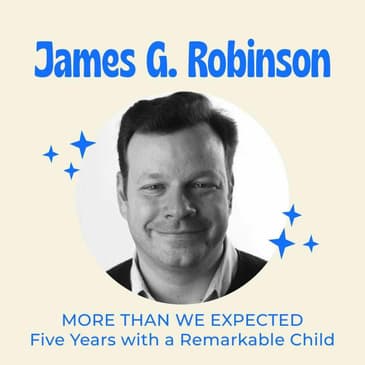
James G Robinson - More Than We Expected Author - Five Years with a Remarkable Child
James Robinson is a dad and the author of More Than We Expected: Five Years With a Remarkable Child, a deeply moving book and a testament to the strength found in vulnerability, the importance of community and the boundless love that families share in the face of adversity.
EPISODE HIGHLIGHTS
Can you tell us about your family and what inspired your book?
My wife and I have three sons, one who was a twin born with a congenital heart defect called heterotaxy that died at age 5. My book is a memoir, a story of our years together and why it was such a privilege to be Nadav's father.
How did writing your book impact your healing process?
When Nadav died, I felt a tug to write about his life. Right after he died, we took a roadtrip across the US, just to feel the relief of the open road. I first wrote an essay about the trip, Road to Recovery, that was published in The New York Times and a lot of people wrote in to talk about how they had gone through similar experiences. I realized that sharing our story was valuable to others. I started writing on topics we had been through to get things out of my brain— faith, anatomy, food, music. Getting things on paper was a relief, but I also wanted to leave things written on paper for his brothers so they knew what we went through and how I dealt with it. In many ways, the story is about how I found the strength to tell his brothers that he died.
What is your advice for other parents who are in a position of making tough medical decisions for their children?
There's a lot of ambiguity in medicine and that informed much of my decision making because I came to learn to educate myself the best I could, but then ultimately go with my gut.
How did your family's faith influence decisions you made for Nadav?
Faith was complicated for us, not that we doubted our faith, but our eyes were opened to what faith really is. There is something about faith that brings people together and I think that's the best aspect of faith— the importance of connection and strength in troubling times when and where you may not expect. After a surgery, we learned Nadav wasn't doing well and that he would either stabilize or deteriorate over night. Despite the news, my wife pointed out that it was up to Nadav and that she could live with whatever he decided because she trusted him. That was a statement of faith more profound than I've ever experienced. It wasn't hope, it was faith, and that was powerful for me and the faith that carried me through a lot of times of uncertainty.
LINKS AND RESOURCES MENTIONED
More Than We Expected: Five Years With a Remarkable Child
https://www.amazon.com/More-Than-We-Expected-Remarkable/dp/1637588224
https://www.nytimes.com/2017/12/07/travel/road-trip-family-grief.html
More Than We Expected: A Conversation with Father and Author James Robinson
CONNECT WITH EFFIE PARKS
https://twitter.com/OnceUponAGene
https://www.instagram.com/onceuponagene.podcast/?hl=en
[00:00:00] I'm Effie Parks. Welcome to Once Upon a Gene, the podcast. This is a place I created for
[00:00:09] us to connect and share the stories of our not so typical lives. Raising kids who are
[00:00:15] born with rare genetics and drones and other types of disabilities can feel pretty isolating.
[00:00:21] What I know for sure is that when we can hear the triumphs and challenges from others who research to real-life stories from people affected by rare conditions and cancer. Each week we'll bring you an extraordinary lineup of guests, not to mention we also have a back catalog for you to choose from. Listen now wherever you get your podcasts. Hello friends and welcome to the show. This is Once Upon a Gene and I'm your host, Effie Parks.
[00:01:42] It's February so you know what that means? It's been quite a journey. Okay, well, James, can you give us a little introduction about your family and can you share with us
[00:03:03] some of the reasons that inspired you
[00:03:05] to write this book more than we expected?
[00:03:07] Yeah, definitely. after your son died. It's funny, he had a pretty remarkable life. The journey was really amazing. Like I wouldn't change any of it, except for the end. But when he died, I just sort of felt this like tug to write about it. I work at the New York Times. I'm actually not a journalist. I work behind the scenes a little bit. But right after he died, we took a road trip across the US.
[00:04:20] I'd never really seen the country
[00:04:21] and I just needed to get out of our house
[00:04:24] and just sort of feel the like keep it alive inside my own mind by repeating it over and over again. So getting it on paper was kind of a relief. And also I wanted to leave something tangible for his brothers so that they had known, so that they would know what we had been through and how I
[00:05:41] dealt with it. When Nanab was born the hardest thing for me was trying to cope And that often leads to really profound conversations with people who have been through, maybe not losing a child but similar traumas and gives them permission to share it as well. And hopefully, you know, my book does all of those things if I've done it right, like you might share a tear or two, but at the same time, there's sort of, there's an uplifting message in there about the nature of what it means to live
[00:07:01] and what it means to live through challenges
[00:07:03] and how that can be a privilege as well
[00:07:05] as kind of a disaster.
[00:07:06] Yeah, it's all so much. Yeah, I mean caring for as part of it. Certainly There's a certain part of identity gets wrapped up in in doing these kind of things that other people might find heroic But when you're in that situation, it's just the things that you do But I think it's like a little more than that in my circumstance at least When the embryo is first formed It's perfectly symmetrical and on the outside of the embryo are these tiny little hairs called cilia
[00:09:25] didn't quite form properly. Now that when you think about it is just so utterly amazing that when you are you know just an embryo that this actually happens to determine how your body's
[00:09:31] going to form. It takes place in about three hours. In time for a dinner and a movie you know your
[00:09:35] fate is sealed. And the fact that that his body sort of revealed these unknown like machinations
[00:09:42] and how the body formed was just so mind-blowing their patients. And it's wild to think that those microscopic little hairs have so much control. Yeah. Yeah. I find our relationship with knowledge as a coping mechanism is significant, isn't it? Yes. But there's a limit to what you can know that even if you're the most expert
[00:11:01] doctors, there are things that they don't know, and you just have to kind of accept
[00:11:04] that at the end of the day.
[00:11:06] Totally, totally.
[00:12:04] not complete peace with the fact of what happened, but it's helped me accept that that his life was a life that he led and that was a full life. When I
[00:12:10] held him in my arms when he died I felt nothing but pride, nothing but pride. And I
[00:12:15] realized that as a parent you live for those moments of pride, you know, seeing
[00:12:20] them take their first steps or their first words or you know graduate from
[00:12:23] high school to college, you get, child life people and therapists,
[00:13:40] physical therapists, OTs, music therapists.
[00:13:43] Like we met when we moved to another hospital,
[00:13:46] we met the chef at the people who become our family, the unexpected family members that we collect along the way, especially not just community members and neighbors and friends of friends, but the people behind the scenes like the janitors and the security in the hospital and just those types of people that we encounter
[00:15:01] in our lives that become a, we took that to heart.
[00:16:20] And because he was able to recuperate there,
[00:16:21] he learned to walk again.
[00:16:24] He was sort of back on his feet.
[00:16:25] I spent some time in a wheelchair,
[00:16:27] but could walk around and we took that opportunity And she said that was a pretty good idea. So she made it work. We went down in the service elevator and suddenly we're surrounded by, you know, gigantic jars of spices, you know, his favorite spices and walk-in freezers and guys running around. One of his friends from the pizza station was like, yo, oregano, you know, he recognized him. So that was great. And my wife, who's incredible, started up the conversation with the head chef and said,
[00:17:42] you know, he's a really picky eater.
[00:17:44] And she said, oh yeah, what does he like to eat?
[00:17:45] And I was like, well, he likes lamb.
[00:17:48] And the chef was like, which, which you really miss when you're in the hospital. And if you can recreate that experience, it can't hurt.
[00:19:02] And yeah.
[00:19:02] So, so I'm kind of blessed to see that.
[00:19:04] I love that first grandchild. My mother was actually the first child. And so every summer we would go back and spend winter in Australia as much as we could. And I spent a lot of happy times with my grandparents. When our older son was born, we made a point when he was six months
[00:20:24] old of bringing him down to meet my grandfather, my grandmother, unfortunately had passed on. to speak at a conference in Australia. And I couldn't really pass it up. It was not the only reason we went, but it was a factor that suddenly we could fly a family of five down under for a single economy class fair. That's a tough time to pass up. We consulted with his doctors when we had the opportunity, and they sort of hemmed and hawed a little bit
[00:21:40] and came back and said, we think you can go.
[00:21:44] And I don't blame them for that decision at all.
[00:21:46] I think that was an educated, professional opinion. family members. They got to meet him. They wouldn't have met him otherwise. He met them. And it was great. And one day when we were two days before we were supposed to go, we just noticed he wasn't looking right. We sent a note to his cardiologist in New York and said, he sent a photo. And she said, well, you should get him checked out. And that's when we found ourselves thrust into the Australian medical system with what was diagnosed as a clot in his
[00:23:03] circulation, which was quite dangerous because if the clot gets in, which part of the story of the book is how we found our way back. Yeah, you're going to have to read the book to know the rest of this Australia story. And the other kids. Yeah, you do mention that inner strength that we as parents discover when we're faced with these challenges.
[00:24:22] It is such a theme in your book. So how did the strength manifest tube down my son's nose Into his stomach right which is like the most terrifying thing I'd ever heard But I did it because I had to do it That was my job and there was a way to do it. We had an amazing NP. You taught us how to do it
[00:25:43] I became very good at it She would deal with that part of the hospital, and I would deal with more like the getting stuff done, and maybe a diplomat or an ambassador to sort of grease the wheels to make sure that stuff happened, because it was kind of my role. And so we kind of, you know, we went on the things that made us fall in love in the first place and adapting to this new circumstance.
[00:27:00] We were chatting a little bit before we started recording
[00:27:03] about that NG tube part, because it just like, What were some of the things that you realized that you had to let go of, and how did you reconcile with that? Yeah, we tried to not let go of anything. Like, even when we were stuck in Australia, we still tried to be there for his brothers. I would take our older son to these soccer matches, which was across the park from the hospital. We went to these soccer matches and tried to find some sort of normalcy.
[00:28:22] But at the end of the day, it is kind of pretense.
[00:28:24] I mean, your life is not normal profound observation that you have in, in realizing
[00:30:47] different sort of luxury in being able to kind of enjoy those smaller things that maybe would go unnoticed otherwise.
[00:30:48] Yes, but it prevents you from enjoying, I think, a lot of things that other people get
[00:30:53] to enjoy too.
[00:30:54] Yeah.
[00:30:55] 100%.
[00:30:56] That's not fun.
[00:30:57] And like I said, that threatens to lead to bitterness and that's something I was trying
[00:31:00] to fight off.
[00:31:02] Not always successfully, I might add.
[00:31:04] All of us.
[00:31:05] Yeah, real life.
[00:31:06] That's right. goals that are different than the ordinary goals. I think in a lot of ways it changed how I related to my career. You know as an employee it distracted me a little bit which maybe not been such a bad thing to be honest at work because I didn't care about my job in an emotional way. I was able to sort of like phase it more rationally and the emotional stuff I saved for my family and the situation
[00:32:21] that we were in. I joke that I think I might be the only person in the company You had to make a lot of decisions around his health and surgeries and everything. What sort of message would you leave for families who are grappling with whether or not they're making the right decisions medically and how to kind of think through that and what resources maybe helped you and Tali ultimately decide things?
[00:33:40] Yeah, I first of all, I don't have any advice for anybody else.
[00:33:43] I mean, all I can share is my own experience and people can take from that what I will.
[00:34:42] and doctors can't predict the future. That informed a lot of how I approached decision making
[00:34:44] because eventually what I came to learn was
[00:34:48] you just educate yourself as best you can
[00:34:51] about as much as you can know about a particular thing
[00:34:53] and then you have to basically go with your gut.
[00:34:55] And if something goes wrong, it's not your fault
[00:34:58] because you did the best you could at that time.
[00:35:01] And the worst thing about that is, you know,
[00:35:04] we're always advancing our medical knowledge.
[00:35:05] So even now, seven years after it died, the dog's condition, they used to just put their legs above their head and hope for the best. For the hard surgeries. You know, and I actually think that he's sort of like born halfway through this arc of going from that to like just plug in a new heart to be done with it. And you know, in 50 years, would he be healed or something like this? Would it be routine? Maybe. But you can't beat yourself up for being born when you were knowing what you know. That's my opinion.
[00:36:21] And so having comfort in that ambiguity, which I think, and I won't speak for doctors, but
[00:36:25] I think doctors wrestle with this as to find a blame whether in yourself or externally. And I don't think that's, maybe sometimes it's appropriate, but I don't think as a practice, it's really healthy or useful. Yeah, I mean, it's not an easy thing to ultimately come to when you've faced the death of a child. I know how much work it probably took and just acceptance.
[00:37:41] And I love the part about how you were comforting each other
[00:37:44] and just realizing that everybody had done their best,
[00:37:47] the best that they knew how at the time. Once you had to we just were honest. I mean I don't know how else to say it We try to be as honest as possible. We didn't sugarcoat things We didn't like easy euphemisms. We didn't claim a believe we're pretending things weren't real Like we just told them the whole way along what was going on. I mean in age-appropriate terms certainly, but we wanted to be honest
[00:39:06] With them because I think the worst thing you can do for a child is to not tell them something and then their imaginations run wild and that's no good and with a nasal cannula. And his teacher, before he started school, this is kindergarten, sat the kids down and explained it to them just really plainly. Like, this is your new classmate Nadav. He has this thing in his nose.
[00:40:21] It gives him the oxygen he needs to breathe, right?
[00:40:24] And it's there to help him.
[00:40:26] And any adult who seems like a kid with a nasal cannula, And when you see it happen in real time with how the children actually process things and deal with things, you're just like, wow, I can't believe I spent so much time on that. Your story does touch on the role of Jewish faith and the culture. And I wonder, how did your family's faith influence any of the decisions that you made for Nadav and your family during those really challenging times?
[00:41:43] That's interesting because faith was very complicated.
[00:41:45] Not that we doubted our faith. So when he came out on ECMO, we kind of freaked out. We called his cardiologist in New York and we explained what was going on. She said, well, I'm praying for you. And I knew that she was Hindu. And so I said, which gods are you praying to? And she said, all of them. Like, it was a full spectrum blast. And I said, well, if you could pick just one, right, who would it be?
[00:43:03] And she said Hanuman, who is the monkey go home and have a beer and just exhale. We'd been through so much in the past, you know, whatever, 72 hours. And then the doctors are like, a nurse came over and she's like, well, we're gonna have a family meeting.
[00:44:21] And that's never good.
[00:44:22] Like a family meeting's never good.
[00:44:23] And they sat us down and the guy who was in charge
[00:44:25] of the PICU who just met for the first time,
[00:44:27] his name was like, I suppose you're right. And she said, well, I can live with that because I trust him. And that was like a statement of faith, more profound than I've ever experienced in a synagogue or religious ceremony or anything else. It was just like faith.
[00:45:40] It wasn't hope, it was faith.
[00:45:43] And that was really powerful for me.
[00:45:46] And that relates to what we're talking about earlier God's blessed them. There's a lot of gods to go around. There are. Oh my gosh. Always tell that story and especially the one with Tali, that statement from her, I think is universal for families like ours. And it's just so beautiful. And I'm so grateful that you had that moment and
[00:47:00] that mindset.
[00:47:01] That was one of the worst moments of my life.
[00:47:04] I'm not grateful I had that moment.
[00:48:02] around and then collapsed. Dov had learned to pace himself.
[00:48:04] So he was always the last one to fall asleep at night.
[00:48:06] The boys would be tucked in and his two brothers would be soaring and Dov would sit there just
[00:48:10] like singing.
[00:48:11] We would hear him singing, himself to sleep, which was really beautiful.
[00:48:15] He had this curly head of blonde hair, which was gorgeous and lovely.
[00:48:20] He was super smart about what he was a little more dancing away. So that's who he was. And even the people who we met along the way did not know that part of him because there's been a lot of taste to this song, but he was very ill. So I wrote the book in part so they would understand who he was. And I think it's very important that the world does who he was because he was a pretty special kid, like his brothers, in
[00:49:44] their own way. Those are the moments of joy that I've written. You'll see conversations like this that I've been lucky to have. There's an opportunity to ask for a little gift. And what that is is an autographed book plate for the book, but there's also something in
[00:51:00] there that's special from the dog that I'd love to share with people if you want to request
[00:51:04] it to send of your podcasts,
[00:52:20] that makes me feel good.
[00:52:21] So it is just the medicine that we all need.
[00:52:23] Definitely.
[00:52:24] Okay. Thanks, James.
[00:52:26] Thanks so much.
[00:52:27] I hope you've been enjoying this podcast.