
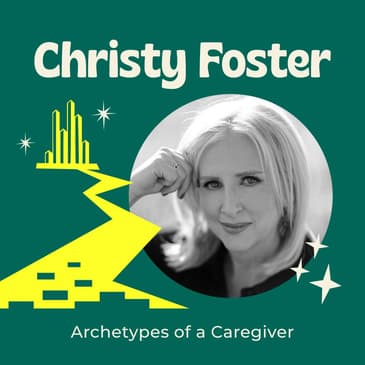

In part 3 of our 4-part series on Caregiver Archetypes, my sister and somatic therapist Christy Foster returns to unpack the Saboteur — the clever inner voice that second-guesses you, overthinks everything, and talks you out of what you actually want and need.
We explore how this archetype shows up for caregivers (especially around time, perfectionism, trusting your gut when doctors gaslight you, asking for help, and feeling “not enough”). You’ll learn how to spot the Saboteur in real time, separate doubt from data, run tiny experiments to rebuild self-trust, and shift from the Scarecrow (who believes he has no brain) into the Magician — the part of you that creates something out of nothing, including time and sovereignty.
This episode is packed with practical language shifts, somatic awareness, and compassionate tools that have literally changed how I show up for myself and Ford.
[00:00:03] I'm Effie Parks. Welcome to Once Upon A Gene, the podcast. This is a place I created for us to connect and share the stories of our not-so-typical lives. Raising kids who are born with rare genetic syndromes and other types of disabilities can feel pretty isolating. What I know for sure is that when we can hear the triumphs and challenges from others who get it, we can find a lot more laughter, a lot more hope, and feel a lot less alone.
[00:00:31] I believe there are some magical healing powers that can happen for all of us through sharing our stories, and I'll take all the help I can get. Once Upon A Gene is proud to be part of Bloodstream Media. Living in a family affected by rare and chronic illness can be isolating, and sometimes the best medicine is connecting to the voices of people who share your experience.
[00:00:56] This is why Bloodstream Media produces podcasts, blogs, and other forms of content for patients, families, and clinicians impacted by rare and chronic diseases. Visit bloodstreammedia.com to learn more. Hello, and welcome to the podcast. This is Once Upon A Gene, and I'm your host, Effie Parks. We're doing something a little bit different. This is a four-part series, and you are at episode three of that series. So if you haven't listened to the other two yet, dial it back and start there.
[00:01:24] So it's a four-part series on caregiver archetypes, which are simple patterns that we all slip into when life gets loud. This isn't therapy homework. It's a practical language for noticing your stress and choosing a kinder next step. My guest for this episode is my sister and somatic therapist, Christy. She has been my guide my entire life, but especially through the very difficult times that I have been through as an adult.
[00:01:49] It's helped me in spotting my stress loops, my thought patterns and systems, and she teaches me to be more aware, more compassionate, and to honor and improve on these. She also appears on a couple episodes. I'll link everything in the show notes. Episode 29, she talks about oxygen masks for caregiver self-care. It's a legendary, legendary episode. Please, it changed my life. Go listen to that if you haven't.
[00:02:16] Also, episode 239, where she maps out how stress literally shows up in the body as real pain. So also really important. Go listen to that. And fun news, too. She finally launched her amazing podcast with her friend Marty Murphy. It's called The No One is Perfect Podcast. I'll also have a link for that in the show notes. Go subscribe to her and Marty Murphy.
[00:03:07] So, she's going to go to the next episode in the series today. We are talking about the saboteur archetype. So she's going to introduce the clever voice that second guesses, overthinks, and talks us out of what we actually want. We'll separate doubt from data, run tiny experiments to rebuild that self-trust, and to use these oxygen masks from episode 29 to make that change doable.
[00:03:31] So, open your mind, relax. This is fun. This is cool. Take some, leave some, whatever. I know that this has personally been a super lifeline for me. And so, maybe it will help you as well. Please enjoy my conversation with Christy Foster on the saboteur archetype. Hello, Christy. Welcome back to the podcast. Thank you, Effie. Good to be here again.
[00:03:56] Yeah. If you're binging on these archetype episodes, you're welcome, because that's what I do when I start listening to archetype stuff. So, we're just going to get right back into it. This episode is about the saboteur, which I feel like I'm, like, off the top of my head, can't really remember a lot about what it's about. But I'm sure once you explain it, I'll be like, oh, man, that's me. So, Christy, I'll let you take it away and tell us about the saboteur archetype.
[00:04:27] Okay. Thank you, Effie. I'm going to just remind you that the saboteur archetype is one of the four survival archetypes. It's one of the legs of that table. And each one of us as human beings have this archetype. And our conversation today is geared towards caregivers within the context of the archetype.
[00:04:52] And I also invite you to stay curious and not attach too much to it, but listen and understand it as information and then let it start to integrate more into you as you notice it in your life. So, the saboteur is such a fascinating, I think it's probably the most complex of the archetypes. So, I'm going to take you back to The Wizard of Oz.
[00:05:18] In The Wizard of Oz, the saboteur appears as the scarecrow. And I would suggest everyone watch The Wizard of Oz again so you have a better context for the information. And the scarecrow doesn't believe he has a brain. He can't trust his inner knowing. And he's always waiting for someone in authority, quote unquote, the wizard, who had him proof that he's intelligent and worthy. I think that's the key piece.
[00:05:45] Looking outside of himself for this authority instead of him being the authority. And if this sounds familiar, which it does for me, the pattern of thinking other people know best for what you need or what you feel. And I would say sometimes that's even over what the authority or the doctor or the whoever might be saying. What does your heart tell you? What does your intuitive hit tell you about what might be wrong?
[00:06:15] Or if I'm sure you've had numerous times where you just knew something was wrong, but they couldn't find it. And you had to keep trusting that knowing of your own self. That's kind of what I'm talking about. And the saboteur will say things like, you're not doing it right unless you're doing it all or unless you know it all. It keeps you from trusting your inner wisdom, your enoughness.
[00:06:40] And it keeps you from asking for help and resting or receiving love because there's a, it's kind of like prostitute, but it's different because it tends to be more of that inner knowing intellectual piece that you as their caregiver do know.
[00:06:58] And as we go into this, it's also has the aspects of one of the key phrases of the saboteur is, I don't have enough time to let's fill in the blank. Right. And this is really challenging to begin to shift this. But when you hear yourself saying that, so if you think of it, it's like an activation of vibration in your psychic field.
[00:07:25] And when that vibration starts to come in of, I don't have enough time, or you hear that in your head with the saboteur archetype, it shifts to the light side of the archetype is the magician. So if you think of a magician, a magician creates something out of nothing. Right. And there's the magic. So time is a funny thing. When you hear yourself saying, I don't have enough time. That is true. Whatever we believe is true. Right.
[00:07:56] Yes. Whatever we believe is true. And what I would, I would invite you to say instead is I have all the time in the world because what it does in your psyche. And what it does in your nervous system is it lets you take a deep breath. I don't care if you believe it. It's a practice to come to that flexing of that intuitive muscle to trust that which you don't believe. I don't care whether you believe it.
[00:08:24] And neither does the universe or the quantum field. I'm challenging you to believe something and practice stepping into something you don't agree with or understand and just try it. It's like pulling a rabbit out of a hat. I don't know how to do that. But maybe it's because I believe I don't know how. Nor did I ever learn how to pull a rabbit. Can I learn? Yes. Do I believe they can? Yes. Time is one of those constructs that seems out of touch.
[00:08:54] And yet, is that really true? True. That's what I'm challenging you to sit with in this saboteur archetype as we step into it. You have enough time and thank you for listening to the podcast because we're talking about time again. Most of these people are in the shower right now. Beautiful. Thank you for listening to the podcast in the shower. But so, okay, Effie, that's a good point. What I'm saying with that is you created time.
[00:09:20] The saboteur is about going from saboteur to magician to creating something out of nothing. So I created time in the shower to listen to the podcast because I have a lot of time. I guarantee you we're all saying I don't have time. I hear you. We're saying that. I hear you. And I'm inviting you to challenge that belief. Is this the same sort of effect of like when I really am mindful of what I'm saying because I know my body hears it or I know? Yep.
[00:09:49] Like I'll tell Effie if she says, you know, she's this and I'll be like, Effie, don't say that. Your body hears you. Like is that sort of the same thing that can happen? Yes. Because when you say I don't have enough time, I don't have time. And you have 50,000 things you have to do that day. What your body hears, Effie, is I don't have enough time, but I'm going to do it anyway. There's a constriction like a snake wrapping around your inner system and suffocating you. So this is like really the language one.
[00:10:20] Like the words that you say are true. Yes. And whatever we believe is true. And that's one of those things you contemplate, right? It's not a thing. It's a contemplation of what is it I believe then about time? What is it I believe about resources? Because we talked about in the prostitute archetype, Effie, you asked me, some people don't believe they have a choice.
[00:10:48] If you're saying that that is true, what I would encourage you to say is, no, you don't have a choice about where your child is at. However, I have a choice, just like I have all the time in the world. I have a choice to create something different in this moment. That would be coming out of saboteur to continue to repeat the same patterns into magician. And it has to stay so simple in choosing one thing, not 50.
[00:11:15] So as you begin to listen to your internal dialogue, which is the key with this archetype, what is it you believe about time? What is it you believe about your resources? What is it you believe about choice? Because only you can answer that. I can give you context in the outline of it, but you have to fill that in. So immediately when you start talking about the saboteur,
[00:11:37] I know many of us went to the place where we knew something was wrong and our doctors didn't agree or listen or indulge our worry. And I think that was sort of the beginning for maybe a short haul or a long haul for many of us to be able to shut that down and get what we wanted or to find someone who would listen. So I think that's probably where it began for me was sort of the gaslighting. Right? Yeah.
[00:12:06] So if it's also something, though, that makes you feel unsure or that you aren't good enough, why would you not want to ask for help? Because that's another problem is caregivers asking for help slash accepting help. So if you do feel like you're in that space where you're not good enough or you don't know enough, why is it so hard to ask and receive?
[00:12:30] I believe, Effie, that comes from, and this is my experience with years of working with clients and my education. I believe that comes from your childhood around your own experience about receiving and what was modeled for you when asked and what doesn't matter mother or father. Whatever was modeled for you about receiving and asking is part of your belief about what's true.
[00:12:56] If you heard a parent say, I don't get, let me think, I just keep my mouth shut and keep my head down. I don't ask for what I need because my needs aren't met. And a child sees that growing up. We replicate that in our adult life. And when you have a child that comes into the world and like little Ford, I remember working on him when he was a newborn and you didn't know yet what was wrong.
[00:13:25] But I remember working on Ford, knowing something was wrong because babies don't just cry. I've worked on enough babies to know they don't just cry. And Ford didn't stop crying. Right? So that knowing in you pushed you to keep finding an answer and trusting that there was something not okay.
[00:13:46] And even to the point, Effie, of doctors gaslighting, because that does happen, and other people, for you to keep pushing through and say, no, I'm not going to accept that. Is this aspect of the saboteur of your trusting that inner knowing, you're trusting your connection with your child that something's not okay.
[00:14:04] And Effie, coming back to the question of why that excavation of the self, of when you were growing up, what was modeled for you about having your needs met, and or I would say having a boundary. We play that out again in our adulthood, even though we think we don't. That's the shadow aspect.
[00:14:26] I 100% know the reason I let the gaslighting go on for months was because I was supposed to respect people in power. And where did you learn that? Exactly. So I knew that was why I allowed that. Yeah. And I don't like that word, Effie. I'm going to, because allow means put another layer of shame. I'm going to shift your word to, I realize now that that happened because I wasn't aware.
[00:14:57] Because allowing just creates another pile of bullshit. Yeah. Good point. On what's already guilty. And that's a new age way of putting us back into a cage that is not helpful. And nor do you attract it, and nor did you allow it. That is not helpful. Yeah. So what you're saying to me too, Effie, is you're realizing that as you continue to heal, as you continue to step into your sovereign, that power lies within us.
[00:15:24] And you realized at some point that you were being gaslit to the awareness that you said no more. And you probably found a different resource to say, hey, will you help me? One of the moments that really sticks out is when I got like physical proof that wasn't just me drowning at home alone without anyone watching. But Casey, who was also drowning, was when we were at our family reunion. And there were two other, maybe three other babies that were a week apart.
[00:15:52] Ford, Lindsay's baby, Penny's baby. And everyone was like, Ford won't suck on you because it's you. I put both of their kids, or maybe all three, I can't remember if there was a third one, on my tata. And I have never felt a suction cup like that in my life. And I said, C4 doesn't do it. And that was like the first time that anyone could not just hear me, you know, relaying my intense worries, but it was finally in someone's face.
[00:16:21] It doesn't work. Yep. And that was a good moment. What happened, Effie, in the structure of the archetypes is you stepped into your sovereign and said, no, this is true. You stepped in as your own authority, which is what we're talking about with Scarecrow. I know it's a knowing in your somatic field, a knowing in your intellect, a knowing that Ford couldn't suck. That becomes true.
[00:16:49] That is sovereignty and your own authority. It doesn't matter what any of you say anymore, think or do. This is what I'm doing. And that's that alchemical process that happens within us. When we step into our own authority out of Saboteur and having other people gaslight and project and all this stuff that happens, you stepped into your authority. That was a pivotal moment. I'm sure it was.
[00:17:16] And probably a rageful, teary, happy. Yeah. So much of that. Rage is healthy. I would say anger. Healthy. In that it moves us to do something else. There's so much fire in us that it burns out the other stuff and we make a different choice. And you did. You started a podcast. You probably put your resources in a row and your warriors, your friends, your people had said, we're going to figure this out.
[00:17:46] I'm pretty sure that's when I called you. So, okay. So, you know, I'm thinking beyond my own experience and I'm thinking about these other families. And I feel like there's a lot of perfectionism. Is that sort of in this realm? Because that's another way of, even though maybe they were perfectionists before, maybe they weren't, I don't know. But I feel like that's definitely an attribute of a lot of caregivers. I'm the opposite of perfectionist. So I don't really understand a perfectionist necessarily.
[00:18:13] But I know that it is a mechanism that many really rely on for that control piece. Is that here? Yes. Because here again, if it's not perfect, then I can't do it. If it's not perfect, I can't teach it. If it's not perfect, I can't share it. If it's not perfect, I'm not a good mother or a good father.
[00:18:38] If I'm not doing it right, my value system lies in how I'm doing it, which also comes from childhood. Right? It's a learned experience of I have to do it this way to be loved and accepted. That's a childhood piece that turns into the adult piece. And perfection isn't negative. It's negative when it drains you because you can't ever attain it. Perfection is all relative.
[00:19:04] If you got up and had a shower and were able to go to the bathroom, that's a perfect day. It's all relative in what you perceive as perfect. And we all have it in us at different levels depending on our experience growing up and where was the bar and who held the bar. And the bar might be a culture. It might be a parent. It might be a friend. But this is the getting to know yourself intimately.
[00:19:27] The word intimately, into me I see, is the work that is required of the archetypes. Who am I? Where did this belief come from? Why does it still hold power over me? That is saboteur. That's finest. Because we give our power to others. We give our authority away instead of holding our knowing. Literally, I'm a somatic therapist.
[00:19:53] When I see a certain body type, I already know that they give their power away based on how they hold their body. They don't have to say a word to me and I can see it. How is that in our living and our speaking? And that's why I'm here today is how can we embody and embrace our own magician, our own knowing. We are the wizard, right? The Wizard of Oz is about the wizard. We are the wizard.
[00:20:21] Yeah, I guess maybe I want to know a little bit more about the wizard part of this archetype. Because it's fascinating that that is the other side. Because I feel like in this archetype, what I'm hearing more of is like mental health scenarios, which all of them are obviously, I feel like. But maybe this is more in like the modern context of it. Am I wrong? Tell me, explain a little more just so I can understand.
[00:20:47] I guess I'm feeling like maybe if you are letting the saboteur archetype sort of consume you, that perhaps you're more vulnerable to having mental health issues. Okay, so you used a keyword. You said let. And in the beginning, you said I allowed. Both of those are key pieces to this. Nobody allows consciously to be abused. It's an awareness.
[00:21:15] If you're not aware of your saboteur patterns, I would never use the word let. Because that assumes you have a choice and you're aware. Correct? Correct. And you said we let them. I would challenge that and say you're not aware. We need a key word book. Yeah. We need all the words. But you understand what I'm saying with that? Because you're setting yourself up for failure, Effie, in that statement. Yeah. I let them. That's not true.
[00:21:45] You don't know how not to let them. And it's about boundaries, right? How do I speak up? That's saboteur. I don't have a voice. You do. You just don't know how to use it. And that is, you know, sometimes a therapist. That's another person helping you to access your voice. And I would also challenge you to, do you even know what your voice has to say? Well, no. No one's ever asked me. Well, how would I know if you don't know? And that's what this conversation is about is what is your knowing?
[00:22:15] What is true for you? What is your authority? How do we step into that? What does that even mean? Yeah. I mean, what does it mean? Well, that's our life path, right? It isn't a one answer sentence. For me, I'll use me as an example. My tendency is to be a workaholic. I do love working. I love what I do. And sometimes I use it as an escape.
[00:22:40] And then I will say, I don't have time for blah, blah, blah, blah, blah, because I'm creating that. So when I hear myself say that, how I recreate it, magician, wizard, is to stop, take a deep breath and say, Christy, you do have time to go on a walk. All that shit waits for you anyway. You do have time. And you're the most important person in your life because nobody else cares except you.
[00:23:08] Christy, I say that all the time and I get really, really awkward looks when I say I'm more important than Ford. I know I say it a little harshly, but people don't like that. Well, it challenges their belief system and value system about that, right? You're challenging their belief system that they've been raised with, that everything is that you should value your children more than you. We do. However, and if you're not alive and you can't function, what does it matter at that point?
[00:23:37] So I would challenge people to look at your own belief system and value system. If you're charged about that comment, that's about you and your value system growing up about what's important. And I think anytime we have a trigger or an activation, it's about us. How come that pissed me off when Effie said that? I would bet it's because you don't put yourself first and who is she that she can't, right? And it's complex and I don't mean to make that sound so light and flippant.
[00:24:06] But what we do is we project our own beliefs and get angry at someone else for having a boundary with themselves. And or we go into blame, well, I can't do that because of this. I would ask you to sit with that and what can you do versus what you can't. It's not simple. And what we're talking about Effie with children with disabilities and to the degree that so many of you have. This is not a simple answer. But yeah, there's simplicity in it.
[00:24:36] You have to make yourself important or you can't be the mother or dad for your kid because you're exhausted and you're a zombie. And then you get pissed or you shut down. And that's not helpful. Yeah. Yeah. I mean, this is like the oxygen tank thing, too, right? Which I think also is in every one of these. But it's exactly what it is.
[00:24:55] I guess I feel like maybe people need more of the time aspect because that's hard to sort of wrap your head around in thinking, how can I get time out of the no time circle and really maximize, you know, get whatever bang for your buck that you need from that?
[00:25:17] Like what sort of, I guess, practical moments can you think about getting time in of the daily lives that we have? Like if we're in a waiting room, we are at therapy. We are, you know, doing meds, doing food, trying to get them to sleep, changing diapers, you know, like what are those moments that we can get those moments in? Because those moments are constant. This is a super long haul.
[00:25:42] Well, Effie, I think your podcast and the reels that you do on Instagram are a good example. So I'm going to use those. I've seen you many times walking on your treadmill while Ford eats in your living room on the little treadmill. I see you lifting him as part of your workout, right? I see you making a healthy drink, drinking it while you're helping him. You're multitasking and the choice within that matters.
[00:26:10] You could also eat fries while you're helping him. Or you could go to the store, man. I probably would get fries. But you can't. Well, it's all relative in we're talking about choice again. Yeah. What I've seen happen with you, Effie, is you are seeing, oh my God, I do have a choice that I can walk on the treadmill. Why put his feeding tube in and then go to the bathroom and then unplug it, right? And then it starts all over again.
[00:26:38] But if you can look at it as the perception of I have time to walk on the treadmill while Ford has his feeding tube, can you see how that gives you a breath versus I don't have time? I have to do everything and wind that up so tight. This is about the play on language and framing it in our psyche. So you saying I have, and I know this hurts your brain and most people's brains that have kids with disabilities.
[00:27:06] I have time during his feeding to do blank versus I don't have time. Both are true, aren't they? Yes. Both are true. And it's okay if you want to throw your drink at me right now. I totally get that and feel free because this is not a simple concept and it is. That's our word again. We should call your podcast simplexity. I love that. It is a very good word. Because it pisses people off and I understand it.
[00:27:36] And great, please be angry. What's underneath the anger? I'm sad that I don't have time. I'm sad that my kid isn't blank. That's how I feel. Give it some breathing room of what's underneath the anger is some sadness and some grief and what I've lost and parts of me that I can't access again. But they're still there waiting for us to access. And that's not simple. I feel like you should say that part again. Yeah, I think it's the sad that's underneath everything that really.
[00:28:05] But of course it is. It's the grief of having a child that, quote, isn't like everyone else's. And it took your life away. The life that you knew. And now you have the life that you have. And in all these archetypes, I encourage you as a listener, what are the parts that got lost? And how can I find them again? And we grieve over the parts that were lost. And the depth underneath the anger.
[00:28:32] And the anger is completely relevant and valid and must be experienced first, usually. And then can we sit with what's underneath the anger with someone, not by ourselves? Because healing is done in community and with a witness, one other person. Otherwise, we go into our same loop. Yeah. And I really do agree with you on maximizing those times when you're busy to really see how you can widen it. Because I have, right?
[00:29:00] I just as well have done all of the things that I'm supposed to do for Ford and then have to just repeat them all again. Because that's how long all of them took. And so you just get in this loop, right, of the day-to-day and the actions that you have to take. It's really like hitting that low, low, right? Like that sort of rock bottom of realizing what's happening to your body and your brain to go, okay, well, this is my time. I have to figure out how to maximize my time.
[00:29:28] And maybe it is spending a little bit of time on a Sunday putting all those things in order. Like Ginger, our sister, I think of her every time I make a drink because, you know, she was like one of the first people on planet Earth to have one of those bread makers. Do you remember that? Oh, yeah. She used to make us bread like literally every day. But Ginger had like pre-measured bags of all of the ingredients. So that's why it was so easy for her. I mean, she had a bazillion kids. She would just pour it in the bread maker and close it. And that's how we had bread every day.
[00:29:58] And so that's what I did with my drinks. I just put all the stuff in bags and they just sit in my freezer. So all I have to do is pour them in. And whereas before, all of that stuff would go to waste. I wouldn't finish. I wouldn't drink it because I didn't set myself up to make it so easy and then a habit. Right. And as your listeners, I would encourage you to choose one thing. Perhaps it's breakfast for an example and or movement.
[00:30:26] One of those and only choose one and work on it for the week, maybe the month, and then choose one the next month. Because when you're in that much overwhelm, it's going to take you some time to incorporate one different behavior of self-care. Otherwise, the saboteur swallows you whole. See, I don't have time. See, she was lying. See, that doesn't work for me. See?
[00:30:53] And we reinforce the truth of what is true, which is saboteur. And there again, I guess this is the part that's so challenging. It sounds so simple, doesn't it? I mean. And it isn't. It's simple but not easy, right? But what I love about the way you teach is always bringing it back to just bites, tiny steps, simple things. It's enough. And I think because, yeah, when you're in that overwhelm, that's too much and it's too hard and it's one more thing.
[00:31:23] So I think always sort of having that reminder that, like, the smallest bit and doing it. Well, the saboteur, Effie, that's key. I'm going to just interrupt you. The saboteur to magician is action. Otherwise, you're going to think about it until you're dead. If you can remember that the saboteur requires action to pull the rabbit out of the hat. I have to learn how to do it if I'm going to do it.
[00:31:51] If I'm going to eat better and you have tons of resources on your – I remember one of the podcasts, I think there were people in Arizona that were teaching people how to prepare food easy and healthy and fast. So there, choose one thing and then find your resources in that. And your podcast is a great one for that. And practice it for 30 days and then do another one.
[00:32:13] And another piece that you said, Effie, and if you can hear this in your psyche, this is the archetype and I would say trauma response being activated. When you hear yourself saying, I'm too overwhelmed, I'm too tired, that's too much. Those are all key phrases of, I need to take a deep breath and feel, feel, not think, feel my breath.
[00:32:41] And you don't have to take deep breaths. Feel your feet, literally feel your toes on the floor and feel your breath. Because it's like a cyclone that hits your internal system. And even if your partner, Effie, like say, Casey, when he hears you speak it out loud, let alone in your head, I'm just, this is too much. Or whatever this is. That's a key thing that he says, take a breath or go on a walk.
[00:33:09] And I think these are conversations that need to be had before you go into your cyclone or you're going to punch him. That's actually a good idea. So like if we as partners, what would you suggest? Like come together and make a list together of like, hey, when you notice that I'm not seeing myself or that I'm, you know, kind of, or that I'm saying all the sentences, right? Yeah. These are the three things I want you to like encourage me to do. Yes. Or make me do.
[00:33:39] No. I mean, Casey has literally put my headphones on my head once and literally walked me out the door and closed it and locked it. Okay. And, but that's probably because you've had enough conversations. I think it's very individual. I think the more that you can have a conversation about, and women especially, I think women are complicated. Women believe that men should know or their partner, male or female should know how they feel and what they need.
[00:34:06] So you as Effie, what Casey understands is that you need to shut the world out. He put the headphones on you and pushed you out the door. So he already knew that about you. As your listeners, what I am emphasizing is what are those needs? Is it to put your headphones on and shut out the noise? And I joke with clients about this Effie, like sometimes it's a code word because no one likes to be told what to do when you're overwhelmed because you want to hit them or shut down.
[00:34:35] Like a code word could be watermelon. Costco. Costco is the code word. Perfect. And then both of you know what that means. And the need is met. It's a great idea. But the conversation needs to happen before the explosion or shutdown. And I would choose three needs. But watermelon or Costco or whatever is the code word for I'm shutting down or I'm going to explode. And then that way you don't get in a fight because I can't even imagine that's a whole other conversation.
[00:35:03] What is my need and how do I meet it? And can I ask for support, which is also part of the saboteur, that I don't believe I can or my needs won't be met. I challenge most people that say that to me. They don't even know what those are. And nor do they believe that they can be met. And you are so correct. Because even having someone sit with you on a Zoom call, Effie, like you and I sitting, seeing each other, it doesn't have to be in person.
[00:35:31] The cool part about technology is I can see you in Seattle and I'm in Salt Lake City. I feel you. I see you. I experience you. That counts. It is wild how what you say is true. That just kind of blows my mind. Because what is true is true and what you say is true. Yeah. It's complicated. It's really complicated. And I think it's important as a caregiver to know that you're not selfish to have your needs met.
[00:35:59] It makes you a better caregiver. It makes you a better friend, wife, husband. If you don't meet your needs, all of those saboteur pieces will come in around blame and resentment. And then sickness sets in. Wherever you're at today listening, sometime today, what is it I've lost about who I was before this happened? And what's one thing I can do today?
[00:36:25] It might even just be writing them down to start to retrieve those parts. You know something else I noticed about when you start to make it a priority, your needs, is that you notice that the people that are with you at that point, when you're doing it, are the same kind of people. And it keeps you accountable, sort of, because they're moving that way and they're doing it. And you're being validated, right?
[00:36:54] That it's not selfish and that it's also like a really powerful sort of growth mindset. It is. And it's intellectual, but it's also present. It's both. It's the masculine, feminine aspects of us that are being met.
[00:37:13] So you hang out with, we all are aware of, we've hung out with negative people that we, like, it's like I need a shower, an energetic shower because it feels heavy. And if you're with that 24-7, you're going to believe that nothing's possible. And I would, that's why I love your podcast, Effie, is because you're searching out people who believe differently, who have found other ways to pull a rabbit out of a hat. You know what, Christy?
[00:37:40] I'm going to pat myself on the back right there because I'm really proud of the direction of that exact point that I've really taken to heart to sort of search for for myself. Because this is so hard forever that I can't stay right there or I'll die. Yep. But I understand why it's easy to stay right there.
[00:38:05] And I would change that word to Effie because it isn't easy. It becomes so uncomfortable that almost you're forced to find a different way. There's nothing easy about it. Yeah. And it's really challenging to say, I can't do this anymore. What else can I do? That's what you did. There's nothing easy in any of that. That takes every bit of courage that you ever thought you had.
[00:38:30] I really like life and I like people and I like me and I'm a happy person. And so I don't feel like I'm on that yellow brick road towards that sort of sense of self. I don't like it. I really don't like it. And I would suggest in those spaces to sit with someone and have them sit in that part.
[00:38:57] And then you get back up and you start again the next day because you don't want to bypass that part, Effie, but you also don't want to stay in it. Yes. Correct. Right. But you can't pretend that isn't part of it. No. And acknowledging it and honoring it and then putting your shoes back on and starting down the path again. And well, and that's a good point too, right? Is that every single day is a new one.
[00:39:26] Yeah. And it's completely fresh. Yes. And that's why you have a notepad on your fridge that says, what are my four oxygen tanks? And can I meet one of them today? Just one. And that may be looking at the sun. That may be looking at a tree. That may be going pee by yourself. I think, you know, it's a wave, right? It's always a wave, this particular life. And we know that. We know there's high highs and low lows and constant movement.
[00:39:55] I mean, I guess it's what you always speak about, right? Like having that toolbox, having a reservoir and keeping it simple. Yes. Because your life is extremely complex as a caregiver with kids with special needs. And I do think there does become this sort of awareness for a lot of people later on, you know, when maybe some stuff has settled and maybe you are getting some of yourself back. That you also have another sort of awakening, right?
[00:40:23] Where you're like, wait, maybe there's even more good here than hard. Or maybe I'm finally able to see it and enjoy it. But I think there becomes a point where it's not the worst place. Yes, Effie. And that has required much of you to get to that point. And many people holding your hand in your tears and in those horrible moments.
[00:40:48] That's required a lot of you to get to that place and appreciate that place you're in today. That it's not the worst place. And the community that you've created to reflect that back to you and hold you capable and hold you with all of the messiness. That's a light at the middle of the tunnel. That's where I want everyone to go. I want everyone to go there. I want everyone to know that. You know, that it's going to be okay, even though so many things are not okay.
[00:41:17] Well, that's why you created this podcast and resources to help people. That is a light in a dark space. And sometimes all we need to see is the light of another person going, she got through it. She's okay. I'm going to be okay. I 100% wish I would have heard that or seen that on social media in the beginning. It did not exist. Mainly because people weren't really making content like they are.
[00:41:43] But I think those parents who were that much further ahead, who maybe had gotten to that place, those were the people who didn't have the internet when it was really hard. So they probably weren't going back to like revisit and talk to the new parents. I think that this type of place or, you know, yellow brick road to a big wizard castle is a really interesting way to think about it.
[00:42:08] Because I think that we are all pleasantly surprised daily with things that fill our cups. Simplicity again. And remember that you are the castle. You are the wizard. And you have everything in you that you need to live this life as you believe that that is possible. I would like to be richer though. I believe that. Well, I think Effie, that comes from your belief there again.
[00:42:35] It comes from a belief system imprinted way before. The possibility that you already have abundance coming in is a change in how you believe that you don't have it. Touche. One of my favorite books that I was, my friend gave it to me. It's called Love Money, Money Loves You. It's a brilliant book. And when I read it, Effie, because we both come from the same place. We all have different beliefs around money.
[00:43:04] I told Trent, I said, oh my God, I think I feel guilty about listening to this book. Because we heard the money's the root of all evil. I heard that all the time as a kid. And I understood how it like mapped my brain and my beliefs around money. And then as I untangle those beliefs, saboteur to magician. I believe I can pull a rabbit out of a hat. I don't know how, but the magician doesn't worry about the how and nor do you get to see the how. And that's what the book's about.
[00:43:31] It's quite brilliant to change what is money. It's energy. So it's kind of like the secret, the saboteur. Yes. Yes. What the secret didn't tell you is how. You can't just imagine a car and have it show up. You have to do the behaviors required. And the secret was very good and also had a lot of illusion with it. Skip the action piece. Yeah. So that's not helpful, right?
[00:43:57] It puts a belief that all that's possible, but okay, how do I do that? What are the practices required of me? To get there. Oh, well, you might need to meditate every day on this meditation. Oh, you might need to get up and exercise if you want to find a partner that looks nice. Oh, you might want to get your finances in order if you want to be able to make more money. Right? There's so many different pieces to that that they don't say in the secret. It just looks sexy, which is a spell, right?
[00:44:28] You can have this. I mean, that was a wild time in the world when people were obsessed with the secret, really. Well, because we want to believe that's possible. And I do believe it's possible, but there were so many pieces left out of the secret. I do believe that 100% that it's possible. Okay, how do we get there? Well, first we have to clean out our trunk about our beliefs around it. And that's what we've been talking about, the archetypes. Well, where does perfectionist come from? Where does our belief about money come from? Where does our saboteur in relationship come from?
[00:44:58] It comes from our past. How do we shift it? Well, first we have to know what it is. Awareness is the first step in change. And then we can make a different choice. Then other people come into our lives. Then we hear a podcast and go, oh my God, you wouldn't even believe what I heard today. Synchronicities start to happen. And that's what the secret talks about. But it requires us to also do our inner work. So it can happen.
[00:45:22] I was talking with somebody just last week about, you know, Carolyn Mace was when she says, if your friend tells you about the same problem more than three times, and they haven't done anything about this problem, it's you being a good friend should tell them that maybe they should think that's a problem, that they're not doing anything about the problem, which
[00:45:47] I think could come across insensitive or, you know, dismissive, I guess, when you are trusting a person that you could complain or rant to them. But it's also really important that if you can't figure out your own awareness, that maybe you have a trusted person that can help you see that. Yes. I think it's essential because we stand in our own way. That's why we need a guide. And Carolyn Mace says that. You forgot that part. Because I agree with her and it needs to be done in compassion and integrity. Yeah.
[00:46:17] And it doesn't necessarily feel good at all, depending on what you're going through. But where you're at doesn't feel good either. Right. And what Carolyn Mace teaches, which is what I love about her, is you must have a guide to walk in the dark. And you telling your friend, hey, you're the center of the circle. I'm going to sit here with you and we can map it out. I love you. And it's important that you see this part. Where does the part come from? Because we can't see our own shadow.
[00:46:46] We can't? No. That's why it's called shadow. As we become aware of it. Well, as we become aware of shadow, like all of these archetypes, we hear it, right? We hear ourselves say, I don't have enough time, for example. We have to bring it into our awareness. And I believe we also need someone as a mentor or a guide to help us when we can't see. And can that person be passive?
[00:47:14] Can that person exist in forms of content where you don't have to give them back anything, like a podcast, like an audio book? Yeah. Like, can it be passive? Can it be something where if you are at the brink of shredding, can you just take and take and take and not have to give back and not have to have an in-person or video or even text relationship with that person? Can you just be a receiver and get that accomplished?
[00:47:44] I would say yes. And I would also say with another human being, and here's the piece again to ask to get your needs met. If I called you and I said, Effie, I am falling apart. Could you just listen to me and not give me any advice, but listen to me and witness where I'm at? Because I just need to say it. With a boundary, right? Doesn't mean you're fixing. I'm not asking you for advice.
[00:48:12] I'm asking you for your time and your heart to sit with me. That's the reciprocity. And yes, you can do it on a podcast and chat GPT. I think AI is brilliant for that now. To have a conversation with AI is brilliant because it talks back and it helps you sort where you're at. And I also think it doesn't have another human being sit with you is where that shifts. And can you do it for another if you expect people to do it for you?
[00:48:40] It comes in many ways and be open to what those ways are. So I guess, I mean, with all the self-criticism and the guilt and the not good enoughs, how does one, I mean, I think we all want to be a sorceress wizard. So how do we sort of seek that out intentionally? We're making a list and we're preparing. You need to know what your needs are. You need to know what your needs are. You make a list. Yep.
[00:49:09] And begin to trust your body, trust your intuition, which is the knowing and practice it. Like use really simple, simple things. I feel like I should not turn left today, but I'm going to turn right and go the other way. That's the practice. And it has to be really simple first. Notice when you go into those loops of belief that aren't necessarily true. How do you know when you're not being stubborn? How do you know when you're not being stubborn?
[00:49:38] Tell me a little more about your question. I guess when you said you have to stand up for what your new belief is or that your newfound sort of boundary is, how do you make sure that you're doing it from that knowing and not from a place of hardheadedness or sort of sticking to your own beliefs without being open to changing them? Or would you even come from that place since you came from a place of feeling helpless? I think it's going to be messy either way.
[00:50:07] You're asking me a question that isn't perfect because everyone's going to have a different way of how that's done because we want to do it right, quote unquote. It's going to be messy. And sometimes you're going to blow up within your boundary and it's messy. Best part is you finally have a boundary and then you can make it better next time. I'd make a lot of room for what that is because if you don't know how to do it, we have to try it on first and see how it sounds to say, I need a nap.
[00:50:35] And I'm going to put my headphones in so I can't hear you breathe or hear my kids, right? That's comforting. Yeah, that it's going to be messy. Because you don't know until you start doing it and then you find out what works for you and it's going to be different for every one of your parents. The needs are going to be different. Collectively, probably similar. But we each come from different experiences with our upbringing. So it's going to be different and messy.
[00:51:00] I was telling my friend Marty, who you've met the other day, we were doing a podcast and our podcast actually is called No One is Perfect. And I said, when I first started learning about the boundaries and the somatic work, I'd been in Canada for two weeks. I came home and something inside of me exploded over dishes in my sink. I mean, it was completely stupid. Not really, but it was. I mean. And I like exploded.
[00:51:30] And I had never done this. I slammed the door. I'm like, and I came back after I cried and sat by outside. And I came back and I told Trent, I said, oh my God, I'm so sorry. Like, I don't even know what took over me. And Trent looks at me and he goes, you probably would have left me over that if I would have done that. And I said, you're right, I would have. I said, and thank you so much for allowing my messiness. But it was messy. And I don't know.
[00:51:59] There's no straight lines though, right? I'd never done it before. And it was so much repressed pieces in me of being the caregiver and the martyr and the prostitute. They kind of all exploded at the same time. And it wasn't pretty. But it's a birth, right? Birth is messy. We bleed. There's poop. There's crying. There's screaming. I mean, I see that as a birth process of me. But it was not pretty. And it was. That's all relative. Lower your expectations is what I'm saying.
[00:52:29] Yeah. No. Again, I think that that's just really comforting. Again, there's so many things that you can insert guilt in. There's another opening. Insert guilt there. Insert guilt there. And it's a really good reminder to know that it can also be because of the pain. This. And it can be this way. Yeah. And continue. Yeah. We have another day tomorrow. All we have is today. What are we going to do with today?
[00:52:59] And can we step out of our own loop that we've dug a trench in? Can we stop on the damn trench and sit on the bank and go? Maybe there's another way. And I would say there's always another way if we actually believe there's another way. Hence the saboteur to magician. So I guess to sort of wrap these four episodes, these four archetypes into a closing, what would you say?
[00:53:24] I would say each one is a guardian of the self and their survival because of our upbringing and our humanness. And when you're a child, you don't have choice. Today as an adult, you do on some level in everything. And to notice and start to learn the language of each archetype, which we talked about. Listen to the episodes again. Where does this one show up? How does it show up in my behavior or my mind?
[00:53:51] And what's one choice I can make to step out of the archetype? Like the time piece. I don't have time to exercise. I'm going to create time. Magician. While I feed forward, I'm going to walk on the treadmill or do weights. Be open to a different way and get out of your own way that you don't know everything. And there's many resources everywhere today to help support you in your process of having more choice and freedom internally. And if you're mad, great.
[00:54:21] If you don't like it, great. Why don't you like it? Encourage you to be curious about your own piece in what you hear and go underneath that and maybe get support in that piece. That's how I would tell you, because this isn't a quick fix. This is an introspection, a contemplation of how we're put together as human beings. And everyone has challenges, some more than others. We all have them. I love that. Be curious about your piece.
[00:54:49] I think there's a stop after emotions sometimes. For, you know. Well, it's protection. It's protective. And you have to be in a safe place to be able to look at those pieces. And that's what you're offering on the podcast, Effie, is a safe place to be in the mess, to say what's true, and know there's people out there who actually care where you're at. And this stuff is just really fascinating and interesting.
[00:55:17] And you don't really get to talk about it with most people or anyone. So I think that it's also a bit of an escape that's also doing good work in disguise. Well, it's real. This isn't airy-fairy. It's real. It's deep-seated in Carl Jung's work of the self and individuation. This isn't something that it's an escape into a different way of knowing, which is what we're talking about. How can I see it differently?
[00:55:48] That is the escape, Effie. There is an escape door, but it requires us to actually look at our stuff and our patterns that keep us stuck, to believe there isn't a door. There is an escape door, and it's you. And your willingness to believe something that you can't see. This is very real. I know for myself, for sure. Yes. Yeah. And the archetypes are about that knowing in us. If we don't understand ourselves, how the hell are we going to drive?
[00:56:16] How the hell are we going to live life if we don't know who we are and how we move? We can't. We just live like a zombie and do our day-to-day bullshit and wonder why we're stuck. Now, instead of road rage, I'm going to be like, oh, that person just doesn't know themselves. Well, it's a different offering of compassion to someone else, right? Because that's the whole idea is how can I offer compassion to myself first? First, we cannot give what we do not have. And if you don't have self-compassion, I promise you can't offer it.
[00:56:46] Even with a smile on your face. You have to cultivate it internally to offer it externally. So yes, you would see someone different because you see yourself different first, Effie. That's how that works. I think I was watching a video yesterday and it's this. It's such a good reminder, too, of like words being true.
[00:57:05] But like a guy was talking about just the silly, simple moments, right, of having an interaction with someone, whether they cut you off or, you know, the checkout lady was rude or whatever. And you just have like that compassion piece, like, oh, they must be having a worse day than me. Or, you know, like just assuming, not giving people excuses for their behavior, but letting you go ahead and be like that something must be really hard for them right now.
[00:57:32] Or, you know, maybe they're going to think about that later and realize, you know, just like moving through those moments that might activate you. And instead, just have an offering that's kind or patient or completely just don't absorb it. Well, and that would require you to have taken care of yourself so you have space to not absorb it. Yes, a wound, an open wound is very attractive. Well, and fatigue, right?
[00:58:02] Are you filling your own cups so you can allow the space for other people that haven't? You become the observer instead of reacting to everything. That is authority, self-power. That's what we've been talking about through this, through the four episodes, right? Self-authority is observing instead of reacting. That's power. Oh, they didn't suck me into their bullshit. I am observing it. That's power, wouldn't you say?
[00:58:28] I mean, I'm never going to look at Dorothy and the Wizard of Oz the same. And I don't know if I never thought about sort of the characters that deeply, but it really is super, super interesting. It was intended that way. It was written from an archetypal perspective. It's very cool. Do you know any other movies that sort of come from that angle intentionally or that just happen to be that are really good? Yep.
[00:58:58] Like what? Game of Thrones is probably one of the best ones. Super good. Because we can all identify with every archetype within Game of Thrones. Lord of the Rings is another great one. And Vikings is a really good one. That guy is handsome. All of the archetypes we can relate to. And we're watching an archetypal story. We are the story.
[00:59:22] And if you notice the movies you love, like if you love romance novels, you will tend to be a lover. If you like shows about war and warrior stuff, you're a warrior. Magic. I am certainly a witch magician. Yes, you are. Because I don't like warrior movies. They give me anxiety. I like to know how to make things go away and, you know, so to be curious too about what movies do you love.
[00:59:49] And Google archetypes and learn about your archetypes. And there's so many conversations we could continue to have about them. Yeah. Well, I guess we'll see what the feedback is from this. If you want Christy to come back and talk about the several more archetypes there are or any of her gifts that she continuously offers. I mean, I tell everyone that I am where I am because of the other part of how I grew up. You, mom, right? Like this piece.
[01:00:15] Like I think I had something to grab onto when I realized I needed to grab onto something. So, thank you, Christy. My pleasure. And I love to see your work, Effie. And I love to see that people are listening because we're always searching and moving towards healing. No matter where we're at. And I do believe there's a light if you're willing to look. Amen. Okay. So, your podcast is coming out soon. Yep.
[01:00:45] Your website's linked in my show notes. Can we start following the podcast already? Do you have like a trailer out yet? It actually, we had the conversation today with the person who's starting that. So, very, very soon. Okay. It's called what? You're not, no one's perfect? No one is perfect. No one is perfect. And is it you and? It's me and my friend Marty. Marty the whole time? Yes. Right now that's what it is because what we talk about is an issue.
[01:01:12] And then at the end we do, we give some resources of tapping through the issue. So, you get to hear it. And then I bring in the somatic piece. Cool. Okay. Well, I can't wait to hear it. All right, Christy, thank you for walking us through these archetypes along the yellow brick road with lots of potholes. I have lots to think about and hopefully someone took some piece out of one of these episodes that made you think. Thank you, Effie. It's a pleasure. I hope you've been enjoying this podcast.
[01:01:43] If you like what you hear, please share this show with your people. And please make sure to rate and review it on iTunes or wherever you get your podcasts. You can also head over to Instagram, Facebook, and Twitter to connect with me and stay updated on the show. If you're interested in sharing your story or if you have anything you would like to contribute, please submit it to my website at effieparks.com. Thank you so much for listening to the show and for supporting me along the way. I appreciate you all so much.
[01:02:12] I don't know what kind of day you're having, but if you need a little pick-me-up, Ford's got you. I don't know what kind of day you're having, but if you need a little pick-me-up, Ford's got you.