
Get your free Nome report at www.nome.bio – Families can upload a genetic report and receive a free personalized therapy feasibility report in minutes.
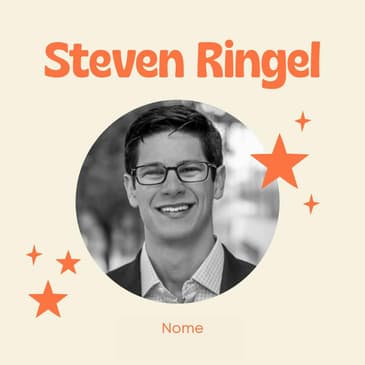
In this powerful conversation, Effie Parks sits down with Steven Ringel — patient, sibling of a patient, founder of the Kizuna Foundation, and CEO of Nome to discuss how AI is revolutionizing personalized medicine for the smallest rare disease communities. Diagnosed at 17 with an ultra-rare inherited retinal disease caused by mutations in the KIZ gene (and later learning his younger sister Natalie shares the exact same diagnosis), Steven refused to accept the doctors’ advice to “learn braille and prepare to go blind.”
Instead, he built a 501(c)(3) to develop custom gene therapies and then launched Nome, an AI operating system that makes personalized therapies faster, cheaper, and accessible even to the tiniest patient advocacy groups. Since the original recording, Nome has exploded: they closed a $2.7 million seed round and their AI platform is now live at nome.bio
Steven shares the deeply human side of rare disease, the operational bottlenecks that hold back small patient-led efforts, and how Nome’s AI acts as the “quarterback” to coordinate experts, manufacturers, and regulators — turning “maybe” into clear, actionable next steps.
If you or a loved one has a genetic diagnosis and you’re wondering whether a personalized therapy could be possible, head over to www.nome.bio right now and upload your genetic report. It’s completely free, takes just minutes, and could open doors you didn’t even know existed. Steven and the Nome team built this tool because every patient deserves to know their options — no matter how rare their condition is.
Thanks for listening to Once Upon a Gene! If this episode lit a spark, share it with a fellow rare disease family and help us spread the word about Nome. See you in the next episode!
[00:00:03] I'm Effie Parks. Welcome to Once Upon A Gene, the podcast. This is a place I created for us to connect and share the stories of our not-so-typical lives. Raising kids who are born with rare genetic syndromes and other types of disabilities can feel pretty isolating. What I know for sure is that when we can hear the triumphs and challenges from others who get it, we can find a lot more laughter, a lot more hope, and feel a lot less alone.
[00:00:31] I believe there are some magical healing powers that can happen for all of us through sharing our stories, and I'll take all the help I can get. Once Upon A Gene is proud to be part of Bloodstream Media. Living in a family affected by rare and chronic illness can be isolating, and sometimes the best medicine is connecting to the voices of people who share your experience.
[00:00:56] This is why Bloodstream Media produces podcasts, blogs, and other forms of content for patients, families, and clinicians impacted by rare and chronic diseases. Visit BloodstreamMedia.com to learn more. Hi there, and welcome to the show. This is Once Upon A Gene, and I'm your host, Effie Parks. I have an awesome conversation for you today. I'm talking with a man who was diagnosed at 17 with an ultra-rare inherited retinal disease that is slowly taking his vision.
[00:01:25] A few years later, his sister Natalie got the exact same diagnosis, and doctors told them to learn Braille and prepare to go blind. And as many of you know, it is almost impossible to accept a story that has been written for you. And many of us go to actually make our own story, like my guest today.
[00:01:45] So instead of what the doctors told him, he started the Kizuna Foundation and then launched Nome, which is an AI operating system making custom therapies faster, cheaper, and it's doable for even the tiniest patient advocacy groups. And yes, it's named after the Alaskan town in the famous Balto sled dog story. Because when everyone says there's no way, a heroic team still finds a path to GNOME. Quick apology, especially to you, Stephen.
[00:02:15] I recorded this one pretty late last year, and I don't know what happened. I dropped the ball big time. So I apologize. But since recording this conversation, there's been an exciting update. GNOME has exploded, and they just closed a $2.7 million seed round, and their AI platform is now live at Nome.bio. So families can upload a genetic report and get a free personalized therapy feasibility report in minutes.
[00:02:45] So please enjoy my conversation with Steven Ringel. Hello, Stephen. Welcome to the podcast. Thanks so much for having me. Yes, I'm really looking forward to learning more about you and about your newest endeavor that you just launched. I'm really excited to hear about it. Let's see. I first met with you, I guess, maybe a couple months ago. We had a little phone call, and you were kind of explaining this new company that you were launching.
[00:03:08] And I've been thinking about it ever since because it sounds like one of those things of why isn't it made or is it too good to be true? So I'm hoping that you can explain it so a lot of us can understand. Not everyone listening is a really smart tech engineer, biotech person. But I also know that you come from a very personal place. So I'm looking forward to hearing about it. So I guess, Stephen, can you introduce yourself for me? Yeah, of course.
[00:03:33] Well, to your point, the big vision that we have is that it should be faster, simpler, and less expensive for patients to get access to personalized medicines. And that ultimately, it should be part of standard of care. But to get there, there's a lot of work to do. So I'll go back and introduce why am I even interested in this big problem in the first place. First and foremost, I'm an ultra-rare disease patient and sibling of an ultra-rare disease patient.
[00:03:58] At 17, I was diagnosed with an inherited retinal disease, which means I'm going blind over time. And a few years after that, my younger sister was diagnosed with the same disease. And at that time, I was in college studying to be a lawyer. And it really felt like I had to jump directly into the healthcare space to do something about this problem because we had been told there's nothing you can do. Just go home and accept being blind over time.
[00:04:24] I'm sorry, no dice and anything further, no actions to take, no therapies, nothing. And I wasn't willing to accept that, not even for my own sake, but really for my sisters. And so being not a doctor, not a PhD, it's like, what can I do? And so I launched a career on the commercial and operational side of precision medicine. I spent about a decade working to combine a lot of the technologies that your listeners are really familiar with, such as genomic testing and sequencing, with the latest and greatest technology.
[00:04:54] When I started, there was not AI in the way that we talk about it today. It was basic machine learning, if it was even called that at all. And over time, it's really come a long way. But I've always been really interested in how does the technology connect with some of these new assays and information that we understand about biology?
[00:05:11] And then really the third leg of the stool, how does that get integrated and implemented into clinical care so that the average or the typical patients can get access to the latest and greatest within the context of their clinical care journey? So that's what I've done for the past decade or so working at companies, big and small. Along the way, I met lots of fabulous people who were working on the latest and greatest CRISPR modalities and other types of platform technologies, antisense oligos, all these things.
[00:05:41] And I was reading a story a year about custom gene therapy made for this kid. And I'm sure your listeners saw the story about baby KJ this summer that was certainly one of the most interesting and advanced ones. But there have been several others over the past year where one or a few patients got access to this really cutting edge therapy. And at a certain point, about a year and a half ago, I thought to myself, I want one. Where is ours? And my condition, my sister's condition, we know that there's 18 patients diagnosed in the United States.
[00:06:11] We believe there's about 200 patients diagnosed globally. So we are teeny tiny, about 15 times smaller than the traditional size of an indication that a bioforma company would seek to invest in building a drug for. And so when I saw the promise of the science actually delivering results for patients, and I knew that there wasn't going to be a traditional bioforma capitalization prospect for us, that's when we jumped in.
[00:06:35] And we decided to start a 501c3 to raise the money and start to advance the development of a customized gene therapy. It's called Kazuna Foundation, and we've been around for a little bit over a year. And our goal is very simple, to develop gene therapies first for our mutation, which is called KIZ, and then ultimately for other similar conditions causing retinal disease and degeneration.
[00:06:58] As I did that work, though, what became really interesting is that while it's certainly hard to raise money, and certainly there's always details in the last mile of science, neither of those things seem to be the true blocker. I was meeting lots of other parents and patients interested in developing drugs, actually doing it. There's a number of others that have already kind of advanced their drugs to clinic and are treating their kids or themselves.
[00:07:22] What really stood out to me is the hardest part was the operations of stringing together many different types of experts in a way that they could work together efficiently and effectively. And I think the reason that is hard for these small personalized therapy efforts led by patients is because traditionally that job of kind of playing quarterback is the role of a bioforma company, or at least the role of a large global CRO.
[00:07:48] And so given that that player on the field doesn't really exist, when we're talking about these small therapies, that really felt like a huge gap. And luckily, a gap that based on my experience building technology, it was something that I thought that artificial intelligence could really take on and solve and play the role of this coordinating experts at a scale and a cost that was radically better than anything before. And so that's when we started a for-profit company called Nome, N-O-M-E.
[00:08:16] And Nome's whole mission is to be the operating system for personalized therapeutics. And like I said at the beginning, make it faster, cheaper, easier than ever to develop a personalized therapy using technology when it makes sense to lower the cost of certain processes and allowing for this whole process of building a customized gene therapy or RNA medicine to really scale and reach every single patient, you know, regardless of where they're being treated.
[00:08:44] So hopefully that gives you and your listeners a little bit of background on what I've been up to and more importantly, why it really matters to me. I mean, you really got a lot done in a little amount of time. You seem to have just taken action fairly quickly. And it's really impressive. And I just think about you and your sister being diagnosed, not necessarily together, but eventually together. And you're being told by your doctors to learn Braille and have a nice life and to accept the future. And I wonder how was that sibling dynamic?
[00:09:14] Like, were you able to lean on each other? Did one of you care more than the other? How did that take a toll, I guess, emotionally and practically with your relationship? Yeah, we're super bonded together over the experience. There's so many things that we can go through in shorthand, like experiences happening to us in the day-to-day that I know that my sister Natalie understands that probably very few other people in the world understand that she could understand with like a very cryptic text message or wink or nod. So there's certainly a lot of commonality and shared kind of emotional experience there.
[00:09:43] I will say that we've taken the experience differently. Natalie is pursuing a degree in sustainability and food policy, which is amazing, but certainly not directly connected to building a biotech company. We also have different opinions on what it means for potential therapy that we're working on to be safe.
[00:10:01] Not that one's better or less informed than the other, but we prioritize different things out of what we want out of our vision and kind of why we'd be interested in potentially receiving an experimental therapy that does come with some risks. And so there certainly are differences in how we navigate both our current state as well as what's possible for us in the future. But I think the key thing to call out is that those similarities and differences are just so human.
[00:10:27] And that's really like a key insight that I've had talking to many, many parents and patients and researchers that are trying to work in this field of advancing novel, small batch therapies. Everyone takes this as a human being. It is a very emotional thing to receive this diagnosis. And it's an even more human trait to not want to accept that and want to actually move forward.
[00:10:50] We often use the phrase that action creates hope or something in that ballpark because we really think it's not even necessarily about getting the therapy into you or your child at the end of the day. Of course it is because we're hoping that it makes a real difference in the patient's life. But along the way, along the journey, just even taking steps forward when you were previously told, sorry, there's no hope, that makes a tremendous amount of difference.
[00:11:17] And I think it's that shared human aspect that having this diagnosis, not just for me, but also for my sisters, really taught me up close. So can you explain GNOME to me and the mission to bring personalized treatments to every patient? Can you elaborate on how you think about that vision in practical operational terms? Yeah, for sure.
[00:11:36] I mean, what stood out to me at the start of Kazuna Foundation, I spent probably about a year, maybe year zero of the foundation, calling hundreds of different experts across kind of different silos or different lanes of expertise. Some that were really knowledgeable about cell therapies, some about gene therapies, some about manufacturing of gene therapies, some about the regulatory guidance that was out there and what FDA looked for in allowing me to deliver a custom therapy to a patient.
[00:12:04] And I was talking to these hundreds of different experts across domains and I realized, one, I'm incredibly lucky to be able to have these conversations. Most people don't have that privilege. I was just so fortunate to have some connections from working in biotech that I was able to make these phone calls and have my phone call picked up. But most people don't even get that chance nor even know who to call and who what to ask. And second, while a lot of those calls were informative, I don't think they moved me or our foundation forward to clear action.
[00:12:34] And I think lots of what I got off the phone with all these people and I was like, maybe I had a slightly better sense of chance of whether something could work or not work. But it was never really clear which types of projects to prioritize. And it was certainly not clear how to move them forward. Who should I partner with? What types of contracts should I go try to create and sign? Do I need an organization? Can I fund this out of my pocket?
[00:12:57] Like some basic questions around how to actually go from theoretically, we could do X, Y, Z to, no, this is a good idea. Here are the first steps. Here's what you need to do. That took a lot of time and a lot of effort that I was privileged to be able to spend, but I don't think will ever scale. And that was the insight for GNOME. Was that what if we could do that on the behalf of every patient or parent who wants us to do it on their behalf and make it really simple so that instead of having to worry about taking all that action on your own,
[00:13:27] it's just a conversation, a question of intent. Do you want this thing? And if so, we can help make it happen. The way that GNOME actually works to do that, we're building a series of AI models that connect what I'll call expert level knowledge and expertise to physical capabilities and assets like manufacturers and other kind of participants in the process. From an AI model standpoint, we just built and launched our first model.
[00:13:56] And it's actually available in the public domain, which we can talk about towards the end here, how people can access it. But the purpose of this model is very simple. If you're diagnosed with a genetic disease and you have your genetic test report in front of you, someone gave that to you or counseled you on that, you can share it with us. Our system will analyze that genetic diagnosis for you and tell you whether you are in a good fit or an eligible patient for one of several different types of personalized therapies.
[00:14:26] It doesn't mean that it's for sure going to work for you. There's a ton of development decisions downstream and risks and benefits. And it's a much more complex conversation to get to 100% this drug will work. And it's difficult to ever know 100% a drug will work before you put it into a patient. But at least with our AI, you can answer very, very clearly, is pursuing a personalized therapy based on your specific gene invariant a good idea?
[00:14:52] Is it worth your time, money, energy, and most importantly, the hope that you would string along through taking that action? And we can answer that empirically. We return back a score, you know, 0 to 100 with a confidence interval that says, yes, this makes sense or no. Honestly, it doesn't. And we cite all the literature that helped us make that recommendation. So we think of this as a really powerful tool for parents and patients to understand, like, is there an option here to pursue?
[00:15:20] Which, again, for me, took a year of searching to answer. And we can return that back to patients usually in about a week, which is pretty cool. Yeah. But, you know, that makes me think one of our amazing CT91 moms who spearheaded our gene therapy, I remember her saying when she was researching it and figuring out what she could do, she called me and she was like, Effie, they said this is a good gene. They said this is a perfect gene candidate for gene therapy.
[00:15:44] So is that basically that initial question that patient advocacy orgs are coming to Nome to find out is whether or not they have a good gene that's amenable to gene therapy? Yeah, exactly that. And I think the challenge is, I mean, okay, one, you have an incredible parent partner there who is able to get that information. It's not always easy to do so. Two, there's a lot of times where there could be multiple kind of good options. And how do you work between those?
[00:16:13] A gene could be potentially a good target for multiple types of technologies. Maybe it's both a good fit for a CRISPR gene therapy and for an RNA medicine like an antisense oligonucleotide. Those different platforms come with different risks and benefits. What do you choose? Who do you trust? How do you kind of take critical path next steps that might benefit both potential options if you're starting off as a foundation?
[00:16:39] Those planning steps to take it from this could be a good gene to, okay, exactly here are the contracts we want to set. Here's how much money we need to raise. And it's going to get us to this milestone in the development path. That maturity of an organization, a patient organization or a parent doing this on behalf of their child, that takes a while to develop. And I guess my point is, I think it's very difficult to kind of make those kind of comparative assessments unless you have some deep training.
[00:17:07] And that's what our tool seeks to do on behalf of all these parents and patients. So in your opinion, or have you seen any mistakes or missteps that families or foundations are commonly making when they're navigating the rare disease treatment space? Like, is there something that you wish they didn't have to make that perhaps Nome could solve? Absolutely. I don't know if it's a mistake, but I think what I see happen all the time is latching on to a maybe from the first scientist or two that somebody meets. And that may be being, maybe this technology could work for you.
[00:17:37] Maybe what I work on could work for you. Maybe I could help you. And I think it's not from now intent. Like, I've been struck by just how incredible so many researchers, scientists, whether they work in academia, whether they work for commercial companies, everyone got into this field for the right reasons. Like, everybody wants to help patients and they're always moving mountains to do so. But it's really hard when you have limited money, but more importantly, limited time.
[00:18:01] And you need to be really efficient with which types of experiments do we want to fund first and really put more of our eggs in this basket. And I think the, I don't want to call it a mistake, but I think what I've observed is that parents and patient organizations oftentimes get excited by that first yes, but they don't necessarily have this scope to kind of look at all of the options. And that makes sense because looking at all the options takes a lot of time and effort normally.
[00:18:27] And that's why we think that the artificial intelligence that we're building is so powerful and so useful because it can look across all of those options and do it, you know, in a very short time span. And so that allows groups to make different types of choices and be more informed with, you know, who do they want to trust? And, you know, how do they want to proceed forward in kind of starting some of their treatment development? So what is the most valuable thing that these small family foundations can do today to prepare to collaborate with a system like Nome?
[00:18:58] Number one, you've got to have your data house in order. So make sure that you have a genetic diagnosis, that you have access to that specific diagnosis with the variant information and the potential other information that a clinical lab or clinician gave you. And then if you're working as an organization, it's important to have that across all the patients, kind of all in one place. And so it's very easy to start to do the analysis.
[00:19:24] And the other big thing is think about how are you going to fund these next steps forward? And there's no one size fits all here. Some just fund completely out of pocket, especially for the first steps. You know, I, you know, hey, it's okay. You know, this is a step that might cost, you know, tens of thousands of dollars to kind of take the first steps in developing a custom therapy. And I'm going to fund that. And if it goes further, great. I'll figure out some stuff later. Okay. That's great.
[00:19:50] Some people don't have that money or they want to bring in more other families around the table from the start so that they can have a wider pool of funding and potentially take on multiple types of therapy developments at once. And that might require a 501c organization or fiscal sponsorship from a 501c3 organization where there's another organization that's kind of allowing you to collect donations using their 501c3 status. There's a number of those different options.
[00:20:17] And I think that's essentially the starting line for getting some of these scientific programs funded because ultimately you're going to need to be able to write and sign a contract with someone performing the work. So in my case for Kazuna Foundation, as an example, we're a 501c3 and we're working directly with University of Florida to carry forward some of our early experimentation for concept work.
[00:20:39] And we can contract with them directly and have rights around who owns which piece of IP and who owns what data because we're an organization and we're able to sign that in the right way. We have bank accounts for the organization that allow us to take in donations and then write checks to researchers to sponsor them.
[00:20:57] And so I think that that's a really critical kind of get started step is to make sure that you're ready to go from a funding and operations perspective, if and when you're able to figure out exactly what you want to take forward. I know there's a story about a 12 year old girl with vision and hearing loss who'd been chasing leads. What was that story about? And can you tell us sort of how your teams reacted to it? Yeah, for sure.
[00:21:23] Sure. So this is, yeah, as you said, a 12 year old who's got both vision and hearing loss. And the parents were super interested in not taking nothing we can do for an answer. They really wanted to fund anything that had a reasonable chance of potentially generating a therapy that could preserve their daughter's vision was their primary goal. And, you know, I think two key things to call out.
[00:21:50] One is, you know, before we started working together, it took a few years of them going to conferences and calling researchers and trying to figure out what was the potential best path forward. And just like I said before, it was always, you know, maybe this could work and just really difficult to triage between different options and different things that they were hearing from different scientists and make a really informed decision around where do I want to go forward? Where do I want to actually kind of sign up and kind of put our eggs in this basket?
[00:22:18] And so the first thing that we did was we analyzed the case and we said, OK, here are potential therapy options that might work. And here are ones that, frankly, we think would be less likely to work or we'd need to know a lot more on kind of some auxiliary studies to have confidence that those things could work. And so the first, you know, we were able to kind of give them, OK, here's the most likely therapeutic option to go develop. And then from there, the question became, OK, that's great. How much is it going to cost? How long is it going to take?
[00:22:47] And who are great partners that can, together with GNOME, collectively provide all the expertise that's required here? GNOME plays the role of a program manager and kind of quarterback of the whole project and uses artificial intelligence to get to the right answer more quickly when it's possible. But you always have to have, you know, actual people in the wet lab, which GNOME does not have like a wet lab actually doing physical experiments with cells and with chemicals today.
[00:23:14] And so who are the people that are going to do that, that have a great reputation we can trust? And so what GNOME did is we went out and we sourced, we wrote an RFP request for proposal that had very specific questions for this patient's case. They were not high level abstract questions. They were very detailed to her specific needs and the development timeline that would meet her specific needs and goals around when they needed treatment. Like, for example, one key question is, you know, how long can we wait?
[00:23:39] You know, how much de-risking do we want to do in the lab before we deliver this treatment to someone that's losing vision by the day? And so that was a key kind of choice to focus on making sure we could get something that was safe relatively quickly rather than kind of checking every single last box in the preclinical stuff. And that's an individual choice that the parents had to make on behalf of their child, which might differ between different individuals.
[00:24:02] Once we had those criteria and we got responses from about 20 different potential partners, we were able to down select two or three that really made a lot of sense for this specific project. And then we were able to kind of help the family weigh out the pros and cons of working with each group across dimensions like timeline and cost and prior experience and reputation.
[00:24:23] What I'm proud of in that effort is that we were able to translate to parents who are very smart and very dedicated and educated themselves significantly, but also are not, you know, PhD drug developers. We were able to put this decision into language that they could make the choice and they could really understand the risks and benefits, the pros and cons of going with, you know, option A or option B and feel really empowered that as parents, they were doing what they thought was best.
[00:24:49] And that level of translation from highly technical scientific concepts to, okay, parents, you know, here's what you get out of door A and here's what you get out of door B. That's what we really, you know, we're able to provide them that was different than any of their prior attempts talking to researchers one by one because we're able to help them kind of frame it and then make decisions as parents and humans.
[00:25:10] And I think that to me is what success looks like because now we're talking about humans, you know, making an informed decision for themselves or for their child versus, you know, the process of drug development, which can seem quite intimidating. It's definitely intimidating. And yeah, that's like the bright shining star, right? That's totally been missing.
[00:25:29] I mean, these families are learning all of this on their own in the middle of the night from their friends, from other rare disease groups, you know, just latching on and, you know, copying each other's homework that's available, not necessarily making an informed decision and not having enough money to like put all of their, you know, like to invest in different types of therapies or only enough to invest in one. And so they go all out like it's it's so random, right? Everyone's doing their best.
[00:25:56] And it's definitely getting better and more organized for these families. But there's never like that shepherd or that quarterback that's really guiding a family through or guiding an organization through to really help them understand what their best options are. It's it's just kind of like a it's a mad dash that takes forever. It does take forever. And keep in mind, as you really well know, like this is not someone who's, who's unattached in their early 20s and has got nothing but time and no responsibility.
[00:26:26] These are oftentimes parents who are working parents that have sick kids at home that they're trying to be caretakers of and for. And like the burden of them trying to become a moonlight drug developer. That's let me commend any single person or parent or group of parents that's taking that on. It is incredible. I am every day like when I hear parents and I meet them at conferences talking about this. I'm like, oh, my God, like your kids are so lucky. Like you just such an incredible humans that are doing this work on behalf of their kids.
[00:26:56] What I think we can honestly also say, though, is that because it is so much work and so much effort and requires just so much from a resourcing standpoint to move it forward. It's probably not going to reach every single kid or family that needs it. In fact, it's probably if we expect that system to continue delivering for us, it's probably going to end up leaving behind 80 percent plus of the families that are out there that are desperate for help. They really, really need something.
[00:27:22] They need a treatment the same way that parents that are able to kind of find these options and bring forward therapies do. But maybe they don't even know to ask the question. You know, maybe they don't have any money to spend on this. Maybe, you know, they started trying to figure out some drug development stuff, but it was just too complicated or, you know, they didn't know who to ask. They weren't connected to all right people.
[00:27:42] It's just like there's so many reasons why it's not realistic for us as a health care system to expect parents and patients to be the only kind of actors leading the charge here and bringing this forward. And so at Nome, we absolutely want to enable those groups and say, like, heck yes. Like, how do we help you? Like, what can we tell you that you haven't already found?
[00:28:03] Can we provide you this kind of on balance review of right therapeutic strategy and help you source the right vendors and help you take advantage of the really quick advances of artificial intelligence by kind of leveraging all the models out there the right ways with the right contracts and relationships. We could do all that for you for sure.
[00:28:20] But our kind of our bigger mission and aim is really what does the system have to look like end to end so this becomes automatic and part of the standard of care so that any child or any patient diagnosed in the course of routine care in their clinician's office is immediately getting pushed into our system to say, okay, and what can we potentially do for this patient?
[00:28:41] And the place that we really think about that showing up the most off the bat is really in the NICU when you have these children that are often very, very sick from a known genetic cause that their traditional kind of standard of care would likely be maybe palliative care. Like, how do we keep this child in this family comfortable? Like, there probably isn't going to be a therapy for this child. It's a very, very sad case. But, you know, if you ask the question, like, how do we then kind of change, you know, the care delivery model?
[00:29:09] It's like, well, if we knew right off the bat or right when that kid entered the NICU that this is a genetic disease, it could be amenable to a splice-switching antisense oligotherapy with a probability of, you know, 85 out of 100. So it's worthwhile continuing to start, you know, that development process. And then here are the exact, you know, two or three kind of process step partners that need to take on these exact kind of process steps in their lab to start moving very quickly. Here's what we can put in parallel.
[00:29:36] Then you start to actually be able to move very, very quickly and develop some of these treatments as we've seen, you know, Tim at Boston Children's do this and some other groups. You know, the total time end-to-end from patient diagnosed to treatment can be less than a year. So really the challenge is how do we make that the standard for every baby every time so that when that kid enters the NICU, it's not a question of palliative care. It's a question of how do we intubate?
[00:29:59] How do we keep this child alive and the family well taken care of for long enough for this therapy to be developed or so that we can match them to, you know, a therapy that's already in development, you know, somewhere maybe across the world that normally we wouldn't have access to. But because of the special case, we can broker them access.
[00:30:17] Those are the types of things that we get really excited about and passionate about at Nome because we think it fundamentally changes the care delivery model in a very equitable way that allows every family to access the advances in personalized medicine. Yeah. Genetic testing for everyone. You know, from talking to so many families over the years, I've found that most of us actually aren't put in the NICU right away.
[00:30:40] It's such a confusing time and nobody really understands what's happening and the medical professionals maybe aren't taking it as seriously as it should be. And they get missed right then because they're not having a seizure the day they are born or, you know, whatever it is. And they get missed. And then it's just that one month, two months up of like trying to make someone understand that something was going on that will also end up making it take years to finally get that diagnosis. And they get missed there.
[00:31:07] It's almost like, yeah, genome sequencing at birth, newborn screening being better and, you know, more widespread. But like some of them, so many of them get missed even from the NICU. You're so right. And that's why, I mean, from a company building standpoint, we're providing the type of help that I've described to you through multiple different channels, both through clinical care as well as directly to patients on our website.
[00:31:33] And we do that first evaluation that I mentioned to you for free because we really believe that this is just a patient's or the parent's right to know. Like it's morally correct and the right thing to do to provide this type of insight and education to families that need it without trying to make a profit on that piece of the process. And so that, you know, that exists because we don't want patients to get missed.
[00:31:56] That being said, you know, I think we've seen a number of different kind of advances in the penetration of genetic testing, both for, you know, children within, you know, inpatient care settings or, you know, within the neurologist's office, as well as newborn screening efforts that are funded by, you know, states, countries, and other kind of NGOs to really start to advance that as the standard.
[00:32:19] Now, it's going to take a heck of a long time to both roll that out successfully, to fund it, to prove the health economics of it, to get that to every child. I think the direction of travel is certainly more patients, more genetic testing earlier in life. And so as we're seeing that happen and really kind of grow significantly over the past 35 years, we want to be there to be ready to potentially provide a therapy option.
[00:32:42] Because even as genetic testing is great and it provides novel insight to what's going on, and we need that as a kind of a requisite necessary first step, we still know that 95% of those kids that are diagnosed, there's no therapeutic option for them, no clinical trial for them. And we estimate about 85% of them are below kind of the prevalence threshold where it would ever make sense for a traditional commercial bio from a company to ever make a drug for them.
[00:33:05] And so we can sequence the world, we can, you know, go out there and, you know, expected 300 million rare disease patients out there in the world right now, we can sequence all of them, we can have perfect genetic information, we can have RNA-seq, we can have all the multi-omic data and clinical data we want. But if there's nobody working to actually translate that information, that diagnosis into a treatment in a cost-effective, time-effective way, then it's just more data. And it doesn't really actually change the game.
[00:33:32] And so that's really, from a known perspective, that's where we start is that post-diagnosis and we're rooting and cheering on all the companies and programs that are driving diagnosis more pervasively throughout the care system in different ways. We're here post-diagnosis. In other words, if there's a diagnostic odyssey that you're calling out, Effie, that many parents and patients face, we're here for the treatment odyssey. We're here for the date after you're diagnosed when you start looking around for options and realize there are none. That's the odyssey that we want to address and close.
[00:34:03] I love that. That just lit me up, Stephen. So looking ahead, five, ten years, what does success look like for GNOME? Is it making it more affordable and widespread access? Are you hoping to have a certain amount of therapies? What is your hope for impact? And also, what would be the one thing that you would change about this ecosystem? Those are big questions.
[00:34:25] So from a vision standpoint and impact standpoint, we have a very clear one, which is we want to be practicing precision population health, which to us means that when we find patients at the point of care in clinical care systems that are diagnosed, we immediately kick off that therapy building process. We're able to deliver the right patient, the right customized or personalized therapy at the right moment in their care, monitor to make sure that it works for them, and then actually understand if it changed health economics.
[00:34:53] And so for us, when we execute on that, what that looks like is that this isn't a process that necessarily is driven by patient-led organizations. It might be, especially if there's more complex and foundational research that's required.
[00:35:06] But for what we call the eligible patients that are out there, which we think is right now about 10% to 15% of the rare disease neurological disorder community, those 10% to 15% patients where we already know that we have the platform technologies and we could do this work, we want all those patients to be treated from the moment that they're diagnosed and have it be something that's part of the reimbursed standard of care.
[00:35:30] Just like if you had diabetes or if you had cancer or any of these other larger diseases, we want kind of a personalized care therapy option to be available for those patients as part of their normal payer or insurer promise. And so we're trying to build all the infrastructure to both make that practically possible because there are a lot of pieces going into who are the right patients? Can we develop them a safe and efficacious drug? And then monitoring to see did it actually work and did it reduce costs?
[00:36:00] So we've got a lot of work to do to build out that digital infrastructure to recognize that vision. And your other question, what would we want to change in the ecosystem? I've seen a lot of positive movement. I mean, truly in the last three to six months alone, I've seen more people from different places that you wouldn't necessarily expect start to really believe in and invest in personalized therapies and medicine.
[00:36:23] I think the one thing that's most important for our ecosystem to keep in mind is that we shouldn't be playing the short game for, okay, how do we make money on these drugs tomorrow? And what's the commercial value of any one given drug and trying to eke out small dollar investments and seeing kind of large returns on them? I don't think that's going to work.
[00:36:46] I think that if we expect short-term games or even kind of medium-term return on capital invested, people are going to be disappointed and investment is going to leave the space. And so I'd encourage everybody in the ecosystem to take an incredibly long lens view of the big problem that we're trying to solve that's going to take a decade plus to really solve it from first principles and at its core.
[00:37:09] And be invested over that horizon with the necessary amount of capital with the expectations that at the end of the day, this is both going to be great for patients as well as something where there is a financial model support based on the reduction of ER visits and inpatient visits of sick patients, just the way that any other medicine would be reimbursed and evaluated based on health economics. And that future is very possible from first principles. It's going to take a bit of time.
[00:37:33] And so I would kind of urge and caution patients of those that are coming into the fray now and hope that everybody would really invest in this for the long term. All of our dreams come true, for real. So you're a patient. Okay, let's not forget that. And you've become an entrepreneur. You're leading an amazing, groundbreaking biotech. How do you do that, Stephen? Like what are your personal habits or your mindset? Like what's helped you stay grounded while going through this personally?
[00:38:01] My fiance and my partner keep taking very grounded, but I think I don't have a secret formula here. Personally, I've tried to invest heavily in mental health and wellness. I try to meditate often. I have two dogs that I love very much that I try to take on long walks on the beach here in San Diego as much as I can.
[00:38:26] And so I try to kind of detach from this problem and be present in my day-to-day life with my family and loved ones and with myself as much as possible because this is a really big problem. There are a lot of things to figure out. It can be, say, all-consuming. And there are a lot of times where you have to get really into the weeds to actually figure out how to fix the problem.
[00:38:49] And so I try to really balance that with a healthy amount of stepping back, detaching, and really just appreciating what I have. I think one easy example of that, I realize we didn't talk as much about my personal diagnosis and trajectory. Like, you know, you're told you're going blind at 17. It has a really big impact on lots of decisions that you might choose to make over the course of your life.
[00:39:13] And so, you know, for me, one thing that was amazing that my parents said is they never limited me in kind of like the opportunities I could pursue, like, you know, sports and different things like that. They're like, yeah, go for it. And some of them worked better than others. I was a much better rower than I was a football tight end. But, you know, we found our places. And I think what I've had to be really cautious of is not kind of like doomsaying and saying, oh, I'm going to lose my vision in a year or two years or five years.
[00:39:42] And then my life is over. And, you know, I'm never going to be able to do X, Y, and Z. Because the honest truth is that I don't know. But, you know, clinicians don't know. My disease is not super well characterized. And so what I try to do is take every day as it comes and just appreciate the opportunity to have the site that I do have today, do the things that I can do today, and get to work on some of these really important problems that I think are going to make an impact for patients like myself, my sister, and many others.
[00:40:09] That's all I try to do is kind of stay focused on what's possible. Well, those are really big things. And it takes a lot of guts and it takes a lot of skill and perseverance. So I would say that you're getting pretty good at it. And I've seen a lot of things that people say about you and write about you. And you are beloved and you're very intelligent. And I'm grateful you're in this space. And thank you for showing up in the way that you are.
[00:40:33] And I'm really excited to keep following GNOME and to see how it's going to impact our rare disease community. And I'm really excited to share this conversation so more people can find you. Well, thank you so much. Is there anything that I didn't ask, Stephen, that I should have for our listeners? No, I think you asked so many great questions. And thank you so much for bringing together not just my voice, but so many others that are trying to make a difference for our community and, you know, find for our community.
[00:41:02] There are a lot of really smart and talented people that are working really hard to make a difference. And so what I'll leave the audience with is there are options out there. It's going to be incumbent on you to push them forward and try to find answers. But there are people like myself and GNOME that are here to help. And so please try to create some action because in my experience, it very much generates hope. You know what? I did forget something because you told me you were going to tell me why you named it GNOME. Can you give me the lore?
[00:41:32] Oh, yes, for sure. So one of my two dogs is a husky named Balto. I love that story as a kid growing up, which for those that don't know, there's an animated film called Balto about the story, a real true life story of 1925. A team of sled dogs pulled a medicine that was needed all the way to the far part of Western Alaska in a town called GNOME.
[00:41:55] And the situation was that there was a medicine that existed, an antitoxin for an outbreak in the lower 48 and in other parts of Canada. But this was 1925. And so there was really no commercial air. A boat would take too long to get these sick kids that were experiencing the disease, the treatment. They would all pass away before the boat could get there. And there was a massive blizzard. And so driving, in any sense, wasn't really possible. But rather than say, you know what? It's not possible.
[00:42:25] There's nothing we can do. A very heroic team of sled dogs and mushers basically created a relay from Eastern Alaska to Western Alaska, ending in GNOME, pulling in about six and a half days this antitoxin to the town and saving dozens of children in the local town that were sick. And I've always just loved that idea that when you're told there's no other way, there is a way. It's just going to be unconventional.
[00:42:51] And that's why we named the company GNOME as this kind of ephemeral destination of the company and of the mission where we always aspire to and expect to get to GNOME, just like the initial dog sled team did. I love that story so much. That's so powerful and beautiful. Now I have to go watch that Alaska race movie this weekend. I'm going to get in it. Watch it with your kids. It's a great one. Oh, I totally will. Oh, my gosh. I love it. Well, I'm so happy you're in San Diego. I know you moved from somewhere cold.
[00:43:21] So this is even going to help you even more with all that beautiful sunshine and your dogs and your spouse, your partner walking on the beach. So I'm glad you're there. And hopefully we'll see you at a rare disease party sooner than later in your area. Can't wait. Thank you so much. All right. Thanks, Stephen.
[00:44:06] I hope you've been enjoying this podcast. I hope you've been enjoying this podcast. Thank you so much. I appreciate you all so much. I don't know what kind of day you're having, but if you need a little pick-me-up, Ford's got you.