
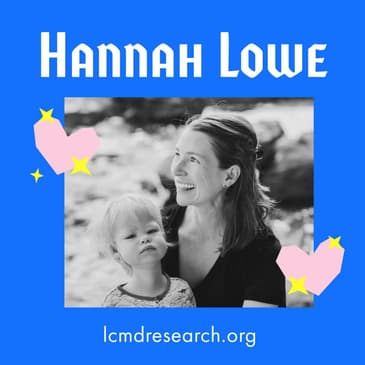

Hannah Lowe is back on the show. In this episode, Effie and Hannah discuss do not resuscitate orders for children with rare diseases. Hannah shares her experience with her son Austin and how the conversation around DNRs came up for their family. They talk about the decision-making process, how feelings around these choices can change over time, and why these conversations matter in the rare disease community.
The episode also touches on planning ahead, the emotional side of these decisions, and the importance of having these talks before a crisis hits.
In this episode:
- Hannah’s update on Austin and the L-CMD Research Foundation
- How the DNR conversation first came up for their family
- The personal and practical side of these decisions
- Why more open discussion is needed in the community
Links:
- Hannah’s first appearance on the show (Episode 108): effieparks.com/podcast/episode-108-hannah-lowe-lcmd-research-foundation
- L-CMD Research Foundation
Listen now and subscribe for more conversations on rare disease life, advocacy, and family stories.
[00:00:03] I'm Effie Parks. Welcome to Once Upon A Gene, the podcast. This is a place I created for us to connect and share the stories of our not-so-typical lives. Raising kids who are born with rare genetic syndromes and other types of disabilities can feel pretty isolating. What I know for sure is that when we can hear the triumphs and challenges from others who get it, we can find a lot more laughter, a lot more hope, and feel a lot less alone.
[00:00:31] I believe there are some magical healing powers that can happen for all of us through sharing our stories, and I'll take all the help I can get. Once Upon A Gene is proud to be part of Bloodstream Media. Living in a family affected by rare and chronic illness can be isolating, and sometimes the best medicine is connecting to the voices of people who share your experience.
[00:00:56] This is why Bloodstream Media produces podcasts, blogs, and other forms of content for patients, families, and clinicians impacted by rare and chronic diseases. Visit bloodstreammedia.com to learn more. Hi there, and welcome to the show. This is Once Upon A Gene, and I'm your host, Effie Parks.
[00:01:13] Thanks. And today I have my girl Hannah Lowe back with me. If you haven't met Hannah yet, she's amazing. She's on episode 108 way back in 2021 talking about her sweet boy Austin and the LCMD Research Foundation that she started. And she's come a long way. Today we're sitting down for a conversation that we've been meaning to have for literally years.
[00:01:35] DNRs, do not resuscitate orders, and what it means for our kids and our families and how the decision feels when your baby's maybe first diagnosed and how that feeling can maybe shift as the years roll by and life starts to feel, dare I say, normal. Anyways, I know this is a heavy topic, but it's an honest topic and hopefully a thoughtful one.
[00:02:03] And honestly, this is full of just we're figuring it all out energy. So there's no pressure and there's no right answers. It's just two moms talking it through. So settle in and take a breath and please enjoy my conversation with Hannah Lowe. Hi, Hannah. Welcome back to the podcast. Thank you so much for having me back, Effie. I really appreciate being here with you today and seeing your smiling face.
[00:02:28] I love you so much and I'm so glad you're here. For those of you who don't know Hannah yet, you're welcome. And she also was on episode 108 back in the day in 2021. Holy cow. Oh, wow. So to learn more about her foundation and her beautiful son, Austin, and LCMD Research Foundation, go check out episode 108. It's a goodie for sure. Hannah, so give us a little brief intro about you and our buddy Austin.
[00:02:56] Yeah, thank you. Austin. Yes, he's my second son. He was born in 2019. And sort of a very standard story I feel like we hear in our rare disease community. We didn't know anything was wrong. He started missing his milestones. And we were sent around to all the various specialists. He also didn't eat that well. So we saw all the ENT and the oral surgeon and all those people.
[00:03:23] And the main concern was that he just wasn't gaining weight. So we were trying to do everything we could to get him to gain weight. You know, the special formula and everything like that. And then eventually, basically around five months old, was like, he's just not gaining enough weight. Like, we just need to admit him to the hospital. And they had actually run some very standard lab work.
[00:03:45] And some of his liver enzymes came back elevated as well as his CK level, which is like a hallmark of muscle breakdown and muscular dystrophy. They said, well, his level's not like that high though. So we don't really think it's muscular dystrophy. So let's admit him to the hospital. We'll get him fed via NG tube. And then we'll like figure out what else is going on. So we said, okay. And we were there for three weeks in February of 2020.
[00:04:14] And they ran all the tests and everything came back fine. They didn't understand what was going on. And then the genetic test came back. And they said, he has a rare form of muscular dystrophy. Oh, great. Like, after all that, after they were like, we don't think he has muscular dystrophy. Yes, that's what it was. A rare form. There's about 200 people described in the literature. Clearly, there's many more undiagnosed around the world. And what we, like everybody else here, right?
[00:04:42] We're just thrown into a turmoil and totally upended our lives. Like, what are we doing? And, you know, all the appointments and the therapies. And they said, he's probably never going to walk. I mean, at this point, he wasn't sitting up at all. He couldn't hold up his own head. He wasn't pushing up in tummy time. This is at six months. We gave him a G-tube at that time. They said, you know, these kids can pass away any moment from a heart attack, essentially.
[00:05:12] And also, don't let him get sick because that's the other thing. The respiratory failure is so scary and a risk. So, as we all remember, then March 2020 was COVID and the lockdown. And we were already in this crazy headspace and just really living day to day and just trying to figure everything out.
[00:05:39] That, when everybody else in the world was in that same spot with us, then it actually almost gave us, like, a moment to pause and think about what are we actually going to do beyond just go to these therapies, go to these appointments, do these breathing treatments, whatever. And that's when we started reaching out to everybody we knew. And, you know, it's just that great network effect, like this person knows that person knows this person and Facebook and whatever.
[00:06:09] And next thing you know, we've come across a whole community of rare disease families that just felt so like a breath of fresh air. And we came across a bunch of rare disease families who had started their own nonprofits to push scientific research into their child's rare disease. So, we said, well, we could do that, too.
[00:06:33] Like, we don't have necessarily all the money in the world to fund that, but we could organize it and we could figure out what we need to do. So, that's what we did. We started the LCMD Research Foundation and we just took, like, those baby steps one at a time to ramp it up, to find the scientists we wanted to work with, to fundraise, to connect with families, and et cetera, et cetera. Here we are. Five years, six years later.
[00:07:03] Six years later. Isn't that wild? Oh, my gosh. I can't even believe the time warp. I know. I know. I can't believe how old our boys are getting. It's wild. Yes. Austin is almost seven this summer, which is unfathomable. Unfathomable. Mm-hmm. Yep. Well, and good job, Hannah. And that's definitely a crazy, crazy time and entrance. But like you said, you know, there's some glimmers in there of the timing itself.
[00:07:32] And by the way, Hannah's, like, known for being, like, a superstar fundraiser. So, if you ever need some ideas on, especially auctions, she's your girl. Happy to help in any way I can. Yeah. Love chatting fundraising with people. She's very creative and very good at it. Thank you. So, today, this episode, we're talking about DNRs. You and I meant to record this, like, I don't even know, two years ago and we forgot. And then you mentioned it the other day and I shared it.
[00:07:59] And I kid you not, the amount of messages I got after I put it in my story of, like, yes, yes, yes was wild. I haven't seen reactions like that over a topic in a while. So, it's definitely something we should cover more in depth than one single episode because not only is there the decision-making of how and why in the process, but there's also the emotional impact. And the parent, too, right? Like, how do we plan that for ourselves as caregivers? Because none of us are planning on dying, but we're gonna.
[00:08:27] So, what if that happens before, like, we are planning it not to? Like, what's our DNR plan, right? So, maybe we'll talk about that another time. But we're going to talk about your experience right now with Austin and sort of where you're at. I guess maybe what's the day-to-day like right now with Austin and how has it evolved? And talk about sort of your entrance into this whole conversation about a DNR. Sure.
[00:08:54] So, Austin is cognitively typical and he's, for the most part, healthy and happy. He still doesn't sit up on his own. He spends most of his time lying on a mat on the floor. And then he will go into his activity chair for school, which we do at home, mostly to prevent him from getting sick around other kids, which I think is just inevitable if you're in a classroom with a bunch of other kids.
[00:09:21] And he has developed arrhythmias. So, he's on beta blockers for his heart and he uses a ventilator at night. And, you know, we've just sort of integrated these interventions into his life and we just stay up with it, right? Like, we go to the doctor a lot just to keep on top of it. So, interestingly enough, we came to the discussion around the do not resuscitate order very early.
[00:09:51] And I will preface by saying every state's DNR, I think, looks different in the process. And, for instance, here in Texas, I think there's an in-hospital DNR and an out-of-hospital DNR. So, for in-hospital, it just relates to a time period that you are in the hospital. So, it would, my understanding is, if you were in the hospital and there was an imminent
[00:10:18] threat that you might die and you said, I don't want to be resuscitated, and then you made some recovery and you left the hospital, that would go out of effect. And you would have to re-implement it the next time you were in the hospital. So, what we're talking about is more of the out-of-hospital DNR. And basically, it says that you're not going to take any measures to resuscitate somebody. Like, if their heart stops beating, you're not going to give CPR or compressions or, you know, manual.
[00:10:49] What am I talking about? I want to just say bag. I'm blanking on the actual medical terminology on that. So, because I don't know how anybody else reacted with their rare disease diagnosis. But I can say that when we got ours, we were really, I don't know, fatalistic. We were just like so pessimistic. And I felt like we were coming out of the hospital with like a bubble boy.
[00:11:18] We couldn't get him around anybody. We had this toddler as well. We're like, oh gosh, he's going to get sick and just, that's going to be the end of it. I think within the first two months, I had called my parents to say, what's the plot situation? Because my grandparents had all these cemetery plots for themselves and their kids. And I was like, are there extra plots in this cemetery? So like he could be with his grandparents and great grandparents.
[00:11:48] I think, I mean, that was like my mindset. I was like, this kid's probably going to drop dead any second. Because that's what I feel like they told me, right? They said, this is very bad, right? And his particular mutation, if you read the natural history study on the disease, it's one where they say more than any other mutation that kids die of cardiac arrest,
[00:12:15] even with, even not having shown any arrhythmias or signs in advance. So not even one of these where you're like, oh, I see the progression. I see that you're deteriorating. I see that it's getting worse. It's just like, nope. You know, every morning that he was awake and alive, I was like, wow, good job. And I feel like I'm speaking sort of flippantly about it, but it was, that's truly what I felt. And it was heavy.
[00:12:44] And it was, you know, during COVID and we were like by ourselves and just, blah, like now I can look back and laugh a little bit about that time and that feeling. And wow. Wow. But really it was, it was a lot. So when we got referred to private duty nursing and the administrator from the private duty nursing company came out to do the intake with us,
[00:13:13] that is when the DNR conversation came up because they presented it to us as an option. It was not something we had known about or considered or had a discussion about. It was just private duty nursing. Okay. Well, what do you guys want to do? Because if you're not here and the nurse is here, do you want to sign this? Do not resuscitate order or not.
[00:13:38] And at the time, this is also when Austin was less than a year old. And we said, yeah, we'll sign it because I think we don't know what's going to happen. But if something dramatic happens, and especially if we're not here to, I don't know, to give our opinion, to see what the true situation is.
[00:14:06] I think we felt in our hearts that it would be better if he was going to decline and pass away, like that it happened quickly. And without much, you know, heartache of going through the whole of like a respiratory situation, right? Like a pneumonia that's like so heartbreaking. And a heart attack is, to me at least, if it can be swift, it might be a little bit more easy.
[00:14:33] I'm not that it's easy, but that was our conclusion at the time, that we would have this DNR. And I will say that they did tell us, you know, you don't have to use this, right? Like you can put it in a drawer. And if something happens and you do want to do CPR, you can. You just don't take it out of the drawer. You don't show it to anybody. It's not binding in that way.
[00:15:00] So that to us made us a little bit more comfortable as well, right? That we're not signing his life away without future consideration if the situation were to arise. Because now, having lived this life for nearly seven years and getting very comfortable with the routine and also seeing other families with LCMD where the kids have passed away in the past seven years.
[00:15:30] There's been quite a few. Yeah, I'm not sure. I actually don't even know where the DNR is at this moment. So if something were to happen, I would have to search to pull it out. Because I think right now, things seem fine enough that I would probably not pull it out and I would probably act to resuscitate him. But who knows? I mean, I don't think anybody can say unless they're in that exact moment.
[00:15:58] The thing that scares me the most, really, is that you just never know, right? Like, you could do every means necessary to save your child and then you've saved them. But it's much, much worse than your current, you know, where you are with their health. And in any given moment, I'm sure it's so frantic. Like, how can you assess that?
[00:16:28] How can you say, well, this is it. Like, he's going to go or he's not going to go. And we should do everything we can to save him. I don't know. You just don't know which way. If you did nothing, you don't know which way it's going to go. If you did something, you don't know which way it's going to go. So that's something that I think about a lot. Like, in any given scenario, how would I evaluate my actions?
[00:16:57] What I would do? I don't know what your experience has been. Man, I mean, even just, like, traveling through this idea with you and, like, thinking about your process so far is, I mean, it's intense and it's heavy.
[00:17:14] And, yeah, I think back to, like, little baby rare mama Hannah and little baby Austin and, like, of course, you know, and, like, you're making these big medical decisions in the beginning before you know anything about the system and about your child and about caring for them. I mean, it's so much. Like, it's hard to actually form an opinion either way.
[00:17:36] Like you said, like, it's evolved over the years from a probably definite yes in regards to ease for the child to, well, he has a good life and we have a good life. And maybe there's a point where we do intervene because it's worth it for these other reasons. It's really complicated. And I think just having the education around it, I guess, is probably the important part.
[00:18:05] And knowing that it's an option and really sort of thinking about it for real is a big part of this, right? Man, I don't even know what I'm talking about because I'm just talking out loud, like, thinking about your story. No, I would agree with that, right? Because if an emergency situation arose, just having had the conversation and having the thought about it previously maybe could save you some confusion. Maybe not. Knock on wood, I haven't yet been in that situation.
[00:18:33] So I really can't speak to it. And I know so many families in our community have. And I would be curious, too, to hear maybe from somebody who has gone through an emergency situation and if this has crossed their mind or not. And I don't know, really, because I think because of the topic being so heavy and so personal, right? Everybody is going to have a very different perspective on what they should do for their child. We don't talk about it.
[00:19:02] It's really not a topic I've talked about with anybody else. It's rare disease family or not. So I would be curious what folks are doing out there. Like, what is the, is there a consensus or is everybody all over the map? And if anybody's had one in place and then a situation arose, did they use it? Did they not? Did they even think about it? Maybe they didn't even cross their mind because they didn't realize the severity of the situation they were in.
[00:19:29] So, and then to just briefly touch on what you are alluding to at the beginning, we've had very similar conversations with our parents. Because they are retirement age and looking at their wills again and then all the things, the medical power of attorney, you know, maybe the spouse. But then if the spouse is not available, is the children. We're making medical decisions for our parents. And what are their wishes?
[00:19:58] And I think the thing about the DNR is like, it seems like very cut and dry. Like, you are or you are not going to give CPR and life-saving interventions. And then there's obviously a whole host of other paperwork that you can get into, especially with the older generation, right? Well, if I, like we went through this paperwork with our parents and it was like, if this happens, I want this. If this happens, I want this. It was like 10 pages of different scenarios and writing down.
[00:20:28] And it was really hard for them to think about that and to put it down. And we said, as the children, we were like, you know what? It really is uncomfortable. It really sucks. But just write it down because just go there. Go there in your mind. Go there in your heart and write it down so that we, as your children, can do what you want to the best of our ability. And now we have to do that for our kids, too.
[00:20:56] And, you know, they can't opine on that, right? They don't have like a concept of that. Yeah. Yet. Not yet. As little kids. He's seven. So this isn't obviously a subject to bring up to your child at this point. But, you know, when Austin's 15. Right. I would assume you and your husband have had a conversation of whether or not you'll get Austin's input.
[00:21:24] Yes and no. Because I. I will say, I think in some ways we are really hopeful and excited about the prospects of the research that are going on, that there will be a treatment coming soon. However, at least for me, I still think in the back of my mind sometimes like, well, we have time. And is. Is he going to make it to that time?
[00:21:54] I don't know. So I really do feel like I live the day-to-day life, day-to-day. And, yeah, there's probably another slew of conversations that need to be had now that we've made it to seven. To think like, are we going to make it to 14? And what's the next set of things that we need to decide upon?
[00:22:20] Because I think in the back of our minds, I'm slightly surprised that we're here, to be honest. Grateful. Very happy. But, yeah, when you said that time is playing tricks on us and a total time warp. That's true. Because I'm like, how do we get to seven? And, yeah. I'm not sure I realized we would be here.
[00:22:46] Well, I love that you have always still kept your eye on that bright spot in the future. We have to. And it's very realistic. I mean, we see, look at all of our groups, right? All of our groups that started around-ish the same time from nothing to dozens, maybe dozens, dozens of our groups, like on the precipice of clinical trials, right? Like happening 10, 15 years before we even thought it would, right?
[00:23:16] Just with how slow it was moving at one point to now just going faster and faster all the time. I mean, we're in a place now with our rare disease groups that we didn't really expect to be. I mean, we did, but, you know, there was always still that chance of like, this could not be realistic. This could not work. We could not make it, you know, whatever. And it's happening. Yeah. Yeah.
[00:23:41] I think for me the steps are, at least personally, know where that piece of paper is, right? Whether we choose to use it or not will be a game-time decision. I don't necessarily want to say like I have advice for anybody because I think it's such a personal call and everybody's situation is so different. I think for me, having the DNR is just like a peace of mind that if we needed it or wanted it, it's there.
[00:24:12] And in the moment, it can be used or not used. It's just another piece of uncertainty that is common, right? Like it's normal for us. Right. Absolutely. I mean, who would have thought? That's like when you step back and you look at rare disease life, there's so many things. And this is just a big one where it's just like, hello, world, other people.
[00:24:39] Do you even understand the mental gymnastics we are going through every day? Like this was not on my expected list of things to do in my life is like contemplate whether or not we should resuscitate my child. That's nobody's expectation. So, yeah.
[00:25:02] I wish there was education just more broadly as well, even outside of our community where it's sort of necessary. Right. But just to really get the wider population to understand all the little bits and pieces that go into this life. They can only understand a little bit.
[00:25:21] I still think it's just it's so interesting because like I feel like for myself, no matter where I'm at or what I'm doing, but especially if I'm just alone and maybe I'm walking through the mall magically. I just I feel so different and I feel like how do these people not know about this whole other world that these people like that families like ours are living? It just seems so wild to me daily. Yes. I agree.
[00:25:49] Obviously, you never know what other other people are battling, what they're going through. But I feel like that constantly. Like you have no clue. I totally agree. I totally agree. The other thing I would just say real quick is like for folks who haven't thought about this at all yet to just research your own state's process, because I do think every state is different. And I'm just speaking about Texas where we are.
[00:26:14] You know, I imagine that organizations like Courageous Parents Network definitely has these conversations. But you're right. We need to sort of open this up a little more in our communities to talk about, you know, the matter of fact stuff and like getting things in line and at least being informed and having a conversation. But also sort of like the emotional gymnastics of it all and changing your mind and thinking about making the wrong choice and, you know, all of that sort of stuff.
[00:26:41] And it would really be interesting, too, to talk to the families who made a choice one way or another. And to see how they felt about their choice. I mean, it's probably a never ending thing of back and forth emotionally, like wondering if you did make the right choice or whatever. Like, I think I wonder if it ever goes away. You would obviously have to make peace with it to be able to live your life. I wonder if you're fully able to. And I would like to believe that you do.
[00:27:11] Right. Yeah. I mean, with so much of this life, sometimes I feel like I'm complaining and then I'm like, I'm not actually complaining. I'm just I'm just saying it how it is. And for me. And that's all we can do. Right. We can only put one foot in front of the other. We can only make a decision with the information we have at that time. And that goes for everybody. I would be.
[00:27:40] Yeah, I would love to hear from other folks and just listen to their stories, because I'm sure there are. Very differing perspectives out there. But it is a hard thing to talk about because you don't want to be judged one way or the other. Right. Right. To say I chose to not resuscitate my kid or I did choose to resuscitate or whatever it is.
[00:28:08] If somebody disagrees, that's a scary. It's a scary place to be to put yourself out there with. Saying how you feel that, you know, people are going to disagree with. But I appreciate your approach of just like these are the facts. These are the facts of our lives. Let's make sure we're informed and educated. And whatever decision anybody makes is the right one for them. Yeah, you know, it makes me also think about Ann Regari.
[00:28:36] She was on a past episode. I'll remember to link it in the show notes. But her two children both died from crabby. Okay. But what she does now with her work is she works to inform families sort of like this ahead of time to let you know about brain donation, tissue donation, all of the things for our kids to be able to participate in research afterwards. Right. And to help us understand our disease and stuff like that. Because you can't make that choice in the moment. Like things have to be lined up.
[00:29:05] And also that is a huge choice to make. Like, do I want my child's brain to be taken out of their body and studied for research? I mean, it's a huge, wild decision that one should never have to make. But talking about it before and thinking about it and at least having it in the drawer. You don't have to open it. You don't have to pull it out. But if you want to, you just press the button and everything's already done.
[00:29:32] And, you know, you've sort of worked through it as much as you possibly could to that point. And you're making an informed decision. And you're doing something amazing, right, for all of the children who come after yours with this disease by contributing in that way. But you have to talk about this stuff first. Like all of it. You have to. It has to exist in your daily, like, compartmentalized grief boxes. Right. Yes.
[00:29:58] The other thing that reminds me is that last year I did meet with a, like, a funeral services here in town just to discuss what is the process? What is the cost? What are the expectations? And I think that's another area where we too often, like, kick the can down the road. And then we're doing it in the moment.
[00:30:21] And, but yeah, thinking about where your child might be buried or cremated or what the plan is and how you're going to pay for the plan, et cetera. Do you feel like any parents or did you yourself feel pressured to choose a DNR? Like, do you feel like there's any sort of that happening with families?
[00:30:47] And if so, like, what would you say about it? I haven't felt that. And I, like I said, I haven't even spoken to nearly anybody else about DNR. So I honestly don't know what anybody has chosen or come across. I personally didn't feel pressured. I think it was very fairly presented to us as an option.
[00:31:10] And I think my husband and I are, we tend to veer towards the practical, pragmatic side of decision making over the emotional side of decision making usually. So I think we really just saw it as a free option. But if you didn't sign it, then the choice is being made for you.
[00:31:33] If you don't have a DNR, the choice is being made that you, that interventions are happening because that is the process in the medical field to resuscitate somebody. So it's almost like not signing the DNR is already making the decision, right? Having the DNR, you get to decide later. Not having it, the decision has been made for you. So I don't know. Maybe that will be helpful for somebody.
[00:32:03] All I can pray is that often and anybody else who's in this similar situation, if they have to go, that they just go instantaneously in their sleep and don't even have to know or think about it. And it's just instant and peaceful. Amen. Amen to that. I know you brought up your parents, but that's actually not what I meant. I meant us. Like, we're not making plans for ourselves, are we? Are some of us? I'm not. I'm not. But we should.
[00:32:34] We should. We really, really should. We really should. Actually, that's sort of, that's only half true. I do, I have a will and we have the Special Needs Trust. You're ahead of a lot of people. Good job. That's a whole nother kettle of fish. Yeah. A whole nother podcast that I'm not the expert on. I'm not the expert on any of these topics. I mean, I think, I think you, we're all pretty much weird experts in lots of areas. I want to talk about this again, too.
[00:33:01] I know Madeline Oden wanted, wanted to talk about it. Yeah. I mean, families are sort of hanging around with all of these thoughts in their heads and there's no real organized sort of way to, I don't know, think through this. True. I mean, we are not a lot of people on social media because they're all very good at the same time. So, maybe we, you know what, we're going to get Courageous Parents Network on it and I'm sure they're already going to, they're like yelling right now. They're like, we have a whole library of this, Effie. Yeah, probably. But maybe we could get like one of their in the room sessions up. I'll ping them and maybe that'll be helpful for families.
[00:33:30] But you're absolutely right. We should talk about it. Yes, I appreciate you having this platform to do it. And I think sometimes it's just that we don't even really think about it because like you said, the day-to-day is so jam-packed inside and out. So maybe it simply just hasn't crossed the minds, really. It wouldn't have crossed our mind had we not had this private duty nurse come in and present it to us. Because none of the doctors had, none of the social workers at the hospital had.
[00:33:59] And maybe we would have gotten it. Maybe they would have eventually. That was our intro. What do you think about the life that you have now and the relationship that you have now with your family, with Austin, with rare disease? What about it now makes you really question signing it?
[00:34:21] What is so wonderful or good or comfortable at this point that has changed your mind or has, you know, at least evolved your thinking? Well, I think all of it. I think you just, you get far enough away from the shock and trauma of the diagnosis and the fire hose of information. Most of it, bad information being, you know, sprayed at you.
[00:34:51] You get far enough away from it that it feels sort of normal. It's sort of normal to just expect the worst or, and when it doesn't happen, you're like, you kind of, I don't know, maybe trick yourself into feeling like everything. Everything. This could just carry on forever. Everything's fine. We're just doing the things and everybody's fine. Yeah. So I think that. Distance in time.
[00:35:21] Yeah. Just the distance in time. And then you've normalized it in your brain. Like I will say, I feel like when new families are diagnosed with LCMD and I am back in it with them, right? Seeing and feeling all of those initial feelings and questions and information overload and digging and digging and digging and digging. Trying to find answers, trying to find anything that's going to help. And like, I have this distance and perspective where I'm like, yeah, yeah, yeah.
[00:35:51] Do all that. Do all that. But, you know, you're going to get to some other side where it's a little bit more accepting. And you still want to do all the things and you still want to investigate. You still want to be up and educated on the latest and greatest. But the latest and greatest isn't happening that fast. But when you first get the diagnosis, everything is new. You're trying to digest everything. And now, you know, new things come along here and there. But it's not just a blast of information.
[00:36:18] So I think you can just sort of, I don't know, glide it into some sort of equilibrium, I guess, of floating along and not thinking too hard about the catastrophes that might be waiting around the corner. Yeah. Yeah. Well said. And, I mean, that answer is pretty endless. So, yeah. Yeah. Absolutely. Absolutely.
[00:36:44] But I will say when these things happen with members, with kids in our community, when bad things happen, I think it really shakes us all. It wakes us up out of our hunky-dory, moving along, everything's fine day to day. And then it's like, oh.
[00:37:04] And I think there's a bit from everybody, a little, there's that thing when anything bad happens to somebody else, where I think instinctively we look to find the evidence of, well, that's not my case. Or, oh, well, that was this scenario. I'm like, that's not going to be my, that's not my scenario.
[00:37:28] So, I think, in any case, people want to grasp onto finding a little clue or a little nugget of information to say, oh, well, that's that person, not me. When in reality, that could be any of us. It could be a form of shadowy hope, I guess. Yeah. Yeah. Because there's panic. There's anger and anguish and panic and learning, right?
[00:37:58] I think anytime something bad happens, we all learn a little bit more about maybe it's what to watch out for or, oh, we didn't know this side effect of this thing or whatever it is. And then there's also, I think, just as humans, we insulate ourselves by saying, well, it's going to be okay over here. Yeah. Coping. Coping. For sure.
[00:38:24] Well, what I actually really appreciate about learning your thoughts on the DNR is that it's completely fluid and you still go back and forth and that you don't have a fully formed decision. I actually really love that. And I didn't know that. So I went into this not knowing what your DNR plan was. And I think that that's just as absolutely relatable as this subject could be. It's the Wild West. It's ever evolving and it's highly personal.
[00:38:53] And, you know, don't message me in anger, please. Do not message Hannah in anger ever. You'll be docked. No, really. Because I respect and appreciate anybody's perspective. This is just mine. There's no right or wrong, for sure. Exactly. Well, Hannah, thanks for starting this conversation. I really appreciate it. And it's such an important topic.
[00:39:18] And again, I'm going to do some work on the back end to see if we can sort of get something a little more formal on the topic and get some families to that. That would be great. Yeah, I think the more education, the better. And hopefully this is helpful for somebody. You have any plugs that you want to leave or any nuggets or anything for families? Well, yeah. I guess just a quick plug for our Instagram account is at lcmd.foundation.
[00:39:46] It's not necessarily only about this form of muscular dystrophy, just rare disease stuff in general. So we'd love to follow and I'll follow you back and we can continue the conversation over there. Thanks, Hannah. Thank you. Give that handsome boy a kiss for me. Back at you. I hope you've been enjoying this podcast.
[00:40:09] If you like what you hear, please share this show with your people and please make sure to rate and review it on iTunes or wherever you get your podcasts. You can also head over to Instagram, Facebook and Twitter to connect with me and stay updated on the show. If you're interested in sharing your story or if you have anything you would like to contribute, please submit it to my website at effieparks.com. Thank you so much for listening to the show and for supporting me along the way. I appreciate you all so much.
[00:40:38] I don't know what kind of day you're having, but if you need a little pick me up, Ford's got you. I don't know what kind of day you're having, but if you need a little pick me up, Ford's got you. Thank you.