

ONCE UPON A GENE - EPISODE 225
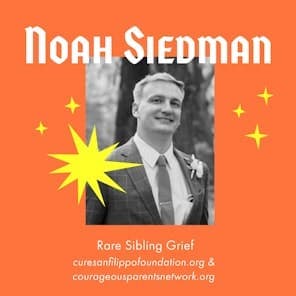
The Bravery of the Brokenhearted - A Big Brothers Perspective on Grief From the Loss of a Sibling with Sanfilippo Syndrome with Noah Siedman
Noah Siedman was a big brother to Ben who had Sanfilippo Syndrome, a devastating disease that leads to childhood dementia and premature death. He joins me to talk about his sibling experience and dealing with grief.
EPISODE HIGHLIGHTS
As a sibling under potential pressure to not be a burden, do you still carry those feelings even after Ben's passing?
It's hard as a sibling to see everything your parents are facing that's out of your control. As a sibling, there's a need to be on top of your own care and your own emotions. There were no casual complaints in my family growing up. It was either a disaster or business as usual. Filling in that middle space where you have a bad day and want to talk about it didn't exist. We've had to work on that as a family because that's not how we've functioned.
What coping mechanisms help you to write and talk about your experience?
I came to the realization that I was going to be emotionally vulnerable, which is uncomfortable. Knowing I would have to talk about my experience and brother, I had to accept it, put it out front, and get really good at talking about it comfortably. I got more comfortable talking about the progression of my brother's disease and my feelings around him, and I used it as a shield.
What would you say to the young person who is living the same life you were living and what questions should people ask that person?
The first thing that I would say, and maybe the best thing to ask that person, is about their roles. When do you feel like a sibling? When do you feel like a caregiver? When do you feel like you're an advocate? When do you feel like you are just you? I got stuck in trying to be a lot of those things at once, where the easiest role to ignore was being just me. But everything you push down morphs into something worse. Frustration turns into resentment, fear turns into trepidation, sadness becomes melancholy.
What are the misconceptions people have about death?
The biggest problem with grief is that no amount of experience is applicable. It defies the ability to be prepared for it or to use your past to help you cope. I don't think grief gets easier, I think you get better at it. Those that try to give advice to people that are grieving are hanging on to the idea that that time will heal. It's not that your grief goes away, it's that you get better at it.
How has your relationship with your sister changed?
Ben's death brought us closer and we do a good job of communicating despite handling things differently. There's no right or wrong way to navigate life with a sibling who has a genetic disorder, so we don't judge each other and we're honest with each other.
As a parent, how do you help siblings to have a better experience?
Abandon the idea that you owe siblings normalcy. My parents put a lot of effort into delivering normal childhood experiences. Instead, put that energy into helping your children articulate what they want. More important than chasing normal is helping siblings decide what's important to them and how to pursue it.
LINKS & RESOURCES MENTIONED
https://effieparks.com/podcast/episode-109-what-i-know-for-sure
CONNECT WITH EFFIE PARKS
https://twitter.com/OnceUponAGene
https://www.instagram.com/onceuponagene.podcast/?hl=en
[00:00:00] I'm Effie Parks. Welcome to Once Upon A Gene, the podcast. This is a place I created for
[00:00:09] us to connect and share the stories of our not so typical lives. Raising kids who are
[00:00:15] born with rare genetic syndromes and other types of disabilities can feel pretty isolating.
[00:00:21] What I know for sure is that when we can hear the triumphs and challenges from others
[00:00:25] who get it, we can find a lot more laughter, a lot more hope and feel a lot less alone.
[00:00:31] I believe there are some magical healing powers that can happen for all of us through sharing
[00:00:36] our stories and I'll take all the help I can get.
[00:00:40] Once Upon A Gene is proud to be part of Bloodstream Media. Living in a family affected by rare
[00:00:49] and chronic illness can be isolating and sometimes the best medicine is connecting
[00:00:53] to the voices of people who share your experience. This is why Bloodstream Media produces podcast,
[00:00:59] blogs and other forms of content for patients, families and clinicians impacted by rare and
[00:01:05] chronic diseases. Visit bloodstreammedia.com to learn more.
[00:01:08] Hello friends and welcome to the show. I'm Effie Parks and I'm so glad you're here.
[00:01:14] It's funny I just got off the phone with the father of today's guests and I was
[00:01:18] laughing and I was like, this family is going to think like I am a super stalker or something.
[00:01:24] You know, I don't know how to explain it but there are a few families that I've met
[00:01:28] along this rare disease journey and through this podcast that I just feel so deeply connected
[00:01:34] to for reasons I can't explain and this family is one of them.
[00:01:40] Today's guest you actually heard on a storytelling episode back on episode 109, Big Brothers.
[00:01:47] So make sure you definitely go back and listen to that episode too.
[00:01:51] Today we're talking about grief and the sibling experience of it.
[00:01:57] He was a big brother to Ben who had San Filippo syndrome which is a devastating disease
[00:02:03] that causes many things and ultimately childhood dementia and death before adulthood typically.
[00:02:12] So it's extremely cruel and tragic and my guest has just such profound insight and I'm
[00:02:23] really, I don't know, he takes my breath away with how he's moved through it and how
[00:02:29] he's figured out ways to communicate it and I'm just, I'm really moved by what
[00:02:36] he has to say and I think he is a teacher and that's just another thing about these siblings,
[00:02:44] right? There's just something about him. I know you're going to love this conversation
[00:02:48] and I can't wait to share it with you so please enjoy my conversation with Noah Sideman.
[00:02:54] Hi Noah, welcome to the podcast.
[00:02:56] Hi, how are you?
[00:02:58] I'm doing well. I'm really looking forward to talking to you.
[00:03:02] I feel like I kind of know about you already. I've listened to your words, I've read your words.
[00:03:08] You were on an episode of our storytelling episode a while back and I'll link that in the
[00:03:12] show now and it's just, it's really great to have you here as a guest.
[00:03:16] Yeah, I'm really excited. I think that while I love doing those pieces where I get to spend
[00:03:20] a little bit more time rolling it around in my brain, I also really enjoy just speaking
[00:03:26] off the cuff and seeing where things go. I think it's an equally good way to do some
[00:03:29] introspection. Totally. Well, I'm sure you're very good at both. Something that strikes me
[00:03:35] about you so much is just how articulate you are and you just dig deep, I feel like,
[00:03:42] without even trying and it's just a really amazing quality. Really.
[00:03:46] Well thank you. I appreciate you're saying that. I hope I'm not going to turn your
[00:03:49] plans on their head by saying I think it might be a bit of a defense mechanism.
[00:03:53] You know, I was actually going to ask you about that and maybe we'll get into that a little
[00:03:57] bit later. But yeah, super interesting. First I kind of want to just lay out the land and I want
[00:04:03] to know about being a big brother to Ben and maybe what you're thinking about the most lately.
[00:04:12] Okay. So I think it is difficult for me to put really neatly what it was like being a big
[00:04:18] brother for Ben. It was a whole lot of things and I would say the thing that sticks in my mind
[00:04:23] the most is this idea of legacy and memory and what I'm doing with it. For a really long time,
[00:04:30] I was super focused on trying to figure out what my brother meant to me
[00:04:37] and how I could communicate that. And in doing so, I was also really holding on tightly to
[00:04:45] whatever that idea ended up being and I almost held on a little bit too tightly.
[00:04:51] And I think a lot of what I've been doing more recently is trying to take a step back and say,
[00:04:56] well, Ben meant this to me. And I remember these things about him, but I'm changing.
[00:05:03] And so the context in which those memories live and those experiences and that meaning is derived
[00:05:10] is also changing. And so I have to be okay with that. I have to be able to let go
[00:05:15] of those little bits of my brother that I sort of polished and shined to the point where I felt like
[00:05:23] they were good enough and just let him be sort of who he is to me as I change. And maybe that's
[00:05:30] part of it, right? Maybe my brother is a great signpost for me because I am going to be changing
[00:05:38] but my knowing him and my experiences with him are these sort of fixed points in my life.
[00:05:46] And so I can come back to them and I can say, when I was 14, I really, really valued all of
[00:05:51] the things that I could do for my brother. Could I go out and speak on his behalf? Could I fundraise?
[00:05:57] Could I raise awareness? Could I do this, that and the other thing? And then as I got older,
[00:06:02] especially when I was thinking about going away to college, the things that mattered more to
[00:06:06] me were the stuff that I could do with my brother. Right? Could we go tooling around the supermarket
[00:06:12] in his wheelchair and bump into stuff and get away with it because, you know, who's going to yell
[00:06:16] at the kid and his brother who's finally laughing and smiling? We terrorized a star market pretty
[00:06:22] regularly. We'd go in and my mom would peel off to the produce section but she would give Ben
[00:06:29] and I three random items to grab all throughout the store. And we would just go full tilt. And this is
[00:06:37] like, you know, me six foot three in high school, like the most athletic I had been going as fast
[00:06:44] as I could with Ben just cackling in his chair. And we would take these corners around aisles
[00:06:50] up on two wheels and, you know, arrive at the milk or arrive at the bread or whatever we
[00:06:56] were grabbing. And some poor store employee would look at us and we would just be like, sorry.
[00:07:03] Oh my gosh. But so suddenly those things mattered a lot more, right? It wasn't I wasn't really doing
[00:07:09] anything for Ben. I wasn't helping care for him. I wasn't advancing the research into San Filippo.
[00:07:14] I was just being with him. And so the value of that suddenly increased to me and I was less
[00:07:20] concerned with the fundraising that I was doing. And so I guess what I'm trying to get at
[00:07:25] probably a little bit too long in the making of this point is that I don't know what is going to
[00:07:31] matter most to be about my memories of Ben in a couple years, but I'd like to be open to whatever
[00:07:37] that changing interpretation is. Do you feel like that was when you finally started to live in
[00:07:44] the moment? Is that what you mean by figuring out what you could do with Ben? Did it take you
[00:07:49] until you were an adult to really savor the exact moment you were in?
[00:07:54] Yeah, I think that's a big part of it. I think that becoming more and more aware that we were
[00:08:01] moving towards an ending and towards a parting meant that it wasn't so much me thinking about
[00:08:08] what I can do for him and how I can maybe even avert sort of this inevitability of his passing
[00:08:18] through my efforts. It was just how can I be a brother to him? How can I make stuff that is
[00:08:23] meaningful and matters to both of us while I have the opportunity? So yeah, I think it was
[00:08:29] maturity. It was the progression of his disorder and I think maybe just a little bit
[00:08:33] of internal clarity of like it takes a lot of money and a lot of fundraising and a lot of luck
[00:08:39] to move the dial on this kind of stuff, but it doesn't take a ton to make your sibling laugh
[00:08:44] and in a lot of ways there's a lot of value there.
[00:08:48] I heard you say once just about what you mentioned about the memories that you polished
[00:08:54] and at those moments or those days that were so difficult or times that you were grieving so
[00:09:02] deeply that realizing that you had been through the hardest thing that you could ever go through
[00:09:07] and you still made it over and over and over that that was such an accomplishment. So if you're sort of
[00:09:14] trying to break down that polished memory at this point and really just look at it for everything
[00:09:20] that it is and everything that you remember now, are you still able to pull things like that on
[00:09:26] those days that are really extra hard? Yeah, I am. And I think that the biggest part of
[00:09:32] breaking down that particular insight because I do think it's a good one and a valuable one
[00:09:37] and has lent me a lot of strength is to be a little more forgiving of myself on my days of
[00:09:42] frustration and to say yes there were incredibly hard moments and I triumphed over them and I will
[00:09:51] continue to and I will have the sort of faith and the confidence that I can and there were also
[00:09:57] moments of frustration where I had to put it put things down and step away from things and
[00:10:02] and just concede that there are struggles and that you know being equal to them sometimes means
[00:10:10] knowing when to take a break and give yourself some distance. And so I think what I had tricked
[00:10:16] myself into doing in this sort of everything is the hardest thing that you can handle and tomorrow
[00:10:23] you'll be ready for the next thing is forced myself to always try to be ready for it tomorrow
[00:10:29] and always try to take on more when I think the truth is a little bit more lenient that
[00:10:36] yes you're going to face challenges and they're going to be ever greater because we're people
[00:10:42] and we love expanding our capacity for things but there's also time to recuperate and
[00:10:50] time to shore up and time to turn the lessons you learned into something more actionable
[00:10:56] and so I think that really the the tempering piece to that little insight is is be lenient and be
[00:11:01] generous with yourself too. What about as a sibling? I know I hear a lot from adults the
[00:11:07] pressure to be perfect, the pressure to be happy, the pressure to not be a burden. How
[00:11:16] was that experience for you and did it remain after Ben's passing or morph into a different
[00:11:23] way of not being a burden and being a perfectionist? Yeah I think that it absolutely
[00:11:30] is still with me and was a really hard thing to grapple with. It's really hard as a sibling
[00:11:36] as you mentioned to look at all of the stuff that is on your parents plate that's so far
[00:11:41] out of your and their control and say well kind I can't get a C on this math test right?
[00:11:48] I need to make sure that I'm doing all of the little things that are so you know they seem so
[00:11:54] menial and so unimportant compared to this momentous part of your life that you just want to keep quiet
[00:12:00] about them and I think it's been true as an adult and a little bit exacerbated by distance
[00:12:06] from my family and distance from those kind of support systems and friends that know me
[00:12:11] but never knew Ben and have only heard about sort of my recollection of him and what I've taken
[00:12:18] from my experiences and as we sort of talked about I view it in a little bit of a rosier
[00:12:25] hue than it might actually have been and so it's sometimes really easy for me to push away stuff
[00:12:32] that I'm struggling with and let myself sort of sink a little bit deeper when it would have taken
[00:12:36] a you know a quick helping hand from a friend to pull me out of it. So yeah I think that
[00:12:41] you know as a sibling there's a lot of need to just be on top of your own care and your
[00:12:46] own emotions and know how to say hey I'm having a rough go of things right this minute. I could use
[00:12:52] a hand or even just report out. I think I was talking with my mom about this a little while ago
[00:12:58] when I first moved out after college I didn't call her for really mundane things
[00:13:06] like my window shades were dirty and I didn't know how to clean them because that was a
[00:13:10] 23 year old idiot who had never lived on his own right and window shades were just kind of
[00:13:15] always magically clean but I knew that in my family there were only problems and solutions.
[00:13:21] There was no just like gentle griping about the day-to-day minutiae because I knew if I called
[00:13:27] my mom she would give me the like play-by-play of exactly what I had to do and that wouldn't
[00:13:33] have necessarily been bad but I don't think it was what I was looking for and it wasn't a piece
[00:13:39] of communication that we understood. There were no casual complaints in my family growing up. It
[00:13:44] was either disaster or business as usual and filling in that middle space of like I had a shitty day
[00:13:52] I don't need you to do anything about it. I just want to talk about it. Just didn't exist and so
[00:13:57] we've had to really build that again and it's been difficult for all of us because we only
[00:14:02] problem solve right that is how we function as a family. We do projects and we profit solve
[00:14:07] and so yeah that part has been the weirdest or like the least expected hurdle in how we
[00:14:14] communicate after my brother. That's a really interesting perspective yeah you're like on
[00:14:21] crisis mode 100% of the time and then all of a sudden you don't have this need or whatever to be
[00:14:31] vigilant all the time. That's a real hard stop and I'm sure that that probably goes into your
[00:14:39] personal life too right like do you feel like you can do the mundane easily with your friends and
[00:14:45] your colleagues? I think that I am getting steadily better about it but it is really hard
[00:14:52] and in the same way that I'm saying I don't always look for that kind of problem solving
[00:14:56] and you know disaster response from my family when I call and talk to them. I imagine that the people
[00:15:02] around me don't always want it from me but it is my gut reaction to this is going on how can I fix
[00:15:09] it what can I do because yeah it was everything that cropped up, merited a response in our
[00:15:14] household growing up and so that's sort of all all I know and what we default to. I would say
[00:15:19] it creeps in a little bit less and less and less as I become more aware of it and actively
[00:15:24] work to fix it but it definitely cuts both ways and is certainly something that I need to be
[00:15:31] you know thinking about consciously to to avoid doing when it's not appropriate.
[00:15:37] What are some of those coping mechanisms that you kind of brought up? Explain the ability
[00:15:43] and the need that you have to kind of write about it and talk about this stuff so
[00:15:48] wisely and so in depth how is that something that you also kind of revert to?
[00:15:54] So I think what I ended up doing and I can't pinpoint exactly when this sort of transition
[00:15:59] happened is I came to the realization that I was going to be vulnerable emotionally around my brother
[00:16:09] a lot and obviously being vulnerable is the king to being uncomfortable and so I said to myself
[00:16:17] like you're gonna have to talk about this you're gonna have to share this you're gonna
[00:16:21] have to accept it and live with it and so let's put it out front and let's get really good at talking
[00:16:27] about it and let's be really comfortable doing it and so it ended up being that like I got more
[00:16:34] comfortable talking about the progression of my brother's disease and my feelings around him
[00:16:40] than all of the other little things that we're all vulnerable about and that we all
[00:16:45] feel emotional about and so I sort of used it you know almost as a shield because nobody
[00:16:53] asked the teenager after they've just articulated how they feel about their brother's inevitable death
[00:17:00] if they're doing okay in school or if they're feeling good about making friends or socially
[00:17:04] or any of those questions and so I got to say like okay here's the one thing that I'm gonna be
[00:17:09] really emotionally open about I'm gonna do a great job of it don't bother me about anything else
[00:17:16] and so it just like through repetition and practice it got really easy to talk about stuff around then
[00:17:22] not that it's not genuine or honest or or even emotionally impactful but it's also in a lot
[00:17:28] of ways my shield oh no uh man that's hard to hear just human to human but like as a mom
[00:17:37] oh man to know that this young person is feeling that much pain to have to put up this shield but
[00:17:48] not just to hide his own pain but also because of such strength right and the growth the maturity
[00:17:56] that comes with living the life that you are living it has a dual purpose but the fact that
[00:18:02] you even had to realize that and that you knew it would work is really really painful yeah it is
[00:18:09] really tough and it's tough to untangle even in the aftermath and knowing it right like I know that
[00:18:16] what I just told you is accurate I know that I do it and it's almost a little bit too good
[00:18:22] because it works and so getting away from it is really hard and I don't necessarily want to
[00:18:27] stop like I want to keep talking about my brother I want to keep accessing that emotion and those
[00:18:32] feelings and I want to keep sharing it with people because I think it is important but I also need to
[00:18:38] catch myself and say are you attending to the other needs that you have or are you hiding behind
[00:18:44] this again you know it's this weird case of like I'm doing the right thing and I'm doing it the
[00:18:49] right way and so I need to examine the the reasons behind it right because there's the
[00:18:55] I want to talk about my brother and share that's a good reason I want to deflect from
[00:18:59] something else that's a dubious reason but really only I can dig into those so it's a
[00:19:06] it's a bit of a responsibility and a work in progress yeah I mean what would you say to that
[00:19:13] young person who is living the same life that you were living and that you're living now
[00:19:22] who is doing the same thing what are some ways or some pieces of advice that you would have for
[00:19:29] them to be able to kind of lower that shield or get their real self out or what questions do you
[00:19:36] want people to ask that person yeah so I think the first thing that I would say and maybe the best
[00:19:42] thing to ask that person is about roles when do you feel like a sibling when do you feel like
[00:19:47] you're a caregiver when do you feel like you're an advocate when do you feel like you are
[00:19:53] just you because I think that part of what happened and part of what led me to where I got
[00:20:00] is I got stuck in trying to be a lot of those things at once and the easiest one to ignore
[00:20:06] is just me because it's not really contingent on anybody else there's no feedback necessarily
[00:20:12] so that is maybe a good question to start with and the other piece of advice I would say
[00:20:18] is that like it's hard to go wrong if you're putting it out there which is going to sound a little bit
[00:20:23] you know nebulous and fluffy but one of the toughest things is to like feel like you have
[00:20:29] to push down this frustration or this anger or this sadness or this fear whatever these
[00:20:34] emotions are because you can't cause a problem you can't face that feeling necessarily and the
[00:20:41] the deeper truth or the real truth is that everything you push down morphs into something
[00:20:45] worse you know frustration turns into resentment fear turns into trepidation you know sadness becomes
[00:20:53] becomes melancholy or torpor or whatever it's going to be and so if you're angry be angry if
[00:21:01] you're sad be sad you'll find the support around you and it will make it way way way easier to
[00:21:09] be strong when you genuinely need to right like I think that's essentially what we're talking
[00:21:14] about right I sort of built up a muscle through using it a lot and then can't unclench the fist to
[00:21:22] do anything else with it and so the more you flex and the more you relax you're still going to be
[00:21:29] strong and you're still going to be able to do all of these difficult things that that a lot of
[00:21:34] your peers can't even imagine but every moment you take in stretching and recovering and relaxing
[00:21:43] is one that's going to make you so much more happy and fulfilled and adaptable and and ready
[00:21:49] to take on the next thing as well if you need to be practical about it too you know no matter
[00:21:55] how strong the fist you can make if that's all you do you know you're gonna have some problems
[00:22:00] down the line. Oof one of the truest pieces of advice I think I have ever heard and known
[00:22:08] to be true for sure how did you learn how to do that Noah because it's hard to realize that emotions
[00:22:15] are important and moving through them are imperative to your well-being did you learn this from
[00:22:20] therapy was this just experience and growth what were the tools that you needed to have
[00:22:25] permission to feel. So therapy definitely helps I would say that all of the other ways that
[00:22:32] I got there are inferior to talking to somebody and getting a little bit of help but experiences
[00:22:41] a big piece of it and I think for me in addition to the help I got from therapy I'm just a really
[00:22:48] sort of methodical person in the way I think and so when I land on something I pick it apart
[00:22:55] and I think that is what ended up happening is as I got older and more and more self-aware
[00:23:02] and more interested in understanding not just what I was feeling but maybe why I started to
[00:23:10] look back and sift through things and you know we talked about it early on writing and speaking
[00:23:15] were a big piece of how I did that but they're not the only outlets at all I would say that like
[00:23:21] helping out friends in moments where they needed a little bit was a great piece of insight into
[00:23:26] my own emotions and maybe how better to parse them out having a little bit of space from my
[00:23:30] brother and going away to college was also a great way to do that getting a chance to reconsider
[00:23:35] how I wanted to talk about him and frame him when I met new people was weirdly enough a really big
[00:23:42] peak into into my own feelings and how I expressed my emotions but really at the end of the day it's
[00:23:50] I think the best thing is someone else who can help you ask all of those questions because
[00:23:55] it's hard to ask them of yourselves did I feel frustrated then was I sad was I angry was I
[00:24:00] afraid those are hard questions to to know to ask of yourself and so having a sounding board a friend
[00:24:09] you know a large dog to take for quiet walks in the woods and have a one-sided conversation with
[00:24:14] like there's a lot of means to that end and I think they all start with just
[00:24:19] you know this sort of Whitney of questions that you can ask at a really steady burn
[00:24:24] and you don't have to get a lot of purchase with every repetition just a little bit more
[00:24:28] insight just a little bit more honesty and and just a little bit more of a relaxed grip on
[00:24:34] how you're feeling it's incremental right I love the way you put that slow burn thought behind it
[00:24:41] what do you do when you know that you're going to go into a situation or be around something
[00:24:49] that's going to bring up something really painful for you how do you brace for it or
[00:24:54] how do you welcome it or avoid it I have no idea I I really don't I think that my gut instinct a lot
[00:25:02] of times is to try to avoid it and I think that when it's not I I tend to I tend to talk things
[00:25:12] away and like I said before come back and sort of pick them apart almost clinically until I have
[00:25:21] arrived at something that I feel like I can I can grasp or understand but I don't know I still walk
[00:25:26] out of the room when someone turns Arthur on because that was what my brother loved to watch
[00:25:32] and so I think it's a bit of a mixed bag it's hard to it's hard to just attack one or just to
[00:25:38] take apart one thing because they tend to all be so interconnected it's easier with family and
[00:25:44] it's easier with friends easier with somebody else to talk to but I think that there's no
[00:25:51] there's no clean negative advice that I can give other than it's worth it how do you think people
[00:25:59] misjudge grief or what are the misconceptions that you've run into personally that people have
[00:26:06] about what you're going through or death and dying in general I think that the biggest
[00:26:13] problem with grief is that there's no no amount of experience is applicable it's sort of just this
[00:26:23] this thing that almost defies the ability to be be prepared for it to use your past to
[00:26:31] to help you cope or anything like that if you kind of have to accept that it's it's going to
[00:26:37] be different it's going to be new and you're gonna have to figure it out and one of the
[00:26:41] things that I say to people is I don't think grief gets easier I think you get better at it
[00:26:46] I think that the totality of the sadness and the pain
[00:26:52] and the loss that I felt when Ben died isn't slowly evaporating over time
[00:27:01] I'm getting better at carrying it I'm getting better at unpacking it where I can
[00:27:06] and facing it where I can and moving past it when I can't in the moment I think people think that
[00:27:15] or I think that those that try to give advice to people that are grieving
[00:27:21] are hanging on to the idea that the time will sort of heal it and I like the I
[00:27:29] like shifting that plan to you improve right it's not that your grief goes away
[00:27:36] it's that you get better at it because then there's some ownership to it and there's some value to it
[00:27:42] and there's this ability to like grab a hold and wrestle with it and feel like you've come out
[00:27:48] a little bit more for having done so having like a little bit of control in the chaos
[00:27:54] for everything that you can't control right like I don't I don't love the idea that like with time
[00:28:00] the pain of my brother's passing is going to fade but I do like the idea that with time I will be
[00:28:06] better and better equipped to to handle all of it and to hold on to the pieces that matter and
[00:28:12] to let go of the ones that don't and to grow and change with it one of those is static and
[00:28:18] the other one speaks to me building something and I'd like to try to build something
[00:28:23] what about regret how do you deal with regret after a life like this even though a lot of the regret
[00:28:32] might not be true might not really be what happened or didn't happen but I know regret is
[00:28:38] such a wound its own special kind of demon and I wonder how how you deal with it
[00:28:46] yeah I with difficulty I think is the most honest answer like I was saying more generally
[00:28:55] with grief I think also with regret and especially in this space where you know in my brain I can
[00:29:03] recognize when it is illogical or unfair sort of beating myself up for no real reason
[00:29:10] but it's hard to get there in your gut and so I've almost have this sort of practice path through the
[00:29:17] maze of that regret that like when I get stuck in a loop of I wish I could have done I could have
[00:29:23] done more for my brother I could have been there for him I could have been more patient and more
[00:29:28] generous I could have engaged with him more even as he was struggling
[00:29:33] and maybe I could have done more but I also was you know was my own person was doing
[00:29:41] the best I could and make mistakes and so I have almost this like thought process that I go
[00:29:47] through when I get in that loop that gets me out of it and every time I start to feel that
[00:29:53] regret and feel like I'm getting stuck I practice that sort of you know mental jujitsu
[00:29:59] to get back to a reasonable place and I'm getting better and better at it every iteration you know
[00:30:05] instead of tossing and turning in bed for four hours at night I've got it down to like a clean
[00:30:10] half an hour and so I would say that like regret is tough right because it's going to sing the
[00:30:17] sort of dissonance between what your brain and your gut know to be true and the best way to
[00:30:24] deal with it is to is to continue moving forward and so as long as you're making the choices that let
[00:30:29] you grapple with as much of it as you can handle and then still take the next step and come back
[00:30:36] to it later then you're doing well what's it been like with the the family dynamic after
[00:30:42] Ben maybe with your sister Isabel I know as someone who comes from a very large family
[00:30:49] every experience that all of us had as children is so different even though we might have been
[00:30:55] literally doing the same thing at the same time we have such different stories about it
[00:31:00] and I wonder how do you and your sibling kind of communicate or has it brought you closer or is
[00:31:06] it weird what's that like so I would say that it definitely brought us closer Izzy and I are
[00:31:14] very very close and we do a good job of talking to one another for the most part we definitely
[00:31:20] handled things differently and we definitely have sort of managed to manifest different problems
[00:31:28] from the same from the same source material but I think that we did the groundwork when we were
[00:31:34] really young we talked a lot we were allies in all things when we thought it was relatively
[00:31:40] brief and it helps that we're five years apart but I would say that I don't know I just I think
[00:31:46] that the best thing that she does is pass no judgment and so I try to I try to do the same
[00:31:54] you know there's no no right way to maneuver life with a sibling with a rare genetic disorder
[00:32:02] and there's no wrong way and that the two of us are honest about it with one another is
[00:32:08] more than enough for us to continue to unpack it together and support each other I love that even
[00:32:15] though yeah problems manifest differently from the same things the sibling experience is still like
[00:32:22] the only person who knows exactly where you came from no matter what right then even if there
[00:32:27] are moments that I don't understand or that she doesn't understand and there certainly are
[00:32:32] are I mean I think that we both just accept them and that's
[00:32:38] that's a really that's a really generous and really comforting thing to know about about
[00:32:44] somebody and about your family do you feel compelled to be some sort of mentor or leader
[00:32:52] for siblings of rare do you feel like there's something else you need to do do you reach out
[00:33:02] privately what do these siblings need that you have to give and do you want to yeah I definitely
[00:33:09] do I think that somewhere along the line and it was probably right around when one of the
[00:33:18] researchers that we were supporting as a foundation was getting ready to bring
[00:33:25] her efforts to clinical trials and I sort of had the crystallizing moment of this might happen
[00:33:31] and it will be too late for my brother and I had to spend a lot of time reevaluating what my
[00:33:37] actual motivations were and was I going to find the energy in the drive to keep doing this to
[00:33:46] keep fundraising to keep staying in the space that you know causes no small amount of pain to be around
[00:33:52] all the time and if so why so yeah I think that I do really want to want to be there for siblings and
[00:34:00] lend sort of the experience of of my life and my voice to those that that maybe don't have at all
[00:34:08] as figured out as I do which sounds really ironic to say because I don't really know if I have
[00:34:13] much figured out but what I tell the people because you know you've listened to me for a little bit now
[00:34:19] I talk a lot and I'm usually good enough at making what I'm saying sound compelling
[00:34:25] but take whatever sticks is really my biggest message right if I say something and it doesn't
[00:34:31] resonate with you at all you are 100 in power to ignore it if it doesn't ring true to you
[00:34:39] at the moment it might later it might never it doesn't really matter if something I say
[00:34:47] seems insightful and it resonates and it makes sense to you then great use it get a little bit of a
[00:34:52] boost from my experience but there's no one path there's no one truth there's no easy way through
[00:34:59] this that you can guide someone with experience you can just say here's where I came from
[00:35:06] here's what I'm feeling here's how I dealt with it it worked it didn't work or some shade in between
[00:35:13] doesn't really matter just take whatever sticks
[00:35:18] and sometimes the smallest thing you can get the biggest bang for your buck for sure
[00:35:22] I think about that in the ways of this podcast too right it's like a cafeteria you take what
[00:35:27] you want and you leave what you don't exactly and everyone is richer for it yeah like I
[00:35:32] you know get a lot of joy and a little bit of therapy about getting to have this conversation with you
[00:35:37] and even if only 30 seconds of it rings true to some of your listeners that's
[00:35:43] you know that's a pretty good a pretty good return on our investment amen
[00:35:50] so as a parent what do the parents from from your perspective what can we do
[00:35:58] for our kids to make sure that we don't screw it up how do we make it better for the sibling
[00:36:07] experience what should we be most mindful of I would say abandon the idea that you owe
[00:36:14] your siblings some normalcy I think that my parents spent a lot of effort
[00:36:22] trying to take a time or a situation where they felt like they needed to deliver for my sister and I
[00:36:30] the normal experience of childhood or something along those lines tell me why because I would
[00:36:38] think the exact opposite like I'm thinking like I'm gonna go out of my way to make sure my
[00:36:43] daughter has this or that or does this or goes here because I want her to feel
[00:36:49] like everyone else too I wanted to have that experience why should I abandon it because
[00:36:55] I think you should focus all of that same energy on helping your children articulate what they want
[00:37:03] right I at no point really cared about normalcy I was in fact pretty happy to
[00:37:11] not eat out to dinner all of the time I didn't really care if people stared at me while I was
[00:37:18] taking a rock around the neighborhood and holding my brother's hand and so I think that
[00:37:24] if I had been better at articulating what I wanted and what was important to me
[00:37:28] then it would have been easier for my parents to spend their you know admittedly limited
[00:37:33] energy to help me get that as opposed to sort of this you know lofty ideal of what is normal
[00:37:43] that that doesn't really it's not really attached to anything meaningful so I would say that like
[00:37:50] normal is defined by who maybe I'm not doing a great job articulating this I apologize
[00:37:56] yes you are I completely understand right I guess what I'm saying is like you know if you're
[00:38:03] your daughter says no this is going to be a bad example oh I'll uh I'll say I'll spare you the word
[00:38:11] salad and maybe be quiet for a moment well I think okay I'm gonna fall back on slightly more general
[00:38:24] truism and just say like I think that more important than chasing normal is figuring out
[00:38:33] what is important to your kid and helping them pursue it because none of us are normal
[00:38:40] regardless of our experience with rare disease or lack thereof and if we're trying to emulate
[00:38:47] something that is as nebulous as normal then I think some amount of our effort is wasted
[00:38:57] maybe not always right maybe it is important to have you know the Chuck E cheese birthday
[00:39:04] even at the cost of a babysitter for Ben but better to spend that that time and the energy
[00:39:11] and those precious babysitter hours on something that you want as opposed to something that
[00:39:18] just aspires to normalcy this is what I'm talking about Nella your coping mechanism
[00:39:25] is so mesmerizing and you just really have such amazing perspective and it's so valuable
[00:39:37] and that is such an important piece of advice to really make sure as families that the siblings are
[00:39:45] exactly the same as you they're living the same experience you are as a parent as a caregiver right
[00:39:51] and that maybe they're also decision makers and maybe they get to know all of the information
[00:39:57] age appropriately to be able to be as equal of a voice in how the family moves day to day right
[00:40:06] and it's great training for self advocacy as those decisions become harder and harder and more
[00:40:13] and more adult that as we talked about a really accelerated pace if you know how to advocate
[00:40:19] for yourself over what you want for your birthday or how you want to spend your free time
[00:40:24] then you're also going to be able to do the same over the more weighty and more important decisions
[00:40:32] and also be able to say you know it's not embarrassing to me I don't mind having friends over
[00:40:38] when my brother's you know wheelchair and stand there is out I don't none of that's important
[00:40:44] to me we don't need to chase that kind of normalcy but you know I really want to go on
[00:40:50] the class trip to go skiing wherever or I want to do this thing I guess just part of being a
[00:40:59] sibling of a kid with rare diseases you you have a pretty good filter for what is important to you
[00:41:05] and it's easy to feel like you can't stand up and ask for that because there are so many other
[00:41:10] needs going on that you you think are more important than your own and so when that
[00:41:17] that sort of focused parent time where your parents are like okay you know your siblings
[00:41:22] don't exist we're just going to go do whatever you want to do you know how to structure that you
[00:41:27] know how to ask for it or you know how to say like it's fine they can come to the soccer game I
[00:41:32] don't care because it just it'll lead to a much happier balance and a little bit more fulfillment
[00:41:38] and it will also keep anybody from feeling like they're not meeting expectations that aren't there
[00:41:44] okay I'm putting that in my in my hard book for sure well I appreciate it I mean
[00:41:51] what I was saying before goes for you too if something doesn't resonate you're welcome to tell me that
[00:41:55] I'm out of my mind like there's no oh my god there's no one who is not empowered to ignore advice
[00:42:02] that's like that's always the first piece of advice I send people I'm like first off ignore
[00:42:06] advice too many people are going to text you too many people are going to call you and tell you
[00:42:11] what to do ignore advice best advice let's fall off what you don't want and what you don't need
[00:42:20] that is really good advice ironically yes okay well no uh I really want you to write a book so
[00:42:28] whenever you get on top of that that'd be great also maybe consider teaching a few classes to
[00:42:33] parents to grievers in general I think that you have a really powerful weapon
[00:42:41] that has come from your shield and your coping mechanism of articulating everything and it is
[00:42:49] valiant and it is just really special it really is and I'm so honored that you do it
[00:42:56] I really am well it was a pleasure to it was a pleasure to come and talk to you this was a
[00:43:02] lot of fun and really interesting I don't know if a book is in the cards I'm not sure I have that
[00:43:07] much to say but I will I will definitely keep jumping on opportunities like this one to to share
[00:43:13] where I can and just have conversations with people I think that the more information is out
[00:43:19] there and the easier it is to find stuff like this that you can connect with or see your
[00:43:24] experience emulated in the better off we all are so again thank you so much for the
[00:43:28] opportunity and thank you for this this awesome research in this wonderful podcast that you produce
[00:43:34] oh my gosh it is literally my pleasure okay I just want one more like a laugh out loud memory
[00:43:42] that you have of ben that happens to you still today when it comes up or when you're in a place
[00:43:48] yeah okay so the the things that made ben laugh were ones that we always really hung on to
[00:43:54] and so discovering a new one was like it was like payday it was the best
[00:44:00] and I have no idea how I got to this because a lot of my time with my brother was just me
[00:44:05] sort of babbling at him and seeing what stuck and so one day in like a really sort of droney
[00:44:14] like what you imagine sort of the the the like secretary at a at an elementary school on tv
[00:44:23] does over the announcements I just went paging ben sideman mr ben sideman and he lost it
[00:44:30] 100 of the time every single time I did it for like four more years after that and it was like
[00:44:37] having this magic trick in your pocket that you could pull out whenever you needed a laugh
[00:44:41] and a smile because it was just guaranteed and I to this day I wish I knew how we got there
[00:44:48] but it is like I can kind of mumble that to myself and crack a smile because I just remember him losing
[00:44:54] it oh my gosh that's hilarious I love that I'm glad you have that it's funny it is funny the stuff
[00:45:04] that cracks these kids up man and it's more than that right like their whole body is engaged with
[00:45:11] how happy they are when something is funny or when you understand something it is like the most
[00:45:18] gratifying experience to watch every single time yep absolutely all right noa thank you so much for
[00:45:26] being my guest I can't wait for people to meet you and I'm sure we're going to hear your voice
[00:45:30] a lot more all right thank you so much you have a great day I hope you've been enjoying this
[00:45:35] podcast if you like what you hear please share this show with your people and please make sure to rate
[00:45:42] and review it on iTunes or wherever you get your podcasts you can also head over to Instagram Facebook
[00:45:48] and Twitter to connect with me and stay updated on the show if you're interested in sharing your
[00:45:53] story or if you have anything you would like to contribute please submit it to my website at
[00:45:58] effieparks.com thank you so much for listening to the show and for supporting me along the
[00:46:04] way I appreciate y'all so much I don't know what kind of day you're having but if you need a little
[00:46:09] pick me up Ford's got you