

ONCE UPON A GENE - EPISODE 211
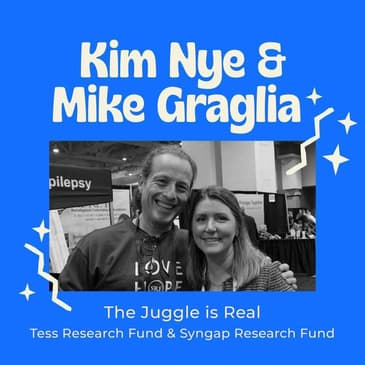
The Juggle is Real - Navigating Parenthood and Rare Disease Leadership with Kim Nye and Mike Graglia
Rare disease parents and front line advocates, Kim Nye and Mike Graglia, join this episode for a discussion about the unseen struggles of rare disease parenthood and the delicate balance of operating an advocacy organization.
EPISODE HIGHLIGHTS
Kim, can you share your perspective on how much work it is to lead an advocacy organization and the impact it has on balancing your role as a parent?
At first, it seemed like something to do on the side, not a job or career, but a calling or a passion project. With so much emotion and heart behind it, it was easy to fool myself into doing the work a few hours a week, but it's actually running a small business. It very quickly became a full time job that really seeped into every moment of the day. Because there's so much passion driving it, I willingly do it by day and on the weekends. There's a level of guilt wondering if you're handling your home front well enough while fighting the battle for your community.
Mike, can you share your perspective on how much work it is to lead an advocacy organization and the impact it has on balancing your role as a parent?
In a single morning, I can go from a call with an investor in the morning, to a lab who needs money to keep working, to a mom who has just received a diagnosis, to a board member who wants to know why a project isn't done yet, to my own child who is screaming out for my attention. There are moments I wonder if I'm doing what's best for my child, going from a heavy intellectual endeavor to a moment where I question if I'm a good enough parent or spouse. The struggle is intense sometimes and there are days where your resources run low.
What key lessons have you learned along your journey and what advice do you have for others?
For new families, don't reinvent the wheel where you don't have to. Look for opportunities to collaborate with other groups. Think long term because your mindset when you receive a diagnosis and you're panicking is very different from reality of what's ahead.
How do you anticipate rare disease evolving from your contributions?
As frustrating as it is not having treatments for our children and communities, I think we are making progress and I can see the return on investment in terms of getting funding and watching the research grow. Progress is never fast enough for affected families, but we will see improvements and treatment options.
What is your advice for other foundation leaders and advocates who are trying to find balance in their dual role?
You'll be exhausted and have down moments, but then you're also going to meet the best people and rally and do great things. Protect your time and focus on what really matters, including your own family and your health. The work of the foundation will evolve and you're in this for life, so get out of panic mode and plan your time accordingly.
LINKS AND RESOURCES MENTIONED
Tess Research Foundation
https://www.tessresearch.org/
SynGAP Research Fund
https://curesyngap1.org/
ONCE UPON A GENE - EPISODE 041 - Time is Brain: SYNGAP Research Fund with Mike Graglia
https://effieparks.com/podcast/episode-41-syngap-research-fund
ONCE UPON A GENE - EPISODE 057 - SLC13A5 - TESS Research Foundation with Kim Nye
https://effieparks.com/podcast/episode-057-slc13a5-tess-research-foundation-kim-nye
ONCE UPON A GENE - Episode 094 - The 12 Commandments to guide you when you're starting a rare disease patient advocacy group wiith Nasha Fitter and Mike Graglia
https://effieparks.com/podcast/episode-094-mike-and-nasha
CONNECT WITH EFFIE PARKS
Website
https://effieparks.com/
https://twitter.com/OnceUponAGene
https://www.instagram.com/onceuponagene.podcast/?hl=en
Built Ford Tough Facebook Group
https
://www.facebook.com/groups/1877643259173346/
[00:00:00] I'm Effie Parks. Welcome to Once Upon A Gene, a podcast. This is a place I created for
[00:00:09] us to connect and share the stories of our not so typical lives. Raising kids who are
[00:00:15] born with rare genetics and drones and other types of disabilities can feel pretty isolating.
[00:00:20] What I know for sure is that when we can hear the triumphs and challenges from others who get it,
[00:00:26] we can find a lot more laughter, a lot more hope and feel a lot less alone. I believe there are
[00:00:32] some magical healing powers that can happen for all of us through sharing our stories
[00:00:37] and I'll take all the help I can get.
[00:00:43] Once Upon A Gene is proud to be part of bloodstream media, living in a family affected by rare
[00:00:49] and chronic illness can be isolating and sometimes the best medicine is connecting to the voices
[00:00:54] of people who share your experience. This is why bloodstream media produces podcast blogs and
[00:01:00] other forms of content for patients, families and clinicians impacted by rare and chronic diseases.
[00:01:06] Visit bloodstreammedia.com to learn more. Hello and welcome to another episode of Once Upon A Gene.
[00:01:12] The podcast where we dive deep into the extraordinary lives of families navigating the world of rare
[00:01:16] disease and I'm your host Effie Parks. In today's episode, I had the privilege to speak to two
[00:01:23] wonderful remarkable friends and individuals who are not just rare disease parents but who are
[00:01:29] also on the front lines of leading the patient advocacy organizations of the disease their children
[00:01:33] have. They are dedicated and their job demands relentless advocacy. So today's conversation takes
[00:01:41] kind of a unique turn and we're peeling back the curtain on the often unseen struggle and the
[00:01:47] delicate challenging juggle of leading an advocacy organization while being a parent to a child
[00:01:53] with a rare disease. It is a journey filled with endless tasks, immense stress and a level of
[00:01:59] commitment that few can really fathom. Our guests open up about the need for support, understanding
[00:02:06] and recognition of this monumental effort from behind the scenes. This episode isn't just a conversation,
[00:02:12] it's a call to action. It's for the leaders in the rare disease community who might find solace
[00:02:16] and solidarity in these shared experiences. And for those considering starting their own advocacy
[00:02:22] journey, it's a treasure trove of insights and expectations. And for families who are a part
[00:02:28] of organizations, it's a little window into the daily lives of those who fight tirelessly on their
[00:02:33] behalf. So whether you're a longstanding member of the rare disease community, a new face eager to
[00:02:40] make a difference or if you're simply here to learn and support this episode will move you.
[00:02:45] So please welcome my friends Kim Nye from the Test Research Foundation and Mike Raleia from
[00:02:51] The Sengap Research Fund. Hello, Kim and Mike, welcome to the podcast. Thank you. I'm so excited
[00:02:57] to talk to you today. Today we're going to kind of talk about something that I feel isn't really a
[00:03:02] topic of conversation in the general landscape. I'm sure you guys probably text each other in
[00:03:07] the middle of the night about these topics, but I think this is going to be a really good place to
[00:03:11] sort of have an open and honest dialogue about all the stuff that goes into being a patient advocacy
[00:03:17] organization leader and a parent and a partner and all those things. And I think this will be
[00:03:21] really valuable for the families to understand kind of the enormity of it all and how best they can
[00:03:27] all show up and contribute, but also for your fellow patient advocacy org leaders who can
[00:03:31] kind of find some solidarity and maybe ping some ideas off of each other on how everyone can
[00:03:38] I don't know sort of best manage all of the things. Okay, so long intro here, but I want to let
[00:03:44] you both maybe share a little bit about yourselves really quick. I'm also going to link your past
[00:03:49] episodes in the show notes here, but Mike and Kim, could you both share a little bit about yourself
[00:03:54] and the moment that you realized that starting a patient advocacy org was not just an option?
[00:03:59] I'm Kim Nye and I think my biggest claim to fame is that I have four children and two of them
[00:04:05] have a rare disease and they were among the first diagnosed with their specific genetic disorder.
[00:04:12] It has a very unmemorable alphabet soup, it's SLC 13a5 and it's a citrate transporter disorder
[00:04:18] and because they were among the first diagnosed, nothing was in place and it was they became
[00:04:23] clear very quickly that there was a real need to organize our patient population and try to organize
[00:04:28] our research community and all the other stakeholders and so we started test research foundation
[00:04:32] in order to do just that. So my son is Tony, he's nine. He's one of two sons and he's only
[00:04:39] one affected and he was diagnosed five and a half years ago on his fourth birthday and
[00:04:46] I, the world was different than was Kim was diagnosed right? It was there was a lot going on.
[00:04:52] Kim is one of the leaders I went to and met and heard everything she was doing and said oh my gosh
[00:04:57] that's amazing and I also talked to you know the Dervace Syndrome Foundation and others and said
[00:05:01] it really doesn't make a difference if there's a patient advocacy group pushing on the science
[00:05:06] and there isn't one for Singapore one that's doing that so I need to start it and I had no idea
[00:05:12] what I was getting into. I'm glad I did it, I am still doing it, I'm going to keep doing it for a
[00:05:17] long time but I had no idea what I was getting into and the past five years have been nuts for two
[00:05:23] years I did it as a side hustle and then at some point my wife and I agreed that nothing was
[00:05:28] sustainable and so I left my career and I've been doing this pro bono now for three years
[00:05:32] and it's just incredible how big this this role is and how much it takes over your life.
[00:05:40] Yeah, can you talk a little bit more about that and maybe both of you give me your perspective on
[00:05:45] kind of like those first bits of I don't know maybe shock for a lack of better words of just
[00:05:51] how much work this is and the enormity on this and the impact that it has on balancing your
[00:05:56] roles as a parent and as a patient advocacy or a leader. Like Mike said, it seems like okay I can
[00:06:03] probably do this on the side this is clearly not like you know in my mind it doesn't it didn't feel
[00:06:07] like a job or even a career heading into it it felt like a real calling and a real passion project
[00:06:12] and so I think because there's so much emotion and heart behind it it was easy to fool myself
[00:06:17] that like oh I can just do this for a few hours a week and then it became clear that although we are
[00:06:22] nonprofit by name and I think people assume that that means like part time or hobby or just a
[00:06:27] fun side thing it's actually running a small business and so you have a lot of stakeholders.
[00:06:32] You have the families who you want to do right by and you want to listen to and you want to figure
[00:06:37] out you know what is most important to them in terms of quality of life and where they're struggling
[00:06:41] and then you have a research community that needs money needs to be connected with collaborators.
[00:06:47] You have industry where you're trying to say hey our gene our disease is worth studying
[00:06:53] and you're really building this nice package of data for them so that it's easy for them to study
[00:06:58] and then you have your donor community where you're trying to say I know there are so many good
[00:07:03] causes but can you see it in your heart to help support our cause because we're a really good one
[00:07:07] too. There's a lot of gratitude but there's also just a lot of work and there are you know staff
[00:07:13] members that need to be paid and need to take vacation time and so it very quickly becomes a full
[00:07:19] time job that really seeps into every moment of your day and because there's so much passion
[00:07:27] behind it you know I find myself willingly you know doing projects on weekends and evenings even
[00:07:32] though I'm also doing it by day so it's been eye opening to see how much work there is to do
[00:07:38] and how much time that work takes to do well. Yeah that's why I let Kim go first because she says
[00:07:43] everything so well I mean just just to simplify that like intellectually this is a full time job
[00:07:51] like as Kim says and you have to remember the easy stuff the lab experiments, the designing tools,
[00:07:58] the basic experiments, the scientists and the companies know how to do that. The scientists
[00:08:03] and the companies call us with the things that they're stuck on right so we are paying ourselves
[00:08:08] nothing working on a shoestring and multi-million dollar companies and well funded labs at prestigious
[00:08:13] universities call us when they when they get stuck. Just think about that for a second
[00:08:18] and our job is to connect the dots and say well have you thought about this and have you talked
[00:08:22] to so and so and so and and to really fill in those gaps right in rare disease there's not enough
[00:08:27] resources so the gaps are huge and the patient advocacy group the way I increasingly think about it
[00:08:32] is we are we just sort of are the glue that goes in and fills all those gaps and stretches
[00:08:36] ourselves out to connect the clinicians and the researchers the industry the funders the investors
[00:08:42] we have to talk to all of these constituencies and and get them to talk to us and that's just half
[00:08:47] of it because the other half is the you know Kim said passion and I say heart like you know
[00:08:54] we have our own sick kids we have our own families and we have to to be effective in our job
[00:08:59] and to speak credibly for our community be a connect with that community which means we can go
[00:09:04] from a call with an investor in the morning who's like explaining to me why I would invest in
[00:09:09] this thing up one company to allow who's like I can't keep working unless you give me $150,000
[00:09:15] to a mom who's just diagnosed and is freaking out to a board member who wants to know why their
[00:09:20] project isn't done yet. That can be one morning and then you turn around and your kids screaming
[00:09:26] and you're like I'm doing all this work to help my kid but I'm right now my kid just
[00:09:30] poured a bottle of ketchup all over the floor did something else insane because I wasn't
[00:09:34] paying enough attention to them there are moments when I'm just like oh am I doing am I really
[00:09:41] doing this the best thing for my kid right now. And you go from this very heavy intellectual endeavor
[00:09:48] to a real existential moment of am I a good parent or spouse or am I taking care of myself such
[00:09:53] that I'm going to last long enough to see any of this work through and it's just the struggle is
[00:10:00] is intense sometimes. Mike you just said so many things there that we could put pins in
[00:10:06] and thank you for that visual of the glue I think that's really helpful but yeah even down to the
[00:10:11] to the basics right of like the daily realities that we're all living and that you're feeling on top
[00:10:17] of kind of holding all these planets in the air. I wonder if both of you can maybe expand a little bit
[00:10:22] on some of the unseen challenges and like the behind-the-scenes challenges that you're facing and
[00:10:27] your advocacy work that most people just really aren't aware of. Sure I mean I think Mike explained
[00:10:33] it so well there's that guilt pang of if you're if you're fighting this battle for your entire
[00:10:39] community you know are you handling the home front you know well enough. I think people assume
[00:10:45] that I have this like extra bandwidth then they do at home right but really like what I'm facing
[00:10:51] at home is very similar to Wittleball a lot a lot of our families are facing at home and that
[00:10:54] is a lot and so trying to you know tell them I will try to lead our organization and be you know
[00:11:03] an upbeat fearless leader but I'm also you know facing the same things each and every one of you are
[00:11:09] like I am one of you and I think that sometimes that gets forgotten by our community because we all
[00:11:17] so need someone who is like fighting for us and I am so honored to be one of the people fighting
[00:11:22] for our community but it is still a challenge at home and it's a changing challenge we're all kind
[00:11:29] of in our own place on this journey and for me you know that has been an evolving place I now have
[00:11:34] a daughter who is about to turn 20 so really we're in this transition to adulthood but I very much
[00:11:40] remember what it was like in those baby phases and so it's been a never ending education but it's
[00:11:46] also had its own you know trials and tribulations every step along the way I would add to that
[00:11:52] so everything I agree 100% with everything Kim said I think people somehow think people we know
[00:11:57] we live in a culture of superheroes right so people like oh you're a superhero so you can do this
[00:12:01] it's like actually no I'm not a superhero I'm a dad and my kid gets mad at me and my other kid is
[00:12:08] mad that his kid his brother is sick and there are days when my resources are just low and yet I feel
[00:12:15] when you get that random message from a parent who is facing some new crisis like reflexively they
[00:12:23] reach out sometimes to me because I'm the leader of our organization and they say how do I deal with
[00:12:29] this and I have to respond to that and I have to give them my attention and hopefully I can connect
[00:12:36] them with someone else in the community who can help them because I've got to go to a meeting or
[00:12:40] whatever it is I'm doing the emotional demands of this role just grow as the community grows
[00:12:46] and the thing I think about a lot also is there are times when I come out of calls with parents
[00:12:51] and I'm just like wow I really need to let other people have these calls because you're sitting
[00:12:56] there feeling what these newly diagnosed families are feeling or even not newly diagnosed families
[00:13:02] who are going through some kind of crisis and you have to sort of support them and then walk away
[00:13:08] and take a breath and push forward and I'll give you a very concrete example like right now we are
[00:13:14] we are having getting ready for our conference and we're scheduling family day and there was a bit
[00:13:20] of a discussion around okay Mike we need to have the family they just be family support we need to
[00:13:26] make sure all these families connect with each other and talk to each other and blah blah blah blah
[00:13:30] and I'm like okay we can do that and we also need to talk to them about registries and clinical trial
[00:13:36] readiness and you know what what studies they should sign up for and people were like oh but we're
[00:13:40] always talking about that and I'm like yeah but we're always talking about that because the only way out
[00:13:45] of this is better medicine right like there are there's so many families experiencing so much hurt
[00:13:51] and those was just a diagnosed ones there's thousands more of undiagnosed families who are going through
[00:13:56] these same trials and tribulations and our focus must be on better medicines and it was you know people
[00:14:03] are very passionately telling me no Mike we should just do family support and I was like that
[00:14:08] doesn't get us over the finish line and it was it was a it was a really hard discussion and it is
[00:14:14] frankly still ongoing I don't know I just we get pulled in so many directions and I feel like
[00:14:21] our communities don't really understand what we're doing on the industry side and the industry
[00:14:26] side definitely has not fully internalized our roles because I was at a conference last week and
[00:14:32] someone's like so you want a patient to have this group and just very nice person they say
[00:14:36] so what do you actually do like they just couldn't imagine that there was enough work to fill a day
[00:14:42] and that that that's when I just I think Fee I called you about this episode I was like oh I
[00:14:48] I do a lot it's just so hilarious I mean really I can't even I can imagine your face in that moment
[00:14:55] it was probably half open and you're probably doing your blinking thing really fast
[00:15:01] like I don't know where to begin with that one I don't know Kim what do you think
[00:15:07] yeah Kim what about the emotional toll that this work takes on you personally and what is
[00:15:12] maybe not visible to others yeah absolutely I mean we're developing drugs that are cutting edge
[00:15:18] so for you know our community we're developing a gene therapy drug and it's a drug that our
[00:15:25] community has a ton of hope invested in right like this is our clearest path towards changing the
[00:15:31] trajectory of this horrible horrible disease but it also comes with risks because it is cutting edge
[00:15:37] because we are among the first you know doing things like this and you know my wee includes Mike
[00:15:42] and all the other patient advocates that are you know out there listening and you happy I mean
[00:15:46] all of us we're really at the forefront I think of some of these precision therapies and that is
[00:15:50] exciting but it's also scary and I think for me it's a lot about balancing that risk versus reward
[00:15:56] and that for me is an ever changing line this summer we had three little girls pass away in just
[00:16:03] a few weeks span they were one five and ten I mean they were just babies and you know I think I've
[00:16:08] been so scared of getting this drug exactly right that I sometimes forget that there is an immense
[00:16:15] urgency like our kids are literally dying and so it's really balancing out you know that that
[00:16:21] pacing that urgency with making sure that things you know are done well and that we're not
[00:16:27] skipping corners and that to me is a real struggle I legitimately love these children in our community
[00:16:34] even if I don't know them well like I feel like they're my nieces or nephews in some crazy way I know
[00:16:40] that makes me sound like a crazy person but it really is an experience where you know our individual
[00:16:45] identities get changed by this diagnosis and we are put in contact with families that are experiencing
[00:16:51] a journey that that very few others you know experience in a similar way I totally feel that I'm
[00:16:57] so sorry about the last in your community Kim and I think so many of us feel like all of these
[00:17:02] children are our children in one way or another right and I think that's what makes our community so
[00:17:07] what about some decisions that you've had to make or that you know your friends have had to make
[00:17:11] what are some of those tough decisions as a leader in your foundation that you've had to make
[00:17:15] that again people may not realize the toll that it takes on you or the tough decisions that you
[00:17:21] had to balance between your family your foundation and others families I think for me one of the
[00:17:25] tough decisions happened a few years ago was this shift from being all volunteer and having every
[00:17:31] penny go towards research and other people's labs to instead having like a full-time scientific
[00:17:38] director at test research foundation and having you know inside staff and becoming a more
[00:17:43] professional organization but that also meant changing how we had traditionally funded things and
[00:17:50] you know for us we have been very lucky in the sense that we've been able to get grants that
[00:17:55] cover that internal capacity through chance augur initiative and PCORI but that for me was a big
[00:18:01] change mentally it was a big change in terms of the messaging I think to our board of directors
[00:18:05] and to our families and even to other researchers but it's been the best decision we ever made like
[00:18:11] it really has helped us continue to run this marathon at a sprinter's pace. I want to I want
[00:18:18] to answer your question Fee about tough decisions but before I do that I want to I want to just pick
[00:18:21] up on something Kim said in her last answer that I think was really perfect like when you have a rare
[00:18:30] disease kid you start to understand you start to think that nobody else gets your kid but you
[00:18:36] and then you meet other parents and you realize oh thank god someone else gets my kid.
[00:18:41] Most people who relate to that but the third step in my experience there is then you start falling
[00:18:46] in love with all of these kids and I think what I saw we had a family staying with us recently
[00:18:52] in their their child is you know twice Tony's age and this mom was sitting at our kitchen table with
[00:18:57] with my with my neurotypical son John and Tony you know landed upon John John and John cried you
[00:19:03] know I'm like whatever I see this movie every 12 hours and this mom who has taught me a lot and
[00:19:09] his dear friends started crying and I was like Monica are you okay and she's like she want my
[00:19:14] music her name and she's like I just it just brought me back to when my son hit my other kids
[00:19:20] and I couldn't protect them and it was almost like she had just been retraumatized but also you
[00:19:25] know her affection for Tony and John is so real that it just it was just real and I think you
[00:19:33] know that was me seeing that other parts of this community love my kids but it's also been very
[00:19:40] clear to me lately in a few calls when I hear about bad and unfortunate things that are happening
[00:19:45] to us in Gapiens that it just hits me hard and I have to figure out how to hear these stories
[00:19:52] and support these families and not need to you know go to my safe space and cuddle up with my
[00:19:57] teddy bear or something because sometimes I hang out the phone with these families and I just
[00:20:01] need to take a deep deep breath because we I care so much about these kids and I know that people
[00:20:10] in my community care about my kids thank god but it's that's a really big part of this like I think
[00:20:15] the emotional toll goes up over time and then as far as tough decisions I think I'm right behind
[00:20:23] Kim on this one I'm I think I'm we have gone with a certain model for the past five years
[00:20:30] and I am starting to really ask myself the sustainability question because I can't work hard enough
[00:20:37] with my you know one and a half staff people to keep up with the pace and it's not fair to my
[00:20:44] family for me to just work 60 hours a week I need to find a different model and so you know I'm
[00:20:51] sort of trying to figure out how to take a train that is rapidly accelerating and kind of rebuild it
[00:21:01] and it's that's the thing I'm getting stuck on right now yeah um I'm feeling you from as you
[00:21:07] getting punched last night and having this conversation with her about it to the point about
[00:21:11] the organizations setting it up more of like a professional organization or a business model where
[00:21:16] there are employees and people are accountable and you're not just relying on everyone's best efforts
[00:21:23] and showing up because they care but making it more of a model I think it's definitely becoming
[00:21:30] more accepted right but do you feel like there's still a little shame or some apprehension by
[00:21:36] org leaders to not go into that model for one reason or another yes I think that non-profits
[00:21:44] are expected to have this incredibly high percentage of their funding go towards their program and
[00:21:52] I think that there is this thought that if you have someone helping with development or
[00:21:58] you know administration or science that somehow that is a misuse of funds you're going to suddenly
[00:22:03] dip below that like 90 percent is going towards our mission but I would really argue otherwise
[00:22:09] like I would argue that the salary that we pay to a scientific director goes a lot farther than giving
[00:22:17] out like one additional research grant in another lab and I think even if we pull the labs that we
[00:22:23] you know are funding or work with I think they would say the same at this point so I hope we can
[00:22:28] get to a point where donors and you know families and boards and everyone can understand that
[00:22:35] you have to that your money is actually well spent by having a you know a scrappy dedicated small
[00:22:43] team I'm not saying we're all gonna you know balloon where every penny goes to staffing but I think
[00:22:47] having a small team really is a smart financial move I totally agree 100 percent agree I think
[00:22:56] you know because at the end of the day your volunteers are family members and these family members have
[00:23:01] sick kids or you're going to extended family and uncles grandparents and that's great but you know
[00:23:06] for you there comes a point where people go from doing one thing to doing a few things to just
[00:23:12] getting really in it and at that point you you're dependent on them and if they say wait I got
[00:23:16] to step out I've had a couple people with big hearts and lots of skills come in get into it keep
[00:23:22] getting into it and then after six or 12 months you're like whoa I need to step back and I get that
[00:23:27] and I respect it I can't do it myself I don't feel like I have permission to do it myself but I
[00:23:31] understand how they need to but then they step back and I have this gaping hole in my organization
[00:23:36] and so we are gradually starting to identify and fill roles but I think there's a big conversation
[00:23:43] with boards and the direct answer to your question Fee is you know it's been nice to be able to
[00:23:47] say to donors for the past five years every penny you give us goes to research we are in all
[00:23:52] volunteer organization and I pay overheads and we may keep doing that for a little while but I
[00:23:57] think the ethos needs to change because when I started this I really thought this is a key step
[00:24:03] for me when I started this I really thought we just need to put more money into the science and then
[00:24:07] it'll work and I missed two big things number one thing I missed is actually no we need a patient
[00:24:14] advocacy group we we are not just a fundraiser we are a connector we are a bridge between industry
[00:24:19] and clinicians and researchers and investors and what I missed is that the science doesn't matter if
[00:24:26] you can't get it to the patient and you get it to the patient through the clinic and if you think
[00:24:31] funding science is expensive try funding clinical work right that's the punch line like the clinical
[00:24:37] stuff is where it gets really expensive and for that you need a larger functioning organization
[00:24:45] and you need partnerships to help share the burden and you can't do that with an all volunteer crew
[00:24:52] so you know I think we started this podcast talking about wow I didn't understand how big this job was
[00:24:57] but it that translates directly into I didn't understand how big our work is as patient advocacy
[00:25:06] groups for rare diseases and that just goes into everything right yeah and I think to piggyback on
[00:25:12] that like having we still need our volunteers for all the volunteers out there please keep coming to
[00:25:17] us and volunteering but having a staff that can help organizers volunteers and assign them appropriate
[00:25:22] tasks like we we always said boy it'd be so fun to have interns but until we had a scientific
[00:25:27] director who could help manage our internship program we really didn't have the bandwidth to even
[00:25:32] figure out how to utilize those types of volunteers so it really becomes this like rich ecosystem
[00:25:37] of you know paid people volunteer people it's it's really heartwarming to see it all gel
[00:25:44] but I do think it needs someone who is coming to work and being compensated you know to help
[00:25:51] lead those types of efforts yeah absolutely both of you kind of touched on guilt a little bit
[00:25:58] using this as your full-time job basically working 60 hours a week maybe taking away time from
[00:26:03] your own family and your own personal personal sacrifices and I wonder if anything is at top of
[00:26:08] mind or if there's a personal story that you have of a sacrifice that you had to make in order to
[00:26:14] keep your foundations running I mean I think the sacrifices are daily so I I have so much guilt
[00:26:21] maternal guilt any kind of guilt you want I've got it in there somewhere I'm I think that for me
[00:26:26] I have to remember that I chose to step up and be the patient advocate but like my other you know
[00:26:34] my teenage daughters they didn't choose to even my husband didn't necessarily choose to right like
[00:26:38] I've kind of brought my whole family into this and they've been amazing they have truly supported me
[00:26:42] and supported our you know broader organization in so many ways and for so long now almost a decade
[00:26:49] now so I have nothing but gratitude for them but I do have to remember like this is the path I chose
[00:26:54] so you know I can't expect that they are going to travel exactly my path and I have to remember
[00:27:00] that I am choosing to have you know my children who have this disorder test on Colton they
[00:27:07] they have become the face of this disease to some extent especially in the early years when there
[00:27:12] weren't that many patients diagnosed but I have to ask my two other girls whether they want to be
[00:27:18] you know the face of our organization and I have to respect it if they say no I don't want to be
[00:27:22] in your Instagram post today or you know something similar so I think I have guilt over trying to do
[00:27:30] right by everyone that I love and I'm lucky enough to love really a lot of people but that comes with
[00:27:36] with a fair amount of guilt just the beginning of Kim's answer like the sacrifices are daily like
[00:27:41] this this just slowly creeps in and takes over your life and for me I mean like Kim you know I have
[00:27:47] very supportive spouse who's very much behind this organization and help you know encourage
[00:27:53] and his current courage may be separate away but I think for the decisions I make around John
[00:27:58] and how I feel like I'm constantly not being with John enough and outsourcing his care to
[00:28:03] more and more people is where I just I am really feeling the challenge right now and I was just
[00:28:10] thinking as you were talking Kim when you said a decade like it was it was five years ago when we
[00:28:14] met so you know when we when I came to you and asked you and starting SRF like you were kind of
[00:28:21] where I am now it's sort of weird to think about but it's not a specific decision it's an endless
[00:28:27] list of decisions that touch everything it's like how we vacation like we generally hang out with
[00:28:34] other families it's my travel schedule it's so so much it's hard to say oh this was a thing I did
[00:28:41] because the work and the job continues to grow and demand more and more it sounds like both
[00:28:48] of you are kind of in a pretty profound like time of reflection which I think is really cool but I
[00:28:56] wonder looking back on your five and your ten-year journey that what are some of those key lessons
[00:29:01] that you've learned that you wish you knew at the beginning and especially what would you bestow
[00:29:06] on a new family entering our space I think that for new families don't reinvent the wheel where you
[00:29:12] don't have to I think a lot of us start our own organizations because we're trying to rally our
[00:29:19] communities around a very specific cause often a genetic disorder but look for those opportunities
[00:29:25] to collaborate to learn from you know other groups whether you make the same decisions as them
[00:29:30] is up to you but at least you know take the time to try to not have to reinvent the wheel I know that
[00:29:35] at this point whenever we make a decision I do like a quick what I consider like a key opinion leader
[00:29:41] analysis by just reaching out to some other you know patient advocacy leaders and saying hey what
[00:29:46] do you do in this problem and that is so helpful I don't know Mike what words of wisdom do you have
[00:29:51] for for newbies the thing I think about hearing you and I talk right now Kim is I think about like
[00:29:56] pat furlong and marion mask is right like the real giants who are so far ahead of us and every time
[00:30:02] my hair pat furlong talk including on your podcast fe like I'm just like wow this lady has let's
[00:30:10] dump so much and like I say to my families when they're diagnosed I'm like look we're in this
[00:30:17] together for the rest of our lives like you're you know our kids are you we're in the same club
[00:30:25] for the rest of this game so like really let's let's think about how we're gonna you know think
[00:30:32] about getting now that you know this diagnosis this is my little speech now the knowing diagnosis like
[00:30:37] you know reorganize your life accordingly in terms of therapies and whatever but then like
[00:30:42] you don't have to start volunteering tomorrow you can start volunteering in six months and then
[00:30:46] let's think long term and what I the single piece of advice I would give is that think long term
[00:30:53] every mom and dad is like what can I do in the next one or two years to save my baby
[00:30:58] and I was right there that started an organization I funded an ASO on day one and that ASO is
[00:31:05] sitting in a large company right now who's throwing it at mice
[00:31:08] and and I've gone from I need to secure singgap and Tony to okay if these therapies that we're investing
[00:31:15] in get into Tony's brain tomorrow which they won't he's still gonna be you know
[00:31:20] neurodiverse at best disabled more likely for the rest of his life but I still need these therapies
[00:31:27] to reduce his suffering and reduce the burden on John when I'm gone and be able to help all the kids
[00:31:34] who are diagnosed and who aren't around the world so you know the mindset you're in when
[00:31:40] you're panicking on day one is so different than the reality that is staring you in the face
[00:31:46] and we have to think long term I love what you said about the reality that you face right away
[00:31:53] in long term I want to touch on something else I'm not really sure how to ask this question but
[00:31:58] I wonder you know you talk about this empathy this extreme empathy and maybe even sort of
[00:32:05] compassion fatigue that you get as a patient advocacy organization leader because you're doing all
[00:32:09] these things and then you're also getting the calls from the family and the worryness and the new
[00:32:13] diagnoses and I wonder one should that definitely be handled in house by a specific like person or
[00:32:20] little committee so that you can focus and or if that is the case you know I know you kind of maybe
[00:32:27] did this a little backwards maybe not Mike of where you were like oh yeah we need the patient part
[00:32:32] too and then you created just the most flourishing and beautiful and empowered patient population but
[00:32:38] not every patient advocacy org has evolved like test research fund and sing up research fund
[00:32:43] and there's kind of a sticky dynamic between org leaders and patient advocates and their families
[00:32:49] how best have you found to kind of cultivate that relationship and nurture that relationship so it's
[00:32:54] not necessarily mom and dad telling you all what to do and then all of you thinking mom and dad
[00:32:58] have everything covered behind the curtain and it's all rosy for them like how do we have this sort of
[00:33:03] transparency between the org leaders and their patient group as more of a team mindset that's
[00:33:10] such a great question I think for me we were really clear about what our organization was from
[00:33:16] the beginning in the sense that we wanted to find better treatments and we were really focused
[00:33:23] on research so we didn't start out really as a patient support community I think we've been
[00:33:31] so fortunate to grow into that but we've had our support mostly as individuals so when I join a
[00:33:38] support call or when I talk to another family I feel like I'm very much there as Kim as you know a
[00:33:44] mom who has traveled down a similar path maybe has learned some things definitely has made a lot of
[00:33:50] mistakes and I'm there to share that I don't really wear my test hat in those situations because
[00:33:56] I'm not really qualified to to give you know professional advice about these hard things but we try
[00:34:02] to find the correct supports like when one of the kids in our community passes away we try to
[00:34:08] find bereavement supports if you know a family is really going through a specific struggle we try
[00:34:14] to connect them with the leaders so I definitely show up but I show up as Kim each time and I think
[00:34:19] that that has has served us well and I've certainly learned a lot and I've been so grateful to have
[00:34:24] the support of the other parents who can help me through some of these struggles as well.
[00:34:29] Yeah I mean I don't I don't touch the support calls anymore I you know I used to host like a
[00:34:34] weekly meet-up of families and now I'm really grateful that there's some other people in our
[00:34:39] community who drive that people still sometimes reach out to me or they reach out to me directly
[00:34:44] with things like you know it's amazing how much how much challenge people can pack into one
[00:34:51] text message where I just look at you know it pings and you know it's messenger it's slack or
[00:34:55] it's whatever and you look at you're like oh god and so I just try to pass those to the people in my
[00:35:02] team who I'm so grateful to that want to take that on but I think the question you really ask
[00:35:08] Kathy is like the way I think the way I think about it is how do you balance explaining to everyone
[00:35:13] what's going on versus this very knee jerk temptation to be like would you please just trust me
[00:35:19] on this one right and that goes over well almost never right you're like you know like I'm like
[00:35:27] we need to have these things on the agenda but this wasn't the agenda that we brainstormed
[00:35:31] yeah but it really don't want to go into like the three-hour discussion about why I think this is
[00:35:35] a essential component it's tough I mean it's part of this is part of the struggle and it's part
[00:35:40] of the as the organization grows and as the disease becomes more ammeshed in the academy and
[00:35:47] industry with the partners like the level of nuance and sophistication goes up accordingly right
[00:35:53] and then when you're having those conversations the challenge is how do you take an empowered
[00:35:59] community and invite them to keep going right okay great now your volunteer group leader okay please
[00:36:05] go to this advocacy training or please come to this meeting with me and it's not going to make sense
[00:36:09] for the first few meetings but eventually you'll start to you'll start to figure this out like
[00:36:15] this is like the most hectic slow-motion movie I've ever seen I feel like I'm constantly
[00:36:22] running around and responding to something that's urgent but in actuality I've been at this for
[00:36:27] five years and I do not have a new drug for a kid yet like what the I just kills me and yet I
[00:36:34] still go to like rent meetings and ELC meetings and combine brain meetings and epilepsy benchmark
[00:36:39] committee meetings and because they all feel important then there's all these important initiatives
[00:36:44] are going to really result in something and some publication in two to three years
[00:36:47] and it's just like gosh you know I think part of the emotional and emotional the intellectual
[00:36:53] challenges like what are the things that I really need to focus on like what's the priority
[00:36:58] and what do I have to let go or delegate and if I delegate it am I okay if no one picks it up
[00:37:04] because that's the point I'm at right now like there's just three days of work to do every single day
[00:37:11] and I've got to decide what's urgent what's important and what can I just be like sorry we missed it.
[00:37:16] Something ELT said that was really important in their mic was you can understand it if you keep
[00:37:22] showing up and I think that's something that we hear from people all the time right it's one of
[00:37:27] the quips that are here of like oh I don't get that science part or oh I don't get that this part
[00:37:31] do you if you keep showing up and if you keep listening and if you keep asking questions and if you
[00:37:36] keep maybe just being open to intrigue you're gonna eventually understand it and you're going to
[00:37:41] be able to contribute somewhere. I completely agree I mean so many of us come into this space
[00:37:46] without a scientific or medical background and I really do think that there are important
[00:37:54] pieces that can be learned instead of you know knowing them heading in and I would actually say
[00:37:59] that some of the science is some of the stuff that you can learn along the way I know that sounds
[00:38:03] crazy but I do think that one of the things that Mike touched on with some of these consortia
[00:38:09] that were a part of or some of these larger projects and I think the other part of that is attending
[00:38:15] a lot of meetings that I guess help us with business development help us see like oh this technology
[00:38:23] is appropriate for our disease versus this technology nope that's not gonna work for us you know we
[00:38:28] each are there to use our to view whatever is happening through the lens of our disease and I think
[00:38:36] that is a really important piece that we're not just champion our causes but we're going out
[00:38:42] and we're seeing okay here's where the science is how do we catch our disease up to science
[00:38:48] and make sure that we don't get left behind as you know as these treatments move forward.
[00:38:53] You mentioned the Queen of the Land Pat for a long and I wonder how do the both of you see
[00:38:59] the landscape from how much you've contributed in your disease groups like how is rare disease going
[00:39:07] to evolve from your contributions do you think do you hope. I think it depends sometimes on the
[00:39:14] incidence and prevalence of the disorder so ours is an ultra rare disorder so I think it would have
[00:39:19] been easy to leave it behind and forget about it and you know because of that I think that we've
[00:39:24] you know had the privilege to really drive the research not just organize the patient community.
[00:39:30] Mike may have a slightly different experience of serving more I think in his last podcast with
[00:39:36] you after he said that they were the lighthouse and I loved that analogy but I don't know Mike what do
[00:39:39] you think what has your experience been. I think you know just like him has driven the research because
[00:39:46] of the very very small incidence and prevalence in her disease we have the chance to bang the drum
[00:39:53] on the undiagnosed rate there's a lot of and I won't give the speech right now but there's a lot
[00:39:59] of reasons to believe that there's a lot of syngapiens out there and if you know anything about our
[00:40:04] clinical presentation you understand that it makes sense that many of them have not been diagnosed
[00:40:08] or don't get diagnosed for too long so that message we have been able to champion
[00:40:14] and I think we have and I ask industry this all the time. I'm like am I wasting my time like is
[00:40:20] this a vanity project like am I making a difference and the industry people a number of people
[00:40:24] have said to me there's no they say we would not be working on this gene if we didn't think there
[00:40:28] was a functioning patient efficacy group to engage with because at the end of the day if you have
[00:40:33] a great therapy and you have preclinical models but you can't find and communicate with patients
[00:40:39] you don't have a product one of the things I keep saying to people like having a functioning
[00:40:43] respectable effective patient efficacy group is any sensious it's it's it's necessary but not
[00:40:49] sufficient it's an essential component of getting a therapy for a drug these biotechs which are
[00:40:55] risking millions and you know CEOs are risking their careers to to work on our drugs they need
[00:40:59] to know there's a patient efficacy group to work with so that they can not just find patients
[00:41:05] but also learn from them because the the literature is by definition you know years too old and
[00:41:11] there's a lot more patients now we know a lot more about the disease and so I think one of the
[00:41:15] contributions of SRF will be that we have helped puts helped keep syn gap on the map and we have
[00:41:22] given a lot of people the comfort they need to continue working on it I have 20 different
[00:41:26] grants in flight right now that's 20 different labs that are working on syn gap with our support
[00:41:31] right so we don't know which of those post-docs will go on and what what are those things
[00:41:35] or result in therapies but that's a heck of a lot of work and I think we have also just as Kim
[00:41:41] very graciously and kindly you know taught me a lot five years ago and keep schooling me on a regular
[00:41:46] basis you know I get a lot of phone calls and I give people encouragement and I tell them these are
[00:41:52] the dumb things I've done these are the smart things I've done and how can I help because the other thing
[00:41:58] Kim just said that's exactly right is we're not just there as a sales marketing team like we are
[00:42:02] asking the question does this make sense for a neuro hapline sufficiency with a broad phenotype
[00:42:07] spectrum like we are we are we are testing because everybody who sends you a proposal to get a postdoc
[00:42:13] for two years to work on their technology will tell you how their technology will help your kids
[00:42:18] but you've got to be discerning and go to scientists and others and say does this make sense should
[00:42:22] this be one of my top three or is this person just looking for you know a warm body in their lab
[00:42:27] and this happens so but I think the real contribution of SRF is a we've helped others
[00:42:34] b we've been radically transparent or I try to be with my podcast and and really just let people see
[00:42:40] everything we're doing the other thing who said f e that got me going was the future of our disease
[00:42:46] like I am amazed at how many people how often I have this phone call with two young driven smart
[00:42:53] parents with a very sick kid with a disease no one's ever heard of because there's only you know
[00:42:58] pick some double digit number patients in the world even if they have the money which they don't all
[00:43:04] there aren't right now enough labs to do this the old-fashioned way right go find a lab have
[00:43:10] them work on your one gene get a therapy blah blah blah like we need platforms we need things
[00:43:15] that scale who there are so many rare diseases epilepsy autism ideas all getting fragmented into
[00:43:21] all these little monogenic causes and soon it'll be polygenic how the how are we all going to do
[00:43:27] it we're not going to go fight over the same 25 scientists that doesn't make sense so I think you
[00:43:33] know SRF has hopefully helped a few people and I believe we have kept syn gap on people's radar
[00:43:40] and given people the comfort to do it and now I think we're gonna keep pushing and I'm really
[00:43:46] fascinated by the future of this space because the change there's the change is radical and it's
[00:43:53] ongoing and then when people look at me and say well Mike how do we not have a five-year plan I
[00:43:57] just laugh at them I'm like dude the world's changed three times in six months if I started
[00:44:04] writing a five-year plan it would be wrong be it would be outdated when I finished it like
[00:44:08] I'm working on a one-year cycle here and I don't really don't think people understand that
[00:44:12] because you've really got to be paying attention to understand how quickly things are happening
[00:44:17] yeah Kim do you have anything to add on to that about the future I am like a hopeless
[00:44:24] optimist I think the future will bring great things like I agree with Mike like it's as frustrating
[00:44:29] as it is that we have that we don't have treatments for our kids and for our communities yet
[00:44:36] like I really do think that we are making progress and I can see the return on investment
[00:44:42] for our disease in terms of giving out seed funding and sort of fertilizing the field and now
[00:44:47] watching it grow into these beautiful networks of researchers and I remember the initial list of
[00:44:53] questions that we you know had I mean for our family that had a 10-year diagnostic honestly the
[00:44:58] question was like what the heck is causing you know this horrible disease in my daughter right
[00:45:04] and now we've moved you know all the way forward to like questions like what is our timeline for
[00:45:10] getting this treatment into clinical trials so that is exciting it is never fast enough for the
[00:45:16] families affected but I think that there will be true improvements it might not be secure with
[00:45:23] a capital C but I think there will be solid treatments so that a child goes to the doctor gets
[00:45:27] diagnosed with one of these rare disorders and there is an actual plan in place instead of the
[00:45:32] messaging that I'm so sorry nothing exists that will help your child go home and love him or her
[00:45:37] while they're still here like that is what we're changing boom all right you two what message do
[00:45:43] you have for fellow foundation leaders and advocates who are struggling with this dual role
[00:45:50] go get a cup of coffee maybe a glass of wine too and play on a nap at some point it's gonna be
[00:45:57] an exciting ride and you're gonna meet the best people that you've ever met in your whole life
[00:46:03] and it's going to be exhausting you're gonna have down moments like Mike and I are both I think
[00:46:09] shared our vulnerabilities and our exhaustion but then you're gonna rally and you're gonna rally
[00:46:14] because the people around you will help you rally and you're gonna do great things yeah and
[00:46:19] I would say you know at the beginning you're really frantic and you're looking around and you're
[00:46:23] wanting to talk to you and you're trying to figure out what to do and you have said this energy that
[00:46:27] you're missing something and then at some point that that turns into oh my gosh my calendar is a
[00:46:34] brick wall and I don't have time and it's it's 2 p.m. and I haven't had breakfast yet like what's
[00:46:38] going on and so I would just say you know protect your time like focus on what really matters and
[00:46:44] and what really matters is use your family and your health and and then the work of the foundation will
[00:46:50] evolve and and and just just get out of panic mode and recognize you're in this for life
[00:46:57] and plan your time accordingly because that is that is the I have gone like a man on fire for five
[00:47:03] years and I need and psych kim said you know I need my glasses of I need my coffee I need my milk
[00:47:10] and cookies with my sons I need my glass of wine occasionally and I need to manage my time
[00:47:17] differently going forward because I'm never gonna stop working on singap one and I want to
[00:47:23] ensure that the future comes as fast as possible but I cannot do this with my hair on fire
[00:47:29] for another five years my can Kim thank you so much for your willingness to be so open and
[00:47:35] vulnerable I really believe that you're honesty in sharing this stuff and all of these challenges
[00:47:40] that might not be seen all the time or talked about all the time I think it's really incredibly brave
[00:47:44] and I'm really appreciative of you and I know so many listening will be also and I know what an
[00:47:50] impact you have had and will have and you're both just so special to me and our community so thanks
[00:47:57] for being my guest today and I love you both so much I'd be too happy thank you so much same here
[00:48:04] I hope you've been enjoying this podcast if you like what you hear please share this show with your
[00:48:10] people and please make sure to rate and review it on iTunes or wherever you get your podcasts
[00:48:15] you can also head over to instagram facebook and twitter to connect with me and stay updated on the show
[00:48:22] if you're interested in sharing your story or if you have anything you would like to contribute
[00:48:26] please submit it to my website at feparks.com thank you so much for listening to the show and
[00:48:32] for supporting me along the way I appreciate y'all so much I don't know what kind of day you're having
[00:48:38] but if you need a little pick me up for it's got you