

Uniting Science and Hope - COMBINEDBrain and it's Quest to Transform Research and Treatment for Rare Genetic Neurodevelopmental Disorders with Terry Jo Bichell
Once Upon A GeneFebruary 08, 2024

Uniting Science and Hope - COMBINEDBrain and it's Quest to Transform Research and Treatment for Rare Genetic Neurodevelopmental Disorders with Terry Jo Bichell

ONCE UPON A GENE - EPISODE 217

Uniting Science and Hope - COMBINEDBrain and its Quest to Transform Research and Treatment for Rare Genetic Neurodevelopmental Disorders with Terry Jo Bichell


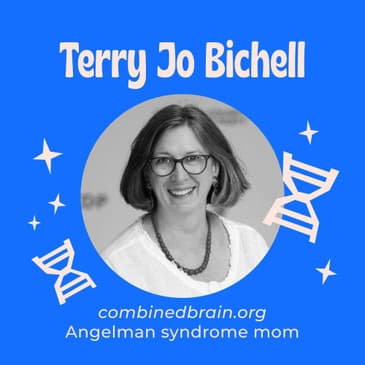
Terry Jo Bichell is a rare mom, neuroscientist and the founder of COMBINEDBrain, a nonprofit organization revolutionizing the approach to clinical treatments for rare genetic neurodevelopmental disorders by pooling efforts, studies and data. 


EPISODE HIGHLIGHTS


Can you share a little bit about yourself and how you came into the rare disease space?

I am a mom of five grown kids and my youngest is 24 years old and has a diagnosis of Angelman syndrome. With that, everything that was interesting to me wasn't interesting anymore and I turned my attention to neurological, genetic and developmental things. I worked as a nurse and midwife before my youngest son was born and I took a particular interest in research. Research felt like it was taking forever and I had the innocent notion that I could push things faster if I only had the right science degree, so I went back to school and got a PhD in molecular neuroscience.


What inspired you to form your organization, COMBINEDBrain?

While I was working on my PhD, scientists figured out treatments for Angelman syndrome and a way to measure if the compounds were working was needed. I was drafted to work on the Angelman Biomarkers and Outcome Measures Alliance (A-BOM) and learned I could take what I knew about Angelman and apply it to a lot of other similar disorders. I started COMBINEDBrain to take the lessons from A-BOM and expand it to as many other disorders as possible. 


What are COMBINEDBrain's key services and programs?

The biorepository has over 900 individuals represented and we collect all samples to be used for biomarker studies for use in stem cells. We have a COMBINEDBrain registry that any disorder member can use for free and transfer data into their own portal. Project FIND-OUT has a goal of facilitating early diagnosis of rare genetic neurodevelopmental disorders in infants based on 7 symptom categories. In the future, we'll also expand this offering to adults. 


Can you tell us about the COMBINEDBrain Roadshow?

Many of our participating member organizations are having conferences this year across the country. We have asked each organization to open their conference to other member organizations so we can collect COMBINEDBrain member samples at those sites. This allows us to meet local families and opens up an opportunity to stop by the conference and submit their donation. We can also send a mobile phlebotomist to patient homes to collect and submit samples. 


LINKS AND RESOURCES MENTIONED

COMBINEDBrain

https://combinedbrain.org/

Angelman Syndrome Foundation

https://www.angelman.org/

The Foundation for Angelman Syndrome Therapeutics

https://cureangelman.org/

Simons Searchlight

https://www.simonssearchlight.org/

Rare-X

https://rare-x.org/

Probably Genetic

https://www.probablygenetic.com/

AmbitCare

https://ambitcare.com/geneticseizures/

Project FIND-OUT

https://projectfindout.org/


CONNECT WITH EFFIE PARKS

Website

https://effieparks.com/

Twitter

https://twitter.com/OnceUponAGene

Instagram

https://www.instagram.com/onceuponagene.podcast/?hl=en

Built Ford Tough Facebook Group

https://www.facebook.com/groups/1877643259173346/

[00:00.000 --> 00:29.800] I'm Effie Parks. Welcome to Once Upon A Gene, a podcast. This is a place I created for us to connect and share the stories of our not-so-typical lives. Raising kids who are born with rare genetic syndromes and other types of disabilities can feel pretty isolating. What I know for sure is that when we can hear the triumphs and challenges from others who get it, we can find a lot more laughter, a lot more hope, and feel a little better. [00:29.800 --> 00:43.800] I believe there are some magical healing powers that can happen for all of us through sharing our stories, and I'll take all the help I can get. [00:43.800 --> 00:56.800] Once Upon A Gene is proud to be part of Bloodstream Media, living in a family affected by rare and chronic illness can be isolating, and sometimes the best medicine is connecting to the voices of people who share your experience. [00:56.800 --> 01:08.800] This is why Bloodstream Media produces podcast blogs and other forms of content for patients, families, and clinicians impacted by rare and chronic diseases. Visit BloodstreamMedia.com to learn more. [01:08.800 --> 01:18.800] Hello friends, and welcome to the show. This is Once Upon A Gene, and I'm your host, Effie Parks, and I'm so happy to be here, and I'm so happy that you're here. [01:18.800 --> 01:28.800] I'm grateful for you for tuning in. Thank you so much for supporting the show. I can't believe it's almost Rare Disease Day 2024. I feel like time is in the upside down. [01:28.800 --> 01:37.800] I'm behind on so many things. I know I need to get back to the episodes. Thank you for the reminder that they'll be out soon. I will get back on top of it. [01:38.800 --> 01:46.800] Normally, I have some big, fun, flashy Rare Disease Day plans, but again, the time, it's like brrrrrrrrrrr. [01:46.800 --> 01:54.800] So, I haven't decided what I'm going to do, but definitely think we should all show up for a Once Upon A Gene walk in, I don't know, maybe some zebra attire. [01:54.800 --> 02:03.800] I'd love to know what you're doing. Please tag me on social media or send me a message and let me know what you're up to, because it's a leap here, and it's very cool. [02:03.800 --> 02:13.800] I'm excited to introduce my guest to you. I'm sure many of you know who she is. I get questions all the time, but especially this one. [02:13.800 --> 02:21.800] Who is Combined Brain? What is Combined Brain? Should we join Combined Brain? And it's so much of an answer that finally I was like, Terry Jo, we really just got to make it happen. [02:21.800 --> 02:28.800] I know we got stuff to do, but I'm going to need to send people an episode rather than just explain this all the time. [02:28.800 --> 02:41.800] And also, how can one really explain it? Get a notebook out for real. Like, she goes in detail of all of the initiatives and all the projects that they're working on and all the opportunities that are available to patient advocacy orgs. [02:41.800 --> 02:52.800] There's a lot of information in this episode, and patient advocacy org leaders send this to your patient groups so they can understand to all the stuff that you're working on buying the scenes and what this is really about. [02:53.800 --> 03:03.800] So Combined Brain is a nonprofit org, and they're revolutionizing the approach to clinical treatments for rare genetic neurodevelopmental disorders by pooling efforts, studies and data. [03:03.800 --> 03:11.800] It's patient advocacy led, which is so cool. And it's all of this magical collaboration with clinicians and researchers and pharmaceuticals. [03:11.800 --> 03:17.800] And it's very cool. And I'm just going to let her explain it to you because she's so chill and smart and funny and you're going to love her. [03:17.800 --> 03:21.800] And you should learn more about her after you listen to this episode. [03:21.800 --> 03:26.800] You should listen to another podcast that I'm going to link in the show notes here about her kind of past life. [03:26.800 --> 03:29.800] She's a fascinating human being and I'm so happy she's on her side. [03:29.800 --> 03:37.800] She is not only a rare mom to a beautiful handsome man with Angelman, but she's a neuroscientist and she's doing all of the things. [03:37.800 --> 03:43.800] So please enjoy my conversation with Terry Jo. Terry Jo, welcome to the podcast. [03:44.800 --> 03:46.800] Well, thank you. Glad to be here. [03:46.800 --> 03:53.800] Yeah, we were chatting a moment ago before we were recording about how we've been trying to make this happen for a while and it's just the perfect time right now. [03:53.800 --> 04:00.800] So I'm really excited to get this episode out. People message me all the time asking various questions and this has been a constant one. [04:00.800 --> 04:05.800] And I really prefer to be able to just pass people an episode rather than explain things and then send them to websites. [04:05.800 --> 04:07.800] So thanks for having this conversation with me today. [04:08.800 --> 04:10.800] My pleasure. I'm glad people are asking. [04:10.800 --> 04:19.800] Yeah. Okay. Well, Terry Jo, let's have a little brief intro of, you know, you, who you are, why you're in the rare disease space in the first place. [04:19.800 --> 04:26.800] Well, I am a mom of five kids. Only they're all grown now. [04:26.800 --> 04:35.800] But the youngest one is 24 years old and when he was born, he was different from his big sisters. [04:35.800 --> 04:44.800] And so it took us a while, but we ended up getting him diagnosed. So that was 23 years ago, and he was diagnosed with Angelman syndrome. [04:44.800 --> 04:59.800] And so suddenly everything I was interested in before wasn't nearly as interesting to me anymore as neurological things and genetic things and developmental questions. [04:59.800 --> 05:09.800] And so I got sucked into the rare disease field through my son's diagnosis with Angelman syndrome. [05:09.800 --> 05:20.800] You have a pretty cool path actually that I remember listening to a podcast a long time ago about you and all of your travels and the career that you had at one point. [05:20.800 --> 05:26.800] It's really fascinating and seems to have primed you in some way for what you eventually went to do. [05:26.800 --> 05:40.800] Well, yeah. So I started out, I got a degree in public health and I was really interested in international health and I became a documentary filmmaker and filmed a documentary about women's health in Africa. [05:40.800 --> 05:50.800] And while I was filming a difficult birth in a tiny little village in the Ivory Coast, I realized I didn't want to be behind a camera. I wanted to actually do things. [05:50.800 --> 06:04.800] And so I went back to school and became a nurse midwife and I loved it. I worked as a midwife for about a decade before Louis was born and diagnosed with Angelman syndrome. [06:04.800 --> 06:18.800] And then I kept working as a midwife for a while, but then I kind of started midwifeing studies because what was really interesting all of a sudden, of course, was research and we couldn't believe my husband and I, he's a surgeon. [06:18.800 --> 06:29.800] We couldn't believe that there weren't any clinical trials for Angelman syndrome and we just, that didn't make any sense to us. So we tried to marshal all of our medical connections to work on clinical trials. [06:29.800 --> 06:43.800] And then I finally got tired of it all taking forever and had this really innocent notion that maybe I could single handedly push things faster if I only had the right science degree. [06:43.800 --> 06:49.800] So I went back to school as a middle-aged lady and got a PhD in molecular neuroscience. [06:49.800 --> 07:00.800] And that was very, very interesting, but it turns out that a whole lot of really good scientists did a whole lot of really good science while I was in the middle of trying to get my PhD. [07:01.800 --> 07:13.800] And so the funny thing is in a way, it's coming back full circle because here I am on a podcast to talk about new developments in research for neurodevelopmental disorder. [07:13.800 --> 07:23.800] And it just goes to show you that you actually need documentaries and films and podcasts and everything to get the word out almost as much as you need science. [07:23.800 --> 07:25.800] So that's basically my road. [07:26.800 --> 07:27.800] I love that. [07:27.800 --> 07:28.800] Oh my gosh. [07:28.800 --> 07:34.800] Yeah, I wish this was an episode about Terry Joe's like backstory because it is full and rich and moving and heartbreaking. [07:34.800 --> 07:37.800] So go Google her and learn about her or find her on another podcast. [07:37.800 --> 07:44.800] Today we're going to be talking about combined brain mostly, but I appreciate that little window into your total awesomeness. [07:44.800 --> 07:51.800] And I just love how many moms there are in our rare disease space who go on to just be like, I'm going to take care of that. [07:51.800 --> 07:54.800] I'm going to go get my PhD and go be a super mom. [07:54.800 --> 07:57.800] Okay, let's talk about the inception of combined brain. [07:57.800 --> 08:00.800] What inspired it and how did it come to be? [08:00.800 --> 08:09.800] Okay, so while I was getting my PhD, some scientists elsewhere actually figured out treatments for Angelman syndrome. [08:09.800 --> 08:23.800] So by the time I graduated, what we found out we needed were not as much new compounds to deliver to kids with Angelman syndrome, but what we needed was a way to measure whether or not these compounds were working. [08:24.800 --> 08:39.800] We knew by the time I graduated, we meaning the world knew that we could turn on the paternal gene in Angelman syndrome, which is the whole key or we think it's the whole key to to carrying or treating Angelman syndrome. [08:39.800 --> 08:43.800] What we didn't know was how could we tell if it was working or not. [08:44.800 --> 08:49.800] So I got drafted by two foundations that were working in the field. [08:49.800 --> 08:51.800] They're still working in the field. [08:51.800 --> 08:57.800] The Angelman syndrome foundation and the foundation for Angelman syndrome therapeutics, ASF and FAST. [08:57.800 --> 09:04.800] I got drafted to run this new thing called the ABOM, the Angelman Biomarkers and Outcome Measures Alliance. [09:05.800 --> 09:22.800] And so I worked on Angelman Biomarkers and Outcome Measures, and I did that for a couple of years and then realized that we could take the lessons learned from Angelman and expand them to a lot of other similar disorders. [09:23.800 --> 09:41.800] Because ever since, I mean, Angelman was one of the first, besides the really obvious chromosomal disorders, it was one of the first really monogenetic neurodevelopmental disorders that was diagnosable. [09:42.800 --> 09:50.800] And so since then, so back then, there were so many kids that were suspected to have Angelman. [09:50.800 --> 10:00.800] So they were diagnosed and maybe even your kid was told he looks like he has Angelman, but he's not coming up with the gene mutation for Angelman. [10:00.800 --> 10:01.800] What is it? [10:01.800 --> 10:05.800] So there are so many disorders that are similar to Angelman syndrome. [10:05.800 --> 10:12.800] So it turns out we could probably use a lot of the lessons learned with Angelman and move them into these other disorders. [10:12.800 --> 10:27.800] So I opened Combined Brain about one minute before COVID hit in order to take the lessons from the ABOM, the Angelman Biomarkers and Outcome Measures Alliance and expand them to as many other disorders as possible. [10:28.800 --> 10:41.800] So that is why we launch Combined Brain, which is an acronym that I'm very proud of, which is Consortium for Outcome Measures and Biomarkers in Neurodevelopmental Disorders. [10:41.800 --> 10:45.800] I know the satisfaction of finally getting that seal. That's awesome. [10:45.800 --> 10:46.800] Good. [10:46.800 --> 10:52.800] We launched it in, is it four years now? How long ago was COVID? [10:52.800 --> 10:54.800] Yeah, it was COVID four years ago. [10:54.800 --> 10:55.800] 2020. [10:55.800 --> 11:07.800] So we launched it four years ago. We started out with about 10 founding members and we're now up to 100 and they're coming in everyday new disorders. [11:07.800 --> 11:14.800] And it's really amazing. Most of the groups are really interested in helping each other. [11:14.800 --> 11:19.800] They like to work on pre-competitive sort of resources. [11:19.800 --> 11:27.800] We've got industry partners now that are also really interested in pre-competitive projects. [11:27.800 --> 11:34.800] And that's our buzzword, pre-competitive. And that's what we're trying to do as much as we possibly can. [11:34.800 --> 11:43.800] Okay, for the families who are new into this and who are getting a crash course in rare disease and moving into this type of advocacy, can you explain pre-competitive resources? [11:43.800 --> 11:52.800] Yeah, so when you have a company working on a disorder, they hold their cards very close to the vest. [11:52.800 --> 11:59.800] They really don't like talking about what they're doing or what they're finding or anything. [11:59.800 --> 12:14.800] A lot of that has to do with the fact that stock prices reflect if they make mistakes or if they stumble or if they're in certainties and they just don't want to really publicize a whole lot of what they're doing. [12:14.800 --> 12:24.800] And so what happens a lot of times is you can have company X do a whole lot of work and then company Y has to redo the whole thing because X can't talk about it. [12:24.800 --> 12:28.800] And then company Z comes in and has to redo it for a third time. [12:28.800 --> 12:42.800] And when you have a rare disease that might only have a hundred or a thousand patients in the world, you just don't have the luxury of redoing research all the time because families get sick of it and they're just playing, aren't enough patients to go around. [12:42.800 --> 13:03.800] But if you could get those three companies to join together and say, okay, what can we do and share before we even start studies that is going to make it faster, cheaper and less complicated for the families because they'll only have to do things once instead of three times. [13:03.800 --> 13:06.800] What can we share and make it work better? [13:07.800 --> 13:11.800] And so that's where the that's what pre-competitive means. [13:11.800 --> 13:23.800] I mean, it seems so basic, but it's been so difficult for everyone to embrace time and money and obviously the holding everything close to the vest and meeting that outcome to be theirs is it's frustrating. [13:23.800 --> 13:28.800] So this idea of course makes perfect sense, but I'm sure it hasn't been easy. [13:29.800 --> 13:33.800] And the funny thing is foundations are competitive too. [13:33.800 --> 13:43.800] So you can have these foundations that that aren't used to being pre-competitive and kind of also kind of hold things close to the vest. [13:43.800 --> 14:07.800] So besides working with companies and getting them to share, we also try to work with foundations and get them to share so that in fact, not every single new disorder needs to build a biorepository or not every single new disorder needs to come up with a brand new way of measuring communication. [14:08.800 --> 14:16.800] But instead, if they can come up with one that can work across a lot of disorders, that might be really great. [14:16.800 --> 14:18.800] Okay, let's dig into that a little bit. [14:18.800 --> 14:33.800] Maybe that's part of the primary mission of Combined Brain, but can you describe some of the key services and the programs offered by Combined Brain to especially kind of encourage the translation of stuff working along more than just one group? [14:33.800 --> 14:42.800] Well, what we did when we started out with our very first founding members, we tried to find out what they needed. [14:42.800 --> 14:48.800] And one of the main things they all wanted right away, they needed IPSC stem cell lines. [14:48.800 --> 15:03.800] That was something for them that was really urgent so that they could find out if they would qualify for antisense oligonucleotide treatment or if they could use cell models to try repurpose drugs or high throughput screens. [15:03.800 --> 15:06.800] So one of the very first things they needed were stem cells. [15:06.800 --> 15:14.800] So we started thinking about how can we help these groups get that and there are resources already. [15:14.800 --> 15:27.800] So groups that are a part of Simon's Foundation can get IPSCs made for free often, but not all of our groups were part of the Simon's searchlight cohort. [15:27.800 --> 15:36.800] And sometimes academic groups would make stem cells, but they wouldn't always make them available to everybody who needed them. [15:36.800 --> 15:52.800] And so we were trying to fill the cracks for the stem cells and realized that in fact, if we could open a biorepository that could be owned and managed by the foundations. [15:53.800 --> 16:05.800] And, you know, so that they could have control over their samples and that might be something that would help fast track the research and towards treatments for those disorders. [16:05.800 --> 16:11.800] So we opened a biorepository and that has only been open for two and a half years. [16:11.800 --> 16:27.800] And it's a really radical sort of thing because the biorepository is run and owned by the Patient Advocacy Foundation and governed by the Patient Advocacy Foundations. [16:27.800 --> 16:45.800] And in that short space of time, two and a half years, we've gone from zero samples to over 900 individuals represented in the biorepository and we're collecting everything from blood to urine, even poop. [16:46.800 --> 16:56.800] We do dried blood spots. We will collect cerebrospinal fluid. If it's transferred in from some other place, we're not collecting it proactively yet. [16:56.800 --> 17:06.800] But soon we will be. We can take the blood and spin it down to plasma. It really quickly and an hour so that it can be used for biomarker studies. [17:06.800 --> 17:19.800] And we can also process the blood into PBMCs, which is a type of white blood cell that can be frozen down and then later on the foundation can decide if they want to make stem cells out of it or not. [17:19.800 --> 17:31.800] We also expand fibroblast. So if people get a skin sample done, we can take their skin cells and expand them and freeze them down and they can be made into stem cells later. [17:31.800 --> 17:38.800] So we're really, really proud of the biorepository and everything that we're doing through the biorepository. [17:38.800 --> 17:48.800] Yes, it's so cool and you're hustling. We were so grateful to have you at our CT and B1 conference last summer and we got a bunch of blood samples and a bunch of sibling samples. [17:48.800 --> 17:53.800] I don't think you were yet doing the skin stuff. So we'll maybe have to coordinate that again sometime. [17:54.800 --> 18:11.800] We have a combined brain registry that any combined brain member disorder can use for free. And then if they want their own portal through across health care's matrix, they can open their own portal and transfer that data into that portal. [18:11.800 --> 18:13.800] Oh my God, that'd be life changing. [18:14.800 --> 18:26.800] I know you can tell I'm a mom who's had to fill out a bazillion surveys and I just, oh my God, I can't stand it over and over again the same thing. [18:26.800 --> 18:34.800] So it's, I'm highly motivated to reduce survey survey repetitiveness fatigue trauma. [18:34.800 --> 18:43.800] I mean, I think I think with anything that I've ever been through with Ford, surveys are the absolute worst and it's been depressing. [18:43.800 --> 18:54.800] Yeah, they're totally depressing, especially if you're in the wrong place, you know, at that time and you got to answer those questions of can'ts, can'ts and it's, it's really, it's, yeah, it's frustrating to have to continue to do it over and over. [18:54.800 --> 19:03.800] This is what so much of the research and so much of what we're trying to do as caregivers to accomplish instead of trying to fix our kids and make them not disabled and blah, blah, blah. [19:04.800 --> 19:10.800] There's like that, there's that sort of opinion that is there that that's what families like ours are trying to do. [19:10.800 --> 19:12.800] And it's not that at all. [19:12.800 --> 19:18.800] It's, it's all about quality of life and gaining any kind of independence and awareness around stuff like that. [19:18.800 --> 19:21.800] And it's so nuanced. [19:21.800 --> 19:22.800] Mm hmm. [19:22.800 --> 19:28.800] I mean, if you think about a lifelong, my son was born when I was 39. [19:28.800 --> 19:31.800] He's expected to have a normal lifespan. [19:31.800 --> 19:35.800] He's going to live 39 years longer than me. [19:35.800 --> 19:42.800] You know, it'll be likely and I want to set him up the absolute best I possibly can. [19:42.800 --> 19:49.800] And if that means that he, he can communicate better with the people who helped take care of him after me. [19:49.800 --> 20:00.800] If that means that if he can take himself to the toilet, he could actually participate in programs where that's a requirement because there are a lot of programs that require that. [20:00.800 --> 20:05.800] That means that there are so many other things that will be open to him and available. [20:05.800 --> 20:21.800] And so gene therapy that gives him those two things would be completely not gene therapy, any therapy that could give him improvements in those two things are going to make a huge difference for the rest of our family too. [20:21.800 --> 20:25.800] For his sisters who will probably be caring for him after I'm gone. [20:25.800 --> 20:26.800] Amen. [20:26.800 --> 20:38.800] Okay, so can you talk a little bit about who can join combined brain, why they want to, who should join it, and then maybe talk just a little bit about the ones who are like, but I'm already at Simon's. [20:38.800 --> 20:45.800] Why would I join combined brain and kind of talk about the differences between and, and how they, how they sort of enhance each other. [20:45.800 --> 21:05.800] Oh, that's a great question. So truthfully, if Simon's would open their list to every neurogenetic disorder, you wouldn't have as much reason to, to join combined brain because you should be able to contribute a lot of study data to Simon's searchlight. [21:06.800 --> 21:25.800] But they don't. Right now, their, their list is, is limited. It used to be limited specifically to disorders that have an autism diagnosis. They're opening it up so bit by bit, it's open more, but they don't work on creating new outcome measures or doing conceptual models. [21:26.800 --> 21:41.800] That's where we can add to what Simon's does. And we try to collaborate with Simon. So if, if a group's already on Simon's, we really try to work with Simon's to get data or give data back and forth. [21:41.800 --> 21:59.800] So that's one example, the same thing with where X. So, or any of them. So for example, where X, we, we encourage people to be on where X and they use a platform that's very similar to what we use for the matrix that across healthcare's matrix. [21:59.800 --> 22:09.800] But there are specific things available on the matrix that combined brain uses that where X hasn't accessed yet. [22:09.800 --> 22:26.800] So for example, on our matrix, you can, you can actually enter things that happen to your kid uniquely. So my son, just the other day over the Christmas holidays had a terrible cold. [22:26.800 --> 22:37.800] And we had the whole entire extended family there for the Christmas holidays. And he wiped his nose on his own for the first time, not once, but many, many times. [22:37.800 --> 22:47.800] And he took big pride in that. That's a brand new skill. That's another life changing skill for him to wipe his own nose when he has a cold is a big deal. [22:48.800 --> 23:02.800] I want to enter that in his matrix, because that shows that he's learning new things even at the age of 24. But there's no natural history study that's going to ask me, does your kid wipe his own nose? [23:02.800 --> 23:13.800] Because they can't anticipate every little thing that's going to be unique to each kid. So that's a thing that we include in the combined brain matrix that where X doesn't. [23:13.800 --> 23:35.800] But we don't want to discourage anyone from being on rare X, because, and we hope, eventually, we really like working with rare X and we hope that eventually we'll be able to really send all of our data over to where X maybe someday or receive all of their data on the combined brain matrix either way. [23:36.800 --> 24:00.800] So, just those are a couple of examples. But we also have this whole project called the rent a brain. And so we have students, college kids that are majoring in neuroscience, mostly pre meds, also grad students and postdocs and some scientists who are on staff who can be who can work for [24:01.800 --> 24:20.800] individual foundations on on a specific limited project. So maybe a foundation might need an ICD 10 code, or they might have a grant that they're trying to write, or they might want a summary of all the different treatment possibilities that their particular [24:20.800 --> 24:39.800] disorder should think about. They can hire some of our rent a brains to work on those projects and help them without having to hire a whole scientist on their own for their whole foundation, which is, you know, a long term expensive project. [24:39.800 --> 25:04.800] At our biorepository, if you had an academic in New York who wanted to do a project, and you had an industry partner in Germany who wanted to do a project, you could actually have those samples shared with both of those groups, along with any data that that's connected to them, and both of those groups could do projects on them independently. [25:04.800 --> 25:21.800] The whole thing we're trying to do is provide all the resources that foundations need to really fast track all their research, and that research could be done by academics, or it could be done by industry, or it could be done by even the foundation. [25:21.800 --> 25:36.800] I love it so much. It's the one stop shop. It's like you're putting everything on the silver platter the way we always talk about it, and just like make it rain, right? Like, here's our data. Here's ours. Here's our that. Let's just do something with it and make it happen sooner than later. [25:36.800 --> 25:47.800] What we're trying to do is make it possible for every little neuro genetic disorder to really be able to attract a lot of attention. [25:47.800 --> 25:57.800] Yeah. Yeah. That's so cool. I'm going to go and research that strategic plan offshoot of the rent a brain stuff. That's really neat. [25:57.800 --> 26:04.800] You have so many different projects going on. It's wild how you can keep them organized. It also makes me go, oh, yeah, what about Project Findout? [26:04.800 --> 26:15.800] Project Findout. When we got bigger after a year or so of operation, by then we had probably 30 disorder members. [26:15.800 --> 26:33.800] We had an industry advisory board, a scientific advisory board, and a clinical advisory board, and by that time, we realized we needed to do a strategic plan for ourselves, and we needed to find out what was the highest priority for each of those different advisory boards. [26:33.800 --> 26:51.800] We did a lot of kind of focus group work and surveys with each of those groups, and we found out that one of the most important things was just plain diagnosing patients, that there were a lot of disorders that were relatively new. [26:51.800 --> 27:07.800] And through research like Dennis Law did on his paper, they estimated that the incidence rates of these disorders were going to be way higher than we were currently seeing. [27:07.800 --> 27:25.800] And so the idea was that we just had to find the patients. So there are groups out there already. Probably genetic is one group that provides free whole genome sequencing for people who have certain symptoms. [27:26.800 --> 27:44.800] Ambit healthcare is another one that does that. And then anyway, a bunch of others that provided whole genome sequencing. But we realized that there were some areas where, or some age groups where you really couldn't get whole genome sequencing easily at all. [27:45.800 --> 27:58.800] Number one were the babies. What we realized is that most families with these disorders, they know there's something going on with the baby, even before any doctors will acknowledge it. [27:58.800 --> 28:08.800] Most of the moms, a few dads, but mostly moms, they have a hunch, and they are usually going to the doctor and saying, look, there's something in the matter, there's something in the matter. [28:09.800 --> 28:21.800] And they get the run around and it takes at least a year, but for unless the child's having terrible seizures or some other symptom that's really obvious, most of the families are put off. [28:21.800 --> 28:32.800] And it's not until they're a year old that when the children are really having a hard time with their milestones and it's obvious that they've missed milestones, then they finally get sent for genetic testing. [28:33.800 --> 28:46.800] They usually get a microarray, but a microarray only tests for a certain number of disorders. So you might only have 200 or 100 or 300 or 400 disorders on any individual microarray. [28:46.800 --> 28:57.800] So many, many, many kids who are tested by a microarray will come up negative. And then if they're lucky, they get referred to genetics and they are on a waiting list. [28:57.800 --> 29:01.800] And most waiting lists last another six months or a year, a year and a half. [29:01.800 --> 29:10.800] So a lot of kids with combined brain disorders, even with the best healthcare coverage, don't get a diagnosis until they're over two years old. [29:10.800 --> 29:26.800] Well, the idea is that for a lot of potential treatments that are coming down the pike, the sooner the kid gets diagnosed and treated, the more chance that it's really going to be helpful to the kid. [29:26.800 --> 29:34.800] And so we wanted to find a way to get kids diagnosed between three months and 12 months of age with vague symptoms. [29:34.800 --> 29:42.800] So we wanted to be able to say, well, what if the child just has a few symptoms of a neurodevelopmental disorder? [29:42.800 --> 29:51.800] Would there be a way that we could get them referred for whole genome sequencing without getting too many families scared for no reason? [29:51.800 --> 29:56.800] We didn't want to have people sent for whole genome sequencing when they're kids just spitting up sometimes. [29:56.800 --> 30:06.800] We wanted it to be kids who really have something, but we don't want to restrict it too much because we want to catch all the kids that do have something. [30:06.800 --> 30:16.800] So we did a lot of research on what diagnoses are done and we went through the ICD-10 codes that were already out there for all these different symptoms. [30:16.800 --> 30:31.800] And we made a list of symptoms that if you report those symptoms when you're under 12 months old, if you have two out of these seven symptoms, we think you have a 30% chance of having a genetic disorder. [30:32.800 --> 30:37.800] So we are doing a study and find out is another acronym and I'm probably not going to be able to. [30:37.800 --> 30:51.800] It's fast infant neurodevelopmental diagnosis by outpatient testing, but there are things like hypotonia, feeding difficulties, NICU, admission, developmental delay, all these different things. [30:51.800 --> 30:57.800] So if you have two of the seven, we think it's worth getting whole genome sequencing. [30:57.800 --> 31:05.800] So we have this project now where we just launched it. We've had our first patient enrolled and we haven't even advertised it. [31:05.800 --> 31:10.800] We haven't taken the marketing materials to any of the doctors. [31:10.800 --> 31:16.800] We haven't even put out anything on the internet except for the website. [31:16.800 --> 31:23.800] And in the month that we just had the website open, we already had 10 families apply. [31:23.800 --> 31:31.800] So we think there's a big need for this early diagnostic testing and that's what find out is all about. [31:31.800 --> 31:41.800] Yeah, when I saw this come out on LinkedIn, I was like, share, share, share, love language because not everyone is quote unquote lucky enough to have been put into the NICU. [31:41.800 --> 31:50.800] Okay, all of our families are kicked out of the hospital and then slogging through these symptoms and not getting listened to and also trying to figure it out. [31:50.800 --> 31:58.800] And I believe obviously so powerful, it's so powerful to empower families sooner than later also, right? [31:58.800 --> 32:10.800] So if we're giving caregivers the ability to understand what's happening, to get a diagnosis, to be motivated, to be a part of their community and to advocate in whatever way, [32:10.800 --> 32:17.800] they shed their debilitating grief sooner, you get them excited, you get them involved and it just creates a healthier ecosystem. [32:17.800 --> 32:21.800] They participate and they fill out those stupid violence like it moves up, right? [32:21.800 --> 32:31.800] A piece like this is so transformative for a family, especially in the beginning on how quickly they could move in and take action and do something. [32:31.800 --> 32:41.800] And they find their tribe, they find other people in the same boat and they can give them advice and help them through the rough patches. [32:41.800 --> 32:50.800] So even if there's no treatment available, yet getting an early diagnosis is supportive, period. [32:50.800 --> 32:52.800] Amen, it's a form of a treatment all on its own. [32:52.800 --> 32:59.800] And I do think that we're going to find that it's over 30% when these start to really tick up and getting these kids tested. [32:59.800 --> 33:00.800] I think so too. [33:00.800 --> 33:10.800] Once we finish that, we're going to expand to adults because those are the other, that's the other age group that is just not diagnosed. [33:10.800 --> 33:23.800] You have so many people and who are 30, 40, 50 years old who are in supportive living situations who were only told that they had autism or intellectual disability. [33:23.800 --> 33:36.800] And they've never been given genetic testing, which it might sound like, well, do they really need it if they're already 30 or 40 or 50? [33:37.800 --> 33:38.800] Yes. [33:38.800 --> 33:41.800] There are some meds. [33:41.800 --> 33:44.800] SINGAP 1 is a really good example. [33:44.800 --> 33:47.800] There are meds that can make kids with SINGAP kids. [33:47.800 --> 33:49.800] Adults with SINGAP worse. [33:49.800 --> 33:59.800] There are people with SINGAP 1 who have terrible frightening behavior and it might be able to be treated differently if they have a diagnosis of SINGAP 1. [34:00.800 --> 34:05.800] Anyway, getting a diagnosis at any age is going to be important. [34:05.800 --> 34:09.800] And we think that the adults are the next frontier. [34:09.800 --> 34:12.800] So we're trying to do the babies and then the adults. [34:12.800 --> 34:13.800] Amen. [34:13.800 --> 34:22.800] This has been on my heart for so long, finding the adults who are under these umbrellas of autism, epilepsy, CP, and there's so much to it, right? [34:22.800 --> 34:28.800] And then think about the patient populations that we would grow also for other important reasons. [34:28.800 --> 34:30.800] I'm getting help and then getting an answer. [34:30.800 --> 34:37.800] And us learning like, oh, our kids don't die at 30 or, oh, this is something that actually starts happening. [34:37.800 --> 34:40.800] We need to address this now and kind of keep a watch fly on it. [34:40.800 --> 34:43.800] Like so many things, knowledge is power. [34:43.800 --> 34:44.800] Okay. [34:44.800 --> 34:53.800] So what are the patient advocacy orgs that are a part of combined brain doing really well in how they're utilizing combined brain? [34:53.800 --> 34:58.800] And what do you wish they could do better or faster or pay more attention to? [34:58.800 --> 35:00.800] And then also what about their patient group? [35:00.800 --> 35:02.800] What about their patient populations? [35:02.800 --> 35:09.800] Is there anything that they could be engaged in or that you would wish they knew about or could potentially start working toward? [35:09.800 --> 35:11.800] And maybe what isn't working so well also? [35:11.800 --> 35:13.800] That's a great question. [35:13.800 --> 35:22.800] So I think there are some members of combined brain that use every single resource of combined brain and they're really smart about it. [35:22.800 --> 35:25.800] They use the biorepository. [35:25.800 --> 35:29.800] They volunteer to be in one of the conceptual model studies. [35:29.800 --> 35:32.800] They are collecting natural history. [35:32.800 --> 35:36.800] They get the Rina brain program to help them write a grant. [35:36.800 --> 35:40.800] They just use every bit of it. [35:40.800 --> 35:43.800] And it's wonderful working with them. [35:43.800 --> 35:51.800] We act the staff of combined brain end up being experts in those disorders because they do use all the combined brain brain. [35:51.800 --> 35:54.800] Resources and so we interact with them a lot. [35:54.800 --> 35:59.800] There are other groups that really aren't using combined brain much at all. [35:59.800 --> 36:05.800] And I think they might think of it as just kind of a one more thing that they have to belong to. [36:05.800 --> 36:10.800] But even some of them, when they come to the patient advocacy group meetings, [36:10.800 --> 36:14.800] they do access some of the resources that we connect them to. [36:15.800 --> 36:22.800] And so I know that even the ones that are sort of passive members are still getting some benefit. [36:22.800 --> 36:32.800] But I think that the biomarkers and the outcome measures studies, which is of course what we were formed to do, [36:32.800 --> 36:37.800] are really the biggest part of combined brain. [36:37.800 --> 36:41.800] And that's what groups should really take advantage of with us. [36:41.800 --> 36:49.800] That and pushing out project find out because then they could get more of their own patients diagnosis as fast as possible. [36:49.800 --> 36:59.800] But in terms of what the patients in the groups could do, they can go ahead and donate their blood samples. [36:59.800 --> 37:03.800] They can go ahead and fill out those dang surveys. [37:03.800 --> 37:08.800] So the individuals in the member organizations were not, we don't want them to give us any money. [37:08.800 --> 37:10.800] Isn't that a refreshing thing? [37:10.800 --> 37:11.800] It's refreshing. [37:11.800 --> 37:12.800] It's very refreshing. [37:12.800 --> 37:13.800] There's a fee though, right? [37:13.800 --> 37:14.800] Right. [37:14.800 --> 37:15.800] There's a membership fee. [37:15.800 --> 37:18.800] It's on a sliding scale and we're increasing it this year. [37:18.800 --> 37:31.800] Our staff has been sorely underpaid and has been traveling around the country to do these projects and sleeping on the floor and in sleeping bags. [37:31.800 --> 37:39.800] And we need to increase their pay and increase their standard of living in the travel. [37:39.800 --> 37:41.800] So we need to do that. [37:41.800 --> 37:48.800] But one of the reasons we need to do that is specifically because we don't accept individual donations. [37:48.800 --> 38:08.800] So if a member of a patient advocacy group is in favor of combined brain work, please tell your leaders that you're in favor of it, that you think it's a good idea and that you're, you'd be happy for your disorder foundation to go ahead and [38:08.800 --> 38:11.800] join or pay a slightly increased dues. [38:11.800 --> 38:23.800] So this year we're increasing the dues from the Nord sliding scale and we're trying to figure out how to do it in such a way that we don't punish the groups that are really small. [38:23.800 --> 38:27.800] And we also don't punish the groups, the biggest groups, which probably need us less. [38:27.800 --> 38:35.800] So we haven't completely decided on that, but it might go up to more than $1,000 for each organization. [38:35.800 --> 38:41.800] But when you think about it, for $1,000, the organization gets a biorepository. [38:41.800 --> 38:50.800] It's just nothing or the organization gets to participate in conceptual models or in a natural history study. [38:50.800 --> 38:52.800] It just for $1,000. [38:52.800 --> 38:54.800] Yeah, that's not just a bill to pay. [38:54.800 --> 38:57.800] I mean, there's so much, there's so much behind that. [38:57.800 --> 38:58.800] It's a no brainer. [38:58.800 --> 38:59.800] Okay. [38:59.800 --> 39:02.800] We can talk about combined brain forever because you guys are doing a bazillion things. [39:02.800 --> 39:05.800] But one more thing I wanted to talk about were the road shows. [39:05.800 --> 39:17.800] So tell patient agacy orgs and especially some of their members, the active community members that listen to this stuff more than the leaders themselves sometimes because they're obviously so busy doing other things. [39:17.800 --> 39:22.800] What if families need to know about maybe getting you on board to coming to their conference or coming to their town? [39:22.800 --> 39:24.800] If they want to send blunt apples, can they just mail them now? [39:24.800 --> 39:27.800] How's all that working if they want to contribute? [39:27.800 --> 39:28.800] Yeah, thanks. [39:28.800 --> 39:40.800] So we got this brilliant idea this year that we have 100 member organizations and a good 50 of them had conferences this year. [39:40.800 --> 39:44.800] There are 50 conferences around the country. [39:44.800 --> 39:55.800] And so we thought, well, if we asked each of those member organizations to open their conference up to every other combined brain member, [39:55.800 --> 40:07.800] then that means that we have 50 collection sites around the country where we can be collecting samples from any combined brain member. [40:07.800 --> 40:12.800] It was taken up by more than 20 groups, including yours. [40:12.800 --> 40:23.800] And that was very exciting because it meant that we could be local families, not the family with the disorder that the conference was about, [40:23.800 --> 40:31.800] but just some family in Philadelphia could walk in and do their blood or P donation or whatever. [40:31.800 --> 40:37.800] When there's another fan conference from a different disorder happening in Philadelphia. [40:37.800 --> 40:42.800] So that is how we got so many samples this past year. [40:42.800 --> 40:48.800] We can actually send mobile phlebotomus to your house. [40:48.800 --> 40:55.800] And that mobile phlebotomus could collect from you in your own house that costs money. [40:55.800 --> 41:03.800] And your the foundation would have to pay for it's still, I think, a really cheap price would cost less than $500. [41:03.800 --> 41:16.800] They have a mobile phlebotomus go to the house of the person, collect the sample, and then send it specifically in to be processed for stem cells or for a biomarker study. [41:16.800 --> 41:24.800] So it's still, in fact, it can be sometimes less than $400, depending on how far away the person lives from civilization. [41:24.800 --> 41:29.800] But these road shows are when we go to the conferences around the country. [41:29.800 --> 41:36.800] And last year we made this huge push, so we went to a whole lot of them, but it really was a stress on staff. [41:36.800 --> 41:50.800] So this year we're going to try to make a more rational decision and have eight or so collection sites around the country and trying to have one in each region of the country. [41:50.800 --> 41:56.800] And so we want organizations to group together and sponsor a collection. [41:56.800 --> 42:14.800] So if we have, for example, last year, FAM 17, 7A1, that organization had a conference in Seattle, and they were really near the Kabuki syndrome group that had a lot of members up in Seattle. [42:14.800 --> 42:24.800] So they were able to get a lot of samples from those two syndromes at the same time, even though they have absolutely nothing to do with each other. [42:24.800 --> 42:27.800] That kind of thing can be repeated this year. [42:27.800 --> 42:43.800] So if there's a group that's having their family conference in Phoenix, Arizona, and there are a bunch of families in Phoenix, then two different or three different or four different organizations could band together to sponsor. [42:43.800 --> 42:48.800] And so we're going to sponsor sample collection in Phoenix. [42:48.800 --> 42:53.800] And I mentioned Phoenix because we've never done one in Phoenix, and that would be a good one to do. [42:53.800 --> 43:08.800] So that's a way that individuals can walk in to a family conference and donate or they can rise up and say we're happy to have a mobile full bottom is come to our house and do that either way. [43:08.800 --> 43:11.800] And the mobile full bottom is thing is so super important. [43:11.800 --> 43:15.800] And I know that made a lot of ears perk up because some families don't even think about it, right? [43:15.800 --> 43:19.800] Because they're so overwhelmed, but that's literally the only way they're going to be able to get their kids blood drawn. [43:19.800 --> 43:26.800] And yeah, there's so many blessings that can happen when you are, you know, at a collection site at someone's conference. [43:26.800 --> 43:34.800] Like I know for me, I got to see so many of my friends in real life for the first time that lived on the East Coast who came to like donate their kids blood. [43:34.800 --> 43:43.800] And you can also like get, you know, appear into other conferences, see the location that they chose, see how it's being ran, see the posters that they have up. [43:43.800 --> 43:49.800] You know, like you can get so many other ideas by just being able to go to another conference to donate this blood. [43:49.800 --> 43:51.800] So it's multi, it's multi purpose. [43:51.800 --> 43:55.800] And Arizona, if you heard it, you could be Terry Jo's best friend if you have a conference there. [43:55.800 --> 43:57.800] And I'm all about the desert. [43:57.800 --> 44:07.800] Okay, well, congratulations to you and your team. I know so many of them and they work so hard and they're always so loving and they're so good with the kids. [44:07.800 --> 44:14.800] Like if you could ever have someone draw your blood, I would definitely choose someone on your team because they just get it and they make it so fun. [44:14.800 --> 44:16.800] Shout out to Rachel Highlandman for that. [44:16.800 --> 44:18.800] So yeah, you're doing so much great work. [44:18.800 --> 44:23.800] I could talk about this for a long time because there's a lot of information, but I'm going to try to cut it off at this point. [44:23.800 --> 44:31.800] So I guess just leave us with kind of like your glowing hopeful future and I'll get that you're kind of thinking about every day. [44:31.800 --> 44:38.800] So I'm dying to tell you about two new projects that we're going to be launching in 2024. [44:39.800 --> 44:42.800] These are we've been just really excited about this. [44:42.800 --> 44:51.800] So we've been working on biomarkers and we started off with blood based biomarkers, specifically plasma. [44:51.800 --> 45:01.800] But in fact, there are two other areas of biomarkers that are really important to work on with neurodevelopmental disorders. [45:01.800 --> 45:06.800] One is cerebrospinal fluid and one is EEG. [45:06.800 --> 45:22.800] So you could technically have biomarkers from EEGs and I don't mean just the sort of indication that you're going to have a seizure or just had a seizure or having a seizure. [45:23.800 --> 45:27.800] I mean, more like a deep dive into the patterns of an EEG. [45:27.800 --> 45:45.800] So you can see that there might be some something abnormal in children with a particular disorder that might be more abnormal in the most severely affected kids and maybe less abnormal in the less severely affected kids. [45:45.800 --> 46:09.800] So if you have enough EEGs from a particular disorder and enough EEGs from typical controls, kids who don't have a disorder and you can look at those over time and you also have all the data about how severely affected they are and what their genetic variant is all of that. [46:09.800 --> 46:28.800] You can do statistical deep dives into that to find out if there's a way to predict whether a kid is more severe or less severe and the big thing, the big breakthrough is if you can actually show a response to treatment. [46:28.800 --> 46:51.800] So this came out of great work that was done for Angelman syndrome, which as you know, my son has, and we collected EEGs through the natural history trial for 15 years and they were collected at six different sites from all these different kinds of machines. [46:51.800 --> 47:01.800] And when it came time to look at them together and we had at that point, at least 150 kids and some of them were seen two, three, four, five, six times. [47:01.800 --> 47:07.800] So we had longitudinal data on them to see if they had the same patterns over time. [47:08.800 --> 47:10.800] This was really important data. [47:10.800 --> 47:24.800] Only the problem was we couldn't analyze them all together because they were all done in different institutions with different software and we had to go through this painstaking process. [47:24.800 --> 47:28.800] And when I say we, I mean the world, it wasn't me specifically doing this. [47:28.800 --> 47:46.800] People had to go through this specific, this very painful process to remove all the names, remove the faces that were on video in the video feed of the EEGs and make sure that all of those EEGs could be analyzed together. [47:46.800 --> 47:55.800] But when that analysis was finally done, when that was complete, there was a beautiful EEG biomarker for Angelman syndrome. [47:55.800 --> 47:56.800] You could predict what the genetic variant was based on the EEG and what made it really meaningful was that when we scored the developmental testing and specifically scores on the Bailey and on gross motor skills and [48:16.800 --> 48:26.800] other things that are important for real life, what we found was that we could correlate that EEG pattern with those developmental skills. [48:26.800 --> 48:39.800] So what that means is that in a clinical trial, if you show, let's say they're giving a gene therapy and you give the gene therapy, but the brain doesn't respond immediately to the gene therapy. [48:39.800 --> 48:46.800] Maybe it takes a while for new neurons to be built or for new networks in the brain to be connected. [48:46.800 --> 48:51.800] So you might not see on the outside how well that's working. [48:51.800 --> 48:57.800] But if in the EEG pattern, you can already see a reversal of that abnormal signature. [48:57.800 --> 49:08.800] That means there's a good reason to keep going because what it means is you might start to see a big change in behavior, you know, after a little while. [49:08.800 --> 49:19.800] So we're, we, to do this, to be able to do this for all the disorders in combined brain, we're creating a giant permanent EEG bank. [49:19.800 --> 49:33.800] And we want this EEG bank to be just like a blood bank, basically, where people can upload their EEGs and by people, I mean, patients could upload the EEGs, doctors could upload the EEGs. [49:33.800 --> 49:44.800] And then those EEGs can be converted and de-identified no longer through the painstaking process that we had to do for Angelman, but through an automatic process. [49:44.800 --> 49:53.800] They can be de-identified and converted into a format that they can be analyzed altogether by whoever wants to do it. [49:53.800 --> 50:05.800] A researcher at a university, an industry, you know, partner who wants to study a particular disease, anybody could, could access those EEGs. [50:05.800 --> 50:09.800] This is the year we're launching the EEG bank. [50:09.800 --> 50:11.800] It's a very big deal. [50:11.800 --> 50:18.800] We have a lot of groups who are applying to be the platform host of the EEG bank. [50:18.800 --> 50:29.800] And so we're hoping by the end of February that we will actually have an announcement to make on exactly how that EEG bank will work. [50:29.800 --> 50:30.800] So that's one thing. [50:30.800 --> 50:35.800] And then the other thing I really want to talk about is our CSF bank. [50:35.800 --> 50:39.800] So, cerebral spinal fluid is hard to get. [50:39.800 --> 50:46.800] The only way you can get it is by doing a spinal tap or if you have some kind of brain surgery or something. [50:46.800 --> 50:58.800] And so we don't expect a lot of families to have access to be able to donate their family members, cerebral spinal fluid in any regular basis. [50:58.800 --> 51:04.800] But sometimes kids do have spinal taps for some reason. [51:04.800 --> 51:07.800] Sometimes it's for a diagnostic purpose. [51:07.800 --> 51:12.800] Sometimes they might have an operation like if they have a tethered cord. [51:12.800 --> 51:22.800] They might have a very, you know, what they call a simple brain surgery procedure done that can release the tethered cord. [51:22.800 --> 51:27.800] And during those procedures, you can get a sample of this reverse spinal fluid. [51:27.800 --> 51:34.800] We also have other people who might go under anesthesia for some normal thing. [51:34.800 --> 51:48.800] Like maybe they have to get their dental work done or maybe they have to get heel cord injections or some other procedure, but they still have to have anesthesia to be able to do that. [51:48.800 --> 52:02.800] When they're under anesthesia, if they're willing to do a spinal tap to collect cerebral spinal fluid, then we are hoping to put all that cerebral spinal fluid in our CSF bank. [52:02.800 --> 52:10.800] So we have our blood bank, our biorepository, we're launching our EEG bank and we're launching our CSF bank. [52:10.800 --> 52:16.800] And the CSF bank is being launched also in 2024. It's very exciting. [52:16.800 --> 52:29.800] We have a surgeon in South Carolina who actually contacted us and said he does these procedures all the time and he doesn't want to throw away cerebral spinal fluid. [52:30.800 --> 52:38.800] It's amazingly valuable in the sense that we could study biomarkers in three versus spinal fluid. [52:38.800 --> 52:41.800] We could see if a protein is measurable. [52:41.800 --> 52:47.800] Let's say that you are doing a gene therapy for CNS K2B. [52:47.800 --> 52:57.800] And what you want to know is is the CNS K2B protein reduced in the spinal fluid in kids with the disorder. [52:57.800 --> 53:05.800] And then you give the gene therapy and you want to know, well, does that protein go up once you give the gene therapy? [53:05.800 --> 53:10.800] If it does, then you know the gene therapy is working, right? [53:10.800 --> 53:16.800] But first you have to know whether you can even measure that protein in the cerebral spinal fluid. [53:16.800 --> 53:26.800] And the only way to do that is to do experiments before you ever do the gene therapy to find out if you can measure that protein in the CSF. [53:26.800 --> 53:41.800] So we hope that we will get people to step up and volunteer to put their EEGs in the EEG bank and step up and volunteer to collect cerebral spinal fluid whenever it's a possibility. [53:41.800 --> 53:43.800] So that's it. [53:43.800 --> 53:44.800] Dude, that's so cool. [53:44.800 --> 53:49.800] To be able to see the gene from the EEG, that's bananas. [53:49.800 --> 53:52.800] Jump on the train because combined brain is mobbin. [53:52.800 --> 53:53.800] Okay. [53:53.800 --> 53:58.800] Well, Terry Jo, thanks for being my guest and taking the time to talk to me and explain this to people. [53:58.800 --> 54:00.800] Definitely go check out Combined Brain. [54:00.800 --> 54:06.800] I'll leave all the links in the show notes and you're going to learn more about it on their website too because, you know, there's probably numerous things we didn't really cover. [54:07.800 --> 54:18.800] I just wanted to touch on most of the things that they're doing and how you as patient advocates and patient advocacy orgs can tap into this resource and perhaps start utilizing it a little more than you are now. [54:18.800 --> 54:20.800] So congratulations to everyone. [54:20.800 --> 54:22.800] And thanks for being my guest, Terry Jo. [54:22.800 --> 54:24.800] Thank you and happy new year. [54:24.800 --> 54:25.800] Happy new year. [54:25.800 --> 54:27.800] I hope you've been enjoying this podcast. [54:27.800 --> 54:36.800] If you like what you hear, please share the show with your people and please make sure to rate and review it on iTunes or wherever you get your podcasts. [54:36.800 --> 54:42.800] You can also head over to Instagram, Facebook and Twitter to connect with me and stay updated on the show. [54:42.800 --> 54:51.800] If you're interested in sharing your story or if you have anything you would like to contribute, please submit it to my website at Effyparks.com. [54:51.800 --> 54:55.800] Thank you so much for listening to the show and for supporting me along the way. [54:55.800 --> 54:56.800] I appreciate you all so much. [54:56.800 --> 55:01.800] I don't know what kind of day you're having, but if you need a little pick me up, Ford's got you. Transcription results written to '/home/forge/transcribe3.sonicengage.com/releases/20240207165123' directory