
ONCE UPON A GENE - EPISODE 229
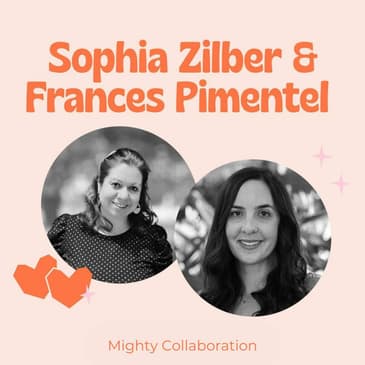
Uniting Strengths - Rare Disease Collaboration on a Shared Patient Registry Through Sanford Cords with Cure Mito and Hope for PDCD Leaders Frances Muenzer Pimentel and Sophia Zilber
Frances Muenzer Pimentel and Sophia Zilber have united the Hope for PDCD Foundation and the Cure Mito Foundation to launch a global joint registry and they're here to share about the collaboration.
EPISODE HIGHLIGHTS
What is a registry and why does a patient group need to have one?
A registry is a way to organize data as it relates to a particular disease. It's useful to bring the community together to learn where patients are in the world, aligning patients with clinical trials, and monitoring how a disease progresses over time. Sharing and publishing results collected in the registry also helps to bring awareness about the disease.
What inspired the launch of a joint registry?
Our populations have an overlap in patients and we wanted to make it as easy as possible for patients and caregivers to participate in the registry. In addition to centralizing the registry overlap, we've made the process optimized for mobile, all in one place and as seamless as possible.
What is the importance of participating in a registry and a natural history study?
Participating in a registry and natural history study are among the most important things you can do to contribute to the research of your disease. It doesn't cost anything but your time and there's no better way to get an accurate count of the patient population than through patient registries. This tool helps with having conversations with biotech companies and to prove that you're a commercially viable disease.
What is next for the registry and what are your goals?
We still have a lot of work left to evangelize the registry and educate our community on the difference between a registry and natural history study, explaining how crucial they both are. The work we're doing with the registry combined with newborn screening advocacy and we won't be able to be ignored anymore.
How can rare disease families start a registry?
There's a working group called Best Data Practices for Rare Disease Patient Foundations and Researchers on PHUSE with resources available on how to start a registry. The materials are easy to read and follow and they're available to everyone.
LINKS AND RESOURCES MENTIONED
Global Genes Conference - Week in RARE
https://globalgenes.org/week-in-rare/
https://effieparks.com/podcast/episode-228-strength-in-unity
https://effieparks.com/podcast/episode-194-a-guide-for-rare-disease-patient-advocacy-groups
Patient registries: a practical guide for patient organizations
https://sophiazilber.gumroad.com/l/registries
https://cords.sanfordresearch.org/account/login
Best Data Practices for Rare Disease Patient Foundations and Researchers
CONNECT WITH EFFIE PARKS
https://twitter.com/OnceUponAGene
https://www.instagram.com/onceuponagene.podcast/?hl=en
[00:00:03] I'm Effie Parks. Welcome to Once Upon A Gene, the podcast.
[00:00:07] This is a place I created for us to connect and share the stories of our not-so-typical lives.
[00:00:14] Raising kids who are born with rare genetic syndromes and other types of disabilities can feel pretty isolating.
[00:00:20] What I know for sure is that when we can hear the triumphs and challenges from others who get it,
[00:00:26] we can find a lot more laughter, a lot more hope, and feel a lot less alone.
[00:00:31] I believe there are some magical healing powers that can happen for all of us through sharing our stories,
[00:00:36] and I'll take all the help I can get.
[00:00:43] Once Upon A Gene is proud to be part of Bloodstream Media.
[00:00:47] Living in a family affected by rare and chronic illness can be isolating, and sometimes the best medicine is
[00:00:53] connecting to the voices of people who share your experience.
[00:00:56] This is why Bloodstream Media produces podcast, blogs, and other forms of content for patients, families, and clinicians
[00:01:03] impacted by rare and chronic diseases. Visit bloodstreammedia.com to learn more.
[00:01:08] Hey there, welcome back to the show. I'm your host Effie Parks, and I'm so happy you're here.
[00:01:13] I hope you're enjoying a lovely walk while you listen to this, or maybe you're in your car going somewhere fabulous.
[00:01:19] Or maybe you're taking a shower. I hear some people listen to me in the shower.
[00:01:22] I don't know what you're doing, but thank you for being here. It is almost summer,
[00:01:26] so may all the gods be with you and your children at home, and I hope you've put some things in place this year.
[00:01:33] I did for the first time, and hopefully it works.
[00:01:35] So I'm crossing my fingers that this summer is gonna be better than every other summer.
[00:01:39] Also, it is the start of like family conferences. I know so many of you have some family conferences.
[00:01:44] I'm so excited to watch them from afar, and
[00:01:48] today the Global Genes Conference in Kansas City in late September opened up for registration.
[00:01:55] So go make sure you register to go to the Global Genes Conference,
[00:01:59] especially if you've never been. It is just one of the most heartwarming and heartfelt like community like reunions ever.
[00:02:05] I hope you can go.
[00:02:06] I'm definitely gonna plan like a Once Upon a Gene meetup or Once Upon a Gene therapy walk,
[00:02:11] so stay tuned and definitely go register for that.
[00:02:14] Let's see, if you haven't listened to last episode with David Fagenbaum, go back and listen to that episode.
[00:02:20] It's episode 228. David and I talked a lot about the importance of patient advocacy orgs,
[00:02:25] like uniting as much as they can and not fragmenting. Obviously, there are cases where that must be done,
[00:02:32] unfortunately and
[00:02:34] fortunately, right? But anyways, go take a listen to that.
[00:02:36] We also talk about every cure and the excitement around AI and drug repurposing. So make sure you listen to that episode.
[00:02:42] So today I have two women who I love so much. One you've heard on the show before, Sophia Zilber.
[00:02:47] She was back on episode 194. She's a super expert in patient advocacy registries.
[00:02:53] So she delves into it there. I'm also gonna attach a link in the show notes. She just came out with her workshop.
[00:02:58] So she's offering workshops for all the how-to's and what to do's and what not to do's on patient registries.
[00:03:04] So super good resource. So many of you ask me about patient registries all the time.
[00:03:07] Sophia is your person and she's made the homework for you.
[00:03:11] So find that in the show notes at the end of this episode. So today I'm talking with Sophia and
[00:03:18] Francis and I'm...
[00:03:20] There's a lot of information in here.
[00:03:22] So go into your work mode because we're talking about patient advocacy orgs, but they did something super cool and really unique.
[00:03:27] They both united. So the Hope for PDCD Foundation and CureMido have launched a joint registry,
[00:03:35] which I don't know if there's any other ones like this, especially in the rare disease community.
[00:03:39] Hopefully it's the first of many because I think that it's gonna be pretty transformational
[00:03:43] and that's also gonna relieve some stress on caregivers and it's global. So it's really cool.
[00:03:49] I'm gonna let them explain it. They are much more well-versed in how this all works.
[00:03:53] They're hosting it at Sanford Chords and it's free. So I hope you learn something.
[00:03:59] Don't like hesitate to message Sophia or Francis and get more information on it.
[00:04:05] So please enjoy my conversation with Sophia Zilber and Francis Pimentel.
[00:04:10] Sophia and Francis, welcome to the podcast. Thank you. Yeah, I'm looking forward to having you here.
[00:04:16] You've all heard from Sophia back on another episode I'll have LinkedIn about registries earlier.
[00:04:22] And Francis, this is her first time to the podcast, but I'm sure you know her.
[00:04:26] Ladies, could you start by sharing a bit about your personal journey that led you to the roles that you're at now at CureMido and at Hope for PDCD Foundation?
[00:04:36] So my journey into rare disease community started in 2017 when my infant daughter died from Lee syndrome.
[00:04:44] And prior to that, I have worked.
[00:04:47] I've always worked in the pharmaceutical industry and data analysis.
[00:04:51] And after the loss of my daughter, I became much more personally involved with the rare disease community and also using my knowledge in data and data analysis
[00:05:01] and sort of to make a difference with the patient registries and how patient groups use data.
[00:05:08] And I'm a board member and a patient registry director for Lee syndrome for CureMido Foundation.
[00:05:13] Your next, Francis.
[00:05:15] My journey with rare disease started with the birth of my second child, my daughter, Violet.
[00:05:21] We had a long diagnostic odyssey trying to figure out what was causing her delays and her low muscle tone.
[00:05:29] And when she was nine months old, we finally got the diagnosis of pyruvate dehydrogenase complex deficiency, which is a type of mitochondrial disease.
[00:05:39] And her diagnosis was very devastating at the time.
[00:05:44] And my husband and I did a lot of soul searching and thinking.
[00:05:49] And when we came out of that, we decided to start our nonprofit Hope for PDCD, which we now run with a lot of other PDCD parents and has quickly grown into a very collaborative and big
[00:06:02] collective of both parents, researchers and industry partners and other mitochondrial disease organizations like CureMido.
[00:06:11] Awesome. I love you both so much.
[00:06:13] And I know how much work you put behind the scenes, not only for your foundations, but for so many other projects and jobs and parenting in general.
[00:06:22] So thank you for all of that.
[00:06:23] So for people who are kind of new to the world, who don't really have this grasp on registries, Sofia, can you give us kind of like a basic rundown of what a registry is and why a group would want to have one?
[00:06:37] Sure. Well, a registry is basically a way to organize data and collect data in an organized way about a particular disease.
[00:06:48] And registries are very useful.
[00:06:51] They can help in many ways.
[00:06:53] Some of the ways are they can bring our community together.
[00:06:57] That's something that people usually don't think of when they think of a registry.
[00:07:00] They can bring our community together and we can learn where our patients are in the world.
[00:07:06] I mean, that can be very helpful, especially if we're thinking about clinical trials and finding patients for different studies, because when clinical trials are happening, companies are usually concerned that they will not be able to find enough patients,
[00:07:20] especially with rare disease.
[00:07:21] And with having a registry, we can provide that view, especially if our registry is global.
[00:07:26] And registry, depending on the data we collect, we can learn more about the disease.
[00:07:31] We can collect information over time.
[00:07:33] We can learn how disease progresses over time.
[00:07:36] We can bring awareness to our disease by sharing our results, by publishing our results and just a lot of ways in which registries are very helpful.
[00:07:48] So you both have done something really unique, and I'm not sure if it's anywhere else so far in this sort of idea.
[00:07:55] So let me know if it is because I'd be really intrigued.
[00:07:58] But you've done a collaboration between PDCD and CureMito, between the two foundations, and it's led to the creation of a shared patient registry on the Sanford's Cord platform.
[00:08:09] So how did this partnership come about and what are your expected benefits for it?
[00:08:15] So when I was thinking about launching a registry for PDCD, first, I just want to clarify that PDCD currently has a natural history study, which is different than a patient registry.
[00:08:30] One is clinical and then one is more patient owned.
[00:08:35] And like Sophia was saying, you don't cap it at a certain number of participants.
[00:08:40] It's like a global census of the entire PDCD population.
[00:08:45] And Effie, I think you connected Sophia and I when I was first pondering whether we should start a registry.
[00:08:52] And the thing that is really important to know is that our population has an overlap with Sophia's population.
[00:09:02] So about 25 to 35 percent of patients with pyruvate dehydrogenase complex deficiency also have a diagnosis of Lee's syndrome.
[00:09:12] And I come at things with the perspective from my like my professional career as a UX UI product designer.
[00:09:24] And I'm constantly thinking about how can we ease the burden on the parents or on the caregiver?
[00:09:31] Because our lives are already extremely, I mean, just I don't want to say that our children are a burden because our children aren't a burden.
[00:09:40] But it feels like everything is on us, like it's on us to pursue their therapies, to get them the services they need to get a diagnosis.
[00:09:50] Effie, I think you recently shared a graphic of like the parent or the caregiver drowning in a sea of like icebergs or something.
[00:09:59] And that's just like a very accurate depiction of what it's like.
[00:10:02] So I'm always thinking, like, how can we make this as easy as possible for a family to join a patient registry?
[00:10:10] And so although my own daughter doesn't have the dual diagnosis of Lee's syndrome and PDCD, I have a lot of close friends who their children has both diagnosis.
[00:10:24] And so I'm thinking about them and I'm like, I don't want them to have to go to one platform, register their son for on the Lee's syndrome patient registry and then have to do that whole process all over again for PDCD.
[00:10:42] Like, that doesn't make any sense.
[00:10:44] It should just be like as seamless as possible.
[00:10:48] And Sophia knows, like I was very adamant that our registry needed to be mobile optimized, like mobile first design.
[00:11:00] A lot of our patient population is coming out of a clinical trial where the burden of the tech was it was just very cumbersome and they had to constantly do their surveys on the desktop.
[00:11:14] And so I, I was like fresh thinking about that.
[00:11:18] And I was like, this needs to be optimized for mobile.
[00:11:21] It needs to be all in one place.
[00:11:23] It needs to be as seamless as possible.
[00:11:27] Um, and so while I didn't like design the registry interface myself, I definitely held it to a high standard, like what I do for a living.
[00:11:37] And I'm like, I'm just really pleased that we were able to make something that's going to ease the burden on that like section of family that has that overlap of Lee syndrome and PDCD.
[00:11:52] Yeah.
[00:11:52] You're kind of a perfect team actually for this.
[00:11:55] I was thinking that, I mean, your UX experience for sure is so valuable.
[00:11:59] And then obviously thinking about that, that caregiver experience.
[00:12:02] Right.
[00:12:03] And not only is it so difficult a lot of the time to like make yourself get out of a computer, honestly, but the time that you have to do it is usually when you're on the go or when you're in a waiting room or when you're in your car.
[00:12:15] So it just, it's one less thing that you're putting up in front of a caregiver who might have 10 minutes to devote to it at that time.
[00:12:23] Absolutely.
[00:12:24] And I think Francis was, um, I think what I loved about collaborating, Francis was asking a lot of tough questions, but I think it was very good.
[00:12:33] She was really, she wanted to make sure that it's not burdensome, that it's worthwhile, that it's worth the patient's time.
[00:12:39] These are really the questions that we all should be asking.
[00:12:42] So I think that was, I really noticed that that was really good.
[00:12:45] Yeah.
[00:12:45] Francis knows how to get to the meat of things.
[00:12:47] I wouldn't mess with her.
[00:12:48] Um, well this makes me think like how many other diseases should we be grouping together like this?
[00:12:53] Like why isn't there a platform like this?
[00:12:55] Cause I know so many kids who have like LGS and then, you know, they have a genetic component and like all of these other things.
[00:13:01] And even just neuro in general, like why isn't there sort of like a matrix, like a registry like that where all of these things could be sort of interconnected?
[00:13:12] Like where's the, where's the tech on that?
[00:13:15] I think that we could absolutely do it.
[00:13:18] I think it's just a matter of different stakeholders coming to the same page.
[00:13:23] I think to me, like that's kind of the biggest challenge.
[00:13:27] For example, we are using Quartz platform for our registry and Quartz has a general survey that is the same for every rare disease using Quartz.
[00:13:38] And then each group can create their own disease specific survey.
[00:13:43] But when you do that, the general survey, which has a lot of questions, it remains the same and that data can be aggregated and analyzed together.
[00:13:54] How did the two of you decide on Sanford Quartz versus all the other opportunities that you could have went to?
[00:14:00] How did you make that decision?
[00:14:02] And I know you're more like agnostic between all of them and they all have their pros and cons, but how did you make that decision for the, for the collaboration here?
[00:14:09] So that was because our registry for Lee syndrome already was on Quartz from 2021.
[00:14:15] And at that time we chose Quartz because I liked the structure of their data.
[00:14:21] I liked the general survey, which uses recommended NIH recommended data elements.
[00:14:26] And I liked the fact that they share all the raw data with our foundation so we could do data analysis.
[00:14:31] And for me, the priority was for like, not just for me, I mean, for Kira and Myra, the priority for us was to make sure that we can take that data and we can bring results and we can have results out of the data rather than wait until researchers or somebody does something.
[00:14:49] Because we all know that takes a very long time.
[00:14:52] Sometimes it doesn't happen at all.
[00:14:54] And we wanted to bring something back to our patients and continue doing that throughout.
[00:14:58] I'll just add a shout out to the engineering team at Quartz.
[00:15:04] Thank you, because I know that I definitely put them through their paces a little bit.
[00:15:08] So even though they're not here, they're definitely a partner on this and I'm very grateful to them.
[00:15:14] Love that.
[00:15:14] I know you mentioned briefly the importance and the difference between a natural history study and a registry.
[00:15:20] I have found that lots of people still don't understand the difference.
[00:15:24] And I've even found founders that don't know the difference.
[00:15:27] So it can be confusing until you're really sort of in depth in this world.
[00:15:31] But I guess since we're talking about registries, can you talk about the importance of participating in one, even if perhaps the patient isn't alive anymore?
[00:15:40] So I feel like participating in the registry and in the natural history study, if you can, ours is only open to people in the US and Canada.
[00:15:50] But those are like the two most important things you could do to contribute to the research for your child or your loved one's disease.
[00:16:02] It doesn't cost anything.
[00:16:04] It just costs some of your time.
[00:16:06] But with our disease and with Lee's syndrome, there's no other way to get an accurate count of our patient population other than with a patient registry.
[00:16:19] I think I mentioned before, it's not capped at a certain number of participants.
[00:16:24] And after we have our registry live for a couple of months, we're planning to start translating it into other languages.
[00:16:31] So we definitely want to, we hope to see patients internationally to start enrolling in it.
[00:16:38] And it's also one of the only tools that we can have in our arsenal to have conversations with biotech and prove that we're a commercially viable disease.
[00:16:49] Dr. Bedoin has some groundbreaking research on retrospective newborn screen blood samples, proving that our incidence rate of PDCD is actually quite high.
[00:17:02] It's one in 40,000 live births, which means that there's probably around 2,000 patients in the US and then who knows how many internationally.
[00:17:11] But I can't like go to a biotech and say we have this huge patient population unless the families participate in the registry.
[00:17:20] Yeah, Frances, that's so cool.
[00:17:23] I mean, you've launched the first ever international patient initiated registry, which is very cool.
[00:17:29] And it's it's a significant achievement.
[00:17:32] How do you anticipate that the registry will impact research and the development of treatments by doing it this way?
[00:17:39] Well, first of all, a lot of the credit goes to Sophia.
[00:17:43] But I think what's really important about it is that because it was designed with caregiver input, we have a whole section on managing the disease with the ketogenic diet, which most geneticists know is the gold standard treatment for our disease until
[00:18:03] like whatever such time another meaningful therapy could become available.
[00:18:08] The ketogenic diet is pretty effective at stabilizing our children and our loved ones and getting their lactic acid to back to normal or somewhat healthy levels.
[00:18:21] But right now, we do not have a standard of care document that multiple clinicians have aligned on.
[00:18:31] And I'm hoping that some of the data from this registry can prove how many families are relying on the ketogenic diet.
[00:18:40] And that way, when we get newly diagnosed families, let's say, for example, they live in a remote area or they live in a different part of the world where it's not well understood that the keto diet is like an essential tool in our toolbox for our children.
[00:18:57] I don't want to see like a year from now families having to fight to get their children admitted to start a ketogenic diet.
[00:19:05] I'm hoping that this registry can prove how effective it is or at least, you know, start to and also help us form a standard of care.
[00:19:17] Yes. So important for all of our kids.
[00:19:20] Sophia, with your experience with the Lee syndrome registry beforehand, what insights or advancements have you seen like since you created it?
[00:19:29] And how do you see it benefiting the PDCD community of the stuff you already did?
[00:19:34] Yeah, thank you. That's a great question.
[00:19:36] I actually wanted to quickly comment first on the natural history study, if that's OK.
[00:19:41] It's true that there's a lot of confusion between what is a registry and what is a natural history study.
[00:19:47] And some people believe that a registry always has to be basically a natural history study.
[00:19:53] And there may be some overlap, but I think the easiest way to think about it as a registry is a more broad term.
[00:20:00] It could collect maybe less information or it could be only patient reported information, for example, but it's more broad and you can use information for different purposes.
[00:20:09] While a natural history study may be more focused and may be specifically designed to explore specific clinical outcomes.
[00:20:19] And natural history study, usually if you're a company like a pharmaceutical company, I think of natural history study, you would most likely think about it sort of as a research study that collects clinical information and possibly patients go to the hospital for visits where they are
[00:20:38] labs and other clinical values are collected.
[00:20:41] So this is so natural history studies are very important, but they are complex to design.
[00:20:48] They are very expensive.
[00:20:50] And like Francis said, you know, there can be only a specific number of participants that can be included.
[00:20:57] Now, a registry is a little different because it may collect possibly not necessarily clinical information or less information, but they are much more broad.
[00:21:08] And there is no limit to the number of patients that can be included.
[00:21:11] And for example, in our Lee syndrome registry, we have patients from countries where many of our patients said that they have never been included in any research before.
[00:21:22] And it's amazing that they're counted and they're there and they are represented and their experiences are presented.
[00:21:29] So these are kind of the differences that I wanted to mention.
[00:21:32] And as far as our registry, so we have started in 2021.
[00:21:37] So it's only two and a half years old.
[00:21:39] And since then, we have analyzed our data consistently.
[00:21:43] We have published two papers.
[00:21:45] One of our papers describes all of our information collected in detail.
[00:21:52] Some interesting things that we have found, for example, time to diagnosis.
[00:21:57] We actually found it to be short.
[00:22:01] About 60 percent of our patients are diagnosed within one year, which is interesting because when we think about mitochondrial disease as a whole, what we know is that it takes patients many years to get a diagnosis.
[00:22:13] But that may not be necessarily true for individual mitochondrial diseases.
[00:22:17] So this is what we found.
[00:22:19] So that's interesting.
[00:22:21] We are having interesting findings on things like loss of milestones, which we already know how severely patients are impacted.
[00:22:30] But to see the actual data, for example, 70 percent of our patients either can't walk or have lost their ability to walk and things like that.
[00:22:39] 30 percent of our patients have tracheostomy.
[00:22:42] So it shows the burden of the disease and the impact on patients.
[00:22:46] To see it coming from data, that's very valuable.
[00:22:48] To see it in publications.
[00:22:50] We are getting interesting data on health care utilization.
[00:22:54] So we're finding that patients are not hospitalized that many times, but when they are, their hospitalizations are long.
[00:23:00] So that's interesting.
[00:23:02] Quality of life data is interesting because we're actually finding that most of our caregivers believe that their children have a good quality of life.
[00:23:10] So a lot of very interesting findings.
[00:23:13] A number of researchers and industry partners have requested our data.
[00:23:17] Our data is being shared.
[00:23:19] That's wonderful.
[00:23:20] We are getting a lot of requests asking which genes are represented in our data.
[00:23:26] Lee syndrome can be caused by more than 110 genes.
[00:23:29] And we have that information and we ask patients for that information and then we bring that to a uniform format.
[00:23:37] So it's very easy for us to share.
[00:23:39] So we work very hard on being sure our data is useful and we can share results easily.
[00:23:43] So we are sharing that and that will help companies hopefully decide what they want to pursue in terms of clinical trials.
[00:23:51] We have had our data aligned with data standards such as CDISC, which is used primarily in the industry, and OMOP, which is more used by academic institutions.
[00:24:01] So these things make it easier for us to share our data and make it, you know, to share it in a standard format where it can be combined with other datasets in a similar format.
[00:24:11] Yes, that's so cool.
[00:24:13] Wow, that's exciting.
[00:24:14] I loved that story so much.
[00:24:16] You know, I like think about all the stuff that you said that you learned and that you're doing and how you organize it and how you put it out.
[00:24:21] And I'm like, how if I didn't know the two of you, I would be like, how did you put that on your plate?
[00:24:26] How are you doing that?
[00:24:27] How are you managing that?
[00:24:28] But you two are a perfect power couple in this, in how your brains work and how just motivated and determined you are.
[00:24:36] So really good job.
[00:24:37] Congratulations.
[00:24:38] That's so awesome.
[00:24:39] I love it so much.
[00:24:40] And I wonder what would it have felt like, maybe I'll start with you, Frances, if there was a registry when Violet was born and Sophia when Miriam was born.
[00:24:48] How would that have changed anything for you, do you think, if there was something already there for you to grab ahold of?
[00:24:53] For me, it would have made a world of difference.
[00:24:57] It would have given me hope that our disease population was getting organized and getting ready for clinical trials after Violet was diagnosed.
[00:25:07] I saw a lot of like general registries, but I didn't see anything specific to PDCD.
[00:25:12] And PDCD is a very unique disease.
[00:25:15] It's a disorder of carbohydrate metabolism.
[00:25:18] And I didn't really see anything that was asking what does your daily life look like when you have to keep a child in ketosis, which is such a fragile state to be in?
[00:25:30] And yeah, it just would have given me hope.
[00:25:33] Well, I hope you do a survey to the families that are coming around that are new and ask them what kind of an impact it made to have that pop up when they got their diagnosis.
[00:25:45] So make sure to track that, please.
[00:25:47] Yeah, absolutely.
[00:25:48] How about you, Sophia?
[00:25:50] So after Miriam died, my daughter, I have enrolled her in some of the general MITRE registries.
[00:25:58] But I think what's very hard is that a lot of times when that was the case with me as well, you join the registry and you are expecting something, that you're expecting to see something.
[00:26:11] How is this data helping?
[00:26:12] Who is looking at it?
[00:26:14] What's going on with it?
[00:26:15] And you don't hear that.
[00:26:17] And you don't know.
[00:26:18] And I think that's very hard.
[00:26:20] And I hear it from all the rare disease groups and patients how disappointing it is.
[00:26:26] And that's why, you know, I wanted when we started our registry for Lee syndrome, I just wanted it to be different.
[00:26:34] My commitment was in this registry was to say, OK, we are starting this registry.
[00:26:39] We are not telling patients that one day researchers will learn something.
[00:26:43] We're not saying that because that day will...
[00:26:46] I don't know when that day will come.
[00:26:48] It's very complicated.
[00:26:49] And data analysis by itself, it's time consuming, it's expensive and researchers are busy.
[00:26:56] And we just can't count on other people to do something.
[00:27:00] And my thinking was we are starting a registry knowing that we're only going to do what we can.
[00:27:05] We're starting a registry where we can be, we can say that we will deliver results from this registry and we are capable of doing that.
[00:27:11] And so that's what I wanted to do.
[00:27:13] Yeah, I mean, I think about something like this that was created by caregivers for caregivers and just like that whole unique sort of tailoring to the information.
[00:27:23] And it and it definitely probably contributes to the output, too, right?
[00:27:27] Like families typically don't necessarily pay much attention to this aspect of it.
[00:27:32] Like they'll see posts and like maybe not really understand it, but go, OK, cool.
[00:27:36] Oh, that graph's pretty. I sort of get it.
[00:27:37] But if they're truly a part of this process and the questions are so relevant and the outcomes to what they're hoping for are so relevant, I can imagine that they would be more interested in actually learning and engaging in it more so.
[00:27:50] Absolutely.
[00:27:51] One of the complaints I hear about every registry is that it takes way too much time for anyone to get anything out of it researcher wise.
[00:28:00] Do you have that problem with with what you're doing or is there like some cut out of the bureaucracy or the middleman with the way that you've tailored it?
[00:28:08] Or is it kind of just standard that it's hard to get data out and together for a researcher?
[00:28:14] No, we do not have that problem.
[00:28:16] It's it's very easy in our platform if researcher request data within a few days they will get.
[00:28:23] OK, that's not normal, but good to know.
[00:28:26] What do you two think looking ahead?
[00:28:28] I mean, what are the next steps?
[00:28:29] You've just announced this, which is so exciting.
[00:28:31] But for both foundation in terms of like research priorities and supporting your communities, like what things are you excited about that are coming up because of this collab?
[00:28:40] I think for us, we still have a lot of work to do to evangelize the registry and to educate our community on the difference between the registry and the natural history study.
[00:28:52] And just explain how crucial both of those things are.
[00:28:57] And I just think that the work that we're doing with the patient registry combined with our advocacy efforts for newborn screening, it's going to come together and we're going to reach like this critical mass of like how big our patient population is that people will realize like we can't be ignored anymore.
[00:29:21] Like PDCD is actually pretty prevalent and we need more therapies and we need them quickly.
[00:29:28] Yeah, I also want to add that what would be really interesting is to see how Lee syndrome and PDCD compare and including for patients who have both, you know, and for patients who have only Lee syndrome, only PDCD.
[00:29:45] So we'll be able to do all of that.
[00:29:46] So that will be interesting to see what that shows.
[00:29:48] Yeah, well, I'm excited to see how how this moves along and grows.
[00:29:52] And we can talk about the newborn screening thing another time.
[00:29:55] That's a whole other bag.
[00:29:56] But good job.
[00:29:58] What do you want to tell maybe your patient populations, Frances, about the importance of joining and finding you and like maybe some easy steps for their super stressed out brains, especially in the middle in the in the beginning to kind of approach with you?
[00:30:13] And then, Sophia, can you talk to rare disease families in general about where they can go to learn about doing something like this and what you can do for other groups?
[00:30:24] And like I know you're putting on some workshops and stuff.
[00:30:27] So can you kind of both speak to those different groups of families?
[00:30:30] So for the PDCD families, my ask would be to please go to hope for PDC dot org and read just take the time you have and read through everything because everything that's on there has been written by parents, caregivers and reviewed by clinicians.
[00:30:54] And we put a lot of work into that website.
[00:30:58] That's also where you can enroll in the registry.
[00:31:01] And my advice is to have your child or your loved ones genetic report handy and find a time.
[00:31:10] I know this is easier said than done, but maybe after the kids are in bed, like a quiet 10 to 15 minutes to fill it out when you can just like focus on it.
[00:31:23] So, yeah, please join the registry.
[00:31:25] Please read about all the resources that the board members have put together for you.
[00:31:32] And yeah, follow us on social media, I guess.
[00:31:35] Yeah, there's a lot cozier of a blanket there for you than there was for Frances.
[00:31:39] So go check it out.
[00:31:41] Sophia?
[00:31:42] So as far as all of the rare disease families.
[00:31:45] So I have some tips.
[00:31:48] So one, I have a working group that's done through FUSE.
[00:31:52] FUSE is a data science community, mostly consisting of industry and others who work in data related fields.
[00:32:00] And with that working group, we've put together a few really helpful resources on how to start a registry.
[00:32:06] We've put together a transparency checklist, some myths and facts.
[00:32:11] And our latest resource is how to make sure the data could be helpful for regulatory use, meaning like to the FDA, for example.
[00:32:20] And so these are all, you know, one page information sheets that are very easy to read and follow.
[00:32:27] And so these are available for everyone.
[00:32:31] Also, I do patient registry office hours for all patient groups, regardless of your patient registry platform, any rare disease, any data types.
[00:32:39] I do them together with Danielle Boyce.
[00:32:41] She's my colleague and she's also advisor to CureMyTha and she works in academia and she's a data scientist.
[00:32:48] She's super experienced with data and we do patient registry office hours.
[00:32:52] We try to do them once a month.
[00:32:54] Sometimes it doesn't work out, so it might be like two or three months, but we do them on a regular basis.
[00:33:00] So please join that.
[00:33:01] I'm also working on a course and my plan is to release it in May.
[00:33:06] And it will have a number of very short modules going through all the different steps related to the registries.
[00:33:14] And it will cover everything, how to select the registry platform, working with data, sharing results, all of that.
[00:33:23] So this will be I'm really excited about it.
[00:33:26] So this should be also available soon.
[00:33:28] Awesome. So cool.
[00:33:29] Thank you both so much for the work that you're doing.
[00:33:32] I know. I mean, I don't know how much it is, but I can imagine how much extra it is.
[00:33:37] I'm thankful for your hearts and your brains.
[00:33:39] So thanks for doing this for the community at large.
[00:33:43] None of it would have been possible if you hadn't introduced me to Sophia.
[00:33:46] So really, it all started with you, Effie.
[00:33:49] Oh, you're so sweet.
[00:33:51] Well, it is like my ultimate pleasure to be a connector.
[00:33:54] I'm so lucky that I get to meet so many of you.
[00:33:57] So it's just part of all of our little superpowers combined, right?
[00:34:01] OK, thanks, ladies.
[00:34:02] Thanks for being my guest today.
[00:34:04] I know you're busy. I appreciate it.
[00:34:05] And I look forward to releasing our conversation so people can learn from it.
[00:34:09] Thank you so much.
[00:34:10] Thank you.
[00:34:11] I hope you've been enjoying this podcast.
[00:34:13] If you like what you hear, please share this show with your people.
[00:34:17] And please make sure to rate and review it on iTunes or wherever you get your podcasts.
[00:34:22] You can also head over to Instagram, Facebook and Twitter to connect with me and stay updated on the show.
[00:34:28] If you're interested in sharing your story or if you have anything you would like to contribute,
[00:34:33] please submit it to my website at Effie Parks dot com.
[00:34:37] Thank you so much for listening to the show and for supporting me along the way.
[00:34:41] I appreciate you all so much.
[00:34:43] I don't know what kind of day you're having, but if you need a little pick me up, Ford's got you.