
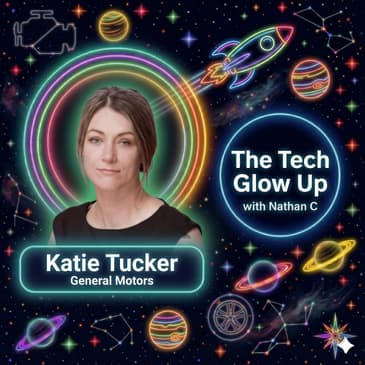

Most vehicle research happens in ideal conditions — short commutes, familiar routes, full battery. Katie Tucker wanted to know what happens when the conditions aren't ideal. As Global Customer Research and CX Insights Manager at General Motors, she led a study that sent 40 Blazer EVs and more than 80 drivers on cross-country road trips to find out what customers actually need when the stakes are high and the variables are real.
What they uncovered reshaped how the team thinks about EV onboarding, range anxiety, and the critical first 60 to 90 days of vehicle ownership.
Katie's approach sits at the intersection of qualitative and quantitative research. Neither method alone tells the full story. Real-world behavior, customer emotion, and product data have to move together if you want insights that hold up when a product team is making decisions with a five-year roadmap on the line.
She's also watching closely how AI is changing what her team can do — and where human judgment still has to lead.
Key moments in this conversation:
- [00:03:54] How an architecture background led to a career in design thinking and CX research
- [00:07:40] What the cross-country EV road trip study revealed that lab research never could
- [00:09:25] Blending qualitative and quantitative data to surface actionable insights
- [00:12:58] Why cross-functional collaboration is how good ideas survive long enough to ship
- [00:21:31] How AI is changing the research workflow — and what it still can't replace
Katie has spent her career moving between boutique consulting and large enterprise environments, and the throughline has always been the same: technology is only valuable if it serves the humans who use it.
That conviction shapes every study, every research question, and every recommendation she brings to a product team — and it's why her work has impact well beyond the research report itself.
Watch the full conversation on YouTube → https://youtu.be/BSOwimnRiq4
Join the Tech Glow Up newsletter on Substack → https://substack.com/@mxnathanc
About Katie Tucker
Katie Tucker is a customer-obsessed product and CX leader at General Motors, where she designs customer-focused operating models that connect emerging technology, vehicle experiences, and portfolio decisions across functions.
Her career spans founding a boutique innovation consultancy, growing a business innovation practice at Daimler Trucks North America, and now shaping GM’s EV and software-defined vehicle journeys through CX governance, journey mapping, and AI-augmented insights.
With graduate degrees in both architecture and business, she works at the intersection of systems thinking and human-centered design, helping teams turn messy real-world signals into clear strategy and execution.
On The Tech Glow Up, Katie shares how resilience, thoughtful experimentation, and a deep focus on customer adoption can turn bold ideas into durable value for founders, product leaders, and the customers they serve.
A "glow up" signifies a positive transformation, reflecting the journey of becoming a better, more successful version of oneself.
At The Tech Glow Up, we humanize the startup and innovation landscape by focusing on the essential aspects of the entrepreneurial journey. Groundbreaking ideas are often ahead of their time, making resilience and perseverance vital for founders and product leaders.
In our podcast, we engage with innovators to discuss their transformative ideas, the challenges they face, and how they create value for future success.
If you're a founder or product leader seeking your own glow up, or a seasoned entrepreneur with stories to share, we invite you to join our guest list via this link.
This episode this week is really special. I hope I'm not blown out, but we're gonna do this anyway. it's such a gorgeous day in Portland. Like, that's the Portland welcome to Old Town sign right there. I just had to show you. Katie Tucker is a hero of mine, whose work I've been following for over a decade, and the way that they use design thinking, the way they use research, and the way that they build cross-functional teams, and even more importantly, they get really different groups of stakeholders to align and build innovative practice at some of the largest places that you might not assume, uh, are that innovative or quick-moving or, uh, thinking and working, uh, in this sort of way with iterative design thinking, testing, learning, sharing back, and, like, improving products. But that's who we have on the show today. We've got Katie Tucker on the show, Global Customer Research and CX Insights Manager for GM. She works in the customer organization at the heart of research, data, AI, and using innovation to impact a customer's journey, help them along their way. They've got a team that does it at every stage of the customer journey. It's such a fascinating organization, and this story, I think, is going to really, uh, get your attention. Katie dives... Right? Her whole thing is about how you blend qualitative and quantitative insights to really figure out how to make a difference in the customer's journey and in the purchase life cycle for General Motors This is influencing near-term decisions as well as long-term strategic planning and understanding of like who our customer is, what they need, and how we can support them with it. She shares this amazing research study where they took an EV on a cross-country road trip and really learned what drivers are looking for, um, and learned how different a high-stress, long trip can be compared to inner-city driving when you're using an electronic vehicle. Katie shares the details of her long and winding career path, which is really quite impressive if you dive into the details of it, and shares how cross-functional collaboration, this idea that like the people that help build your next innovation will protect it and help you implement it when it is time to go with it. She talks about how she uses data to bring executives and other teams on board and how AI is changing and automating and empowering her team in new ways. This is one of those episodes that proves you should absolutely talk with your heroes, uh, because they might just impress the socks off of you. I've had the honor to watch Katie Tucker's work for years, and I'm so glad that you have a chance to see it here on The Tech Glow Up. That's right, Katie Tucker, Global Customer Research and CX Insights Manager for General Motors on The Tech Glow Up. Hello and welcome to the Tech Glow Up. Today I am thrilled to be talking with Katie Tucker, the Global Customer Research CX Insights Manager for General Motors. Katie, it is such a delight to talk with you today. Thanks for joining me on the Tech Glow Up.
Katie TuckerThanks for having me. I'm excited to be here.
Nathan COh my goodness. those who listen to the tech Glow Up know that I talk a lot about how you can learn so much from your customers, that you can take products from great ideas into wildly successful ones. That oftentimes, like the work that it takes to do those things isn't as hard as we might tell ourselves. what these listeners don't know, Katie, and maybe you don't either, is that, the learning that I got to do, Early in my, design thinking career, watching some of the things that you were doing, over a decade ago was really a foundation for that. I just have to let you know that like this is, I'm so thrilled to be chatting with you today. And, So thank you.
Katie TuckerOh, it's, it's so wonderful and the feeling is mutual, so, great to.
Nathan CSo Katie, I'm so excited to talk to you, but I think what everybody wants to hear is your introduction. So can you please introduce yourself and, the work that you do with this very fascinating title as a global customer research and CX Insights manager Motors
Katie TuckerYeah., I'll start off by, by introducing myself by a couple with a couple of things that no matter what role I've had and where I've been, have been true to the work that I do and and it's always been centered around kind of new technology adoption. In a human-centered design way. Right. And that's what brings me to cx. so at General Motors, I've had a couple of different positions. before that, I, I, ran a small boutique consulting agency for about five years and, and a couple of other large businesses, large corporations that I worked at before that, and everything, everything kind of comes down to that at General Motors, it's all about taking the customer, insights that we get. Data. Rich, we have a lot of quantitative data. I love digging in and getting qualitative data and letting those two kind of dance and inform each other. But the research isn't the end of it. It's what do we do with that? Then? Who needs to know, how do we make strategic decisions based on this? How do we make, sometimes fast changes, sometimes more structural changes. so that's kind of the summary of the work that I do.
Nathan CAmazing. And in this role, are you answering broad questions across the organization or is there like a focus problem space that you're currently diving into?
Katie TuckerSo I think, anybody who's spent time in large organizations knows that it's very easy to fall into. I have this role and for every task there's a different person.'cause there's just so many people that work there, right.
Nathan Cright?
Katie TuckerI've been really lucky, to have a, a role that kind of lets me fly at a couple of different altitudes. Sometimes the customer insights inform future product vision, so we're five. Years out. sometimes we're talking about, you know, a, a vehicle that's launching in three months and, you know, here's a thing that we either need to fix or we need to highlight or, a new aha that needs to be activated. So, so I've been pretty fortunate in that way.
Nathan CI love the idea of. A new aha that needs to be activated on.
Katie TuckerYeah.
Nathan Cis there an example that you might be able to share of a, like a. Uncovering an organizational aha and like how you go about like socializing that and sharing it and like turning it into action at an org, the size of the one at of gm.
Katie TuckerI'd say when I first joined gm, it was about four years ago, and it was right as, their line of new electric vehicles were rolling off. We had about seven EVs that rolled out in the portfolio within a couple years of each other. so with that new technology adoption, there was a lot that our customers were going to learn and need to learn, and there was a lot that we needed to help prepare them to learn. So how do people charge? When do they charge? When is it important to have navigation? That's, you know, that fits a different need. one of my favorite ahas that we had, you know, it's really easy to kind of proximity test. we had a, a fleet of Blazer EVs that went out across the country. It was a two week road trip with 40 vehicles and 80 drivers or more. And, we gave them some rough routes and said. Let's go learn about what your experience is like. what was really striking is, the differences of our customer needs when they were in a road trip condition with unfamiliar territory and kind of an extreme use use case. Maybe the stress is a little bit higher, you know, for a variety of different reasons. But, you know, and for any reason the, you know, we've got this. All the context that people bring with them to try to understand why it's important for them to get accurate information immediately. the importance of that was not the same when people were driving around in their regular daily commune, right? Where we know our roads, we know where we're gonna go. I've got three chargers I like to go to, and if I don't hit one, I'll hit the other one. Right? And so, I think that Aha was, you know, it was kind of right, right before launch, but it did kind of change the way that we, you know, it kind of gave some context to how we talk about, the different, values that we, that we provide in the.
Nathan COh, I had like horror flashbacks as you were talking about that, right? Like the conditions where the customers are using your tool might like dramatically impact how they feel about it. I have some strong memories of working on an augmented reality platform that was very easy to use in our office, but when you were out in the field on top of a house, trying to use the same features, those particular users wouldn't call it fast and easy, you know,
Katie TuckerYes.
Nathan CKatie, What sparked, like, doing customer insights, translating it for an enterprise company, helping, you know, large and diverse teams adopt technologies in ways that actually deliver pretty significant, you know, value to these companies. those are outcomes of a, of a long and successful career. Wh where did you start on this journey, bringing, you know, design and insights and innovation together like this? Can
Katie TuckerYeah.
Nathan Cus back to the origin?
Katie TuckerI'll start by saying this is a story of one, right? So, you know, if you want to be a neurosurgeon, there's a very defined path of what you have to do to do this, right? I've worked with wonderful CX professionals who have psychology backgrounds who have. Design backgrounds, we have business back. Right? It can kind of come in a lot of different ways. So for me in particular, my, I was brought up in design by way of architecture, big a architecture like buildings in the built environment and yeah. and that was incredibly gratifying. one of my favorite ways to think about, the work that. I was doing was like, how does a building become a good neighbor and how does it serve the neighborhood around it? Right. it's there, it's going to be there hopefully for a hundred years. how might it, you know, increase activity like physical activity and connection and, and bring out all these, you know, good, healthy attributes that you want in a neighborhood. so I think there is really, really where I learned about, you know, kind of having to, to do the research. You know, if you go into a neighborhood, every neighborhood has its own culture and its own identity. You can't just learn from the kind of looking on the internet. You have to go there and you have to talk to people and you have to go to coffee shop, right? so that was a part of it. I went back to grad school and I got my master's. I graduated into a recession, and so there was like, big props to all my architecture friends who landed jobs during that time. It was really tough and, and I had a young family. We moved across the country, with my new husband and my new baby. And, I was at this moment where, I was trying to figure out what I was going to do next, and I, and I knew about myself that it was. Fairly, you know, I, I was comfortable talking to, other architects and designers about, you know, maybe the value of design and the importance of what we were doing, but I didn't really have the, the business language around it. I went back and I got my MBA at Portland State University and, In there, I, took all of my electives and new product development, had a wonderful mentor who was my human centered innovation, professor, and we ended up collaborating and doing some, classes together after that. It was just a really, really wonderful, time. And so that's where I learned that there was kind of like a canon around the things that we were learning that wasn't just in architecture, but it was around, at the time design thinking, human centered innovation. And that's kind of grown into cx. So I think that's the, that's the origin story.
Nathan CI realize Katie, I am always very flexible with terms and I think your role and title kind of poses a very interesting, is an interesting mix because oftentimes like design and innovation and customer experience are like siloed, right? Like those are full different departments and you. I'm curious, can you talk a little bit about in your role, like, how those ideas come together and, and sort of, the, the, the organization that you're working in with there? I think, you know, a lot of times the ideas like CX is the people who deal with the problems after the fact. And to have this like proactive design, component to it, seems pretty forward for where I think a lot of folks might, Suppose a product org is organized.
Katie Tuckerthere are always gonna be silos and there are always gonna be people who are kind of like knocking holes in those silos. it is always in all of my. Work that I've done, kind of cross-functional collaboration has been a foundational pillar to, to finding success, in my current role. You know, there might be, there are some silos that we have to break down. I think what's really wonderful right now about where General Motors is. Also have this, I'd say probably in like the last three or four, maybe five years, have this really new, excitement around. Coalescing around the customer's experience, although functionally and the way that we've always done things might feel like you do this and you do this, and you do that, I think that, cognitively and then, you know, that leads to behaviorally we have more and more people who are actively working to say, Hey, I see this thing over here. How does that impact what you're doing? Or are you seeing it over there? And so I think. What's really important, if I could offer one piece of suggestion, is if you find yourself in, you know, trying to get over to another side, it's easy to get, you know, I, I'm too busy to talk to you right now. but keep working at it and you'll find the person who's like, oh, I've been looking for you and I didn't know that you were here. Let's have this conversation now. And then you just start, you know, finding your people and, and building your kind of internal network of people kind of working cross-functionally and. That kind of energy is contagious. It really is, and I think that's been the best thing that I've, I've experienced so far.
Nathan CAt least from the outside, what I have seen as an observer that that skill of getting those cross-functional teams excited about something that like maybe was off their radar is, is one of your superpowers. Like it is something that like you have the patience that, you know, the ability to bring people on board, to meet people where they are. Do do you have like. A secret sauce for that. Is it an approach, is there a, a methodology or is it, is it really, you know, a, a, a case by case basis of who your stakeholders and, and collaborators are?
Katie TuckerI think it's like anything, it comes with practice and the more you practice, the less you have to. so I'll say a couple of things, but if you try to do it all at once, first time, it's gonna feel overwhelming I think one thing is really trying to understand who's in the room, right? What projects are important, what is motivating them, where are their challenges, where are their pressures, right? it's also about, I like to think of being open or like open-mindedness, like. Somebody's propensity to, to, to absorb information, or take in how somebody is feeling and let that change them or change their direction. And so I always try to lead with being open so that I'm actively engaging and, and like you said, kind of meeting people where they're at and helping define that common ground. I mean sometimes, quite frankly, it's one part mediation. But it's just, you know, we have to have these conversations to get to the good place. And so, depending on the topic, sometimes it's really easy and it's fun and, and sometimes it's, it's challenging and we're talking about, you know, trade-offs and, and who's gonna make which concessions and for what reason. So, It just takes a lot of patience and, and, and practice
Nathan Cyou know,
Katie Tuckermaking sure that everybody in the room is one, engaging, right? If somebody's not engaging right, then we have to
Nathan Cthey have
Katie Tuckermake the environment right for everybody else.
Nathan Celse.
Katie Tuckereverybody's there wholeheartedly engaged, the rest is just kind of figuring out how to make the ingredients work together.
Nathan CI love that. I'd love if you're able, can you share. You know, when the data has brought new information, whether either as an opportunity or a challenge, like how, how do you like to, you know, socialize these things, bring people on board and, you know, direct people, to, you know, to, to grow and change as, as the data indicates,
Katie TuckerSo I think it's, you know, the more methodologies we use to understand a situation, the, the richer the picture, the more complete the picture is. so oftentimes we'll see, you know, if we're looking at some kind of. Let me back up. My, my wheelhouse and where I typically engage is on the qualitative side, like I said before. And so, sometimes we'll get, you know, a small sample. We have a small sample size to work from, and we get, you know, an insight, you know, maybe two out of eight people or, you know, found this or, you know, 15 out of. 30 or 45 found this right? So it's like, well, this isn't like, you know, it's a really small sample size. And so there's all these reasons why we can kind of explain it away, but we shouldn't do that, right? So we kind of take note and say, okay, here are some stories that we're collecting. and then we go into the data and say. You know, these are the behaviors that we've observed. If we can kind of classify or understand those behaviors, you know, whether it's the way that somebody is, you know, connecting their phone via Bluetooth or, the process that they go through something. Is there something that was special about this group or is this actually representative of what's going out in the real world. And so then that's where we'll ask our, our quant people and say, Hey, you know, let's look at, we have a wonderful like voice of the customer team that kind of listens to what people are saying. We have great behavioral analytics that we can kind of look at, how people are either like connecting or using their vehicle, right? And so then how do we bring all these conversations together and say, hey. You know, I have a hunch. our data, our qual, our qualitative data is, you know, telling us that we have maybe something that we should pay attention to. A lot of times what happens is, With, new users of this kind of phone we're experiencing, we have in fact actually found that we're experiencing this kind of, issue. and what the qualitative data has pulled up is usually when we have a, not like a mass market issue, but something that might be a little bit more niche maybe, if we're talking just to keep the example going, if we're talking about phone connection, maybe it's, you know, If we're talking about a, a, i, I love Tidal. I'm a Tidal user. So if there's, you know, if we have a group of people, sometimes we only have one or two Tidal users that we're talking to. And so, you know, in the, in the big data, it doesn't really bubble up, but that's our opportunity to say, Hey, can we filter this out and just like, look at this group and see what's going on. so it might be an, a good example. And then sometimes what we find over there kind of reinforces, how we might do more qualitative research next.
Nathan CThe, even just the, the, like, the, the culture of curiosity of bringing different behaviors, different questions to these different teams and, engaging. Starting with a question you were noting when you were talking through some of your, your process of it. Especially in the architecture years of, of really, like you, you kept using your how might we, questions. And I think it, it can be so powerful, to, to really, you know, flip, the, you know, how do we technology into how might we, you know, drive these values, drive these engagements, you know, be delightful rather than, starting with some of those point solutions. So I all of this. the show is called The Tech Glow Up, and that's kind of like your job is figuring out how to make technology better, faster, more impactful. I'm curious, do you have, a six month goal, that you're working on, to elevate or transform the work that you're doing?
Katie TuckerYeah, can I answer this in. Ways.
Nathan Clove
Katie Tuckerso I think there's this like internal structural goal, right? that I'm working on. And this is really about, you know, we're a company that has multiple platforms, multiple brands, multiple configurations, and sometimes, you know, something that we learn over here kind of goes back to these people who are working on it, but really can be impactful, broader, And so the work that I do is really focused on kind of, I have my, my common time windows are three to six months out, right? How can you know? And those are those ahas that we need to activate right before launch. And then also, like, how do we kind of bring this back to the people who are looking five years out and, and, and also and across platforms, right? We're always trying to find better ways of doing things and, evolving as a practice. And so, you know, I'm really excited to be engaged and how do we evolve our research and development practices to, be, closer together and more informative and really activate those insights. Some places that I've seen research, it's been, kind of like a, okay, this is my homework and now I get to go do the thing. what I'm really excited to do is take all of those insights and, how do we be there when you need to have that and develop together at the same time. I think from a customer perspective, the where I get a lot of excitement and, Where I'd love to see some glowing up would be, really in those moments where you like, it's really like, we call it like the onboarding space, but when you first receive your, your vehicle or maybe it's a new update in your vehicle, and, and we as a company have an opportunity to say, you know, how do we, how do we get invested in your life? And a big part of that is helping people understand these new technologies in a fast and intuitive way, so it doesn't feel like laborious or frustrating or Right. And so, whether we're talking about autonomous driving, we're talking about AI in vehicle, or we're talking about, you know, your EV life or, or just your new, infotainment system, you know, You know, really getting those first, 60, 90 days is really, really important.
Nathan CAs a, a, a major purchase, a lifestyle product, something that people are in every day, similar to that first, getting to know you, period. In a job, right? You wanna make sure that you set good expectations. You wanna make sure that you're following through on why they got you into the room already. just to follow up,'cause those were so delightful. if I could hand you a magic wand and you could, wave it and erase something, that is in your way toward those Glow Up, what would you, boop out of existence?
Katie TuckerI think it'd be like. Things that are part of like the human condition, like time. Like could we just have more time? Could we like be multiple places at once? Can we just change physics? Can I use my magic wand to change the space time continuum? you know, I think that there's just, you know, it's. We have to live within the constraints that, that we're in. and I think that, you know, on the, on the work front, there's a lot of technology that's actually helping us to do some of those things, right? you and I are able to talk across the country and we're able to do research the same way. you know, so maybe, maybe the magic wand is developing, but, but I think it's just, you know, there's so much to do and, And it's so hard sometimes to say, this is the thing that I need to bring to this person right now. It takes a lot of discovery and exploration and finding the right folks so that sometimes you have to bring them along for the journey so that you know, that, you know, they understand the context of the insights that you're, that you're delivering.
Nathan Cso I
Katie TuckerI don't have a great answer for that, but I think
Nathan CI think that's a fabulous answer because I was asking for a quick fix and you're like, Nathan, like this work is the process like this, this, this work is bringing people along and Right. Like if, if we're talking, if this show is looking to get great advice from leaders who have seen it and done it all. idea that like, you will have to make choices. You are always working in constraints. And so to pick your battles and to be focused and to be, you know, opportunistic where you're able, like, hell yeah. Like we don't need a wand is like a, a great answer.
Katie TuckerGreat summary.
Nathan CSo, you, you alluded to this earlier, but I, I really have found that asking innovators and entrepreneurs about the, the role of mentors and guides and coaches just always delivers fantastic stories. So I Right. Like no innovator, no. person working in digital transformation does this stuff alone, and sometimes that push of like, do it, try it, I believe in you, can mean so much when it comes from the right source. Can you talk about how mentors or coaches have, have, helped you on your journey to where you are today?
Katie TuckerYeah, I'll say that, you know, finding a good mentor and finding a good coach. I don't know if this is a shared experience, but I've only had a couple of like, just like maybe falling in love. There's only a couple really good ones in your life, right. That, you know, make the real change and, and there's great. People along the way. you know, I have wonderful colleagues. I have a wonderful network of people that, support me, along the way. But there have been a couple that have made real substantial changes to how I feel about my work, and, and have pushed me. I guess I had mentioned, earlier about a professor that I had at Portland State, you know, who really saw and believed in, the work that the way that I approach work and, and kind of brought me under his wing. And, and we kind of built some things together and through that, it provided a lot of confidence. History of work that he could pull from, and he was able to give me confidence in, I guess maybe how I differentiate myself, right? And where there's value that, sometimes, you know, if you live with your own, the value that you have, you don't realize that it might be different or unique from, you know, what else might be out there. I was working full time and also going to school, and then I also started teaching. And so like all of these things were happening kind of at the same time. And what was really important was, that I was able to kind of live in the working world and I was living in the university world and I was bringing, kind of the mentorship that I was getting from people together and letting that inform me. So it wasn't. One person telling me one thing or providing one kind of, you know, help or, insight for me. But it was, it was kind of, I was, I was open to it, and so I was absorbing it everywhere I was. so that's one thing. And then the other thing I'll say is, I've, I've always kind of dipped in and out of like adjuncting, through working and it's been incredibly fulfilling for me. One, because, you know, I can like be in around students and help, you know, like thinking about their future careers. But, but selfishly it gives me a, a, a great outlet to kind of think in a different way and to explain it in a different way. And through having those conversations, I've, I've found, you know, kind of unofficial mentorship or insights from even like my students in my classroom.
Nathan CYeah. I love that you have your own sort of, qualitative research group of mentors. Katie, we've made it to the speed round. Are you ready?
Katie Tuckerokay, I'm ready.
Nathan CSo
Katie TuckerI need a buzzer or something.
Nathan Cnotes for, for future episodes. if there is one key takeaway that listeners walk away from our chat today with, in one sentence, what should that be?
Katie TuckerStay curious. Listen, be open to change, adjust.
Nathan CYeah. you mentioned a little bit of this earlier, but I am, a nerd about strategic planning. We're at the end of quarter one, as we're talking now, where is your strategic planning brain?
Katie TuckerStrategic planning for my role and how I'm trying to find success is really about, you know, so I've kind of taken a new role in research, so still cx, but. You know, different toolbox, different network. so my strategic brain is really about building up that new and kind of growing and from a on top of an existing network and really trying to understand how we can, you know, find, find like-minded like working folks that, you know, wanna take this journey with me.
Nathan CAmazing. And, I'm curious, do you have a spicy soundbite to share, possibly a hot take on technology trends, CX or beyond?
Katie TuckerTechnology is only valuable if it serves the humans that use it.
Nathan CAnd Katie, lastly, if people wanna know more about your work, how can they follow up and learn
Katie TuckerYeah. Okay, so, I'm not very active on, social media. but I am on LinkedIn and I am always open for, a conversation. So,
Nathan CSo,
Katie Tuckerreach out LinkedIn, Katherine.M.Tucker, I think is what it.
Nathan CKatie, we have done it. it always goes so fast when the conversations are, so juicy and interesting. Thank you. you know, they say don't meet your heroes, but I've never found that. To be true. the work that you do, not only surfacing these aha moments for some of the largest companies and manufacturers in the world, I have found astounding forever. but the grounded, curious. Collaborative way that you bring people along for that journey and get them invested, I think is just a masterclass that almost anyone who's trying to work in technology and innovation transformation could learn a whole lot from. it has been a true delight to chat with you today. Thanks again for joining me on the Tech Glow Up.
Katie TuckerThanks for the wonderful, thoughtful questions. So happy to be here with you.
Nathan CCan I ask you a favor? If you really enjoyed this episode, could you share it on your Instagram stories or maybe post the link with what you enjoyed on LinkedIn? The sort of sharing and engaging really helps small podcasters like me reach the audience that I know really cares about these kinds of conversations. If you've made it this far in the podcast, I really appreciate you. Thanks for listening. Please make sure to like and subscribe so that you never miss an episode of the Tech Glow Up. And hey, can I ask you a favor? If you really enjoyed this episode, could you share it on your Instagram stories or maybe post the link with what you enjoyed on LinkedIn? The sort of sharing and engaging really helps small podcasters like me reach the audience that I know really cares about these kinds of conversations.