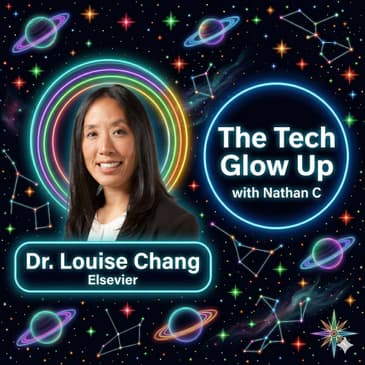
One pattern keeps showing up in the hundreds of conversations I have with CEOs and clinical innovation leaders: the companies that last are the ones that stay in service of the human relationship. Dr. Louise Chang, Global VP of Clinical Strategy at Elsevier and practicing internal medicine physician, is one of the clearest examples of that principle in action.
"What if AI could actually take the jargon and confusion out of healthcare — so patients and clinicians could finally talk like real people?"
Louise has spent 20+ years asking that exact question. She's building toward AI that bridges the gap between the clinician's workflow and the patient's journey, making care feel more human, not less.
She's moved through startups and scale-ups, nonprofit and for-profit, consumer to provider to payer. And she's watched wave after wave of hype roll through the industry. What she's learned: staying grounded matters more than staying ahead.
Episode Key Moment Highlights:
- [00:05:26] Healthcare AI today: why we're seeing a wide range of outcomes, from "working fast and failing fast" to genuine clinical value at the point of care.
- [00:06:37] ClinicalKey AI in action: how physicians are using it to access patient-specific insights instantly, enabling quick decisions and deeper learning at the same time.
- [00:08:22] The Glow Up for 2026: Louise's vision for AI that doesn't flash — it smooths, bridging the patient and clinician workflow so care actually feels more connected.
- [00:10:18] Closing the care loop: Louise and Nathan align on the big idea — patient AI research and clinician AI tools eventually speaking the same language.
- [00:13:39] Contact lenses, not glasses: Embedding AI so naturally into clinical workflows that it stops feeling like a tool and starts feeling like part of you.
Louise is the clinician who became the strategist — the translator between how medical minds work and how product teams build. Her personal mission is making sure someone is on the clinician's side, and that drives everything she does.
Like and subscribe to The Tech Glow Up, and watch the full episodes on YouTube.
Join the conversation on Substack for the deeper analysis behind every episode.
About Our Guest:
Louise Chang, MD, FACP is a physician executive and internal medicine physician with over 20 years of experience at the intersection of clinical care, digital health, and healthcare innovation. She currently serves as Global Vice President of Clinical Strategy & Partnerships at Elsevier, where she leads clinical strategy for a global portfolio of evidence-based clinical decision support and workflow solutions, including the development of responsible, AI-enabled tools used by clinicians.
Dr. Chang has held senior clinical and product leadership roles across startups, scale-ups, and established organizations, including Babylon Health, WebMD, and the American Cancer Society.
A "glow up" signifies a positive transformation, reflecting the journey of becoming a better, more successful version of oneself.
At The Tech Glow Up, we humanize the startup and innovation landscape by focusing on the essential aspects of the entrepreneurial journey. Groundbreaking ideas are often ahead of their time, making resilience and perseverance vital for founders and product leaders.
In our podcast, we engage with innovators to discuss their transformative ideas, the challenges they face, and how they create value for future success.
If you're a founder or product leader seeking your own glow up, or a seasoned entrepreneur with stories to share, we invite you to join our guest list via this link.
OMG, Dr. Louise Chang is such a digital health og. Am I even ready for this conversation? Dr. Louis Chang is global President of Clinical Strategy at Elsevier, where they're responsible for all things related to learning. Here's some things that you're gonna love about this episode with Dr. Louise Chang? Using AI to take the jargon and confusion out of healthcare, so we're communicating like real people, putting the users first. What if we could. Empower better care by giving clinicians real time access to a world of high quality information. Yep. They're doing that too. You're gonna love this metaphor that Louise uses, talking about how now so many AI solutions are like clunky glasses that you have to really strap into to get some value from. But soon we're headed to the contact lens era of AI integration into our workflows. What a great metaphor from a powerful thought leader and AI innovation in healthcare. Great to talk with you, Dr. Louise
Nathanokay. So 1, 2, 3. Hello and welcome to The Tech Glow Up. I'm Nathan C, live from VIVE and today I'm talking with Dr. Louise Chang, Global Vice President of Clinical Strategy at Elsevier.
Louise ChangThat's
Nathanright, Dr. Louise, it's so great to meet you. Yeah, thanks for joining me today.
Louise ChangYeah, thank you for having me.
NathanOh my goodness. global Vice President of Clinical Strategy. Sounds like a very important job. Can you introduce yourself
Louise ChangSure.
NathanAnd the work that you do at Elsevier?
Louise ChangSure. So I'm Louise Chang. I am. the title that you just mentioned. And I'm also an internal medicine physician and assistant professor of medicine.
NathanOkay.
Louise ChangYeah. So I've been in the digital health space for a while. I've been with Elsevier for about five years. So at Elsevier, what I like to say is we bring together mm-hmm. The best. Highest quality medical knowledge. Mm-hmm. Foundational medical knowledge with the latest research. Mm-hmm. And other clinical content that's evidence-based, peer reviewed mm-hmm. To clinicians and practice.
NathanYeah.
Louise ChangTo support care delivery. And their ongoing training and learning in addition to patient engagement.
NathanOh, interesting. So a couple different data streams and different ways that you're supporting clinicians.
Louise ChangYep.
Nathanis there like a specific area with within the clinical strategy area? What is the, parts of that equation that you're most excited about or most active in?
Louise ChangSo I've been involved in clinical AI for a number of years. And so just the last couple, the last few years have just been amazing. So, I would say when I think about the work we've been doing at Elsevier in clinical solutions Specifically, AI is very top of mind. And so, we are starting our, enhancements of our AI solutions, and really elevating what we've developed and improving our, you know, clinical utility and value to our users.
NathanI'm very curious as a doctor and educator, and now like a, a global head of strategy. what's your origin story in bringing all these things together? how does a doctor become, a, a global strategist?
Louise ChangOh, it's a long, windy story,
NathanUhhuh.
Louise Changbut my gateway was in consumer health.
NathanOkay.
Louise ChangSo, and I've always, throughout my 20 plus year digital health career have maintained, My clinical groundedness.
NathanYeah.
Louise Changprimarily in academic medicine. So I've gone from startups to scale up to large organizations like Elsevier and the consumer provider payer spaces.
NathanYeah.
Louise ChangSo I've been all over nonprofit for profit, and so it's been really great and I, I feel like I've really seen over this whole time.
Speaker 3Mm-hmm.
Louise Changa lot of things come and go. and what really, I think. Shines Is when you have that sort of groundness and, balance
Nathanmm-hmm.
Louise ChangTo, to what you're doing. Yeah. Because there's always gonna be, you know, some frenzy hype and things like that. Always gonna
Nathanbe some
Louise ChangRight. So there's, there are these waves, right. And I think we're going through another one of these waves. Mm-hmm. that's quite significant. but, but yeah, it's interesting. So I've seen a lot come and go.
NathanYeah.
Louise Changthe past several years.
Nathansome of the, the leaders that I've talked to who have been in, you know, AI and, and different kinds of, you know, large models for decades mm-hmm. Right. Have been sort of waving ahead and like, Hey, you know, like we've been studying this stuff for a while. It's just that these, like chat GPT era models are very fast and the, you know, the change is quite growth.
Speaker 3Yeah.
NathanWhen I hear people talking about AI innovation, especially here at Vive. One of the questions that I'm always trying to follow up with is around trying to understand what does it mean? Like, where are we at in using AI in ways that is responsible, that it's effective, that it's making an impact on the bottom line, right? That's driving revenue, for the people that are using it. How would you assess the state of healthcare AI today? Like how effective And responsible? is it, a practice? I
Louise ChangI, would say it's still, probably a work in progress. Mm-hmm. But what we, what we're seeing is a range
NathanYeah.
Louise ChangOf how people, right.
NathanMm-hmm.
Louise Changworking fast, failing fast, you know, and iterating. Mm-hmm. and so in a environment like that. You can expect a range of, this type of thing. Yeah. And you know, when I was going back to the point I made before, you know, staying grounded and at the same time balanced Yeah. With staying agile. Mm-hmm. Right. And being able to kind of be responsive, especially now,'cause this technology is really at another level with the pace of change and the dynamics of everything. Mm-hmm. That, You need to have that balance. And I think it, it's still up in the air, but there is that range.
NathanYeah. Do you see a space where it's having the biggest impact or, where it's making the, biggest difference for the, kinds of clinicians that you're supported?
Louise ChangWhen we, so, in Elsevier mm-hmm. with our AI product, clinical key ai, we are focused on clinical decision support. Targeting right now physicians. and, with what we're seeing with the use of it is that because we're, we've created this, tool mm-hmm. That clinicians can use. Very easily.
NathanYeah.
Louise ChangAnd be able to access, insights and information easily for very specific patient. Mm-hmm. details. It's, just, it's improving their, ability to get the information quickly. Mm-hmm. Being able to support. point of care. Quick decision making. And then at the same time enable them the opportunity to dig deeper. Yeah. To, learn. Because at the end of the day, people go into medicine and clinicians, they have this inherent curiosity To learn. And so we enable that because we allow access to the primary literature. You can read up on it, you
Nathancan,
Louise Changsave it. Whatever you want to do.
Nathanthat idea of like healthcare providers are often like creative problem solvers. That's right. And that like the, health records and the documentation isn't just like a set of instructions, but it's the research data that they're using to go out and solve That's right. Complicated problems and bring puzzles together. Right, And I think when you think about, often when we talk about workflows, it's like A to B2C, but Right. Like when you're enabling creative thought and drawing, solving, problem solving, like the kinds of interactions, the kind of modalities
Louise ChangOh yeah, the designs. It's not linear.
Nathanso different.
Louise ChangA typical person mm-hmm. Adult will have multiple issues going on. Yeah. Maybe different medications, some allergies, some family history, all these different factors.
NathanMm-hmm.
Louise ChangMake you very complicated than
Nathanit's true.
Louise ChangYeah. So
Nathanamazing. Dr. Louise, as we think about the, state of AI and what's going on in the industry, What would you say is the Glow Up or like the notable transformation that healthcare should be working on making in 2026?
Louise ChangOkay, so when I think Glow Up.
NathanMm-hmm.
Louise ChangInitially I think the reaction would be something flashy.
NathanYeah.
Louise ChangBut I actually think
Nathanthis is my favorite,
Louise Changactually I feel like it's gonna be something more about the experience of care feeling. Better. Ah, like it's smoother, right? Oh, things are smoother and better. And I think we're gonna start seeing ai we already see ai in the clinical workflow and the clinician's workflow. We're starting to see we hear about the public lay people, patients using it, right? Yeah. And that overlap between the clinician workflow and the patient workflow journey, I think is going to get greater. What I'm seeing happening is that that will help bridge and bridge that communication gap that we often, you know, talk about with, clinician patient communication and and build relationship, build that relationship. Yeah. So I think it's actually gonna make the relationship stronger and help make it feel like it's more of a human connection. Then it'll make care. Feel more human is how I'm feeling better.
NathanIf we're gonna use ai, let's use it to make care more human. Like, heck yeah. I've had several conversations about closing the care loop. Closing the prescription loop, right? There's these gaps where the traditional observability of the care cycle like goes somewhere out of a cycle and we can't watch it anymore. And so having all of these conversations and you're talking about the patient's gonna be consulting, ai, the doctor's gonna be consulting ai, this is like a really interesting like collision where you have the patient's AI research and data set about what their res
Louise Changbut you know what I know that's how it feels.
NathanSo the thing that I got excited about was. Could, if we're talking about integrations, if we're talking about closing care loops, could AI eventually help to bring those two different separate searches?
Louise ChangThat's exactly what I'm trying to say.
NathanOh, Don,
Louise ChangOkay. That's exactly what I'm thinking. Yeah, because I think right now, this is like a in Oh no, it's such a good idea. Then. News. News and what, people are, the hype about it is that it's very separate, right? Yeah. It's oh no, people are gonna get their care from
NathanYeah.
Louise Changyou know, everybody's got
NathanAmazon.
Louise ChangThey're just gonna do that and, they'll be more of a wall, and I don't think that's gonna be the case. I think that's something that's a trend I'm following. Is the common is there gonna. Start to I'm looking for a common language and understanding of how this technology's working. Yeah. And then it help improve the communication. So like, as a patient mm-hmm. You can go see your doctor and be like, I looked up all this stuff.
NathanMm-hmm.
Louise ChangAnd tell me more. Right. You know, some patients might look up things in Google and they come to you or they watch something on tv. Right. And then they come talk to you. Sources everywhere. Yeah. But this is different. Right. This is different. And at the same time, these tools can help translate
Nathanmm-hmm.
Louise ChangVery medical jargon because now patients have access to their patient records.
NathanRight.
Louise ChangAnd it's like a translator for all of that. Oh yeah. So whereas before they might have all these reports and whatever, now they can understand it. Yeah. and help their family members. So if you're someone who's taking care of an older relative or different, you know, child or whatever, you have the opportunity now to, to have a more informed conversation with your provider. Mm-hmm. If that makes sense.
Nathanthis topic of like, the accessibility of the aftercare information is incredible, right? like the average reading level in the US is like under an eighth grade. It's like between fifth and eighth grade level. And so if you're like handing people a bunch of technical or medical jargon, you know, no matter what, like it can be very clear and purposeful information, but like, if you're communicating in the wrong way, like what do people do with it? That's right. How do they engage? That's
Louise Changengage. That's right. And of course, clinicians are always trying.
NathanAnd they're so good.
Louise ChangYes. And meeting patients where they are. but this is just, you're not there all the time.
NathanYeah.
Louise ChangRight. And so this is like an. a tool
Nathanmm-hmm.
Louise ChangOr support that's available.
NathanI love that. Like in the like spatial computing world that I'm from, there's a lot of talk about like, your agent and my agent could like talk and share the important information and like the idea that like some of that, you know, that maybe patients could be searching in their doctor's preferred databases or like that, some of the silos around information. Yes,
Louise ChangI agree.
Nathanso inspired by this
Louise Changidea. I
NathanSo bringing it in a little bit closer to the work that you do at Elsevier, what's the Glow Up or the notable what are the audacious six month goals? That you're working on specifically in your Work?
Louise Changwe are continuing to enhance the flagship product, clinical key ai, we're, expanding our strategy on how we're gonna deploy AI across our portfolio. So we have a pretty wide portfolio. With, solutions that target nurses and pharmacists and, patients as well. And so how we might be able to do that. one of the things that I think is really important, and for us to consider is when we think about these types of tools, how do we make it more. natural For Use. unless like something that is an add-on system that you have to log into or have to, you know, one more thing, you're one more login, even if it's helpful. Right.
NathanEven if you use that key.
Louise ChangRight. Even if it's helpful, like how can we make it less that way? the way I think about, it's kind of like when you wear contact lenses instead of glasses, right? Mm-hmm. Glasses are functional. They can look great. They're helpful, but we're in context in the Pacific
NathanNorthwest,
Louise Changbut contact lenses is a whole nother story. So how can we think about our solutions to be more like that, right? Where it doesn't, it just feels like it's part of you.
NathanSo one of my complaints about the state of AI right now is kind of like glasses. There's so many requirements for it to work, right? Like it's like clunky and there's a lot of prep and if you're good at doing the prep and you know what you're supposed to do, then like you can be really successful with it. But like for those of us who are trying to get through a busy day the, barriers and the extra baggage I want that like seamless contact just
Louise Changright. You can go run around,
Nathanyeah.
Louise ChangEverything,
Nathanbut I have to be like, you know, tied to a specific device, a specific chat window. Ooh, what a cool, Dr. Louise, you're like, it's late in the, day, late in the event. You're blowing up my brain. I love It. I'm trying my hardest not to ask more questions about like, how do you, well, actually I wanna ask this question.
Louise Changask, you can ask.
NathanSo like,
Speaker 3there's
NathanWe've already talking about silos, different goals, different drivers for why people are doing things. I love to talk about, you know, with people who have experience doing hard things and succeeding. So like, what's your strategy for helping technologists, for brands, for product people, for to think like, and like care about? And like put clinicians first, like what's your strategy for getting technology to care about your people?
Louise ChangI love that you're asking this question.
NathanYeah. Well, we're all trying
Louise ChangYou know, I think when I think about, what clinicians have to face on a day to day,
Nathanright? It,
Louise Changit's almost like no one's on their side. And so, I feel a responsibility
Nathanmm-hmm.
Louise Changand so that's always been one of my personal missions and why I, why I do what I do, because it's not easy. Mm-hmm. It really isn't easy. Yeah. so a lot of it is communicating, I think of it. A, I think about it like translating also.
NathanMm-hmm.
Louise ChangSo when you go through clinical training, the way you're trained, the way to, to think and be critical thinking and, and problem solving and all of that, those are great skills to have.
Speaker 3Mm-hmm.
Louise ChangAnd at the same time, we're always gonna be critical. Right. And wondering, right. Mm-hmm. And, and I think part of, you know, going into clinical practice is you're always also thinking about the worst case scenario. Mm-hmm. In addition to all the options. Yeah. You're always thinking about different things. Yeah. All the time in your head. And, and I think when you're working with different types of teams like cross-functionally tech, product communications, marketing, like always it, it's a little bit different, the, training, the how they approach problems is different. And so being able to help translate how we think For them to understand how we think helps us build better products.
NathanYeah.
Louise ChangIn addition to, of course, why we're doing it reminding people why it matters.
NathanYes.
Louise ChangBecause I think you also get caught up in the day to day,
NathanRight. We said we were gonna do it.
Louise ChangThat's right.
NathanYeah.
Louise ChangAnd so at the end of the day, this could be you, this could be your mom, this could be, you know, your child, right. Yeah. Because in the end it's all about the patience. and I think helping to remind people and bring it. Home.
NathanYeah.
Louise ChangI think is has been critical
Nathanare there tools that you like to get super tactical? Are there tools that you use to help tell that story and to translate, yeah, I'm so curious. Like, do you have like a go-to, do you bring personas? Do you bring in special guests? Like
Louise ChangYeah, yeah, yeah. No. How do you I it, so I worked in lots of different places. Yeah. And I've done it different ways. Without, I guess naming names or whatever, but like in some, in, in some places, difference. Difference. So if I think about the American Cancer Society Yeah. very mission oriented. Mm-hmm. We are very in touch with our constituents and our patients and, and, and that, so that was always kind of there. and being able to lean into that. And then in other places, also on more on the consumer side is like really being involved with patients. I think when you start talking about, areas that are a little bit, I guess more Corporate oftentimes is trying to expose people.
NathanYeah.
Louise ChangYeah. And using metaphors to help people understand the Situation. so a lot of, the commun, it's really to me about Communication. And showing people, I mean, sometimes you actually have to have a visual to show people. Absolutely. So whether it's bringing people in for, doing interviews. Yep. So, like for instance, at Elsevier, we're, we're really committed to user research and making sure that we are, Talking to our customers. Yeah. Talking to our user end users.
NathanGot
Louise ChangTo make sure that what we're building is meaningful. Right. Right. It's useful, it's relevant, and that, you know, and people like it. Yeah. So that's really important.
NathanDr. Louise, You were talking about how like a clinician is always thinking about the worst case scenario of like, how is the user gonna engage, you know, if this technology, what's the worst thing that could happen? And I would argue that this is a place where product marketers and clinical like clinicians share a really similar perspective on. Technology and how it impacts the people that it's using. So yes, that's like, I, I never, I've never thought that product marketers and clinicians were the same in such a specific way.
Louise Changyou for helping to probably, of the same than different,
Nathanright? Hey we start as people, right?
Louise ChangYes.
NathanSpeaking of people, You don't go on a long or Jewish complicated journey alone, typically. And I found that one of the most interesting questions to ask, especially in the health tech space, is about the mentors and guides who have helped you on your journey. So as a health tech innovator. Can you talk about how mentors or you know, advisors have played a part in how you got to where you are today?
Louise ChangYeah, I think mentors are critical.
NathanYeah.
Louise ChangI would not be here without the mentorship I've had, and it's not necessarily like one person, right? Mm-hmm. It's sort of like many different people along the way.'cause I've had a very interesting, like, atypical Yeah. Career for a clinician. and I really wouldn't have done it. Now when I look back, I would say the first group of the first experience, mentorship type of experience mm-hmm. I would, characterize would be during my residency
NathanYeah.
Louise ChangAt St. Vincent's in Manhattan. Yeah. Which I'm not, it's famous. I mean, it's closed now, but I was there during. An amazing time. I learned so much. But the patients, the other residents, the staff.
NathanMm-hmm.
Louise ChangIt was during a period of a lot of social change.
NathanYeah.
Louise ChangAnd we saw patients from all walks of life with all sorts of,
Nathanyeah.
Louise ChangBut at the end of the day, my takeaway was care of. Those moments of care, it's all around relationship.
Nathan CMm-hmm.
Louise ChangAnd so, so I would say that's like when I look back Yeah. Was like the biggest thing. And that's been the kind of common thread for me. And then throughout my career, what I do is, wherever I am, I, I think I'm pretty good at sort of finding people and it's not like one mentor at a given place. I work. Right. I find people. That I connect with and invaluable, I mean, too many people to, to mention.
NathanAbsolutely.
Louise Changwhen we think about, those type of situations and, and mentors, it's really also important to give back,
Nathanright?
Louise ChangSo I've also tried to make an effort to give back
NathanThe last thing I wanna do is give you an opportunity to share a hot take, maybe a spicy soundbite about health, technology, healthcare, AI culture, anything, but also no pressure if you're not feeling spicy.
Louise ChangI really think that the frenzy about AI is starting, like when I compare this five
Nathanmm-hmm.
Louise ChangI feel like in every session I've been in. Trust keeps coming up, which I think is super important. So I think with the settling down, people are now focusing on who, what can we trust? Yeah. What are the, trust markers, right? How can we establish that something is reliable, safe, credible, in addition to being useful.
NathanYeah.
Louise ChangAnd that topic keeps coming in every session I'm in, you know, whether it's a panel or a talk or whatever. And so I think. I'm glad for that. Yeah. So that's not really a hot take, but I know there's still a lot of like, you know, excitement. Yeah. And then there still should be. Yeah.
NathanYeah,
Louise Changyeah. but I, I think that's a good thing.
NathanIt's literally the first conversation I walked into as I, like, picked up my badge and saw somebody I knew that was the first conversation. Yeah. and I would argue That. Like how do we trust it? This is right, like this idea that healthcare is built off of trust. It's built on trust in institutions. It's trust on care models. That's right. It's trust on these doctor relationships and if we're going to bring it AI into every single part of this space.
Louise ChangYeah.
NathanHow do we know? What we're giving people, how do we know that what we're giving them is true and accurate? And also helping like that, that need for like, some sort of certification. Understanding. Understanding standings. Yeah. Standards not standings. Amazing. yeah, I it's been everywhere. I think it's a, it's a fantastic summary of what's going on at VIVE Dr. Louise, it has been such a pleasure to chat with you today on the Glow Up.
Louise ChangThanks.
NathanThank you for joining me. And the work that
Louise Changappreciate being here.
Okay. One last thing. Okay. Clap it out. Ready? 1, 2, 3. Thank you.
Nathan Ccan I ask you a favor? If you really enjoyed this episode, could you share it on your Instagram stories or maybe post the link with what you enjoyed on LinkedIn? The sort of sharing and engaging really helps small podcasters like me reach the audience that I know really cares about these kinds of conversations. If you've made it this far in the podcast, I really appreciate you. Thanks for listening. Please make sure to like and subscribe so that you never miss an episode of the Tech Glow Up. And hey, can I ask you a favor? If you really enjoyed this episode, could you share it on your Instagram stories or maybe post the link with what you enjoyed on LinkedIn? The sort of sharing and engaging really helps small podcasters like me reach the audience that I know really cares about these kinds of conversations.