
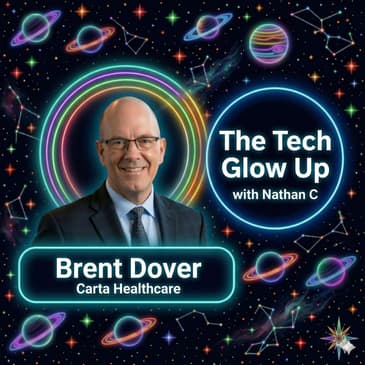

Most CEOs at VIVE were talking about what AI could do. Brent Dover, CEO of Carta Healthcare, came back to the Tech Glow Up with receipts. Since we last spoke in October, Carta grew revenue 50% in a single quarter, retained every customer, and is now in conversations with major health systems about platforming their entire abstraction operations at scale.
The work is specific and the impact is real. Hospitals spend $15 billion a year paying nurses to log into patient records, scan through dozens of entries, and manually abstract the data that goes into clinical registries.
That data drives 30 years of quality benchmarking across the country. It is how hospitals know whether their knee replacements, their stents, and their stroke care are actually measuring up. Carta's AI tools cut that process from two hours to 40 minutes per form, surface findings a human abstractor might have missed, and do it while keeping the nurse's hands on the keyboard the entire time.
Episode Key Moment Highlights:
- [00:02:38] The $15 billion problem: why hospitals spend a fortune on clinical data abstraction and what is actually at stake in the quality data it produces.
- [00:05:52] What effective AI looks like in practice: from two hours to 40 minutes per form, better answers, and less cognitive burden on the people doing the work.
- [00:08:51] The cake mix design principle: why Carta deliberately slows the AI down just enough to keep humans cognitively engaged and in the driver's seat.
- [00:11:57] The update: 50% revenue growth since October, zero customer churn, and a path to doubling or tripling the business again within a year.
- [00:15:05] The Glow Up for 2026: closing the loop so abstracted data feeds back into hospital data science initiatives within an hour of the case, while the patient is still in the building.
Brent calls the standard approach to business backwards thinking. Most companies prioritize the company first and treat customers and employees as means to that end. Carta is building the other way around, and the growth numbers are making the case.
Watch the full conversation on YouTube and like and subscribe so you never miss an episode of The Tech Glow Up.
📩 GO DEEPER
Join the Tech Glow Up newsletter on Substack → https://substack.com/@mxnathanc
A "glow up" signifies a positive transformation, reflecting the journey of becoming a better, more successful version of oneself.
At The Tech Glow Up, we humanize the startup and innovation landscape by focusing on the essential aspects of the entrepreneurial journey. Groundbreaking ideas are often ahead of their time, making resilience and perseverance vital for founders and product leaders.
In our podcast, we engage with innovators to discuss their transformative ideas, the challenges they face, and how they create value for future success.
If you're a founder or product leader seeking your own glow up, or a seasoned entrepreneur with stories to share, we invite you to join our guest list via this link.
On The Tech Glow Up from the Vive event, I talked with a lot of CEOs and almost every one of them had AI on their mind and AI as part of their business plan. But Brent Dover at Carta Healthcare was the only one to mention that AI driven innovation and a team that's aligned from top to bottom is delivering some impressive results, like growing revenue 50% in just a quarter. He's focused on tackling the$15 billion tax that hospitals and clinics have just collecting, abstracting,and coding the data that they collect on a daily basis. Brent brags about some backwards thinking that he sees actually drives both innovation and real value. It's about prioritizing the customers first, aligning your whole team around this vision and then empowering them to deliver at the level you know that they can. It is such a treat to catch up with Brent Dover, CEO at Carta Healthcare on this tech Glow Up follow up interview from The VIVE event.
Brent DoverLet's do it.
NathanAwesome. To get started, we'll just clap it in and then we'll get going. So 1, 2, 3. Hello and welcome to the Tech Glow Up from VIVE. I'm Nathan C, and today I've got the repeat pleasure of welcoming Brent Dover of Carta Healthcare. Brent, it's so good to see you again.
Brent DoverSo good to see you. Thanks for having me.
Nathanthanks for making some time in, of course, your VIVE schedule, to join me on the tech Glow Up again. How has your show been?
Brent DoverBeen great as always.
NathanAmazing.
Brent DoverAlways good to get here. To be connected to the industry, to meet with colleagues from former companies, investors, customers, partners.
Nathanlet's just jump in.
Brent DoverOkay.
NathanSo, if folks haven't listened to our first episode, could you quickly introduce, what you're doing at Carta Healthcare?
Brent DoverSure. at Carta Healthcare, we're bringing some AI tools to the complicated topic of clinical data abstraction.
NathanMm-hmm.
Brent DoverAnd the way they fill out those forms is they pay nurses to log into a patient's medical record, scan through dozens and dozens and dozens of entries, and abstract the relevant answers to the questions on a form.
NathanYep.
Brent DoverOur industry spends about$15 billion a year doing it. We take a lot of nurses off the front line. It's incredibly valuable and important work, but we think, and we've begun proving very substantially that if you have a careful workflow for the nurses, we can build some AI tools that really assist them in their job and they can actually answer the questions better, faster, and with a lot less effort. Mm-hmm. And, we think it's freeing up a lot of space in the healthcare industry.
Nathanthe idea of like giving any amount of time back to nurses always like commendable and, if hospitals are wasting 15, or spending$15 billion, where, it could be going other places. Like I, I could think of a few,
Brent Doverbut I for sure,
NathanIn earlier conversations this week, the connection of abstraction and like clarifying this chart data and how that actually like helps hospitals get paid for all the services that they do and kind of close some of the loop, it, it's driving both better care and better business models, better efficiency of the business is, am I hearing that right?
Brent DoverIt also really drives the quality mm-hmm. Of patient care that gets delivered. And so kind of behind all of this work is if we did a thousand knee replacements, or if we did a thousand stents, or if we did a thousand, stroke mm-hmm. Events for a patient, what did we learn from all of those? Can we collect a bunch of standardized data? Compare that data across the country. And use that to find out which drugs work better, what procedures work better, what was the quality of the outcomes from each of these hospitals? What kind of variation in the data happened that maybe led to better outcomes versus worse outcomes? Mm-hmm. And our industry's been doing this for 30 plus years, and we have learned so much. Yeah. It's just this incredible infrastructure that we as a nation have built that we benefit from each of us when we go and we have that. Kind of scary moment. We're in the hospital, we know we're probably getting the best possible care from that hospital because they are comparing themselves against the, the country and the norms. And so the way we learn is by, we abstract this data about the cases we do and we find out exactly where we are. And we do that on behalf. Our company is helping lots of hospitals do this faster, cheaper, more efficiently than before.
NathanWhenever somebody's talking about AI's gonna make faster workflows, I'm trying to kind of gut check like, what does that actually mean in practice? And like, where I'm really interested is like, is the AI effective? Is it like a responsible use of the data and like, does it make, an impact on the bottom line today? Right? Yeah. Like AI for tomorrow's workflow is cool. But like, we got stuff to, so how, how do you see, Right, like where healthcare is or like how is, how is chart, what does effective AI look like? in your space? Yeah. In, yeah.
Brent DoverWell, give you an example.
NathanYeah.
Brent DoverIf before it took a particular chart or, form to be filled out mm-hmm. Maybe it took a really good nurse two hours to do it.
NathanMm-hmm.
Brent DoverMaybe it's taking'em 40 minutes.
NathanYeah.
Brent DoverMaybe they're finding more information in the complex chart that they would've not found on their own, and so they're giving even better answers to these questions. Mm-hmm. So we can reduce time, we can kind of alleviate the cognitive burden that a lot of abstracters'cause parts of the job. Mm-hmm. Become very monotonous. But other parts are super interesting for them'cause they're solving like, what's really going on with this patient? So that's kind of fun for them.
NathanYeah.
Brent DoverAnd our tools just guide them, doesn't tell them what the right answer is. We guide them to what we think the right answer is, but they have to keep their hands on the keyboard, use their brains at all times. They're in a critical part of it. So we kind of talked about this as an AI assist.
NathanMm-hmm.
Brent DoverAnd the abstracters who have the opportunity to use our tools. They just love it. It feels like they feel good when the AI helps them find something they might've missed. They also feel good when the AI validates their instincts and whatnot. Mm-hmm. And just having this all happen faster. They can either do more of the work or they can free their time up and be more patient facing, whichever is, you know, their work environment that they're focused on.
NathanYeah. It's really cool. And assuming that like every coder has the same goals in that regard, right?
Brent DoverSure.
NathanSome could be get back to the patient.
Brent DoverAnd that all sets up their, the, the other thing I think that's really great about it is that abstracters seem to like, feel empowered by this AI as opposed to threatened by it. Mm-hmm. And that's a conscious design decision that we have made. Like human beings are always gonna have to apply their training and expertise to this topic.
NathanYeah.
Brent DoverAnd we're not arrogant enough to think that like the AI's just gonna do this for you forever there, it's not going to happen. And I really am proud of that, like, that's important for us.
NathanThis is a hilarious metaphor, so I hope you'll forgive me.
Brent Doveryeah.
NathanIt's gonna be good. But, there's this like. A classical case study about how important it is to be involved in the work when you're making things simple and automated, right? There's a bit of ownership, pride we've already kind of touched on, on the work, and so, right. Early cake mixes needed you to add an egg and some oil, and like that amount of work was like the amount that made you feel like you were a part of making a cake. And you've talked about this intentional design. To help people feel like they are doing work that's meaningful and that they're getting the right kind of assist. Can you talk about like what sort of design principles or like how, what elements or experiences make an AI feel like it's supportive rather than, you know, a distraction or diverted, I guess,
Brent Doverby the way.
NathanYeah,
Brent Doveryour analogy's really good.
NathanOkay.
Brent DoverI like it.
NathanYeah.
Brent DoverSo in the early days, imagine you're an abstractor and on two screens. On your computer. The left screen is the form you need to fill out. the right screen is the electronic medical record with all the content.
NathanMm-hmm.
Brent DoverSo what's happening? You're searching and then you're entering data over here.
NathanYeah,
Brent Doverso we built a tool day one, where we thought we would replicate that form and automagically just put all of our findings in it and have the abstractor. Check through it. No, no, we did not do that in the end. Yeah. In the end, what we built is we built a replication of the form with all of the justification.
NathanMm-hmm.
Brent DoverThe actual reference to the documents that we found inside the medical record, and then we prompt what we think the answer is.
NathanMm-hmm.
Brent DoverSo they can validate it on this screen. But then enter it over here on there. So they have to interact with both of'em. And a lot of'em say, can I just click a button and have it automatically populate that? Mm-hmm. And in some way, exactly. Our research has shown, just slowing it down just enough to keep the human in the loop, bring them the information, really cognitively ask them to think about, do we have the right answer over here? And then make the physical movement to enter the answer over. Yeah. So that's. That's a concept that we've gone with and it's really worked. And then the other thing, there are great tools over here that fill out these forms. We're not gonna replace all those tools, so it's also a little bit pragmatic on our part. Mm-hmm. Like, let's just assist the entire process.
NathanOne of the worries about AI in the healthcare space is that we're moving too fast and we're gonna miss something. And. Yeah, in like product strategy, typically, like removing barriers to work is like one of the things that you're always trying to do, make it faster to get things done. And I love that, like this user experience principle of like, we're not gonna paste it for you, like you're involved. that slowing down of. Of that interaction, like starts to really develop the outcome that you are hoping for rather than like the process Exactly. Or like the workflow that you might be imagining in a, you know, specific moment. So I, I love that example. Thank you.
Brent Doverwelcome.
NathanOh my goodness. I have to keep track of time. So, Brent, you mentioned. This$15 billion sort of tax that hospitals are paying and when we talked in October, a little over a hundred days ago, it's probably closer to FIF 115. You talked about the Glow Up that you were working on was to really work on that$15 billion problem. Yeah. Can you give us an update? Yeah. how's the state of abstraction? How far have we come? What have you learned in the last few months?
Brent DoverWe, as a relatively
NathanYeah.
Brent DoverWe've probably grown our business 50% since then. We have not lost any customers. Almost all of our customers continue to ask us to do more and more work with them or on their behalf. And we're very honored and humbled by that. I think it means that we're doing something really right. we still have a huge system-wide problem, but what I'm also beginning to see are hospitals today handle their registries department by department, by department, and some hospitals are starting to think about how do we systematize a platform that can provide standards for this type of work against our entire system. And we're really honored to be in a bunch of discussions with healthcare systems who are thinking about that at scale. And so as always, it's gonna be slow, fast, fast, and then super fast in the, in technology adoption in Yeah. Healthcare. And I think we're moving from slow to the fast phase, and I'm, I'm thrilled about that. Awesome. I think we're gonna double or triple our company again in the next, year, easily. We've, we seem to have found a really sweet spot of this AI technology, but dedicated to the abstraction, profession. Mm-hmm. And our whole goal is how do we make abstracters better? How do we allow them to embrace safely AI technology, but keep them in the driver's seat?
NathanYeah.
Brent DoverAnd. Doing that I think has been a really important part of our strategy.
NathanSo the like user first product strategist in me is like literally got goosebumps because you're saying we really focused on being incredibly useful in this specific way. And because we know that customer so well, we know those clinicians, we know those users so well. We're gonna triple our. Like we had 50% growth in three months. Like that's pretty, that's, that's a great cause of effect. It just
Brent Doverstarts working.
NathanYeah,
it
Brent Doverjust starts working
Nathanlet's turn it looking forward a little bit this year. As healthcare has changed and grown a lot even since we last talked in October for 2026, where do you think the industry needs to Glow Up? What should the focus be?
Brent DoverOh boy. So many interesting things.
NathanMm-hmm.
Brent DoverI think the topic of, conscientious use of ai. I think the big thing that we need to do is what are we really doing as an industry when we fill out all these forms?
NathanMm-hmm.
Brent DoverWe're taking unstructured data from a medical record, we're putting it into a structured format, and we're filling out the form. Those forms are there for all kinds of really good reasons, financial quality, operational improvement, et cetera. But all we did was fill out the form. What we should be doing is filling out the form, very important, but then taking that data and cycling it back into hospital driven data science related initiatives.
NathanMm-hmm.
Brent DoverNot a month later after the case, or a quarter later, but we're doing it an hour after the case. The forms filled out. It's driven in through data science initiatives and organizations can catch possible gaps in their quality while the patient's still in the hospital. Like that's where we've gotta get to.
Nathanyou can't have real time like insights and Yeah. Oh my gosh.
Brent DoverWe gotta get there.
NathanI,
Brent Doverand by the way, I
Nathanhope
it's
Nathanrelated
Brent DoverAbstracters who do this work, that's what they care about. That's why they're doing it. Mm-hmm. They care about those patients. They want to help doctors and nurses with the quality that gets delivered from their organization. Yeah. And can we get into this kind of rhythm? It's probably gonna take longer than 2026, but we're gonna get there. Yeah, we're gonna get there.
NathanI mean, if it's where the industry should be focused, that's a lovely focus.
Brent DoverThere you go.
NathanThe right, like one of the highest, drivers of employee satisfaction is the feeling that you have contributed to something. And so if the time you are spending doing a task or if being able to do that task more quickly. It has more meaning, more ability to contribute either to your patient or your team's ability to face a moment like that's gonna drive more than just like, happy charging. But like that connection to the work is, is also gonna be there. So I'm stoked. Brent.
Brent DoverYeah. Don't you think that's the most important contributor to workplace satisfaction, feeling like you're contributing?
NathanAbsolutely. And
Brent Doverlike, I think it's number one.
NathanStudies show that like, yeah, way far. You know, more than compensation, more than the benefits. This is like part of why I'm so passionate about like go test, go learn, go ship more, because. You learn and your team feels great about doing it and they start to take on more. Exactly. They start to contribute more. You move from like responsibility to accountability and like that's the kind of Right, engaged, excited, active.
Brent DoverThat's exactly right.
NathanThat's the hard work we're working on, right?
Brent Dovergotta build a culture around that, and then that culture inside our company needs to extend to our customers as well. They need to feel like they are contributing as well to helping us build the right tools. We're not smart enough to know all the answers. Yeah. We have to be listening to what the abstraction community's telling us in our tools and it, it's incredible the ideas that come from our users and Yeah. How they kind of feed back to us because they want it to make a difference.
NathanSo the next time we talk, I'm gonna ask you about this.
Brent DoverOkay.
NathanAnd how that culture of like learning and growth and. Impact, how you're bringing that into the culture, beyond your own borders. Okay.
Brent DoverWait.
NathanSo, Brent, on the topic of we don't know it all ourselves. I've been asking about how mentors have played a part in people's journey and innovation. You've had, such a, a number of great, experiences. How have you have done so much with your career? How have mentors and coaches and advisors helped you get to where you are today?
Brent DoverWell. I can think of two specific people whose names I won't use. Just they're super important people to me.
Nathanyeah,
Brent Doverone of them saw something in me years and years before I would've ever had a chance to see it in myself.
NathanMm-hmm.
Brent DoverAnd just threw me into the deep end of the business world to tackle things. Mm-hmm. And I will be forever grateful to that person. and I think now that's my job to find up and coming talent. And throw them into the deep end of the pool. Like, yeah, like that's the payback. You know, you, you pay it forward, right?
NathanMm.
Brent DoverAs a matter of fact, he kind of skewed standard thinking and, we had some very successful companies and products as a result of that. And I think the big thing that I learned from him was. Freeing people to be creative in a way that bucks the norm. Mm-hmm. And is non-standard. And can you work in an environment where it's safe to just think about things that are super pragmatic but maybe not popular and standard ways of doing business. Yeah. And that's what we seek out all the time.
Nathan'cause it makes a difference for you.
Brent DoverIt makes a huge difference.
NathanYeah.
Brent DoverCustomers seek authenticity.
NathanMm-hmm.
Brent Doverthat authenticity is what makes them know that we're gonna, I think, support them and care about them first. And if we care about our customers and our team first, all the good things come to our company. And unfortunately, most companies think about their company first and how to get what they need out of their customers and employees. It's just backwards thinking. But unfortunately it's standard thinking.
NathanBrent, I'm leaving it there. That's perfect. Oh my goodness. All right. Thank you so much joining me. Thank much joining me again on the tech Glow Up. thank you. Such a treat. last thing, we're just gonna clap it back out.
Brent DoverOh, I can't wait.
Nathan1, 2, 3. Amazing. Thank you.
Nathan Ccan I ask you a favor? If you really enjoyed this episode, could you share it on your Instagram stories or maybe post the link with what you enjoyed on LinkedIn? The sort of sharing and engaging really helps small podcasters like me reach the audience that I know really cares about these kinds of conversations. If you've made it this far in the podcast, I really appreciate you. Thanks for listening. Please make sure to like and subscribe so that you never miss an episode of the Tech Glow Up. And hey, can I ask you a favor? If you really enjoyed this episode, could you share it on your Instagram stories or maybe post the link with what you enjoyed on LinkedIn? The sort of sharing and engaging really helps small podcasters like me reach the audience that I know really cares about these kinds of conversations.