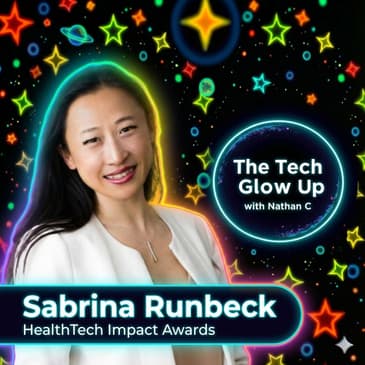
Sabrina Runbeck spent a decade in cardiothoracic surgery. She operated on hearts. Now she operates on healthtech companies—fixing what's broken before founders even see it themselves.
As co-founder of PulsePoint Path and the Health Tech Impact Awards, plus Chief Strategy Officer at Health Board Advisors, Sabrina teaches founders something critical: your pitch deck means nothing if you can't clearly explain who you help and what problem you solve in under two minutes.
Many founders get this backwards. They pitch everywhere—conferences, investor calls, demo days. Lots of top-of-funnel activity, lots of conversations. Then nothing happens because they never learned how to follow through. They're building companies like side projects.
Episode Highlights:
- Healthtech founders waste precious time telling 10-minute background stories instead of getting straight to traction, core problem solved, and what makes them different from every other startup at the conference.
- Health Tech Impact Awards runs like a founder bootcamp—free application, two-minute video pitch, public voting, then final six compete in a game show format that teaches you to speak investor language.
- Women make up 70-80% of the clinical healthcare workforce but less than 15% on the venture side and barely 20-30% in executive leadership—Sabrina's TED Talk breaks down the 3% problem.
- Sabrina assesses founders across five levels: body communication, psychological profile, natural skillset, behavior patterns, and spiritual purpose—if your deepest values don't align with company mission, you'll burn out.
- Clinician advisors with 10+ years experience can join Health Board Advisors to vet startups, guide product development, and help bridge early-stage companies to venture partners who understand clinical workflow reality.
Applications for Health Tech Impact Awards close March 1st. Six categories: diagnostic, digital health, medical device, biotech, mental health, women's health. Winners get featured on The Tech Glow Up.
Watch the full episode to hear why Sabrina thinks we need more clinicians making investment decisions early, not waiting for big hospital systems and VCs to catch up.
Get Seen by the Right Investors, Not Just Any Investors
Third-party validation is the trust shortcut most founders overlook. Apply now for the HealthTech Impact Awards—six categories, one chance to be seen by capital-ready backers.
Nominations close March 1, 2026
HealthTechImpactAward.com
A "glow up" signifies a positive transformation, reflecting the journey of becoming a better, more successful version of oneself.
At The Tech Glow Up, we humanize the startup and innovation landscape by focusing on the essential aspects of the entrepreneurial journey. Groundbreaking ideas are often ahead of their time, making resilience and perseverance vital for founders and product leaders.
In our podcast, we engage with innovators to discuss their transformative ideas, the challenges they face, and how they create value for future success.
If you're a founder or product leader seeking your own glow up, or a seasoned entrepreneur with stories to share, we invite you to join our guest list via this link.
Hey, it's Nathan today I am talking with Sabrina Runbeck. She's one of my health technology podcasting peers, and i'm super excited to share this special episode, uh, introducing you to the Health Tech Impact Awards. These awards are a fantastic way for new technologies to accelerate their authority. Attract the right attention and open the next chapter of growth in their lives. This competition and process is part about teaching founders how to align their business and their vision with how they show up best as founders, as well as give them a succinct, successful pitch that they can bring to a pitch competition game show. Very exciting. You'll hear lots of details check out healthtechimpactawards.com to learn, more about the awards and to submit your application, to submit your startup to be a part of the competition. A few of the lucky winners will actually. Get to come talk with me here. On the tech Glow Up as a perk for their successful competition. All right, the Tech Glow Up Special edition with Sabrina Runbeck. Of the Health Tech Impact Awards and The health Board Advisors. Let's get started
Sabrina Runbeck:When we see anything, that can be impactful, you have to have three fundamentals. You have to be sellable, sustainable, and you have to be scalable. And that means you have to have the right people doing the right things, and then creating your go-to market, the operation matching what the people's capability and skill. Otherwise, we don't have the money to do it. We don't have the resource to do it. We don't have the people to do it. So I believe the biggest takeaway is stop doing things backwards.
Nathan C:Alright, let's get into it. Today I have the pleasure to talk with Sabrina Runbeck, co-founder of PulsePoint Path, the Health Tech Impact Awards, Chief Strategy Officer, at the Health Board Advisors, Sabrina, it's great to talk with you. I can't wait to dive in more to how you are supporting founders and other people with big ideas succeed faster and build businesses with actual value. Thanks for joining me on The Tech Glow Up today.
Sabrina Runbeck:Yes, I think all of us have amazing stories and build something meaningful, but it's hard to express that to connect the value to what they created. that's why you've been doing well I launched my podcast show five years ago. It's getting the right people to show up confidently being truly the niche leader that they are. So then whatever product services that they're creating or organization that they're leading no longer feels like a burden and they have to push, but it's already embody that, absorbing the right people along with them to champion their work
Nathan C:Can you talk about how the Health Tech Impact Awards help Founders understand their core value and tell stories that make a difference for their business.
Sabrina Runbeck:Yeah, for the past few years we've been seeing a lot of applicants both from me being a venture partner and on the judging panel. we're often seeing people using everything very transient. I pitched here, I did this, I went to conferences. It becomes chaotic. You have a lot of conversation and most don't know how to follow through to the next phase, they do all these top of the funnel, capturing the initial interest, but then what happens to the rest of the work, right? You're building a company, not a side project. That's why when we start launching the Impact Award, it is not just about a war that we are giving to people, but actually through the different steps of the process, teaching people how to show up. Of course number one you submit it's free application's a way that we give back and something that between The tech Glow Up The Provider's Edge Podcast and others. We wanted to support you guys. We wanted to sharing the best of the technology that can help us age better, reduce disease progression, diagnose faster, develop med tech, women's health, mental health, all these things, It's very exciting right now. So we want to help with selection process and you become that category leader. So step one, just simple application. Upload your pitch deck and a short, less than 200 words, a script of who are you and what are you truly asking for, right? And then step two, once you've advanced to step two, now we start thinking we wanted to see you, As a leader of your company or maybe one of your co-founder or partner, you have to get out there a lot. for us to encourage you to be get behind camera, we're asking you to film a less than two minute video, and also tell us more in detail what is the impact you already created and what's the impact you can create in the future. Eventually the goal is that is your elevator pitch. If you go to conferences, meetings, a lot of time people don't have all day to listen to you. The saddest thing is when I have a founder on a call with me and they go to a 10 minute story background. You're wasting your precious online real estate have not even get to the core of what you're solving. What have you done for traction? All those amazing things if you're just all over the place with your story. So this is really helping you guys, and also force you if you never done this before, to get out there to truly shine. Step three after you pass step two, we start building a voting system. That is a way that you can share with your email list, your social media. Not only get people to vote for you, but also a great re-engagement tool. we are giving you a reason to connect with other people. Perhaps you got lost touch from the conferences or the investors that you build relationship, but they're waiting for your next milestone, right? You can continue to build those relationship, warm up to that to show, hey, see what I did, how we're progressing, right? And then we bring you together to refine your pitch. when you are the final six on stage, as a fun game show in front of the investors, system leaders, that you are prepared. And so it's a step-by-step process to help you shine speak the right language with the right people. So you can actually share the value, you truly can create the biggest impact that we know you are trying to achieve.
Nathan C:I love that the, awards process is a founder bootcamp for figuring out who you are, what you're doing. You know how to speak in a compelling way to the audience that's gonna make a difference for you at this stage. And then like giving you the tools, confidence, and clarity to, go on and use this pitch and focus to meet and make the best use of your time in front of investors, at events and otherwise. Sabrina, I know that your career didn't always. exist in this innovation advisory, strategic space. Can you talk about your journey as an entrepreneur and how you got to this space? Why do you care so much about helping health tech companies and founders clarify and communicate their, value?
Sabrina Runbeck:I spent a decade practicing medicine as a cardiothoracic physician associate, and now it felt like a career pivot, We're just changing my operating room. I used to be operating only on patients. And now we're operating on health tech companies. Fixing what can be the predictor for scalability and sustainability without collapsing on execution. And usually we do it before the founder even see it themself. When I made the pivot, it is because was someone who always challenge the norm. Oh, this is how we always do it. If it's not easy or better, faster, does that matter? How we always do it? And a lot of people are in that stuck uncomfort bubble, right? But we say as you get outside the comfort zone, that's gross. Zone. And when we're in growth zone you learn to how to then go into the acceleration zone. So I was one of those people who start to lead, continue education summits, start talking about resilience, talking about peak performance. My background was in neuroscience before cardiac surgery. I always wanted to grow, continue to add on, and then. That journey, I start to become a professional speaker myself. And I did a TED Talk last year specifically. The 3% problem why women led a company in healthcare is so hard. We know that are 70, 80% of the workforce in clinical medicine, but in venture side is less than 15%. in executive leadership barely 20, 30%. When I was burning out, running larger programs, we had transplant, bypass, valve surgery, aneurysm, things piling up on top of each other. And when you can function, other people start putting even more work on you to say, if you ask for help, and don't know how to defend yourself in that position, and people will feel like if you are already doing it, why would we hire more people So I start thinking, how do we create a more well-rounded solution where people are not constantly burning out in healthcare we can use. Remote monitoring. technology, integration. Especially we take so much calls at night. Can we have the solution where people are routed to the nurses, to the other healthcare professionals, to triage? We can capture things earlier that's a ding on the program. we needed to be more proactive in syncing solutions. I start owning my stage because I care about people like Nathan and people like my peers, other clinicians, operators, investors having these discussion, what does it mean for us to be here to support each other? Who need to say things that other people deserve to hear it, even maybe themself didn't know they need to speak out loud about it. I think we all have to be okay to say, even though we all wanted to see the good deal flow, if It doesn't fit how we proceed. We are gonna get overwhelmed. the flip side to the startup is you might want the next client, the next pilot, the next investor conversation. But if you just take whatever is presented and you're not really screening and evaluating you're gonna get overwhelmed. That's why you have no follow up system, right?
Nathan C:Yeah,
Sabrina Runbeck:the funnel heavy.
Nathan C:amazing. it's such a gift, Sasbrina, to look at complex business problems see all the facets and translate them for new founders. How do you help Founders build insights and really learn from their customers so, that they can craft those right messages.
Sabrina Runbeck:Yeah. I think first we do self-reflection because people get what I call the first day effect. They get super excited of any opportunity coming or the people and they feel like, oh, Sabrina, I can plug into something like CVS go for the laboratories. I can also go after the private practice. But I'm a realist, a strategist. I can look at your possibility and give you a order of to tackle first, because otherwise you don't have the money, the energy. And they're the people to even execute. So we always say, let's start with you. Who are you as an individual? There are five level of assessment that we use to see how your body communicate, how your psychological profile is actually supporting you into the stage brain where sabotaging you. How is your natural skillset? Are you a true. Break out the box thinker. You're the true innovator, or you really is the promoter. You are the one who help champion getting right people in, or you're truly a doer, right? If you gimme a plan, I know exactly how to execute, or you are a planner. So then that has 17 profiles, but. That is not even enough. That's psychological profile, behavior profile, and physical profile. We also care about your spiritual profile. What's your deepest purpose? Is your deepest purpose and meaning for being here on Earth aligned with. The company's value. The company's try a mission. How are they running in parallel? all your partners, whether they're just an advisor, their board member, they're co-founder, how are they all connected and overlapping? If you're too off shift, guess what? Those people are transient, you needed to think a step ahead to how to replace that person when things happen. And that ultimately is about creating a resilient ecosystem and team, which means from my partners who teaches and work with our startup, they're looking at three major things. much space can you create for yourself and your company? much health And lightness That's the inner motivation. A lot of people are always thinking about these external motivation to keep people re talent retention, right? Oh, maybe just a little extra equity, extra pay. those make sense, but need to be personalized. The most important is the drive that human need. most inner lightness that just simply bring out the joy in them individually, And if we don't know how to connect all three together for all the leaders and the entire company, then you have no space to grow. sustainability means if you have everything the same, can you withstand the economic ups and downs,
Nathan C:Sabrina, I love this. On the tech Glow Up, we often talk, having a great idea is just the first part of a founder's journey understanding yourself, how you thrive, what drives you, and having that awareness for your team and clients. Is hard work that makes a difference. I love that you keep this on how you show up and deliver value for investors, from the beginning of your day to the end you're aligned with yourself, your values and your company. if you're giving 110%. you want it to be worth it for everybody involved.
Sabrina Runbeck:How do you find those people? Once we understand ourself, of course it's easier to identify others and that's when we can dive a little deeper. I do a sales, matrix for every company to evaluate their ICP. level one people, don't know they have a problem. So why educate a market? people just really need to be educated. They don't understand us. That means you're talking to the wrong people to start with, right? And level two is that people know what their. Bothering them, but it's not enough of a point. And then level three people are curious and they're like, oh, okay, there's a better way, there's a better solution. That's cool. Let me see what's possible out there. And then level four people is oh, I'm comparing, okay, I'm start feeling a little bit of pain, right? I can see this is not what I want. Five level adds urgency and trust. That means you are in conversation You have engagement activities. You did workshop, met at events. You have something that people. Have continue to grow that touch point and you also create urgency for people, right? that urgency is also when we say your type of people you're engaged with and your solution need a match your solution has to present as something that's a must have. have to have now not solving annoying problem, right?
Nathan C:Thank you Sabrina Some ways you help founders pick through the potential of their own products and, how you can guide that to. Actual stories that resonate and get things done, how you integrate into systems that grow. we've been talking a lot about the Health Tech Impact Awards. Can you quickly tell how can people participate? What are the timelines? Where should they go? how can people learn more and get involved?
Sabrina Runbeck:you have just over a month to nominate yourself. Step one deadline is due on March 1st at midnight Pacific time, and you can go to healthtechimpactaward.com we have six categories. you can pick multiple categories. for example, one of them is a device that are paying minimum pain, smaller way to do a pap smear, right? And then because it's a medical, considered medical device and as well as a diagnostic, so you can pick both category and because women's health is one of the thing listed, you can pick a women's health too, right? there's diagnostic, digital health, medical device, biotech. Mental health and women's health. And those are really the big six major categories that a lot of our venture partners are looking for we're excited to be in this space, and especially for some of the earlier stage founders. will accept applicants as long as you have a minimum viable product. And best if you start having early users because we want to see how are you actually creating impact.
Nathan C:How are you actually creating impact is always a question you should be asking. No matter the stage you have. In innovation, especially with today's trends. the, name of the show is The Tech Glow Up, and I use Glow Up a transformation or rebirth to talk about short term audacious goals. What's the big goal driving everything you do in the next six months?
Sabrina Runbeck:For us, it's all about promoting more clinicians to become advisor, executive and investors these early stage startup, because we don't wanna wait for larger hospital system, bigger VCs to make that decision. We can actually help to bridge. them the trust, give them the champion. It's a lot more powerful to have a group of clinicians that have look at the solution vetted and they're across the country, right across the globe than just one or two medical experts on your board. Because we all know every single practice also function a little bit differently. So if you are that well adapted into. The workflow, then of course, it's much easier for you to get that next level of funding once we bridge you to that early stage and connect you with our venture partners my mission, just like my Ted Talk, is all about how do we bring in the right people in the earlier part of your product development? Getting you having the right conversation and not just spread your net too wide and get overwhelmed. And also through that process, getting more women to start leading, to start having more conversation that's not something that we. Learn in school. We don't even learn building. I think I had a one hour class when I was finishing my training on just simply coding your charts a different level of how much you consider billable because we're not focused on the business side of medicine and versus the chiropractic. The dentist now actually. Do have a bit more training because most of them are running almost like a private practice. Insurance doesn't pay as much versus the medical community. We start shifting. A lot more of us start wanting to get their, business degrees, getting into what entrepreneurship really means because we're shifting to that payment plan where it is patient driven. They're willing to pay out of pocket for some of these wellness and early detection options because waiting for all that to get approved, were waiting for a long time. So we definitely see this a shift in healthcare of more patient driven. Product base and services and out of pocket, right? These are telemedicine and urgent solutions we're excited for clinicians to play a part in that. we are all about uniting these experts. especially if you have more than 10 years of expertise. We would love to bring you in our health board advisor ecosystem to shine. If you don't have the. System to vet them across the board, then you really don't know if they are sellable, scalable, or sustainable. Let us do the work. House Board advisor truly is the organization we build. That's the only triple match system. We matching the startups after we vet them with the right experts and investors to help them Get over the hump, keep going. Don't run out of runway early. We needed that collaborative effort instead of the typical venture fund they're driven by, I raised my phone. invest in startup and then I'm moving on to the next race. We like to be those ecosystem. We like to say, we're your navigator. We like to stay with you, and it's not just giving you the money and good luck, We help you grow, get to the next phase, and continue to work together.
Nathan C:Oh my goodness. What fantastic value, right? Regardless if you are an early founder, a doctor or a nurse or a practitioner who has years of experience and has seen how others have gotten involved with digital health. A big trend at Health in October was there are more doctors and nurses as part of health tech innovation, but there needs to be more. You don't just have to have the original idea to be an advisor, to be an investor, to help other practitioner founders see a vision forward. And there's, many ways that your expertise can further both your own goals and the careers of other innovators. So many cool options, Sabrina. Are you going to be at VIVE Am I gonna see you there. Awesome.
Sabrina Runbeck:gonna.
Nathan C:How can people learn more and follow up? What's your call to action for today?
Sabrina Runbeck:I'm very active on LinkedIn I publish weekly newsletters and share about my podcast. go to Link, find me Sabrina Runbeck like running backwards, except with the E. I'm happy to chat with. See how our ecosystem support you. Whether you are a expert that we should spotlight you and match you in within our system or a startup in growth or fundraising phase. Let's see, where is the best match? We're all about. that big umbrella, we think ourself like the pet scanner, right? And then you have to have a head to toe scan for your company so you actually know what you are missing. And if you don't do that, you constantly hiring one fractional here and there. And most of them are great experts with great experience, but they don't have the time or resources to connect and talk to each other. So you're still gonna have. from the plans that you have. And so we're all about integration, co true collaboration, and your left hand needed to where your right hand is to actually make a high five. they're grabbing different things. You, can't make a sound. so we love to be in that arena and for anybody else who just wanted to see if this is a good fit, go to. Healthboardadvisor.com/application. Tell us a bit more about yourself and then we'll arrange a conversation if it's not a good fit, we'll let you know. it's all about quality not quantity. every month we pick four startups that we believe we can drive. Meaningful impact. Forward. And at the rest of the time, we have a large network of experts. We can really put you into the right direction.
Nathan C:Amazing Sabrina Runbeck Providing value to every kind of user in the health tech ecosystem. From founders to investors, to clinician advisors I am excited to support the Health Tech Impact Awards everyone should get their applications. In by March. Thank you so much for joining me on this special episode of Tech Glow Up can't wait to see you again in person at ViVE in la. Thank you so much. If you've made it this far in the podcast, I really appreciate you. Thanks for listening. Please make sure to like and subscribe so that you never miss an episode of the Tech Glow Up. If you've made it this far in the podcast, I really appreciate you. Thanks for listening. Please make sure to like and subscribe so that you never miss an episode of the Tech Glow Up. And hey, can I ask you a favor? If you really enjoyed this episode, could you share it on your Instagram stories or maybe post the link with what you enjoyed on LinkedIn? The sort of sharing and engaging really helps small podcasters like me reach the audience that I know really cares about these kinds of conversations. If you've made it this far in the podcast, I really appreciate you. Thanks for listening. Please make sure to like and subscribe so that you never miss an episode of the Tech Glow Up. And hey, can I ask you a favor? If you really enjoyed this episode, could you share it on your Instagram stories or maybe post the link with what you enjoyed on LinkedIn? The sort of sharing and engaging really helps small podcasters like me reach the audience that I know really cares about these kinds of conversations. And hey, can I ask you a favor? If you really enjoyed this episode, could you share it on your Instagram stories or maybe post the link with what you enjoyed on LinkedIn? The sort of sharing and engaging really helps small podcasters like me reach the audience that I know really cares about these kinds of conversations. If you've made it this far in the podcast, I really appreciate you. Thanks for listening. Please make sure to like and subscribe so that you never miss an episode of the Tech Glow Up. And hey, can I ask you a favor? If you really enjoyed this episode, could you share it on your Instagram stories or maybe post the link with what you enjoyed on LinkedIn? The sort of sharing and engaging really helps small podcasters like me reach the audience that I know really cares about these kinds of conversations.