
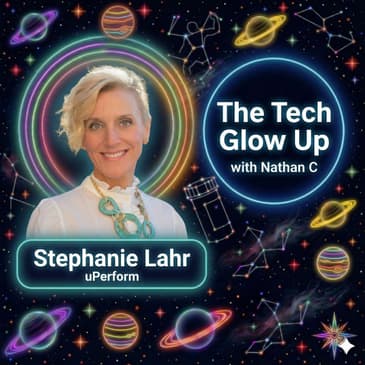

Most technology implementations in healthcare fail in the same place: the moment after go-live, when clinicians are supposed to just know how to use the system. Dr. Stephanie Lahr, Chief Medical Officer at uPerform, spent years watching that happen from the inside — as a physician, as a CIO, as a CMIO — before deciding to fix it.
uPerform is a just-in-time learning platform built for health systems. When a nurse forgets how to document a medication, when a physician can't remember how to write a specific order, when a revenue cycle team member needs to get a bill out the door — uPerform surfaces the answer directly inside the workflow, without breaking it. No separate training system.
No waiting for a trainer. Just the information you need, in the moment you need it, embedded in whatever EHR or ERP the organization already uses. And the next chapter: that same on-demand intelligence expanding beyond EHR how-to into the broader landscape of information clinicians need at their fingertips in real time.
Stephanie's Glow Up for healthcare in 2026 isn't another technology announcement. It's a shift in focus: from building more systems to helping people actually use the ones they have. We don't have an innovation challenge. We have an overwhelm challenge. Every tech investment should be driving back toward joy, humanity, and presence in the care room — not away from it.
Key Moments:
- [00:02:14] What just-in-time learning actually means and who uPerform is built for
- [00:06:09] From physician to CIO to vendor: how the doctor-informaticist path happened one decision at a time
- [00:09:13] The 2026 Glow Up: we don't have an innovation problem, we have an overwhelm problem
- [00:12:01] uPerform's next chapter: on-demand learning expanding beyond EHR training
- [00:18:20] Responsible AI today: workflow tools are ready, predictive AI still needs cleaner data
Recorded live from the Vive 2026 event.
Catch the full conversation on YouTube → https://youtu.be/0gioHYjYJvQ
Join the Tech Glow Up newsletter on Substack → https://substack.com/@mxnathanc
About Stephanie Lahr
Stephanie Lahr, MD, CHCIO is on a mission to bring joy back to medicine and reduce friction by improving the caregiver’s technology experience. She is an experienced informaticist, change agent and leader in the healthcare industry who has led the clinical aspects, data conversion strategy and the incorporation of multiple Community Connect sites.
Dr. Lahr served as the CMIO, and later CIO, of Monument Health where she was first introduced to uPerform as a client. Her passion, expertise and experience is an asset to uPerform as we work together to improve the clinician experience through enhanced health IT education.
A "glow up" signifies a positive transformation, reflecting the journey of becoming a better, more successful version of oneself.
At The Tech Glow Up, we humanize the startup and innovation landscape by focusing on the essential aspects of the entrepreneurial journey. Groundbreaking ideas are often ahead of their time, making resilience and perseverance vital for founders and product leaders.
In our podcast, we engage with innovators to discuss their transformative ideas, the challenges they face, and how they create value for future success.
If you're a founder or product leader seeking your own glow up, or a seasoned entrepreneur with stories to share, we invite you to join our guest list via this link.
It is not every day that a guest shows up to The Tech Glow Up sparkling more than I do. But I have to admit that Stephanie Lahr came to VIVE with more sequins, more sparkle and more energy than practically anyone in the whole event. It's always a pleasure to meet Doctor Informaticists like Dr. Stephanie, who see the value in the data and the impact that they can make through tech innovation. This is one of those peak founder stories where Stephanie saw a problem that was literally sucking the life out of her colleagues and chose to do something about it. She talks about putting the humanity back in healthcare and in medicine by helping people. Stay up to date and understand how to use the systems that they are around, right? We've put so much money into all of these systems and tools. Let's make sure that people can use them effectively and when they need it on time, on demand learning, powered by AI for almost every step of the healthcare journey. Such a fascinating and sparkling conversation with Dr. Stephanie Lahr CMO of uPerform.
Nathanon three. Okay. 1, 2, 3. Hello and welcome to the Tech Glow Up. I'm Nathan C, and today I'm talking with Stephanie Lahr, chief Medical Officer at uPerform. Stephanie, it's so good to talk with you finally. I
Stephanie Lahrknow. I feel like this has been a moment waiting to happen for so long.
NathanI've seen you
Stephanie Lahrsparkling. I wore my sequins just for you.
NathanI did not wear enough sequins.
Stephanie LahrI know my unicorn is not here. So we both, you know, it's
Nathana pretty good swag.
Stephanie LahrIt is.
NathanI've seen you sparkling across the the floor at so many HLTH events. And now finally at my first VIVE
Stephanie LahrOh,
Nathanthank you for joining. Congratulations on that. Thank you. Thanks for joining me on the Tech Glow Up. Can you introduce yourself and the work that you do as Chief Medical Officer with uPerform? Sure.
Stephanie LahrYeah, I would love to. So, I'm a internal medicine physician by background. Mm-hmm. informaticist by then training beyond that, went into the health tech space, as C-I-O-C-M-I-O. Mm-hmm. And then moved into the vendor space. and so kind of rounding all that out now, blending all those things together, I'm the Chief Medical Officer for uPerform, which is a just in time learning platform.
NathanAmazing. And when you talk about just in time learning, who's doing the learning?
Stephanie LahrYeah, so this is anybody in a health system. Mm-hmm. On any platform. Mostly what we see is E-H-R-E-R-P. Right. Where do people spend the most money? They spend the most money on those systems. We need to make sure people know how to use those systems.
Mm-hmm.
Stephanie LahrNot just in a moment of, oh, here's your onboarding training. Mm-hmm. But in any moment, in real time, shoot, I forgot how to do this. And that could be a physician trying to write an order. It could be a nurse trying to deliver a medication. It could be a revenue cycle person trying to get a bill out the door.
NathanYeah.
Stephanie LahrAll of those areas, we have a real time need for people to get something quick accessible and figure it out.
NathanThere's this stereotype of like millennials working in tech where like their older bosses need them to like print something as a PDF. Oh, yes. Or like, remind them where a file is. It seems like. And, and not to discredit the, the strength of the technology that we're like fixing that problem space. Like, hey, people need information. People are busy. But like, instead of pausing what we're doing, breaking down the workflows, walking out of the patient room. Exactly. Like, let's see if we can get that information. Find that file right here and now.
Stephanie LahrYeah, absolutely.'cause I mean, the re the cool thing is there's more information available to us and the systems can do more mm-hmm. Now than they've ever been able to do. The reality is no individual user is gonna have all of that in their head all the time. And there's some things you don't even do very often. Mm-hmm. So how do we in this moment, make sure with a couple of clicks and you know, almost like using a chat GPT search or whatever, get the information that you need to solve that problem in front of you at the moment. Mm-hmm. So that you can go back to whatever it is you're really trying to do, which in the clinical side is deliver care, but you know, any of those roles in their organization, health system, organization,
NathanI am like. Strangely interested in the details on this one. Okay.
Stephanie Lahrdo
Nathanit. Like what is, what is my, so where my brain went is there's lots of different health records and it sounds like uPerform.s all about meeting the user where their information is.
Stephanie LahrYeah.
Nathanso how do you insert that layer of learning? I have like five different MyCharts and I don't know how to use any of them. Like how do you insert that in, into where people are working and,
Stephanie Lahryeah. So. The tech, this platform itself Yeah. Is we deliver it to a training team.
NathanPerfect.
Stephanie LahrRight. So a health system organization will have a training team Yep. That supports getting enablement and adoption, you know, to where it needs to be. They will then embed that. Mm-hmm. Right. In the workflow, it doesn't matter what the EHR is or what the ERP is, or, or it could be something else. We have organizations that are saying, Hey, we're trying to teach people about ai.
NathanMm-hmm.
Stephanie LahrAnd we need them to understand how those tools work. Can we use your platform to build out some classes that we can deliver, you know, directly into workflow if we went Yes. Great. Let's do that. So it's, it's a technology platform delivered to a team that then is gonna build out. The back end of it so that the front end user, mm-hmm. Can wherever they are, just click on the button right on the screen and say, I don't know how to do this, and it comes to them.
NathanSo the Doctor Informaticist, entrepreneur Pipeline Uhhuh is one that I've heard a few times.
Stephanie LahrOkay.
NathanOn the tech Glow Up. But I'm really curious, like, what, when did you catch that bug? When did you decide, right? Like Doctor is a pretty big job in its own. When did you decide to add, this like tech innovation side to what.
Stephanie LahrYeah.
NathanWhat you do.
Stephanie LahrHonestly, I was, I went through training during the time when we were transitioning from paper to EHR.
NathanMm-hmm.
Stephanie Lahrwent through a couple of those transitions, ended up in a story for another day, a hurricane, and all kinds of things that were impacting patient care allow. I ended up having an EHR to be able to use and it sort of just. Made me realize there was something different available there. So when I went into private practice, I just basically went to, you know, the team and said, Hey, we're using these systems. I'm happy to help if you might need some help. And then they were like, oh, really? By
the
Nathanway,
Stephanie LahrAnd then after a little while I was like, maybe this is a job. Mm-hmm. Maybe you should pay me for some of this. Maybe I, and then maybe I should get some actual education. Mm-hmm. So then I got more education. It just. It was not really a, I didn't sit down with a strategy map and say, okay, by year 10 in my medical training or my medical career, I'm gonna also be doing the like. Mm-hmm. In fact, if I, if you asked my med school self today. Hey, maybe someday you'll be the CIO at a health system. I first probably would've said, I don't know what that is. Mm-hmm. and then if they just said, and maybe you won't, you'll end up leaving from that and going and working in the health tech sector and vendors and whatever. I would've really thought that was not possible. So it just happened. Right? It was, and then as I got more into it, I wanted to bring the joy back to medicine.
NathanMm-hmm.
Stephanie LahrI was seeing that this technology that while I saw value in, was also in lots of cases sucking the life out of our clinicians and we were adding friction. Mm-hmm. And I knew that we could get to a point where that didn't have to be that way anymore. But I thought clinicians involved in it from the beginning is how we're gonna know when we've arrived is how we're gonna move that needle forward.
NathanMm-hmm.
Stephanie LahrSo I just sort of little by little, made one decision at a time, and here we are.
NathanI love it. But like that physicians are uniquely qualified. To see and address certain kinds of pain points within this ecosystem has been something, I've been learning, like I've been hearing and learning a lot on, and, I so appreciate like that additional perspective. So, Stephanie, the, the name of the show is The Glow Up, and I'm, I'm sure this concept is not new to you.
Stephanie LahrYeah.
NathanA Glow Up is a notable transformation, a rebirth, a coming of age of sorts. And like I've been hearing for a while that like healthcare needs change. So I'm curious, what's the Glow Up you see that healthcare needs to make in 2026 To be more effective. More responsive? Yeah. less full of provider burnout.
Stephanie Lahryeah. I think where we are is. We have the innovation. Mm-hmm. We have the tech.
NathanYeah.
Stephanie LahrHow do we bring it to the people?
NathanMm-hmm.
Stephanie LahrThe, the Glow Up is in an era when we've got more tech than we probably can even assimilate right now. Mm-hmm. How do we make people feel happy and comfortable using it, and how do we really get to the point that we wanted to get to, which is they're back to being the experts they were meant to be. Mm-hmm. We don't have a technology challenge. We don't even have an innovation challenge. We have a bit of a, I'm overwhelmed by all of this that you're providing to me. Mm-hmm. Challenge.
NathanYeah.
Stephanie LahrAnd a lack of focus on the idea that healthcare is still about people. That's where our focus needs to be.
NathanI honestly like all of the inclusion of technology into the care room. Makes so much of that conversation. Like talking through a screen.
Stephanie LahrYeah.
NathanAnd like I cannot wait till there are that the technology just like blends in
Stephanie Lahr100%
Nathanto the room and that like we can, like doctors have this kind
Stephanie Lahrof keyboard, no screen,
NathanMaybe a pin, maybe you know a camera.
Stephanie LahrThose, but they'll be ambiently integrated into the room where it's. Not intrusive, right? Yes. Because that's what we've seen is technology that's become intrusive.
NathanMm-hmm.
Stephanie LahrAnd alters not for the better. Right.
Nathanfriction
Stephanie LahrCreates the friction.
NathanSo, as a doctor and as a technology leader, what's the Glow Up that you see in the next six months for uPerform.?
Stephanie LahrI think we're going to start to see. there's more, more information that people need at their fingertips
Nathanmm-hmm.
Stephanie LahrThan just how to use the EHR.
NathanMm-hmm.
Stephanie LahrAnd so we're gonna be digging in on what else is out there and what is that information that needs to be assimilated in real time.
NathanMm-hmm.
Stephanie LahrNot just on the how and the why, but even bigger picture than that.
NathanI'm so curious.
Stephanie LahrYeah. So Will at HLTH in the fall, we can have a follow up conversation.
Nathanyeah.
Stephanie Lahrgoals about, mm-hmm.
NathanHere we go.
Stephanie LahrYes. All right. Stephanie, doctors, like tech leaders are kind of a rare solo breed, and so. Often, like when they're out fixing the problems of the worlds, it can feel a bit little bit like you're on islands. But what I've heard and I've seen in the medical profession as well as in technology, that like mentors can make all the difference. In your career, in your journey, and, and I love this like additive, you know, everything I've done before, brings you to this moment. Can you talk about the roles that mentors and coaches have have played in, in your success in your journey as an entrepreneur? Yeah. So first I would say it's been an evolution in my career. It's been an evolution of mentors. I even had, and I have mentors from early in my career that now. The tables have shifted a little bit and I've mentored them in some ways yes. as their careers were changing. Right. So, and that is probably more gratifying than anything else because I was so appreciative of what they did in the mentoring of me that then to be able to have the table turn and give something back in a full circle way mm-hmm. Is super powerful. but. Probably the biggest thing I think is important in mentoring, and maybe it feels obvious, but I'm not sure it always does, is being open to the idea that you even need it and that it doesn't, it's not a constant see it. And so the person who was your best mentor today is not probably the person that you're gonna need a year from now. And yet, that doesn't mean that you've outgrown the need for a mentor. It just means you've outgrown where that person can take you and then it needs to go to the next. And so having that introspection mm-hmm. Of being able to say, where am I now? What do I need? And, and finding a mentor who will tell you the hard truth.
NathanYes.
Stephanie LahrOne of my very early mentors, I was in an organization, there were some challenging things going on. He was new to the organization. I thought I was doing really great work. Mm-hmm. And I was super passionate about it, and I was like, but I was probably being a little too pushy, a little too, because I was just so excited about where things were going. And he came to me and he was like, yeah, there's some feedback that says you need to dial it back and maybe if you don't that you won't be staying. And I was like, what? What? I've never failed at anything. Like this is that you're telling me I'm not doing that right? Like, that can't be right. He was like, okay, Calm down. You're not going anywhere. there's lots of good in what you're doing. Mm-hmm. We just need to focus your passion in a different way. Right. We need to, you need to think a little bit differently about how you're communicating. Like some things we're really great things I needed to learn, and that is an experience that throughout the whole rest of my career, I've reflected on that conversation and his willingness. To have that hard conversation.
NathanOh yeah.
Stephanie LahrI've been a leader of people too, and that's, those are the most challenging conversations to have. Yeah. And so, but it continues to live on today.
NathanYeah.
Stephanie LahrAnd, but I had to be open to what that feedback was, and then when he gave the feedback, I had to be willing to do the work of saying, how do I do it differently? How do I grow from here? Mm-hmm. And then go back for more feedback and say is, I think I've moved the mark some, are we on the right track?
NathanThe, the idea. That you want to be surrounded by people who will show you how you're showing up, even if it's not the best news that you want to hear, right? Yeah. Like that is the kind of good advice that founders and, you know, I ideally doctors as well, everybody, right? Like are open, and right, that that is the sign to get that kind of feedback. There is trust, there is investment. I love it.
Stephanie LahrYeah.
NathanOh, find a mentor who will give you that feedback that you need.
Stephanie LahrYes.
NathanStephanie, we're getting very close. Okay. to the end of our time, I'd love to give you the opportunity to share a hot take, maybe a spicy soundbite about healthcare, technology, culture, or otherwise. do you have a spicy opinion this week?
Stephanie LahrBut again, I, I kind of alluded maybe I even, gosh, maybe I, maybe I even,
Nathanyou might have just
Stephanie Lahrsaid it already, and now I've like, you know, shortchanged myself in my
Nathanmagic of editing
Stephanie Lahrof Oh, my moment.
NathanYeah.
Stephanie LahrI think at a conference like this where there's so much emphasis on the tech
NathanYep.
Stephanie LahrThe investment. Yep. The, what we're doing, the healthcare runs on people, healthcare runs on people.
NathanMm-hmm.
Stephanie LahrAnd every. Strategic investment that we make. Every technology we decide to use needs to be helping us drive back. Mm-hmm. To how to bring that joy back to medicine. How to bring the humanity back to medicine.
NathanJoy,
Stephanie LahrI know we we're gonna get there, we're gonna have joy.
NathanI think we've got
Stephanie LahrAnd it's, yes, we're seeing the lights of it, right? Yep. In moments like this, and even in, in, you know, in-house systems, we're, we're seeing some of these tech. Deliveries start to build trust. Mm-hmm. And this idea that, oh, we, we've been through some challenging times and we are gonna see our way through and we're gonna become better. And this transformation is possible. It's not gonna be in giant platforms, it's gonna be in small changes.
NathanMm-hmm.
Stephanie LahrAnd it's gonna be human centered.
NathanReal change in healthcare isn't gonna be giant systems. It's gonna be. Small bites and human centered, that's like worth saying over and over again. did I ask you about responsible, effective ai?
Stephanie LahrNo.
NathanOkay.
Stephanie LahrYeah.
NathanWhere, so if like the baseline for like the kind of AI that should be used in healthcare is that it is responsible, it is effective and it's driving revenue or savings for the people who are using it.
Stephanie LahrUnexplainable.
Nathanunexplainable
Stephanie Lahrexplainable is a good one.
NathanWhere are we at today? What is responsible, effective AI in healthcare today?
Stephanie LahrIt's a, it's a little bit, I think of a tricky question because in an organization, if you're talking about using AI on, you know, taking like from a data and analytics perspective mm-hmm. And trying to create prediction of outcomes and, you know, things like that. I don't think we're quite there yet. Mm-hmm. we have. Data problems. we have work to do on even how we capture, data to make it reliable so that then we can do these predictions
Nathanmm-hmm.
Stephanie LahrThere's work to be done there.
NathanClean your data.
Stephanie LahrAm back to ambient technologies. Right. But do you But before that, there are some other easier things. There's workflow optimizations. There are workflow tools that we can use that are AI driven. Mm-hmm. That I think are fully baked and, and ready for, for use. I think there are some things that can drive, you know, decision support. And so that stuff, I think is, is responsible. It's explainable, there's a human in the loop.
NathanMm-hmm.
Stephanie Lahrand I think we are still very much at the time when we need to see that human in the loop.
NathanYep.
Stephanie LahrI think we still have some work to do on some of the other kind of more predictive elements. And, and again, it's not because we don't have probably the, the technology to be able. To make the predictions. Mm-hmm. We don't have the data quality in order to be able to have those predictions be reliable quite yet.
NathanYeah.
Stephanie LahrSo we all have some cleanup to do in that space.
NathanAwesome. I'm so glad I asked Stephanie. How can people follow up and learn more, if they wanna follow your work and what you're up to? Yeah. Well maybe keep track of some of these six month Glow Up that
Stephanie Lahryou're working on. Yes, exactly. For I would love for that. LinkedIn.
NathanYep.
Stephanie LahrFind me Stephanie Lahr. uPerform. also on LinkedIn. Our website, regular old www perform.com
Nathanregular
Stephanie Lahrrole.
NathanYep. Stephanie shines at all the health tech conferences I've seen, so
Stephanie Lahrthank you. So good.
NathanOh my goodness. Uh, Stephanie Lahr, chief Medical Officer at uPerform making technology not only customer first, but also explainable and understandable. Wherever the people who are using it may be such a great time chatting with you today.
Stephanie LahrYes, you too.
NathanAmazing. There's one last thing to do.
Stephanie LahrOkay.
NathanDo you know what it is?
Stephanie LahrNo.
NathanWe're gonna clap it back out.
Stephanie LahrOh,
Nathanwell, of course.
Stephanie Lahr1,
Nathan2, 3. Thank you. Thank
Stephanie Lahryou.
NathanPerfect.
Nathan CCan I ask you a favor? If you really enjoyed this episode, could you share it on your Instagram stories or maybe post the link with what you enjoyed on LinkedIn? The sort of sharing and engaging really helps small podcasters like me reach the audience that I know really cares about these kinds of conversations. If you've made it this far in the podcast, I really appreciate you. Thanks for listening. Please make sure to like and subscribe so that you never miss an episode of the Tech Glow Up. And hey, can I ask you a favor? If you really enjoyed this episode, could you share it on your Instagram stories or maybe post the link with what you enjoyed on LinkedIn? The sort of sharing and engaging really helps small podcasters like me reach the audience that I know really cares about these kinds of conversations.