
We train our bodies. We track our steps, our sleep, our resting heart rate. But when it comes to mental wellness — the skills that help people regulate, process, and recover — most people never learn them until something breaks. The tools exist. Cognitive behavioral therapy has 50 years of evidence behind it. And those tools work just as well before a crisis as after. Almost nobody knows that.
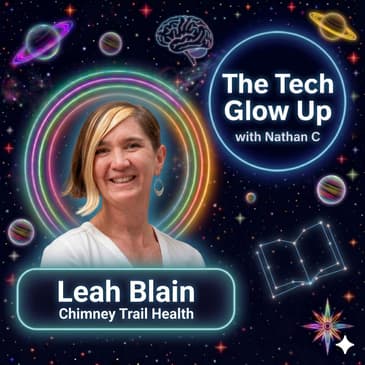
Leah Blain is a licensed clinical psychologist and Chief Clinical Officer at Chimney Trail Health. Her conviction is simple: get evidence-based mental wellness tools to people upstream — before a problem starts, not after it requires treatment. That means translating decades of validated CBT research into something accessible. Something that fits in a cargo pocket.
Chimney Trail's flagship offering is a workbook that looks like a fun magazine — small quizzes, thought records, digestible content, designed specifically to fit in a military uniform pocket. Sometimes meeting people where they are is the whole innovation.
What we cover in this episode:
- [00:00] Nathan and Leah introduce Chimney Trail Health and the primary prevention model
- [04:36] How Chimney Trail builds ROI through outcomes, not just access — B2B and B2G engagement strategy
- [05:59] The pocket workbook: why a physical, cargo-pocket-sized magazine beat a digital app for military users
- [15:57] Mission as the decision yardstick: how Chimney Trail evaluates what to add and what to leave out
- [24:38] Chimney Trail's recent glow up — a lethal means security curriculum and a large-scale Air Force pilot
Leah also talks about the incentive problem in healthcare, why prevention is invisible when it works, and what it would look like to give mental wellness the same cultural weight as physical fitness.
Her ask for the field: stop treating mental health as a marker of brokenness and start treating it as a performance edge everyone already has and can train.
Catch the full episode where you get your podcasts or watch on YouTube —https://youtu.be/vuNTy5lIR6I
.
Join the Tech Glow Up newsletter on Substack → https://substack.com/@mxnathanc
About Leah Blain
Dr. Leah Blain is a licensed clinical psychologist, a Beck Institute-certified cognitive behavioral psychotherapist, and Chief Clinical Officer for Chimney Trail Health. She spent the last decade building and running cutting edge behavioral health clinics; most recently at the University of Pennsylvania, where she launched a specialized cognitive behavioral therapy program for veterans and military family members.
A "glow up" signifies a positive transformation, reflecting the journey of becoming a better, more successful version of oneself.
At The Tech Glow Up, we humanize the startup and innovation landscape by focusing on the essential aspects of the entrepreneurial journey. Groundbreaking ideas are often ahead of their time, making resilience and perseverance vital for founders and product leaders.
In our podcast, we engage with innovators to discuss their transformative ideas, the challenges they face, and how they create value for future success.
If you're a founder or product leader seeking your own glow up, or a seasoned entrepreneur with stories to share, we invite you to join our guest list via this link.
The energy on this episode of The Tech Glow Up is off the charts. Join me as I talk with Leah Blaine of Chimney Trail Health. She's the Chief Clinical Officer there, and we hit it off immediately around what makes a difference in innovation. And guess what? It's about data and the users you're trying to reach. Sometimes the difference between life or something really scary can honestly be the right information at the right time. And in this case, Chimney Trail is making really important information incredibly accessible for people under a lot of stress. This episode really inspires me because at some point I discover that the innovation that we're talking about is accessible information and workbooks for warriors, for soldiers, and how in a person-first exploration of how to share mental health information and coping strategies, sometimes the right-sized workbook is more important than any kind of app or tech innovation. We learn some amazing stories of mentorship and motivation from Leah, and we hear about the glow up, that she's working on that includes some really impressive trials and programs with her target audiences. I hope you enjoy this episode of The Tech Glow Up as much as I did. Take a listen to Leah Blaine of Chimney Trail Health. Hello, and welcome to The Tech Glow Up. I'm Nathan C, and today I'm talking with Leah Blaine, Chief Clinical Officer at Chimney Trail. Leah, it's so great to meet you. I can't wait to learn more about your work on The Tech Glow Up.
Leah BlainThank you. It's great to be here.
Nathan CAmazing. Let's just jump right in. Can you introduce yourself and the innovative work that you do as a Chief Clinical Officer at Chimney Trail?
Leah BlainYeah. So thank you again for having me, Leah Blain I'm a licensed clinical psychologist and I serve as Chief Clinical Officer for Chimney Trail Health. A decidedly not clinical company, which is always fun. So we our focus at Chimney Trail is really taking all of the evidence. Based tools that the field of behavioral health has been able to test in the last five decades, and really work to translate those tools and get them to people as early as possible. So we are really in the primary prevention and wellness space. Our focus area is within cognitive behavioral tools. So most people know those as cognitive behavioral therapy. It turns out that they are just as effective when delivered before a problem hits. And so that's our goal is to get those upstream, get them to folks before they need them.
Nathan COoh, you just called out like two things that are somewhat challenging, right? One, getting folks to build new habits and behaviors that are good for them, and two, to do that proactively before there's a crisis. Can you talk about my assumption is that's probably where your differentiator is. Can you talk about how Chimney Trail approaches this space and how you get folks activated in their best interest? Ooh, I, the, you-- I love that you called out once you know that it's working, right? That's when it, those, those patterns and those new habits get really sticky. What do you-- how do you help your users and the patients who are, are using these tools and, and workbooks to understand and measure their own progress within that sort of framework?
Leah BlainYeah. So right now we're solely focused direct we're, we're not going direct to consumer. So we're solely focused business to business and business to government, which is a really, I think, interesting opportunity in terms of thinking about the organizations that are invested in essentially helping their high performing teams to stay high performing. Right? And so that I think allows us really to have some kind of cultural and infrastructure scaffolding around the program. Right. And the follow through. So in partnership with you know, the, the clients with whom we're working, we have an implementation plan that is paired with an evaluation strategy, right? So they wanna see ROI, they wanna know that their folks are indeed getting better. You know, are they using these tools with their family members? Are they sharing this learning? Is it helping them as a leader? Kind of whatever those key indicators are for them. Burnout, prevention mental resilience. Building, whatever that case may be. And so, you know, thereby the organization is seeing it, the individual gets to kind of provide that feedback at kind of, it's like an every other month pace. So we don't try to overwhelm people. But within the curriculum itself, we also have a process where we help folks break down what's their individual goal, right? Again, this is preventive. They did not come in with like, I'm having a big problem. So we want them to really focus in on, Hey, what's the number one thing that this could help you with? And then track that through.
Nathan CLeah, you described like a workbook that's more like a fun magazine.
Leah BlainYeah.
Nathan Clike print documents that people are working through?
Leah BlainYeah.
Nathan Coh my gosh.
Leah BlainJust so happens what good product company CCO would I be if I didn't have, so you get it's a fun just little, little book. It was designed to actually fit in cargo pockets for military uniforms.'cause that's one of our, one of our go-to, Constituents. So we have like little quizzes, right? we worked with the design team to help us really digest through the content and make sure that, folks can, engage with it pretty easily. But like any CBTR would recognize, like that's essentially like a thought record. so it really is just digested content, right? Like we're not claiming that we founded CBP, like we're really trying to help translate the tools that work, and get them to people.
Nathan CI'm so in love with that. I'm so glad I asked. Like on The Tech Glow Up, I'm, we're often talking about, the bits and boops, the code that's solutions. But in like the classes that I teach when I'm talking about how you market innovative technologies, right? This idea that sometimes the technology is like the understanding of where your user is. Sometimes the innovation is taking something that's a really good idea and just bringing it to the right place. Meeting those, meeting those professionals where they are.
Leah BlainYeah.
Nathan Cso incredibly fantastic. Leah, I am. Thank you for that deep dive into the product. I'm very curious, especially for a clinical person in a decidedly nonclinical, company. how'd you get here? what was your origin, when did, as a clinical, person, you decided that innovation and this entrepreneurship was also part of, your professional identity and, how'd you. Yeah, how'd you move to this moment? Yeah.
Leah BlainYeah, it's always a, it's always a journey. So I, I knew that I wanted to be a clinical psychologist, like even as a kiddo, I was one of those weird people that I knew at 12 that I was like, that wasn't what I was gonna do. and so I was very fortunate, to be. Able to pursue a clinical PhD, and I loved it. but my background, my passion was really in trauma recovery. So I had seen, I'm from, I'm first gen college student, low HCS background. And I, I had seen trauma impact a lot of people that I loved very, closely. And that was really my why. Like my why was if there's anything that we can do to help people recover faster, and prevent some of these, additional outcomes. let's do that. And so I went to grad school where Patty Reik developed cognitive processing therapy, one of the top two, top three, psychotherapies for PTSD. It was amazing. So I spent about a decade running clinical trials and doing clinical work in that space. And love, loved it. But I got pretty disillusioned with the'publish or perish' lifestyle and. Specifically with just that gap of, that ivory tower, how long it takes to get stuff out into the field. When I was seeing how much impact I was working with people that had PTSD for four decades and they were getting better in eight weeks and I was like, this is amazing. And most of them had never even been diagnosed with PTSD, let alone knew they could potentially recover from it. So that was my why for a long time. I had the opportunity to open to, Psychotherapy clinics. And so I guess that was my, first foray into startup. It was like, Hey, you've got this space and there's nothing in it. Can you make a whole thing happen? and I was like, yeah, it turns out I can. And I loved it. so I got to bring together these amazing teams of clinicians and then resource them with the tools and, the infrastructure that they needed to provide evidence-based care. And that was just the best thing. And I thought I was gonna do that forever because that. That was my why, that was my passion. but it was right around, when the pandemic hit and we were seeing so much. I was running a behavioral health clinic at Penn that was specifically for veterans and military family members and, We were just seeing this onslaught of need, just so much care seeking, which is great if people need care there, it, there are amazing options out there and everybody should go get them. And yet, my leadership team and I and our clinical team, we were looking, we were going like, why is this so needed? What, where, you know. For us to be able to scaffold, to get, as much care as was demanded to people in a quality way. the numbers just weren't there. And so that was right around the time that I met Matt Brown, who is the CEO and primary founder here at Chimney Trail Health. a member of my advisory board for the clinic had gone to the Naval Academy with him. the universe just working in the ways it does. And we had one of those coffee shop conversations that like, we both left and we're like, ah. This is gonna be a thing. I had really been wanting to move towards prevention and really be thinking about how can we get these tools to people earlier and then they were working on how to do that in a really engaging way, but wanted, somebody with the behavioral health experience to be able to make sure that there was that rigor and that things were being done with high fidelity. be able to measure those outcomes and things like that. say lovey life happens, how it happens.
Nathan CA, an overnight success born out of decades of hard work. it sounds, I love it.
Leah BlainIndeed.
Nathan CThe, there's a very interesting through line of I, identifying and expanding impact, this could be helpful. So how can we amplify it? Like we got more people, how do we amplify it? We know the metrics. How do we get six people? I a cool, perspective to have within that, within that journey. You really, I think there are already a few places where you've started to show how measure the impact. How you understand, how you're making sure to align your product and services to both the audiences that you're trying to reach these organizations. I'm curious though, out of, everything from the boots on the ground to having, these, clinical advisors. What's your favorite way in, in your role now to help your team and your organization really understand? how your work resonates with your customers and what that means for, the vision of, a product, especially one that is so not as technical or in a world where so many people are turning to AI solutions. I'm just, how do you stay anchored and, understand your role within, such a diverse, ecosystem?
Leah Blainthe, yeah, and I'm parsing'cause there were like three questions that I heard in there that I was like, oh yeah, that's true. That's great. So I think, so the first piece I'm, so I will just say this is just a little brag'cause my team is so amazing. we are really, We're so lucky because we come from such diverse backgrounds, but we all have our, the mission is the North Star, right? We wanna get these tools to people and so we're really clear on that and I think that helps us to make a lot of decisions as a company and really not even necessarily have to have some conversations because we don't have mission drift. and of course we have a very strategic go to market and. Stay aligned to that and all those things. But, so I think that really helps. but my team loves data maybe more than me, which is usually being like the PhD nerd, that's not the, so my, our whole team is okay, what are the, what are the results that we got? What's. The feedback, what's this? How are we moving towards studies and really understanding and they'll chip, chirp in and be, when partners, will be talking about, what we do and wanting to measure it as an intervention, for example. And, we'll say, Hey, absolutely those are the best measures we have and we should absolutely include those. We want validated measures, of course. And yet it turns out that. Prevention when done right, looks like nothing at all. It really looks like maintaining current state. you may not get, you want things to not get worse, right? So how do you measure the absence of a thing you actually can't? So that the fact that I'm lucky enough to work within a team. where everybody is aware of those challenges and we're all trying to solve for them together. And we have great partners who are trying to collaborate on that.'cause they're trying to solve the same things, right? These forward leaning Fortune 500 companies, these folks in the military space whose mission is readiness and supporting their folks, right? Like we're all aligned on that and nobody's cracked it yet.
Nathan CYeah, I was just at a tech summit here in Portland that was all about, the world is changing so fast, how do we have resilient, companies, resilient teams, resilient employees, and how do you keep, how do you keep track? And I think both, on a technology side and on a wellness side,
Leah BlainYeah.
Nathan Cgot the. You've got a good mix. I love it. And if you can brag about not having mission drift, you should absolutely brag
Leah BlainYeah.
Nathan Cnot
Leah BlainYeah. we are fortunate on that one. we hold, we protect it, but we're fortunate on it.
Nathan CI'm gonna, there's a follow up question that I'm gonna avoid, which is right. how do you know when to make, actually I'm gonna ask it. How do you know if you're so good about, staying focused on the mission? it's the most interesting question I think. how do you know when to change? How do you know, right? cause, oh, we've always done it this way, is like the
Leah BlainYeah,
Nathan CSo
Leah Blainindeed.
Nathan Cyou, look at opportunity with that same sort of focus?
Leah BlainYeah. So we, I think the answer like the. The answer is like, it's a tology, right? It's you know when to change by using the mission as your yardstick. And so for us, like we've had a couple of big decisions that we've already had to make just between like strategic planning in December and through this first quarter. And so making those decisions about, we're, we are a relatively young company, a relatively, I would say lean a mean company. And so figuring out where, what eggs go in, what basket. And so for example, we are, we know that we need to move towards a direct consumer go to market. That is our third wave, so to speak. and so we're con we're on track for that building towards that. One of the pieces that's gonna need to happen is we're going to need to have additional ways for users to interact with the content, right? So we have our core offering, we have these really great experiential kits, but we know that folks are gonna need more. Introduction or review or realtime feedback, right? And so that pulls us towards, a tech augmentation, right? that pulls us towards apps, more video content and things like that. And so we are not inherently anti-tech, right? We are actually founded by a bunch of tech nerd. It turns out. really using that as a supplement to augment, to add and enhance feels really mission consistent for us because we're getting the tools to people in a way that we understand and we know works. We can show that to our investors and make sure they know that this, the foundation is remaining the same or enhancing so that we can pivot to this new group who needs just a little bit of an adapted model. so that's really how we think through it. we've had requests. From partners of, Hey, could you do this? Like this thing that kind of goes left where it's more of a leadership training or it's more if it's a leadership training that is rooted in these principles, and certainly leaders can use these. That's we talk about like our 2 0 1 with an organizations, right? It's lead the self and then lead others that Yes, but a totally go left, totally different content area for us that's drift, right? So it's really just always coming back to that kind of north star.
Nathan CAnd that's like a fantastic place for partnerships and other folks to own. my goodness. you teed this up perfectly. Really, talking about these future opportunities, growth and goals, the 2.0, if you will, show is called the Tech Glow Up. And, especially at VI
Leah Blaintesting.
Nathan Csort of healthcare spaces, I've been asking clinical leaders about what is the Glow Up or notable transformation you wanna see in healthcare in the next year.
Leah BlainI have more than one year.'cause I don't know that it'll, I dunno that it'll happen. I wanna see the foundation, the seed sewn for this and I think they are, So for me, and I think this is true for us in our prevention work, it's true for all of my colleagues in who are in the intervention side of the work, it is really leaning on the evidence-based foundation. and really I would love, and I hope, and I'm holding. For this, to see our field, our policies, and our procedures and our infrastructure continue to incentivize that and make that possible for clinicians. I think I get into a lot of conversations where people talk about it's hard to find quote, unquote good therapy or a quote unquote good therapist, and I know what they mean. I am a human and a, family member and a friend, and I often help people try to find. Good care and it is hard to find something that I think will be effective for them, and yet that is not because those clinicians are not good people, good clinicians, and want to provide good care. It's because our infrastructure is built in such a way right now where it's actually. Disincentivized, it's not even not incentivized. It's actually disincentivized. You need to be booking every hour buts in seats is how you get paid. You don't get paid for quality and outcomes. And so I think, then when we start to look at like how does that tie to what we're doing? Prevention, if people think that therapy is just chitchat, right? Rent a friend. And they don't know that it can actually be effective, then what are you, how are you gonna package those tools and get those to people in a proactive training? And so it all works together, right? We have to change the mental health landscape so that people understand I do have mental health, right? We all do. There are tools that can actually help me to thrive or to get through struggle faster. and I, so I think the whole landscape needs to move together.
Nathan COoh, I love that. And it's really hard to tell people, right? The foundations of, if they don't believe that therapy is a valuable, data-driven, effective sort of, tool, then using those tactics earlier has very little insight.
Leah BlainYeah.
Nathan COh, great.
Leah BlainYeah.
Nathan Cearlier.
Leah Blainthe folks,
Nathan CYeah.
Leah Blainright? A lot of the folks that we're working with, not the folks we're engaging our company, but the folks we're delivering training to often are like, they don't even think, they like don't have mental health, right? It's like a, one of the jokes that we make when we do the kickoff, because so many people are like, oh, I don't have that. And it's like we only conceptualize mental health as brokenness in our culture, right? We don't. So I'm so thrilled. There's been so much work in the wellness space and right there is that movement, but it's really. I would say largely limited to fairly forward leaning, larger organizations who understand the performance edge that is, but that has not translated to the majority of our culture.
Nathan CYeah. Ah, You've sparked in me so many anecdotes and case studies, but I'm gonna hold them quiet because I wanna
Leah BlainWe do that after.
Nathan CI wanna hear about your Glow Up, and the work that you're doing at Chimney Trail. what's six month goals, that you're working on, to help address and set the stage that you talked about?
Leah BlainYeah, oh my gosh. it, startups are always so fun, right? we're doing a lot all at the same time. We're building the plane, we're flying it. so the piece that I am really excited about, we just last I will. Build my Glow Up off of our most recent Glow Up. So in the last year, we built out an entirely new curriculum, focused on lethal means security. And so that is really using, again, the evidence that we understand in that space to help, firearm owning families, specifically military families, to have conversations around safety and specifically to be able to support those in their community because we know. That, individual like peers are the people that people are gonna go to if they're not feeling safe with their, their firearms. So it puts a lot of, pressure in the community and we wanna help to support those folks who are really trying to do the best by their brothers and sisters. So that has been, incredibly. Awesome. we also revamped our flagship offerings. So you had asked previously about like, how do we get feedback and use data and integrate? And so we had, a couple of years worth of like pilot, feedback and outcomes and we did some, user testing, focus group stuff. And so we put all that together and revamped, those lovely books that I flashed on the screen earlier. revamped some of the gear and actually, from some of our, Partners, we whittled it down to, we had, we previously did a five kit series, that would go over a year, and it was just too much time in between. People weren't getting that kind of ripples in the pond, keeping the momentum moving. So we've pulled it to, it's four kits over six months. And so now that we've got things out, we've relaunched, and now we're really, the next wave for my lane. We're doing many other things, but the next wave for my lane is really looking at that evidence. So we have a. Large scale pilot going with the Air Force, that's gonna allow us to really look at how is it working within that community. we're submitting for, a contract, to be able to, study the effectiveness of our offering within, family members, of veterans and service members who are often overlooked and under-resourced. Despite many best efforts, it's just a community that, experiences a lot of stress and could use some more support. So that's really where I am. so excited is to continue getting that feedback, as you said, so that we can keep improving it.
Nathan COh my goodness. Knowing that the work that you do helps people feel more in their skin, safe in their environments, ready to more resilient and ready to face the challenges of the day. Like any of these improvements, any of these growth, any of these step forward are just like filling me, with such great, warm thoughts, right? it must feel really good. know that, like you're making an impact on already making an impact and like,
Leah BlainYeah.
Nathan Cyou compound that, is such a, inspiring problem to, to get into.
Leah BlainYeah.
Nathan CSo on this journey, I've, on this journey, there must have been some moments where. a mentor, a coach, a clinical advisor, I'm gonna start this whole section over, Leah. One of my favorite questions to ask, especially in like the healthcare and clinical space, around the role of mentorship, because it's. it, while mentorship isn't necessarily built into like technology and entrepreneurship out of the box, it is in the clinical world. And so
Leah BlainYep.
Nathan Clove hearing these stories. Can you talk a little bit about how a mentor, a guide, a coach, even up here, has supported you on your journey and, encouraged you, to keep asking these hard and juicy questions.
Leah BlainAbsolutely. I've had, I think anyone who has been able to tackle, a lot of different problems and move forward, like we don't ever work alone. so I have, there's two folks who come particularly to mind, but it's examples of how. They led actually, it wasn't like they jumped in at a tricky moment and said, Hey girl, you got this right? Like they really, they just showed it. and so my grad school mentor, who is just a total rock star, so Tara Glovsky, she's now, at the Women's Health Sciences division of the, Center for Excellence for, the VA for PTSD. So anyway, so she's a rockstar. She had three kiddos and two NIH funded grants before 40. And that's when I met her and I was like, okay, here I come, ba baby researcher gonna come help her with this thing. But what she was doing was she was. She was basically running an innovation grant. We didn't call it that in the non-profit academic side, but she was looking at like, how far can we push this treatment before we break it? And that was the crux. So we were working with trauma survivors. It was all about what if we make it shorter? What if we make it longer? What if we give people emergency sessions because their house caught on fire and maybe they need a beat, right? So how can we adapt this treatment, and really look at, Hey, does it still work right? and how far can we bend it before we break it? And so she always stands out in my mind as such an innovator and such, just a total rockstar. and she will still give me pep talks if I reach out. I always just think of her, right? She's just she's just always, she just has that kind of brain. and she's done that in an academic capacity. I hopped off the train maybe to her chagrin, she can tell you that later. the other person who helped me make that mental shift. And that's I think really where things opened for me to think about. I had always thought about this. you come up and it's like clinical or it's academic, right? Like you have these two pathways, right? The VA is a thing or this, it's, but you have these kind of buckets that you can see yourself fitting in. And so I was really lucky. My, my internship supervisor's, wife and I met at a training, right? One of those, and they are both psychologists and we were chatting one of those conversations, that we were just like, whoa, okay, this is really fun. And she was like, I am gonna recruit you to come open this clinic for me. And I didn't even have any license yet. And I was like, Julie Buchanan, I love you, but I don't understand. I like can't bill for therapy yet. What are we doing? And she was like, you've run clinical trials, you understand how to do this. You've been leading research teams like you can do this. All I have to teach you is the billing, but you can come and bring measurement-based care to my federally qualified health center. Set clinic that I'm opening and I was like, it was the best. So that those sorts of like role models, mentors that are just like ev within their lane, they're adapting, they're thinking outside and they're just like setting that vision for we're gonna adopt and overcome. We're gonna figure this out. And specifically like you can figure it out. so having those people along the way has been a big thing for.
Nathan CBravo. having a serial entrepreneur, somebody who's out there making their own waves already. make space for you and to like this story I hear maybe the most, especially with, clinical entrepreneurs, is this, I didn't think I was ready, but somebody opened a door for me and pushed me through and I was so
Leah BlainYep.
Nathan Cit later.
Leah BlainYes, indeed. Yeah. And I always say, Julie in particular, I say she, she shaved 10 years off my career, right? Because I would've gone on to be a staff psychologist and then Rosen, and she was just like, Nope, go. but yeah, absolutely. It was a shove. It was a loving shove.
Nathan CWhen you talk about building opportunities, for people in a space, like that's the model that I wanna see. No more of this. we're gonna give you awareness, we're gonna put you on stage, bring them in give them a job. I love it, Leah. we have made it to the speed round. Are you ready? Amazing. So if there was one key takeaway that listeners were to walk away with our chat, Oop, if there was one key takeaway that listeners should take away, it's a takeaway by Leah. If there was one key takeaway, listeners should walk away from our conversation with what should it be.
Leah BlainOh, you have mental health. and there are a lot of evidence-based tools that can help you anywhere along that well. Wellness continuum.
Nathan CYeah, absolutely. So I'm a nerd about strategic planning. We're right in the last couple weeks of the first quarter of the year. is your clinical strategic brain focused on today?
Leah BlainYeah, so my brain today, this like end of Q2, Q1 going into Q2, I've been focused a lot on, training and so we've, I've just, I've spent first part, the first part of this year. Building a Train the trainer program, for folks, to, so that we can, increase our capacity. So that's where my head has been as a company. We're doing a ton of things, but really, I think the operational leadership side, it is really helping us all stay aligned. So we do weekly sprints. We make sure that those goals are aligned under, the priority lists that are, OKRs and our strategic goals outlined. So it really is. Woven into the fabric. And so critical because it's so easy to start going left and right, without those kind of, and if we're gonna make a change, we have to really say, okay, we're changing this, right? This is a change to the priorities. This is a change to the strategy, that's fine, but we need to all decide and be clear because that way, it's that adage of you have five minutes, what are you gonna do? Whatever it is, should align with the top thing on the list.
Nathan COh, what a lesson hidden in the speed round. I love it. we're gonna have to have a whole follow up just to get into how you organize such a, an aligned company. Oh my goodness. next, do you have a spicy sound bite to share? This could be a hot take on technology on healthcare. AI trends or anything else.
Leah BlainYeah. I think I, I probably peppered in a little bit of spice, when we were talking about my Glow Up for the healthcare industry. my little evidence. Base Glow Up? I think I would do a similar kind of, it's a little bit of a hot take, but I think one of the challenges that our company has faced is we are building, like many startups, we are building a market in some ways, in, in as much as we're building, a solution within that market. And when I say anything about behavioral health, people immediately jump to therapy and psychiatry, right? We do not have a conceptualization in our culture. For wellness, for prevention, and that is really such a shame. So one of the things that we talk about in the kickoff training when we're just orienting people to the materials, we talk about all the ways that they've learned to take care of their physical bodies and all. So all the things they know about how to do that, all the places they've learned how to do that from the Presidential Fitness challenge, in grade school, for those of us who are old enough to. Bootcamp, basic training, right? These all the way through folks are getting this. And when we ask folks to raise their hand and say, how many people in this room have gotten a similar training on mental wellness? Usually there's one or two people. And when I say, and how many of you have specifically pursued degrees in this area? Every one of them. And so we are doing a disservice to our country, to our culture by not weaving this into wellness. And hopefully that's changing. I've seen, I have kiddos of my own, I've seen them getting different education in this space, but, we're really, we're behind. And it is not only a wellness indicator and something that is right to do by people, it is also a performance edge. And there's ROI there, pick your rationale. We need to invest in this.
Nathan COh, that was
Leah BlainAll right. There's some more spice for you. No.
Nathan Cit was perfect. We're gonna take you on Hot ones next, Leah, it has been such a delight. If folks wanna learn more about the work that you're doing at Chimney Trail, where can they follow up? How can they get to learn more?
Leah BlainYeah, so we, we're on online@chimneytrailhealth.com. we're also on LinkedIn under Chimney Trail Health. we keep a fairly low social profile just because we're trying to go for more signal, less noise, but we would always love to connect.
Nathan COh my goodness. I, I knew that there were some values and some impact, at Chimney Trail that I was excited to learn more about what I was not expecting. Leah was an incredibly thoughtfully designed, patient-centric to using driven methodologies. To make a difference for people's mental health, and that doesn't need to be an AI solution that's plugged into everything that innovation can be about access and storytelling and meeting people, in meaningful ways where they are. I think anybody who is in an innovation. Space is gonna be jealous of this aligned, organized and data-driven organization that you talked about. I honestly, I feel like, while there is this wave of AI hype and innovation that is going on your hot take that, we do have mental health and that, our future success in innovation, in relationships as a culture depends on us all having better tools and access, to that sort of and information. It has been such an inspiring opportunity to chat with you today. Thanks so much for joining me on the Tech Glow Up.
Leah BlainSo much for having me. This was a blast.
Nathan CI love it. Can I ask you a favor? If you really enjoyed this episode, could you share it on your Instagram stories or maybe post the link with what you enjoyed on LinkedIn? The sort of sharing and engaging really helps small podcasters like me reach the audience that I know really cares about these kinds of conversations. If you've made it this far in the podcast, I really appreciate you. Thanks for listening. Please make sure to like and subscribe so that you never miss an episode of the Tech Glow Up. And hey, can I ask you a favor? If you really enjoyed this episode, could you share it on your Instagram stories or maybe post the link with what you enjoyed on LinkedIn? The sort of sharing and engaging really helps small podcasters like me reach the audience that I know really cares about these kinds of conversations.